In the collection · Denmark · 2007
Principia
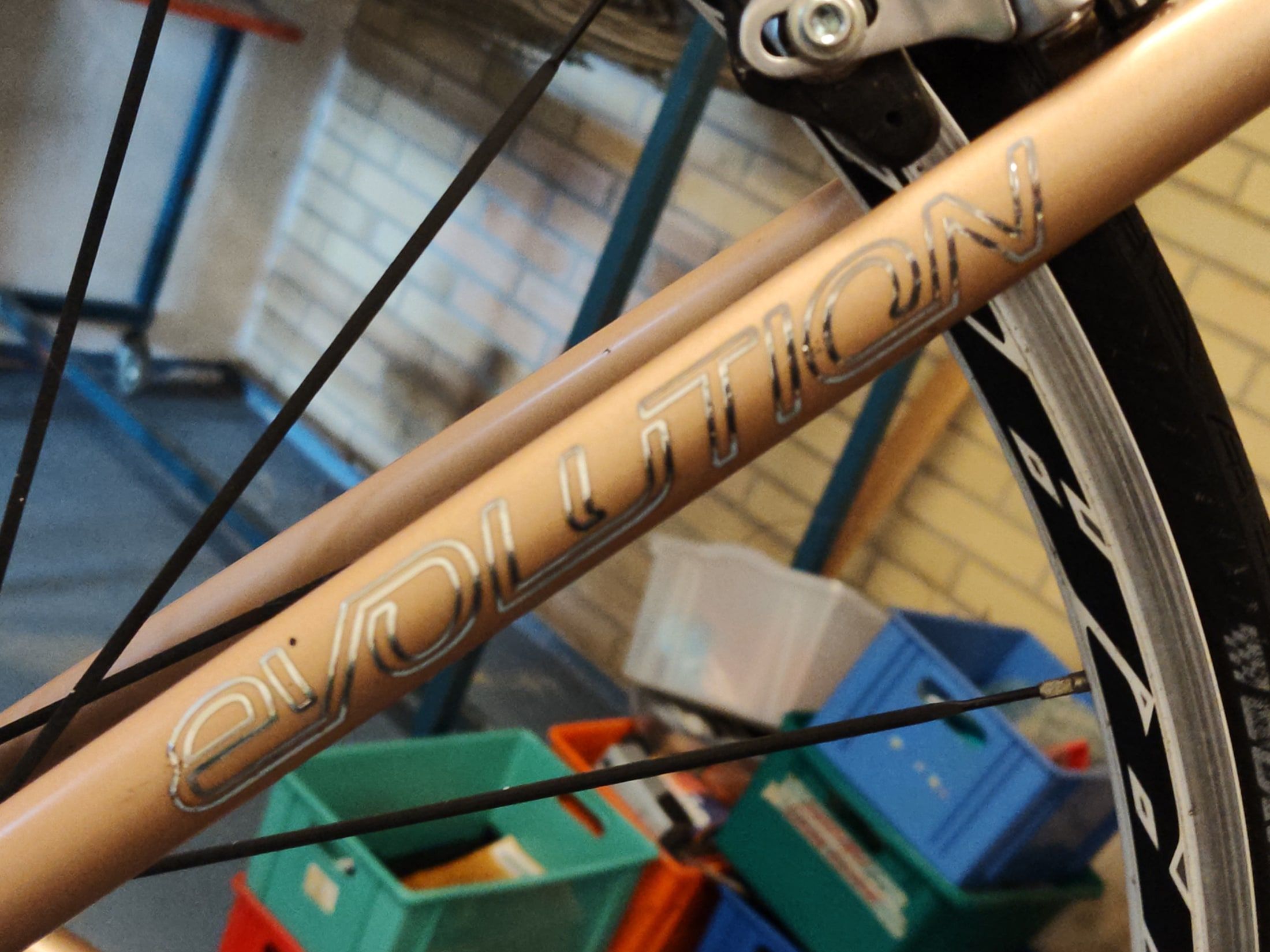
Evolution
A Danish aluminium racer built around large shaped tubes and Principia’s original measure of performance: as much stiffness as possible for as little weight as possible.
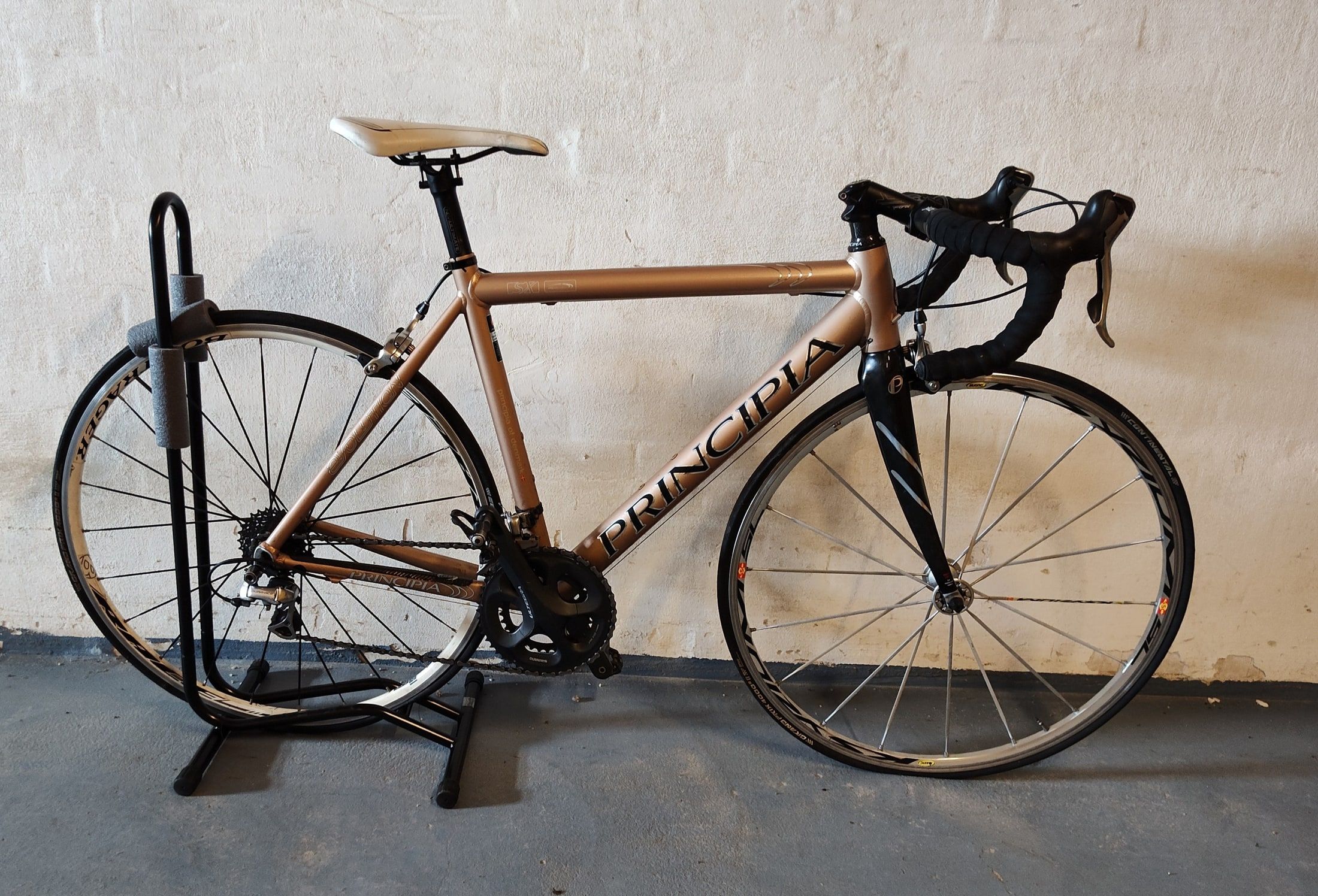
Large tubes, clear purpose
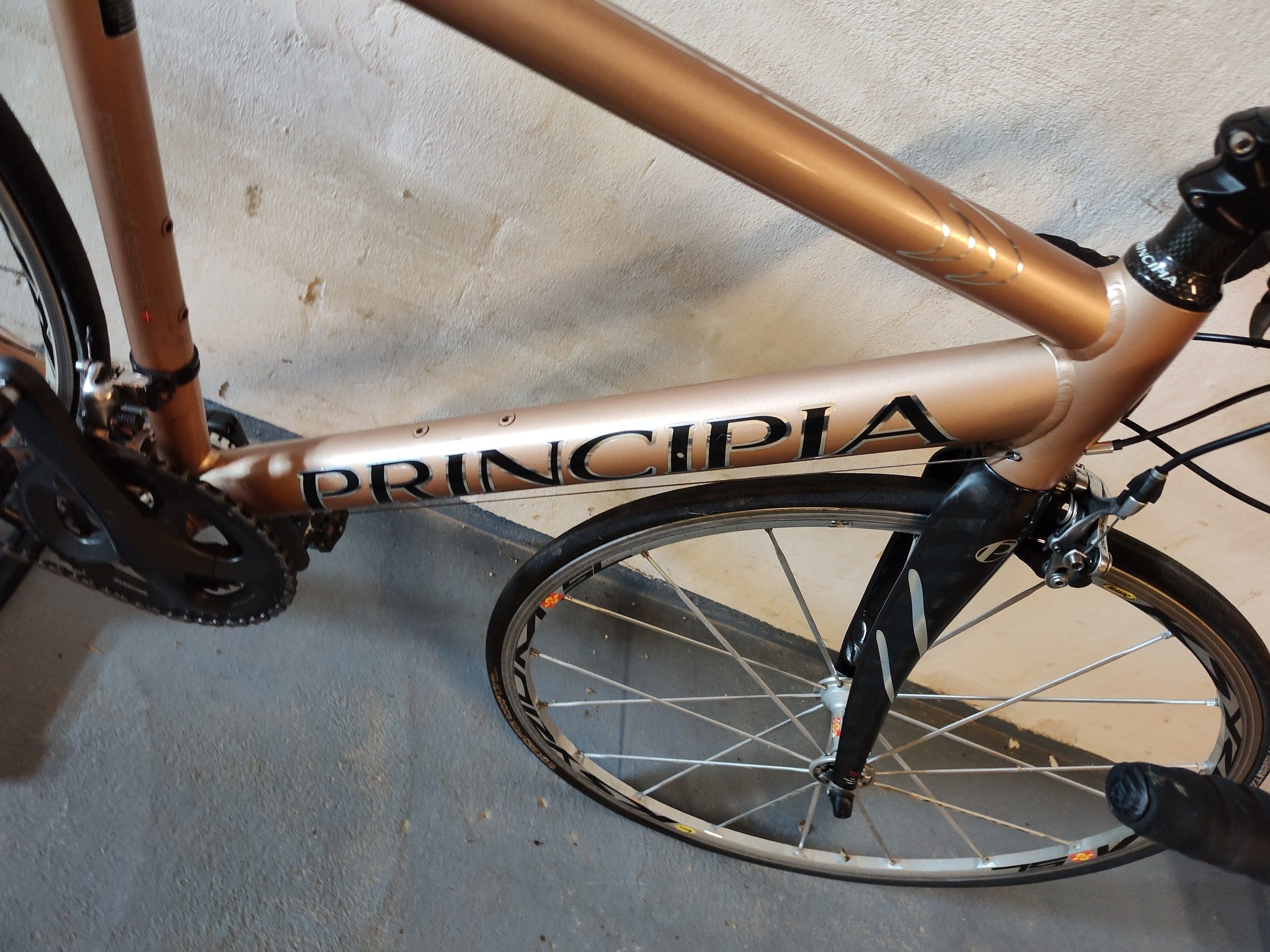
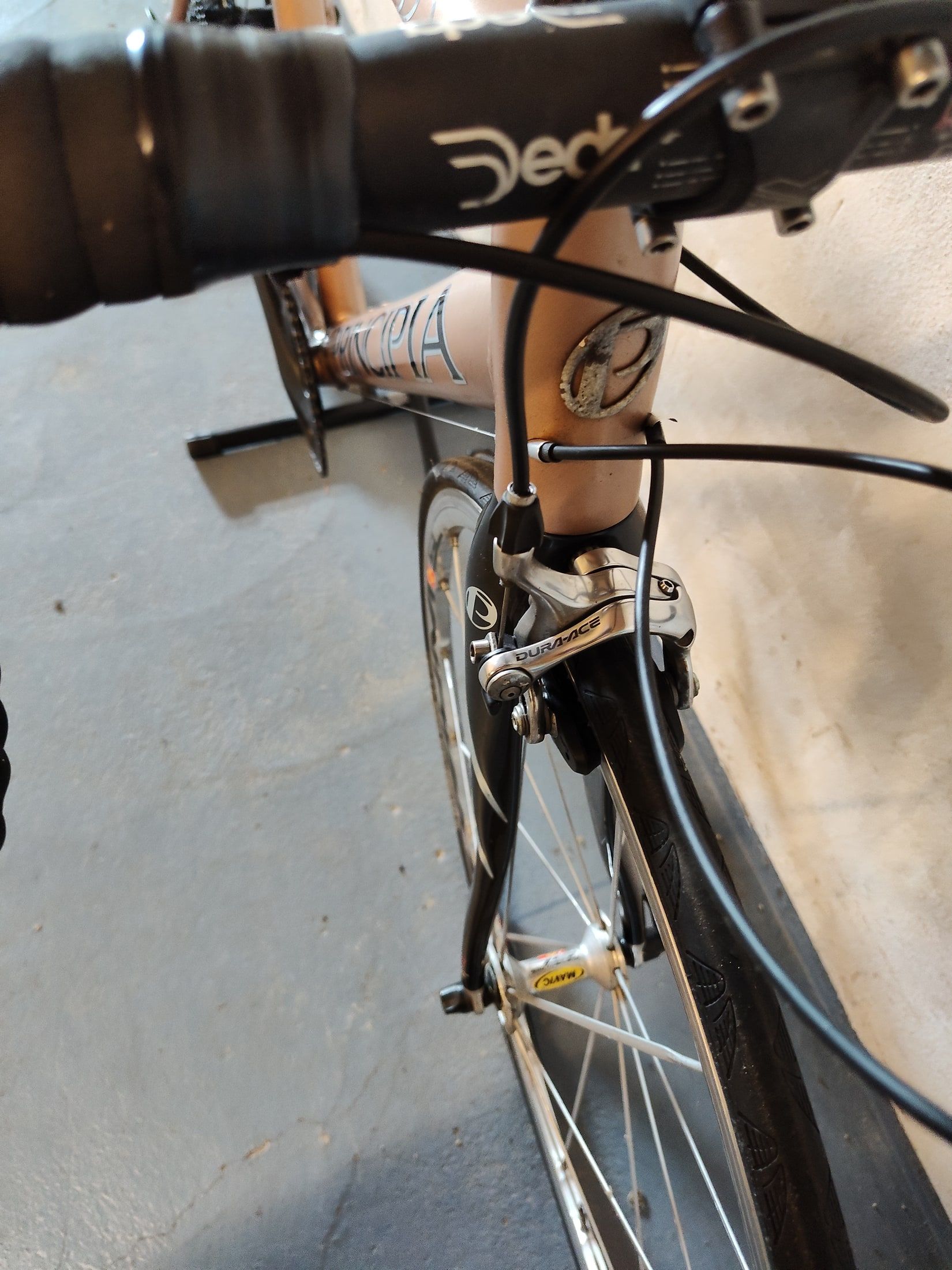
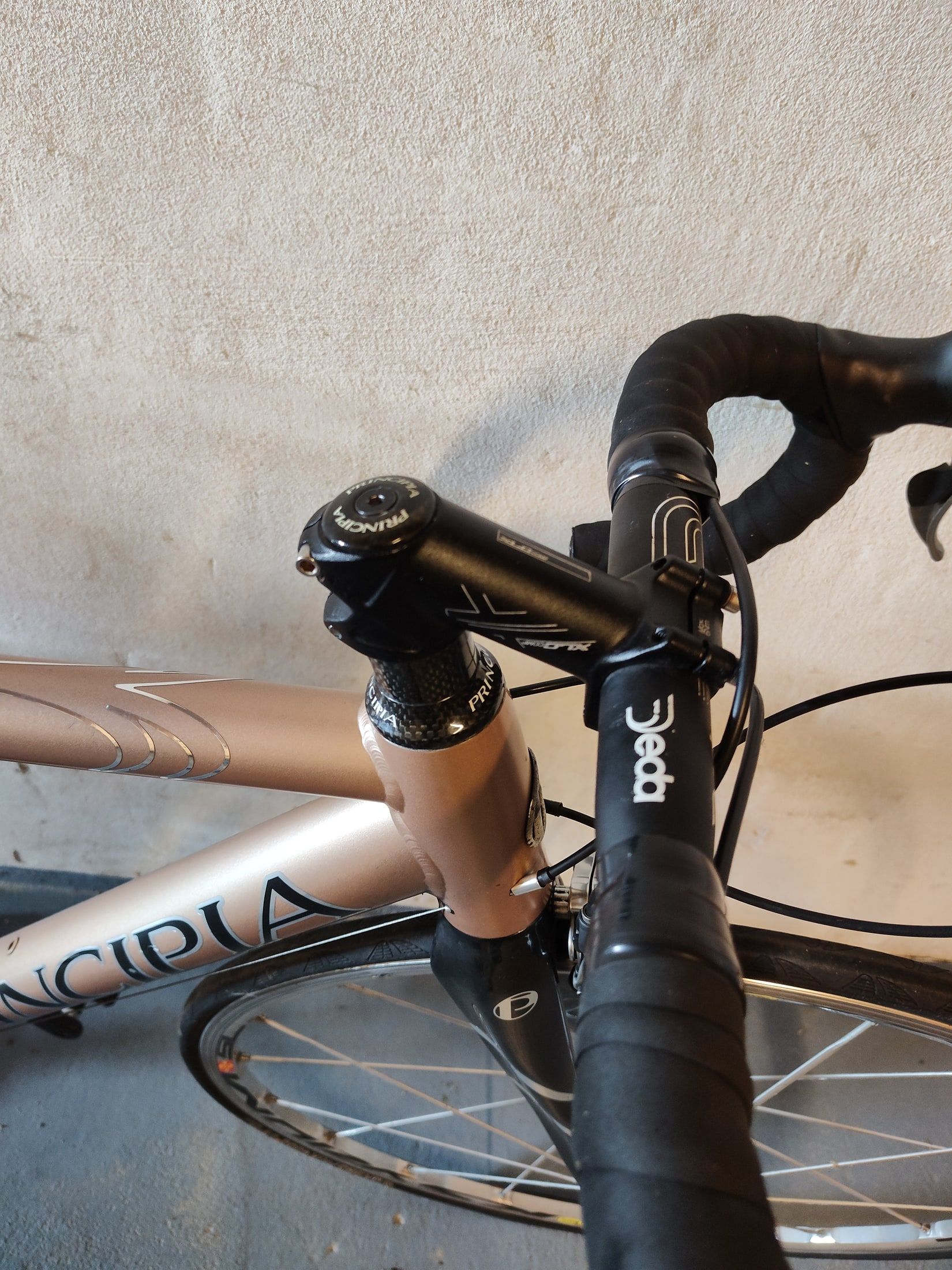
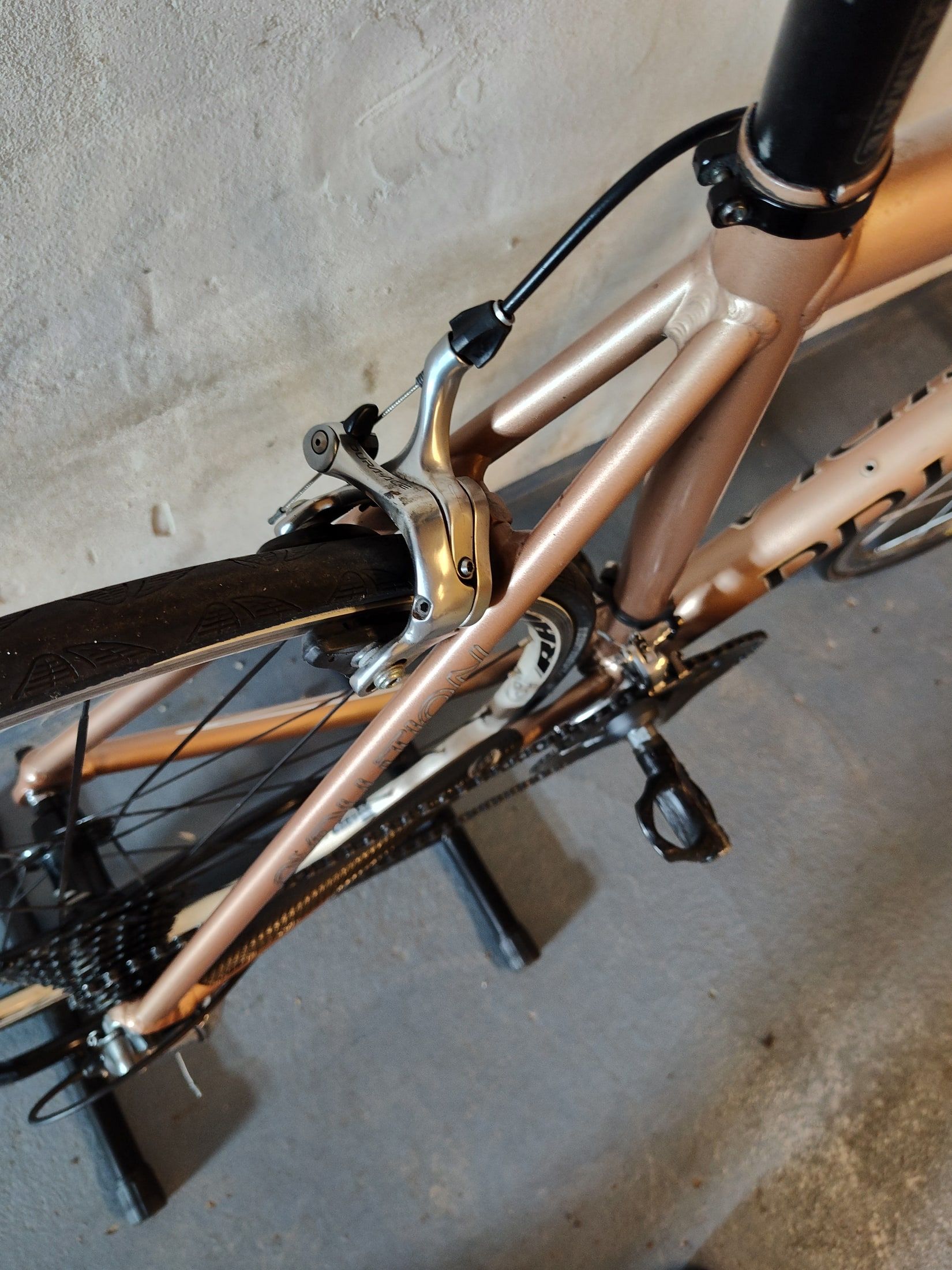
The tubing dominates the bicycle. Around the head tube and bottom bracket the profiles grow large and shaped to resist twisting under hard pedalling and cornering. Principia made stiffness in relation to weight an operating principle: STW, stiffness to weight.
Aalborg, 1990
Three triathletes began building
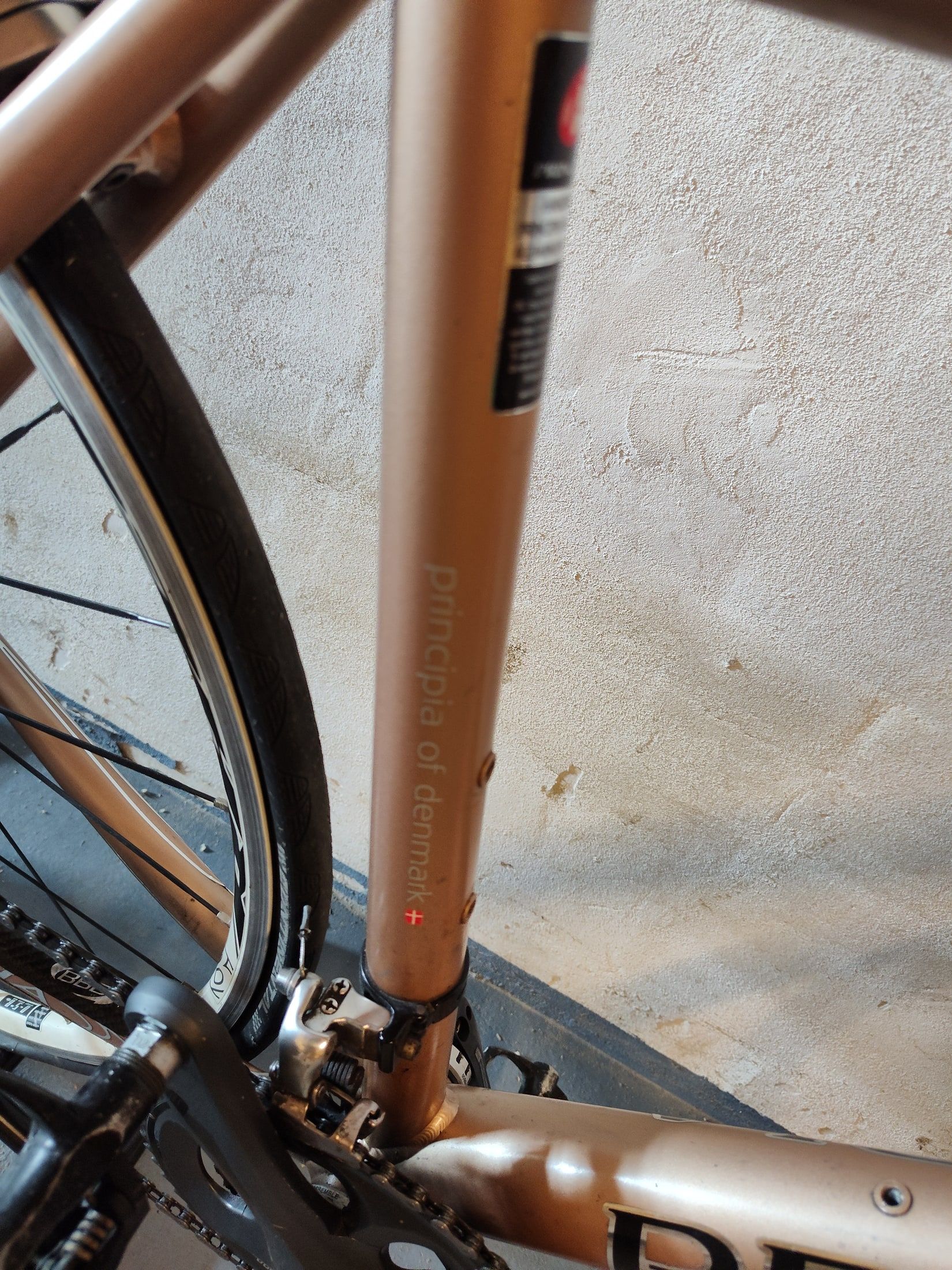
Principia began in Aalborg in 1990. Three young triathletes could not afford the American aluminium frames they wanted, so they began filing, fitting and welding their own tubes in a basement on Himmerlandsgade.
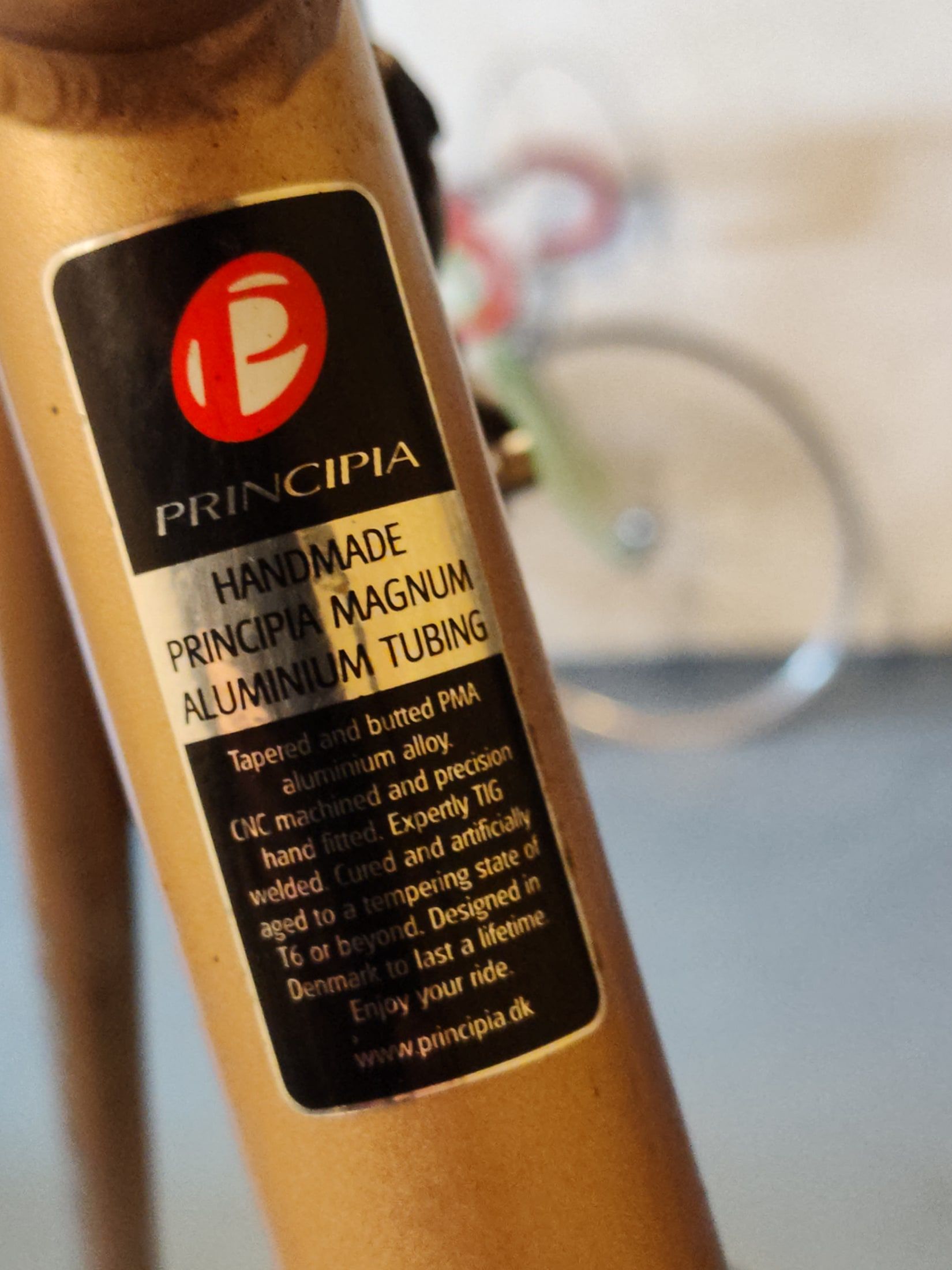
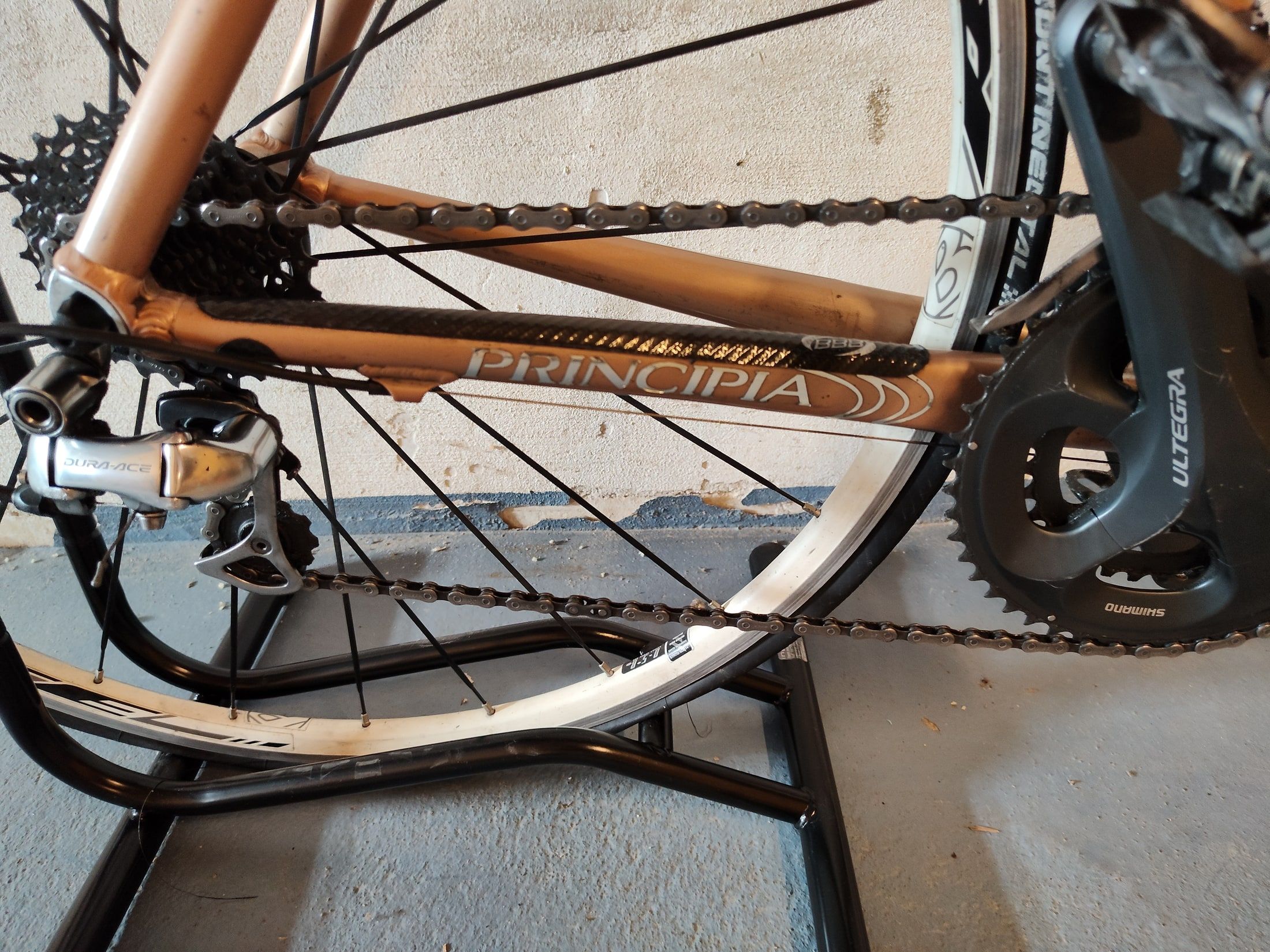
Principia worked early with 7020 aluminium. The label on this Evolution, however, says “Principia Magnum aluminium tubing”. Without a contemporary model catalogue, the two descriptions should not automatically be treated as identical.
The large tubes became a visual signature. Their size also had a practical purpose: moving material farther from the tube’s centre increased resistance to bending and twisting.
The 2007 bicycle
Aluminium with carbon at the front
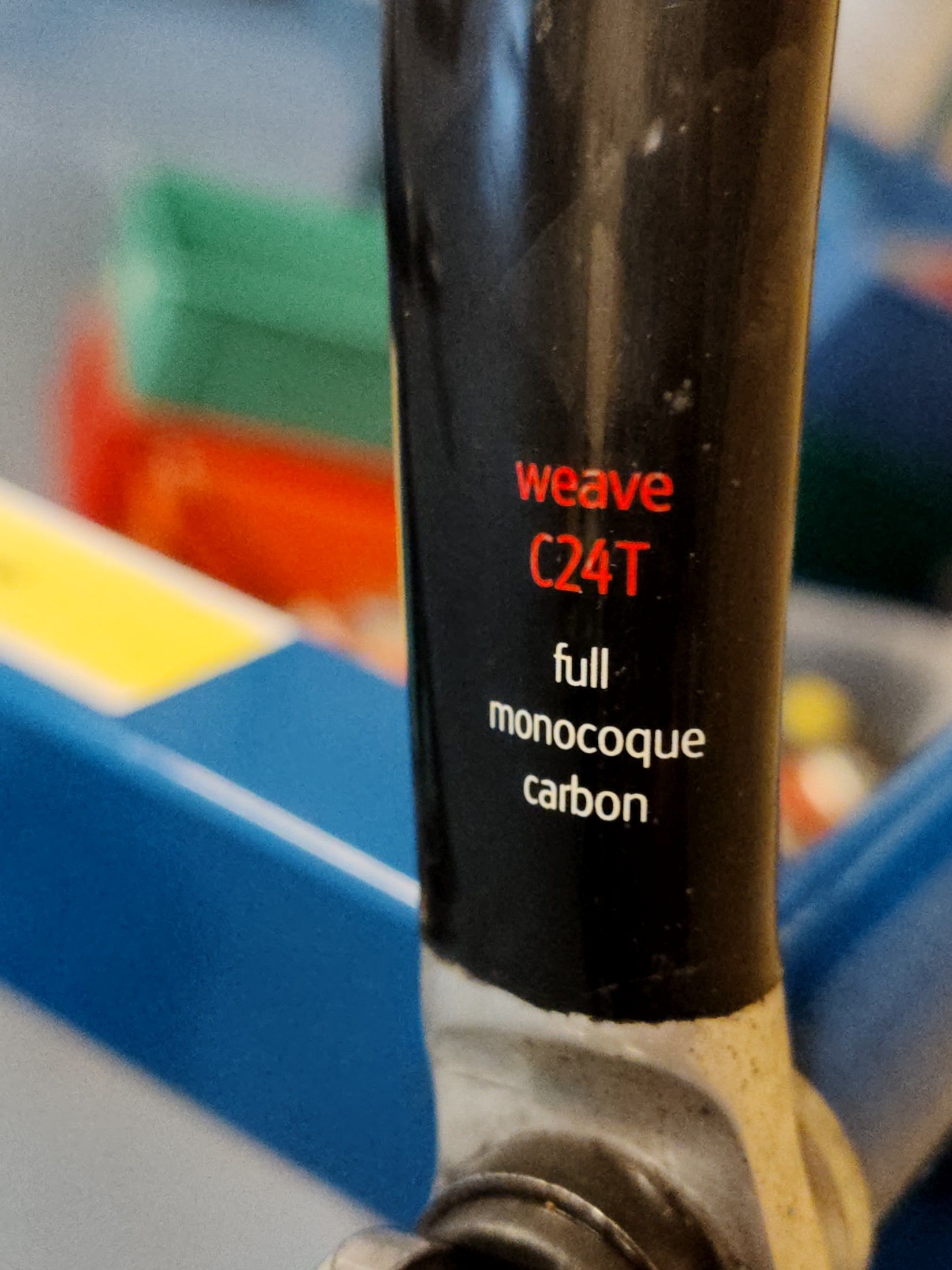
The Evolution combines its aluminium frame with a WEAVE C24T monocoque carbon fork, a characteristic material mix for good road bicycles of the 2000s.
Dura-Ace markings are visible on the brakes and rear derailleur. The crankset is marked Shimano Ultegra. It is therefore more accurate to call this a build with Dura-Ace parts than a complete matching Dura-Ace groupset.
Rim brakes and external cables keep the mechanics visible. The bicycle sits just before electronic shifting, hidden cables and disc brakes changed the modern road racer’s appearance.
From Aalborg to export
The frames went racing
Principia grew quickly during the 1990s, helped especially by the German market. It supplied Team Chicky World, Team Acceptcard, Team Fakta and Britain’s Linda McCartney Racing Team.
On a Principia, Australian David McKenzie won stage 7 of the 2000 Giro d’Italia after spending 164 kilometres alone at the front. A small Danish frame maker had reached international professional racing.
After several changes of ownership, Principia became part of HF Christiansen in 2006. This bicycle is dated to 2007 and therefore stands close to that transition.
The bicycle
Brief specification
- Maker
- Principia
- Model
- Evolution
- Year
- 2007, stated
- Frame
- Principia Magnum aluminium tubing
- Fork
- WEAVE C24T monocoque carbon
- Gears and brakes
- Shimano Dura-Ace parts
- Crankset
- Shimano Ultegra
- Status
- In the collection
Sources
Basis
Principia: Our history · the bicycle, its labels and information supplied by its owner.
The year is supplied by the owner. Components are identified from visible markings. The maker’s history is a retrospective company account used for the broad outline of the marque.
The Evolution shows how far Principia’s original idea could be developed. Large welded aluminium tubes remain the starting point, while a carbon fork and 2000s components place it far from the first basement-built triathlon frames.