The period 2000–2009
When cycling became
a control room
Training, nutrition and bicycles were measured ever more closely. So was doping. The result was greater speed, specialisation and a sport losing control of its own story.
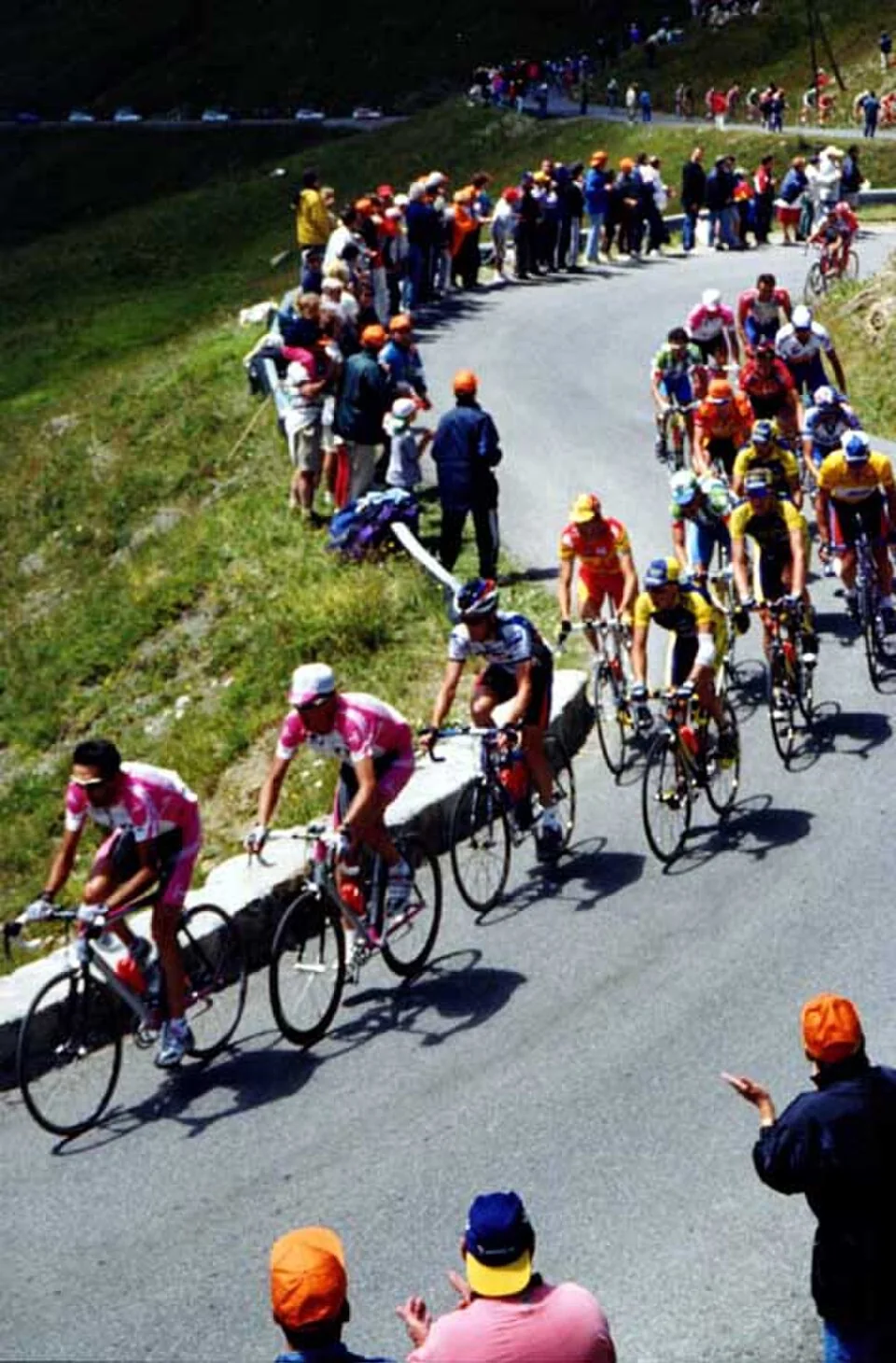
The plan before the race
A Tour was now prepared all year: routes surveyed, climbs measured, daily equipment selected and riders kept within increasingly narrow figures.
The common period model
The 2000s in three views
The decade’s main development
Carbon frames, power meters and specialist equipment made the racing bicycle part of an increasingly measured system.
What defined the period
Meticulous preparation, global television and major doping investigations existed side by side.
Three changes to cycling
- Carbon became the dominant frame material
- Power data moved into daily training
- Electronic shifting reached professional racing
Selected events
A short timeline
- The peloton enters the decade with aluminium, titanium and carbon still competing at the top level.
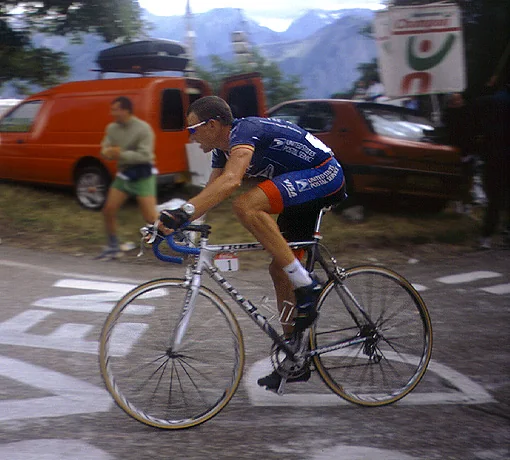
- Armstrong’s acceleration on Alpe d’Huez becomes one of the era’s defining television images.
- Beloki crashes near Gap; Armstrong escapes across a field.
- Paolo Bettini wins Olympic road gold in Athens.
- Operación Puerto removes leading riders before the Tour; Landis later loses the overall victory.
- Rabobank removes Michael Rasmussen from the Tour while he leads the race.
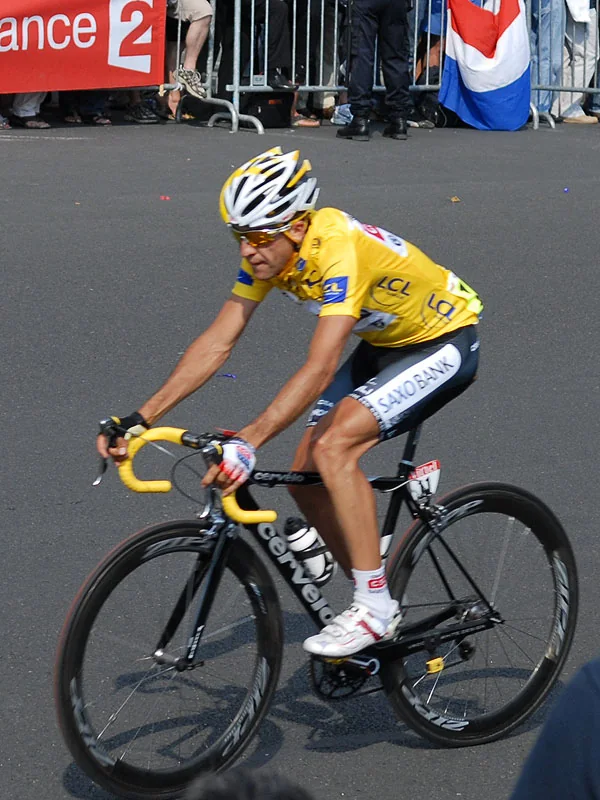
- Carlos Sastre wins the Tour after attacking on Alpe d’Huez.
- Boonen wins a third Paris–Roubaix; Shimano introduces Dura-Ace Di2.
Seven fixed themes
The decade, seen across the site
Races and defining moments
Boonen on the cobbles, Sastre on Alpe d’Huez and the chaotic Tours of 2006 and 2007 show a decade shaped by both racing and events away from the road.
Follow this theme through cycling history →Riders of the period
Armstrong dominated the decade’s public image before his results were annulled. Boonen, Bettini, Cancellara, Contador, Sastre and Rasmussen supplied very different stories around him.
Follow this theme through cycling history →Bicycles and technical change
Monocoque carbon frames, deep-section wheels, ten-speed groups and electronic shifting changed the professional bicycle. The 6.8-kilogram limit became a design constraint rather than a target.
Follow this theme through cycling history →Nutrition, training and science
Power meters, laboratory tests and planned carbohydrate intake made preparation more precise. The same professional structures also formed part of organised doping programmes.
Follow this theme through cycling history →Cycling culture and everyday life
Internet forums and live reporting joined television and newspapers. Equipment, training data and controversies could now be discussed while the race was still unfolding.
Follow this theme through cycling history →Society and the times
Global sponsors and Asian carbon production changed the industry, while police investigations and legal cases repeatedly moved cycling beyond the sports pages.
Follow this theme through cycling history →The people behind cycling
Team managers, doctors, aerodynamicists and mechanics gained influence. Bjarne Riis and Team CSC show how the modern team became an organisation built around planning and specialists.
Follow this theme through cycling history →Armstrong and Bruyneel
Professionalism with a darker side
Lance Armstrong and Johan Bruyneel placed the Tour at the centre of a strict programme of camps, reconnaissance, aerodynamic tests and weight control. Many methods already existed, but US Postal combined them visibly — and won on the road from 1999 to 2005.
In 2012 Armstrong’s results from August 1998 onwards were annulled. USADA described an extensive, organised doping programme. The work was meticulous and modern; so was the cheating.
A change of material
Carbon becomes normal
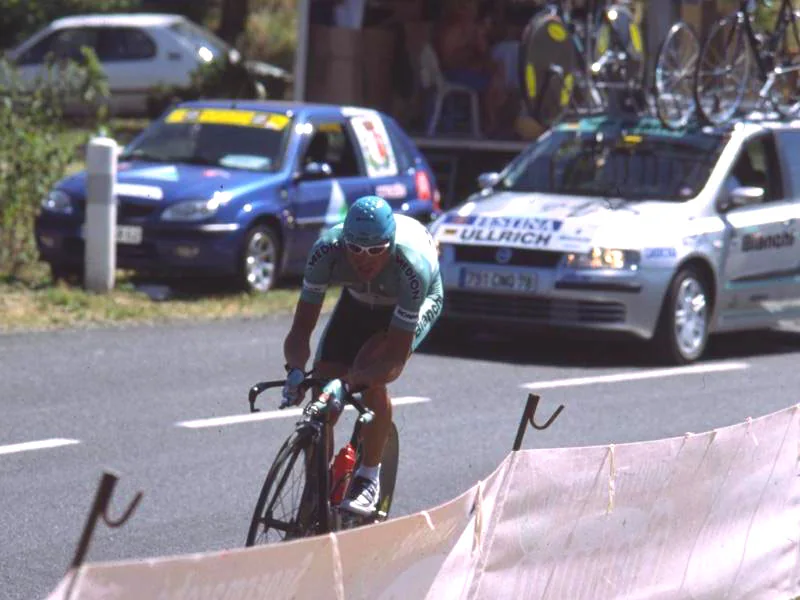
Aluminium, steel, titanium and carbon coexisted early in the decade. By its end, carbon dominated top-level racing. Deep wheels became specialist tools, compact chainsets widened gearing, and leading groups reached ten rear sprockets.
Watts over instinct
The body becomes data
Power meters showed the rider’s actual output. With heart rate and laboratory tests, training became easier to control. Teams planned carbohydrate, recovery and hydration more closely. Figures improved preparation, but the same medical and logistical systems could be used to evade rules.
The winner removed from the result
Floyd Landis collapsed one day, attacked from afar the next and won the Tour. A positive test led to disqualification, with Óscar Pereiro named winner.
Yellow did not reach Paris
Michael Rasmussen led when Rabobank removed him over false whereabouts information. Danish viewers went to bed with a Tour leader and woke without one.
After the empty years
No single permanent king
Alberto Contador won in 2007, Carlos Sastre decided the 2008 Tour on Alpe d’Huez, and Armstrong returned to finish third in 2009 behind Contador. No replacement winners were named for Armstrong’s annulled victories; the result sheet could no longer tell the whole story.
2009
The gear cable gets electricity
Shimano’s Dura-Ace 7970 Di2 replaced mechanical cable pull with an electrical signal and motor. It was expensive and batteries on racing bicycles met predictable suspicion, but it neatly ended a decade in which more decisions became data and buttons.
Sources and notes