One event. One person. One story.
Stories and
anecdotes
Stories that can be read on their own while still belonging to the wider chapters of cycling history.
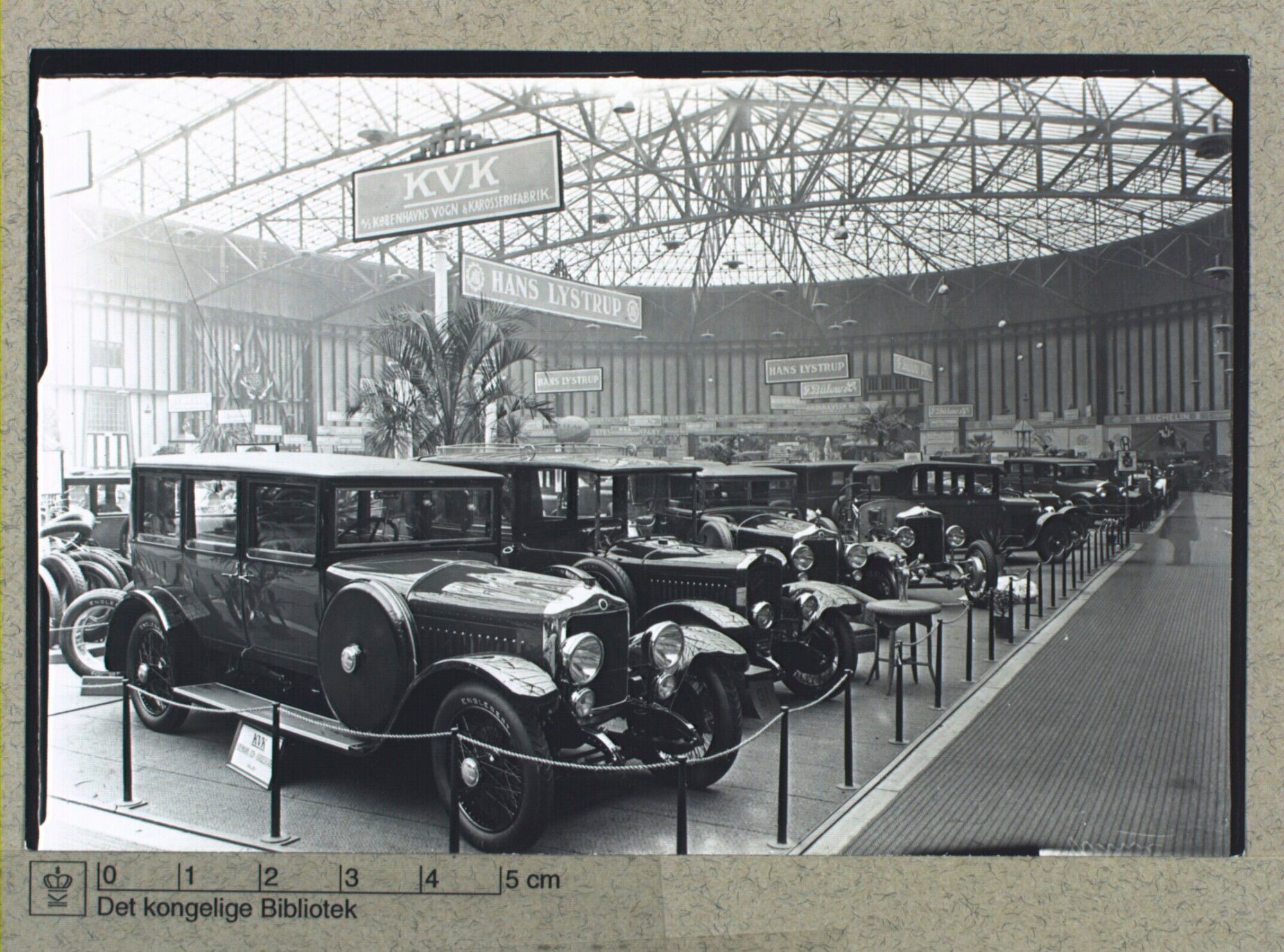
Hand slings, cabins and 144 hours in Forum
Forum’s small cabins, the division of labour between partners and six days on the track reveal how Copenhagen’s six-day race worked in the 1930s.
Read the story →
Michele Ferrari, training science and the doping era
Michele Ferrari helped make training measurable and was later banned for life by USADA. His story separates measurement, explanation and documented doping violations.
Read the story →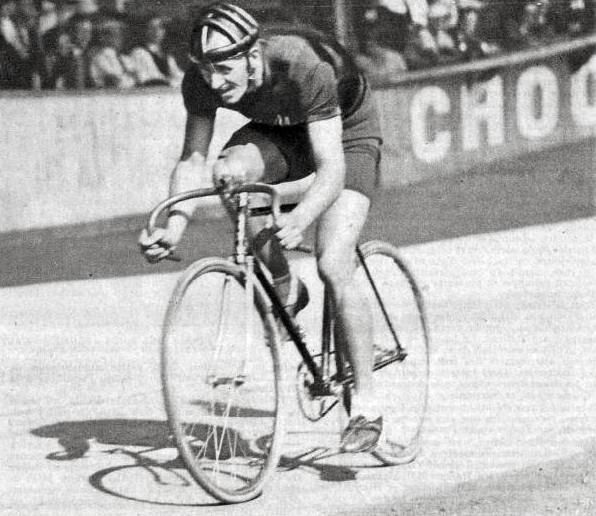
Jan van Hout and the 44,588 metres
Jan van Hout rode 44.588 kilometres in an hour in 1933. A dispute followed his ride; he later closed his café and joined the resistance.
Read the story →
When the rider was his own mechanic
Early Tour riders repaired their own bicycles. From Christophe at the forge to neutral service, the tools gradually moved into the following cars.
Read the story →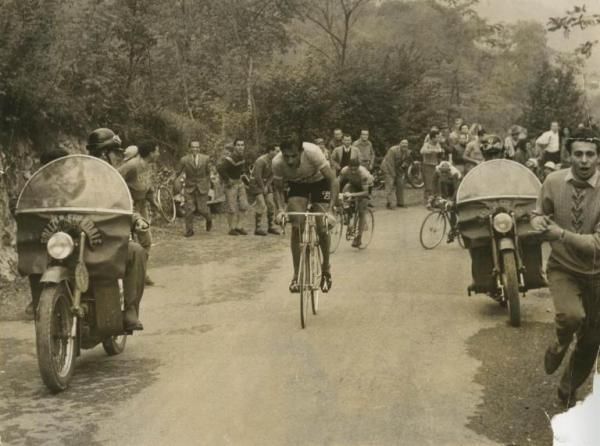
Coppi’s last journey and the missed malaria
Fausto Coppi returned ill from Upper Volta. Fellow traveller Raphaël Géminiani had the same disease, but malaria was recognised too late in Coppi’s case.
Read the story →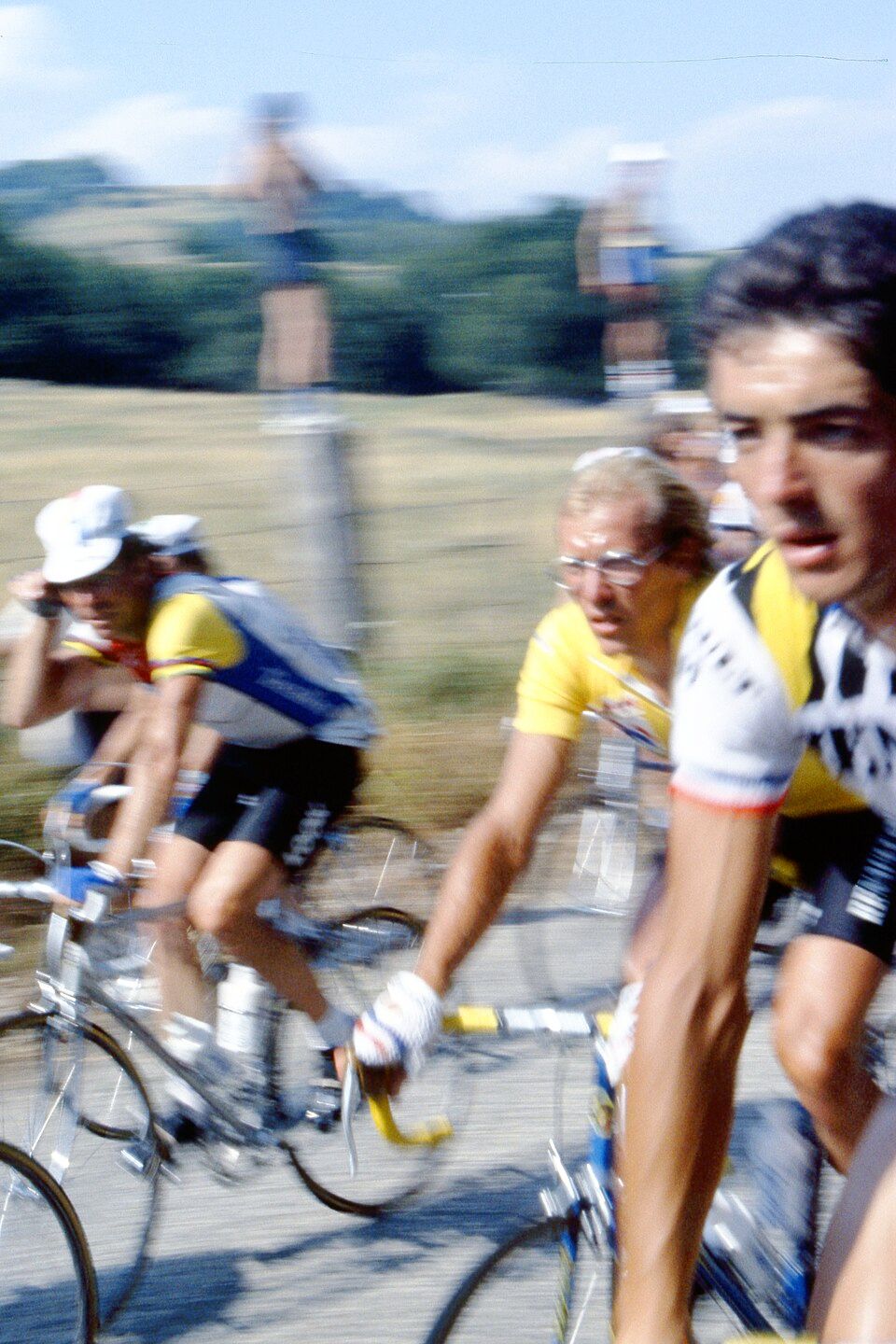
When Oosterbosch found the time trial again
On 6.6 wet kilometres through Winschoten, Bert Oosterbosch beat team-mate Eric Vanderaerden by eleven seconds and briefly recovered his speciality.
Read the story →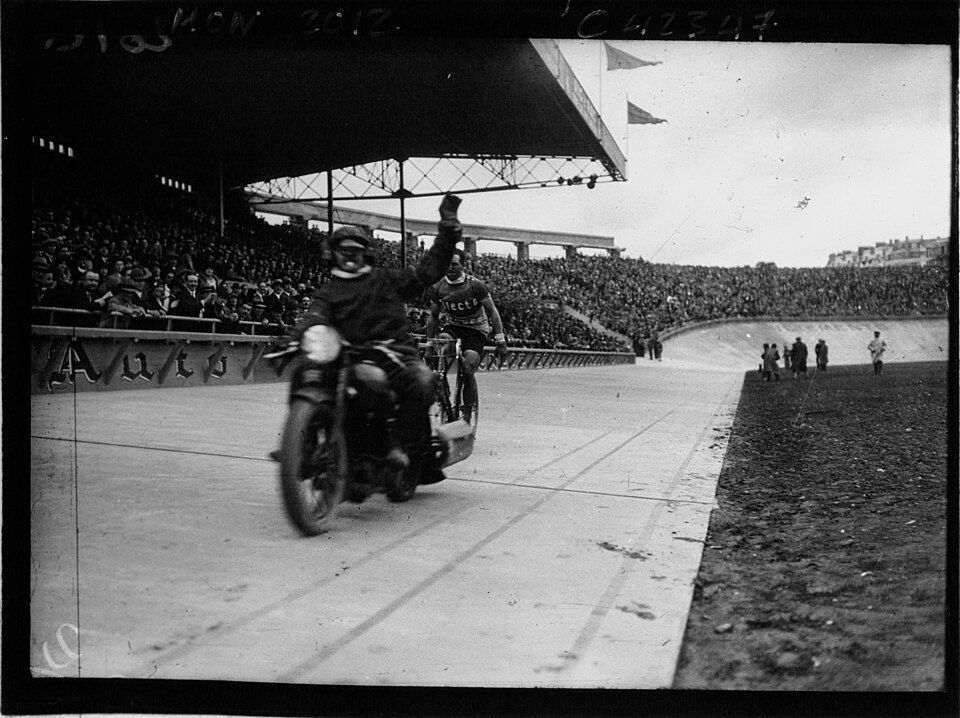
The centimetres between Gresse and Nasq
A surviving postcard naming stayer Gresse and pacer Nasq opens the story of motor-paced racing, where two people and two machines had to work as one.
Read the story →The blood bags at the 1984 Olympics
The US cycling team’s transfusion programme sat between medical experiment, sporting ambition and rules that had not caught up.
Read the story →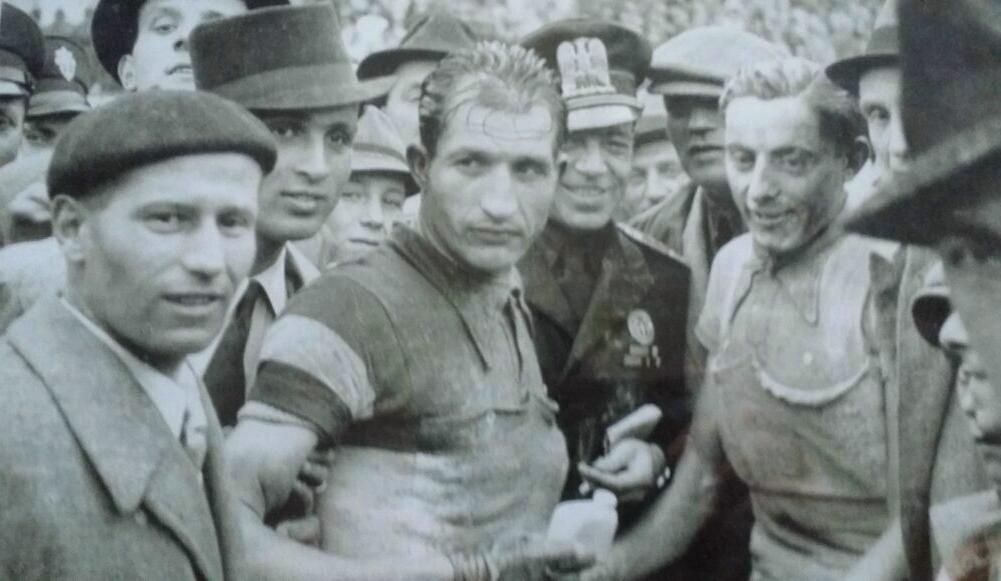
Coppi, Bartali and a divided Italy
Fausto Coppi and Gino Bartali began as team-mates and became rivals through whom post-war Italy told stories about itself.
Read the story →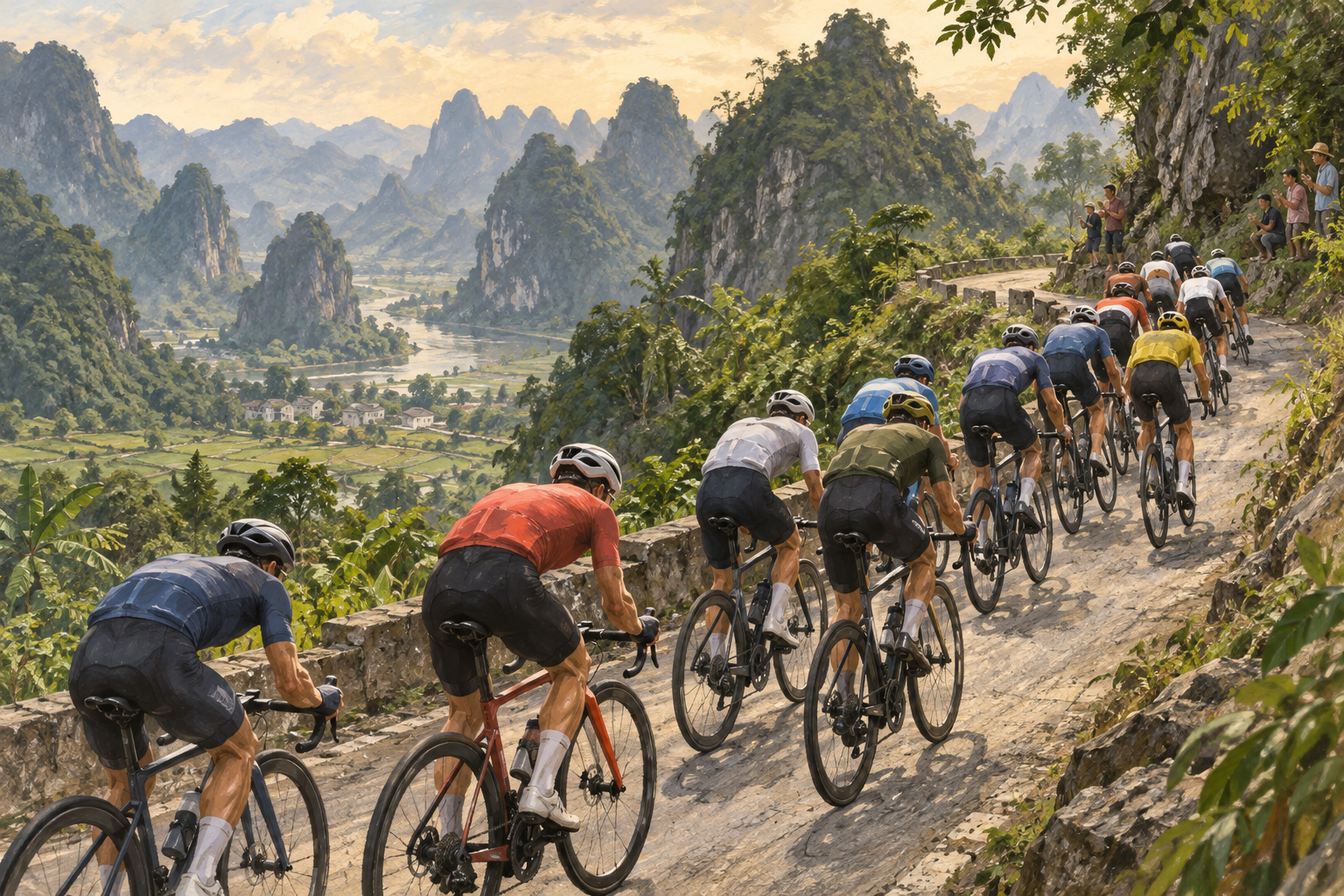
Tour of Guangxi: Six days and one steep finish
The final stage race of the WorldTour season crosses the rolling landscape of Guangxi and is decided on the short, steep road to NongLa.
Read the story →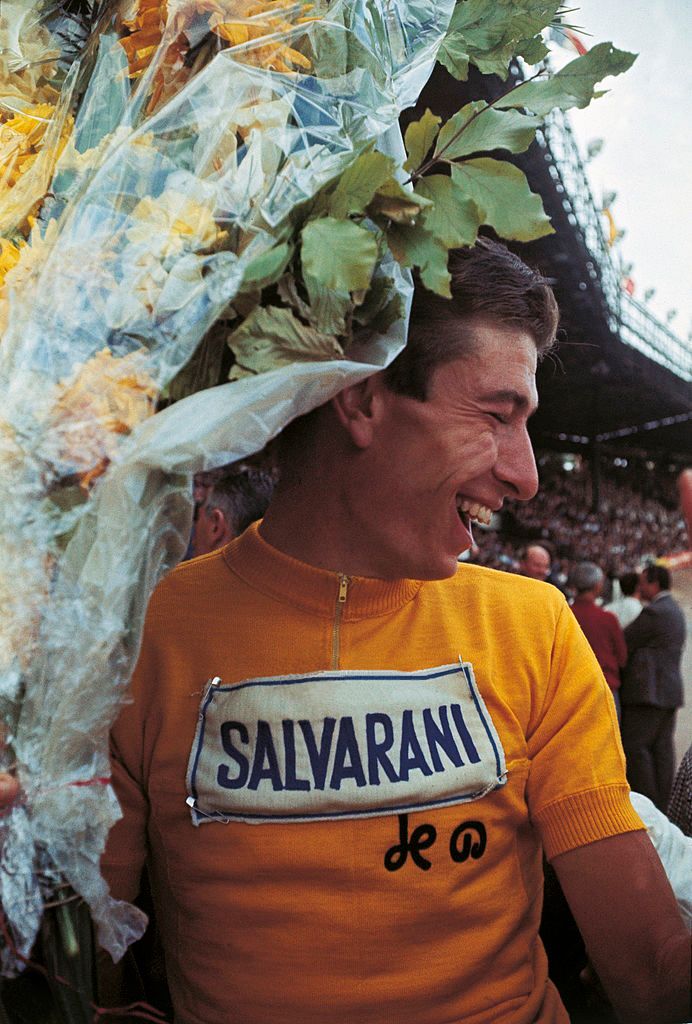
When Gimondi opened the sprint against Merckx
At the 1971 World Championships in Mendrisio, Eddy Merckx and Felice Gimondi reached the finish alone. Gimondi opened, but Merckx took his second rainbow jersey.
Read the story →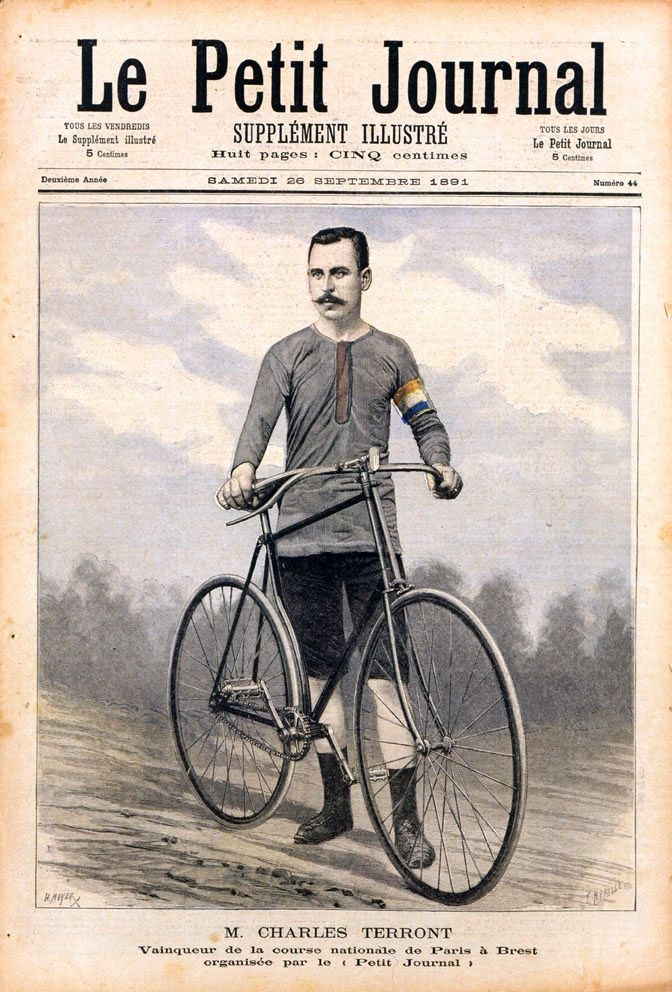
The race that was called the first
James Moore won a short race in Parc de Saint-Cloud in 1868. The day was later cast as the beginning of cycle racing—but the history is more complicated than that.
Read the story →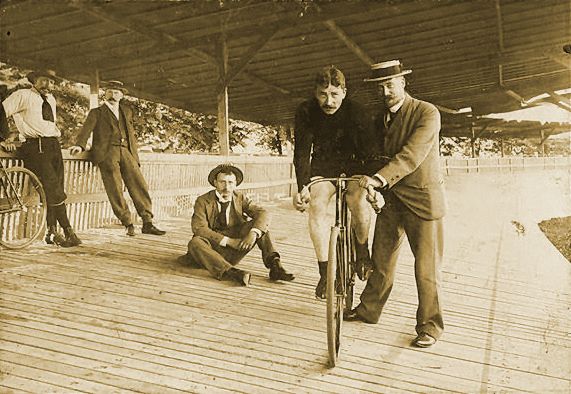
The world champion who changed from skates to bicycle
Jaap Eden became world champion in speed skating and track cycling in the 1890s—and one of the Netherlands’ first sporting celebrities.
Read the story →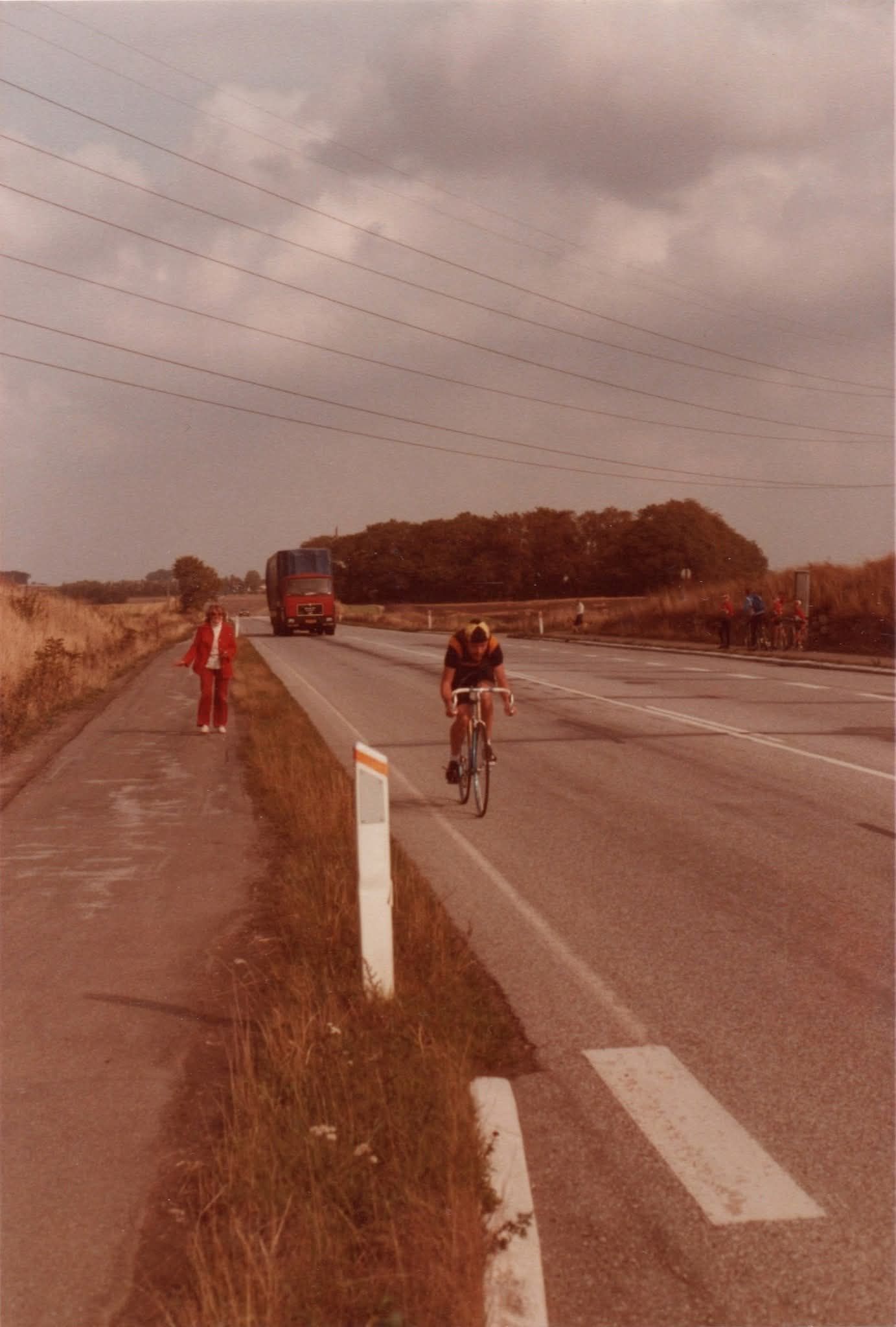
Kund Rindbøl’s time trial on the old main road
A reader remembers 30 kilometres against the clock, a 54 × 14 gear and his mother at the roadside between Holbæk and Roskilde.
Read the story →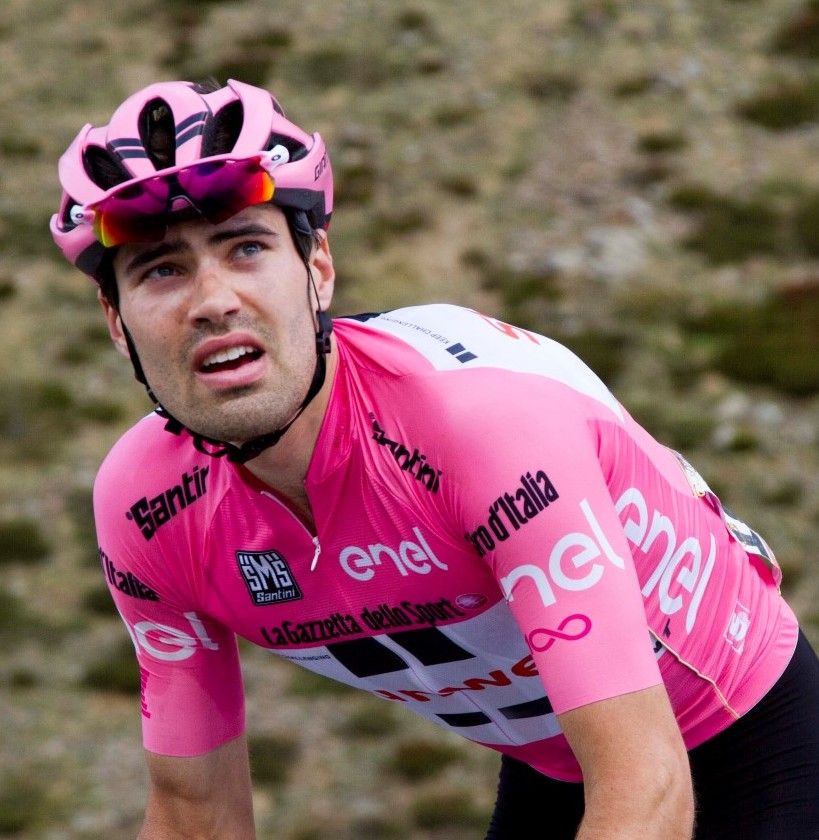
The comfort break that nearly cost Dumoulin the Giro
Tom Dumoulin had to stop with stomach trouble on stage 16 of the 2017 Giro and defend the pink jersey alone.
Read the story →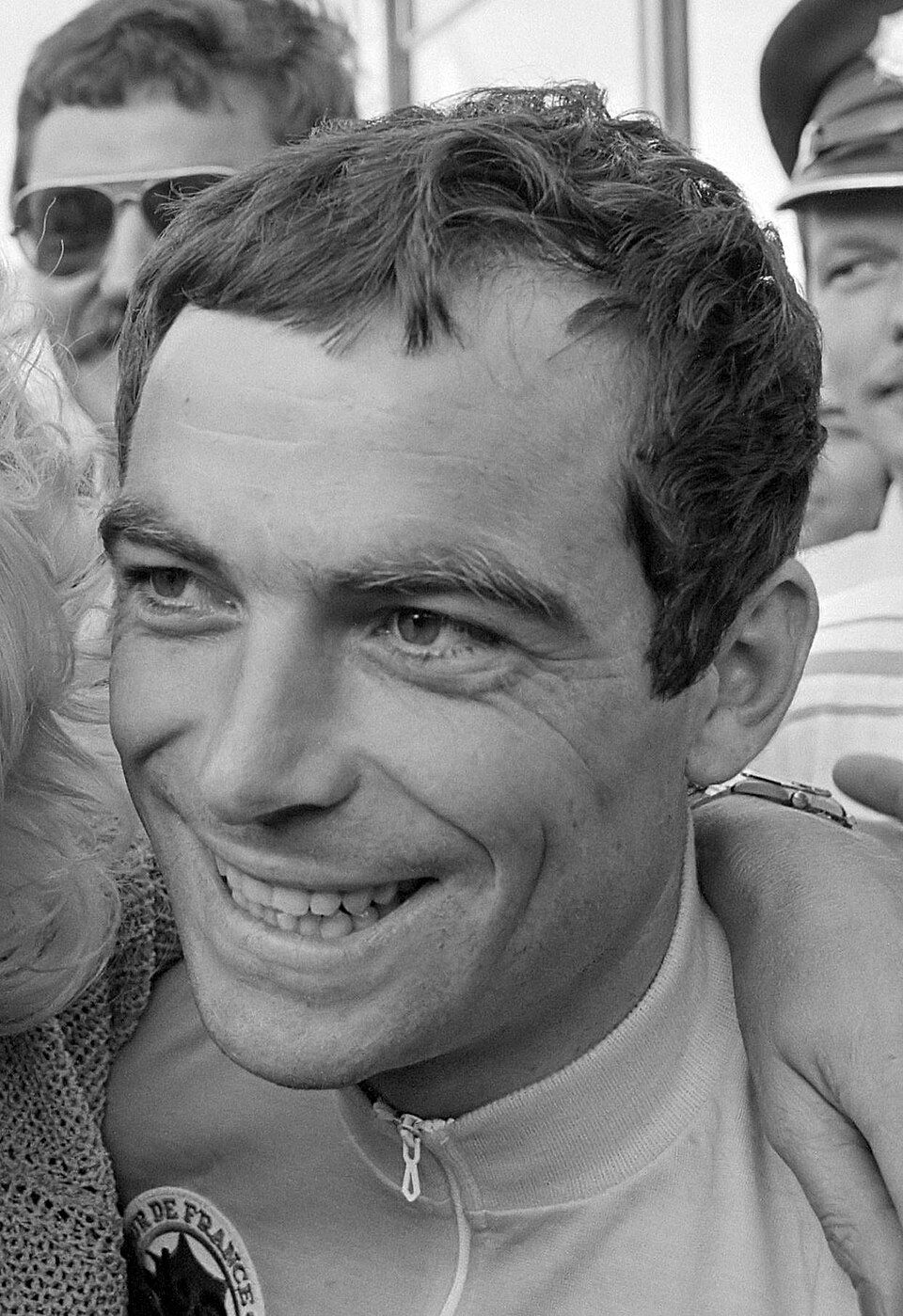
When Hinault rode into a workers’ protest
Paris–Nice met a road blockade by La Ciotat shipyard workers. Bernard Hinault was knocked down, got up and struck a demonstrator.
Read the story →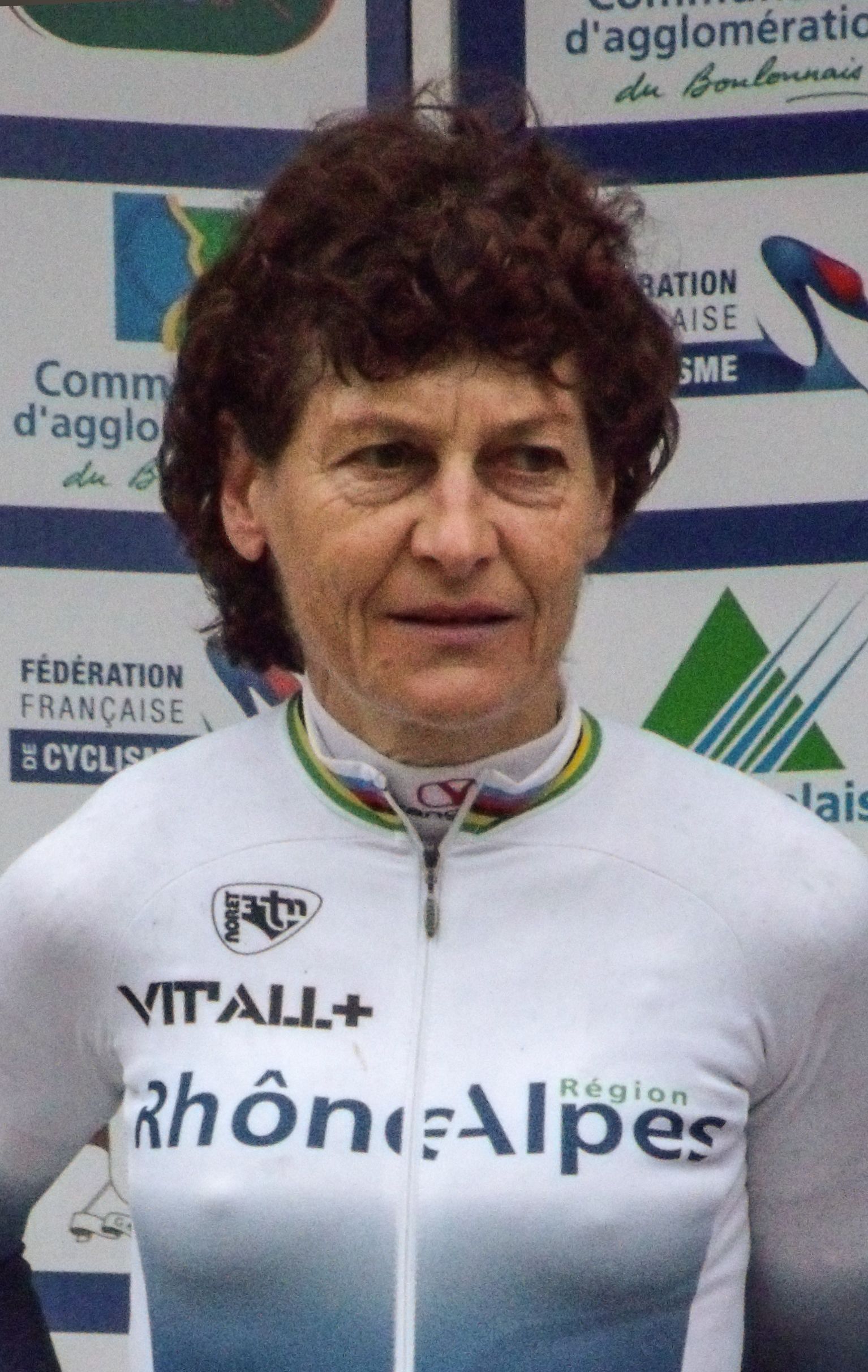
French champion at 52
Jeannie Longo won the 2011 French time trial championship at the age of 52, finishing 42 seconds ahead of the runner-up.
Read the story →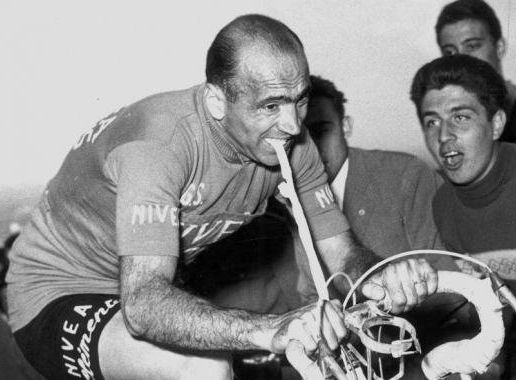
When Magni bit an inner tube to stay in the Giro
With a badly injured shoulder, Fiorenzo Magni continued the Giro with an inner tube tied between his handlebars and teeth.
Read the story →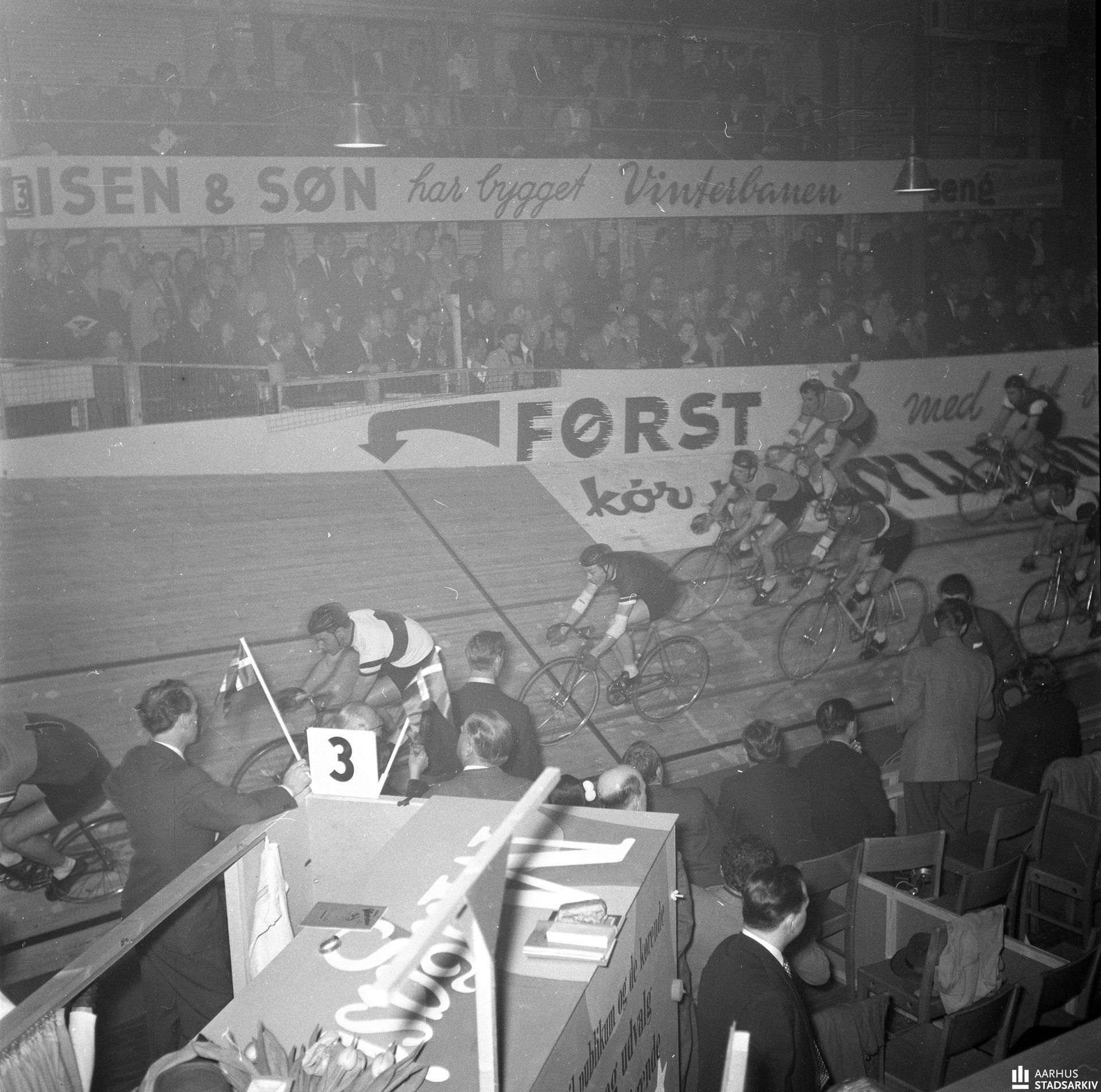
Why the whole Forum cheered for Pair Number 7
From Kay Werner Nielsen and Evan Klamer to Michael Mørkøv and Alex Rasmussen: one race number became the Danish crowd’s own pair.
Read the story →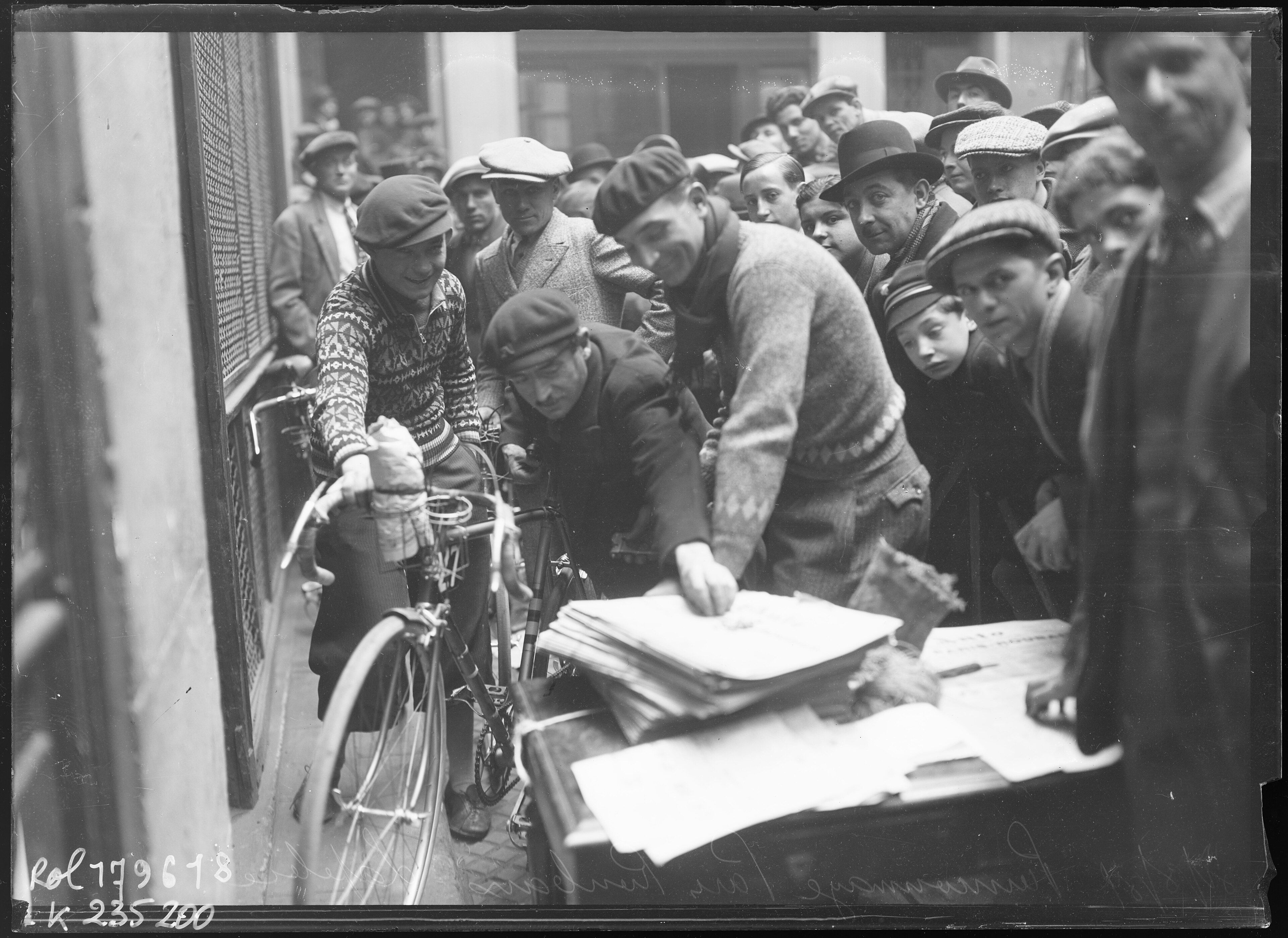
The spectator's bicycle that cost Lapébie Paris–Roubaix
Roger Lapébie punctured near the finish, borrowed a spectator's bicycle and crossed the line first. The rules awarded victory to Gaston Rebry.
Read the story →
The condom that cost Pollentier the yellow jersey
Michel Pollentier won on Alpe d’Huez and took the yellow jersey. That evening, the doping control revealed a container of someone else’s urine beneath his jersey.
Read the story →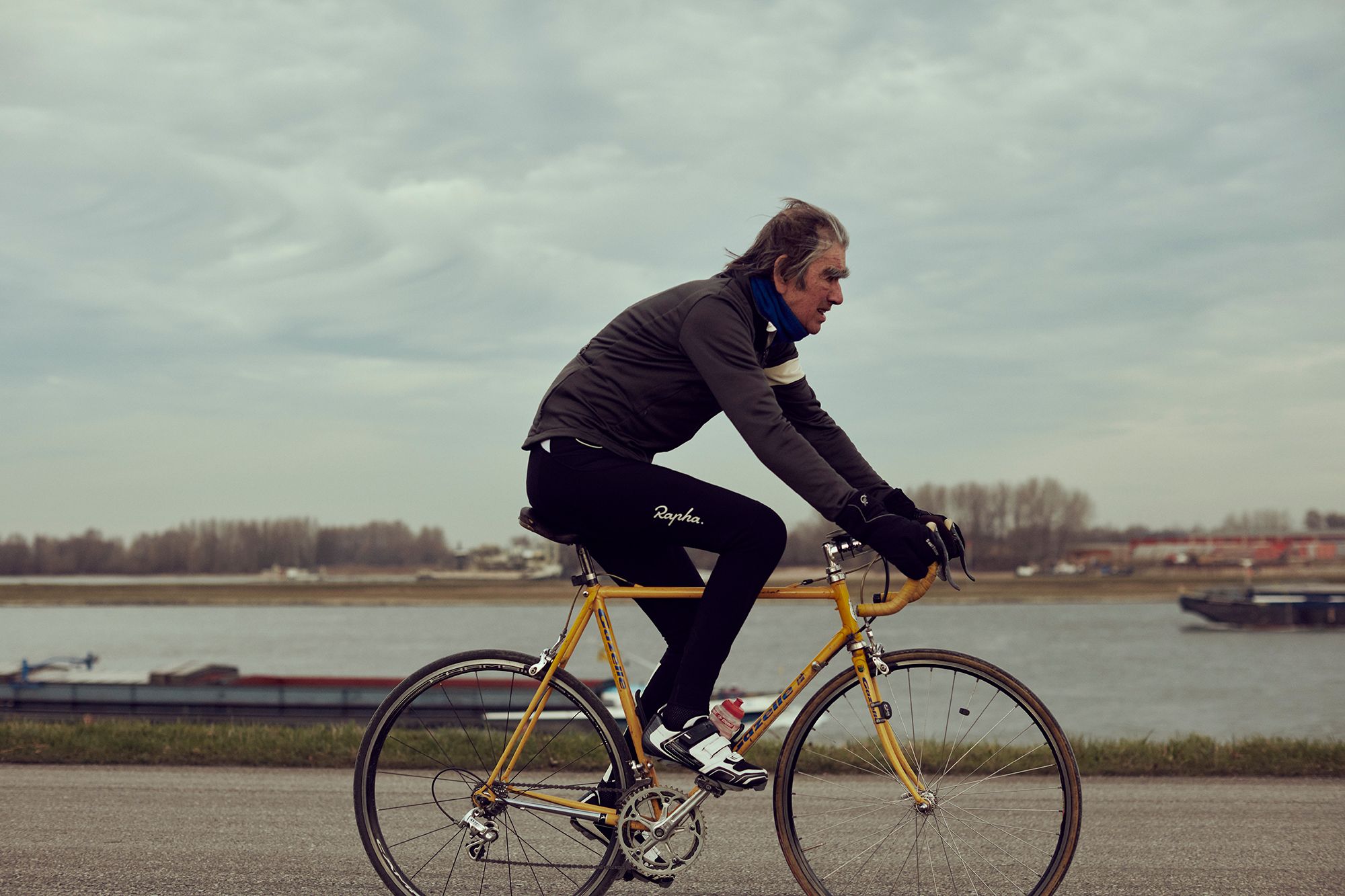
A Man of Steel
Albert is 82 and still rides every day. A photographic reader story about a yellow steel Gazelle, daily kilometres and an iron will.
Read the story →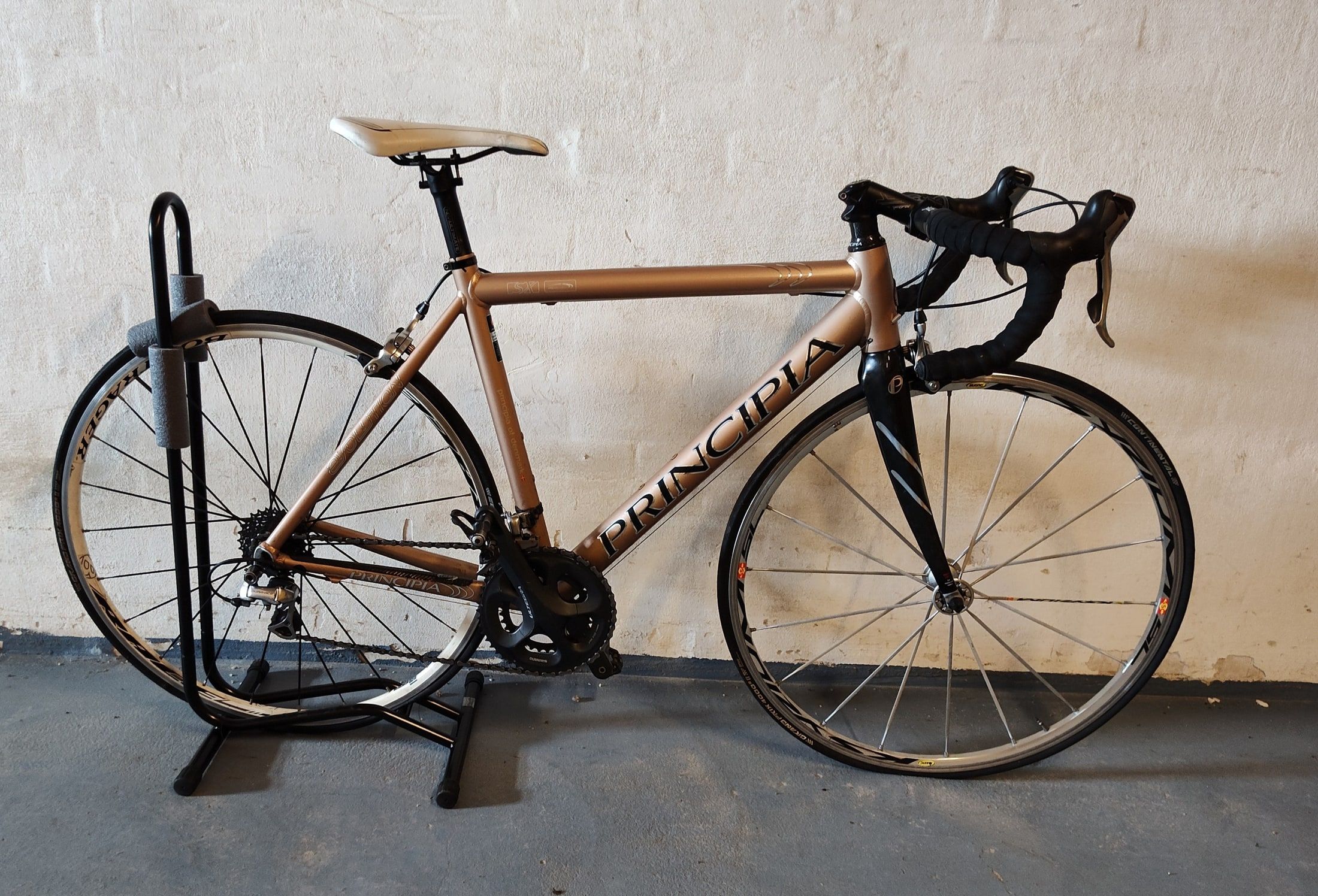
Principia and the Danish aluminium dream
Three triathletes in Aalborg began welding the aluminium frames they could not afford to buy. Within a few years, Principia was racing far beyond the basement workshop.
Read in Danish →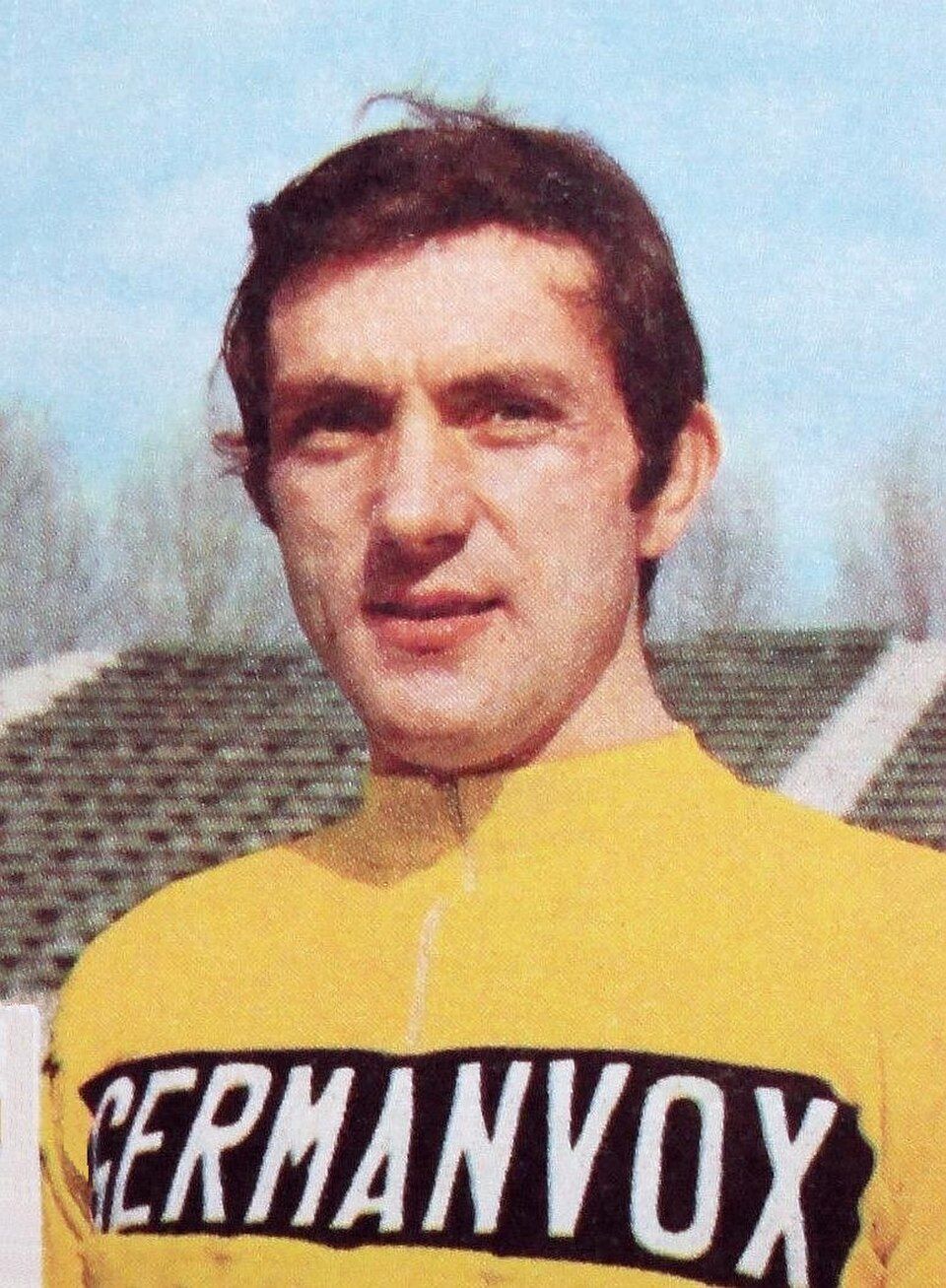
Ole Ritter's hour in Mexico City
On 10 October 1968, Ole Ritter rode farther in one hour than anyone before him. The thin air of Mexico City helped the speed, but it did not make the effort easier.
Read in Danish →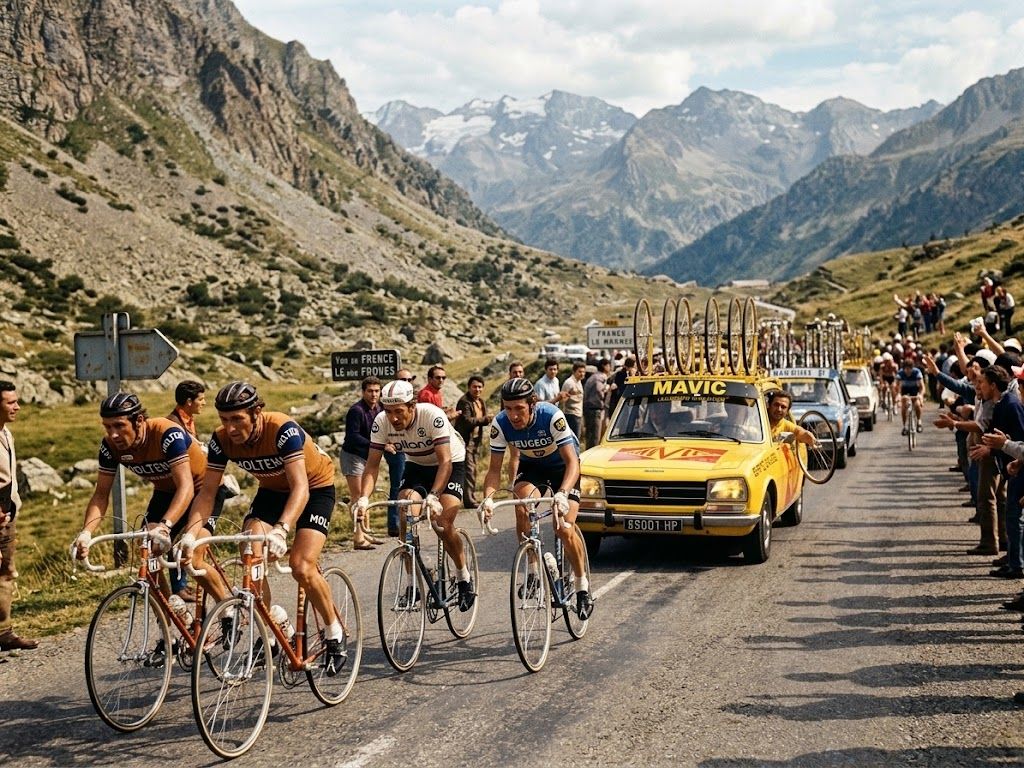
When the neutral service car became everyone’s mechanic
A car broke down during the Dauphiné Libéré. The following year, Mavic sent out a yellow service car to help the entire field — including riders far from their own mechanic.
Read in Danish →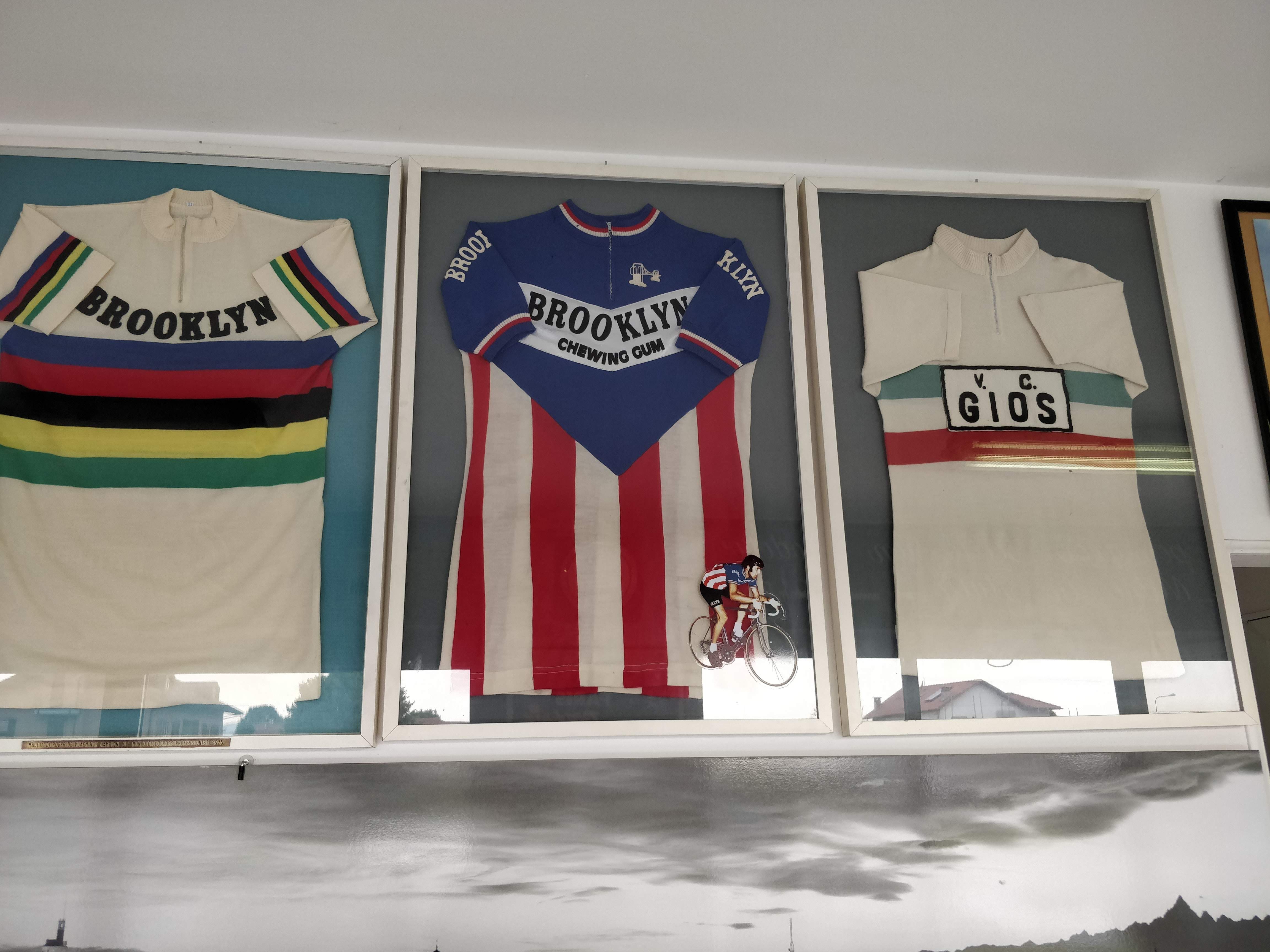
When the Brooklyn team turned GIOS blue
A sponsor's request joined the Brooklyn jersey, the GIOS Super Record and Roger De Vlaeminck's team — and the colour outlived the contract.
Read the story →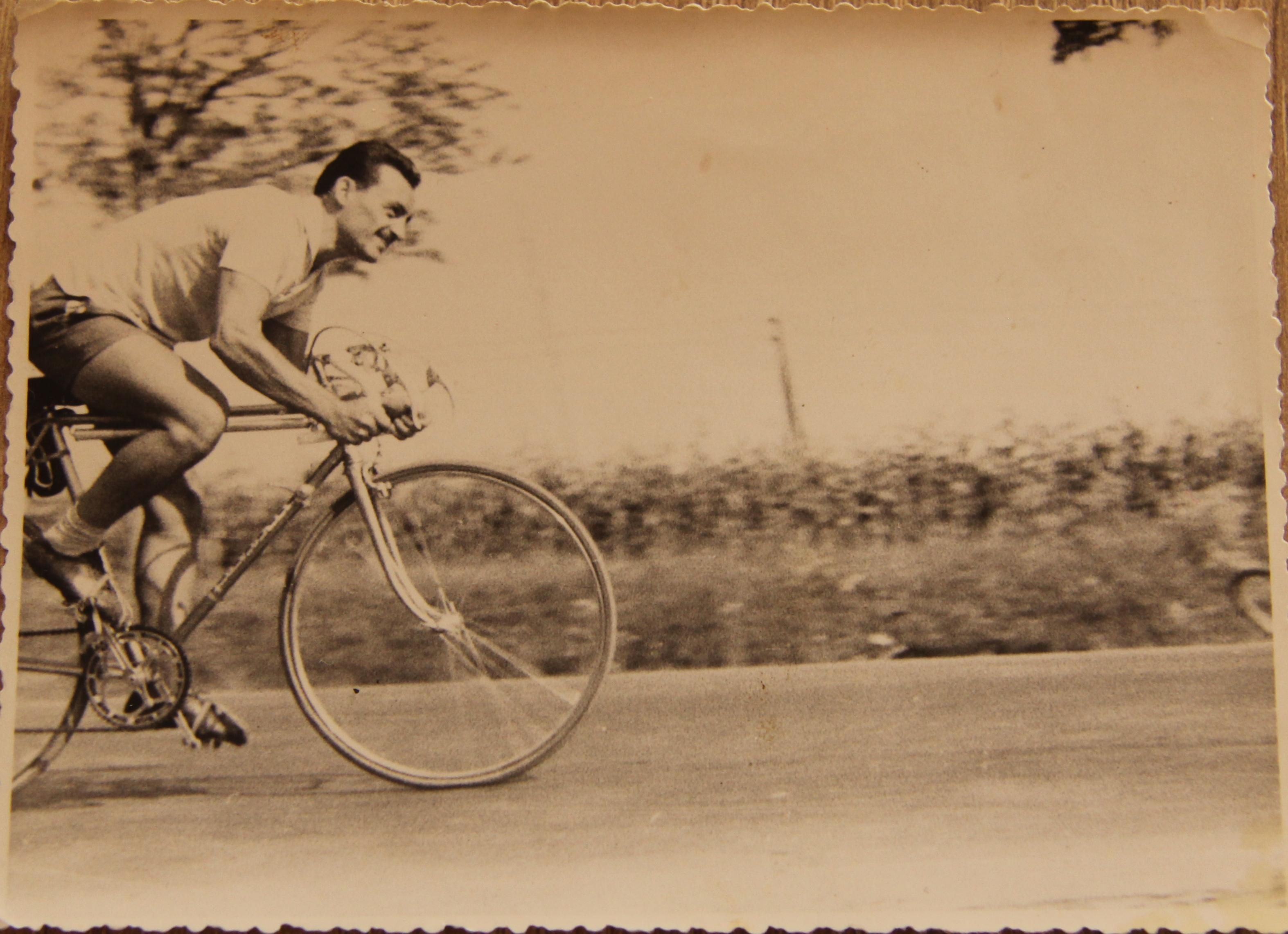
When the bicycle left its first owner
A gold Favorit F11, its 1960 receipt and a meeting with the man who had kept the bicycle for more than six decades.
Read the story →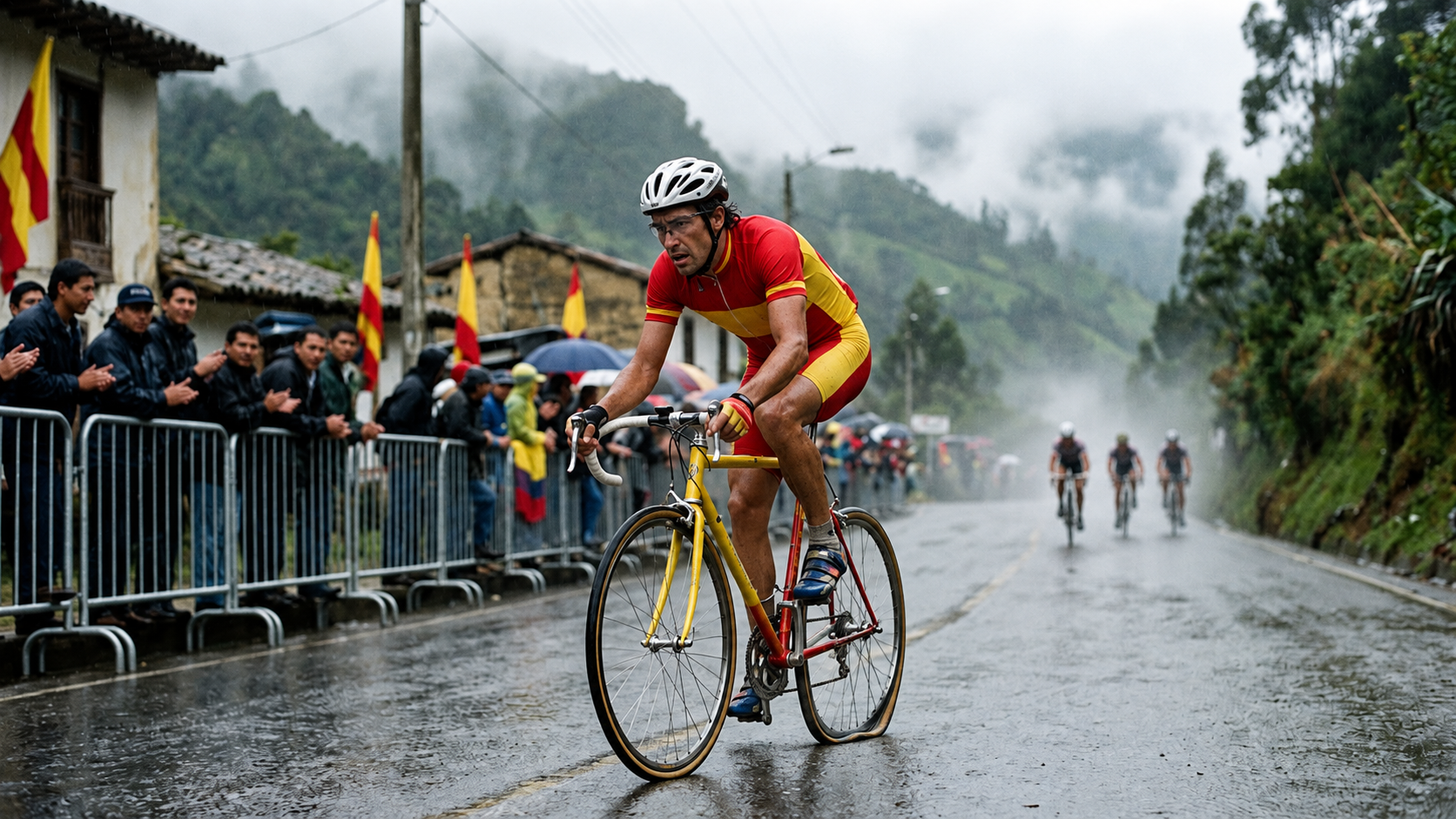
When Olano finished on a flat rear tyre
Abraham Olano punctured shortly before the finish at the World Championships in Duitama. Behind him, Miguel Induráin kept the chase under control.
Read the story →
When the coal had been delivered, training began
Yvonne Reynders delivered coal on a three-wheeled cargo bicycle before winning seven world titles on road and track.
Read the story →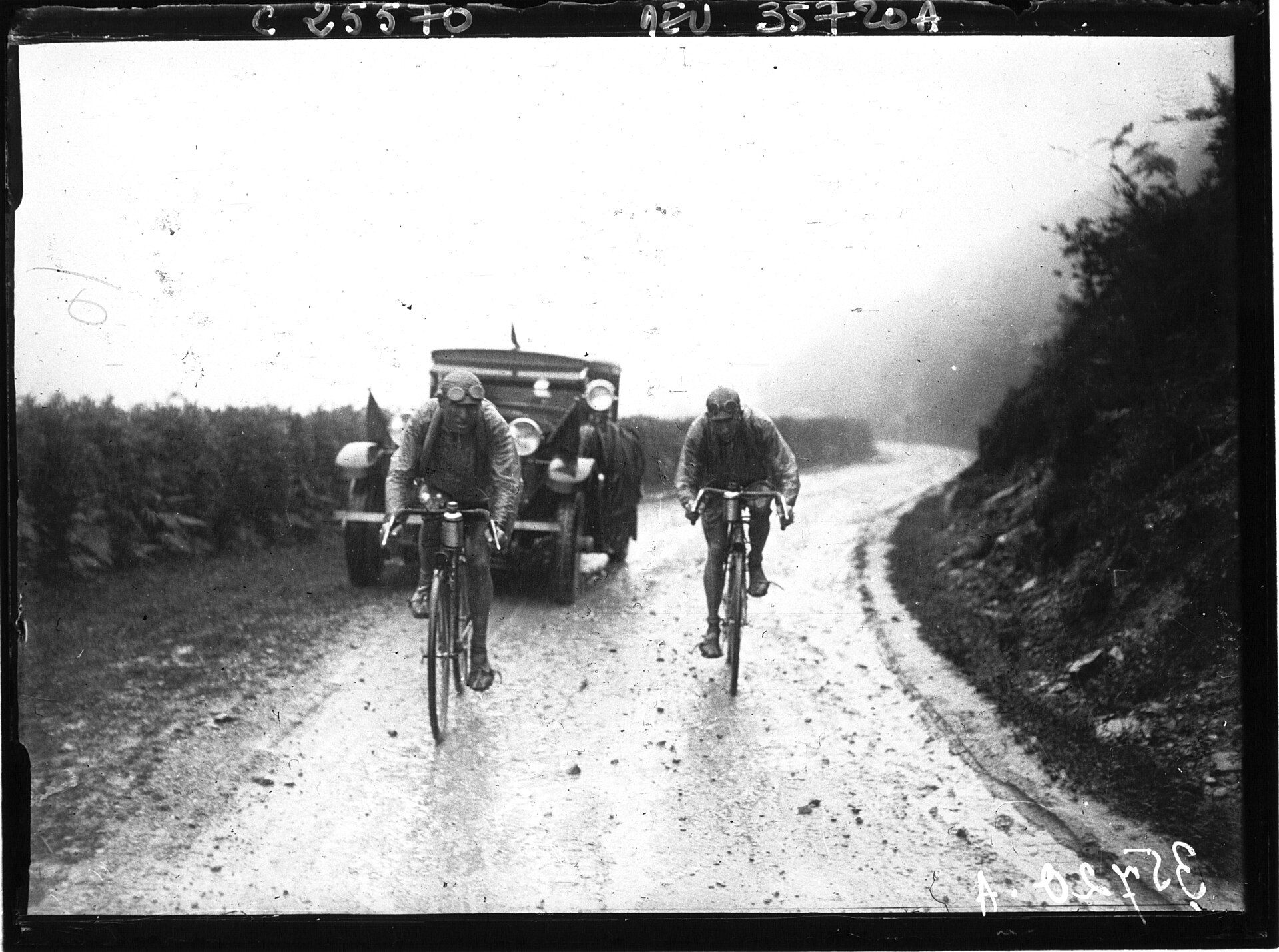
When the Tour had to pay the taxi fare
Three riders stepped out of a car in Luchon and disappeared, according to a story passed down from the 1926 Tour. The driver instead took his bill to the race officials.
Read the story →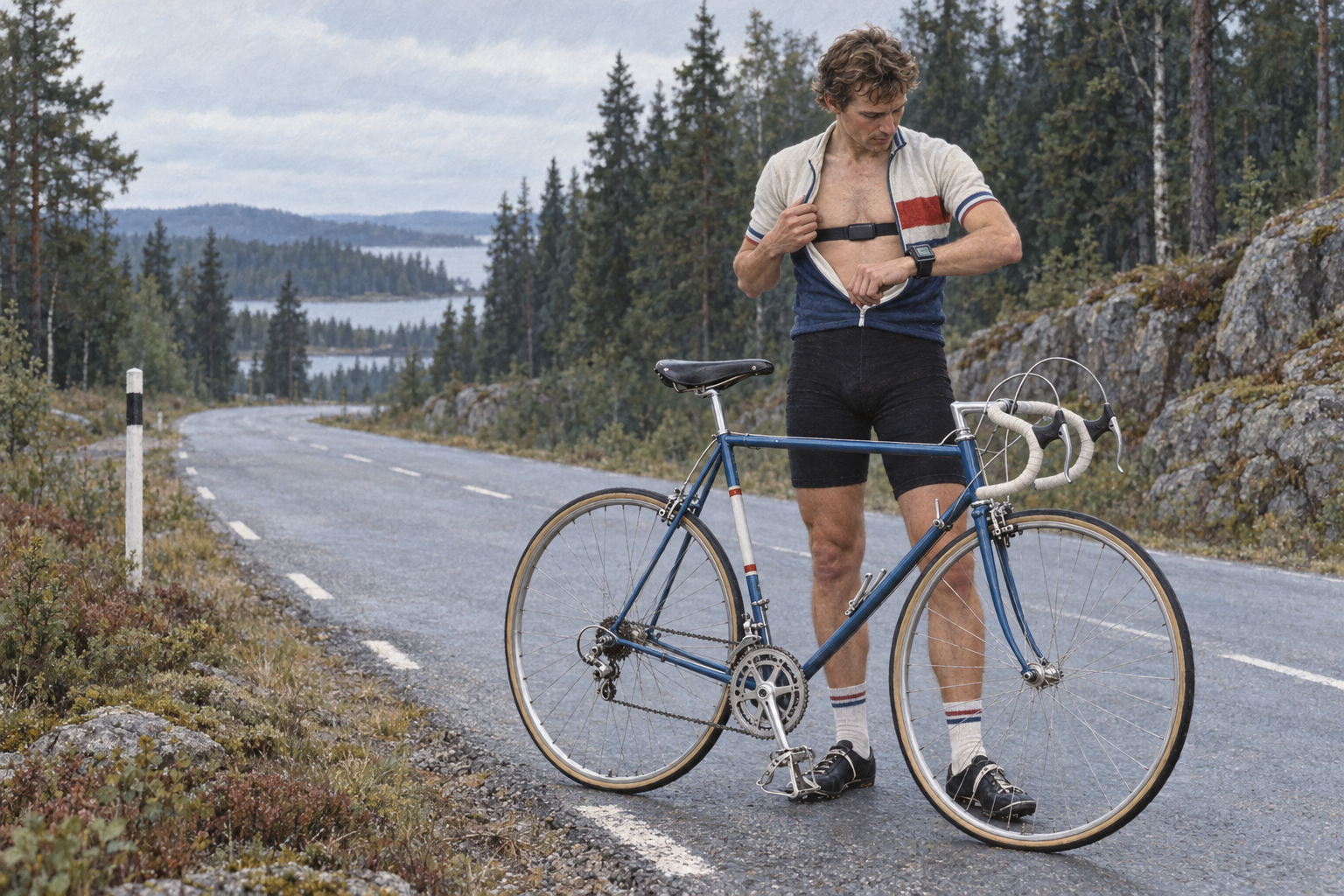
When heart rate joined the rider on the road
A chest strap and a small wrist receiver made it possible to follow the heart without laboratory cables. Training acquired a new number to discuss.
Read in Danish →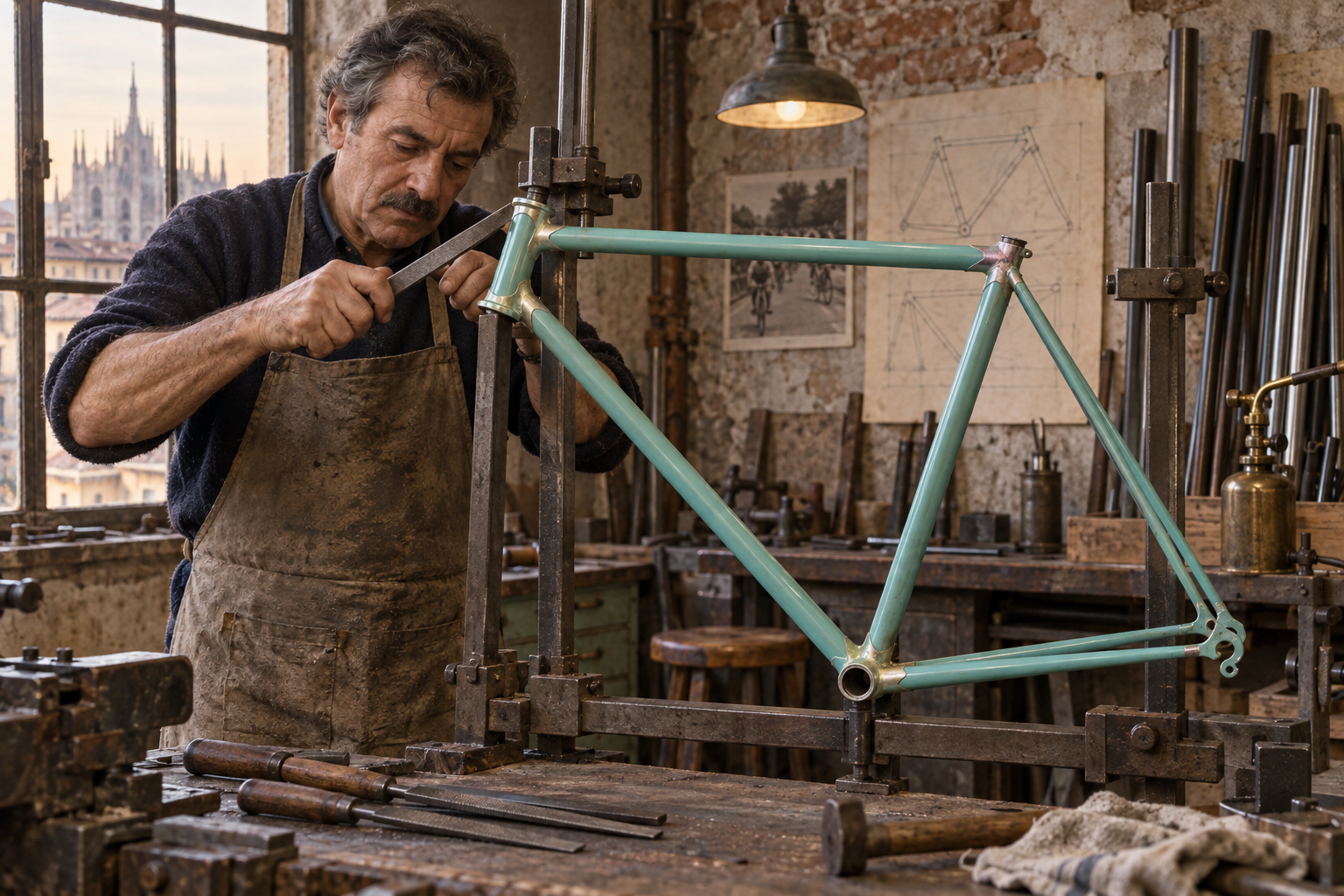
Bianchi on the down tube, Drali at the file bench
Peppino Drali built made-to-measure Bianchi frames in Milan. The large factory supplied the name and materials; the small workshop supplied the fit and handwork.
Read in Danish →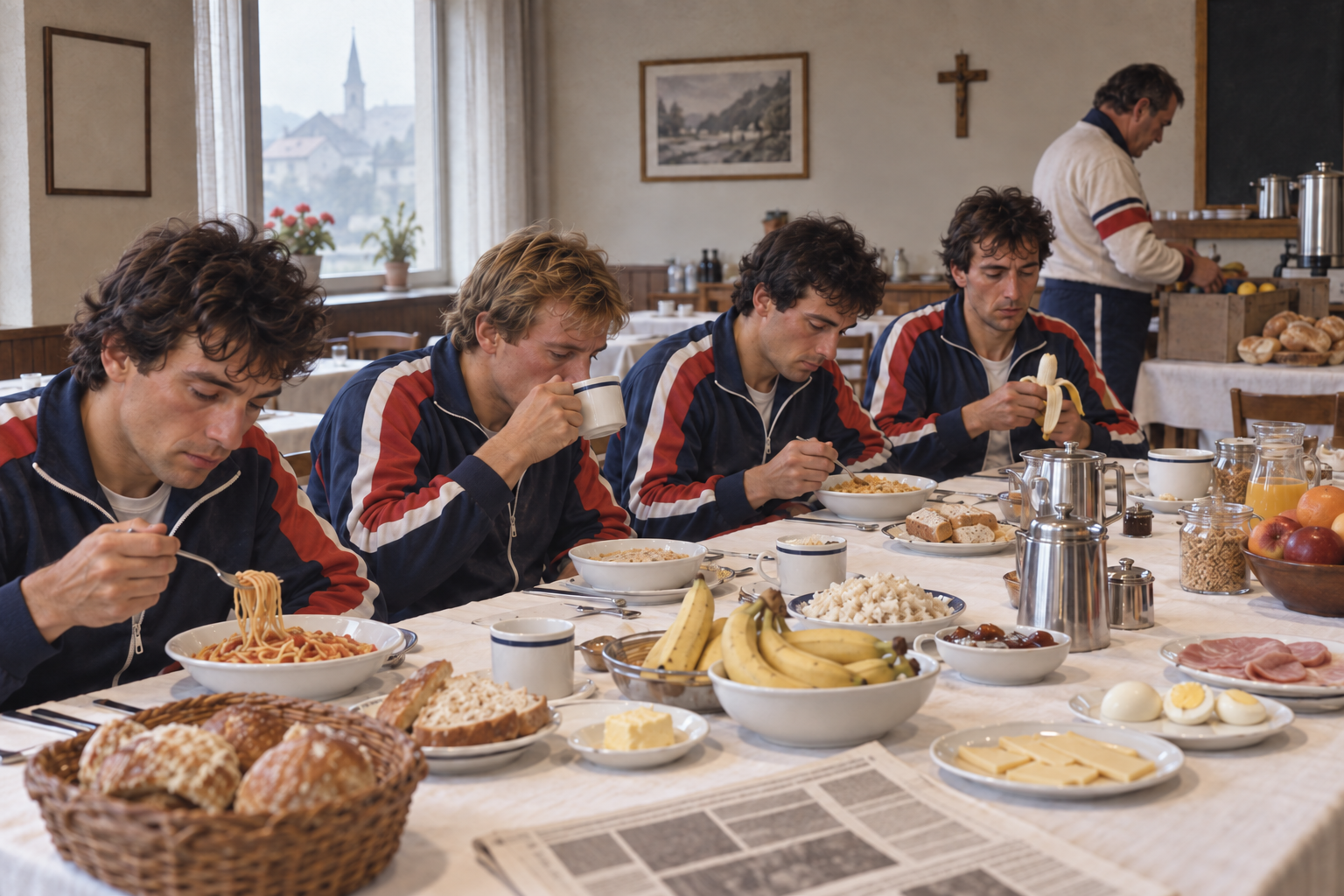
When pasta took over the breakfast table
Steak did not vanish in a morning, but during the 1980s carbohydrate became something teams could measure, mix into bottles and put on the plate.
Read in Danish →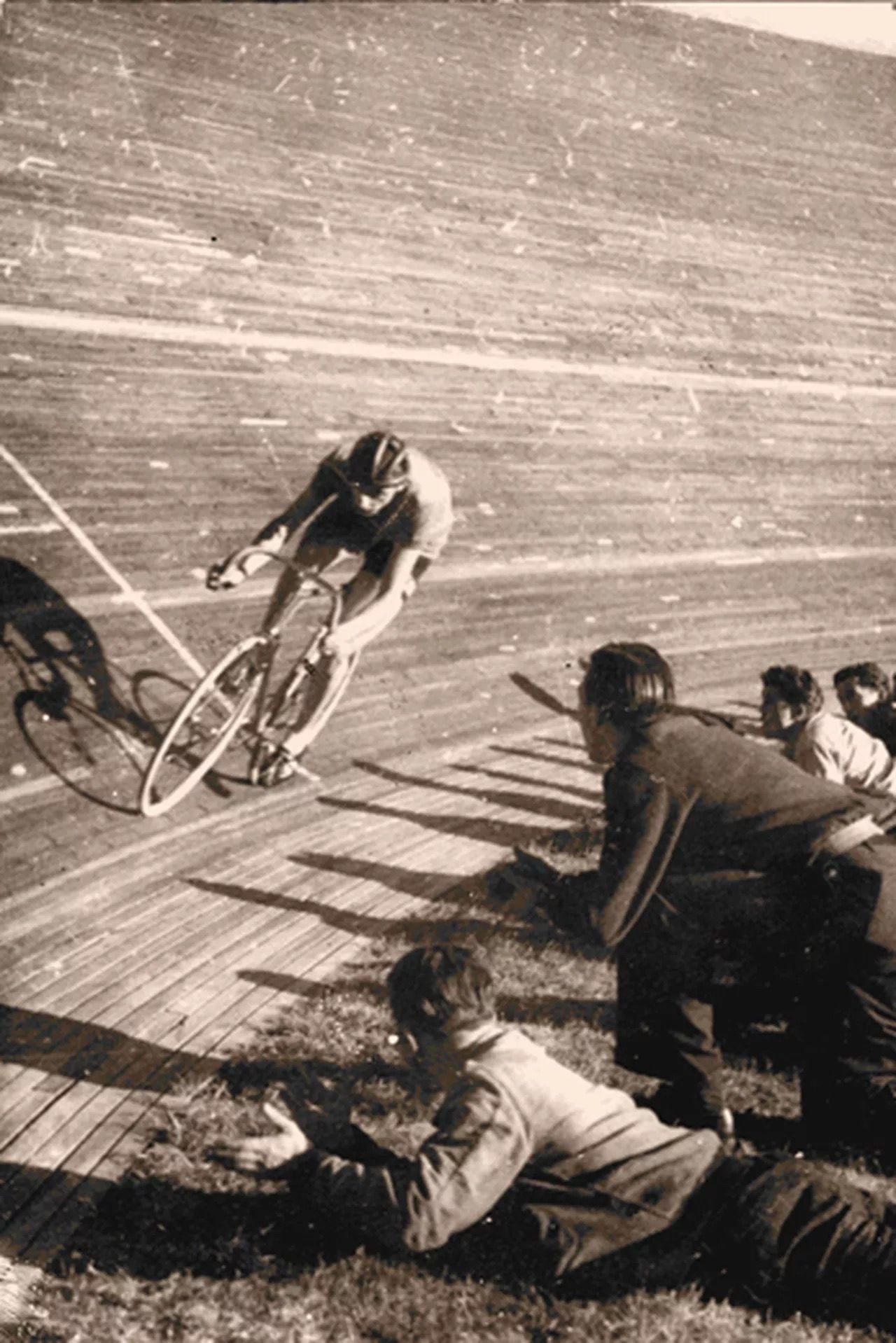
The track bicycle said to weigh 3.48 kilograms
Ugo Bianchi built bicycles for Legnano’s finest riders. A later account credits him with a 3.48-kilogram track machine—a number that invites both curiosity and a raised eyebrow.
Read in Danish →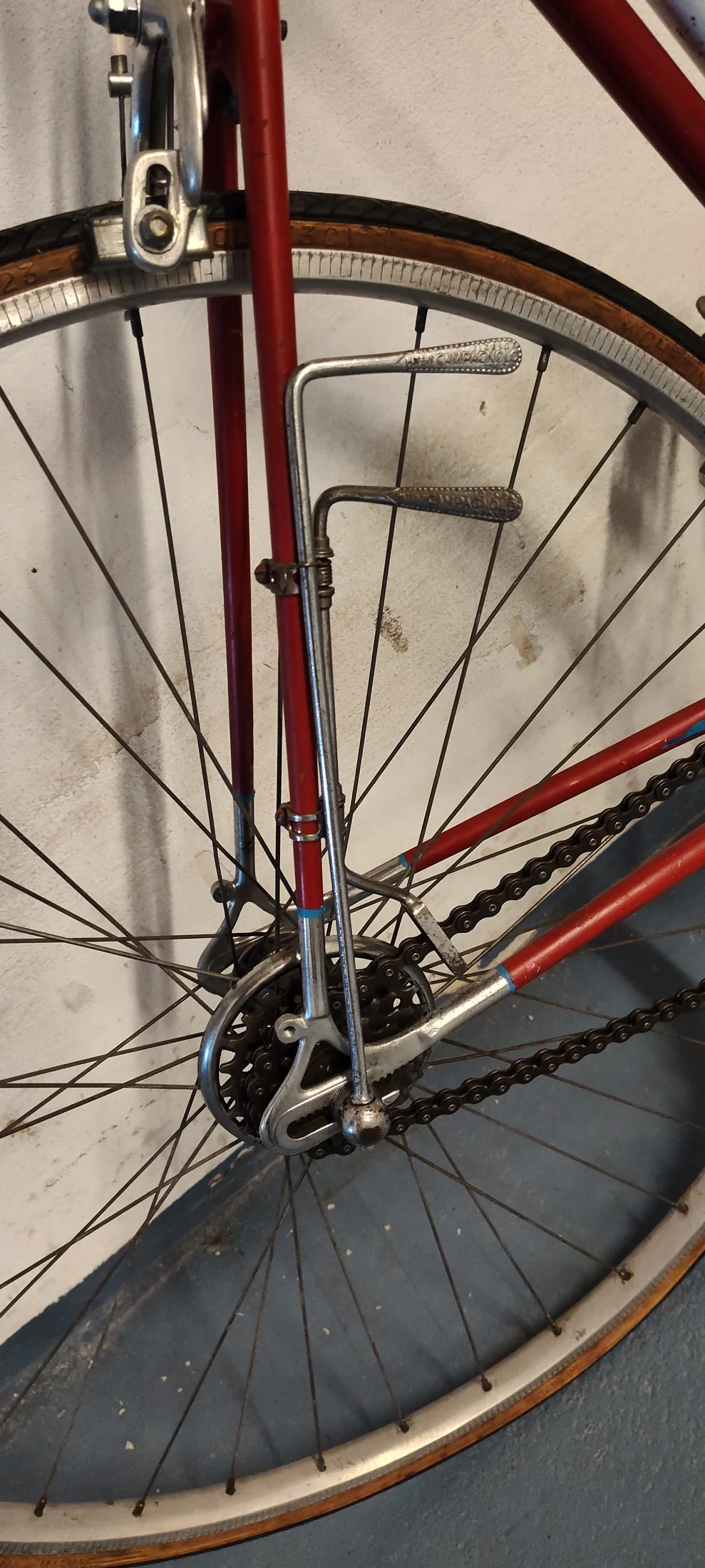
The gear change with a loose rear wheel
Cambio Corsa offered several gears, but demanded two levers, back-pedalling and a moment with the rear wheel released while the bicycle was moving.
Read in Danish →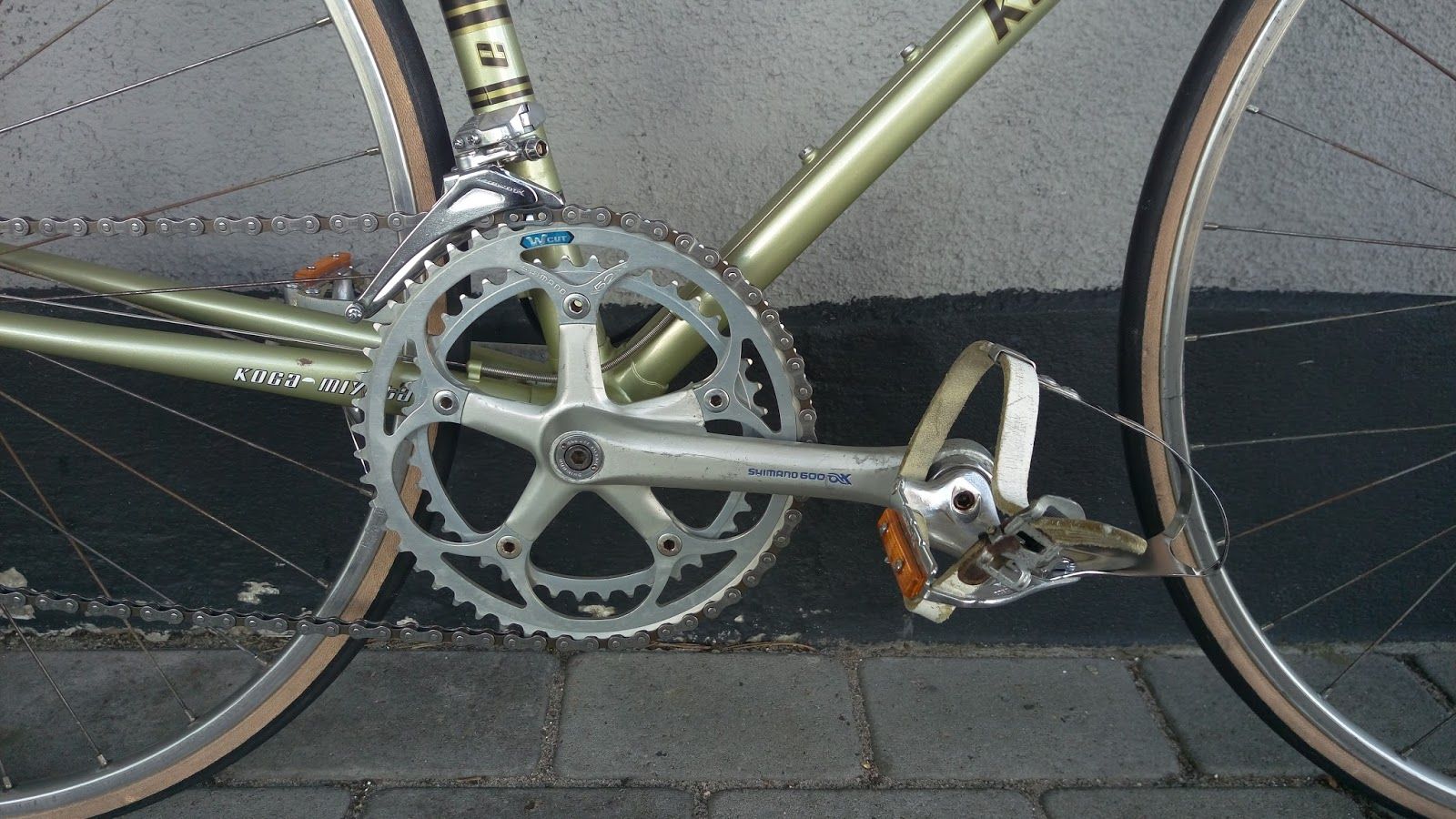
When even the pedal thread had to be aerodynamic
Shimano built a wind tunnel and gave Dura-Ace AX smooth forms. The idea reached all the way to the pedal and showed how far a complete system could be pushed.
Read in Danish →The day snow emptied Liège–Bastogne–Liège
A field of 174 began in the cold and only 21 finished, while Bernard Hinault rode roughly 80 kilometres alone and suffered lasting damage to his hands.
Read in Danish →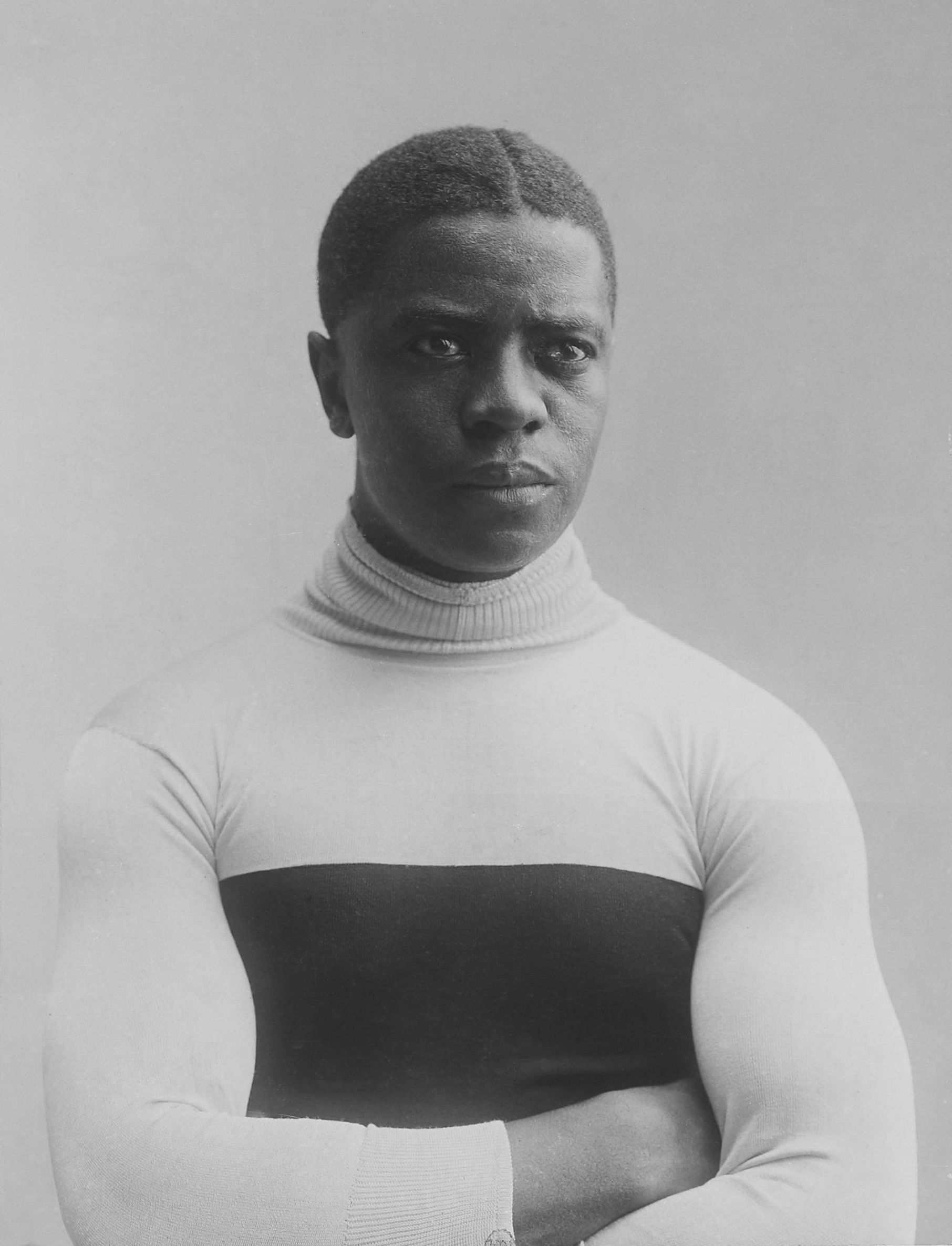
Major Taylor also had to win the right to race
Marshall “Major” Taylor became world sprint champion in 1899. His route there passed through records, packed velodromes and a cycling establishment that repeatedly tried to exclude him.
Read in Danish →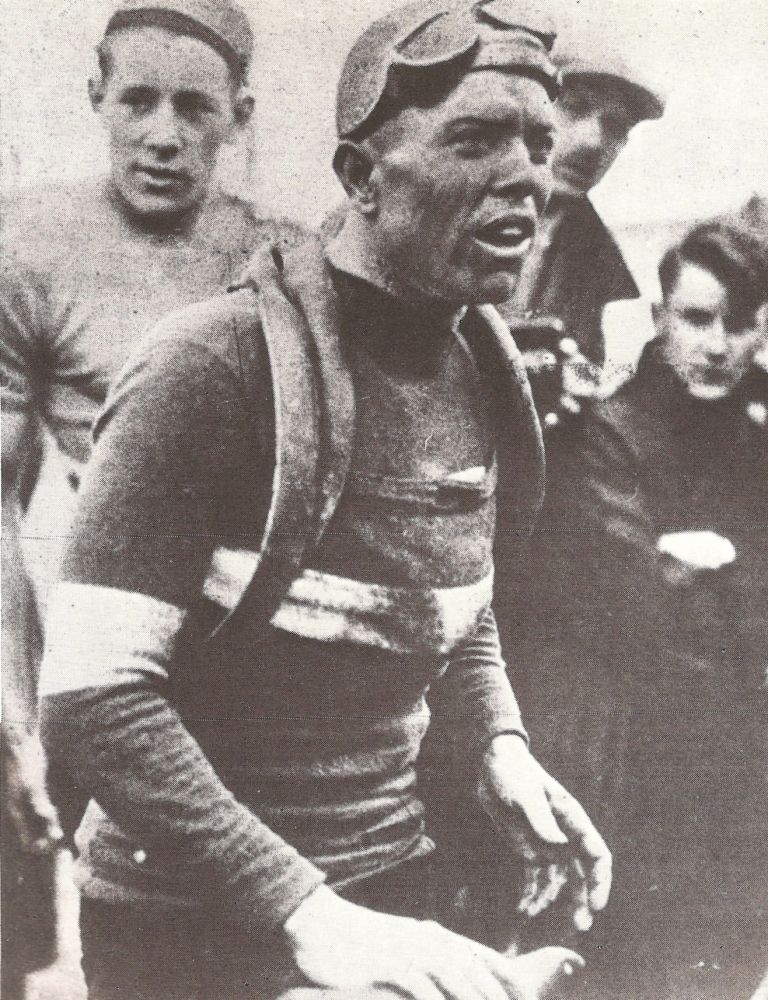
When the Tour had to provide dinner
National teams made the Tour organiser responsible for the riders’ food and lodging. Menus were heavy, advice plentiful and nutritional science still far from the measuring cup.
Read in Danish →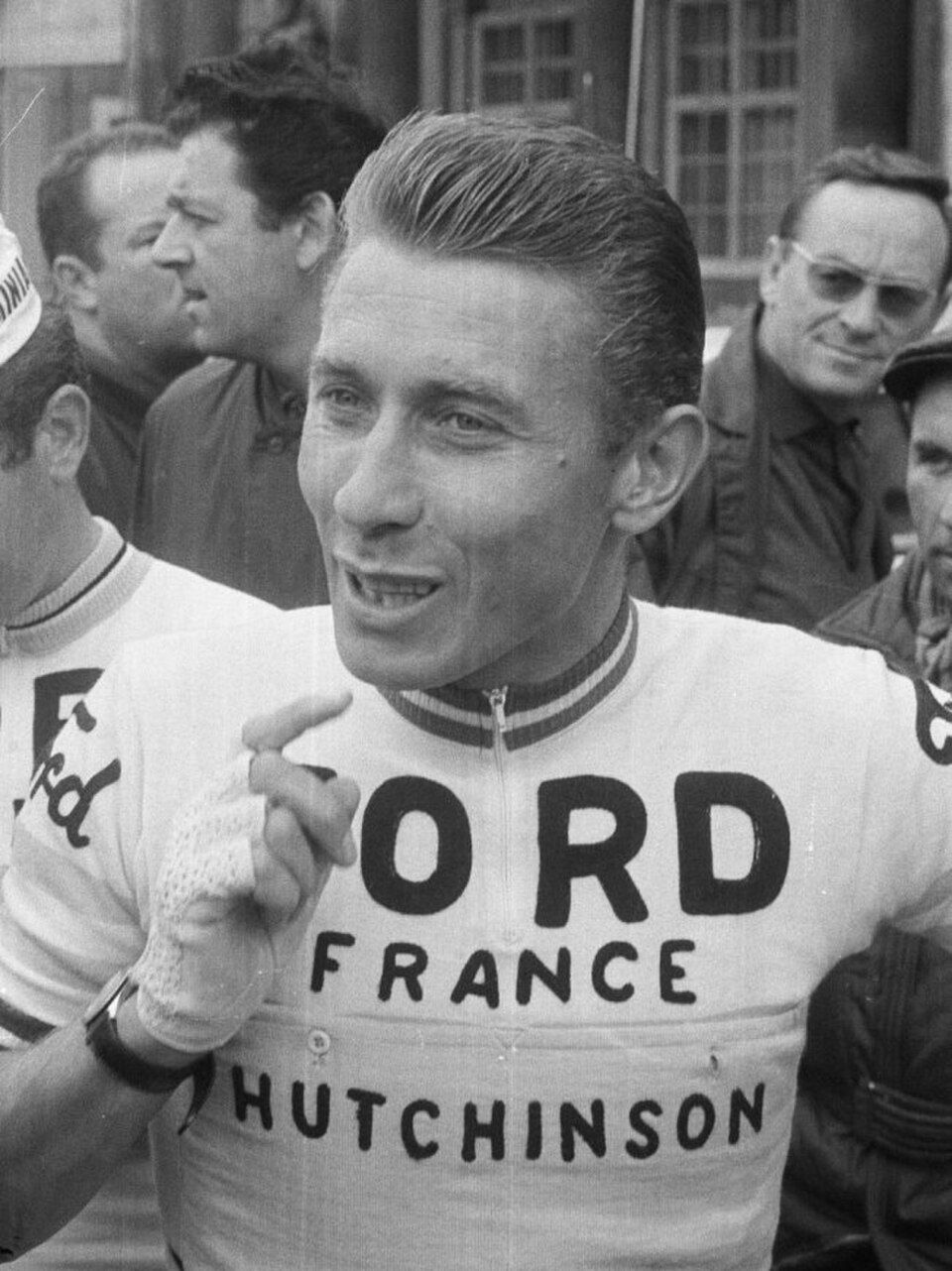
The tailor beneath the Vigorelli
Faliero Masi built bicycles beneath Milan’s velodrome and fitted them to riders including Anquetil, Van Looy and Merckx – often with another name on the down tube.
Read in Danish →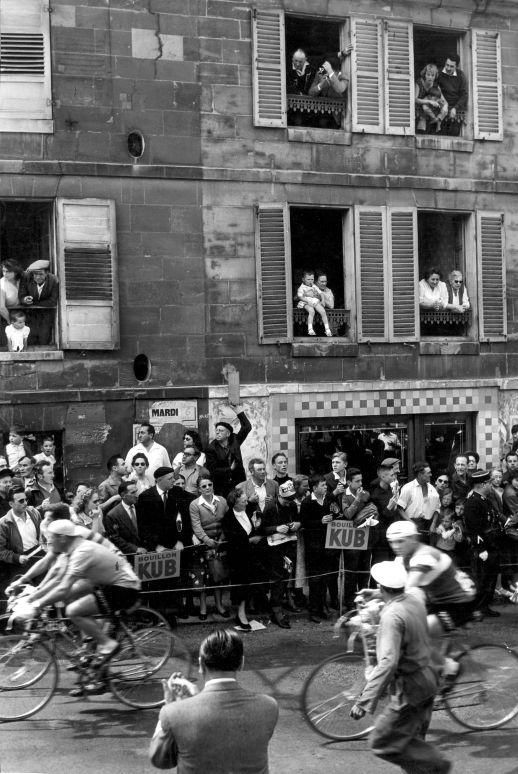
When television found the Tour
First came a live finish. In 1958 moving pictures arrived from the mountains, and a year later the helicopter joined the travelling television production.
Read in Danish →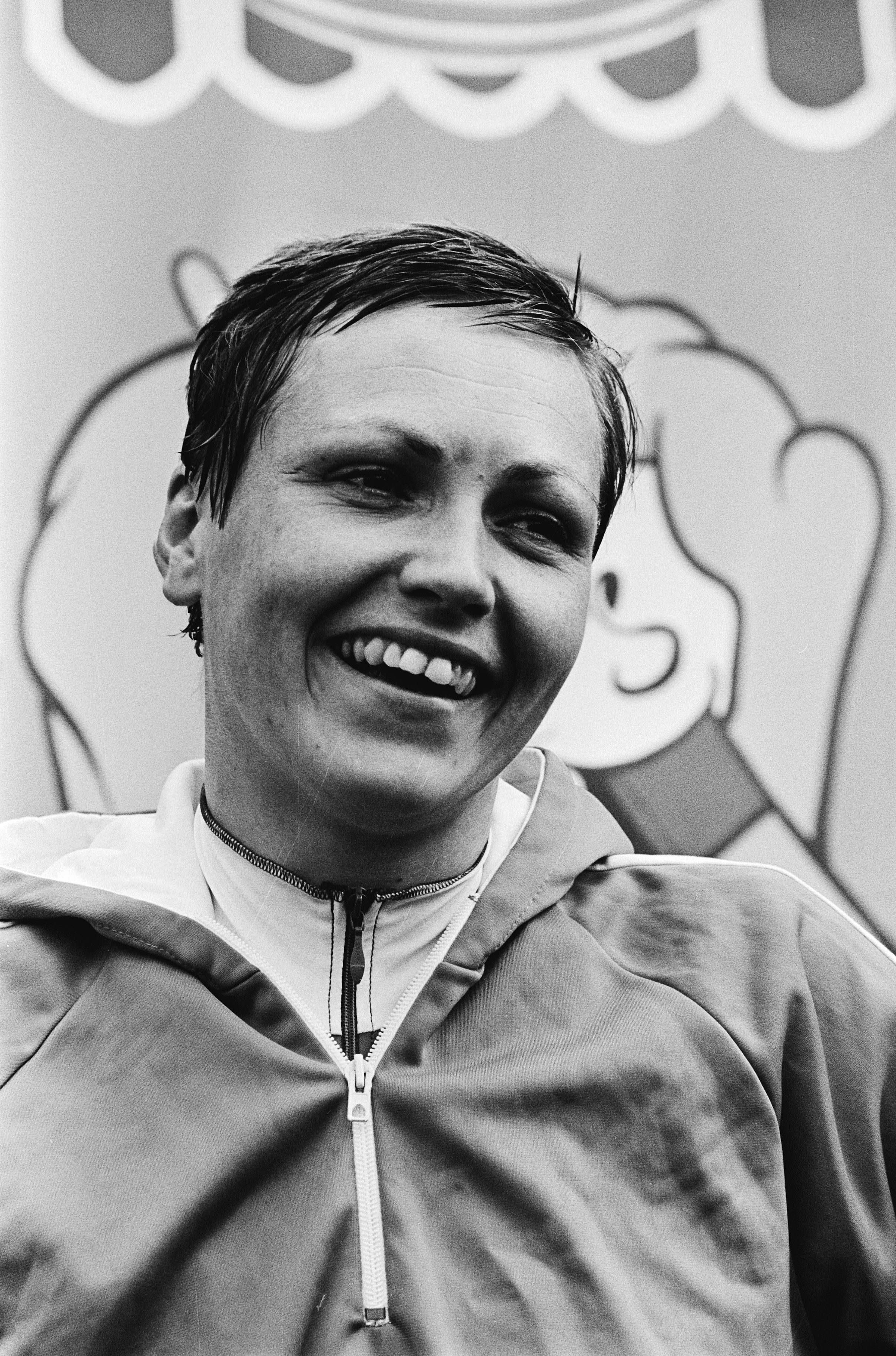
Keetie won almost everything that existed
Keetie van Oosten-Hage became world champion on road and track and set an hour record. She did it in a sport without the Olympics, a Tour or proper daily support.
Read in Danish →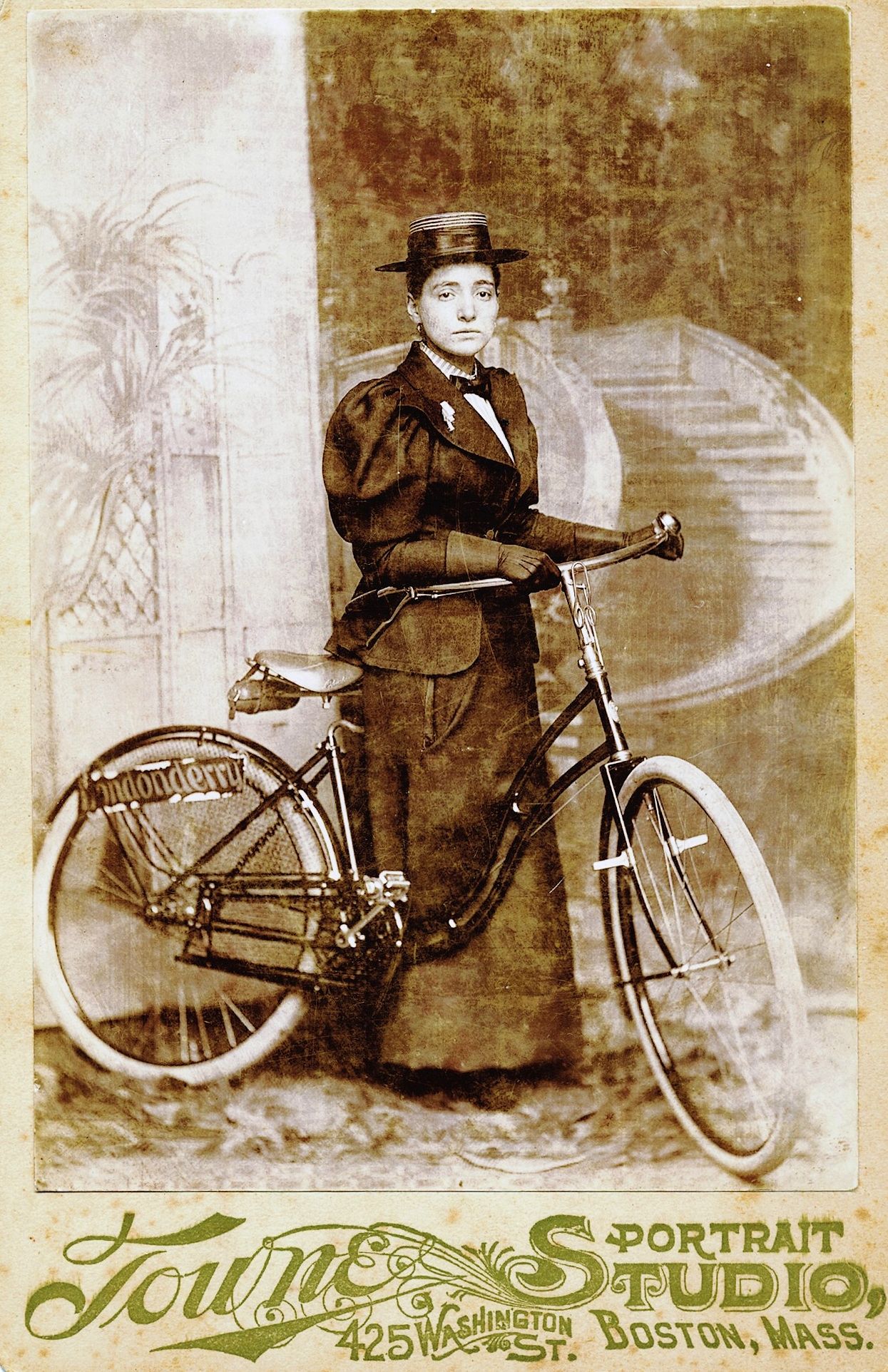
Annie Londonderry turned a bicycle journey into a performance
Annie Cohen Kopchovsky travelled around the world by bicycle, ship and train, making names, clothes, advertising and storytelling part of the feat.
Read in Danish →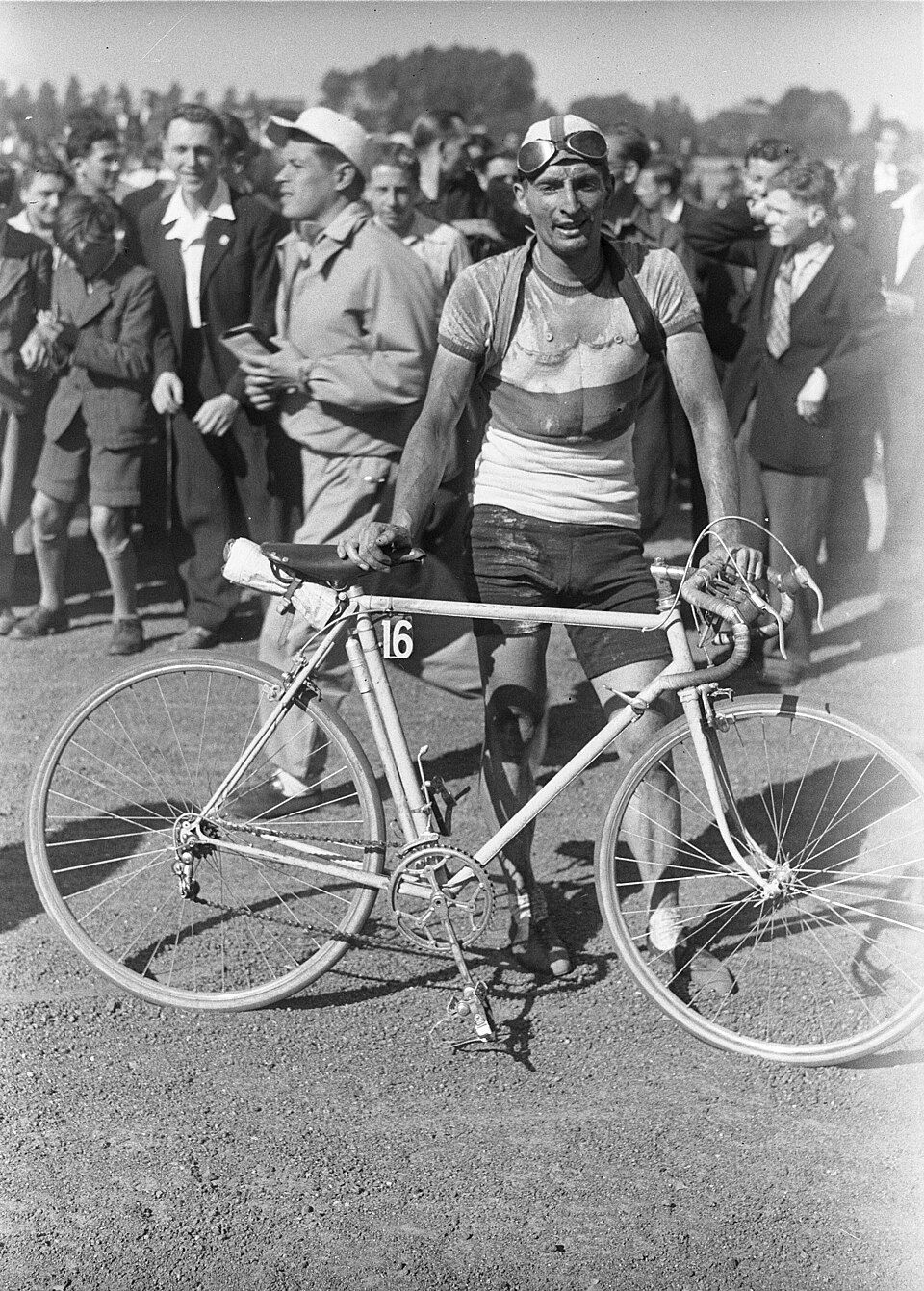
When the Tour returned to a hungry France
The Tour returned after the war and had to feed a race over 4,640 kilometres while France cut the daily bread ration to 200 grams.
Read in Danish →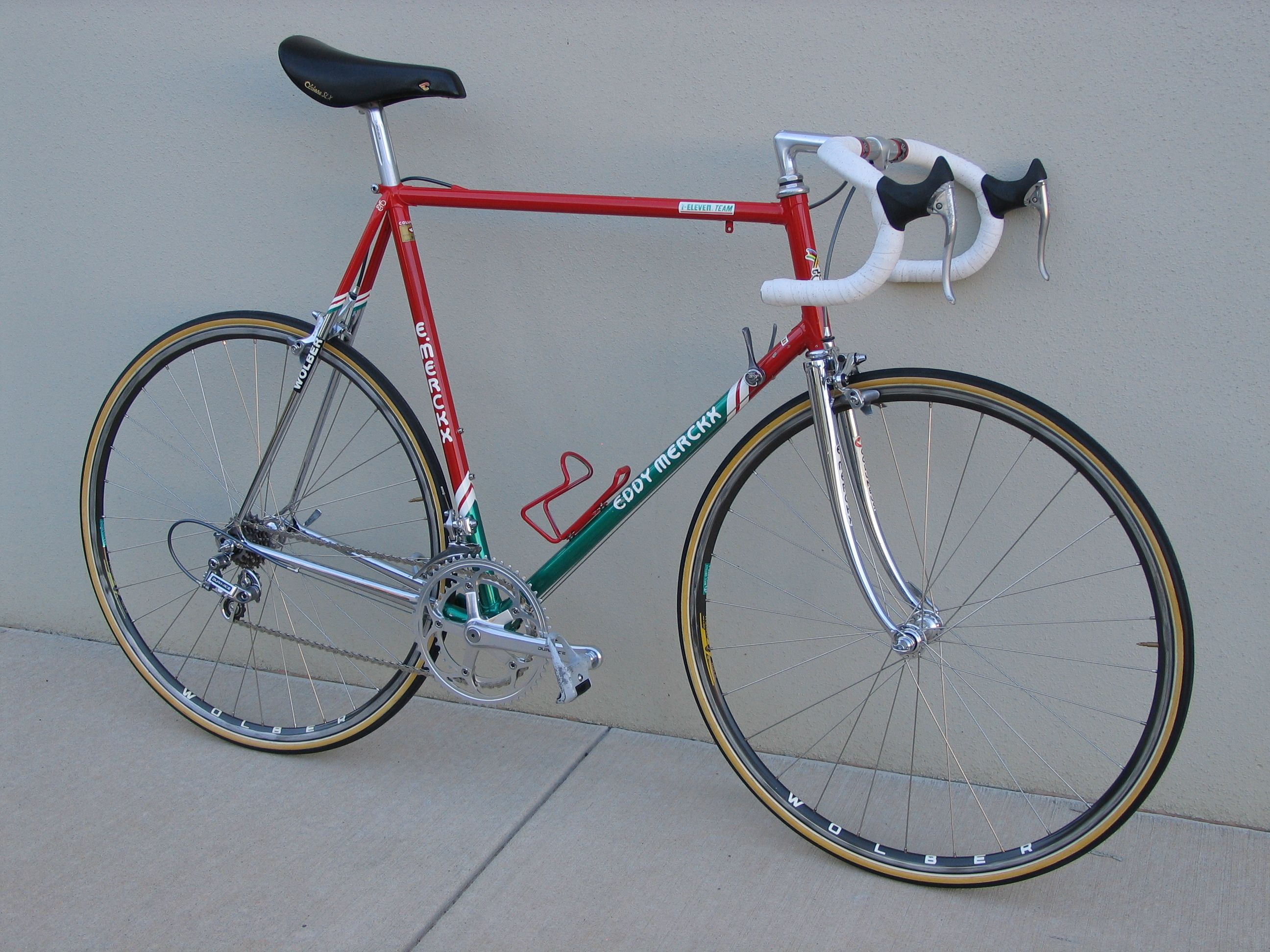
When 7-Eleven came to Europe
The American team learned Europe’s unwritten rules at the Giro and became the first US-based team in the Tour de France a year later.
Read in Danish →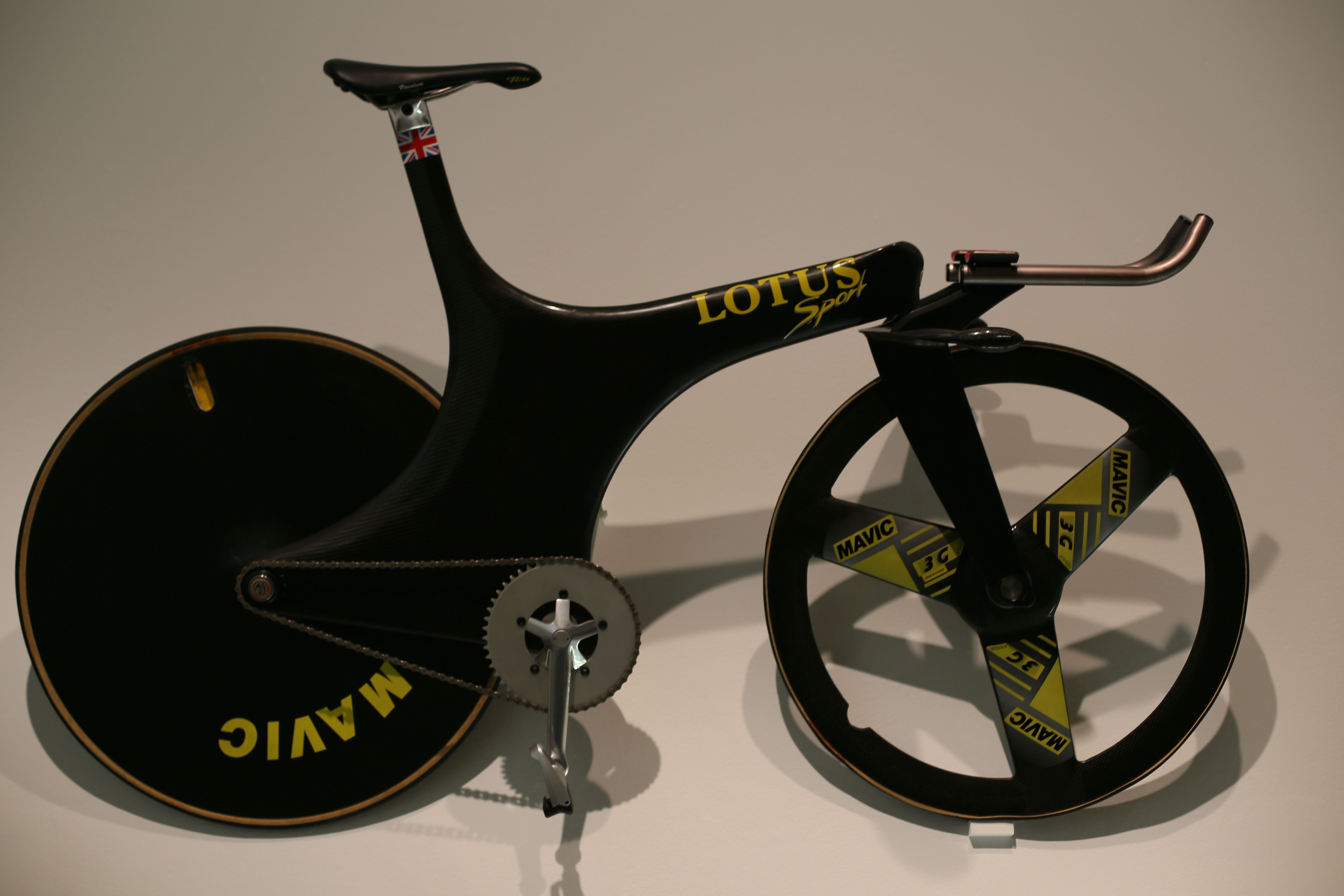
The bicycle without the usual triangle
Mike Burrows’s monocoque idea, Lotus engineers and Chris Boardman met in a black track bicycle that won Olympic gold in Barcelona.
Read in Danish →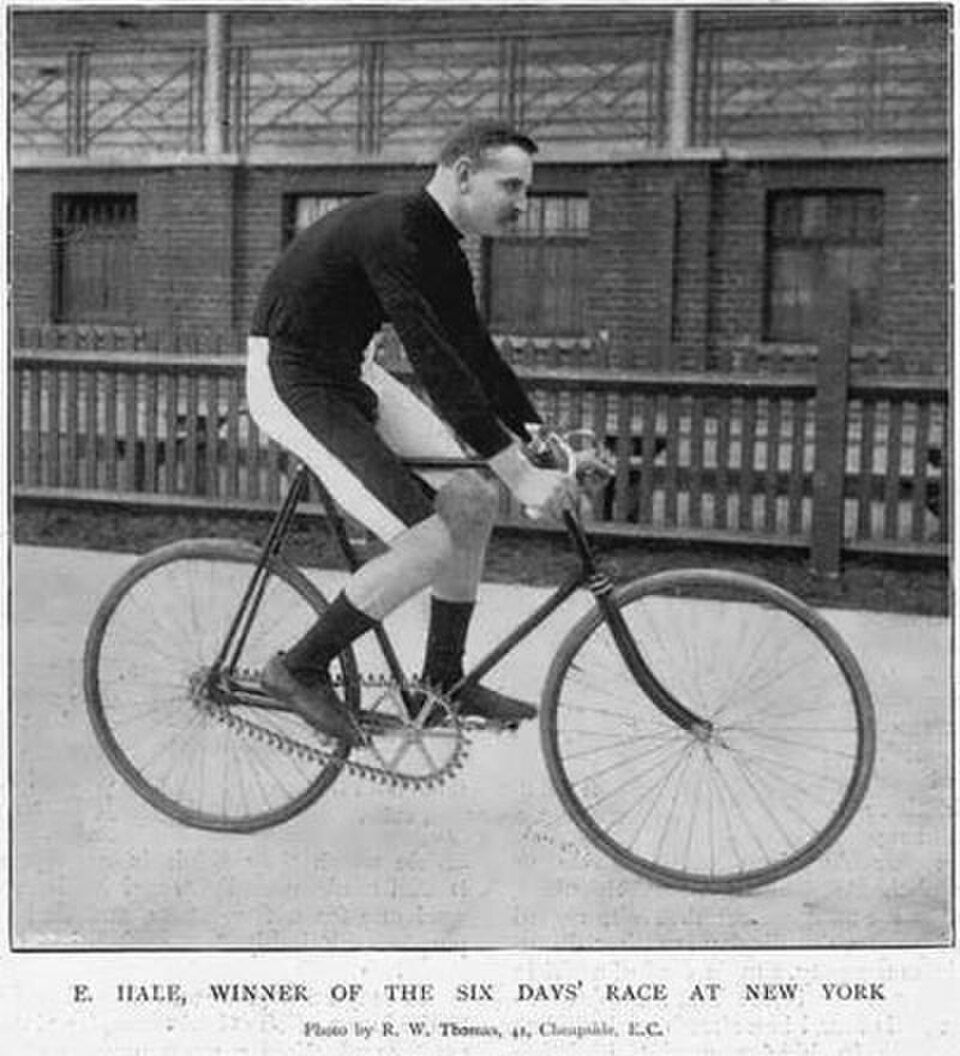
Teddy Hale and 142 hours in New York
In December 1896, Teddy Hale won the individual six-day race at Madison Square Garden after 142 hours and roughly 3,074 kilometres.
Read the story →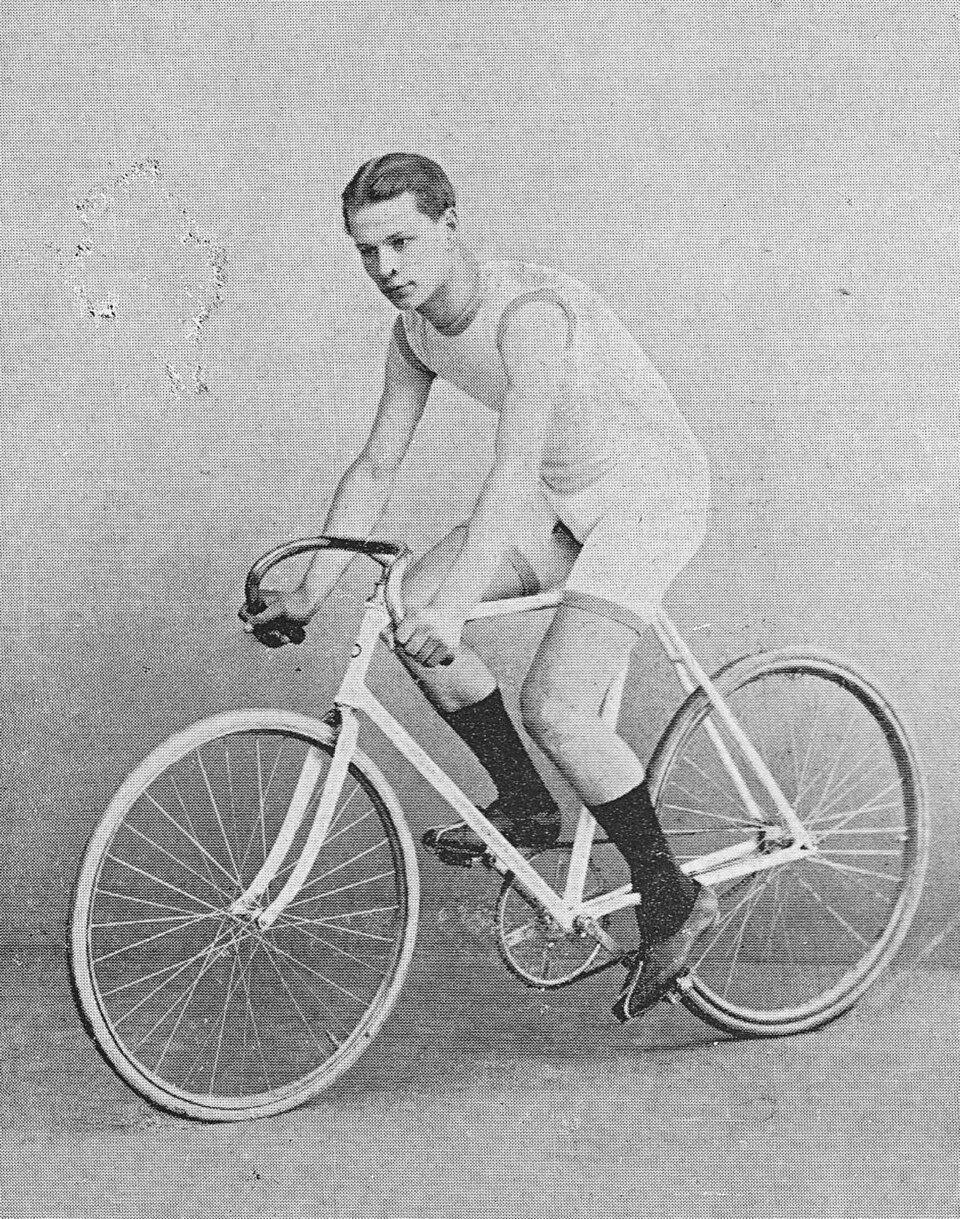
From Paris–Roubaix to spark plugs
Albert Champion won Paris–Roubaix at twenty. His work and a dispute over his name later produced two American spark-plug brands: Champion and AC.
Read the story →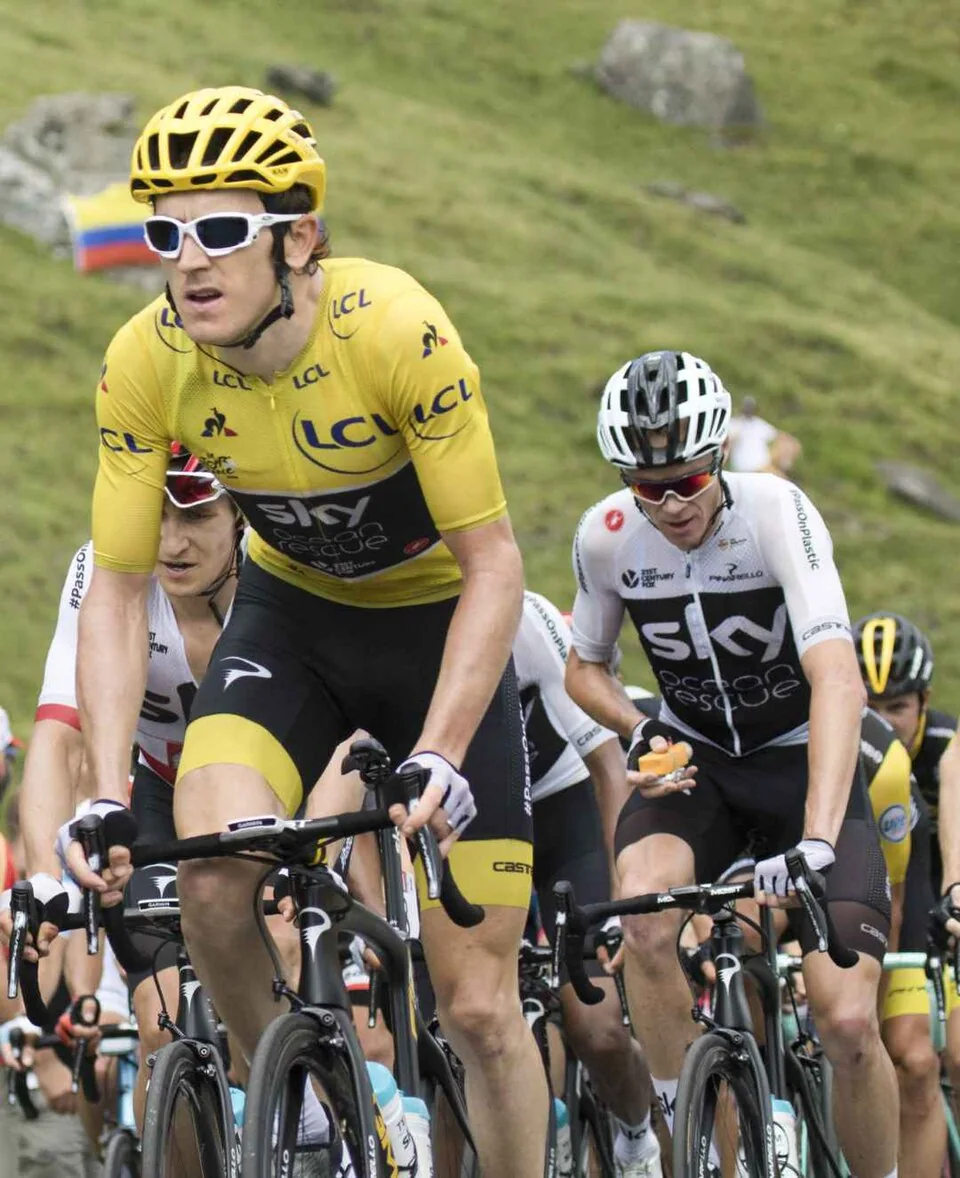
When Froome attacked with 80 kilometres remaining
On the Colle delle Finestre, Chris Froome rode away alone and overturned a Giro he began that day 3 minutes 22 seconds from the lead.
Read the story →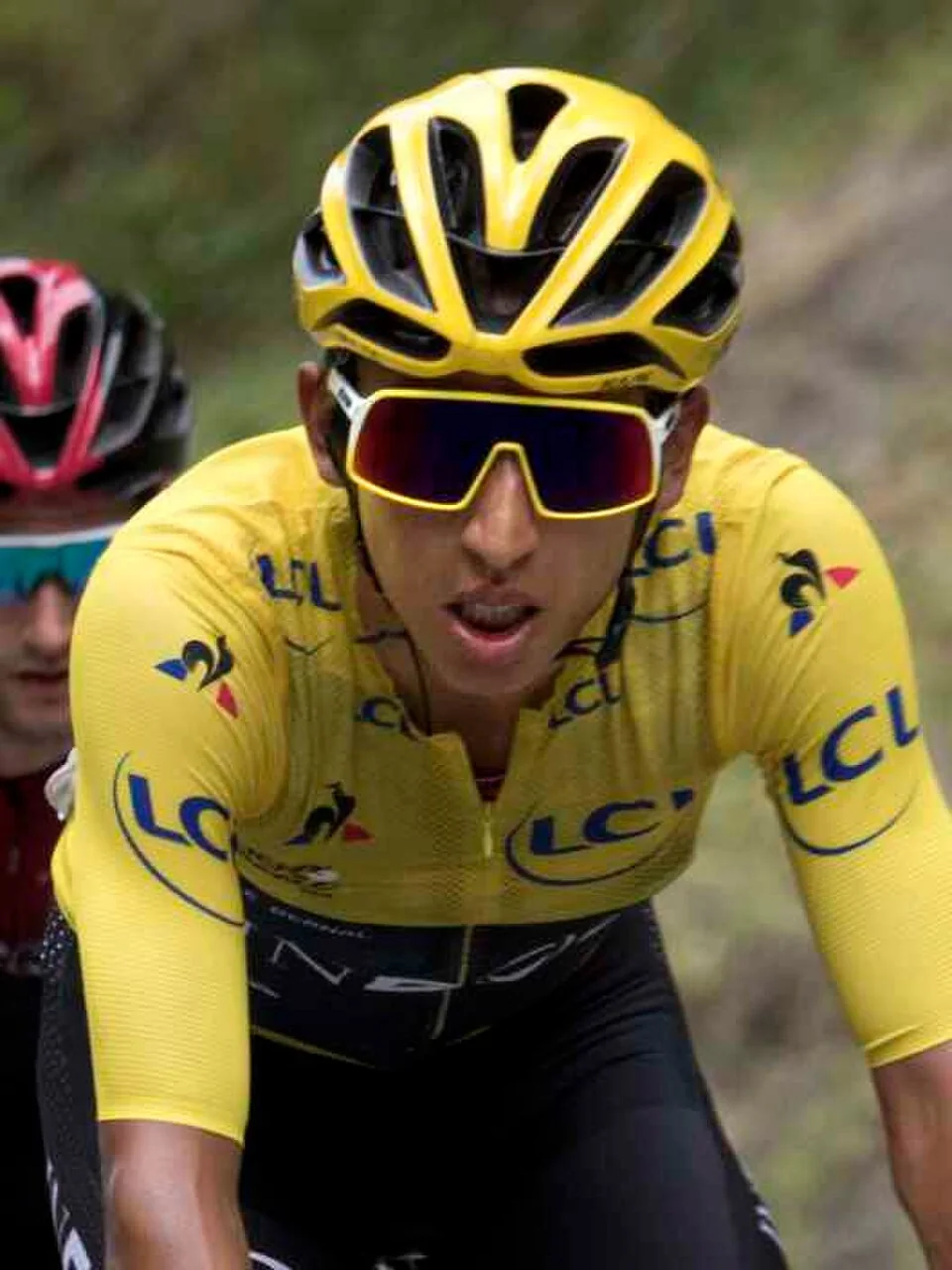
When a Tour stage ended without a finish line
Egan Bernal attacked on the Col de l’Iseran as hail and a landslide made the road to Tignes impassable and stopped the stage.
Read the story →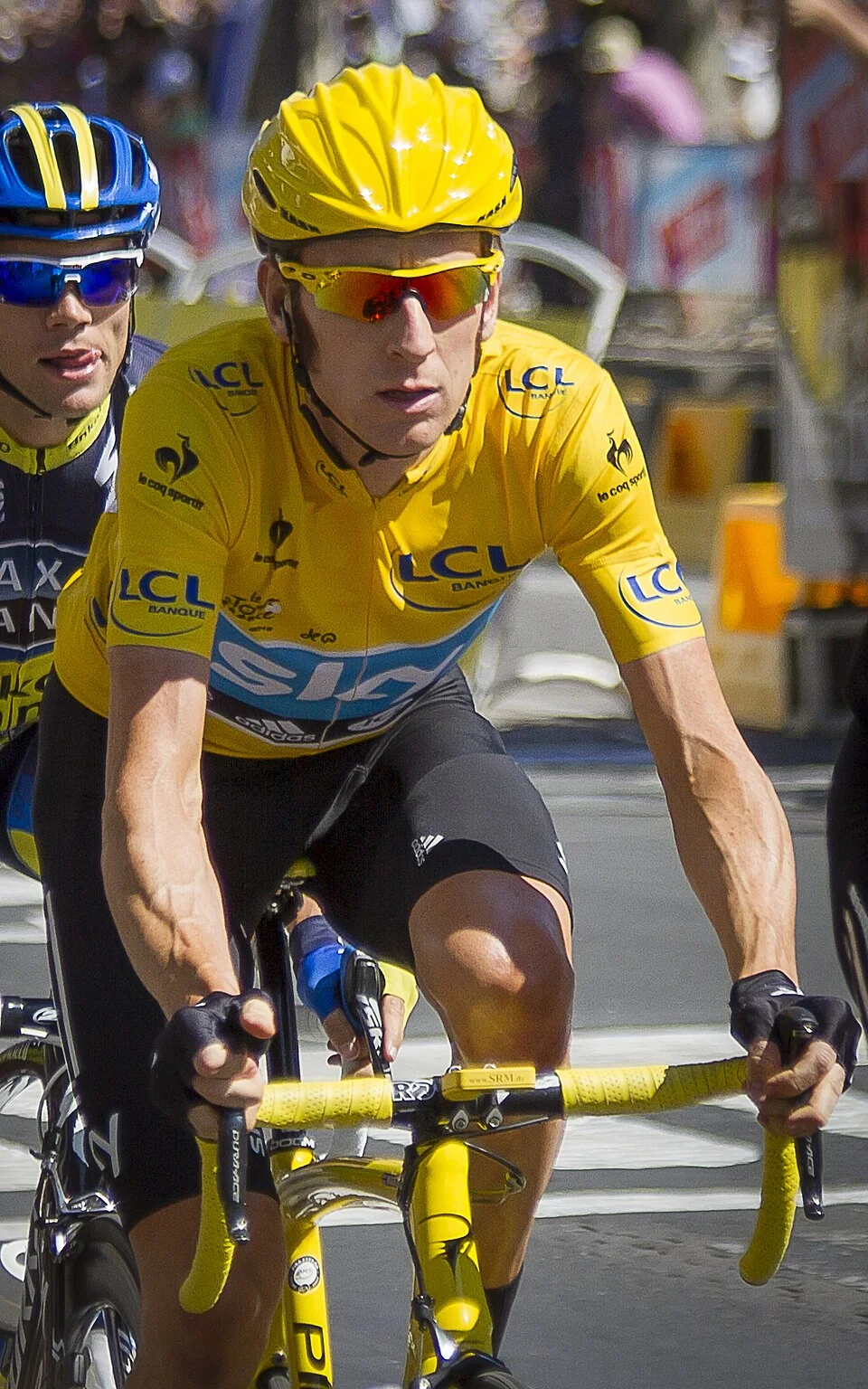
When Philippe Gilbert rode away on the Oude Kwaremont
An attack more than 50 kilometres from the finish became a solo ride over cobbles and climbs and Gilbert’s first Tour of Flanders victory.
Read the story →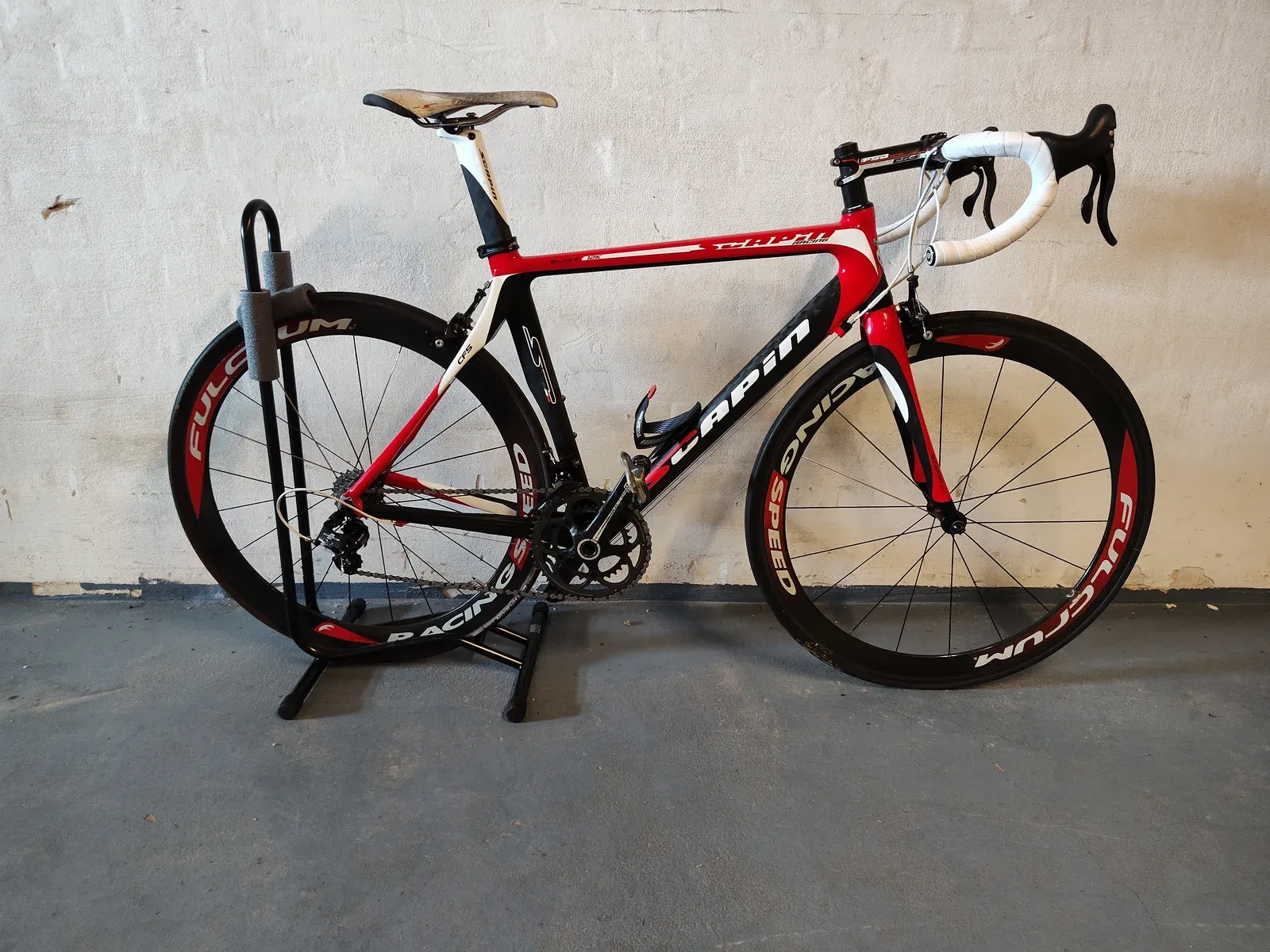
When the gear cable disappeared
SRAM RED eTap made road shifting wireless and gave riders, mechanics and frame designers a new way to think about control.
Read the story →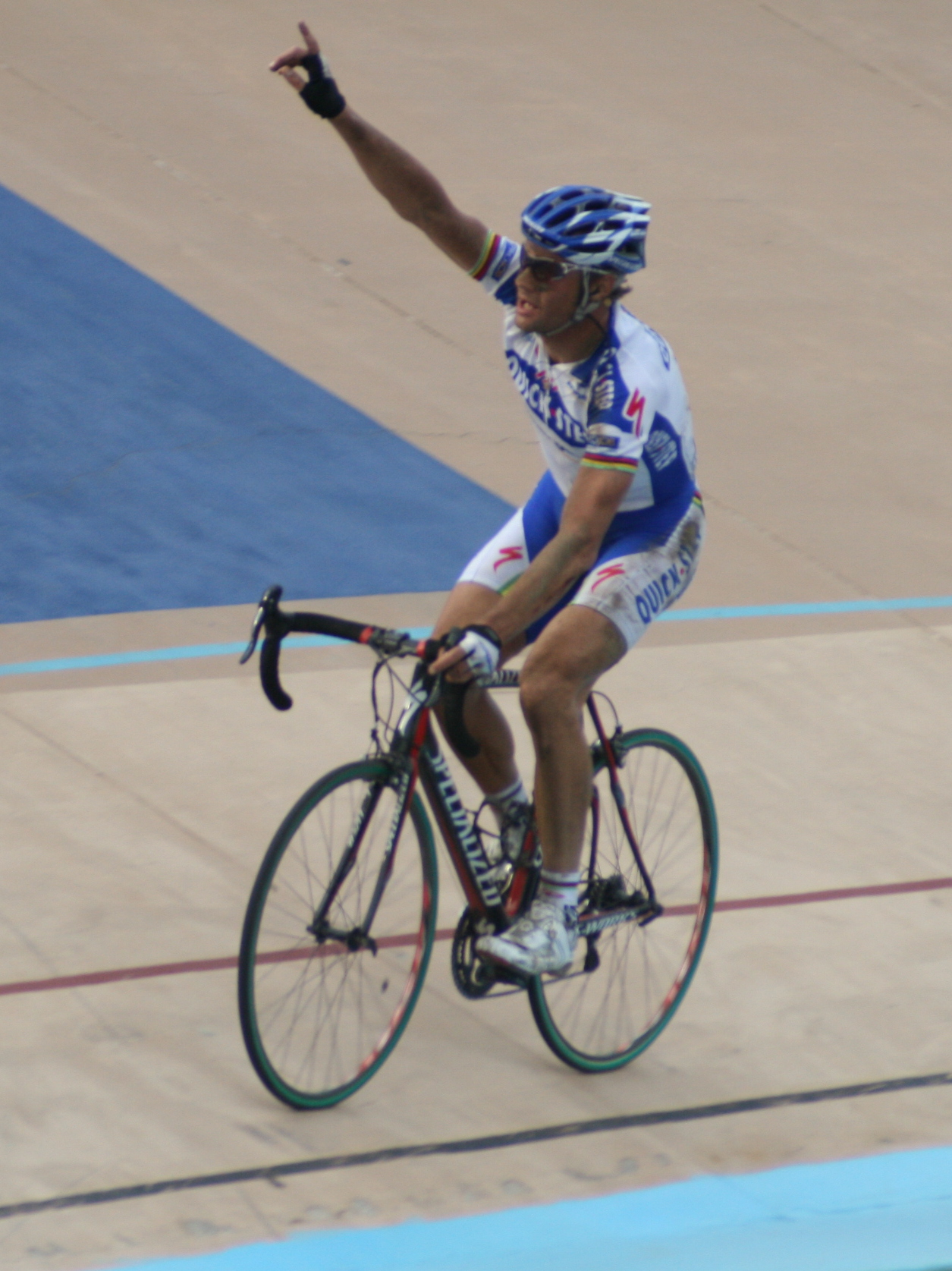
When the Roubaix favourites disappeared one by one
Flecha crashed at Carrefour de l’Arbre, Hushovd hit the barriers and Tom Boonen rode alone into the velodrome for his third victory.
Read the story →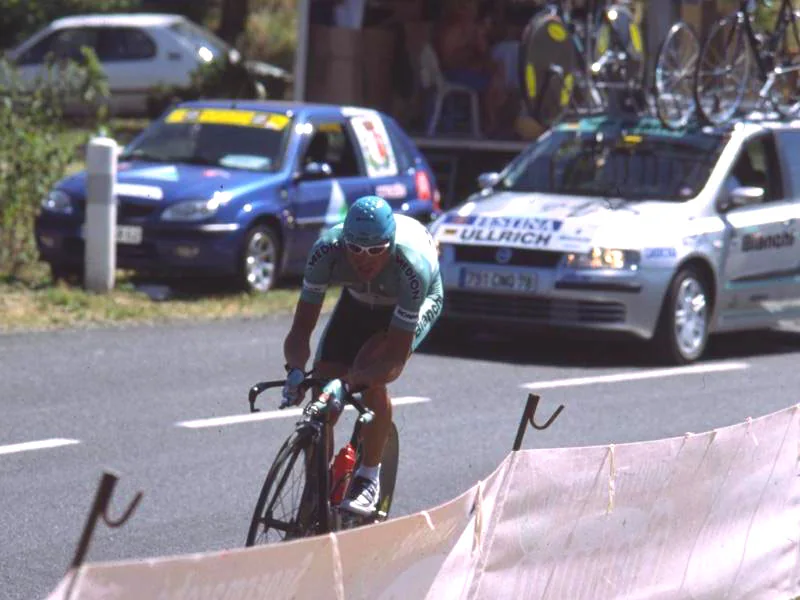
The blood bags that reached the Tour before the start
Operación Puerto led from a Madrid clinic to the Tour start in Strasbourg, where Ivan Basso and Jan Ullrich never took the line.
Read the story →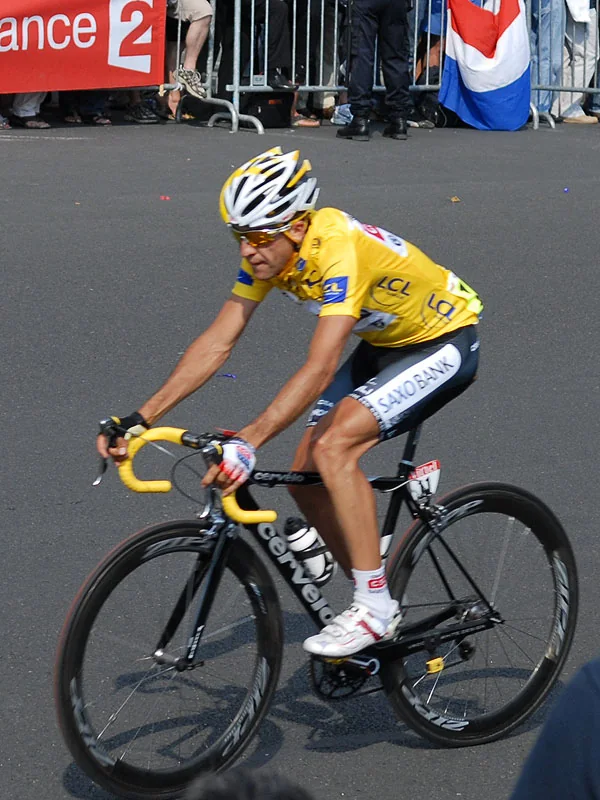
When Bjarne Riis built Team CSC
A struggling Danish team became an international organisation built around clear roles, training data and a team spirit tested far from the road.
Read the story →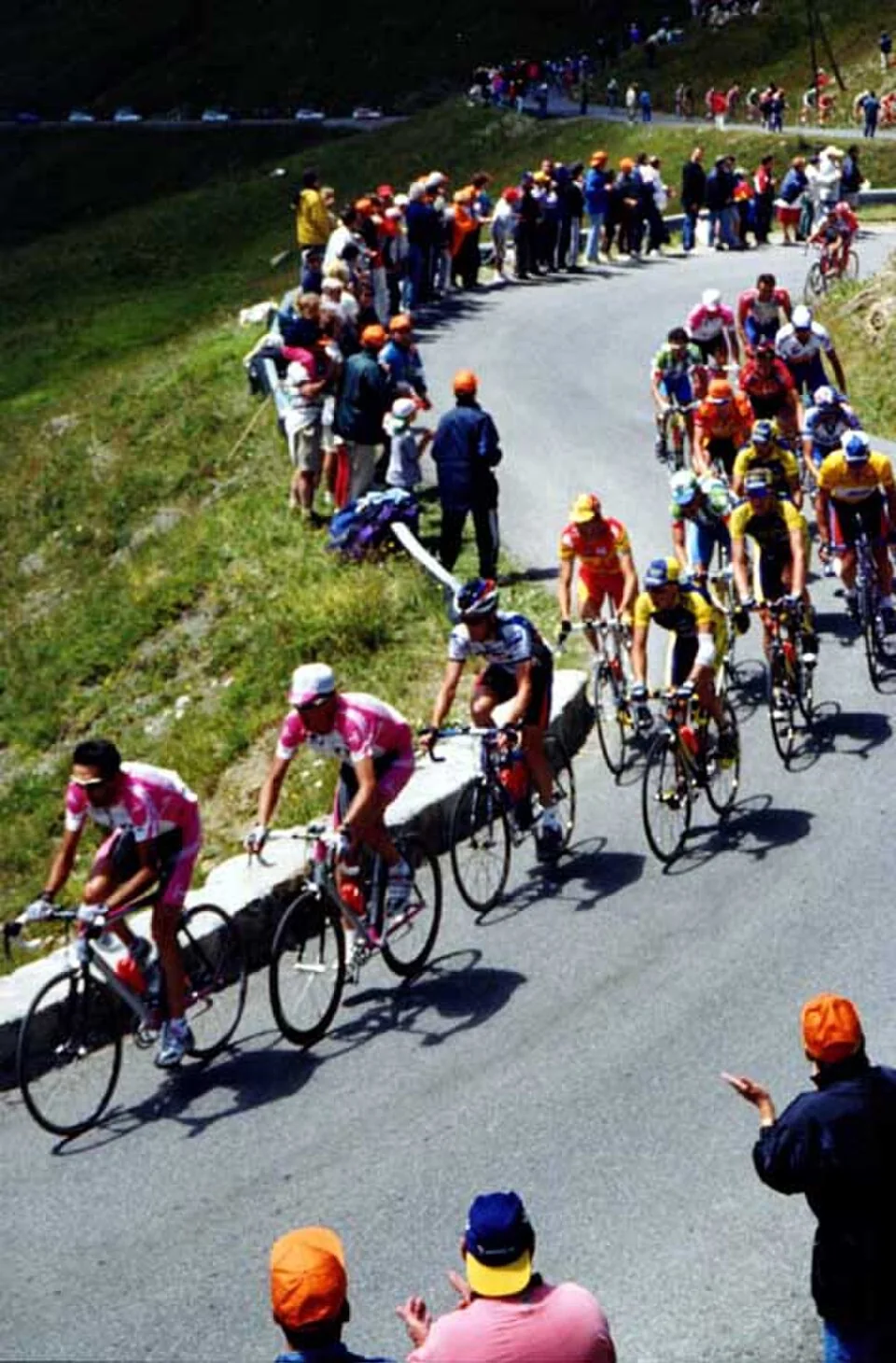
When the carbon bicycle reached the weight limit
Carbon gave designers new shapes while the UCI’s 6.8-kilogram minimum made ballast and gram counting part of the mechanics’ work.
Read the story →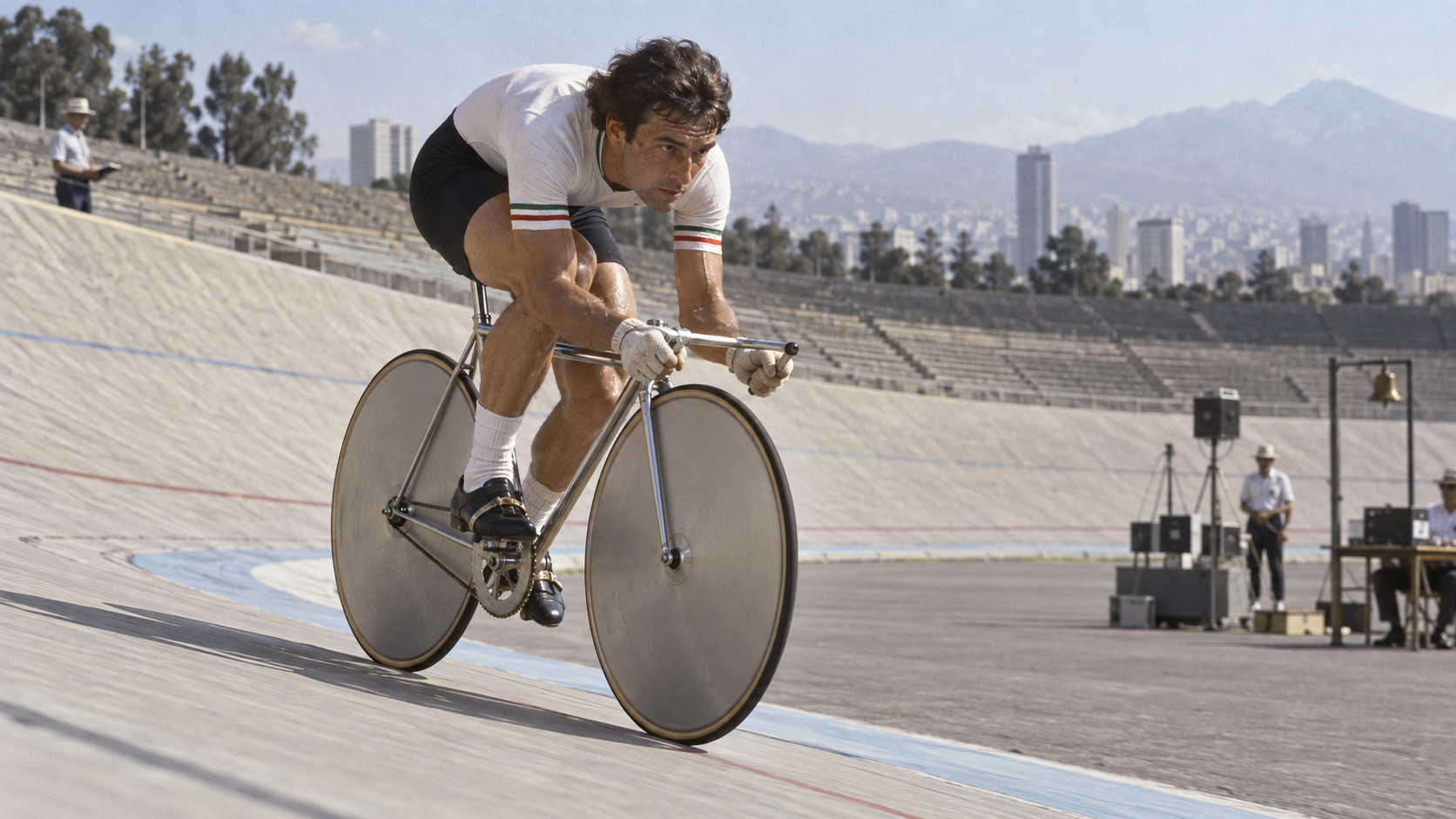
When Moser rode 51.151 kilometres in an hour
In Mexico City, Francesco Moser made aerodynamics, disc wheels and a new riding position visible on the stopwatch.
Read the story →When the toe strap gave way to a click
LOOK transferred the ski binding’s lock to the racing bicycle. Bernard Hinault’s fifth Tour victory made the clipless pedal visible to the whole peloton.
Read the story →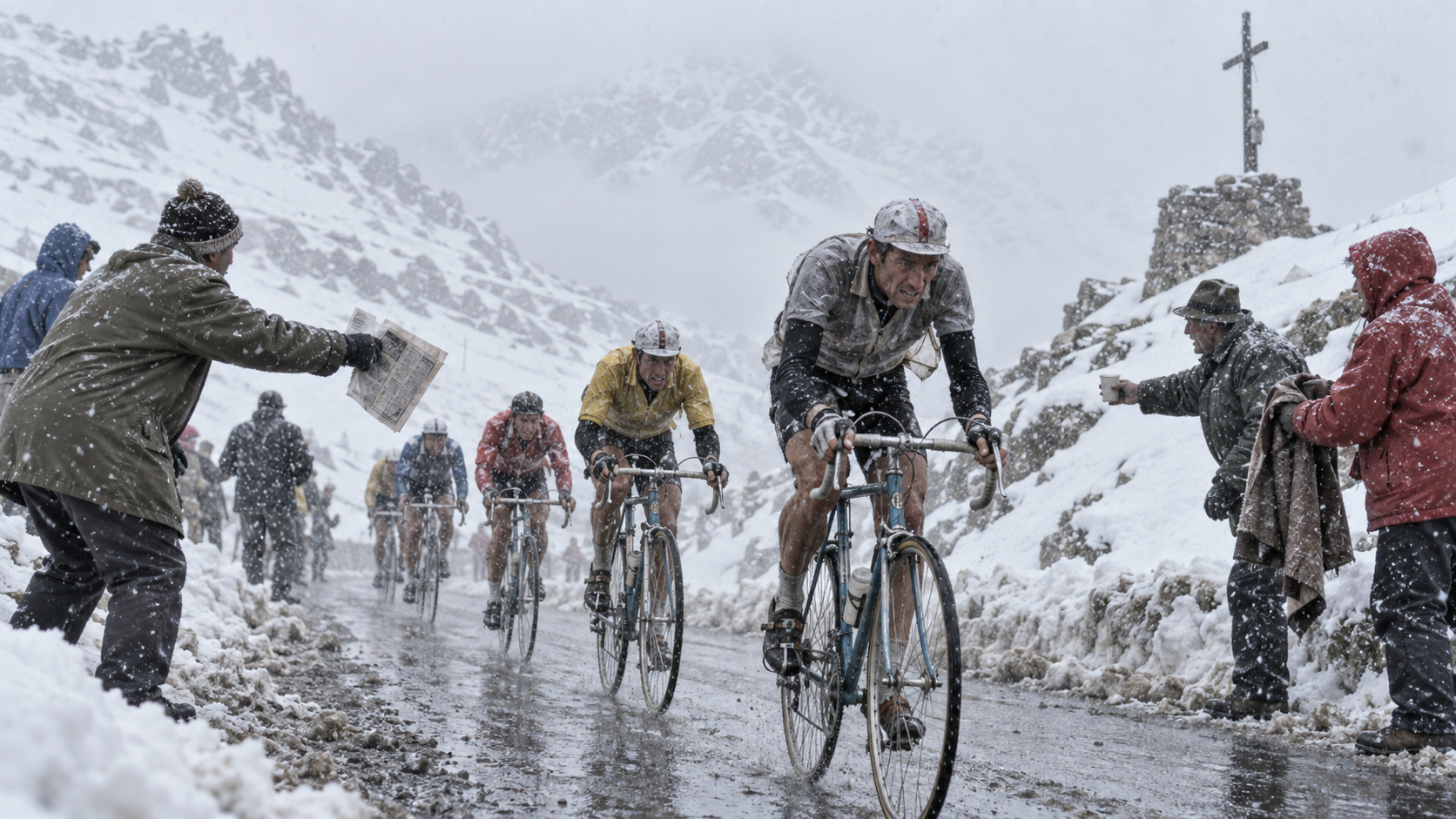
When the summer peloton rode into snow
Rain turned to snow on the Passo di Gavia. Johan van der Velde reached the summit first, Erik Breukink won the stage and Andy Hampsten took pink.
Read the story →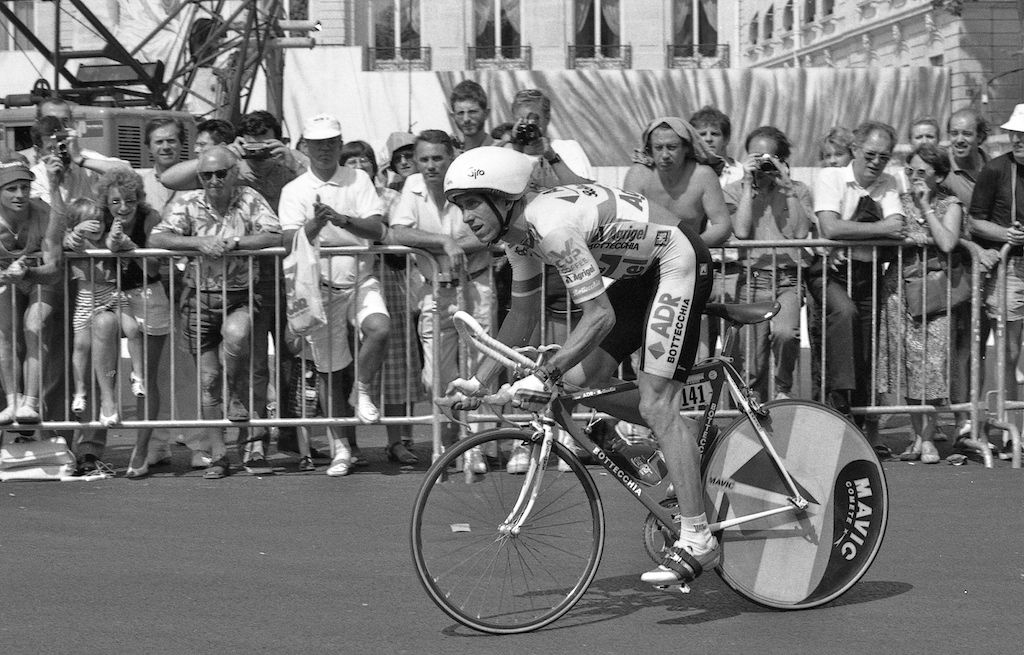
Eight seconds on the Champs-Élysées
Greg LeMond began the final time trial 50 seconds behind Laurent Fignon and finished the Tour eight seconds ahead.
Read the story →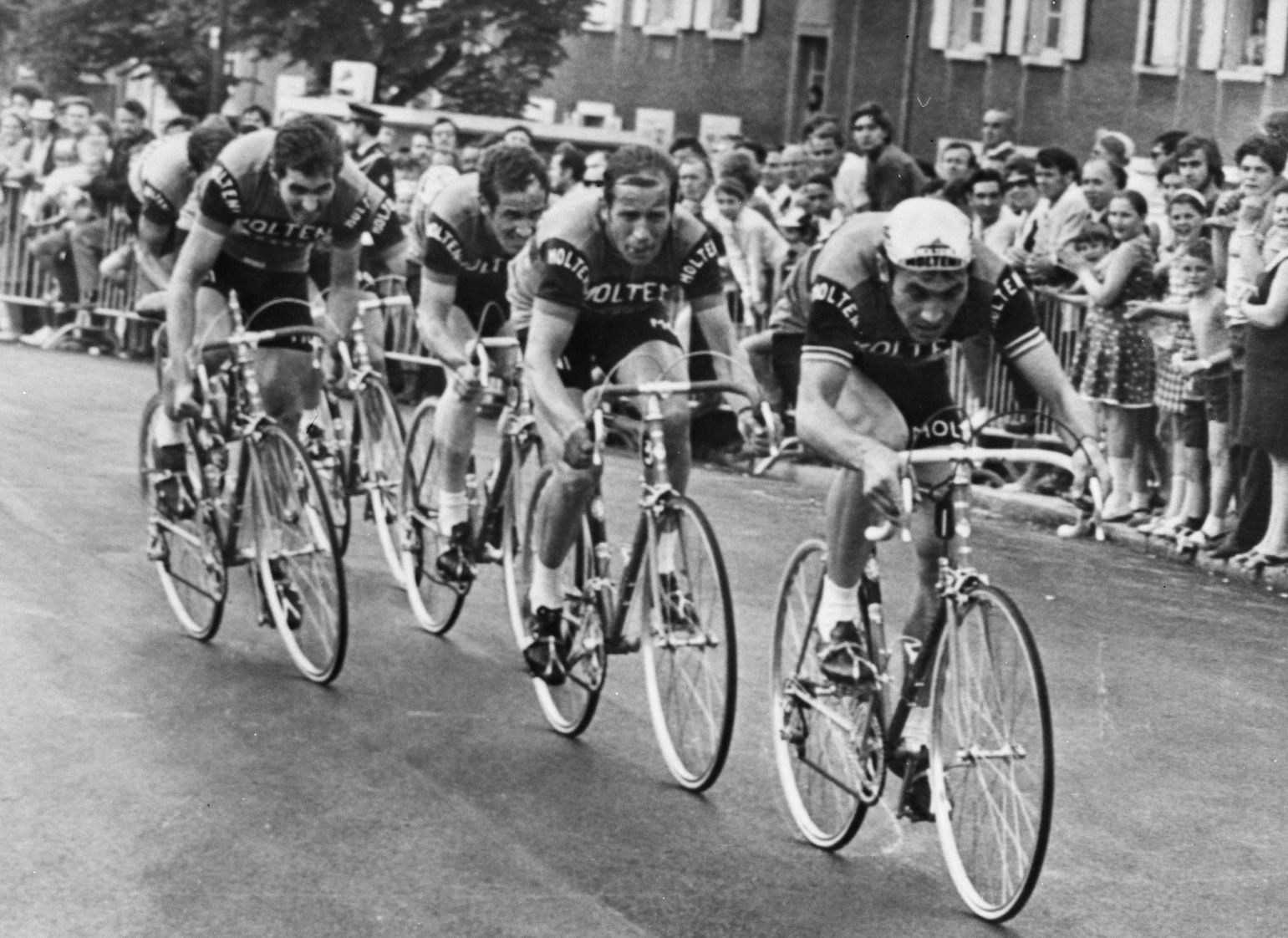
Steak at five and coffee with cognac
Before gels and precise carbohydrate plans, the soigneur packed sandwiches, fruit and tarts, filled the bottles and tried to keep riders eating through a long working day.
Read the story →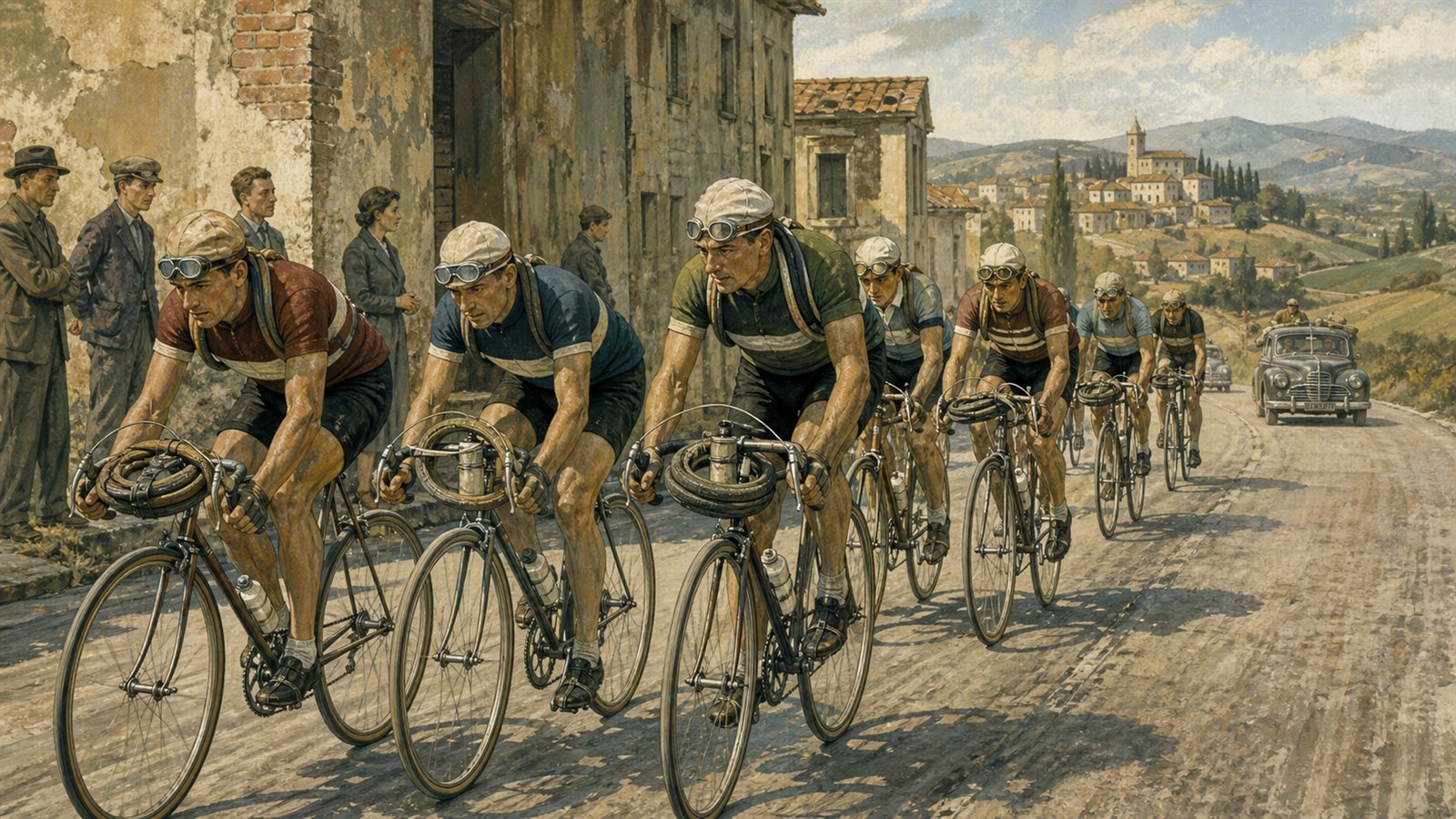
The Tour the occupation wanted
The six-stage Circuit de France was meant to resemble a national revival. Instead, it showed how difficult a major bicycle race was under occupation.
Read the story →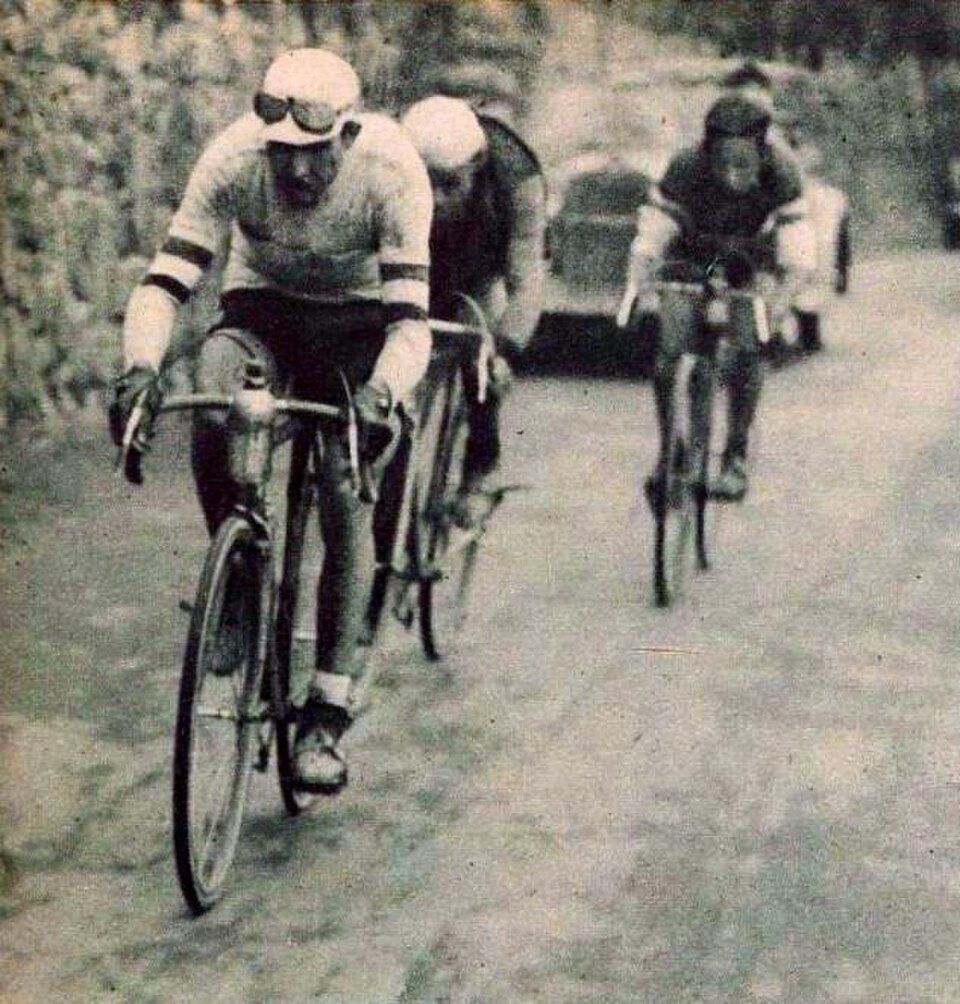
Bartali's training rides had another purpose
During the German occupation of Italy, Gino Bartali used the familiar sight of a professional rider in training as cover while carrying material for a rescue network.
Read the story →From prisoner of war to Giro–Tour winner
Fausto Coppi had already won the Giro when he was captured in North Africa. Six years later, he became the first rider to win the Giro and Tour in the same season.
Read the story →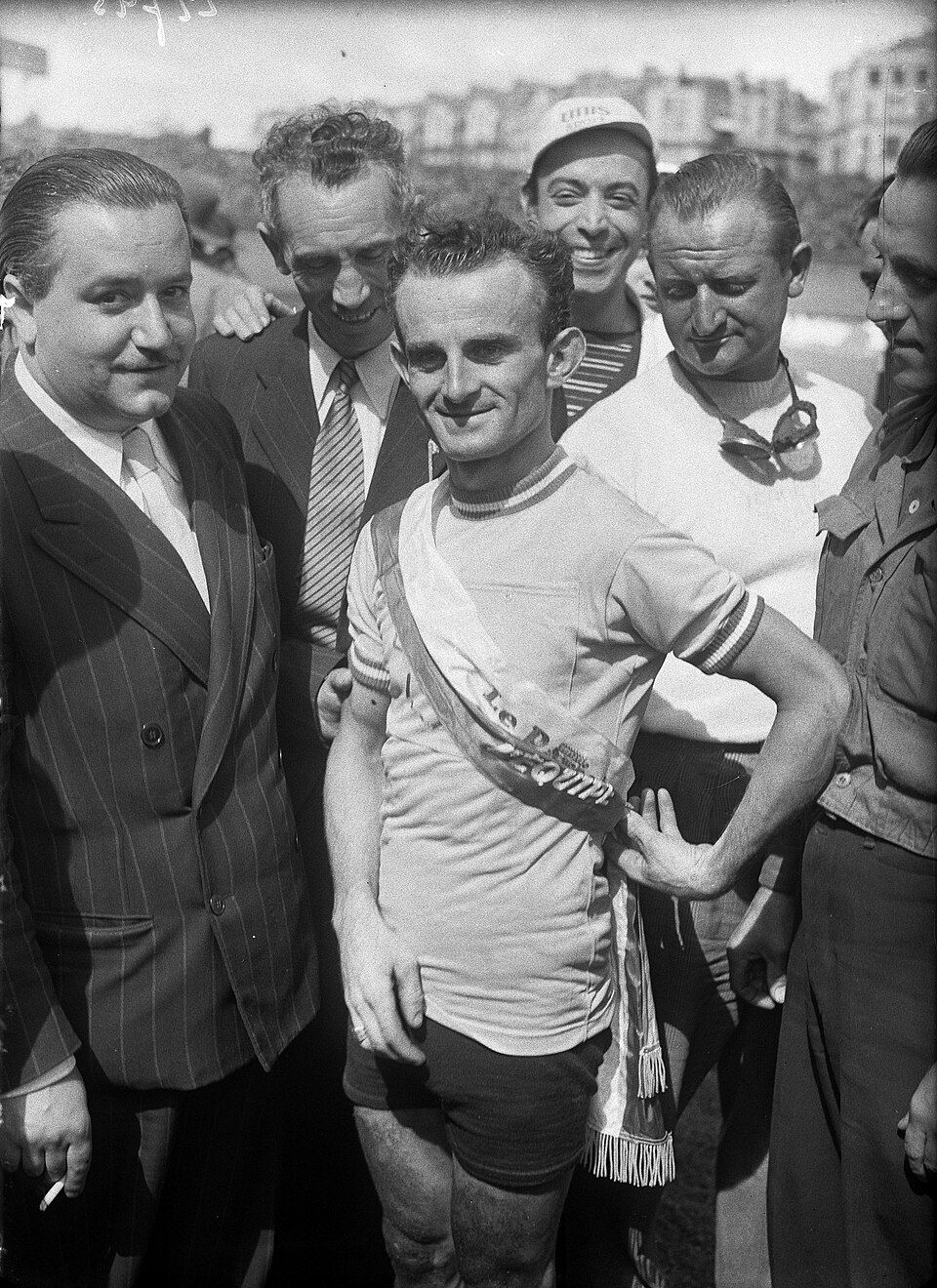
Robic took yellow on the final day
Jean Robic began the last stage of the 1947 Tour in third place. On the road to Paris, he attacked and overturned the entire classification.
Read the story →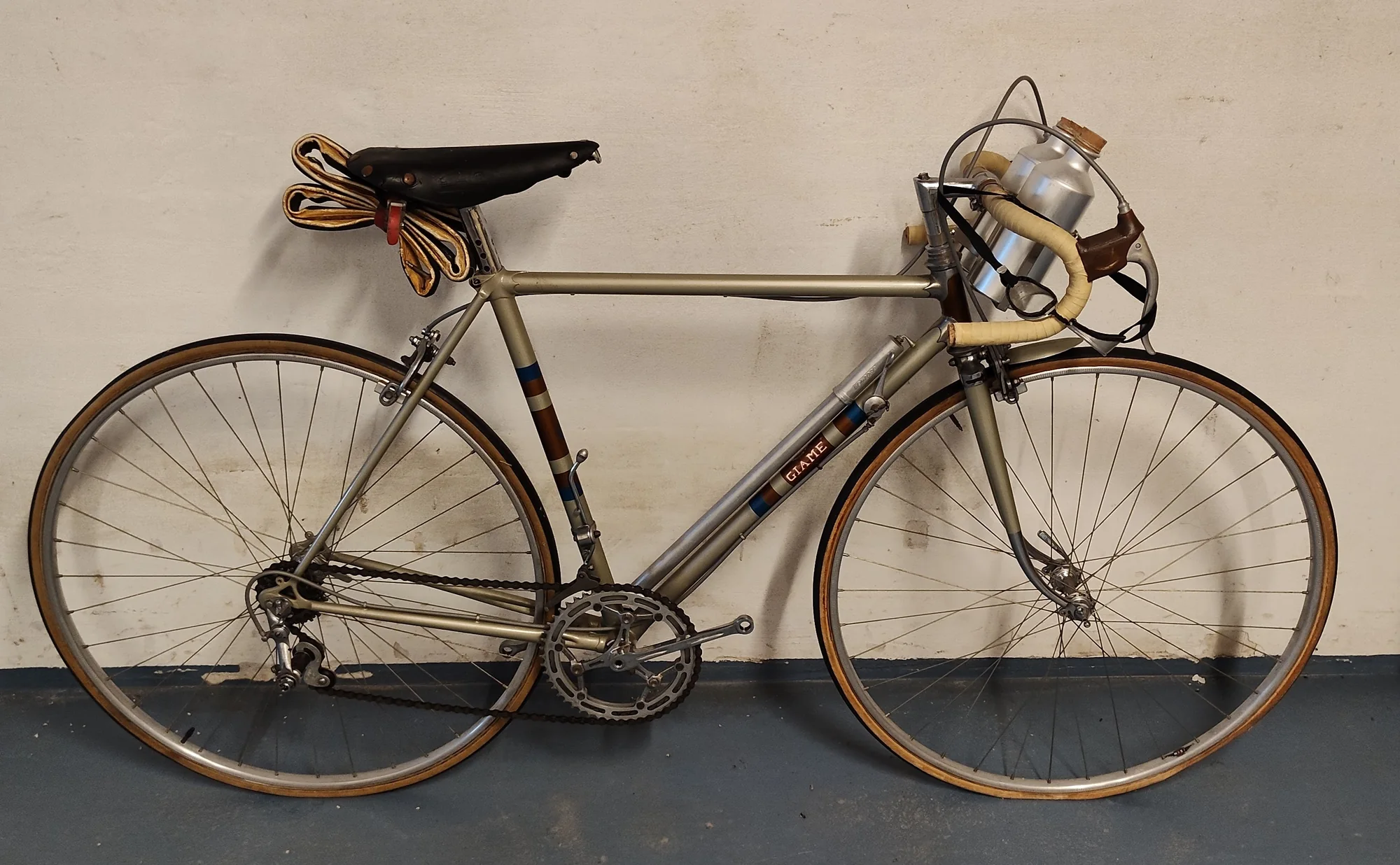
When gear shifting finally became modern
Campagnolo Gran Sport allowed the rear wheel to stay fixed while a spring-loaded parallelogram moved the chain between sprockets.
Read the story →The Tour winner nobody expected
Roger Walkowiak won no stage in the 1956 Tour. He won the race because the favourites first underestimated his breakaway and later could not drop him.
Read the story →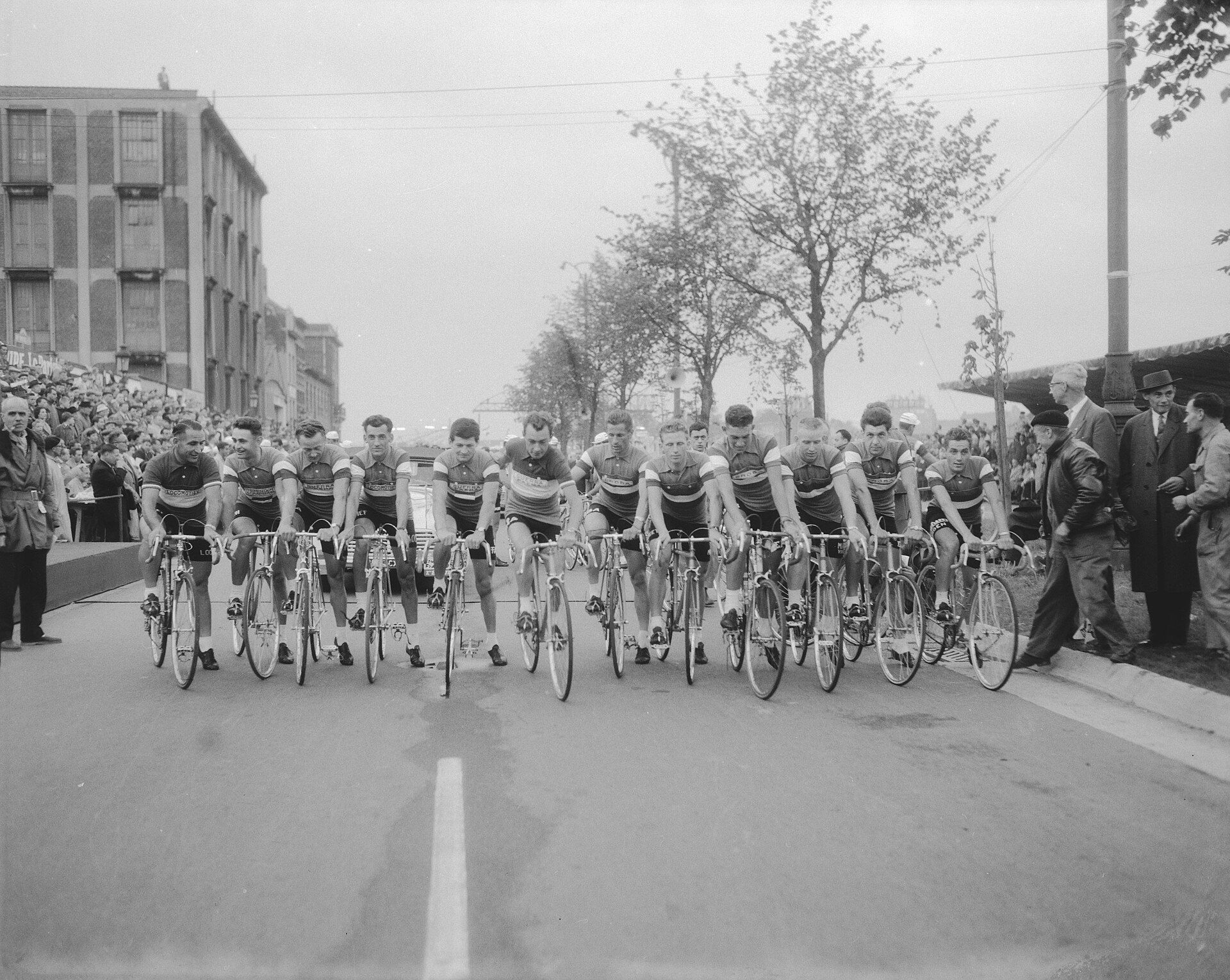
When the snow broke the Giro peloton
On the 242-kilometre stage to Monte Bondone, Charly Gaul rode through snow and cold from eleventh place into the pink jersey.
Read the story →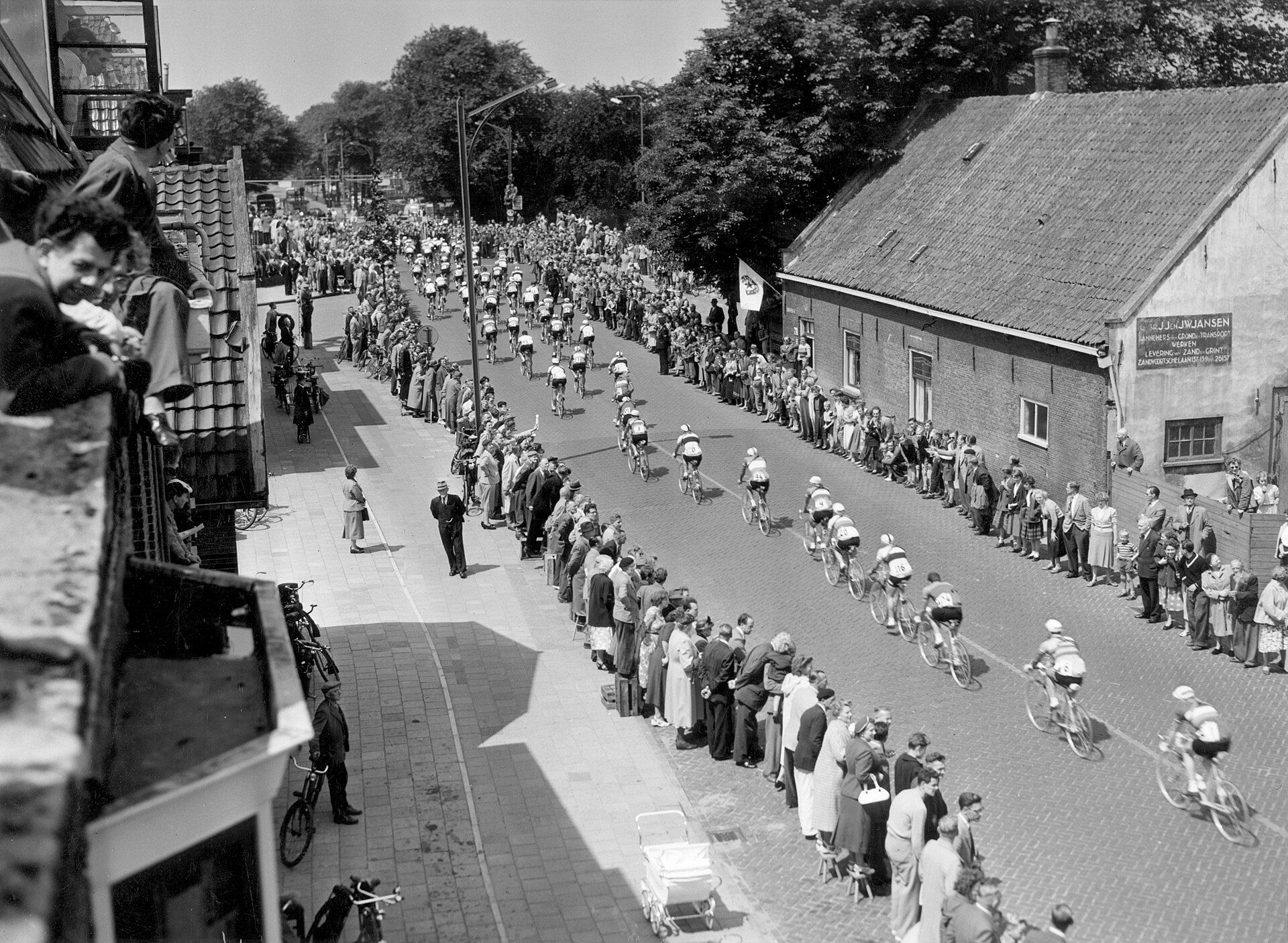
When the Tour left France
The Grand Départ in Amsterdam was the first Tour de France start outside France and showed a race becoming a European spectacle.
Read the story →When “necessary” meant almost always
In a RAI interview, Fausto Coppi spoke unusually openly about the peloton’s use of “la bomba” in an age without effective doping controls.
Read the story →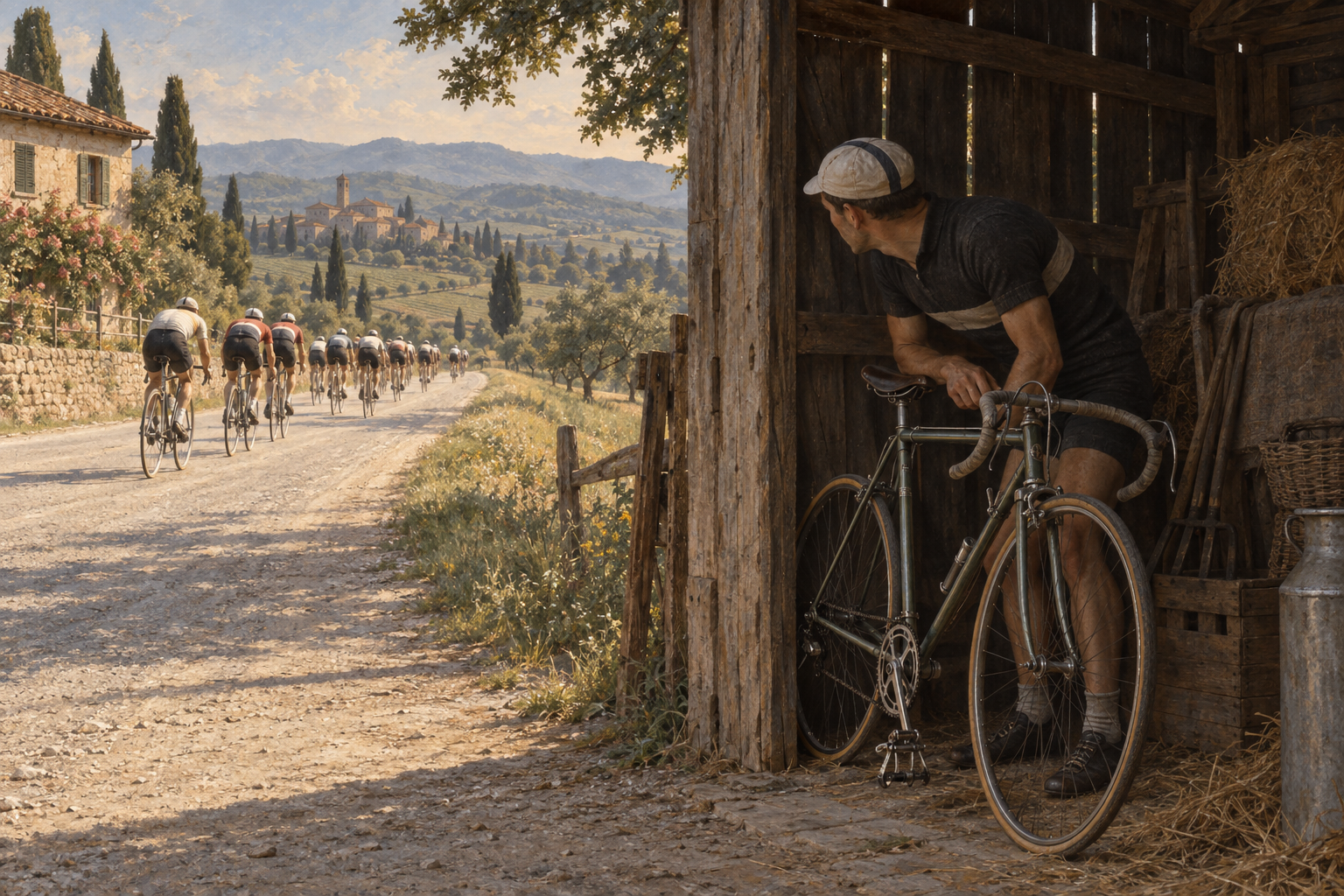
The hide-and-seek contest for the Giro's black jersey
Luigi Malabrocca tried to finish last in the 1949 Giro. The problem was that bricklayer Sante Carollo was already almost two hours further behind.
Read the story →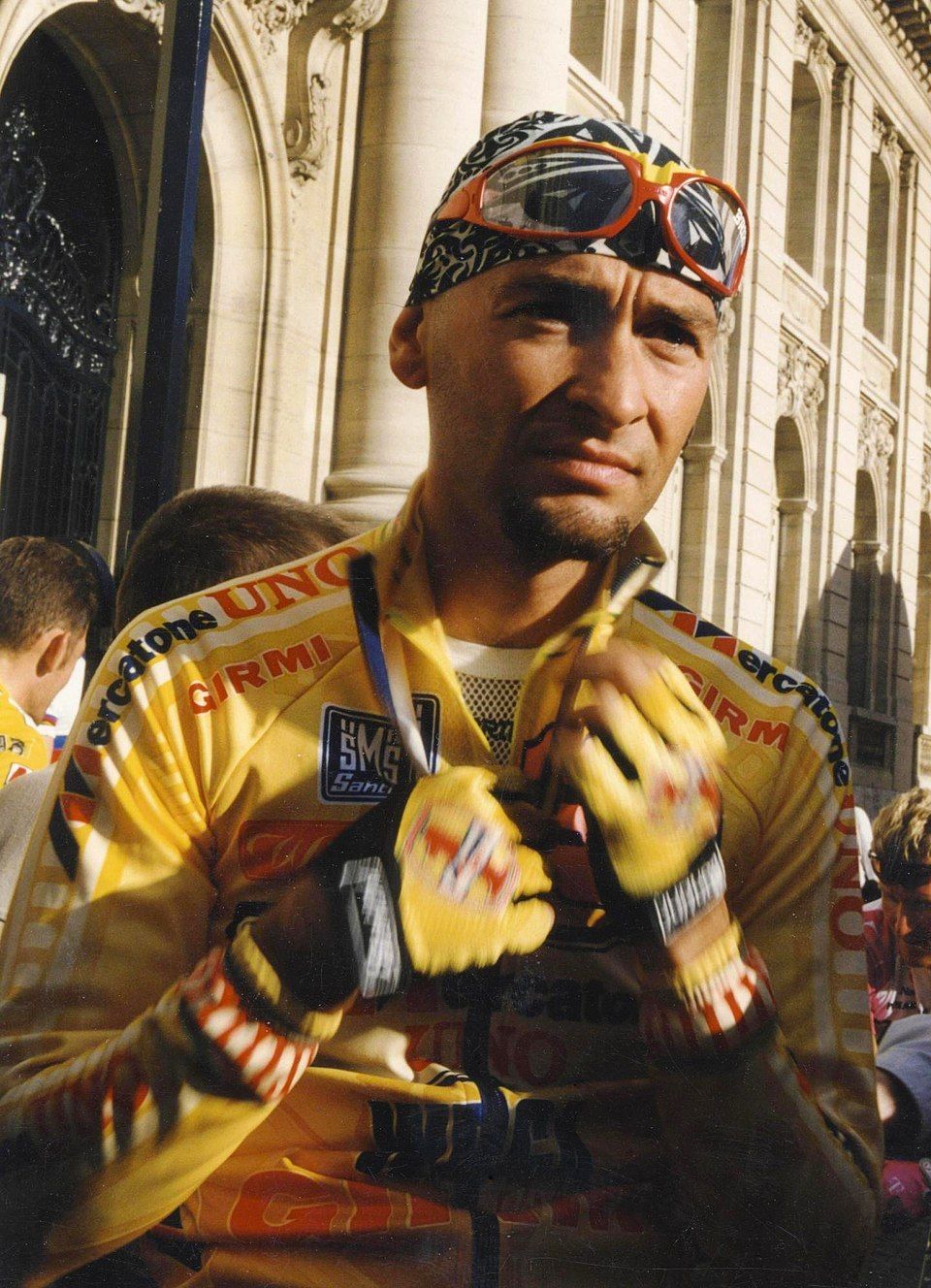
The man behind the Pirate
Marco Pantani returned from a shattered left leg to win both the Giro and the Tour. The rider’s story also contains the vulnerable man.
Read the story →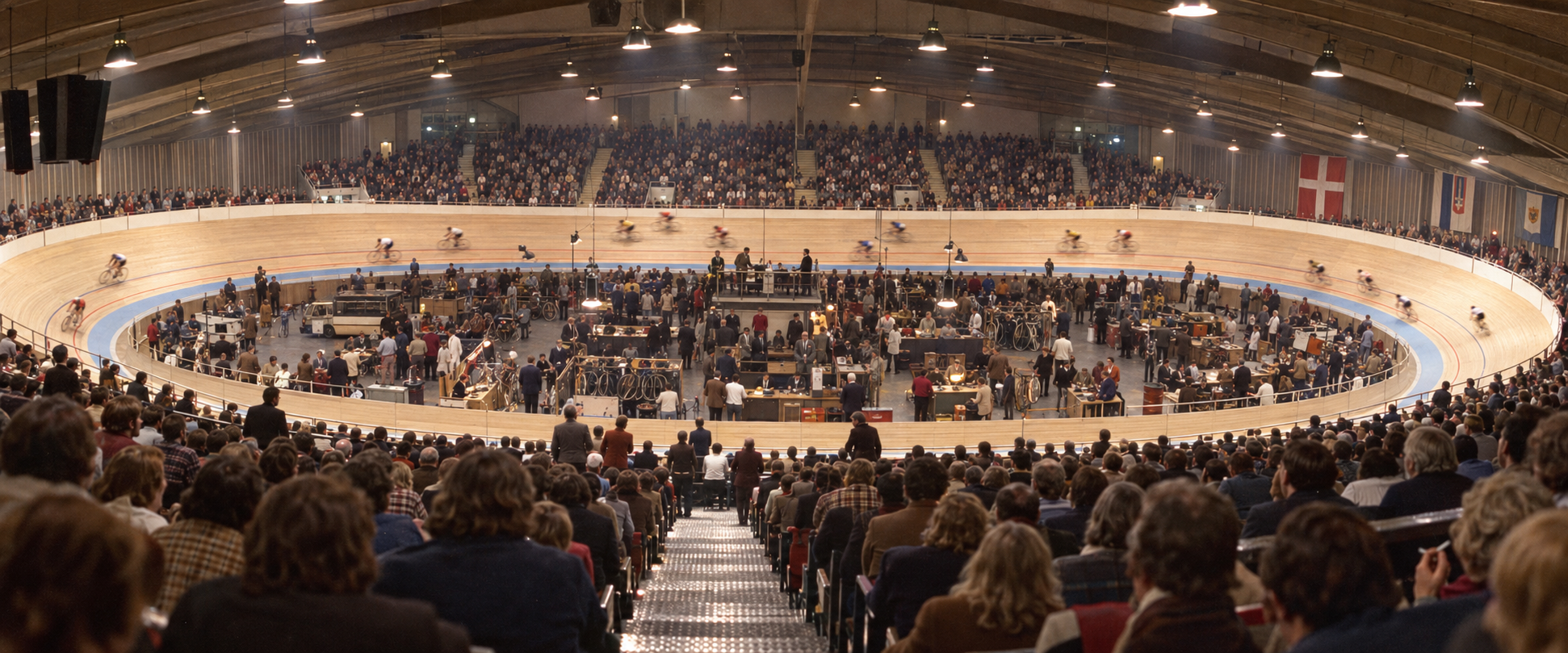
When Herning acquired its own wooden track
A wooden track from London, a new six-day race in Herning and Ole Ritter as the rider the crowd came to see.
Read the story →
When Mogens Frey won after a hand on the handlebars
Joaquim Agostinho crossed first in Mulhouse, but the jury awarded victory to team-mate Mogens Frey after visible interference in the sprint.
Read the story →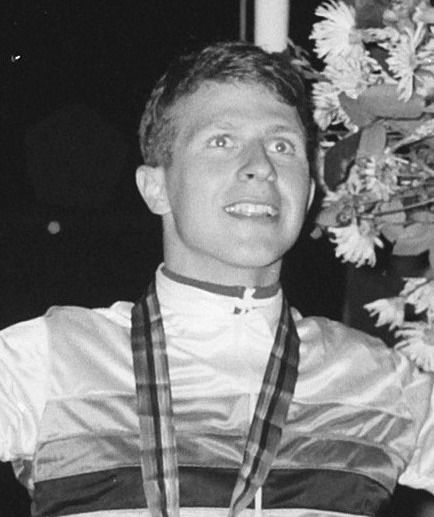
When Fredborg equalled the world record and won silver
Niels Fredborg equalled the world record in the Olympic kilometre in Mexico City. Eleven starters later, Pierre Trentin went faster.
Read the story →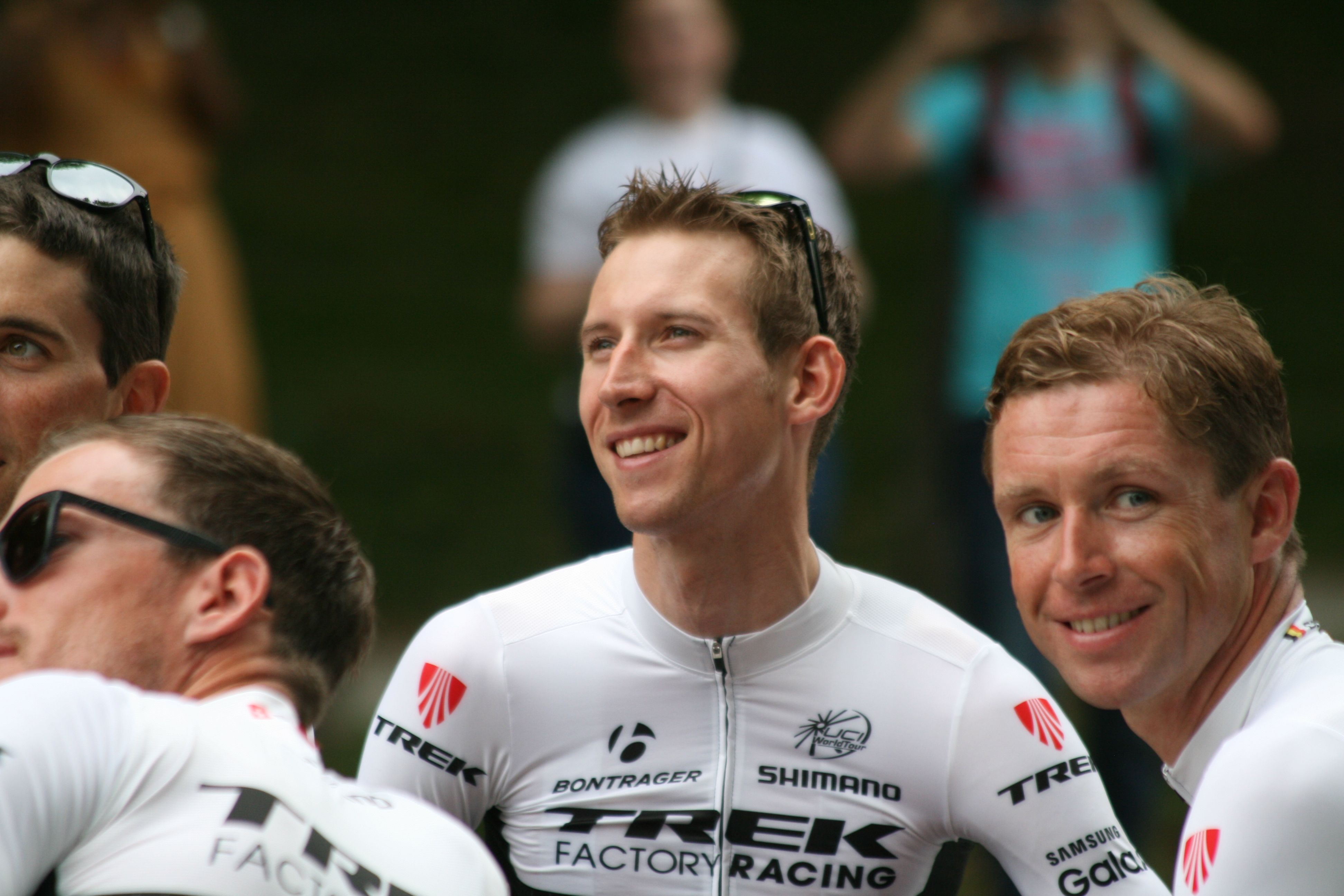
When the peloton finished, Christine Lueber's working day began again
A day of musettes, Alpine driving, laundry and massage reveals the part of the Tour de France that the results do not measure.
Read the story →
When a bent crank gave Colnago access to the Giro
Ernesto Colnago was 23 when a mechanical observation on Fiorenzo Magni's bicycle took him into the Giro service crew.
Read the story →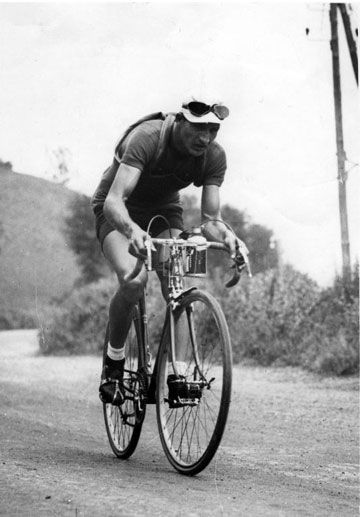
Did Bartali really bring peace back to Italy?
After the attempt on Palmiro Togliatti, Gino Bartali won three consecutive Tour stages. His victories gave a political crisis its most enduring hero.
Read the story →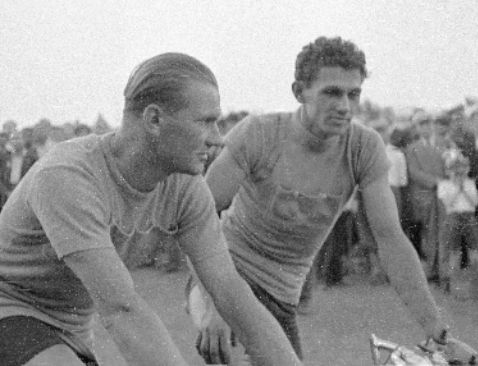
The Peace Race – two pelotons going opposite ways
In May 1948, two fields raced simultaneously between Warsaw and Prague. The future Peace Race began with two routes and two Yugoslav winners.
Read the story →Paris–Brest–Paris 1891 – Charles Terront's three days
Charles Terront covered 1,200 kilometres in 71 hours 37 minutes. The newspaper race tested both the rider and the young safety bicycle.
Read the story →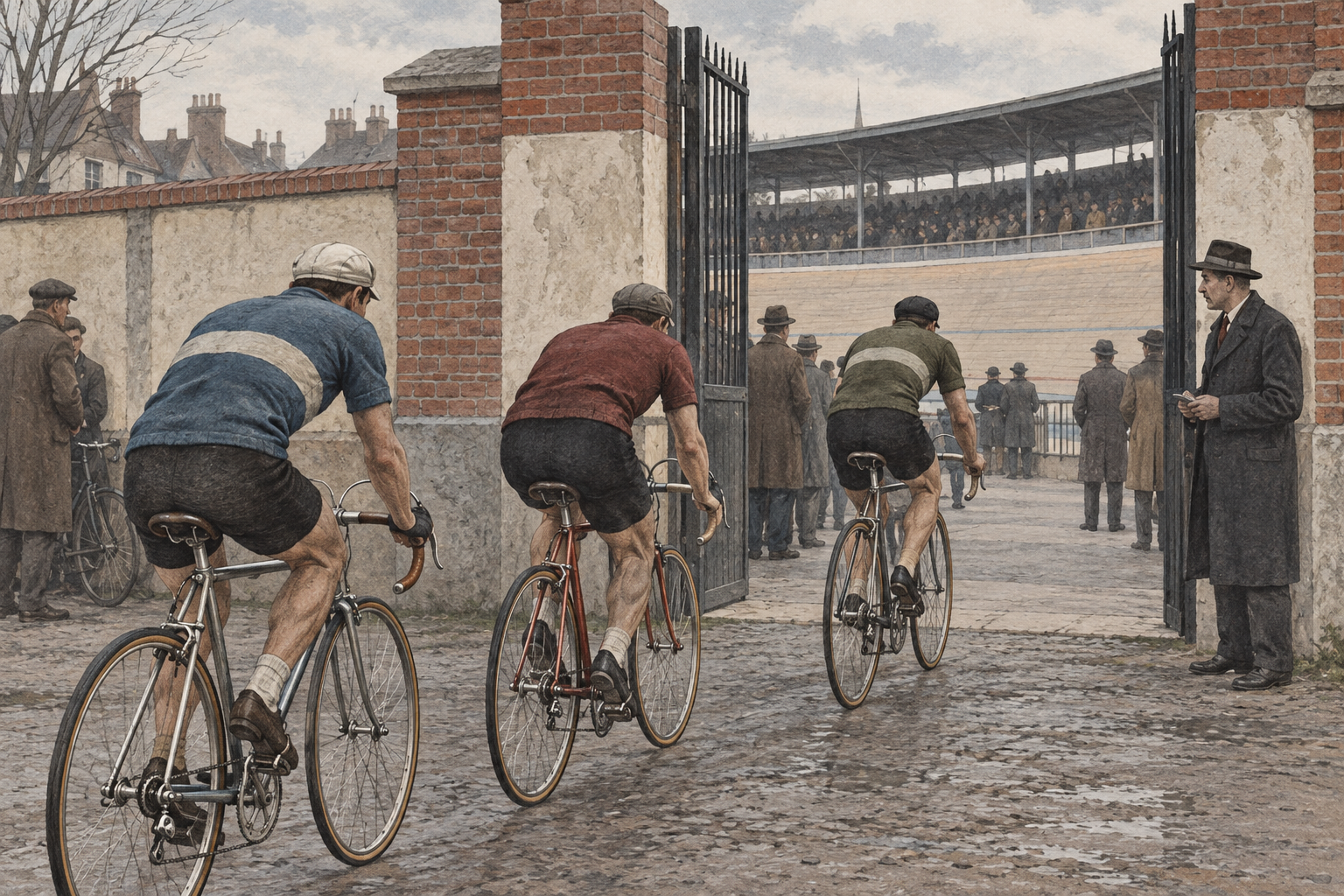
Paris–Roubaix 1949 – one race, two winners
André Mahé crossed first after being misdirected at the track. Serse Coppi protested. Months later, the race had two winners.
Read the story →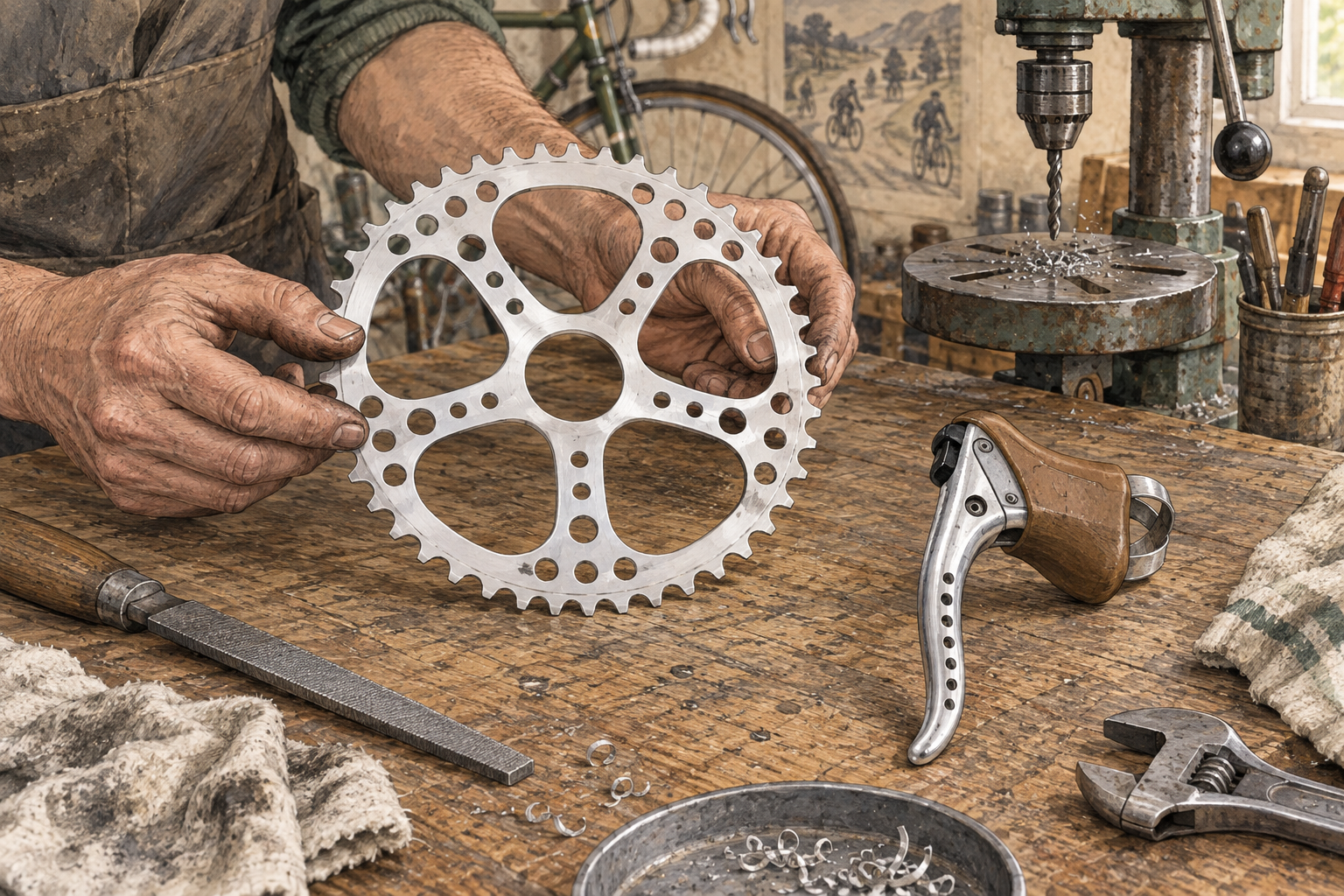
Drillium – when the drill became a weight-saving tool
Chainrings, brake levers and derailleurs went under the drill. Drillium became weight saving, workshop craft and decoration.
Read the story →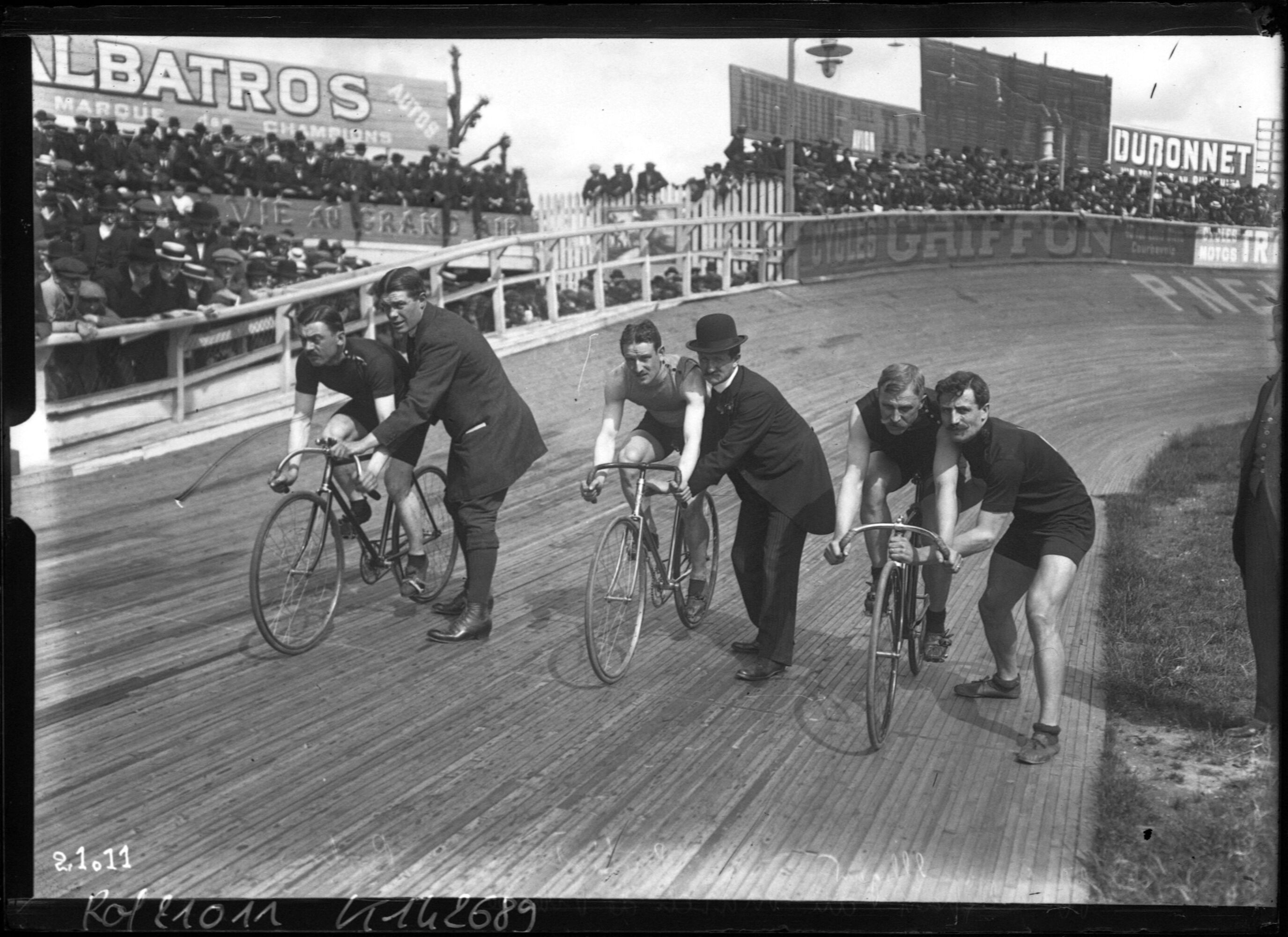
Three men held at the start on the Buffalo track
A press photograph from Paris shows Thorvald Ellegaard, André Perchicot and Gabriel Poulain in the still moment before a sprint match.
Read the story →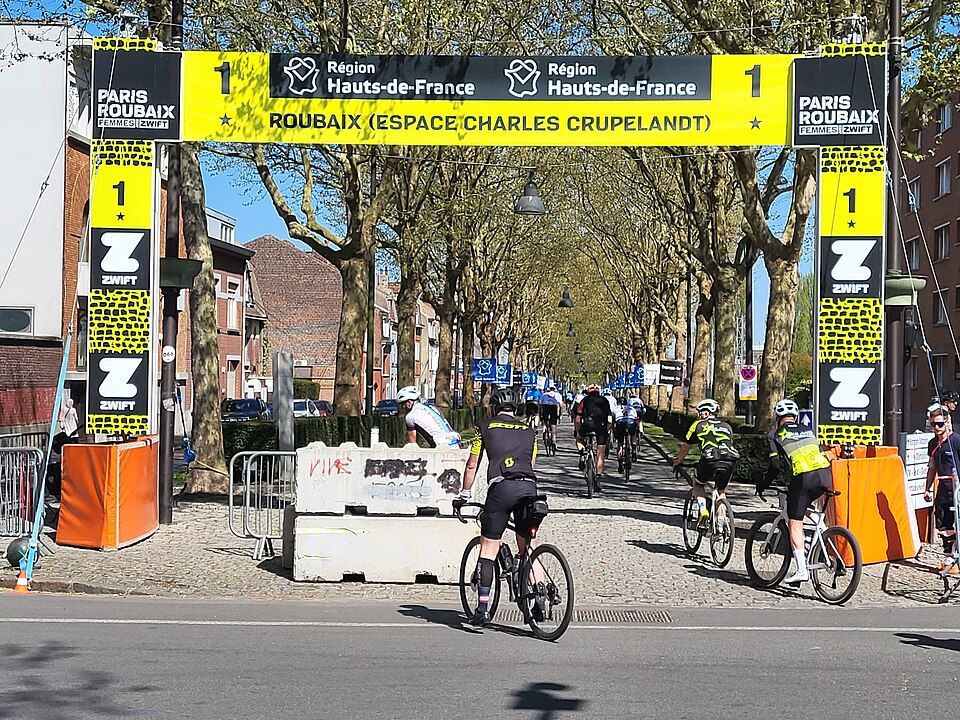
When the alarm clock cost twenty minutes on the Paris–Roubaix route
Jonas B. Hansen woke up 45 minutes late in Roubaix. By the time he reached the start, the others had left and the rest of his day became one long chase.
Read the story →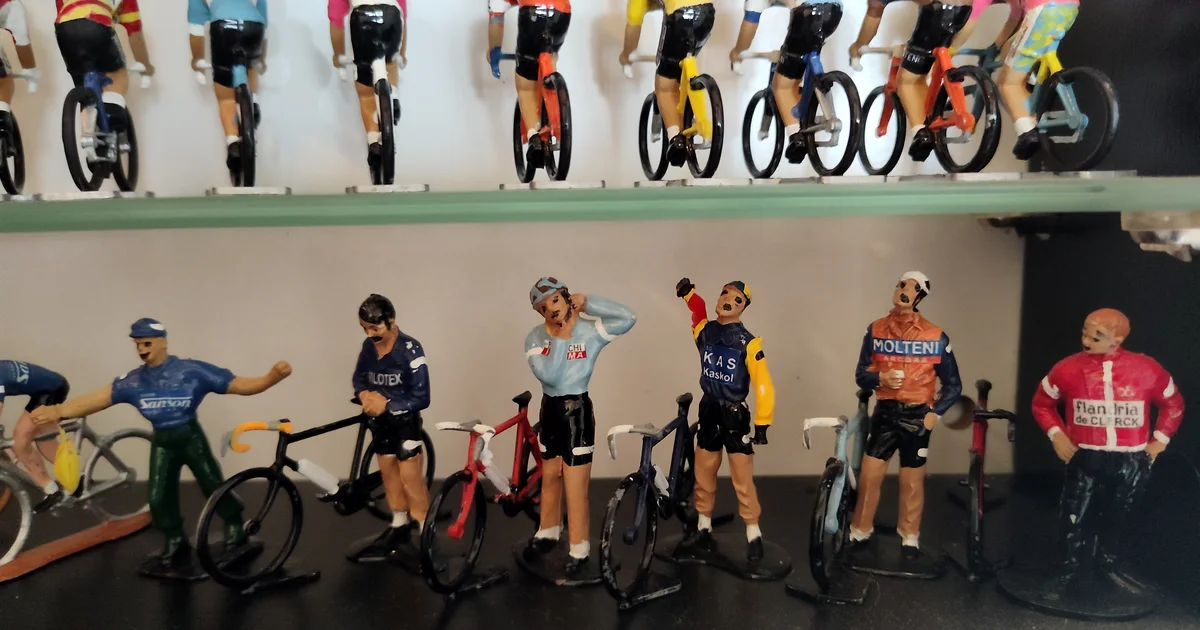
When the Tour de France moved into the children’s room
Small cast cyclists turned pavements, sandpits and carpets into stage races — and later became collectibles with their own moulds, poses and peculiarities.
Read the story →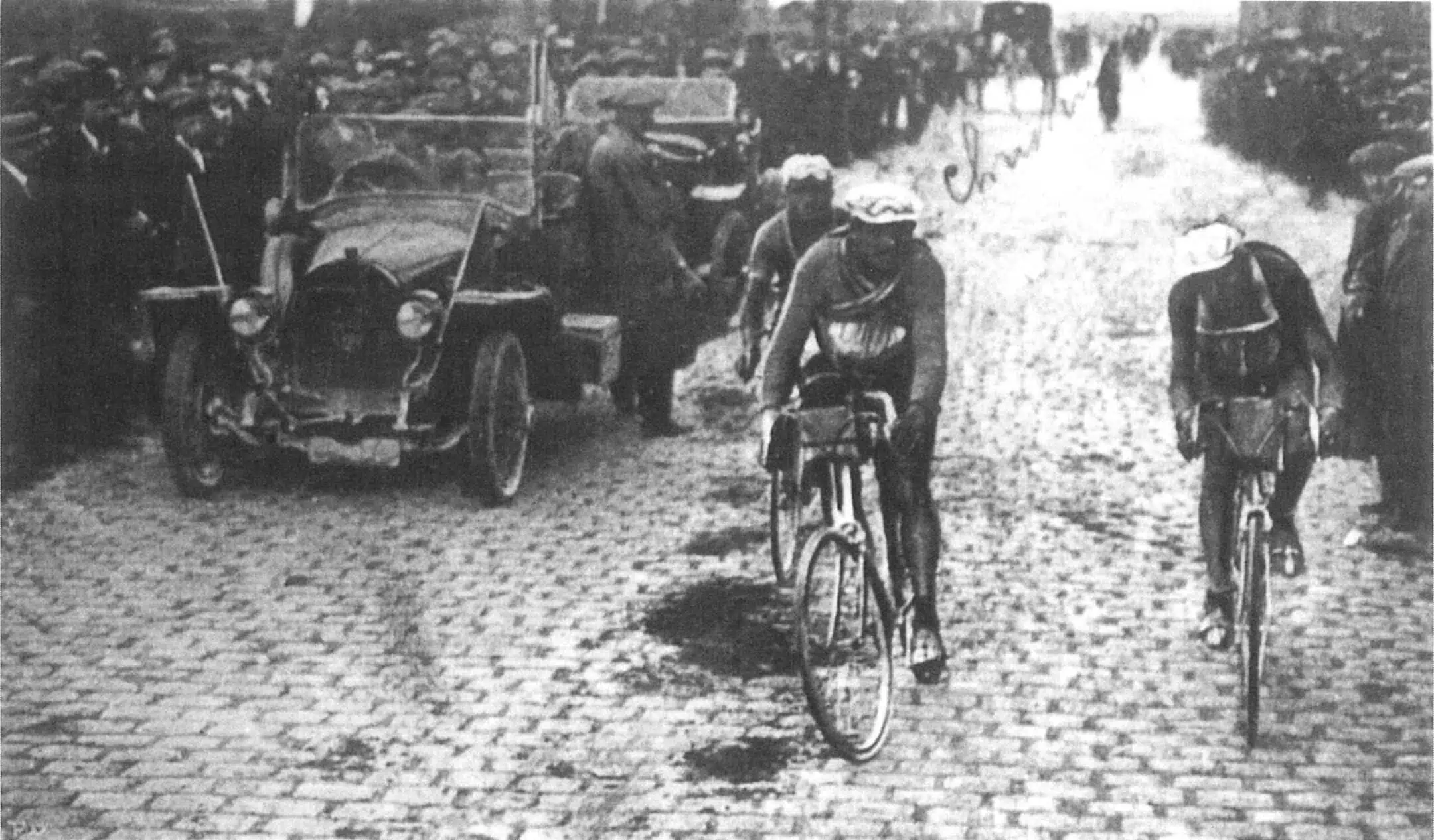
Christian Christensen – out of the Tour, but on to Paris
Christian Christensen missed the time limit in the 1913 Tour. Later accounts describe how the Danish dairy worker continued to Paris outside the classification.
Read the story →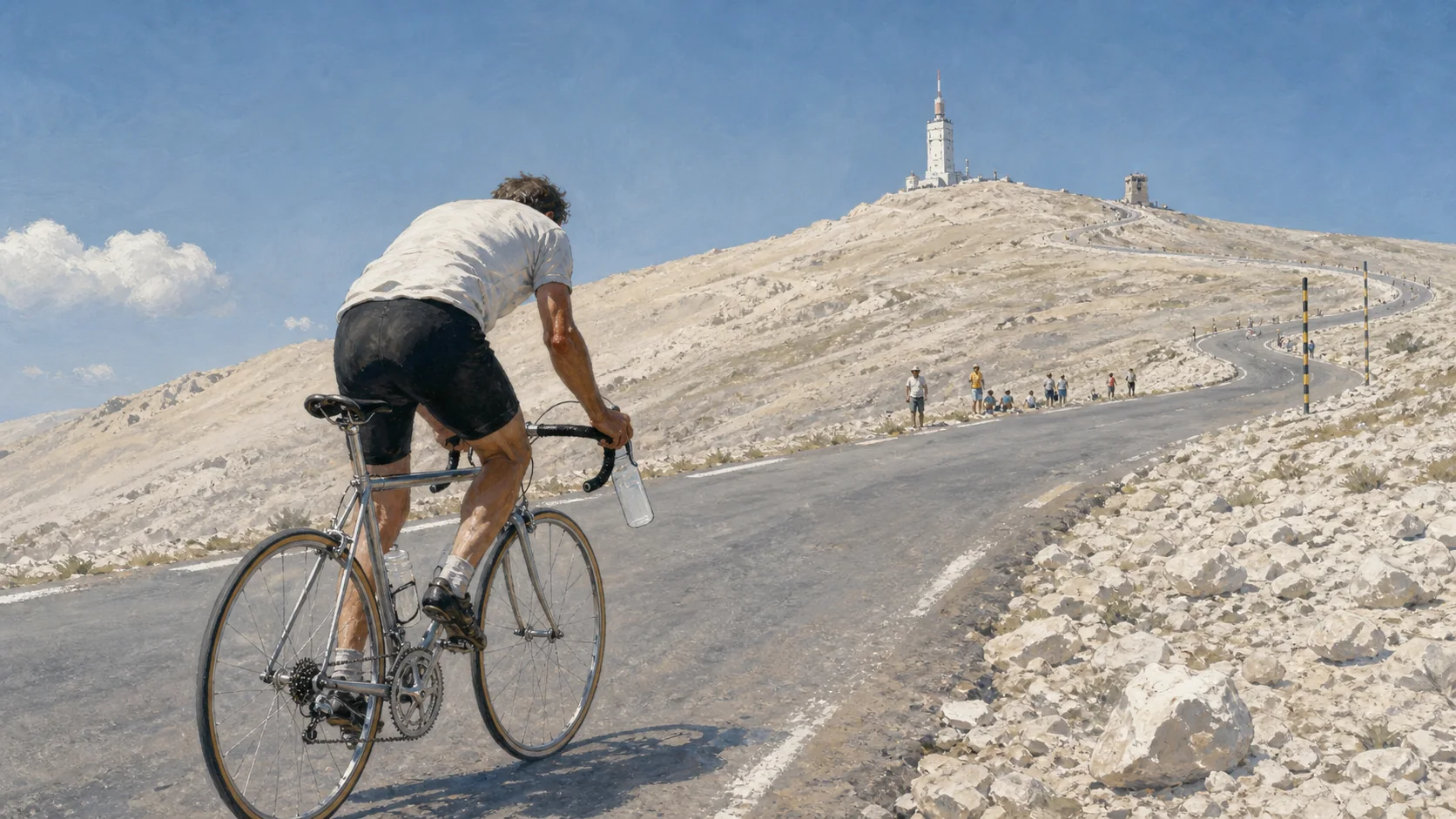
The white wilderness and the chicken farmer’s thirst
The bottle was empty on Mont Ventoux. Then a Danish Tour rider from 1958 helped decide whether the reader should accept water.
Read the story →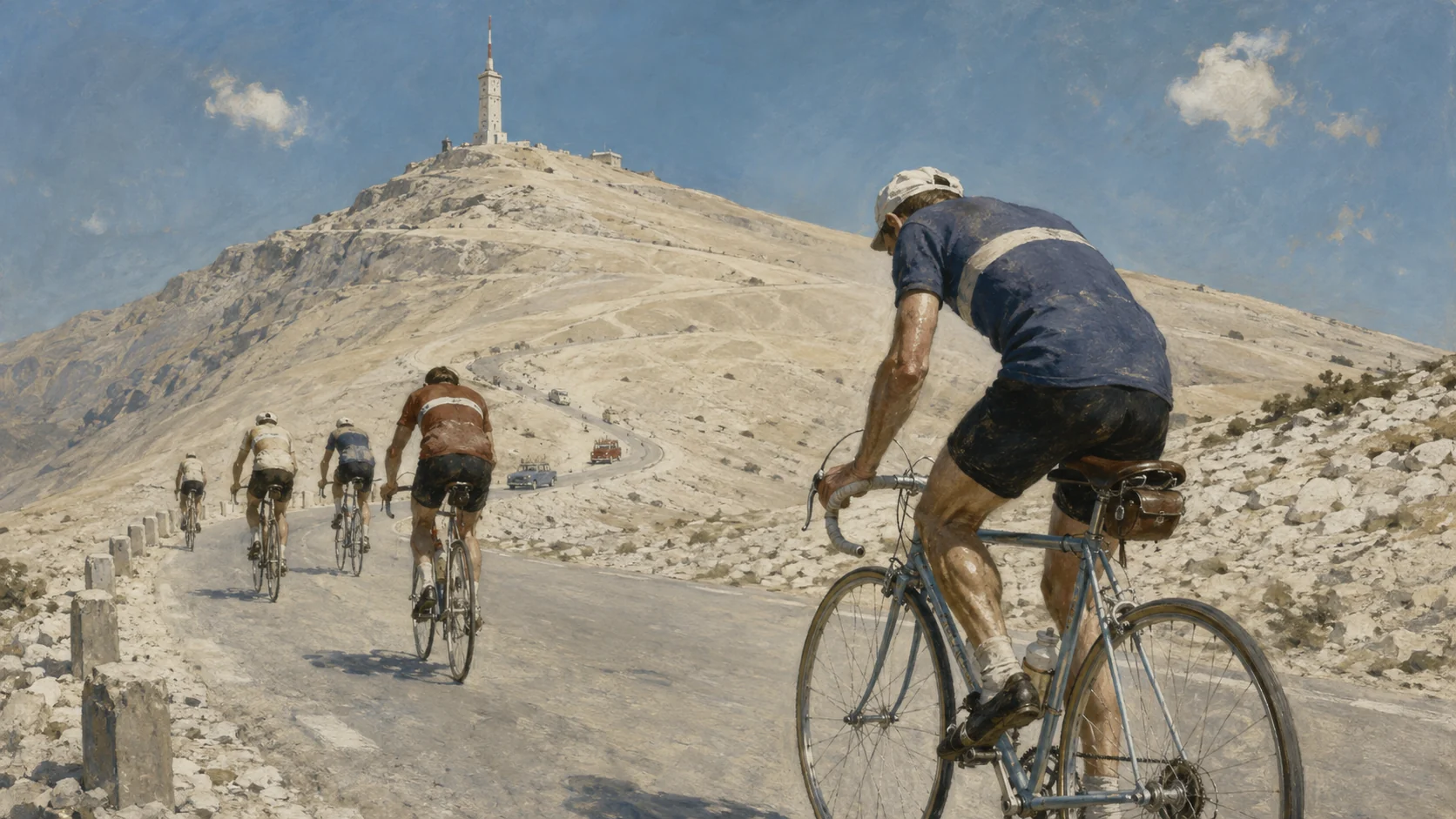
The day Tom Simpson died on Mont Ventoux
Heat, dehydration, exhaustion and stimulants came together on the bare mountain during the 1967 Tour de France.
Read the story →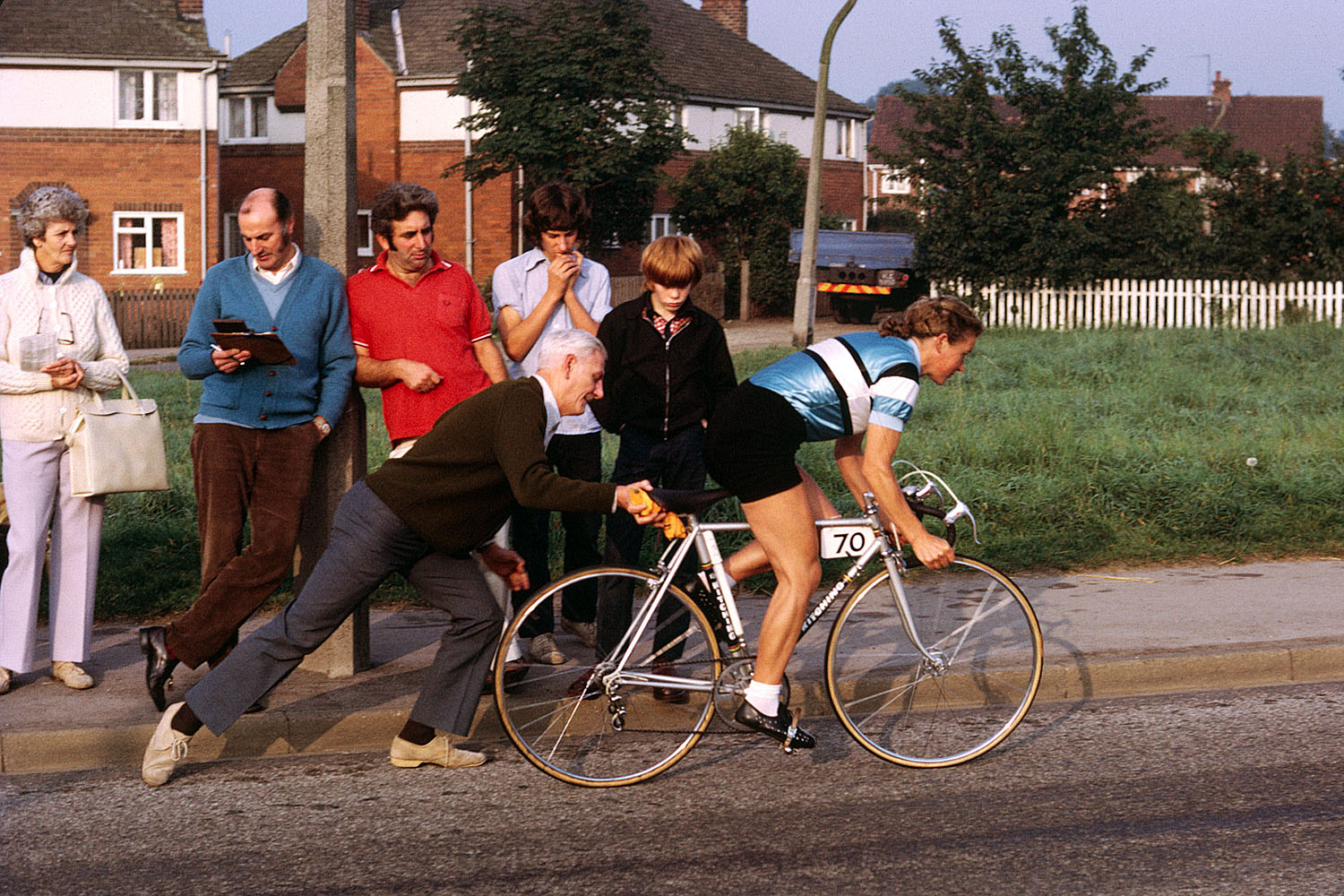
Beryl Burton, twelve hours and a liquorice allsort
Beryl Burton rode 277.25 miles in twelve hours, broke the British men’s record and handed Mike McNamara a liquorice allsort as she passed.
Read the story →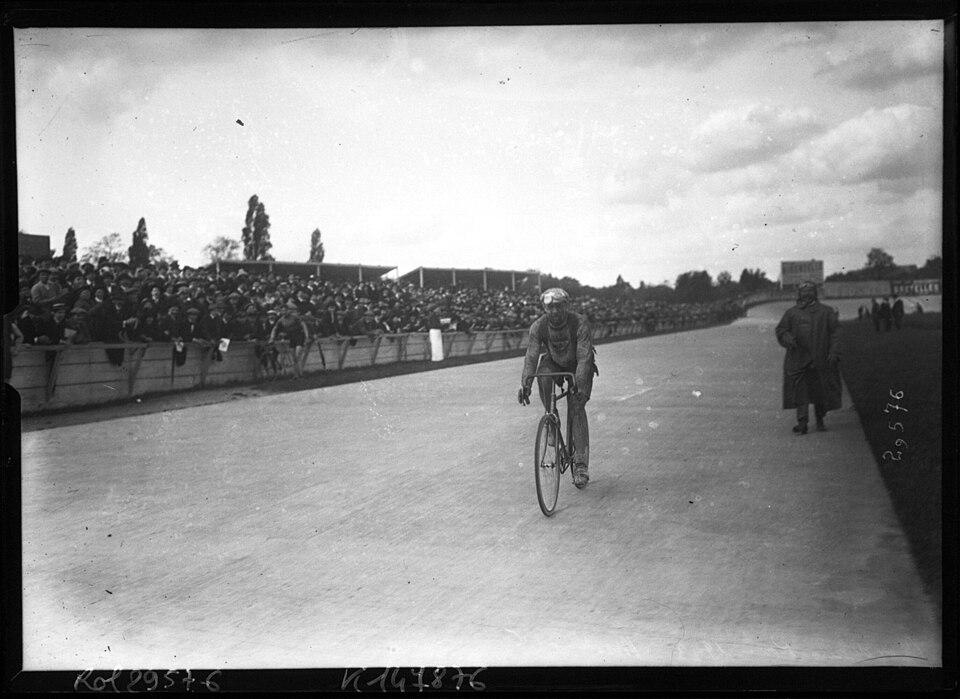
Bordeaux–Paris — with a motor pacer ahead
Jacques Anquetil won the Dauphiné and, a few hours later, began the 557-kilometre Bordeaux–Paris with motor pacing over the final part of the race.
Read the story →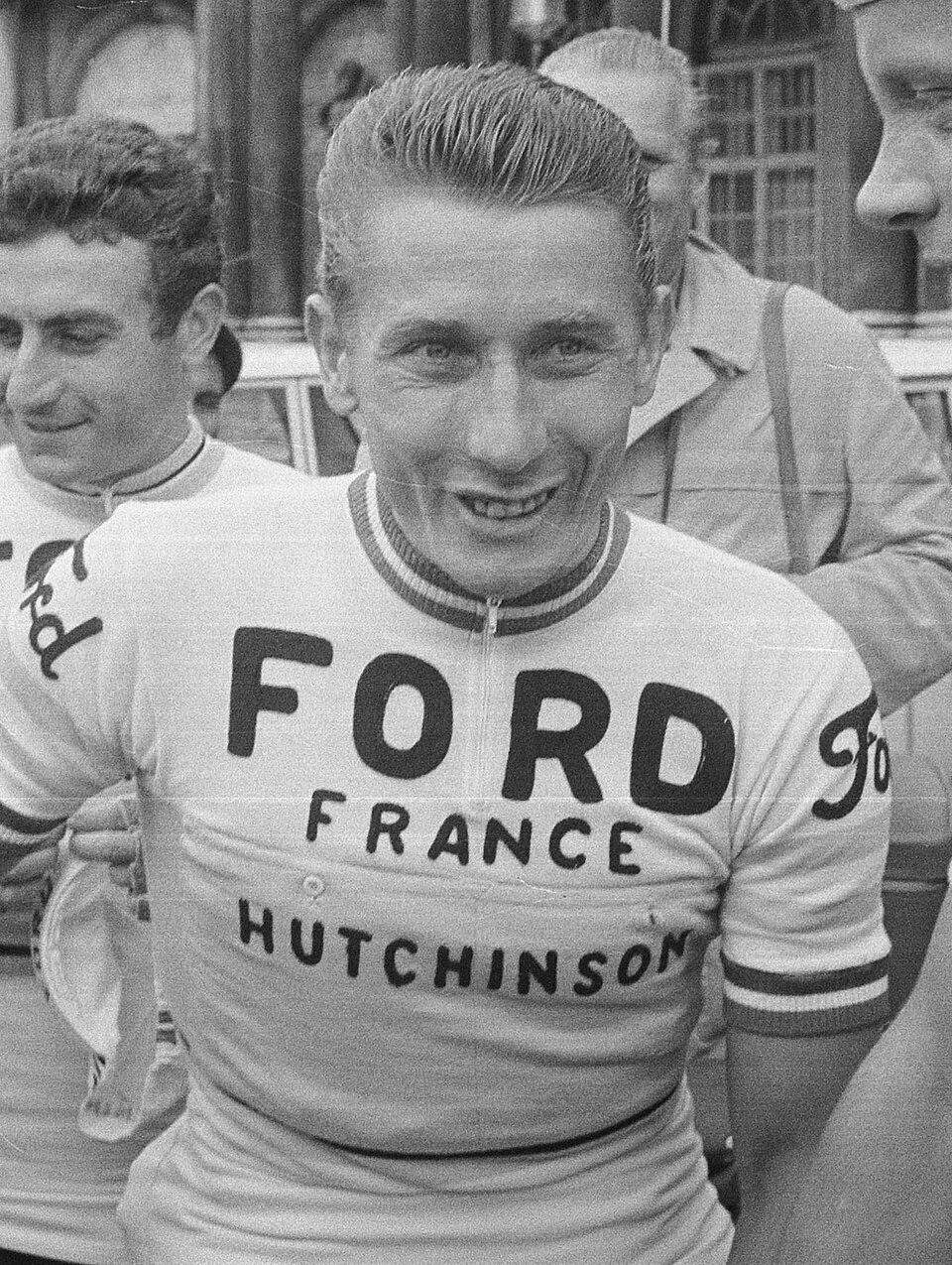
When the Tour peloton protested against doping controls
Shortly after leaving Bordeaux, the riders stopped. New doping controls had entered an old working culture.
Read the story →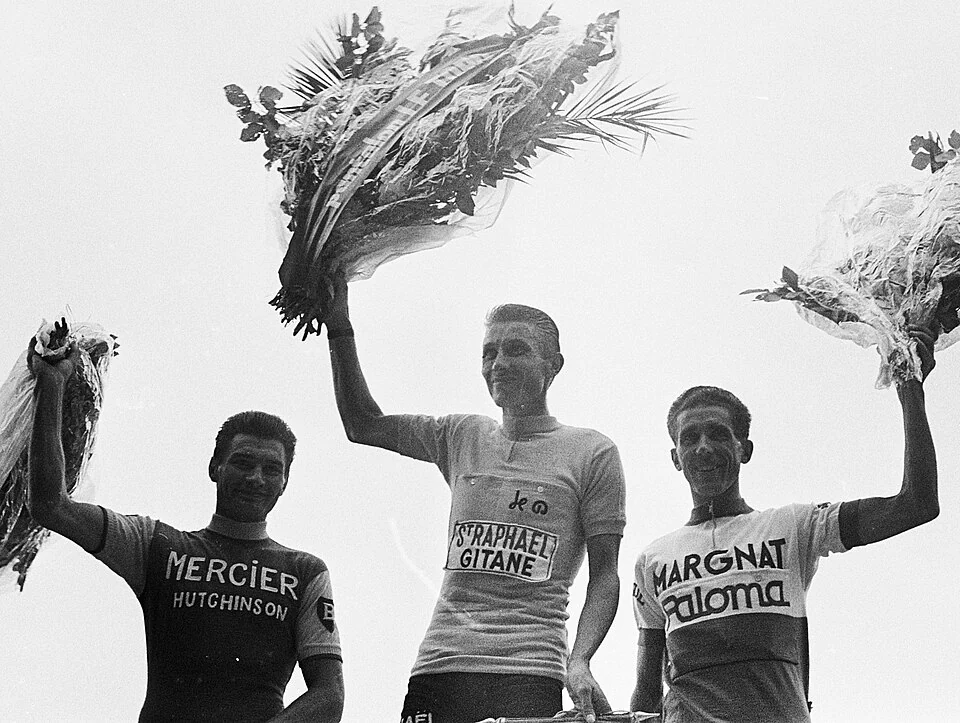
When Anquetil and Poulidor rode shoulder to shoulder
Poulidor won the duel on the Puy de Dôme, but Anquetil kept the yellow jersey by fourteen seconds.
Read the story →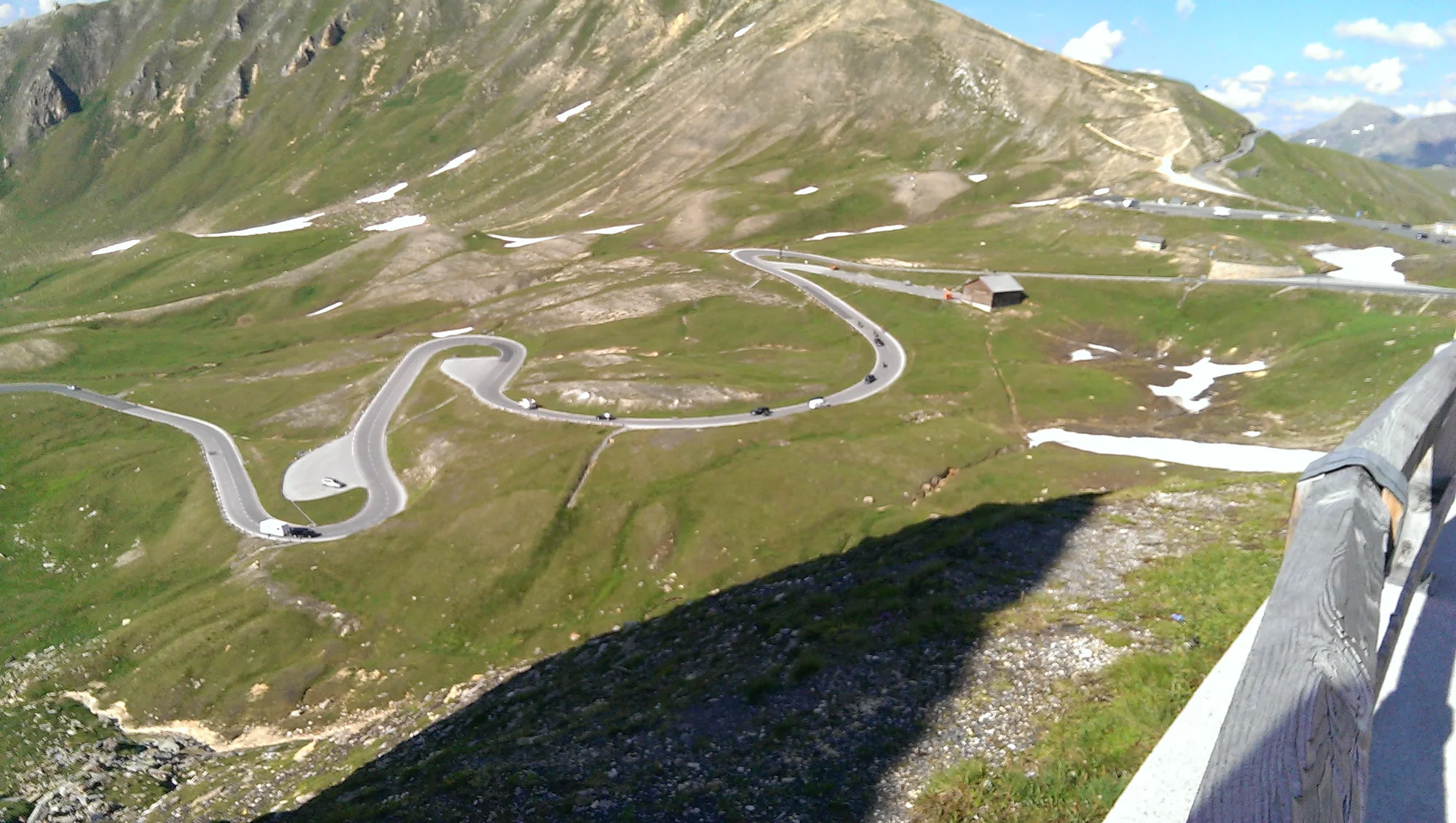
When the rainwear came up in the sunshine
A rucksack full of dry clothes, long trousers and a jacket travelled about 30 kilometres up the Großglockner — in 28-degree heat.
Read the story →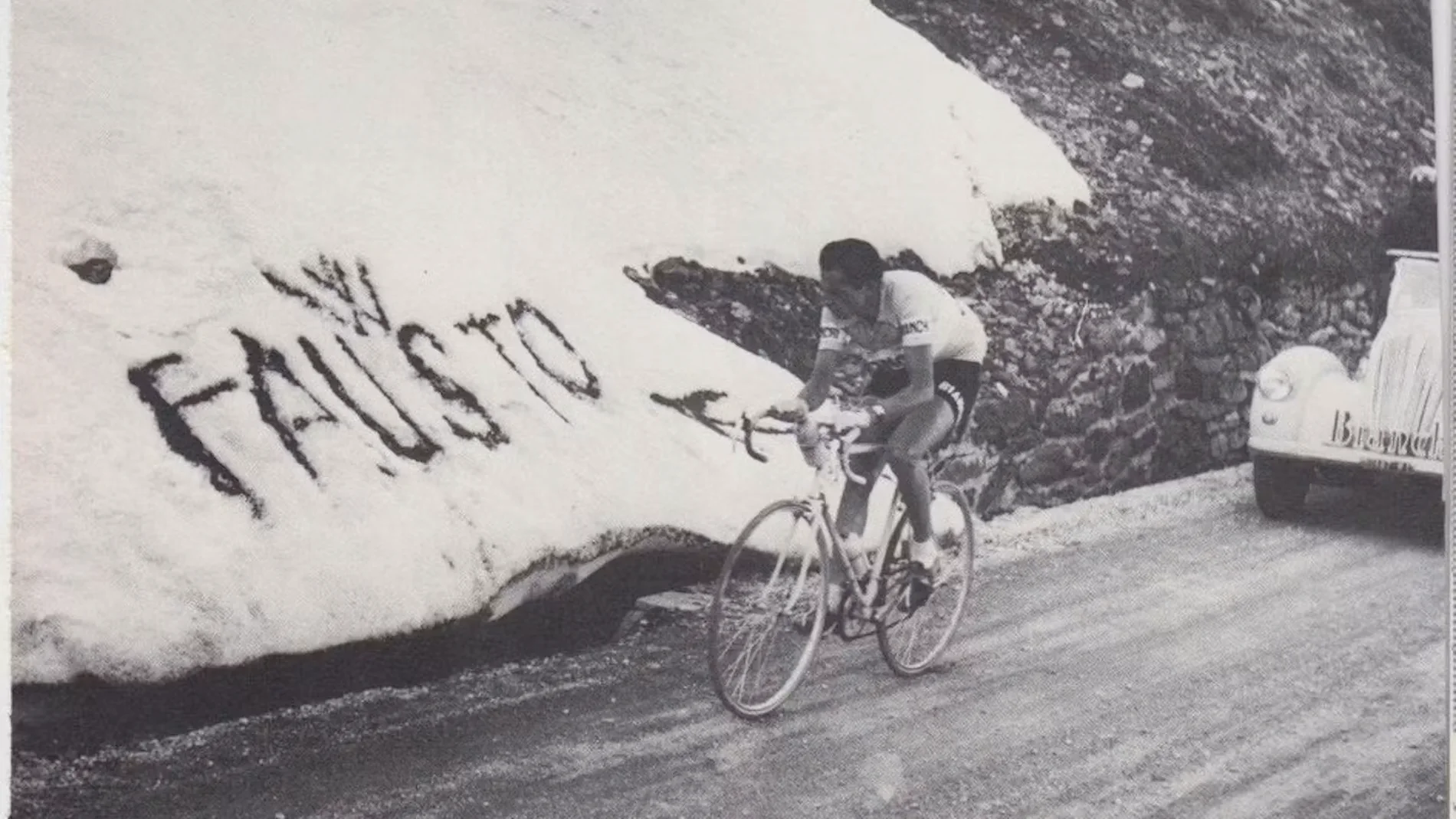
When Coppi found a loophole in the Stelvio agreement
Koblet led the Giro by almost two minutes. Then Coppi sent a young team-mate up the road on the Stelvio.
Read the story →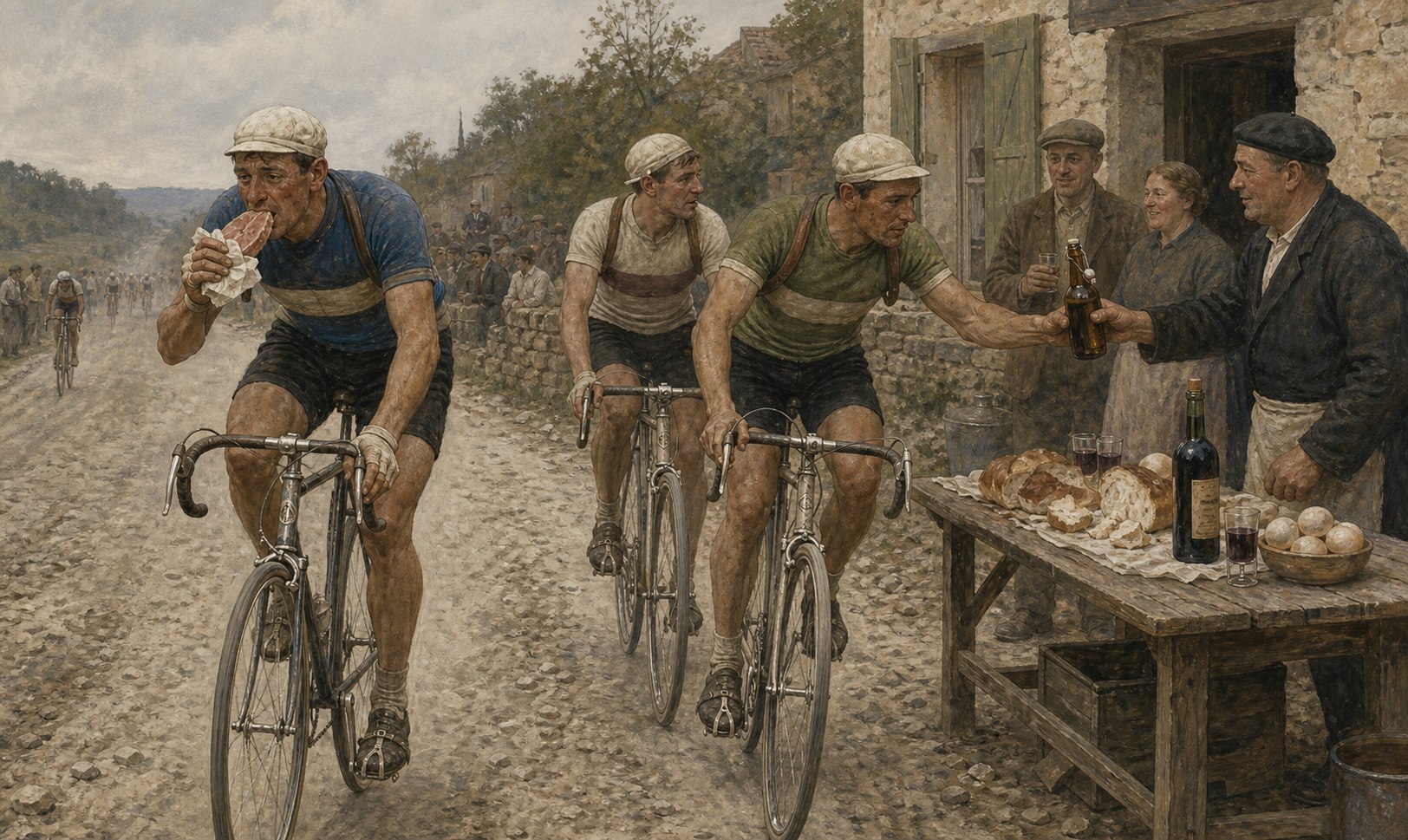
Insomnia, butter and cold beer
Chops, cigarettes and imitation: when one rider’s meal could become the entire peloton’s nutrition theory.
Read the story →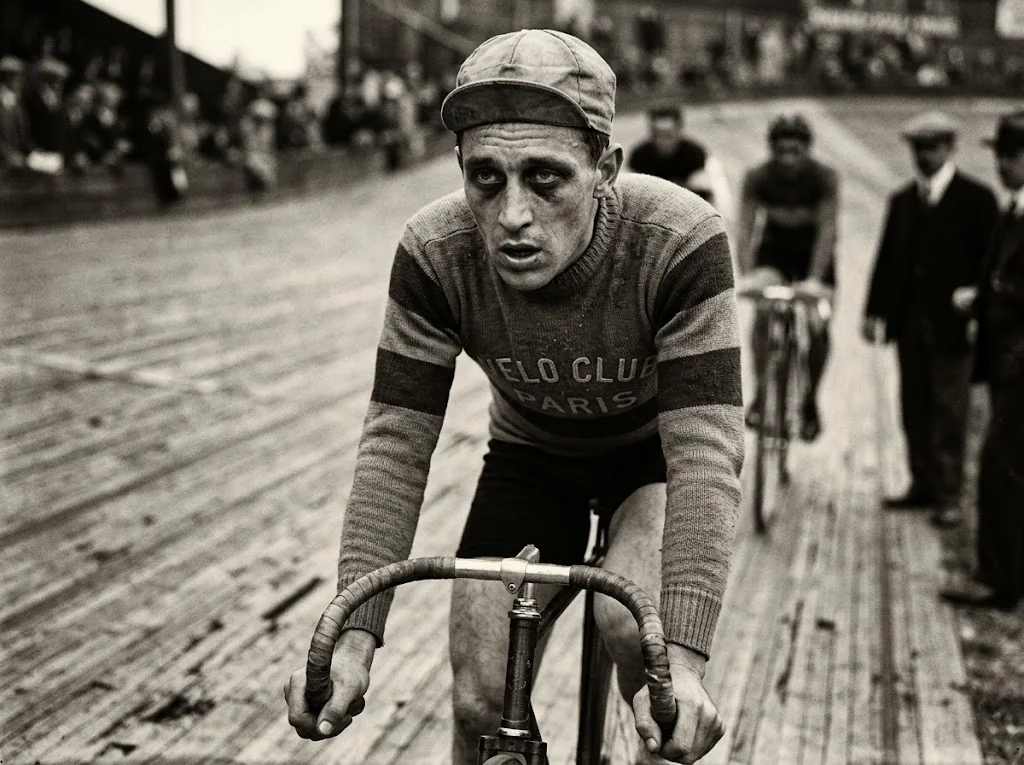
When cycle racing was the Wild West
The heroes, machines, six-day races and physical limits before modern cycle racing.
Read the story →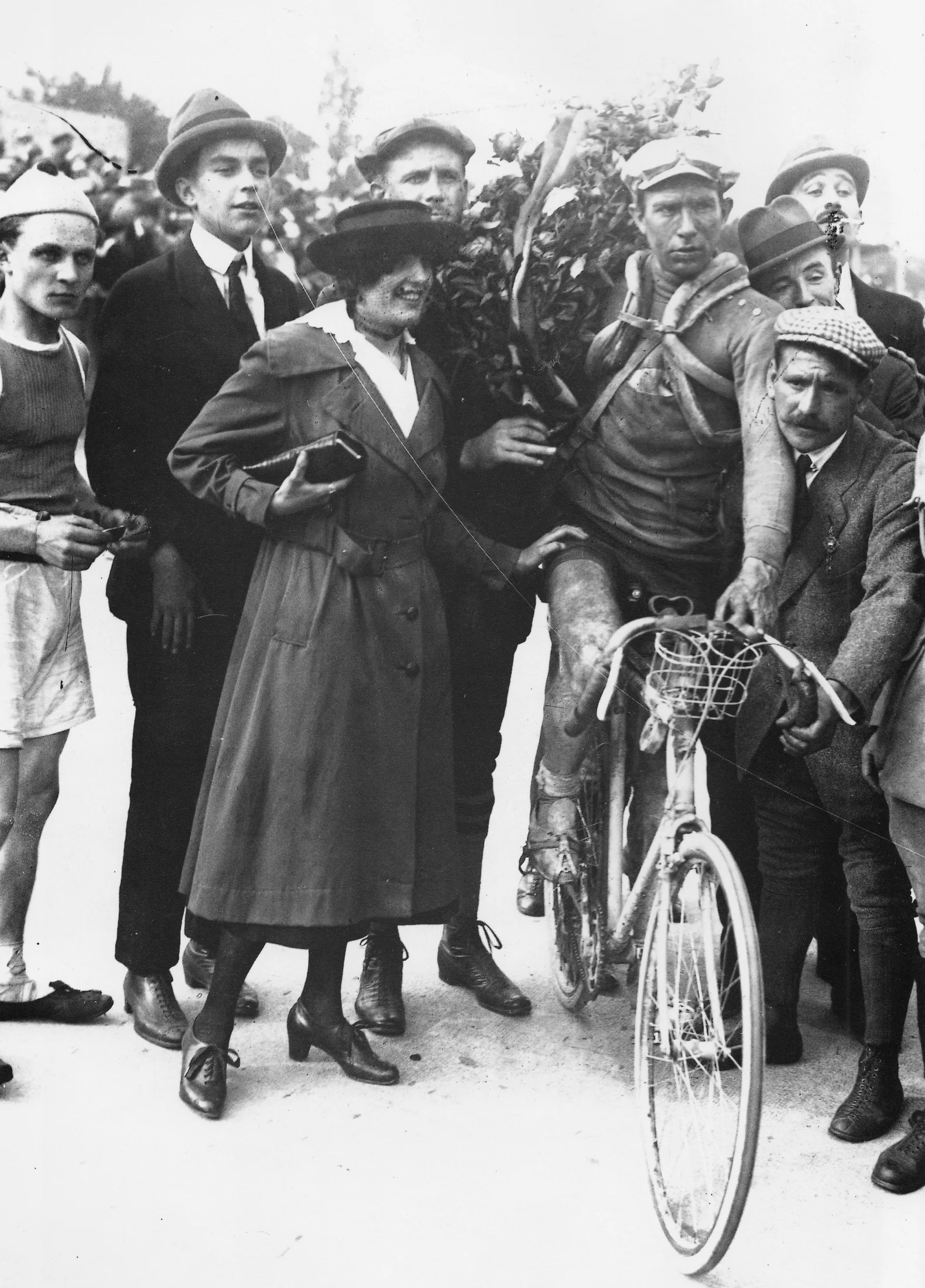
Cheating, nails and chaos at the 1904 Tour de France
The scandal that nearly killed the Tour, and the road from travelling circus to organised sport.
Read the story →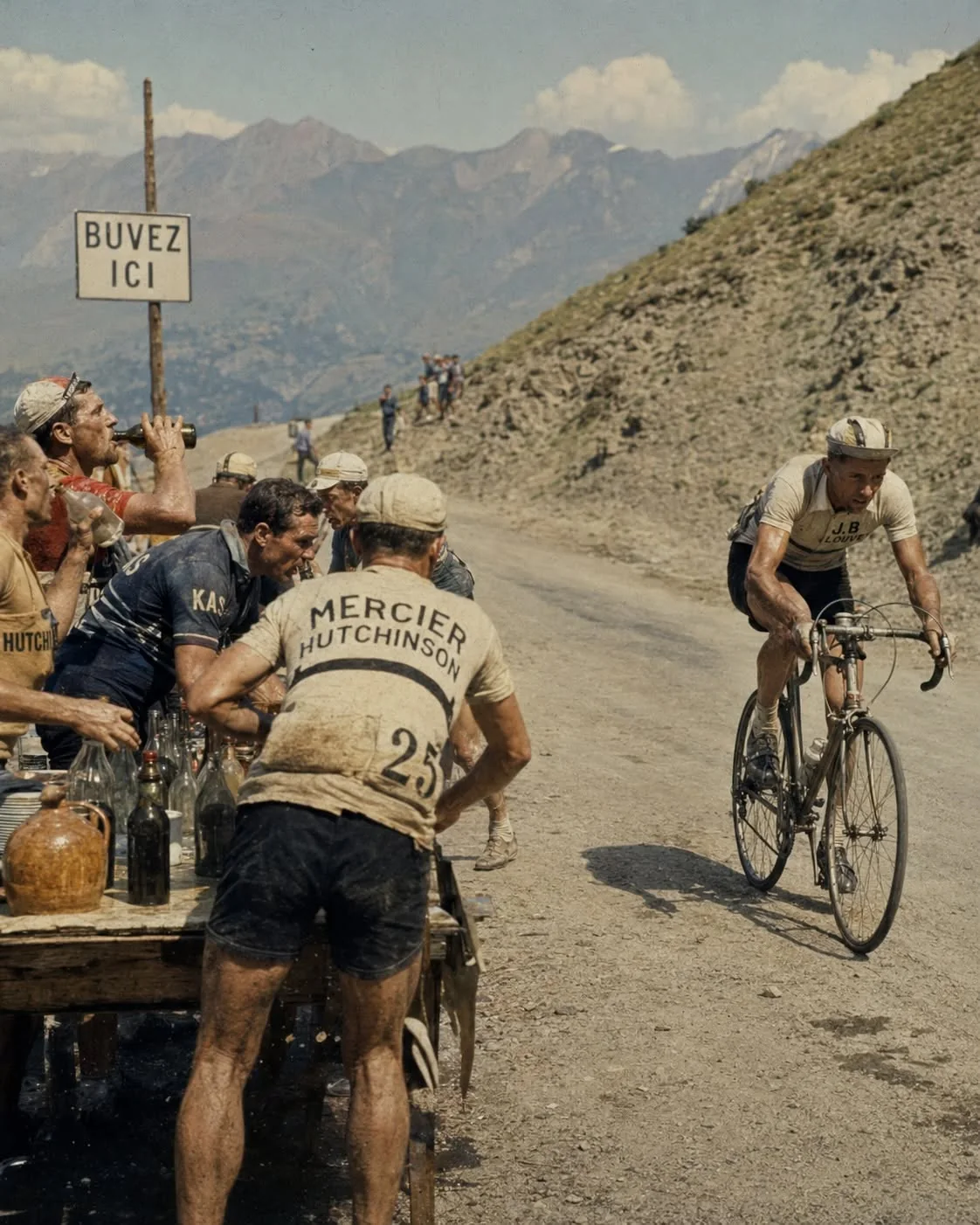
When gears arrived — and beer fooled the peloton
The Tour’s resistance to gears and Julien Moineau’s unusual breakaway towards Bordeaux.
Read the story →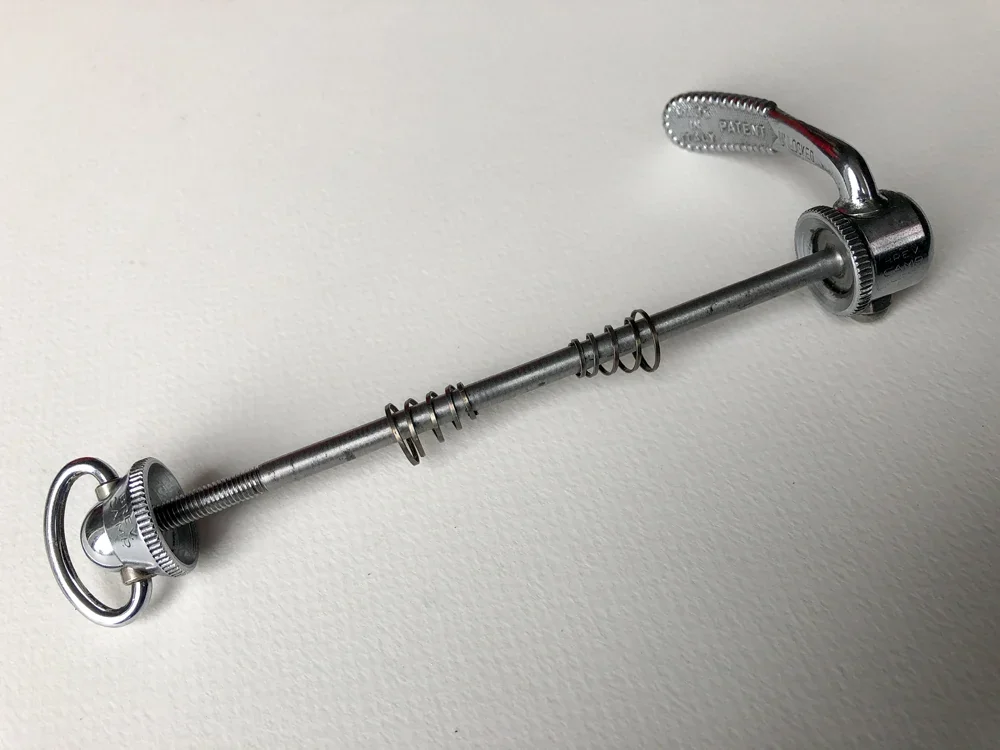
When the cold created the quick release
Tullio Campagnolo’s frozen wheel change became the beginning of a new mechanical solution.
Read the story →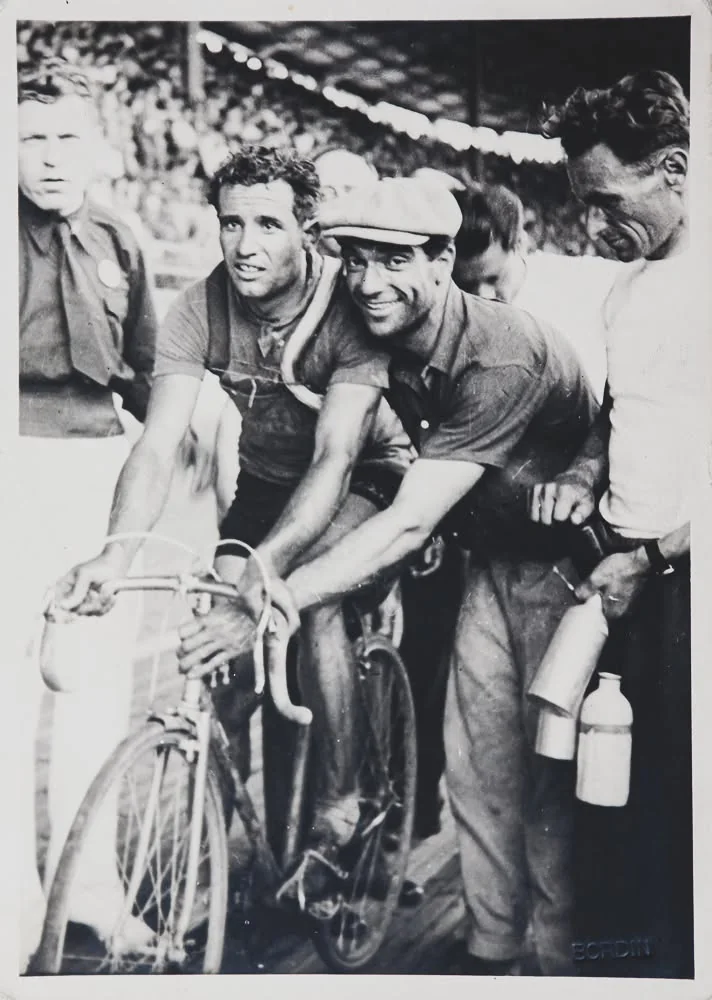
The star who fell from the top
Aldo Bini completed the Giro d’Italia with a broken hand and found distinction in the black jersey.
Read the story →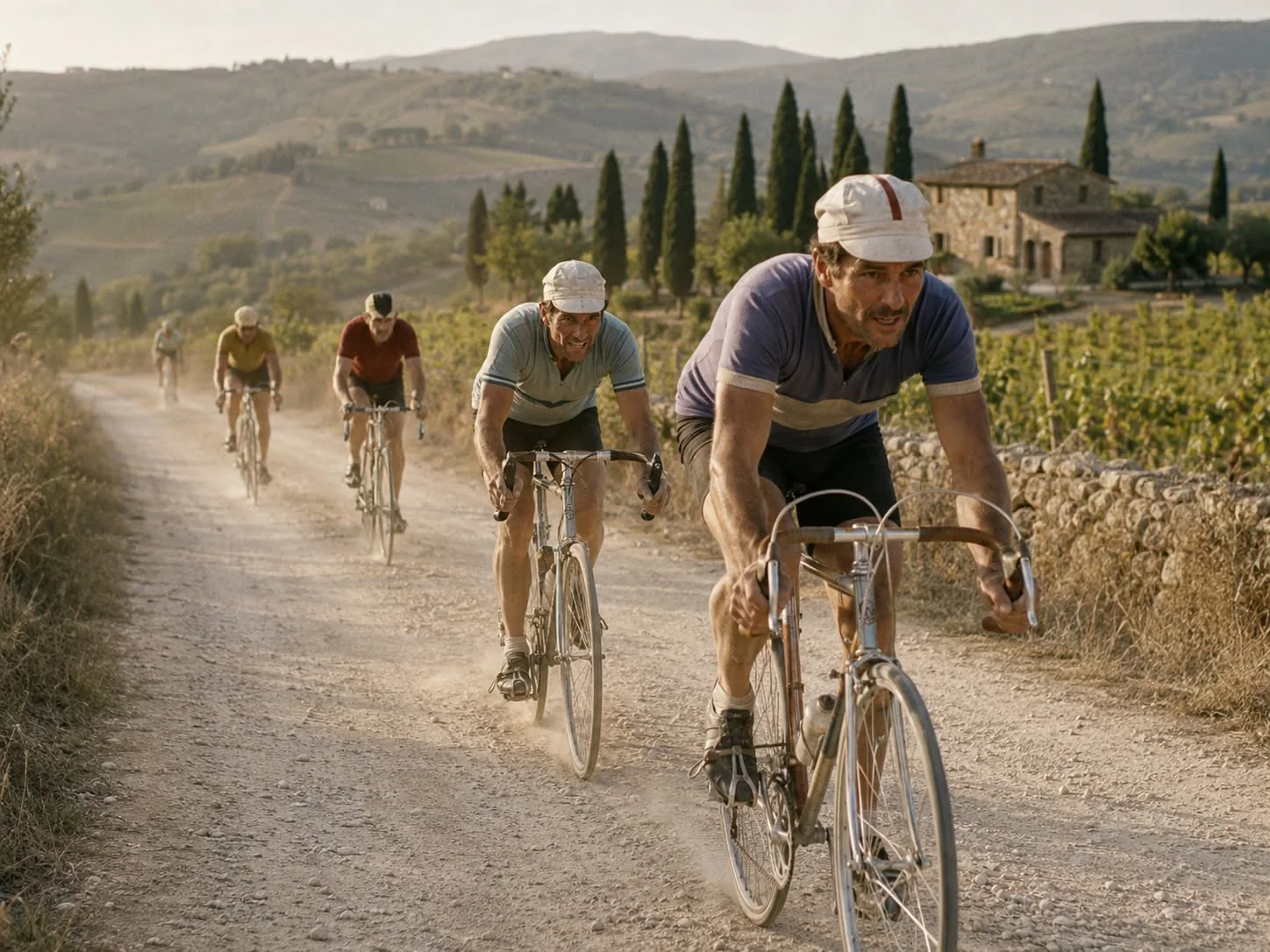
When old bicycles found new roads
L’Eroica began with 92 riders on Tuscany’s white gravel roads.
Read the story →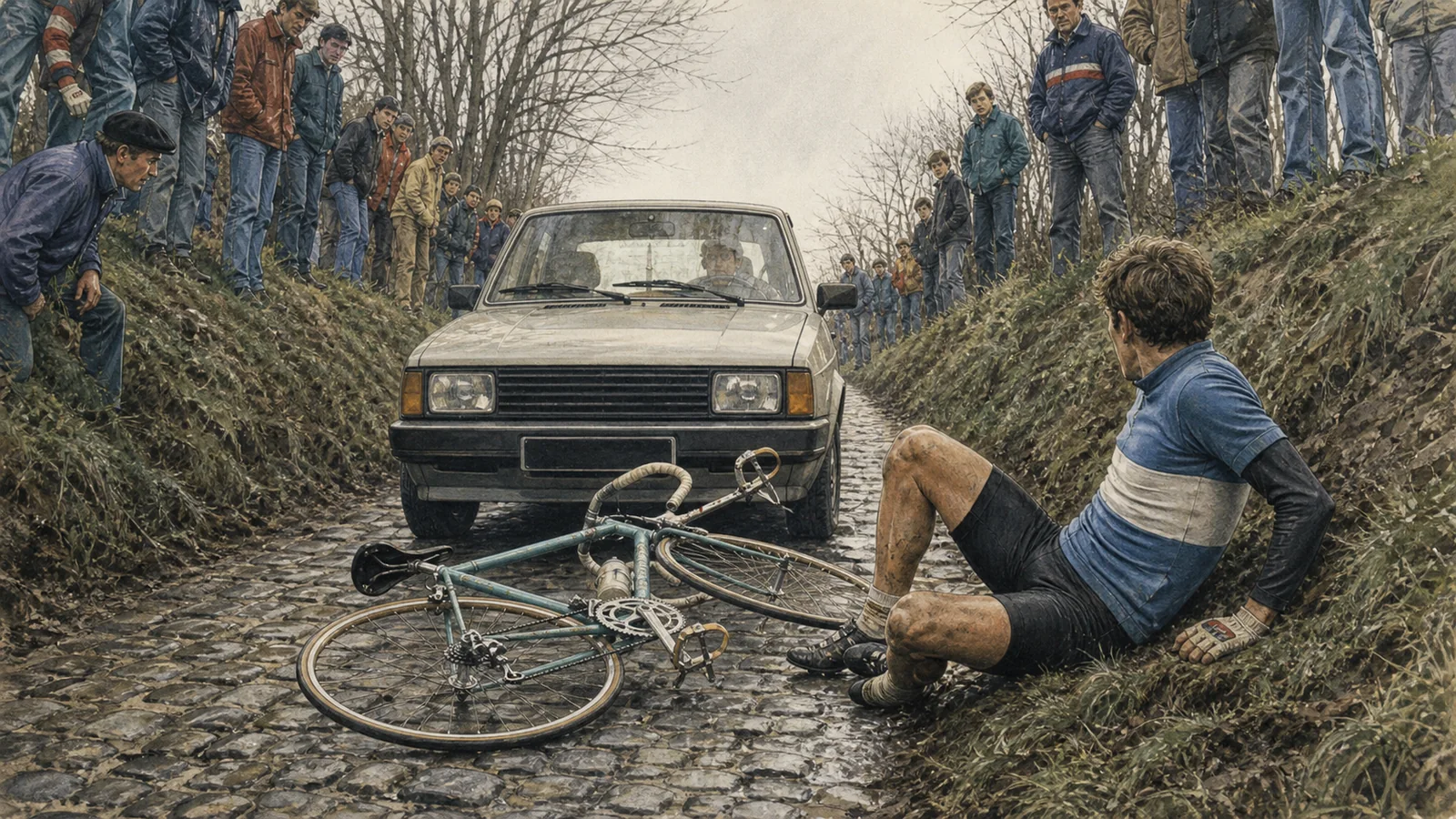
When the race car drove over Skibby’s bicycle
Jesper Skibby led alone on the Koppenberg in the 1987 Tour of Flanders when an official car drove over his bicycle.
Read the story →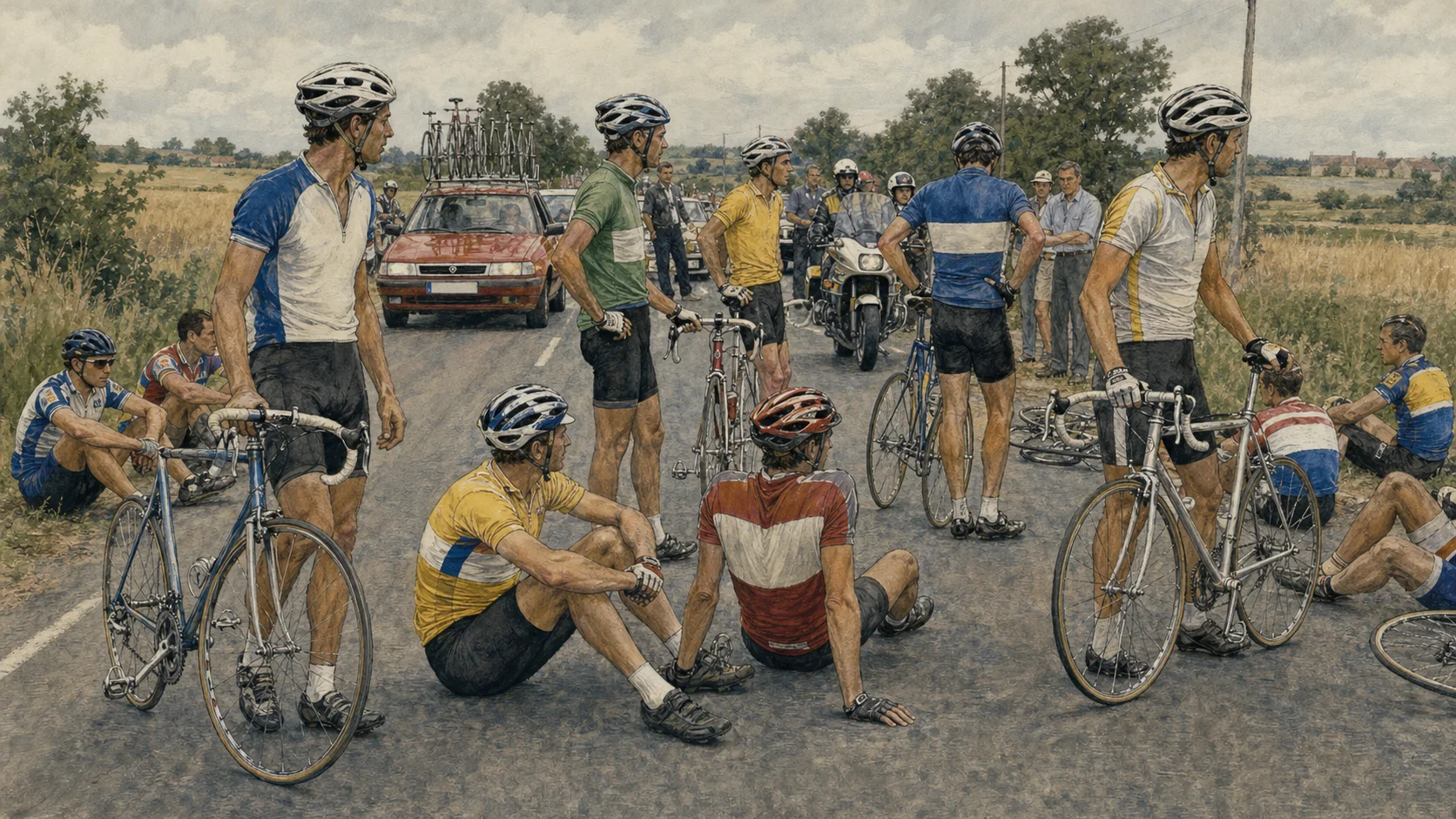
When the Festina affair brought the Tour de France apart
A car full of doping products was stopped before the Tour. Three weeks later a team was expelled, riders were protesting and the peloton was nearly halved.
Read the story →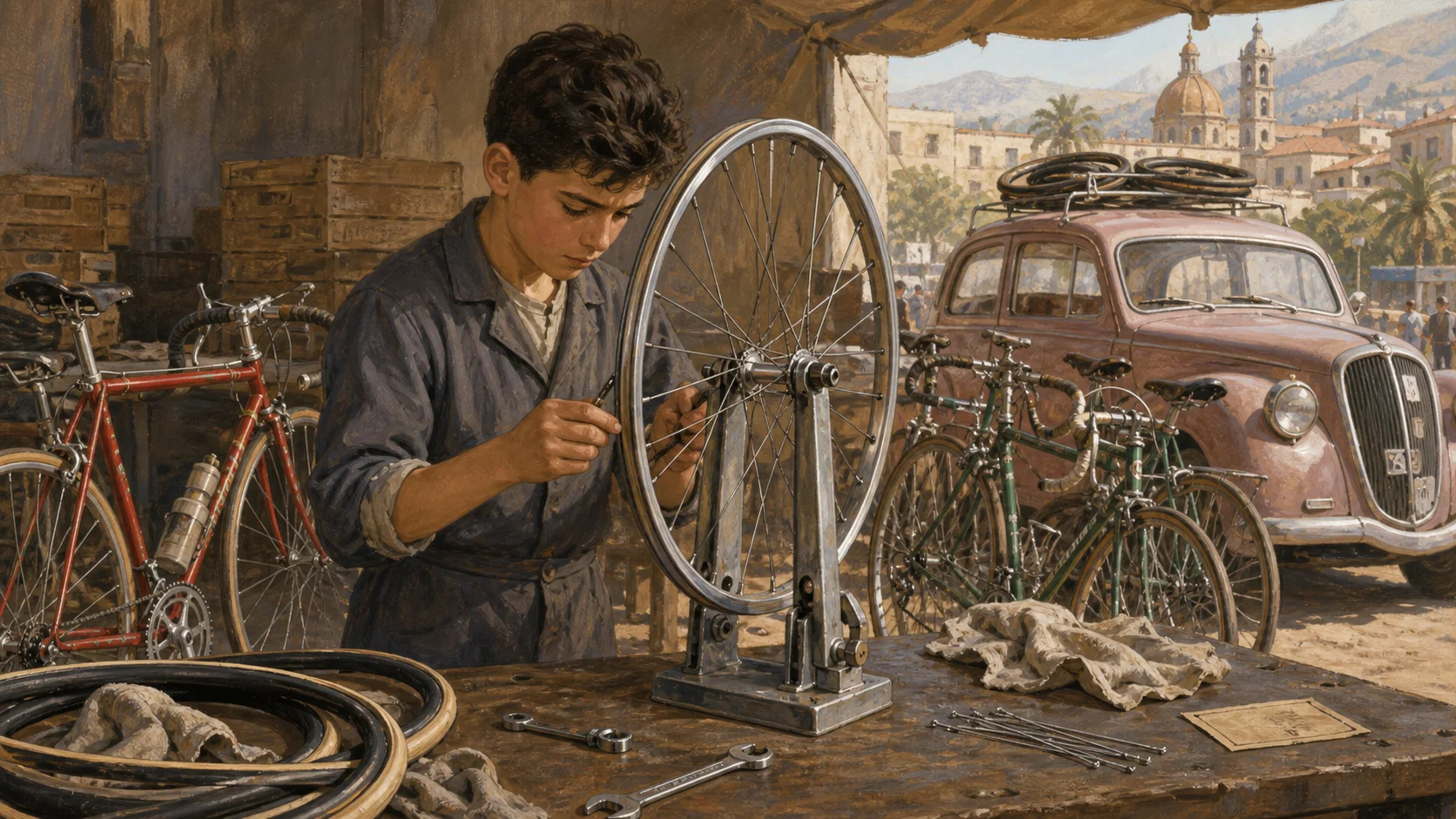
The 16-year-old mechanic who became two years older overnight
Ivo Faltoni was 16, good at building wheels and too young for the Giro service caravan. A false document made him eighteen on paper.
Read the story →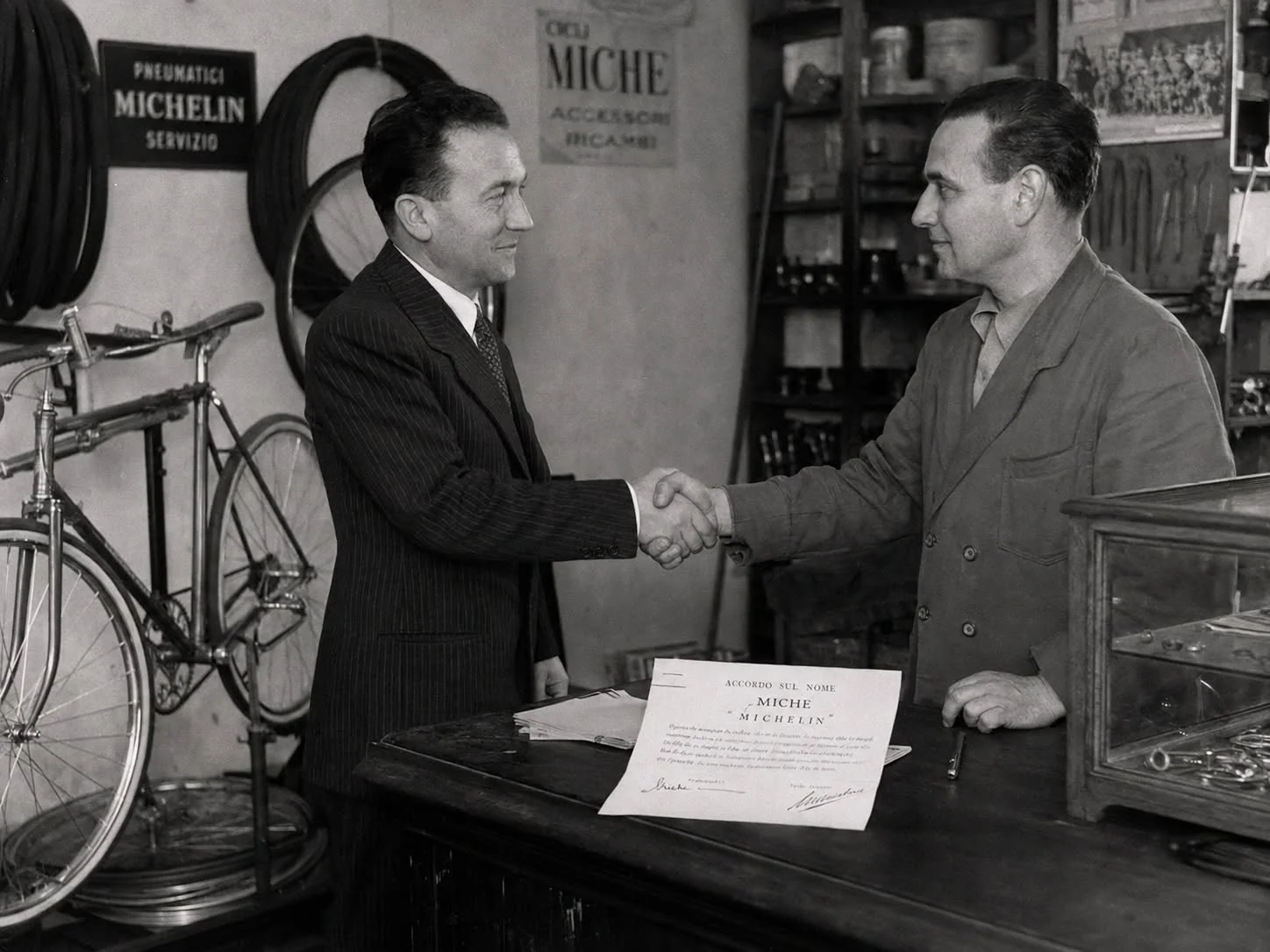
When the Michelin name nearly became a problem
The story of Stella Veneta, Ferdinando Michelin and the name MICHE.
Read the story →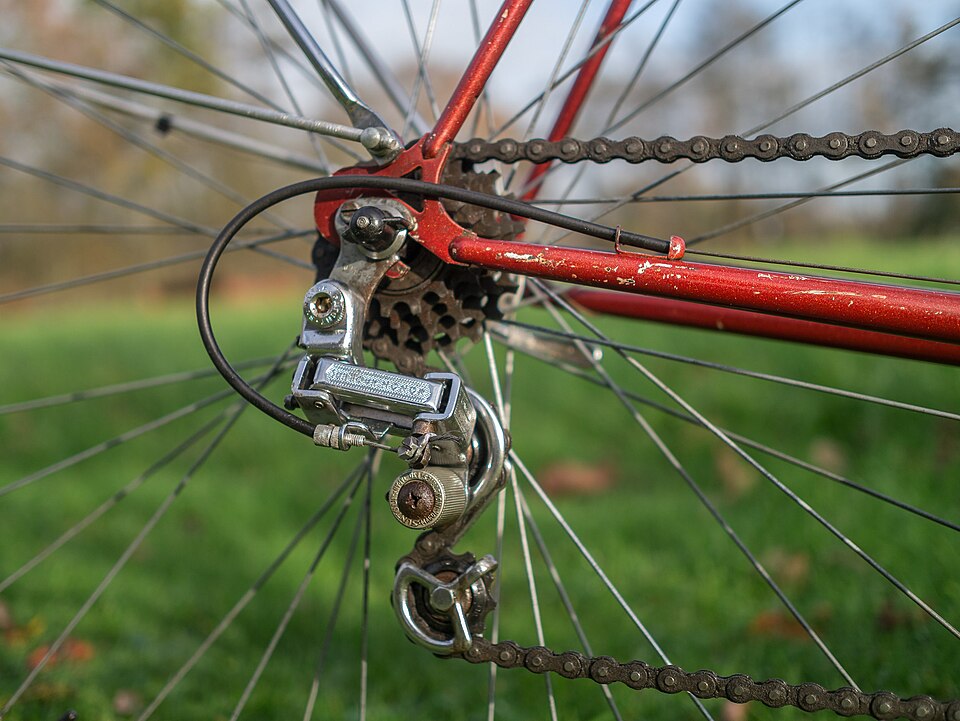
The patent headache that lasted twenty years
SunTour found the slant movement. Shimano answered with indexing, cables and a complete system whose parts had to work together.
Read the story →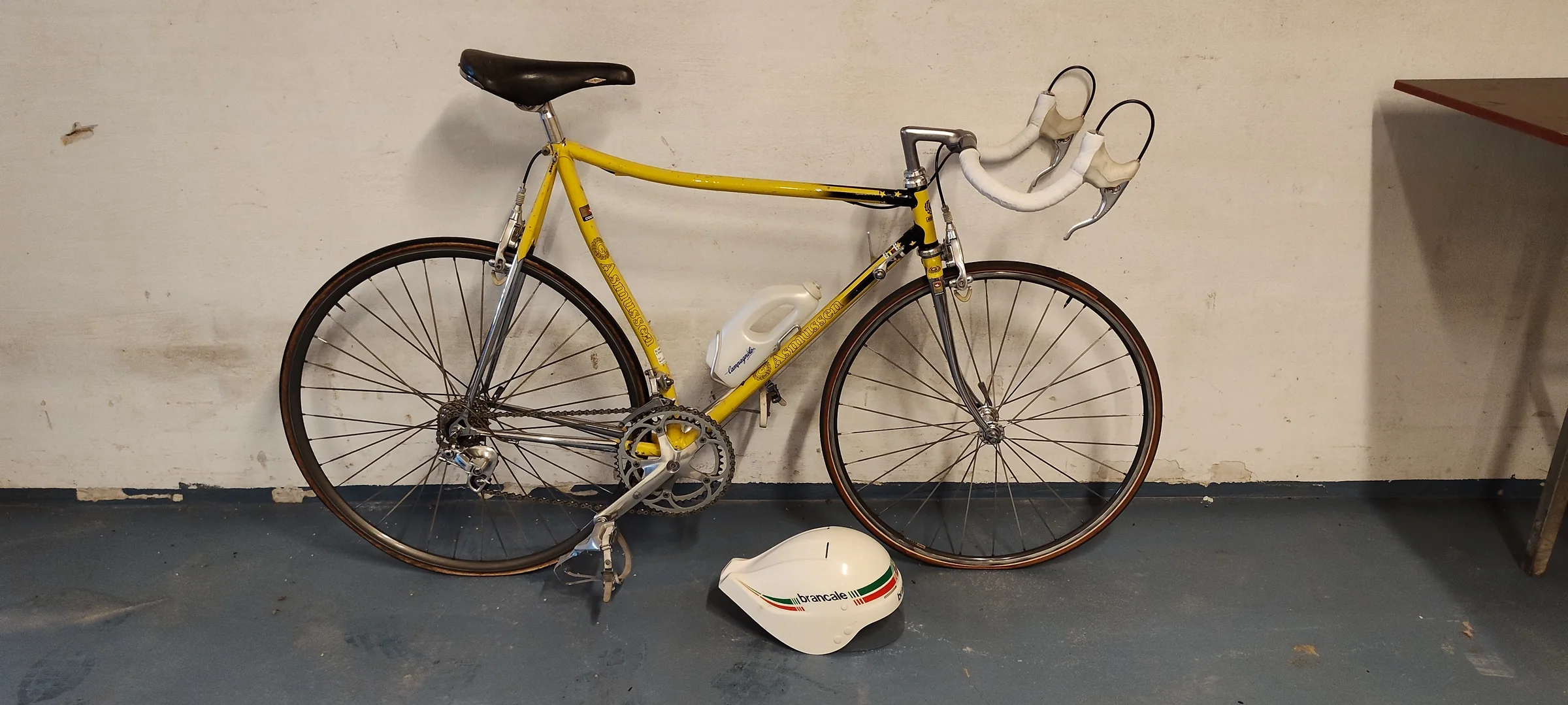
When Gunnar Asmussen made the bicycle lower
From Olympic gold in Mexico City to a yellow-and-black funny bike from a bicycle workshop in Aarhus.
Read the story →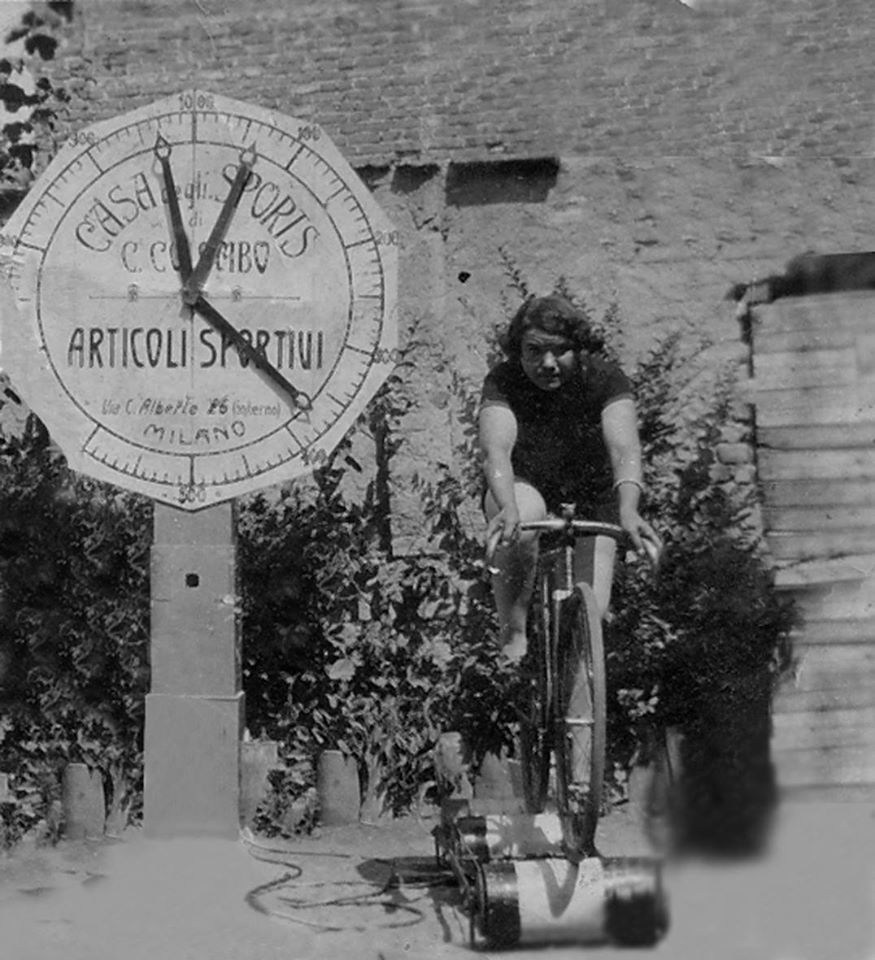
The woman the Giro could not get rid of
Alfonsina Strada arrived outside the time limit in Perugia. Even so, she continued all the way to Milan.
Read the story →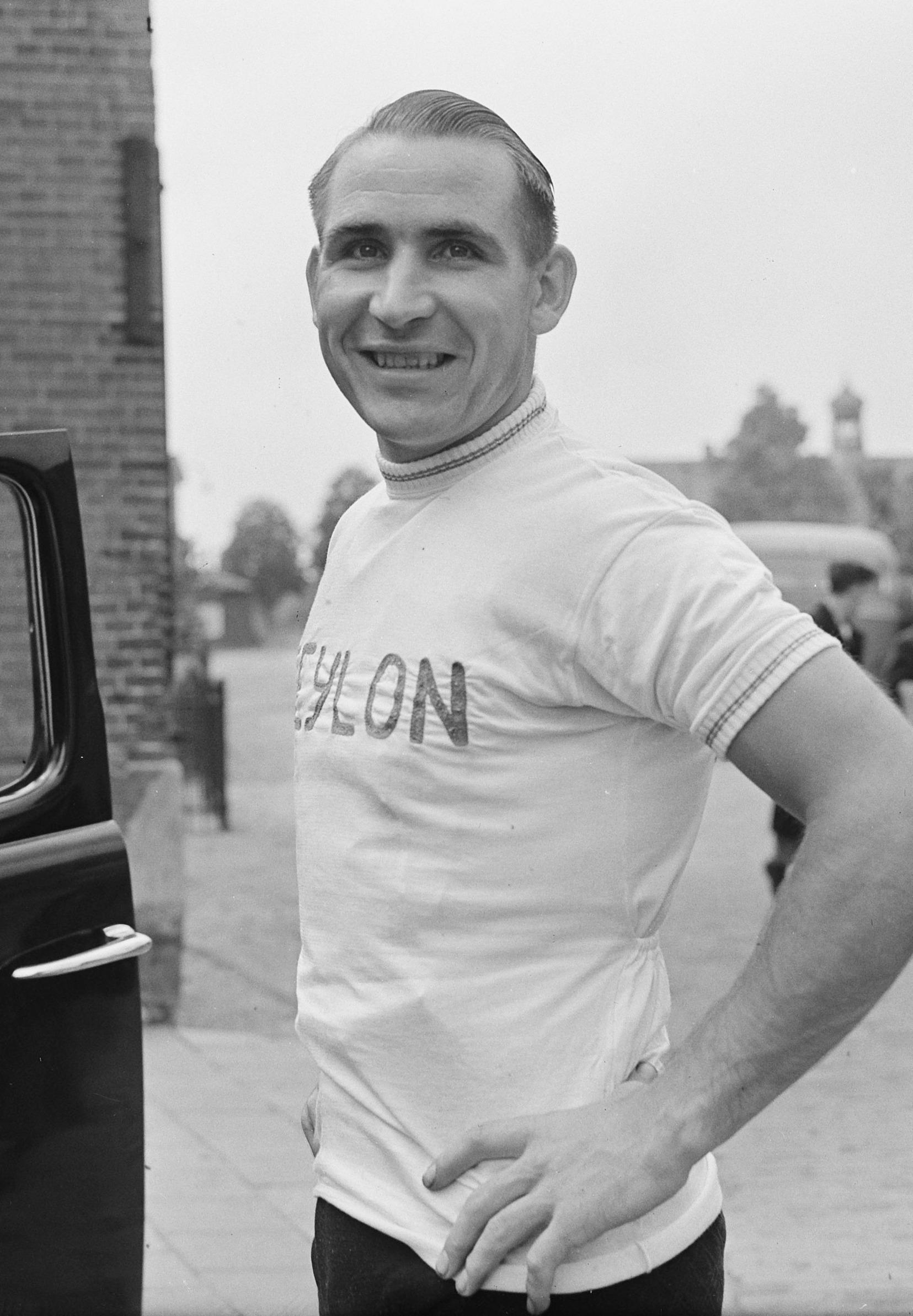
The yellow jersey disappeared down the mountainside
Wim van Est crashed over the Aubisque and was hauled back up with an improvised rope made from inner tubes.
Read the story →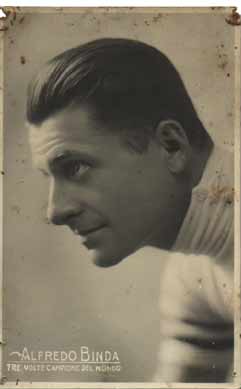
When the Giro paid Binda to stay at home
Alfredo Binda had made the Giro so predictable that the organisers paid him 22,500 lire not to start.
Read the story →No stories match your search.