Riders of the period · War and return · 1943–1949
From prisoner of war to Giro–Tour winner
Fausto Coppi had already won the Giro when he was sent to North Africa and captured. When the races returned, the second part of his career began as well.
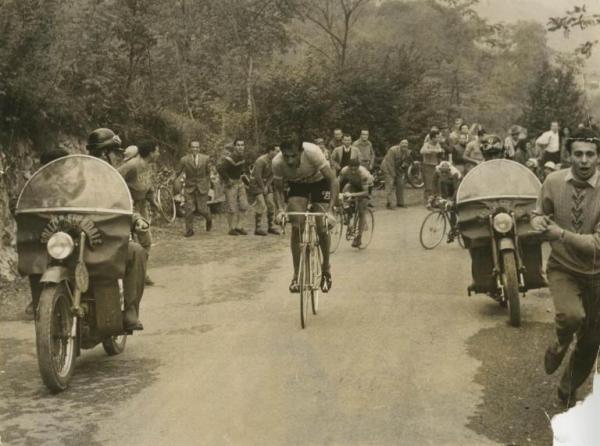
Fausto Coppi had already won the Giro when he was sent to North Africa and captured. When the races returned, the second part of his career began as well.
A Giro winner before call-up
Coppi won the 1940 Giro d’Italia at the age of 20. A few days after the race ended, Italy entered the war. His breakthrough therefore did not begin a normal run of international seasons, but several years of military service, interrupted racing and uncertainty.
To North Africa
In 1943, Coppi was sent to Tunisia with the Italian army. British forces captured him in April near Mateur and Medjez el-Bab. In captivity he was first a soldier and prisoner of war, not the public champion Italian newspapers had made him.
Back through Italy
Coppi was later brought back to Italy with the Allied advance. A surviving letter from November 1944 places him in Caserta. After the war he could race again, but the calendar, teams and supplies had to be reassembled just as the riders did.
The victories returned quickly
In 1946, Coppi won Milan–San Remo after a long solo ride. He won the Giro in 1947 and, in 1949, both the Giro d’Italia and Tour de France. He became the first rider to win the two major stage races in the same season.
Not an unbroken line of talent
Coppi’s results can look like a straight line from young Giro winner to the post-war Campionissimo. The war cut a large gap through that line. His return is therefore not only a story of talent and modern training, but of a professional career that had to begin again.
Sources
Continue exploring
More from cycling history
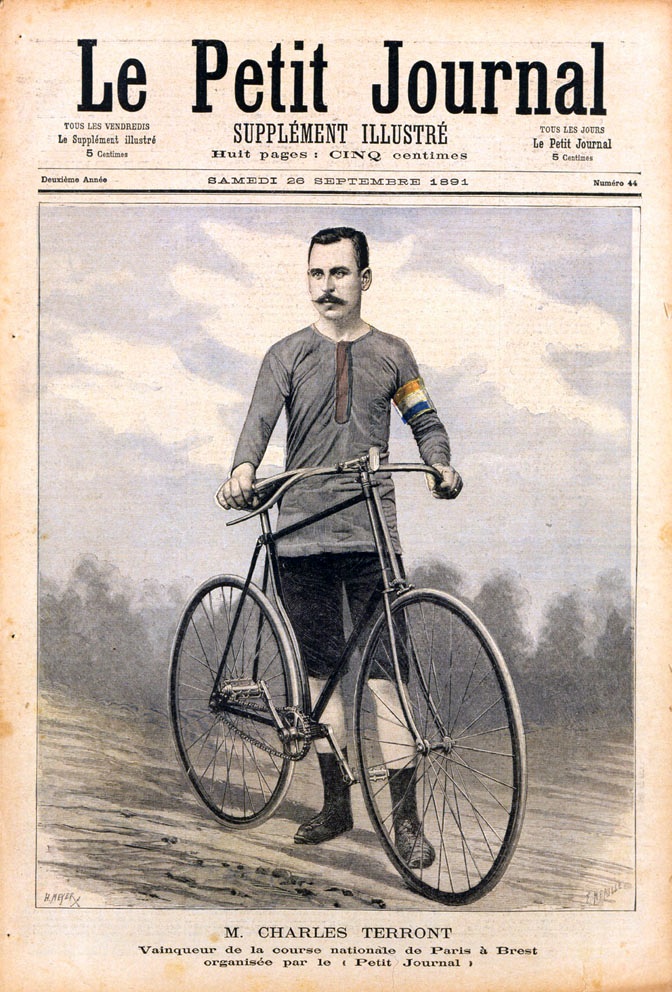
Paris–Brest–Paris 1891 – Charles Terront's three days
Charles Terront covered 1,200 kilometres in 71 hours 37 minutes. The newspaper race tested both the rider and the young safety bicycle.
Read the story →
Cheating, nails and chaos at the 1904 Tour de France
The scandal that nearly killed the Tour, and the road from travelling circus to organised sport.
Read the story →
Cycle racing’s hard golden age
See the races, people, bicycles and changes that shaped the period.
Explore the period →