The period 1920–1929
Cycle racing’s hard golden age
Modern road racing took shape while riders were still treated as a mixture of athletes, mechanics and travelling endurance specialists.
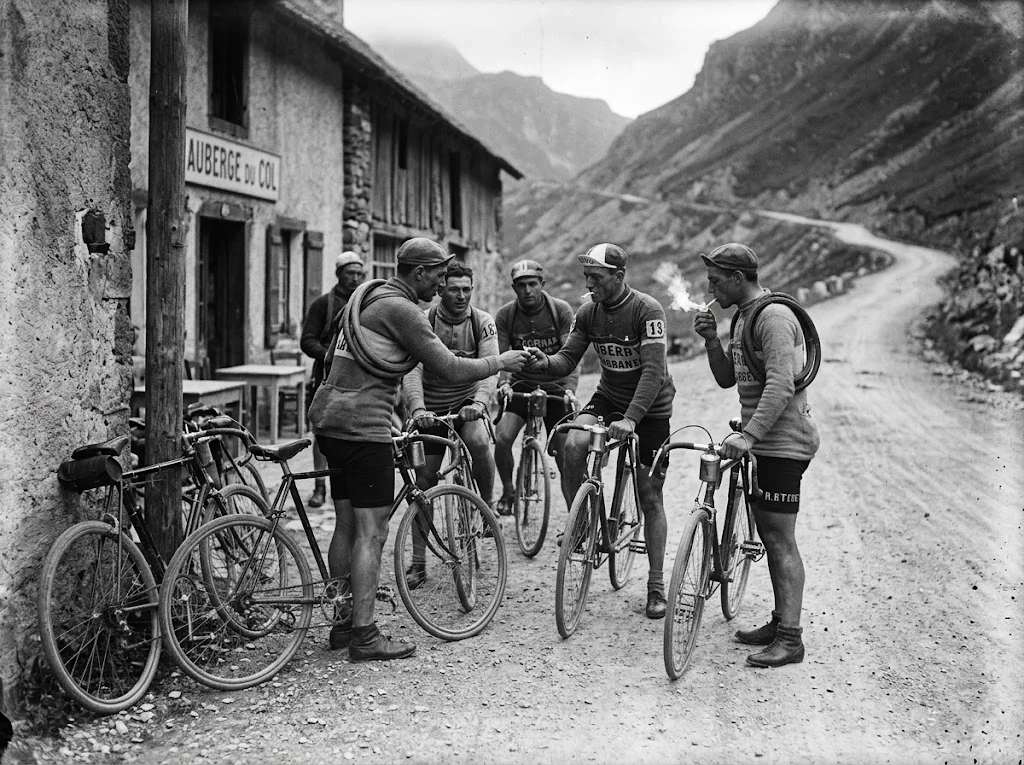
The common period model
The 1920s in three views
The decade’s main development
Stage racing grew into a European mass spectacle while teams, manufacturers and organisers became more structured.
What defined the period
Enormous distances, damaged roads and strict rules existed alongside factory teams, race cars and a rapidly growing press audience.
Three changes to cycling
- The Tour first started outside Paris
- Practical gear systems continued to develop
- Specialist frame builders became part of racing culture
Selected events
A short timeline
- Peter Schrøder begins building bicycles in Copenhagen.
- Léon Scieur wins the Tour de France.
- Henri Suter wins both the Tour of Flanders and Paris–Roubaix.
- Alfonsina Strada starts the Giro and continues to Milan outside the classification.
- Alfredo Binda wins the Giro at his first attempt.
- The longest Tour in history covers 5,745 kilometres; Lucien Buysse wins.
- Binda wins twelve Giro stages; Tullio Campagnolo’s frozen wheel change becomes part of company lore.
- Binda wins eight Giro stages in succession and takes his fourth overall victory.
Seven fixed themes
The decade, seen across the site
Races and defining moments
The 1926 Tour stretched across 5,745 kilometres, while the classics and the Giro developed their own stars and recurring dramas. Distance was still one of the organisers’ strongest instruments.
Follow this theme through cycling history →Riders of the period
Alfonsina Strada challenged the boundaries of the Giro. Binda’s victories made dominance itself a problem, while Bottecchia and Buysse embodied the decade’s stage-race champions.
Follow this theme through cycling history →Bicycles and technical change
Reversible rear wheels still offered two ratios, but freewheels and early gear systems were spreading. Frames, wooden rims, tubular tyres and hand-built details made the racing bicycle both refined and demanding.
Follow this theme through cycling history →Nutrition, training and science
Riders ate according to availability, habit and experience. Coffee, alcohol, medicines and stimulants belonged to a poorly defined field, and later anecdotes must be separated from documented practice.
Follow this theme through cycling history →Cycling culture and everyday life
Newspapers, roadside crowds and portraits with prized bicycles made cycling part of everyday modern culture. The racing cyclist became both worker and public figure.
Follow this theme through cycling history →Society and the times
Europe still carried the damage of the First World War. Industry recovered, mass media expanded and international races offered a shared spectacle across national borders.
Follow this theme through cycling history →The people behind cycling
Frame builders such as Peter Schrøder, mechanics, officials and newspaper organisers shaped the sport away from the finish line. Their choices determined the machines, rules and routes.
Follow this theme through cycling history →After the war
Europe was scarred, the roads were worn, and many riders had never returned home. Even so, cycle racing grew during the 1920s into one of the continent’s largest popular spectacles.
A generation marked by war
The sport returns to a changed Europe
The Tour de France was not held from 1915 to 1918. When it returned in 1919, the peloton passed ruined villages, military cemeteries and landscapes in which the war was still visible.
The bicycle industry had changed too. Factories had produced military equipment, and materials were difficult to obtain. Several marques joined the La Sportive consortium, whose teams shaped the first post-war years until manufacturers could once again build their own professional squads.
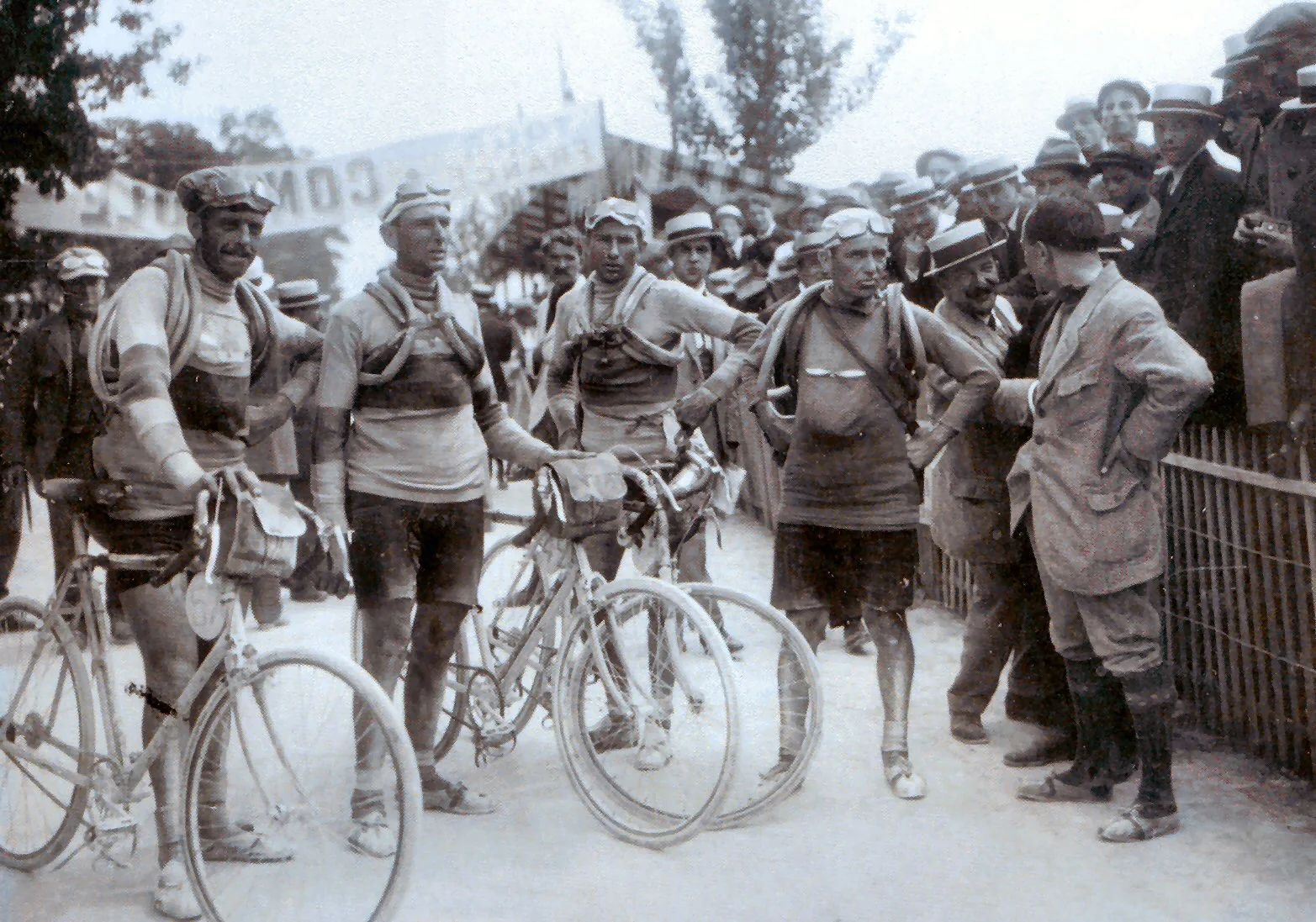
Tour director Henri Desgrange cultivated the ideal of the self-reliant rider. The race was meant to find not only the fastest man, but the character who could endure hunger, cold, solitude and mechanical problems with the least possible help.
Beyond a modern yardstick
A whole working week measured in kilometres
In the 1920s, a stage of more than 300 kilometres was not unusual. The 1920 Tour covered about 5,500 kilometres in only 15 stages. On race days, riders could be out from before sunrise until well into the evening.
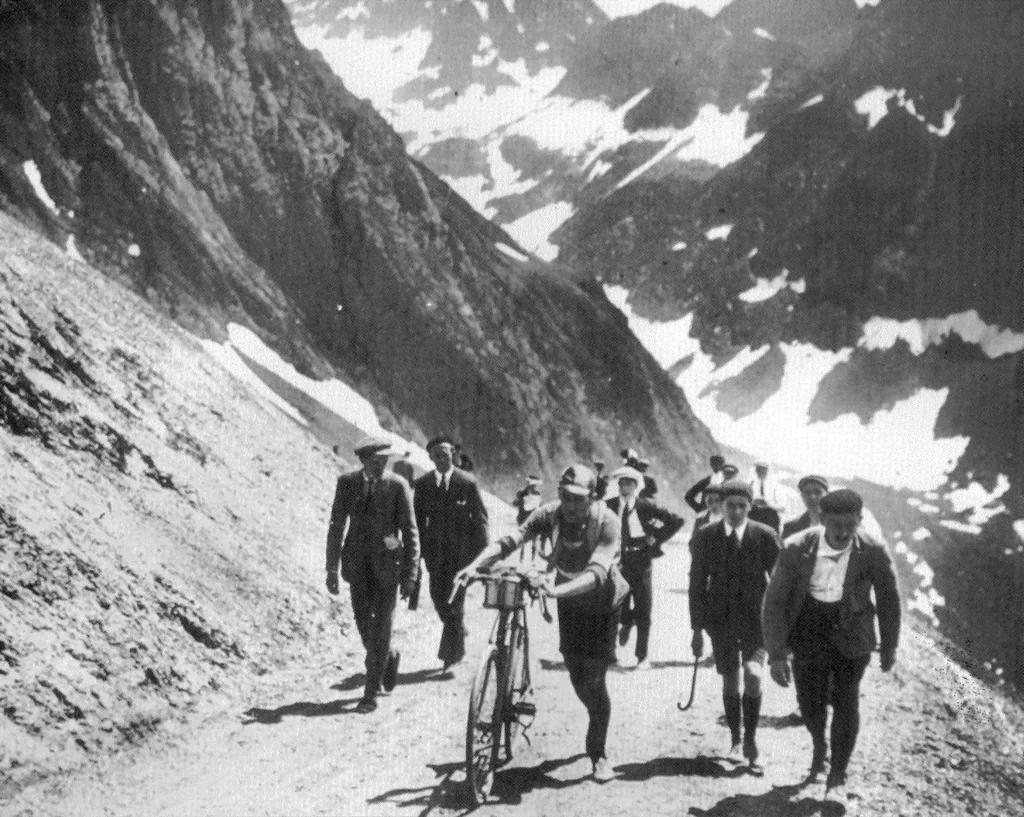
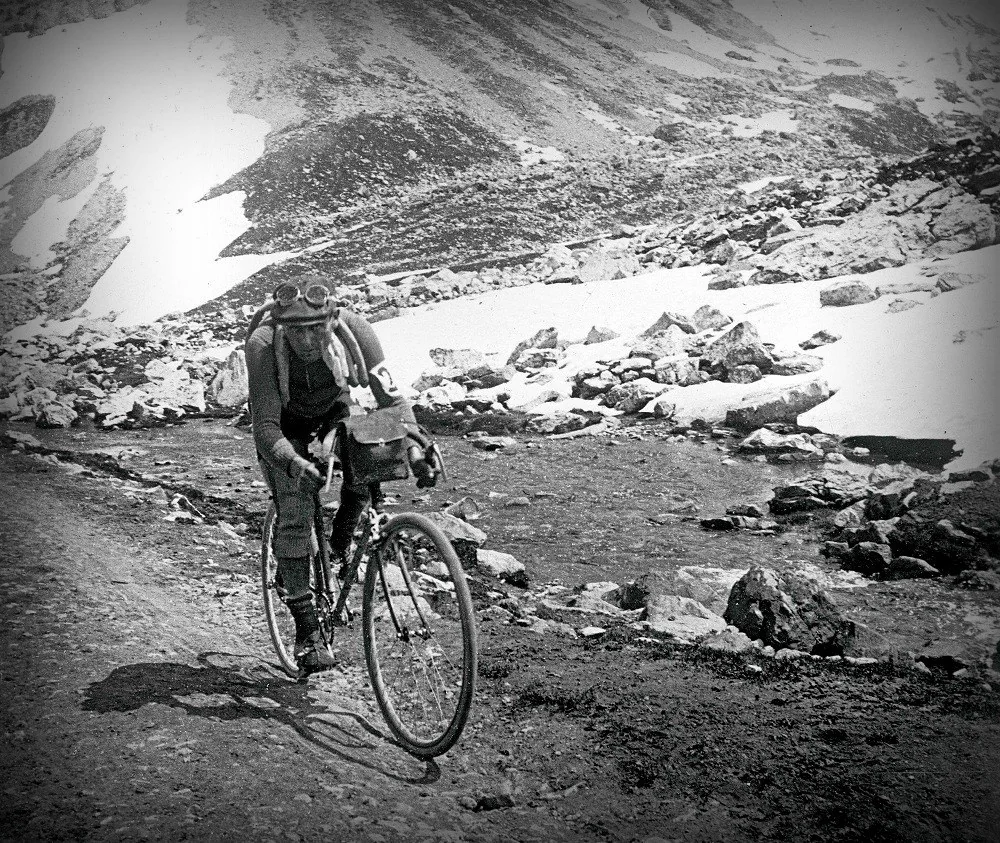
The longest Tour was held in 1926: 5,745 kilometres over 17 stages. Belgian Lucien Buysse won after almost 239 hours of riding. On the decisive stage from Bayonne to Luchon, he attacked in rain, sleet and wet snow over climbs including the Aubisque and Tourmalet.
Buysse embodied the period’s ideal: the strongest was not necessarily the most explosive, but the man who could continue when the others were close to breaking. In 1924, the stage from Les Sables-d’Olonne to Bayonne measured 482 kilometres — longer than two present-day Tour stages put together.
The steel bicycle
A refined working tool
Professional bicycles of the 1920s were not simply clumsy iron machines. The best had thin steel tubes, narrow tyres and competition-developed parts, though they were heavier and far less efficient than today’s racing bicycles.
Rims were often wooden and tubular tyres were glued in place. This could produce a light and comfortable wheel, but rain and braking heat affected both wood and glue. The simple rim brakes required the rider to read the road early; a sudden stop on a wet descent was seldom possible.
Freewheels were no longer unusual. The crucial problem was the lack of a practical gear change.
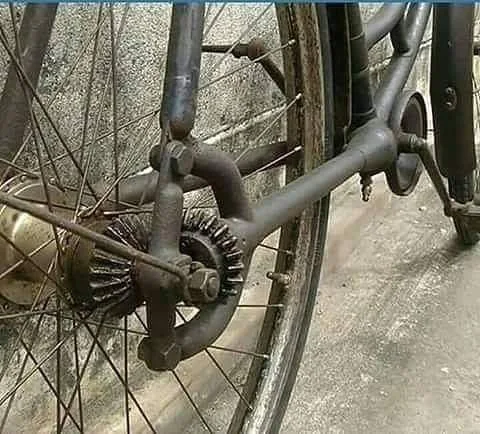
When the rear wheel was the gear lever
Stop. Loosen. Turn. Tighten.
Many racing bicycles had a reversible rear wheel with one sprocket on each side: a smaller one for flat roads and a larger one for the mountains. Before the climb, the rider had to loosen the wing nuts, turn the wheel around, replace the chain and align the wheel again.
With cold or exhausted fingers, even a wing nut could become an opponent. If the wheel sat crooked, the tyre could rub against the frame or the chain could come off. Changing gear was not merely technique — it was a small mechanic’s test in the middle of the race.
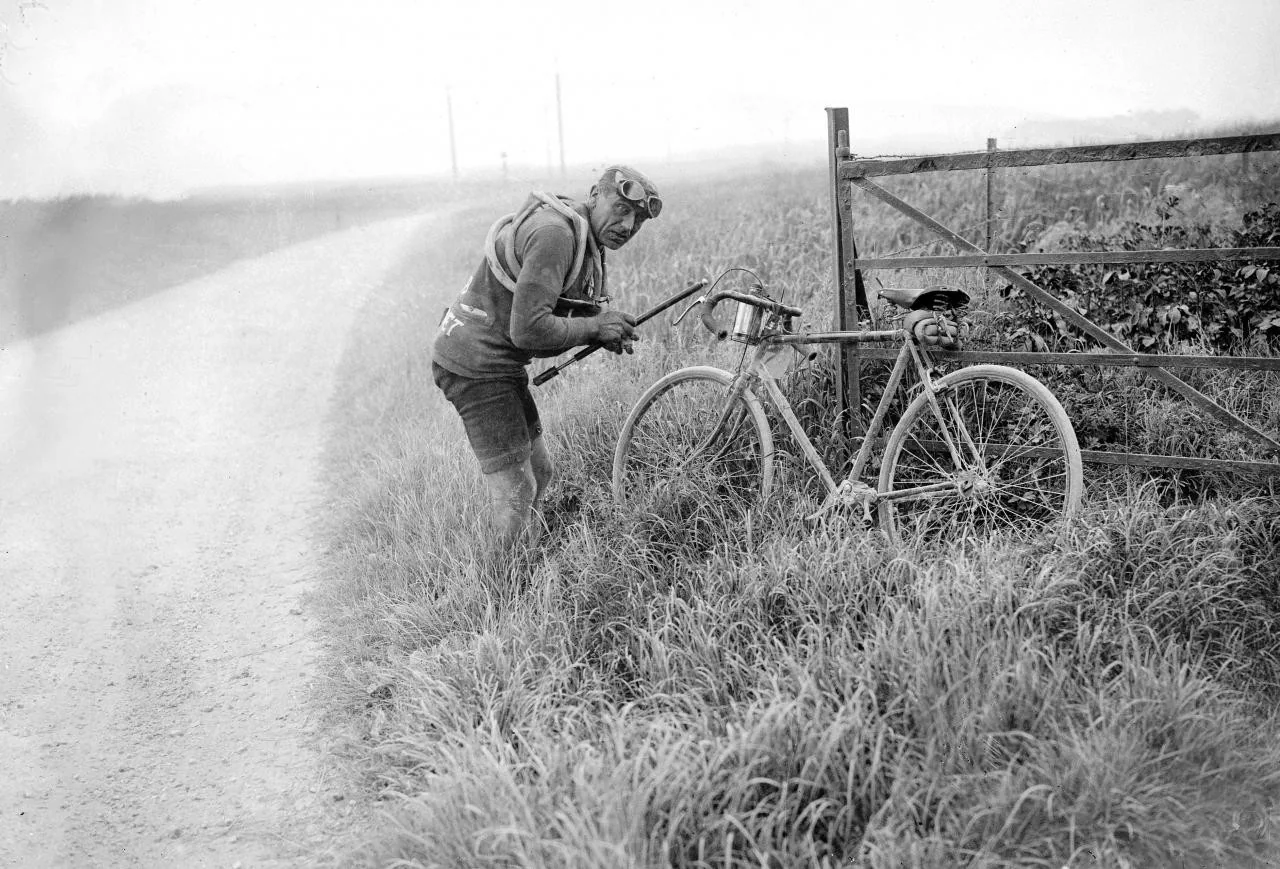
Spare parts on the body
No radio. No guarantee of help.
Team managers, mechanics and cars already existed, so the 1920s were not entirely an age before the team car. But help was far less accessible, and the Tour’s rules continued to be based on personal self-reliance.
Spare tubular tyres were carried in a figure of eight over the shoulders. After a puncture, the rider had to tear off the tyre, fit a new one and inflate it with a hand pump. He might also need to join a chain, straighten a wheel or make a damaged pedal usable.
If he stood alone between two villages, the choice was simple: repair it with the tools he carried — or start walking. That may be where 1920s cycle racing shows its true face: technically refined and widely celebrated, yet still unforgivingly close to the pioneering years.
Stories from the period
The individual moments
The period provides the overview. From here, you can continue to the individual stories about people and events in the 1920s.