1900 to the 1920s
Pioneers and
endurance
A time when the bicycle was simple, the roads unforgiving, and riders had to bring both body and machine all the way home themselves.
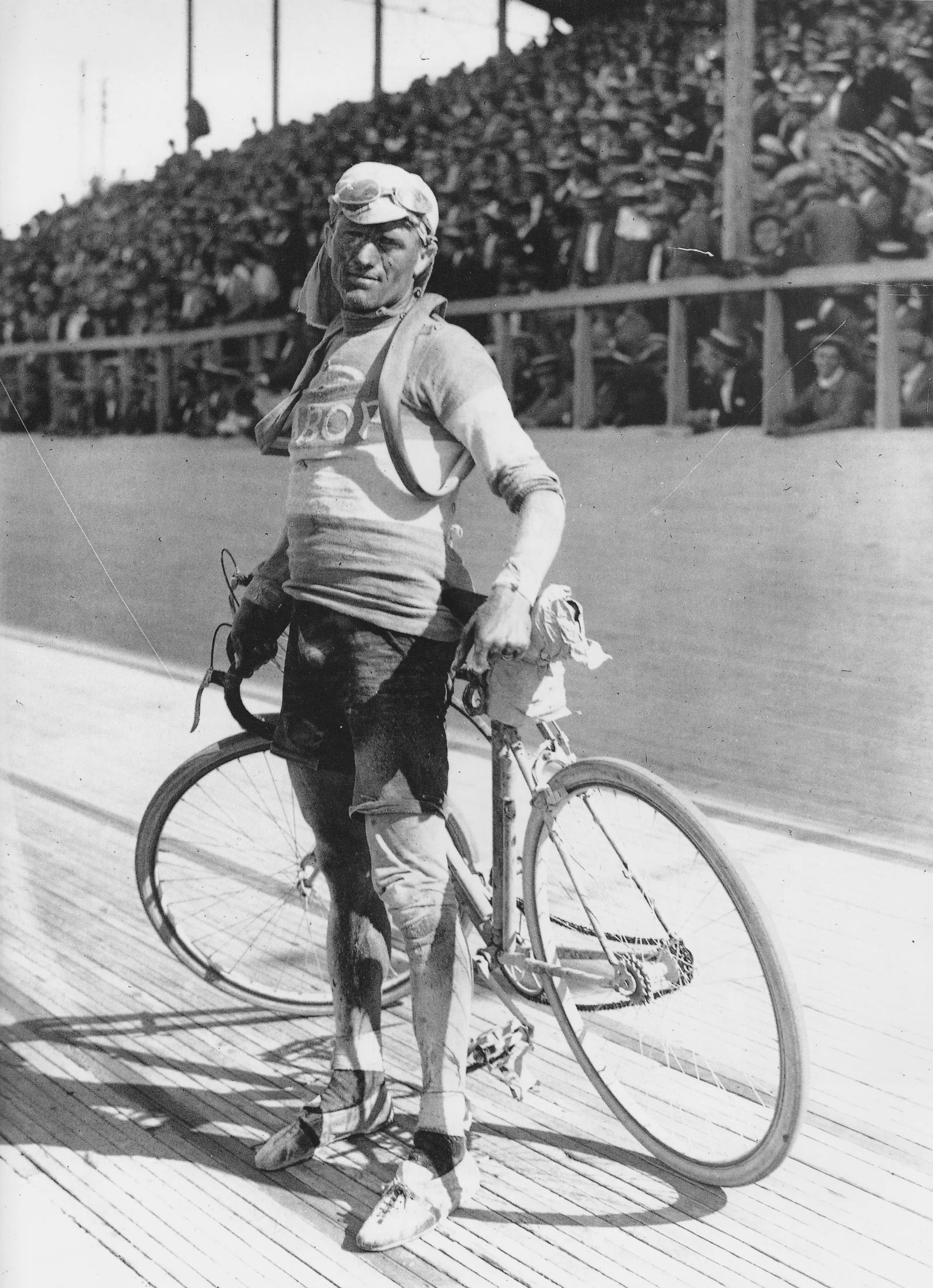
The common period model
1900–1920 in three views
The period’s main development
Road racing became a mass spectacle, and the Tour de France established the stage race as a recurring national story.
What defined the period
Long distances, rough roads and strict rules made self-reliance part of both racing and its public image.
Three changes to cycling
- The Tour began in 1903
- High mountains entered the route
- The yellow leader’s jersey appeared in 1919
Selected events
A short timeline
- Track racing and long road races already draw large paying crowds.
- The first Tour de France is held over six stages.
- Spectator violence, nails and suspected cheating throw the Tour into crisis.
- The Tour crosses the major Pyrenean passes for the first time.
- Thorvald Ellegaard races the international sprint circuit as a six-time world champion.
- Eugène Christophe repairs his broken fork in a forge; Christian Christensen becomes the first Dane to start the Tour.
- The Tour returns after the war, and Christophe becomes the first wearer of the yellow jersey.
- Philippe Thys becomes the Tour’s first three-time winner.
Seven fixed themes
The decade, seen across the site
Races and defining moments
The first Tour in 1903, the crisis of 1904, the Pyrenees in 1910 and the return after the First World War show a race still defining its route, rules and public role.
Follow this theme through cycling history →Riders of the period
Ellegaard was an international track star, Christophe became the image of persistence, and Christian Christensen travelled from a Danish dairy to the Tour without the protection of a major team.
Follow this theme through cycling history →Bicycles and technical change
The bicycle was mechanically simple but demanded practical knowledge. A puncture, a broken fork or a change of ratio had to be handled with tools, time and the rider’s own hands.
Follow this theme through cycling history →Nutrition, training and science
Food followed availability and experience rather than a common scientific plan. Coffee, alcohol, medicines and stimulants occupied a blurred field before international bans and laboratory tests.
Follow this theme through cycling history →Cycling culture and everyday life
Newspapers turned races into serial stories, velodromes created professional stars, and roadside spectators made the bicycle part of modern popular culture.
Follow this theme through cycling history →Society and the times
Industrial production, mass newspapers and new mobility helped cycling grow. The First World War interrupted the major races and marked both the riders and the landscapes when racing resumed.
Follow this theme through cycling history →The people behind cycling
Editors and organisers such as Henri Desgrange created the rules, while Alphonse Steines found roads that could turn into stages. Their decisions shaped what the riders were asked to endure.
Follow this theme through cycling history →Tour de France
The Tour de France of this period was a brutal test of both people and machines. Riders often started before dawn and continued through darkness, cold, dust and rain on roads that in many places consisted of gravel or cobbles.
Related stories
When cycle racing was a Wild West on two wheels
Before rules, support cars and team radios, cycle racing was a travelling experiment in speed, endurance and ingenuity. From here, you can continue to the period’s individual stories.
The race returns
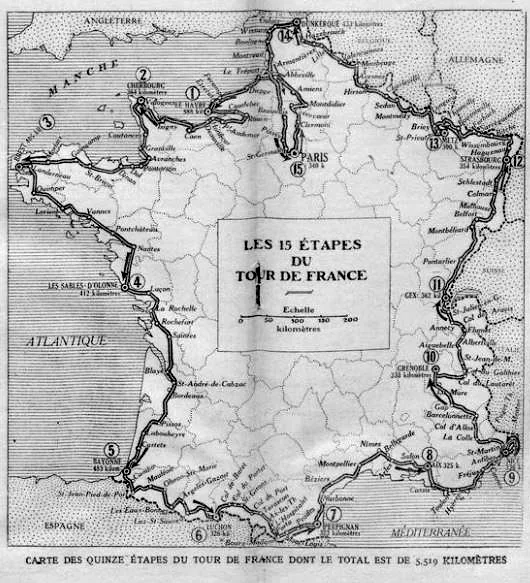
5,560 kilometres through a country marked by war
The 1919 Tour was the first after the First World War. It ran from 29 June to 27 July over 15 stages and a total of 5,560 kilometres. The field consisted largely of former soldiers, and the race passed through a France that still bore clear traces of the war.
The longest stage ran from Les Sables-d’Olonne to Bayonne: 482 kilometres in one day. Jean Alavoine won after 18 hours, 54 minutes and 7 seconds in the saddle — a distance and riding time that seem almost inconceivable today.
A new colour makes history
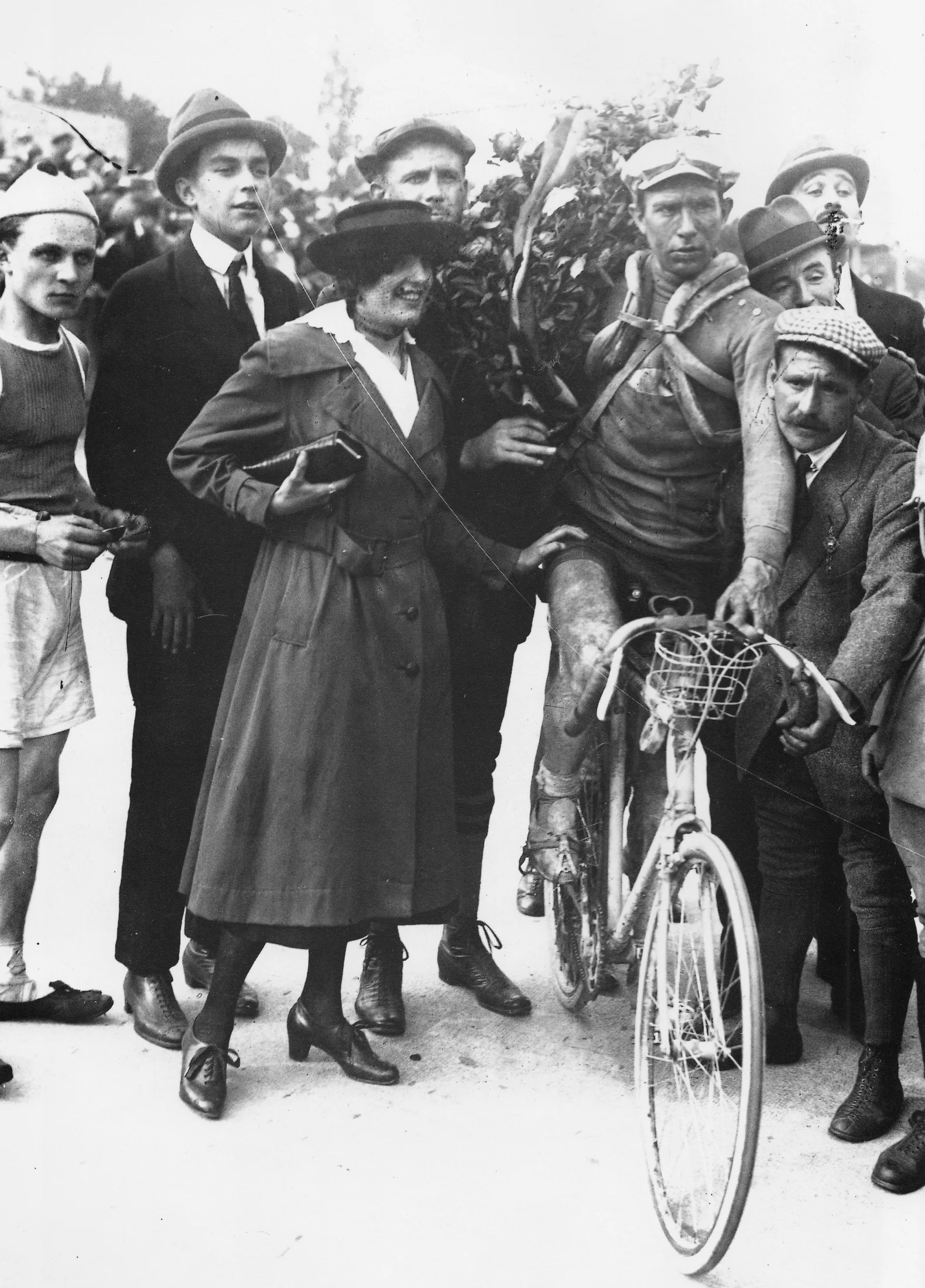
The yellow jersey was born in 1919.
Eugène Christophe became the first rider to wear the yellow leader’s jersey. He received it in the morning before the stage from Grenoble to Geneva. The colour made the race leader visible to the public — and later became the Tour de France’s strongest symbol.
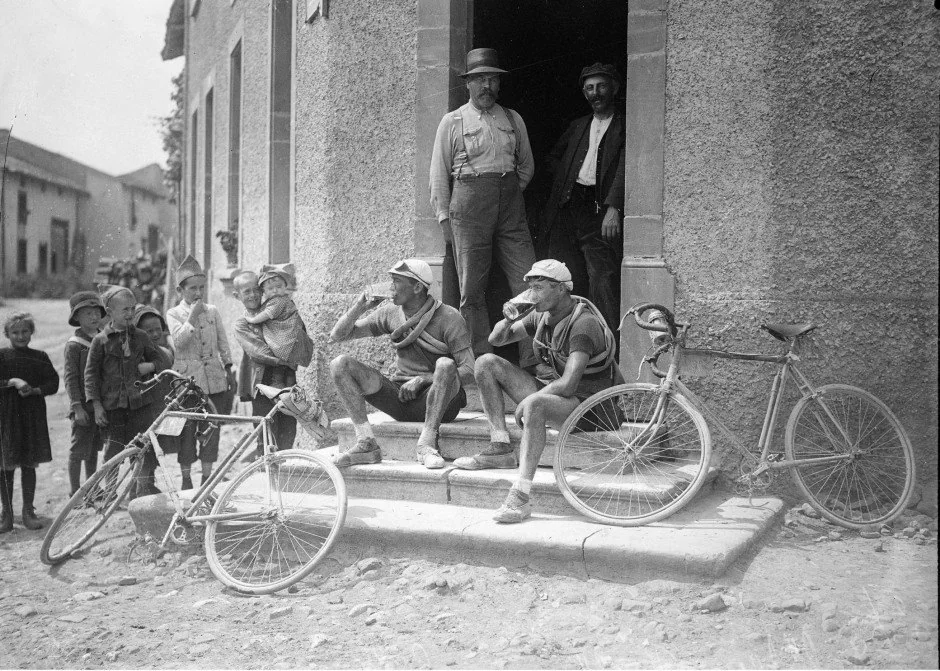
Rider and mechanic
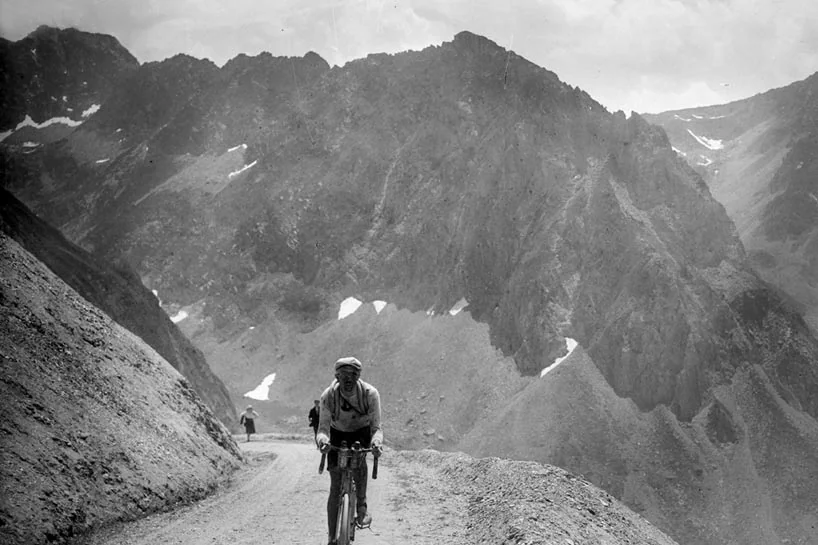
No support car.
No quick assistance.
Riders had to deal with punctures and mechanical failures themselves. The rules of the time required them to finish on the same bicycle and carry out repairs without assistance. Spare parts, tools and extra tyres therefore had to be carried on the bicycle or over the shoulders.
Changing gear was equally physical. Many bicycles had a reversible rear wheel with one sprocket on each side. Before a climb, the rider had to stop, loosen the rear wheel, turn it around, tighten the chain and continue in the lower gear.
The bicycle of the period was thus a sporting tool that also demonstrated ingenuity, workmanship and almost inconceivable endurance.
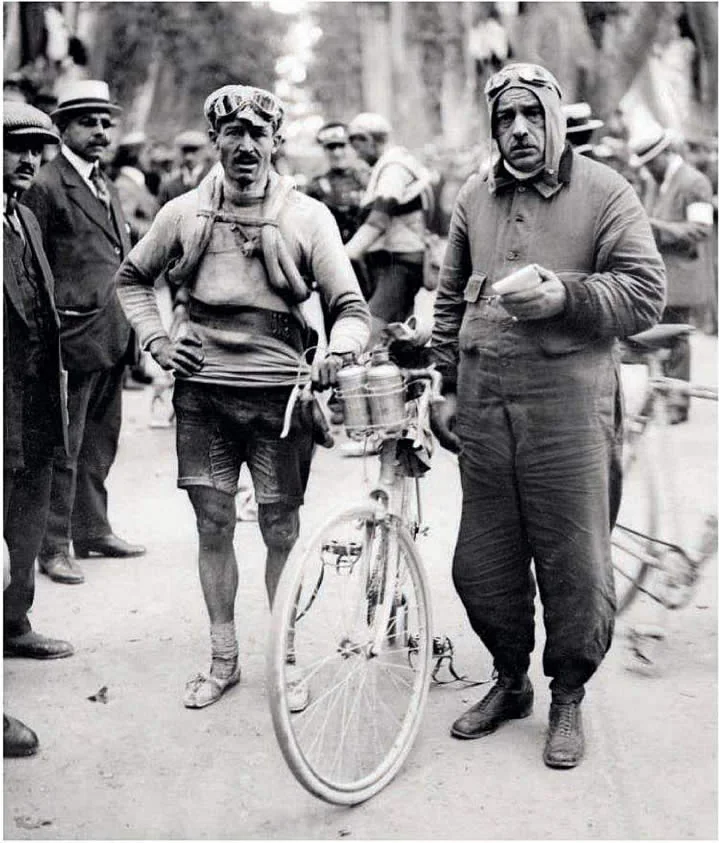
1920
Philippe Thys makes history
Belgian Philippe Thys won the Tour de France in 1920. After victories in 1913 and 1914, he became its first three-time winner. His result connects the pioneers before the war with the new generation that resumed cycle racing after 1918.
View the collection’s bicycle from the periodSources and image notes
Historical data has been checked against the Tour de France’s historical material and contemporary race results. The images come from the collection’s archive; where identity cannot be documented directly, the caption reflects the archive’s identification.