Story · The pioneering years
When cycle racing was the Wild West on two wheels
Before the Tour de France gathered the heroes and scandals into one enormous race, there was already a raw world of endurance, risk and technical experiments.
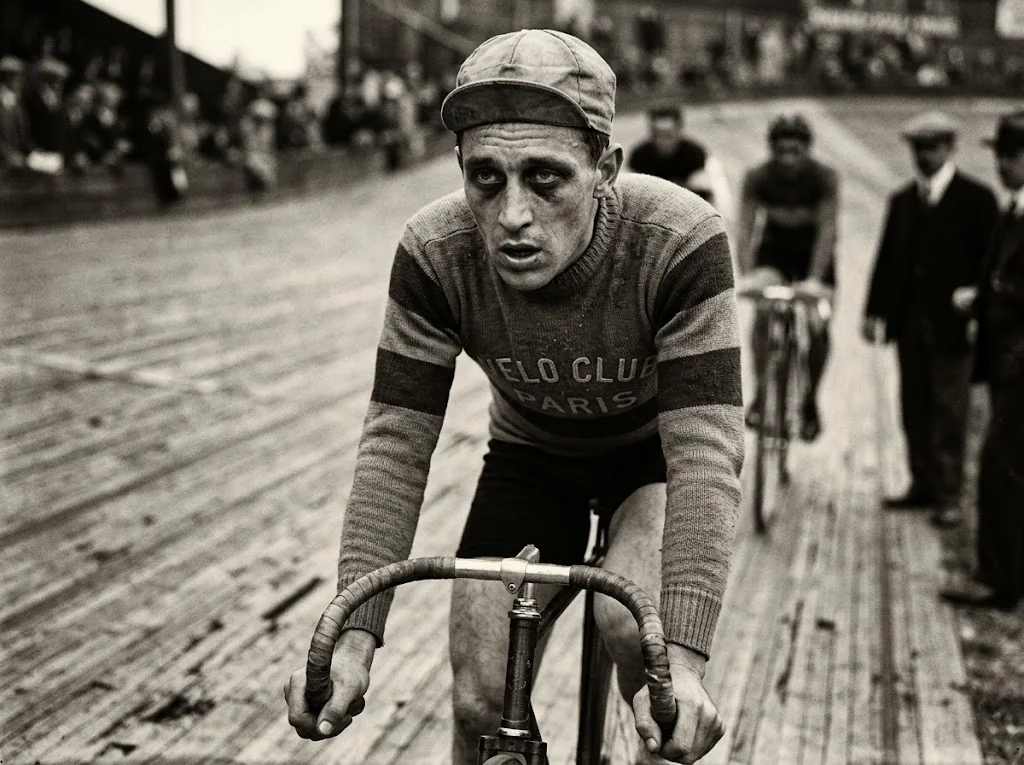
Before the Tour
The longer the race, the worse the roads and the more exhausted the riders became, the better the story often was for the newspapers and promoters paying for it. Riders fought darkness, lack of sleep, dust, cold and primitive bicycles — as well as rivals who did not always believe the entire route had to be covered by bicycle.
A new kind of hero
From the workshop to the newspapers
At the end of the nineteenth century, the bicycle became a symbol of the modern age. It gave ordinary people mobility that had previously required a horse or a train ticket, and it created a new sporting star: the professional cyclist.
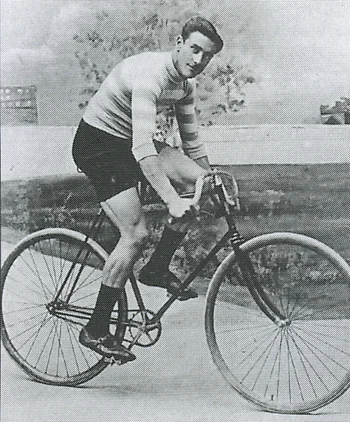
Many came from working-class backgrounds, where prize money could exceed an ordinary annual wage. Maurice Garin had worked as a chimney sweep and became known as Le Petit Ramoneur — the little chimney sweep. His rise became an image of the tough worker who could ride towards another life.
Contracts were short, however, and an injury could end a career overnight. Riders therefore accepted risks that would be unthinkable today.
The classics emerge
Races before the Tour de France
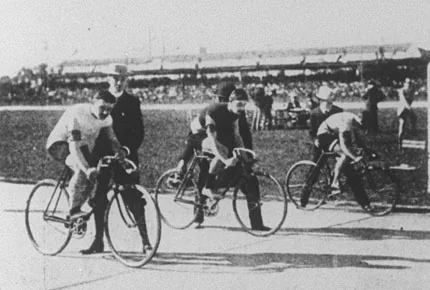
The Tour did not appear from nowhere. Liège–Bastogne–Liège was first held in 1892. Only 17 riders reached the finish, and the last arrived more than five hours after winner Léon Houa.
The first Paris–Roubaix followed in 1896: roughly 280 kilometres on primitive roads and cobbles. Germany’s Josef Fischer won in 9 hours 17 minutes, with Maurice Garin third. The cobbles were not romantic scenery. Rain filled the joints with mud; in dry weather, dust hung over the peloton.
The first edition also used pacing. Cyclists — and motorised pacers on parts of the route — could reduce wind resistance for the riders. The boundary between individual performance, teamwork and mechanical assistance had yet to be settled.
Rider and machine
One gear for the whole day
A racing bicycle around 1900 had a steel frame, often wooden rims and simple brakes — if it had brakes at all. Many used a fixed hub or a single freewheel and one ratio. The rider chose the gear before the start and hoped it would suit both flat roads and hills.
Tarmac was rare. Outside towns, roads were earth, gravel and loose stones; after rain they became mud with deep ruts. A puncture was largely the rider’s own problem. At night, a road sign or a local resident might be the only navigation.
Six days in a wooden bowl
Exhaustion as spectacle
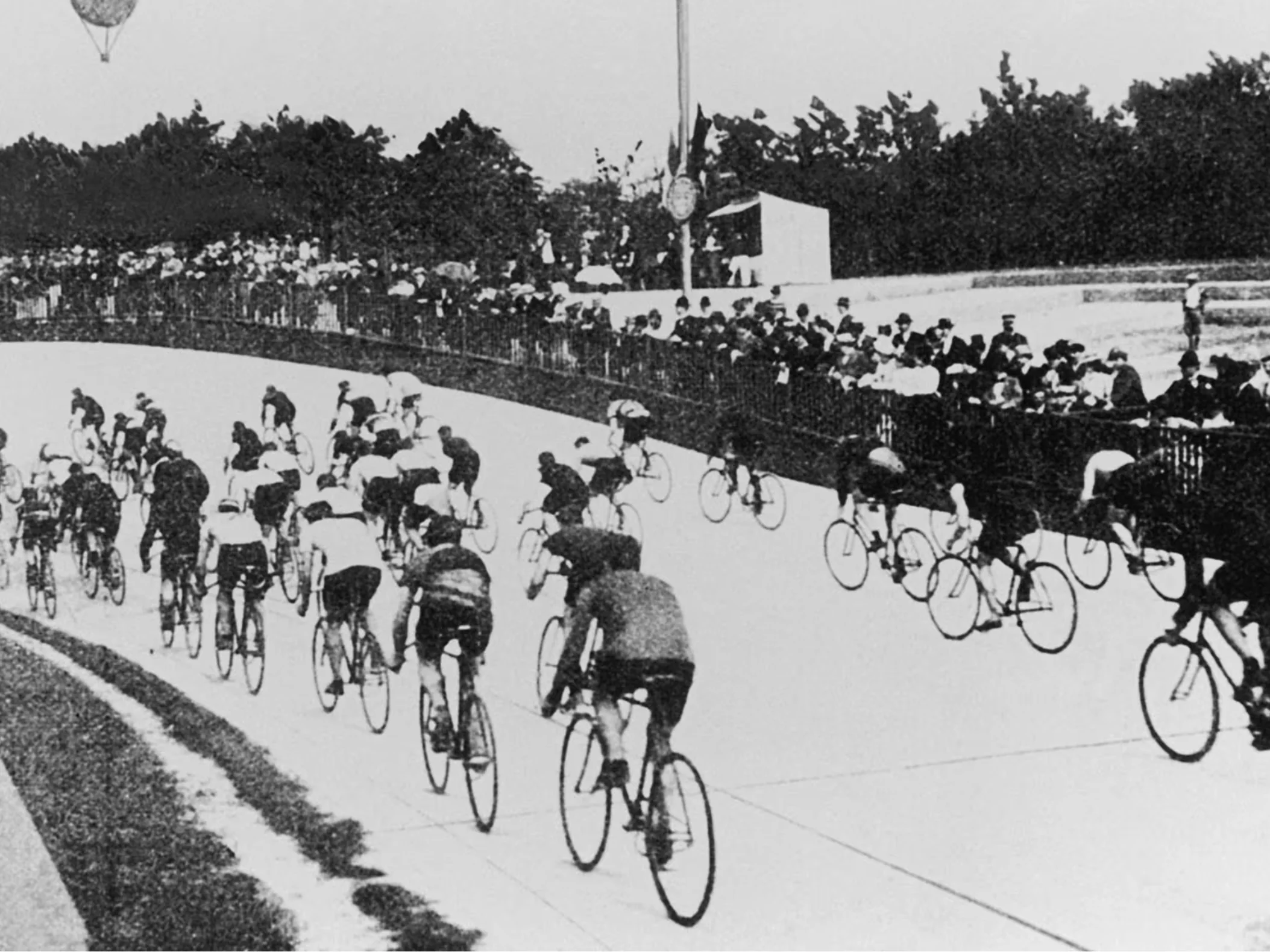
Early six-day races were individual endurance contests. At Madison Square Garden, spectators followed the riders around the clock while cigar smoke, dust and heat hung over the wooden track. Every minute away gave rivals a chance to increase their lead.
After days without sleep, some riders became disoriented, hallucinated or continued almost mechanically. When authorities in New York and Illinois limited each rider to 12 hours a day in 1898, organisers paired them. One could rest while the other rode. This produced the two-rider discipline known as the Madison.
Motor-paced racing added engine noise and exhaust fumes. Riders stayed close behind large pacing motorcycles and reached otherwise impossible speeds. The crowd enjoyed the combination of speed, mechanics and danger.
The little black bottle
The body simply had to continue
There were no modern anti-doping rules. Caffeine, alcohol, ether, cocaine and small doses of strychnine appear in accounts from the period, though documentation for individual stories is often uncertain. The line between medicine, stimulant and poison was unclear.
A rider did not always know what a trainer’s secret mixture contained. The Englishman James “Choppy” Warburton became notorious for his little black bottle, but its contents have never been established. Such substances probably did not make the body stronger; they could make warning signs easier to ignore for a little longer.
Arthur Linton is often described as the sport’s first doping victim, but contemporary information suggests that his death in 1896 was probably caused by illness. The pioneering years are dramatic enough without turning uncertain myths into facts.
Continue exploring
More from cycling history
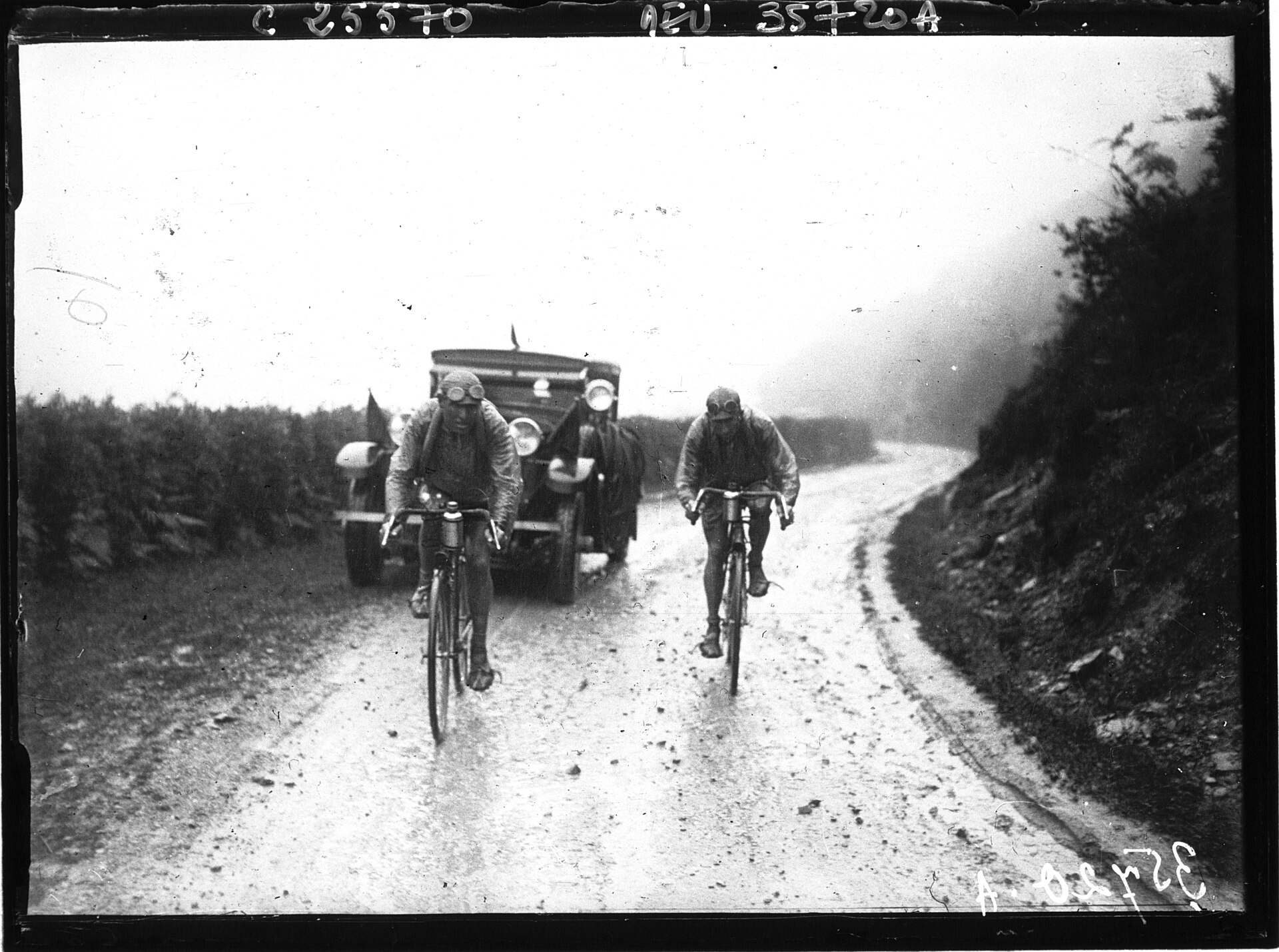
When the Tour had to pay the taxi fare
Three riders stepped out of a car in Luchon and disappeared, according to a story passed down from the 1926 Tour. The driver instead took his bill to the race officials.
Read the story →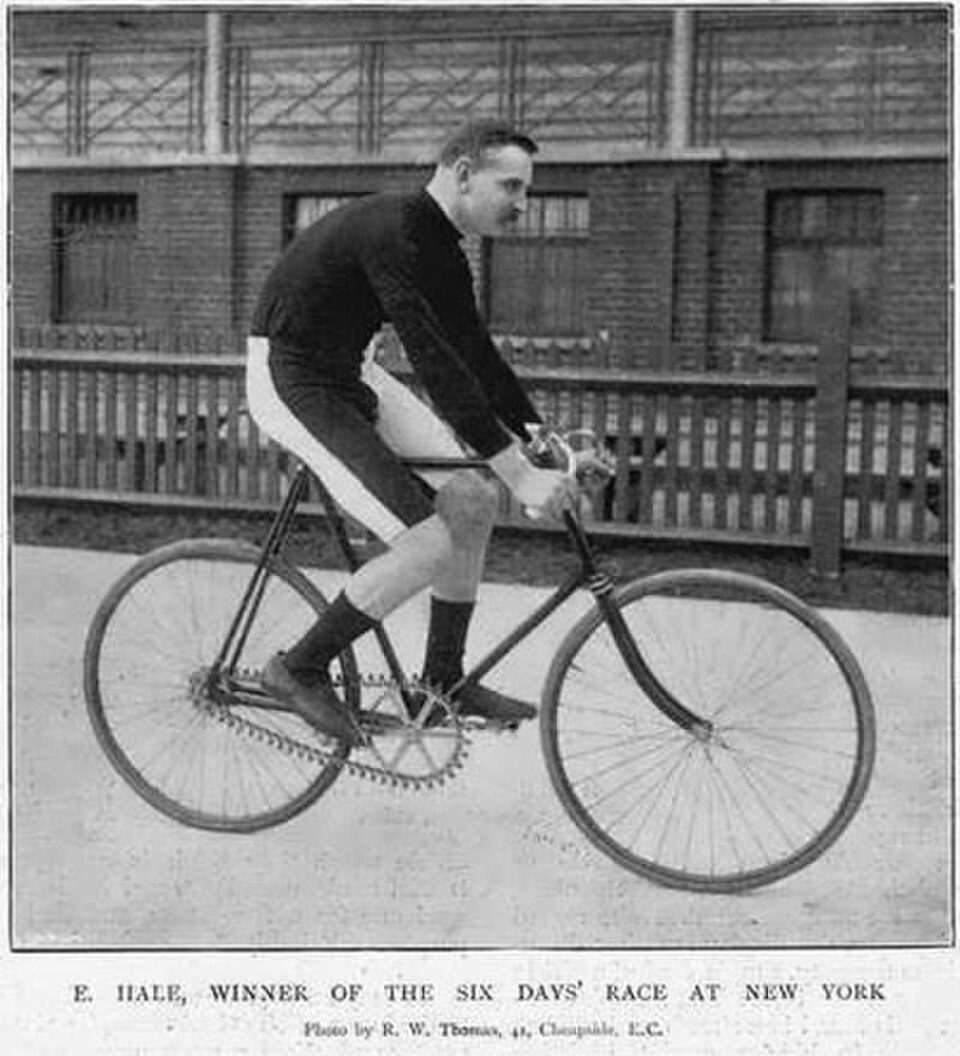
Teddy Hale and 142 hours in New York
In December 1896, Teddy Hale won the individual six-day race at Madison Square Garden after 142 hours and roughly 3,074 kilometres.
Read the story →
When the computer took over the bicycle
See the races, people, bicycles and changes that shaped the period.
Explore the period →