New York · 1896
142 hours
on the boards.
Teddy Hale won a six-day race in which every rider was alone, sleep came in short fragments and exhaustion made the track itself difficult to recognise.
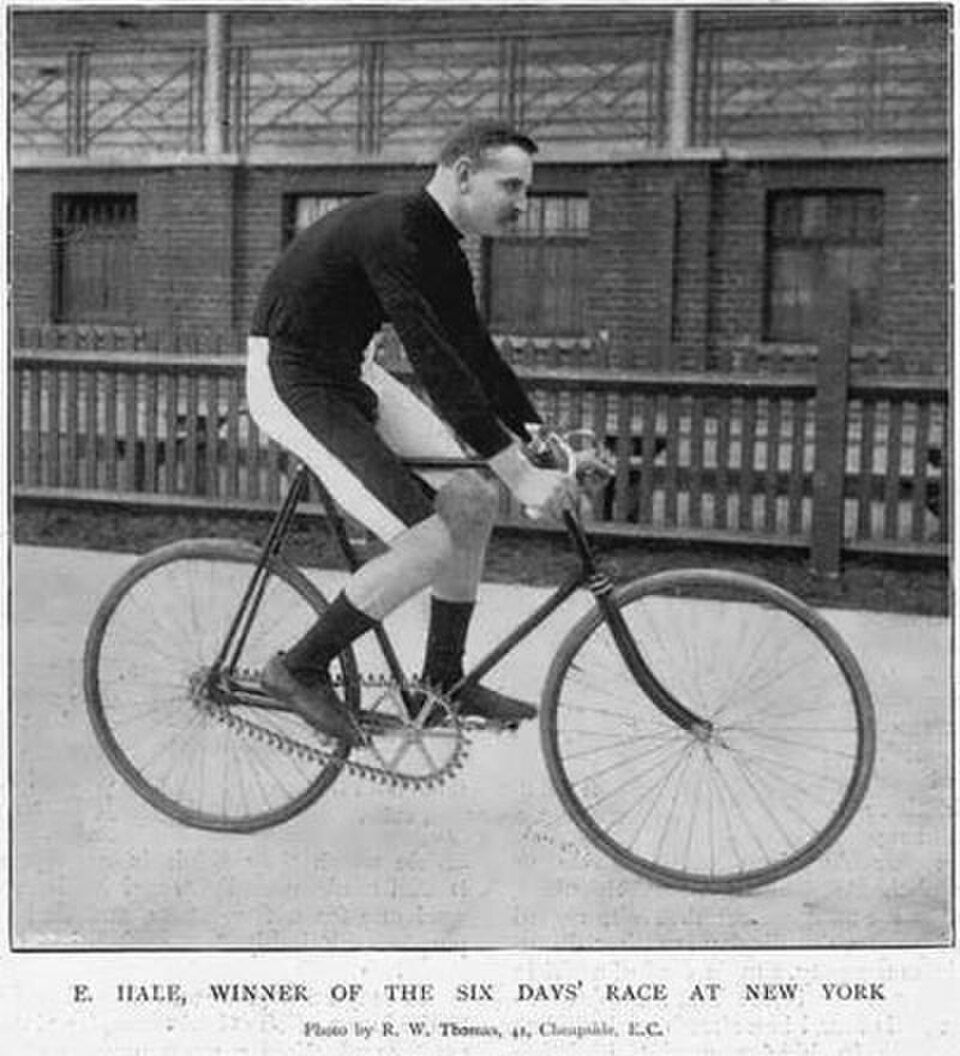
When the race ended on Saturday evening, 12 December 1896, Teddy Hale had covered 1,910 miles and eight laps: roughly 3,074 kilometres.
One rider, six days
The early six-day was not yet the pairs event later known as the Madison. In 1896 the riders entered individually. They could stop and sleep, but the clock continued and every pause allowed rivals to gain miles.
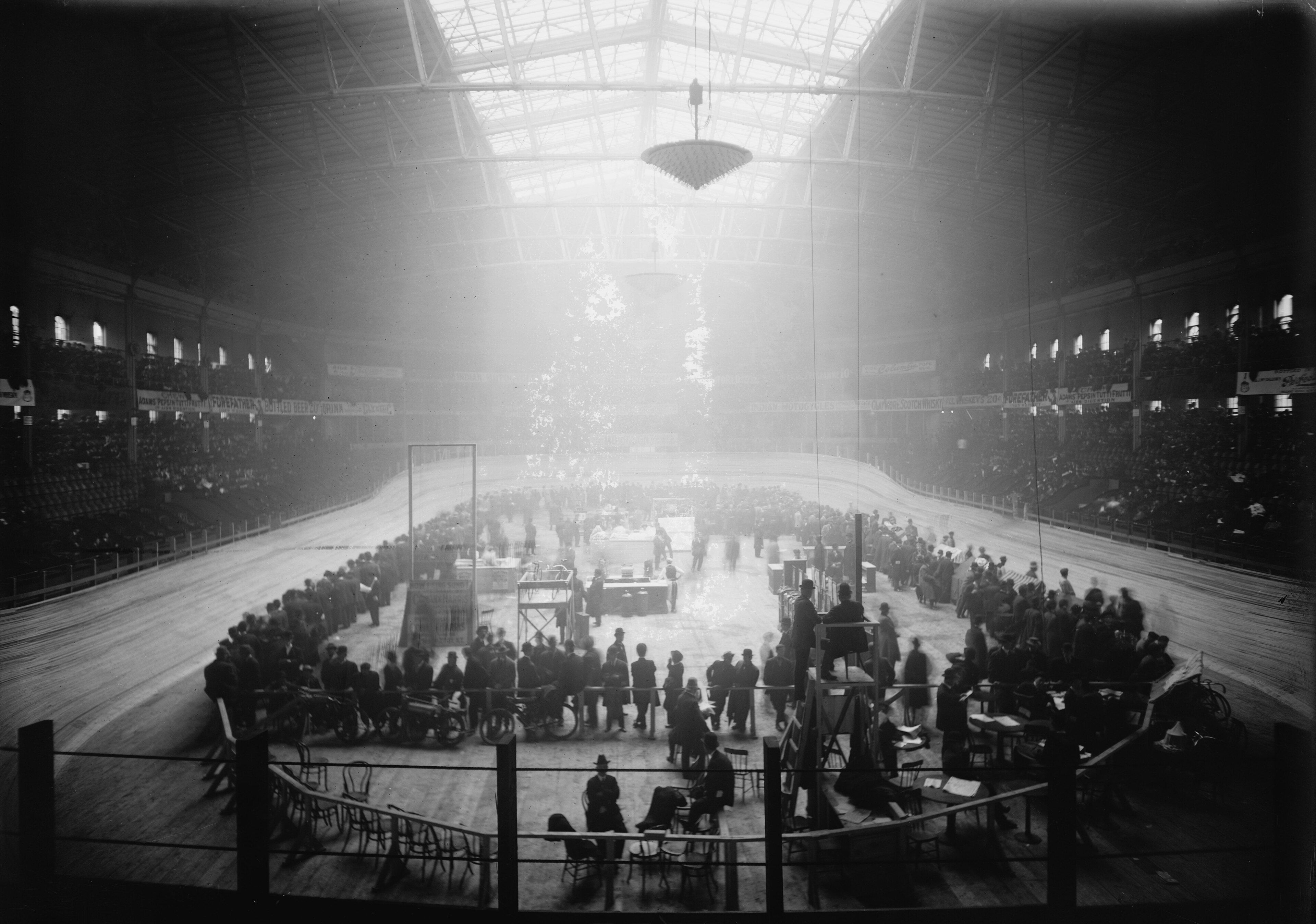
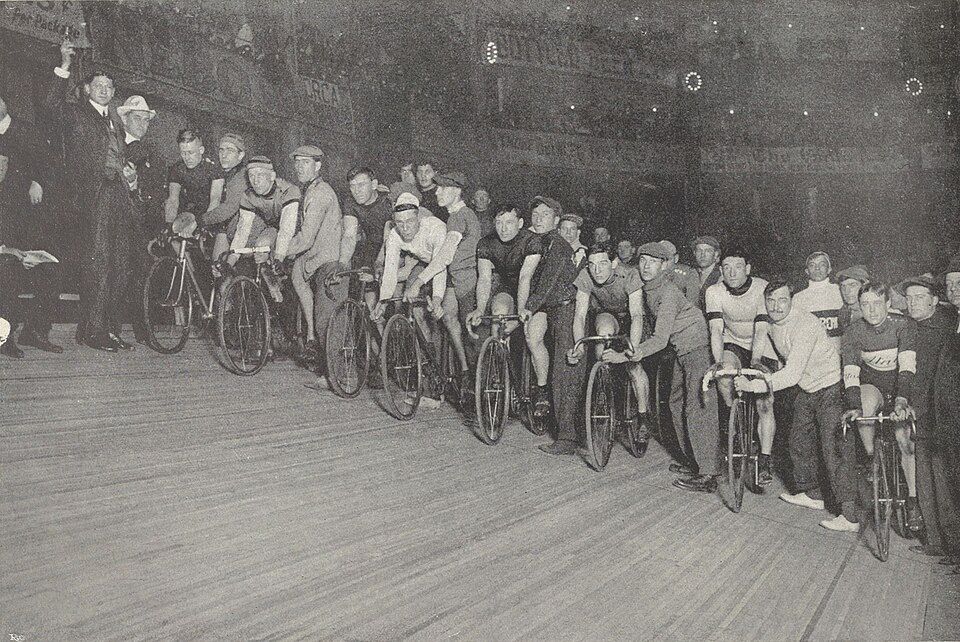
The race at Madison Square Garden began shortly after midnight on Monday and ended at ten on Saturday night, 142 hours later. A contemporary account records 27 starters and 15 finishers. Hale won by a little over 28 miles and beat the previous record by more than 300 miles.
When sleep disappeared
Hale and his nearest rivals had to balance speed against rest. Contemporary newspapers described riders becoming disoriented and losing their senses through fatigue and lack of sleep. Later retellings added vivid visions of snakes, walls and threatening objects among the crowd. Those images belong to the race's folklore, but the surviving sources do not securely attach each incident to Hale.
The established facts are extreme enough. The riders competed day and night under artificial light, noise and tobacco smoke. Whenever they lay down, they knew the race continued without them.
The track bicycle offered no rest
Track bicycles of the period used a fixed wheel. Whenever the rear wheel turned, the pedals turned with it. A rider could not coast and rest his legs through a bend as on a freewheel bicycle. The mechanism was simple and dependable, but over six days it was also relentless.
Attendants inside the track supplied food, drink, massage and whatever the period considered stimulating. Coffee, alcohol and various stimulants formed part of late nineteenth-century racing culture. Cocaine, nitroglycerine and strychnine appear in later accounts of the era, but there is no sound basis for stating exactly what Hale received during the 1896 race.
From individual endurance to the Madison
The extreme events drew criticism. Before the 1899 race, New York imposed a limit of 12 hours' riding per rider per day. Promoters answered by pairing riders, allowing the team to remain in the race while the partners took turns to rest.
That was the beginning of the team form named after Madison Square Garden. Hale had won the older version: six days as an individual. After him, six-day racing increasingly became a matter of partnership, relief and the hand sling that would become the discipline's signature.
Sources and image notes
Continue exploring
More from cycling history
When the Giro paid Binda to stay at home
Alfredo Binda had made the Giro so predictable that the organisers paid him 22,500 lire not to start.
Read the story →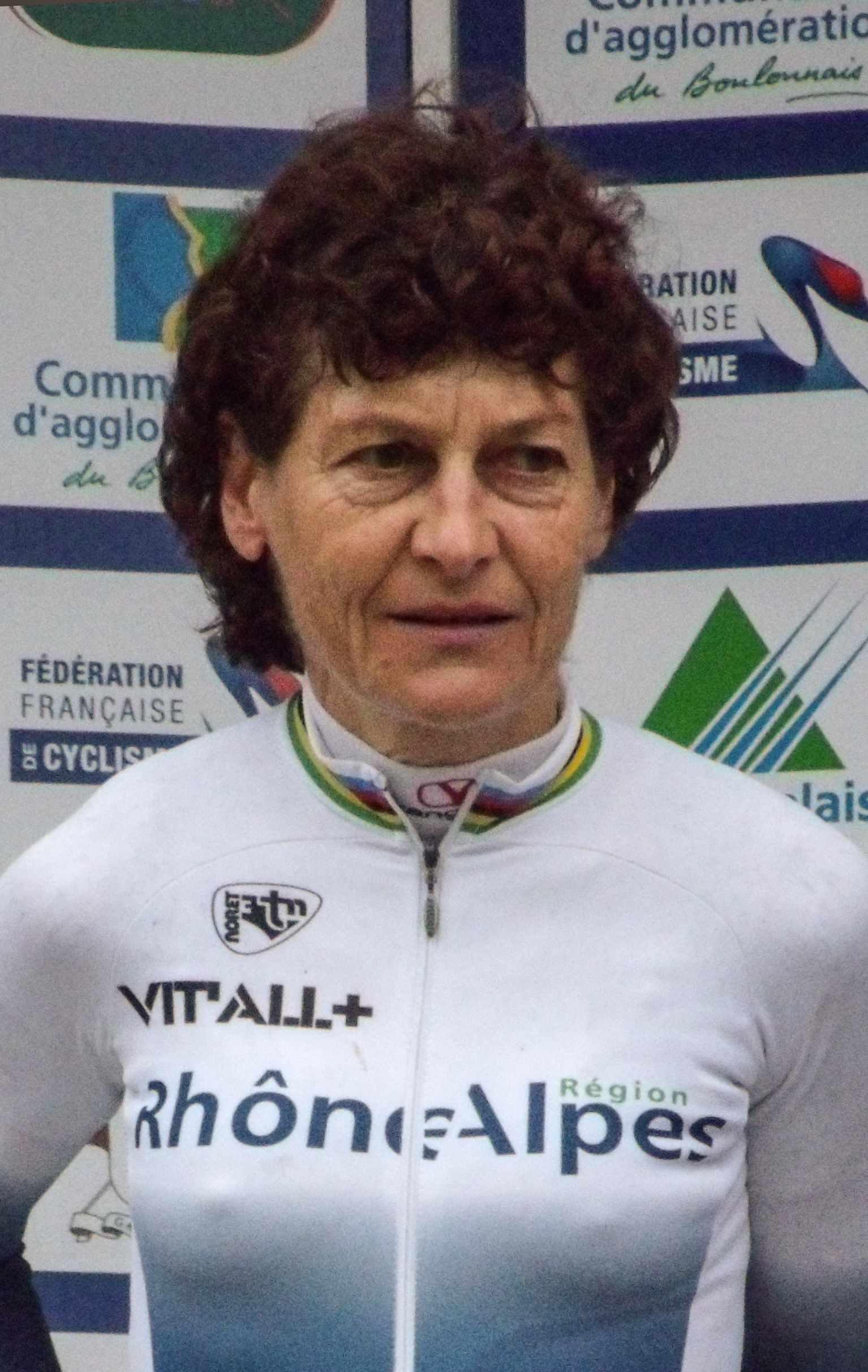
French champion at 52
Jeannie Longo won the 2011 French time trial championship at the age of 52, finishing 42 seconds ahead of the runner-up.
Read the story →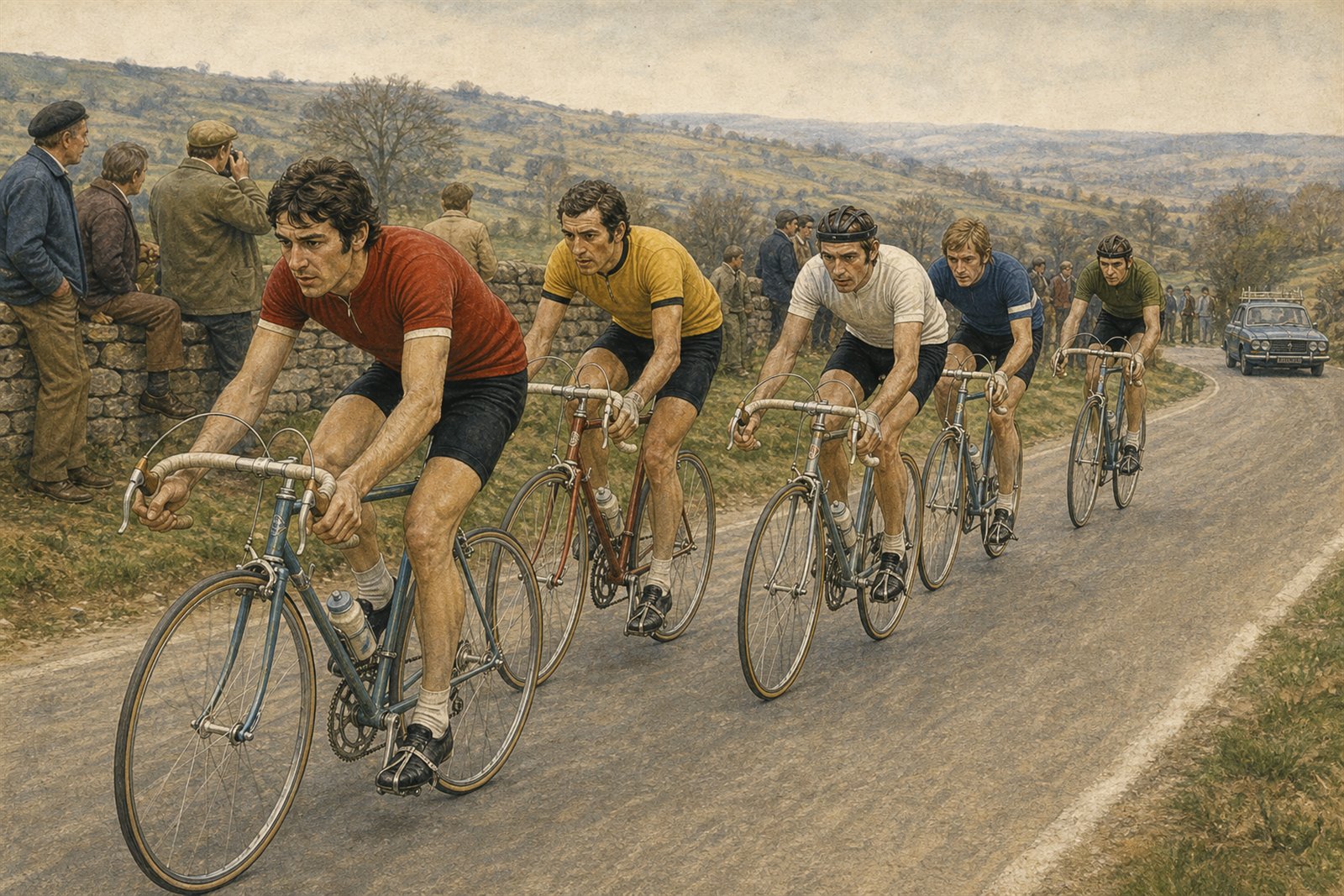
Between the Cannibal and the Badger
See the races, people, bicycles and changes that shaped the period.
Explore the period →