Campagnolo · Croce d’Aune · 1927
When the cold created
quick release
A frozen gear change on a mountain pass became the beginning of one of the racing bicycle’s most important mechanisms.
11 November 1927
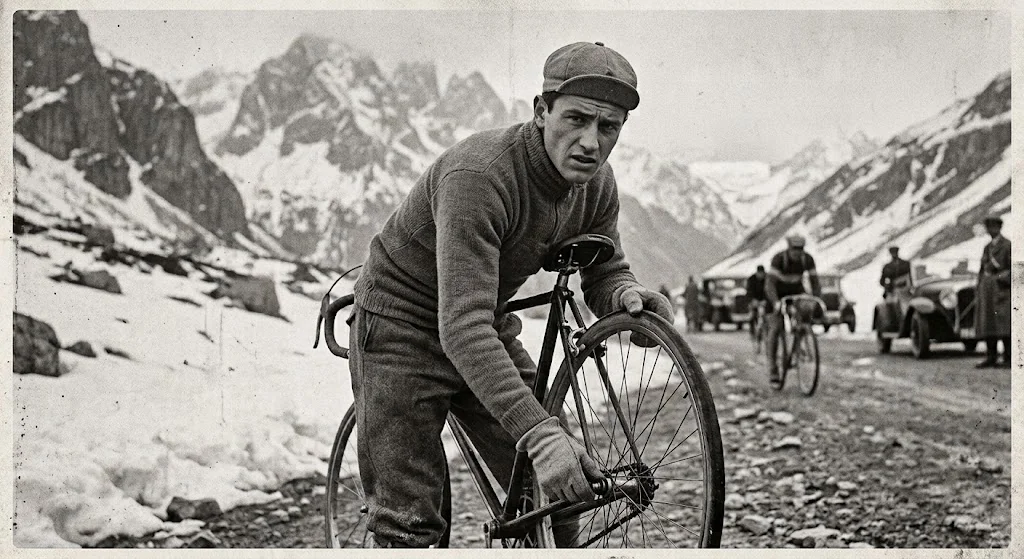
Tullio Campagnolo stood on Croce d’Aune with cold, numb fingers and a rear wheel he could not loosen.
During the Gran Premio della Vittoria, the 26-year-old Italian cyclist needed to change gear for the next part of the race. Racing bicycles of the period could have a sprocket on either side of the rear wheel. To select the other gear, the rider had to stop, loosen the wing nuts, reverse the wheel and tighten it again.
The weather was freezing. Campagnolo’s hands were too cold to grip the nuts. As his rivals continued, he was left with a problem that ought to have had a better solution.
The wheel had to come loose quickly — without tools and without a fight with a frozen nut.
From problem to patent
A small cam with a large effect
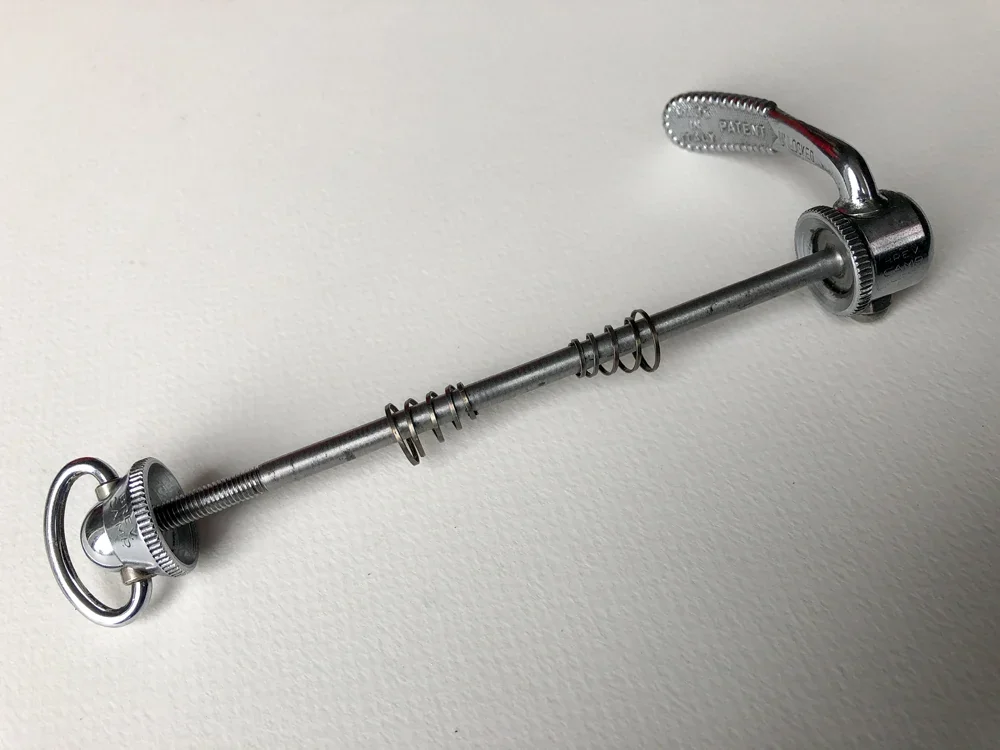
Campagnolo’s solution was a hollow axle with a rod — a skewer — through the hub. An adjusting nut sat at one end and a lever with an eccentric cam at the other.
Closing the lever made the cam pull the two ends together and clamp the wheel into the frame’s dropouts. Opening it allowed the wheel to be removed in seconds.
Campagnolo received his first patent for the mechanism in 1930. Three years later, he founded the company that bore his name.
How it works
Open
The lever opens and the cam releases the clamping force.
Adjust
The nut on the opposite side determines the correct tension.
Close
The lever closes with firm resistance and clamps the wheel securely in place.
A quick release is not a wing nut: the lever must close through the cam action, not merely be turned.
Beyond a faster wheel change
The invention also changed gear shifting
At first, the mechanism made it much quicker to reverse the rear wheel between two sprockets. Later, quick release became a major advantage for punctures and wheel changes in races.
The principle also became part of Campagnolo’s early gear systems. Cambio Corsa used one long lever to release the rear wheel and another arm to move the chain. Quick release was therefore both an invention in its own right and a step towards modern gears.
A bad day on a mountain pass
became a good day for every cyclist.
Sources and notes
The dates have been checked against histories of technology and cycling. The Croce d’Aune story is central to Campagnolo’s history, but accounts vary in some details concerning the race and date. The opening image is an illustration, not a contemporary documentary photograph.
Continue exploring
More from cycling history
When cycle racing was the Wild West
The heroes, machines, six-day races and physical limits before modern cycle racing.
Read the story →
When the rider was his own mechanic
Early Tour riders repaired their own bicycles. From Christophe at the forge to neutral service, the tools gradually moved into the following cars.
Read the story →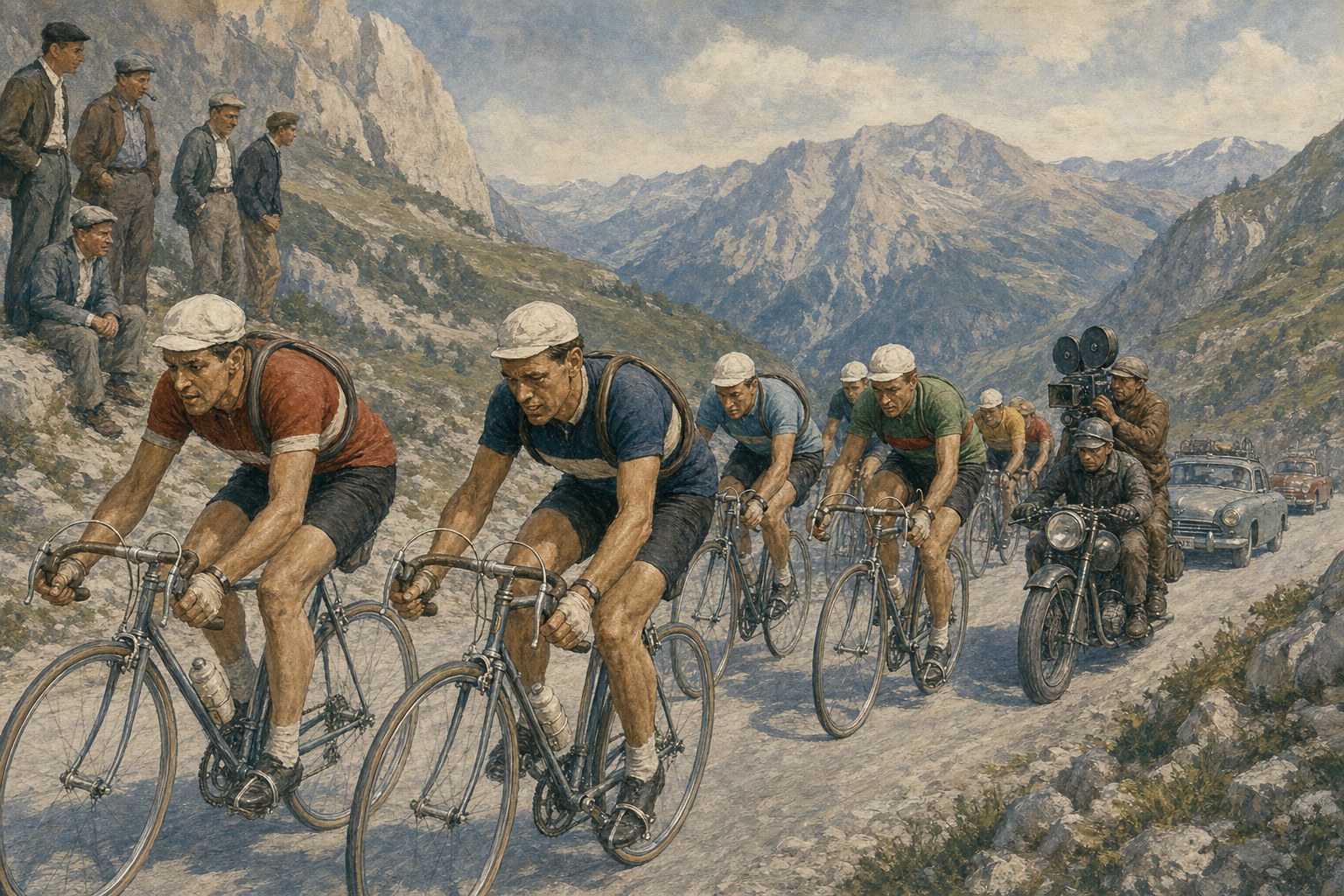
When cycle racing entered the living room
See the races, people, bicycles and changes that shaped the period.
Explore the period →