Giro d’Italia · 1948
The star who fell
from the top — and
found gold at the bottom
For Aldo Bini, the greatest achievement was not winning, but refusing to give up.
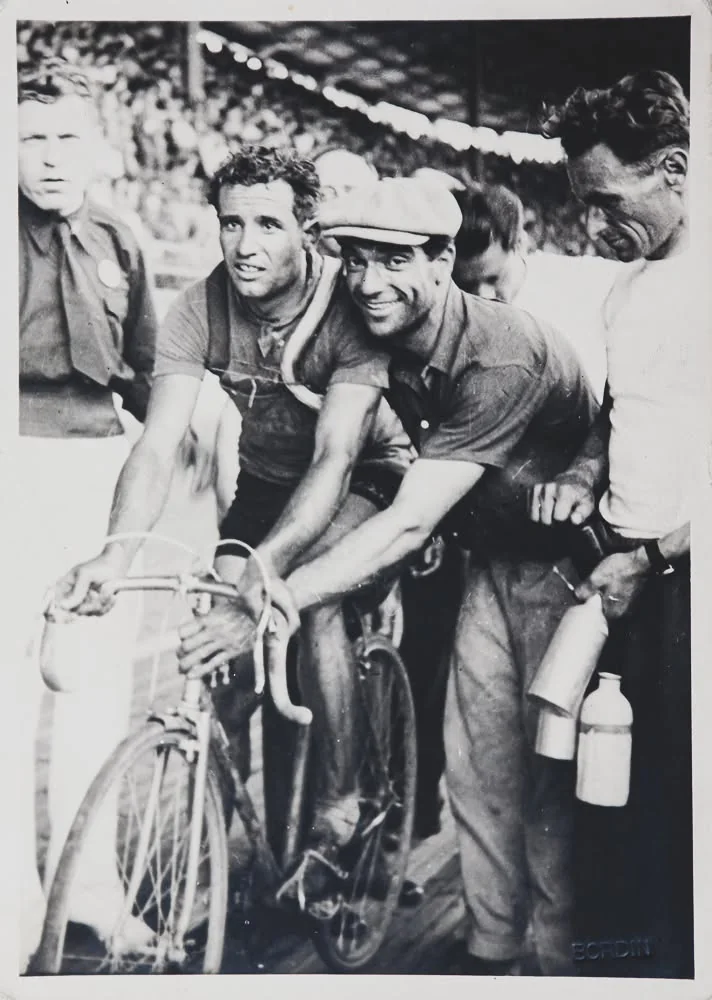
From pink to black
Imagine having been one of Italy’s most feared sprinters, having worn the pink leader’s jersey and beaten Gino Bartali — only to discover years later that your most heroic Giro would be ridden at the very bottom of the standings.
One of the best
Before the fall, he was a star
In the late 1930s, Aldo Bini was among Italy’s strongest riders. He wore the pink leader’s jersey for five days in 1936, won five Giro stages during his career and took the Giro di Lombardia in both 1937 and 1942.
His 1937 Lombardia victory came ahead of Gino Bartali. Bini was known as a sprinter, but he could also win when the road became hard.
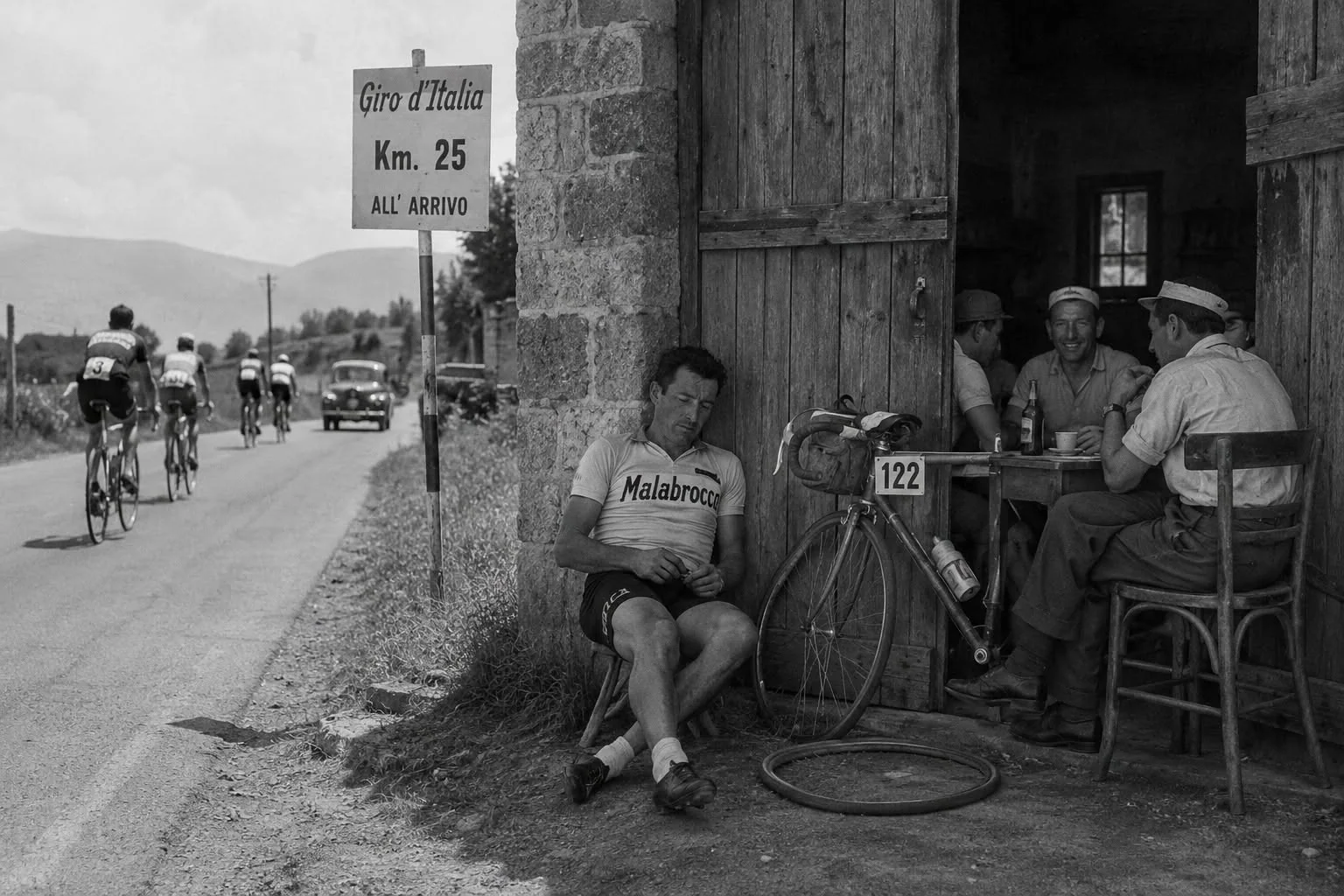
Maglia Nera
The black jersey turned last place into a sought-after position.
From 1946 to 1951, the last-placed rider in the Giro was associated with the distinctive Maglia Nera. The position brought attention, meals and cash prizes.
The contest for last place could become comic tactics. Riders tried to lose time without missing the time limit — sometimes by hiding along the route or deliberately causing delays.
This time it was serious
A broken hand and a promise to continue
Early in the race, Bini crashed heavily and broke his right hand. He continued anyway. In the mountains the pain became so severe that he had to dismount and push his bicycle up the climbs.
For Bini, the black jersey was therefore not merely a tactical trick. It became visible proof that he had completed an entire Giro d’Italia despite an injury that would normally have ended his race.
Milan · 6 June
Last across the line
After 19 stages and 4,164 kilometres, 41 of the 77 starters made it back to Milan. Fiorenzo Magni won the Giro in 124 hours, 51 minutes and 52 seconds — just 11 seconds ahead of Ezio Cecchi.
Bini finished 41st in 128 hours, 59 minutes and 43 seconds. He was 4 hours, 7 minutes and 51 seconds behind Magni.
He received the black jersey, the prizes and the respect of the crowd. The star of the 1930s had found another kind of honour: not in victory, but in stubbornness.
You can finish last
and still be a hero.
Sources and image notes
Race data has been checked against the Giro d’Italia historical archive. The Bini story and his results have been compared with cycling biographies and results archives.
Continue exploring
More from cycling history
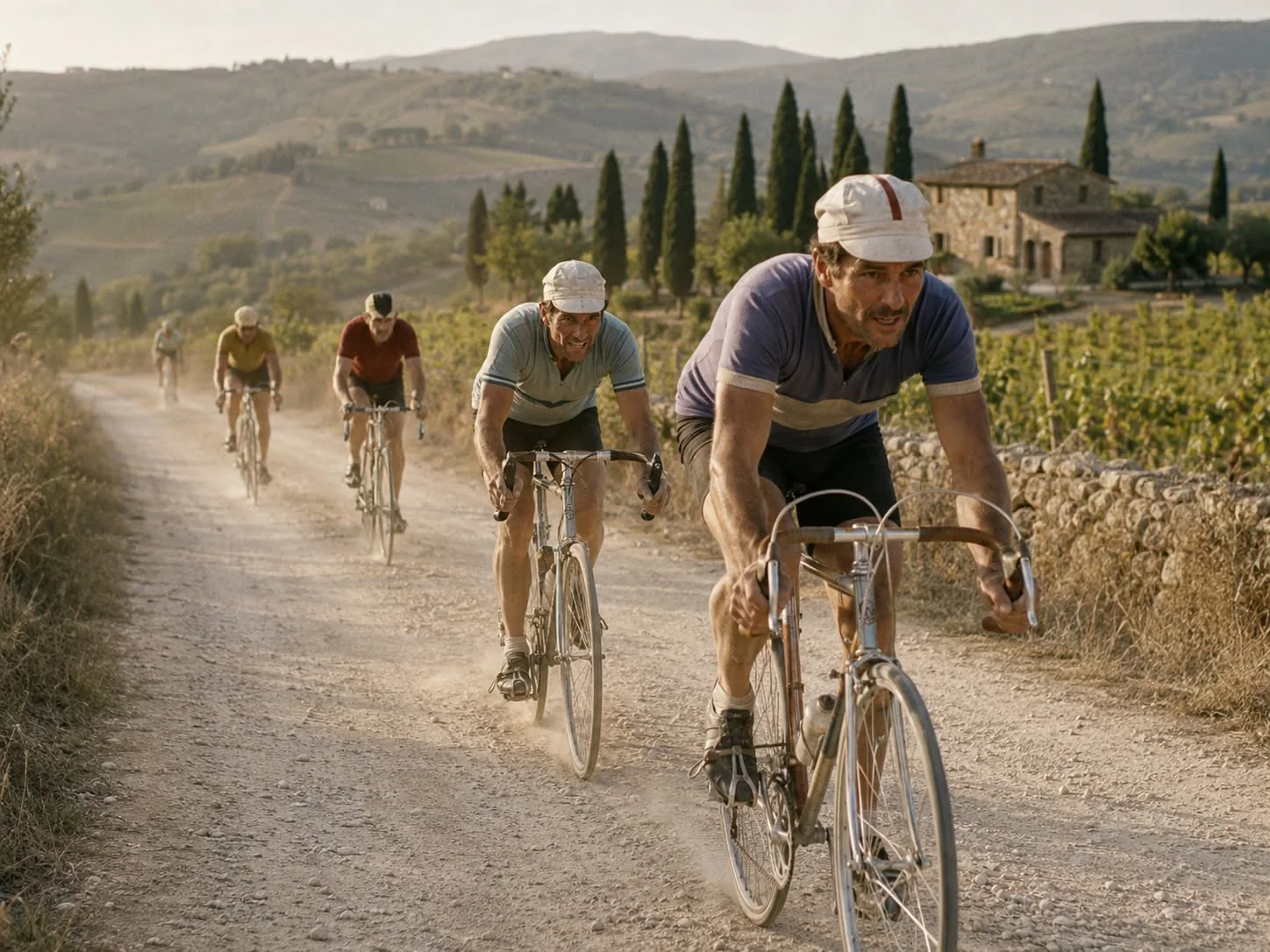
When old bicycles found new roads
L’Eroica began with 92 riders on Tuscany’s white gravel roads.
Read the story →
The blood bags at the 1984 Olympics
The US cycling team’s transfusion programme sat between medical experiment, sporting ambition and rules that had not caught up.
Read the story →
Between the Cannibal and the Badger
See the races, people, bicycles and changes that shaped the period.
Explore the period →