1984 · Story
The blood bags at the 1984 Olympics
A few days before the Olympic races, riders lay on beds in a hotel near the velodrome. A doctor found their veins. The blood came from bags, and nobody hurried to tell the public.
A hotel room near the track
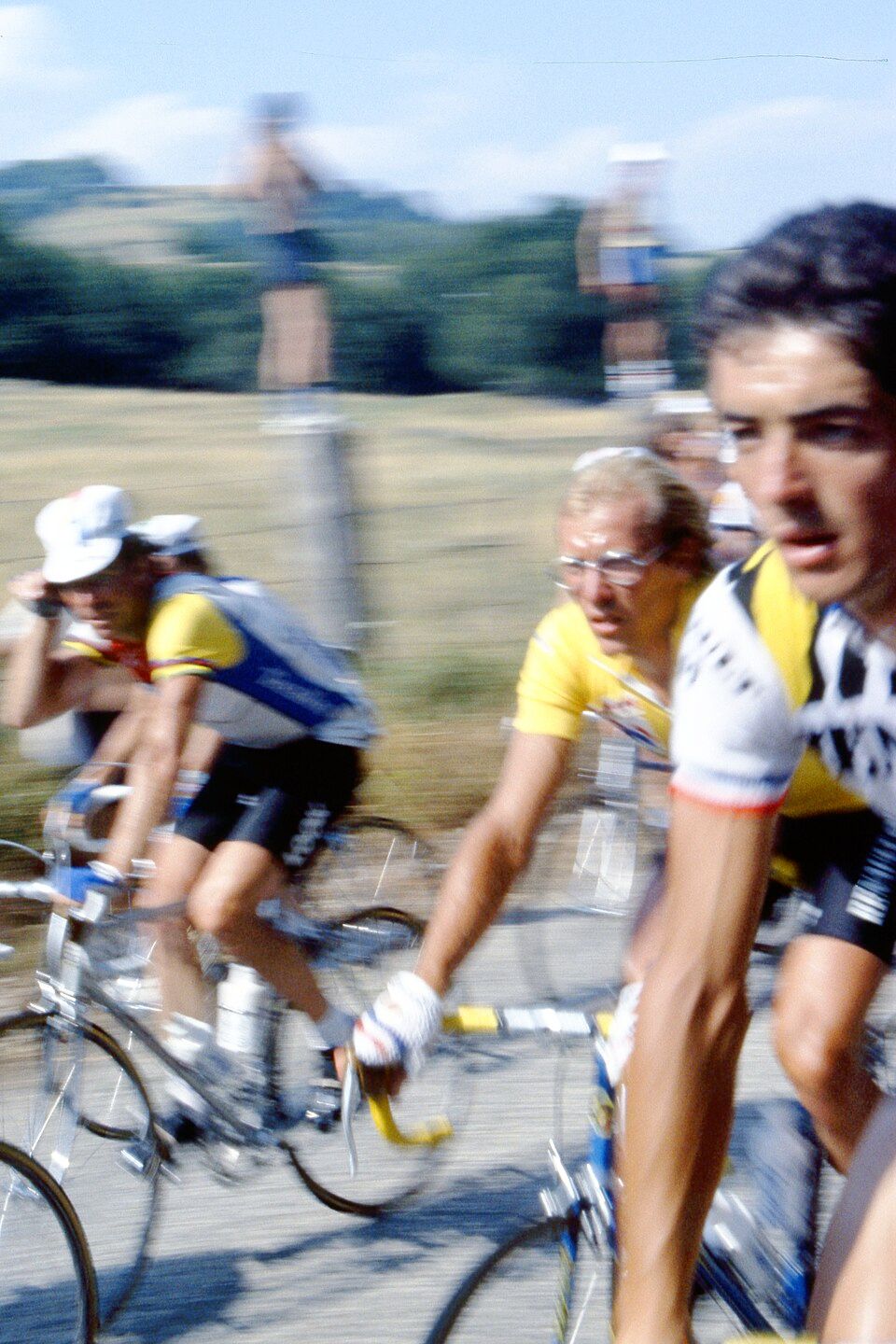
There was little Olympic splendour in the room: a bed, medical equipment and bags of blood to be emptied into riders who would soon compete for medals. It happened at a hotel near the Los Angeles velodrome. Several members of the United States cycling team received transfusions shortly before their events.
The idea was simple enough. More red blood cells could carry more oxygen to working muscles. That interested a pursuit rider expected to hold a violent pace for four kilometres and, preferably, still see straight when the bell rang for the final lap. The method was not new. Finnish runners had discussed it before, and researchers had studied it. Now it was being used inside an Olympic programme.
The late-arriving plan
The American team had prepared carefully. Home advantage, aerodynamics, training camps and a velodrome crowd that finally took track cycling seriously. Coach Eddie Borysewicz and exercise physiologist Ed Burke knew the discussion around blood doping. According to the later investigation, the transfusions were administered by Dr Herman Falsetti, who had not been a regular member of the team’s medical staff.
The procedure was not the clean laboratory exercise one might imagine. Some riders received their own previously stored blood. Others received blood from compatible donors. The latter is a homologous transfusion and requires reliable blood typing and cross-matching. Otherwise the body can react violently. Infection and poor handling were further risks. It was not pretty, but it was done.
Five medallists and a larger team
The United States Olympic Committee investigation later concluded that roughly a third of the 24-member cycling squad had received transfusions. Those named included Steve Hegg, Brent Emery, Pat McDonough, Leonard Nitz and Rebecca Twigg. All five won medals. Hegg took gold in the individual pursuit and silver with the team. Twigg won silver in the women’s road race.
The United States collected nine cycling medals, four of them gold, its first Olympic cycling medals since 1912. Yet the arithmetic cannot be reduced to one bag of blood equalling one medal. The Eastern Bloc boycott removed powerful opponents, the Americans had prepared purposefully for years, and they were racing at home. The transfusions were part of the picture. They were not the whole picture.
A gap with edges
In 1984 blood doping was not stated clearly on the international banned lists. Falsetti and the rider Brent Emery later defended the procedure by saying it had not been prohibited. The US Olympic organisation, however, had already rejected the method, and its investigation described the programme as a breach of its rules. This was not a neat, empty grey area. People were standing around its edges saying no.
No rider lost a medal. The officials responsible received relatively modest sanctions, and the affair became public only after the Games. That left a dry aftertaste. Spectators had seen stopwatches, gleaming disc wheels and nine medals. Only later were they told there had also been needles and blood bags in a hotel room.
When the list caught up
The IOC explicitly prohibited blood doping in 1985. A ban did not solve the practical problem: no simple test could yet detect a transfusion. The sport had written a rule, while doctors and riders could still work out of sight. EPO later offered another way to raise red-cell mass without bags on a hotel table. That is a different story and should not be laid backwards across Los Angeles.
The 1984 affair works best when kept concrete. A group of officials made a decision. A doctor found the veins. The riders agreed. Once the medals had been presented, responsibility began moving between rules, ethics and results. The blood bags had left the room. The questions remained.