1940–1952 · Story
Coppi, Bartali and a divided Italy
One was cast as the devout traditionalist, the other as modern and restless. On the road their relationship was less tidy than the division.
The helper takes the pink jersey
Fausto Coppi was twenty and employed to help Gino Bartali when the 1940 Giro d’Italia reached the mountains. Bartali was Legnano’s captain, a double Giro winner and the man who had won the Tour de France two years earlier. Coppi was the thin new name, expected to fetch bottles, close gaps and remember his place.
Bartali, however, was suffering after a crash. On the stage to Modena on 29 May, Coppi rode away over the Abetone and took the pink jersey. When the race later reached the Pordoi, their roles had changed. Bartali won the stage and helped his young team-mate through a crisis. Coppi became the Giro’s youngest winner. The rivalry therefore began not with two enemies, but with a captain who became the helper of his own helper.
Forty-seven seconds after the war
War interrupted the grand tours. When the Giro returned in 1946, Italy was marked by broken roads, political division and an everyday life that had to be assembled again. Bartali still rode for Legnano. Coppi was now the leader at Bianchi. They knew one another’s rhythm, weaknesses and small habits from their years on the same team.
The result was close. Coppi won four stages, but Bartali held on to win the Giro by 47 seconds. Coppi took revenge the following year. From then on almost any hill could be turned into a public vote: Bartali or Coppi? It was easy to understand. No radio explanation or power meter was required. You chose one and distrusted the other.
Two men turned into two versions of Italy
Bartali was openly Catholic, stern-faced and already a champion before the war. Coppi appeared lighter, faster and more modern. He approached food, training and equipment with a different curiosity. The press and supporters completed the picture. Bartali became the traditional, church-going Italy. Coppi became the secular future and was often presented as the man of the political left.
The division was useful, but too neat. Coppi was not a party programme on two wheels, and Bartali was more than a Catholic figure with a cross around his neck. They were professional riders with contracts, team-mates and races to win. They become more interesting when allowed to remain difficult people rather than tidy symbols.
Rivals when possible, allies when necessary
In 1949 they rode the Tour de France for the same Italian national team. Alfredo Binda had the thankless job of pointing two captains in roughly the same direction. Coppi lost time early, then recovered. In the Alps they alternated between attacking and helping, and Paris ended with Coppi first and Bartali second.
It was not warm comradeship. Roles, waiting and honour all had to be negotiated. Yet they could cooperate when the race and the national team demanded it. That sits awkwardly with the simple tale of an Italy divided into two camps. It fits bicycle racing rather well: today’s rival may be the only man able to help you tomorrow.
The bottle without a certain answer
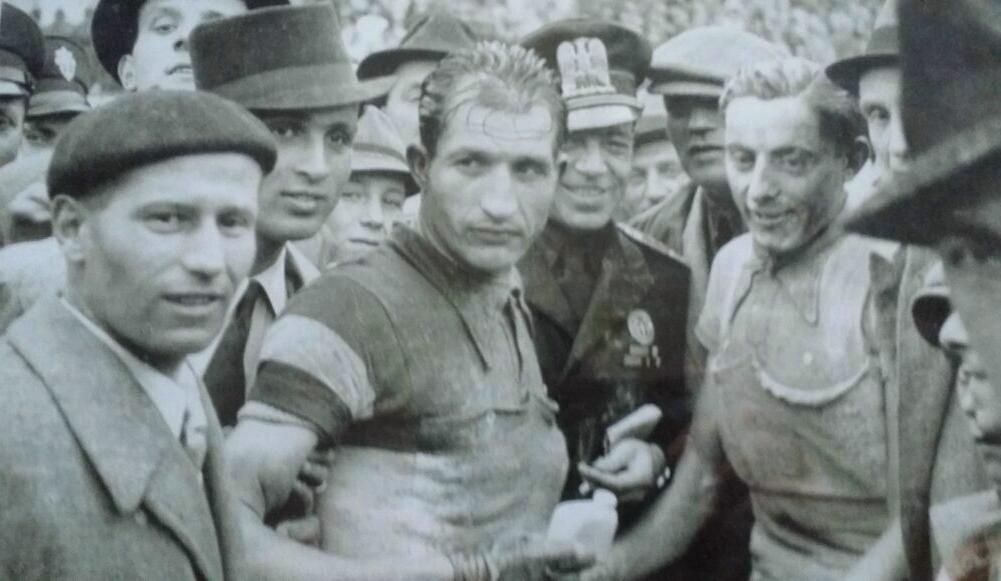
The best-known photograph of the pair comes from the 1952 Tour. On the Galibier a bottle passes between Coppi and Bartali. Who gave and who received? Both versions have been told, and the photograph does not settle it. Perhaps that is why the image still works. Competition and necessity occupy the same small gesture.
Coppi won the Tour that year. Bartali finished fourth and was nearing the end of his career. Italy still had its coppiani and bartaliani, but on the mountain there were simply two tired riders and one bottle. The newspapers could argue about the rest the following morning.