SunTour · Shimano · 1964–1990
The slanting line
that changed shifting
A small change to derailleur geometry gave SunTour a lead. Shimano answered with an entire system, not merely a new derailleur.
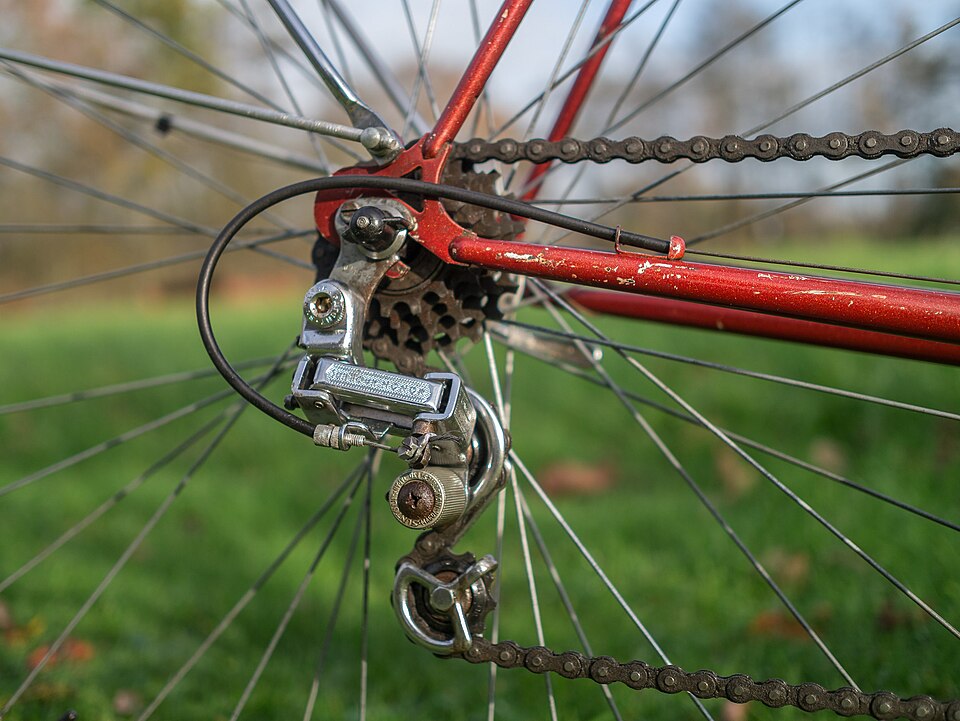
Japan, 1964
SunTour tilted the parallelogram slightly. It sounds modest. For its competitors, it became a headache lasting about twenty years.
It is tempting to begin at a Shimano drawing board with an engineer cursing a rival’s patent. We do not know that such a moment occurred. But the frustration is easy to imagine: Tetsuo Maeda’s patent was filed in 1964, and the design became associated with SunTour.
The parallelogram derailleur was not new. The angle was. Instead of moving the chain only sideways, the derailleur also travelled along the sloping profile of the freewheel. Its upper pulley therefore maintained a more consistent distance from both small and large sprockets.
SunTour did not invent the derailleur. It found the movement the derailleur had been missing.
The 1970s advantage
The small manufacturer found the large market
On recreational bicycles and lighter racing machines, smooth, accurate shifting mattered more than the prestige attached to the most expensive European parts. SunTour was strong here. Its derailleurs were simple, effective and available at many prices.
The story is often told as the small inventor’s victory over two giants: Shimano in Japan and Campagnolo in Italy. That is a simplification, but it captures something important. For a time, the best idea was not necessarily the most expensive component.
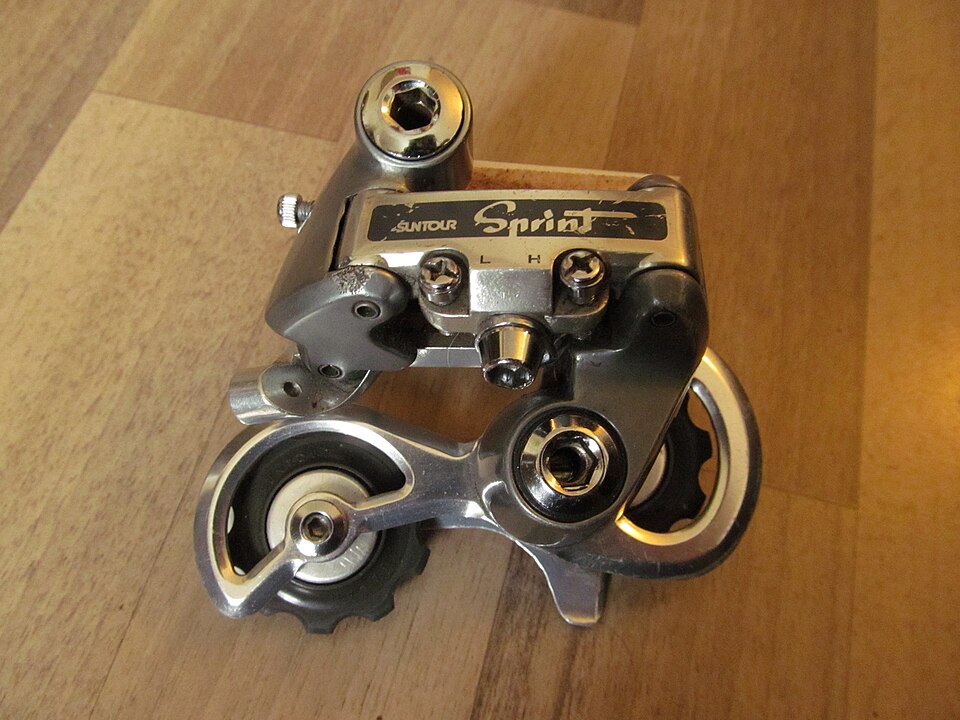
The mechanics behind the difference
Friction
The rider moves the lever and feels or listens until the chain runs quietly on the sprocket.
Slant path
SunTour’s geometry moves the pulley sideways and up or down, allowing it to follow the freewheel more closely.
Indexing
Shimano SIS gives the lever fixed clicks. Cable pull, derailleur and sprocket spacing must now work as one system.
Slant geometry improved shifting, but did not create indexed gears by itself. A stable indexed system also required precise levers, cables, chain and sprockets.
1984: the answer arrives
Shimano no longer sold a part. It sold coherence.
When Shimano launched Dura-Ace 7400 with the Shimano Index System in 1984, the gear lever gained fixed positions. Riders no longer had to trim the chain by hand. One click was meant to equal one sprocket.
The system concept was decisive. Lever, cable pull, derailleur, sprockets and chain had to be matched. Cyclists lost some freedom to mix brands, but shifting became easier to learn and repeat.
SunTour responded with AccuShift, among other products, but did not gain the same hold on the integrated market. It would be too simple to blame the company’s decline on one patent or product. Currency, production, timing and distribution also mattered. But the move to systems changed the rules.
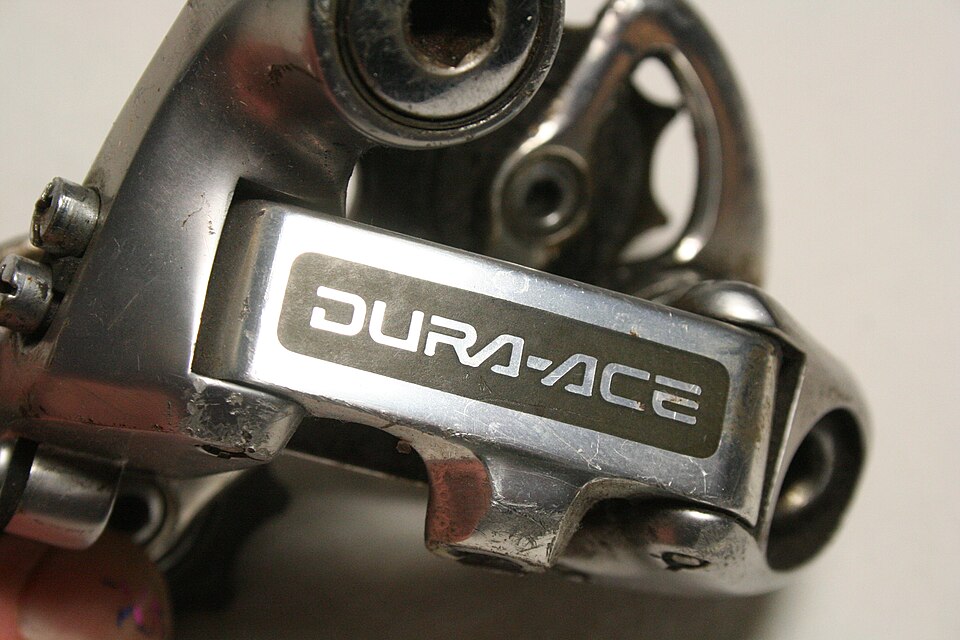
1990: hands remain on the bars
The final major lever
With the Dura-Ace Dual Control lever in 1990, Shimano placed braking and shifting at the rider’s hands. A rider could change gear during an acceleration without reaching for a down-tube lever.
The popular version calls this Shimano’s twenty-year revenge. Sources document the chronology, not the motive. But the story has an accurate core: SunTour showed what a small geometric idea could achieve. Shimano showed its strength when the whole bicycle became a system.
The misunderstanding
Shimano took the market. Not the company.
It is still said that Shimano eventually bought its old rival. It did not. Shimano took over SunTour’s market position, but the name and remains of the company followed another, messier route.
SunTour lost orders as bicycle makers selected Shimano’s complete systems. AccuShift never reversed the trend. Yet one poor derailleur was not the sole cause: exchange rates, production problems, late deliveries and weakened confidence all pointed the same way.
The dates are often confused. SR SunTour’s history says Sakae Ringyo established SR SunTour in 1987 and opened production in Taiwan in 1988. A technical history instead describes Mori Industries buying Sakae in late 1989, taking over the indebted Maeda SunTour around mid-1990, then combining operations under the SR SunTour name.
The short version stands: Shimano never bought SunTour. The longer version is that there was no single 1988 takeover, but an uneven transition involving Maeda SunTour, Sakae Ringyo, Mori Industries and new Taiwanese production.
SR SunTour continued. From 1995 it began making suspension forks for mountain bikes, which later became a more visible part of the name than the racing derailleurs that had made SunTour famous.
First the derailleur learnt
to follow the freewheel.
Then it learnt to click.
Sources and notes
The patent date comes from Tetsuo Maeda’s US patent, filed in 1964. SIS and STI dates follow Shimano’s product history. The long-term “revenge” is a narrative device, not a documented quotation or motive. Sources differ on the transition to SR SunTour, so both the company timeline and technical history are included.
Continue exploring
More from cycling history
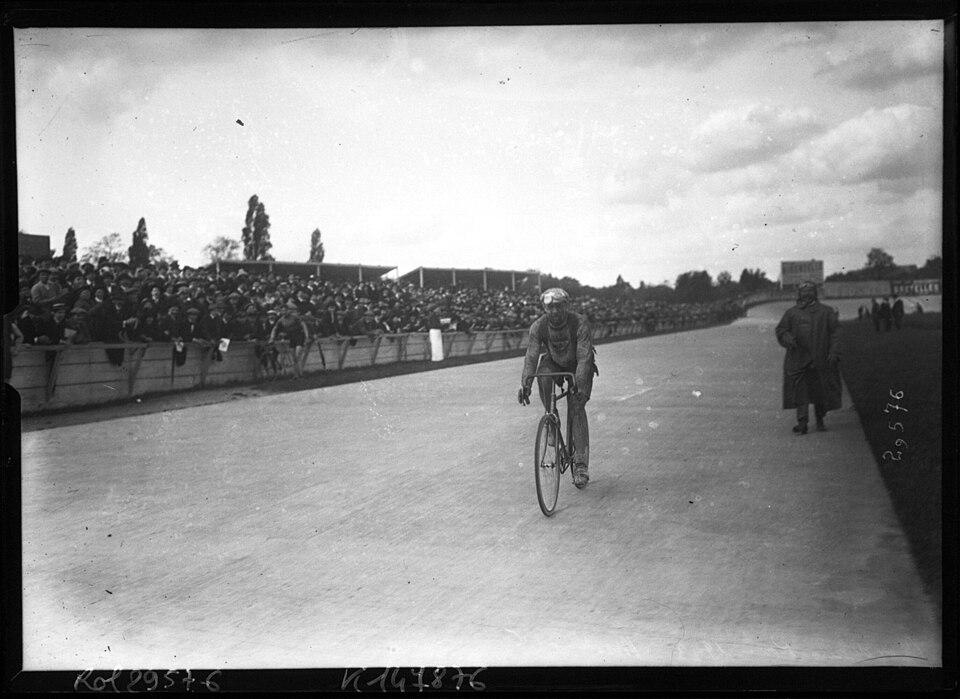
Bordeaux–Paris — with a motor pacer ahead
Jacques Anquetil won the Dauphiné and, a few hours later, began the 557-kilometre Bordeaux–Paris with motor pacing over the final part of the race.
Read the story →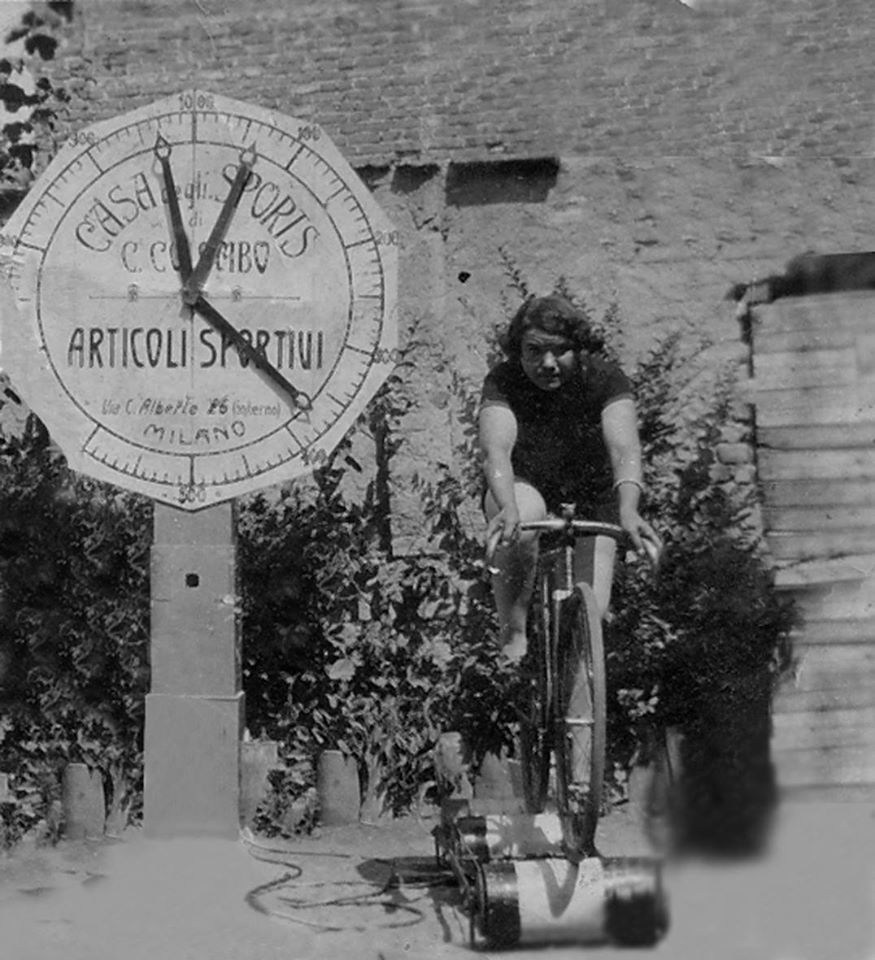
The woman the Giro could not get rid of
Alfonsina Strada arrived outside the time limit in Perugia. Even so, she continued all the way to Milan.
Read the story →
When the racing bicycle found its modern form
See the races, people, bicycles and changes that shaped the period.
Explore the period →