Italy · 1995–2004
The man behind the Pirate
Marco Pantani returned from a shattered left leg to win both the Giro d’Italia and the Tour de France. That did not make him unbreakable. It makes the story more human.
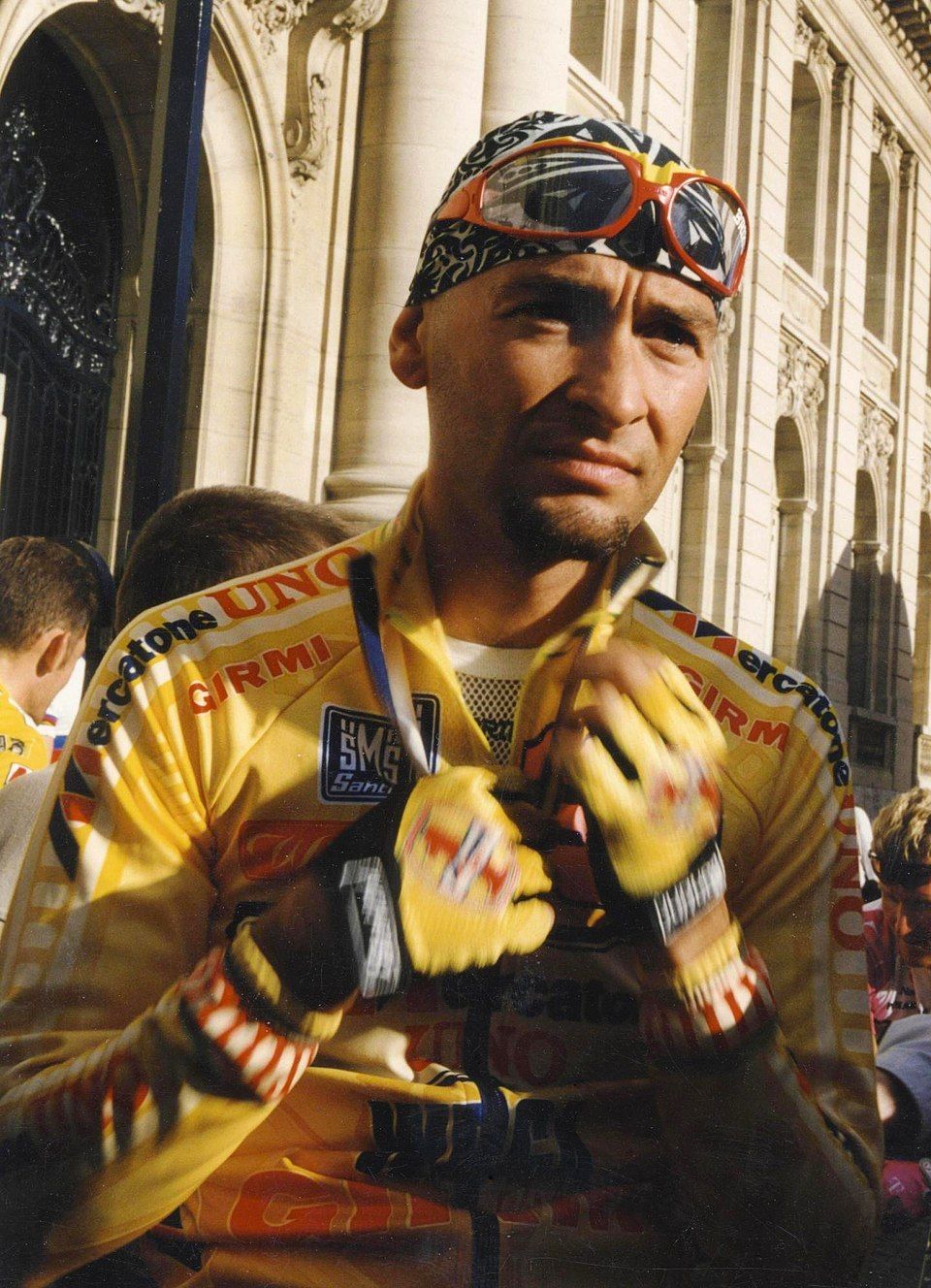
On 18 October 1995, Marco Pantani lay on the road during Milano–Torino. A car was in the race route at Pino Torinese, and the collision shattered the tibia and fibula of his left leg.
A year earlier he had finished second in the Giro and third in the Tour. In 1995 he won at Alpe d’Huez and Guzet-Neige, then took bronze at the World Championships. Now the whole 1996 season disappeared.
The episode is often used as proof of an unbreakable mind. That is too simple. Pantani returned from an injury that would have ended many careers, but he was not invulnerable. The tension between the fearless racer and the vulnerable man is why he is still remembered.
The small rider from Cesenatico
Born in Cesena in 1970 and raised in Cesenatico, Pantani began racing with the local Fausto Coppi club. His slight build and abrupt rhythm quickly found the terrain where larger riders struggled. The shaved head, bandana and earring gave him the name Il Pirata. His attacks gave the name its force.
Back — and down again
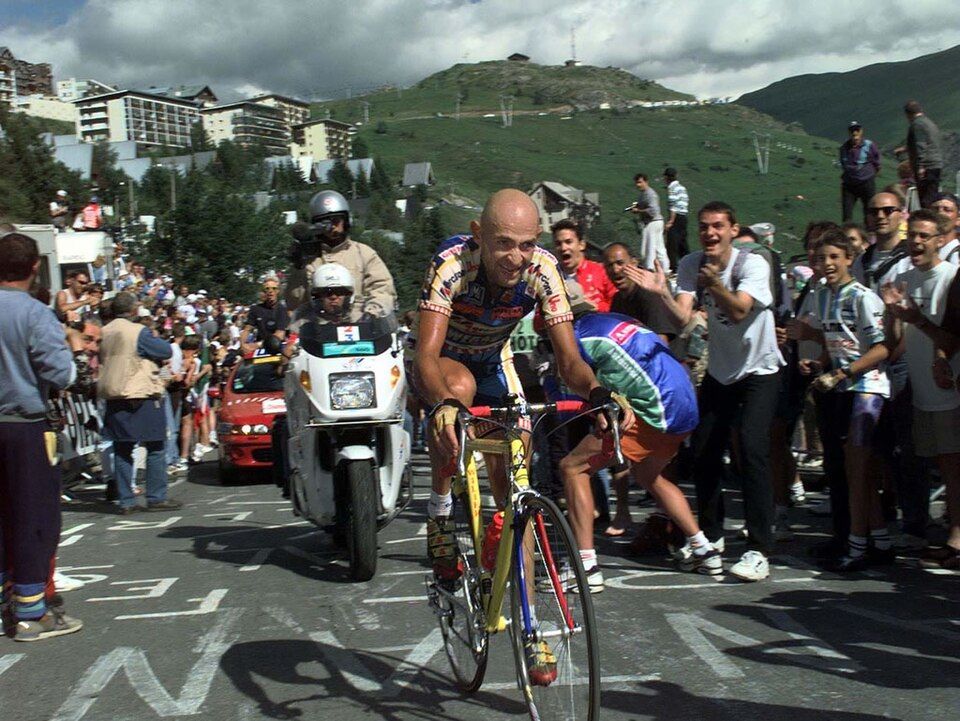
Pantani returned in 1997 with Mercatone Uno. A cat crossed the road on the descent from Chiunzi during the Giro, causing another crash and retirement. At the Tour he answered with victories at Alpe d’Huez and Morzine and third place overall.
The comeback peaked in 1998. Pantani won the Giro, then attacked on the Galibier during a cold, wet Tour stage and rode into yellow at Les Deux Alpes. In Paris he became the first Italian Tour winner since Felice Gimondi in 1965 — and remains the most recent rider to win the Giro and Tour in one season.
A tribute must include the whole man
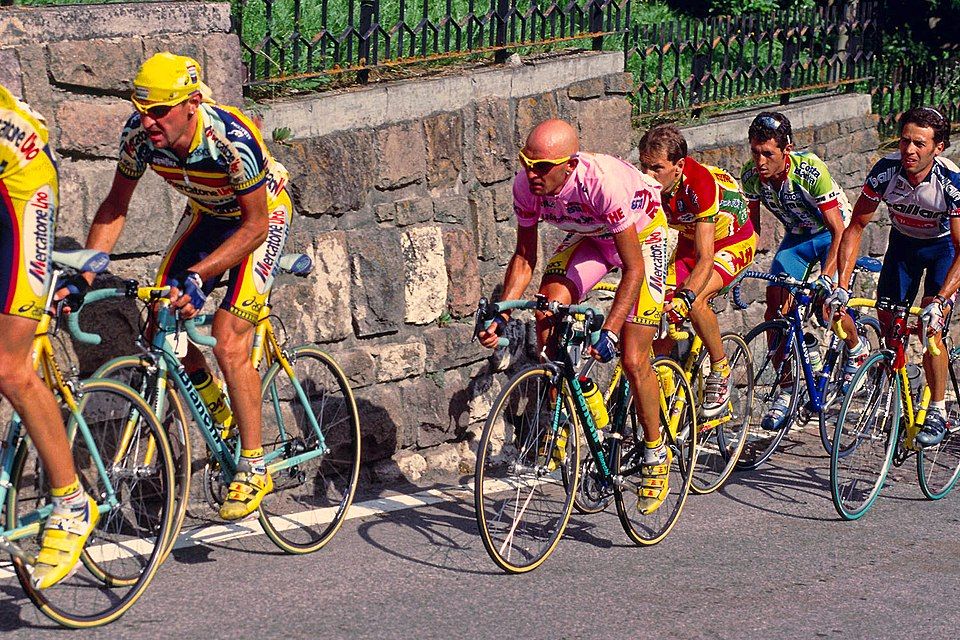
In 1999 Pantani led the Giro when a blood test at Madonna di Campiglio recorded a haematocrit above the permitted threshold. He was removed from the race on health grounds. Later evidence of unusually high and fluctuating blood values means his career cannot be separated from cycling’s doping era.
Campiglio was also a human breaking point. Pantani returned and won two Tour stages in 2000, but never regained the same consistency. Distrust, court cases, isolation, depression and cocaine abuse increasingly took over. On 14 February 2004 he was found dead in a Rimini hotel, aged 34.
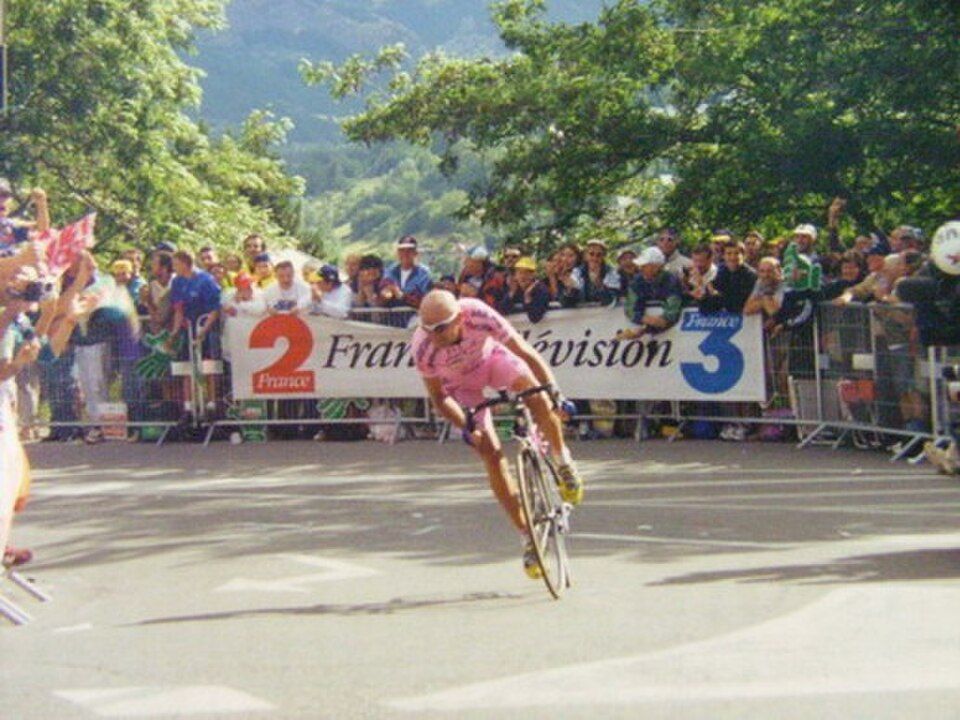
A tribute need not soften the darkness. Pantani’s greatness was not that he could never break. It was found in the moments when a small rider made an entire mountain wait for his next attack — and in the long road back after 1995.
After the Pirate
The places where he is remembered
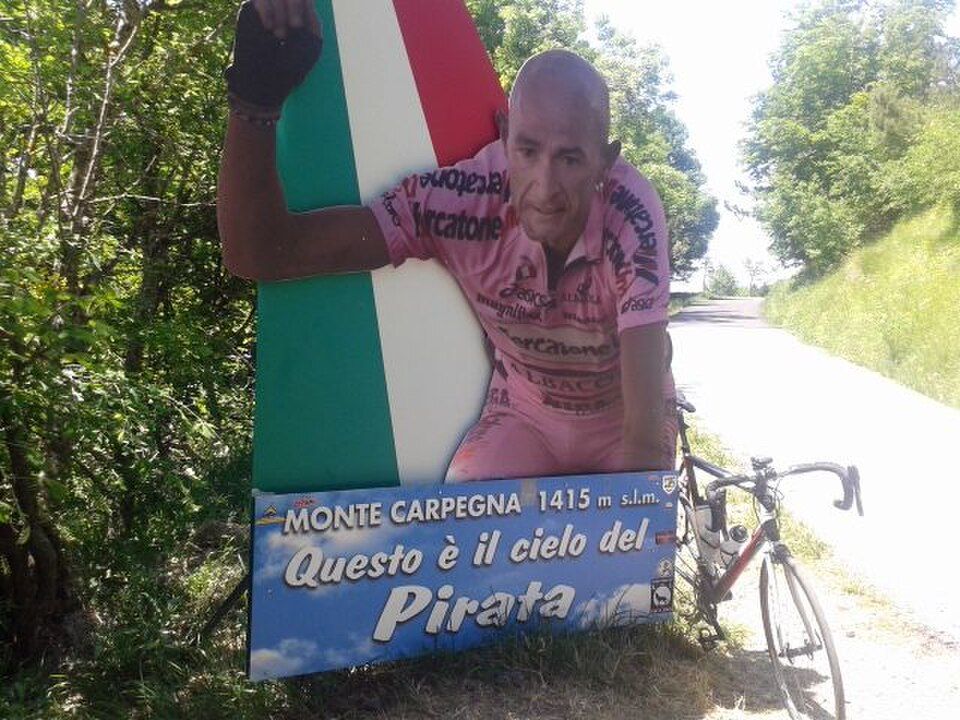

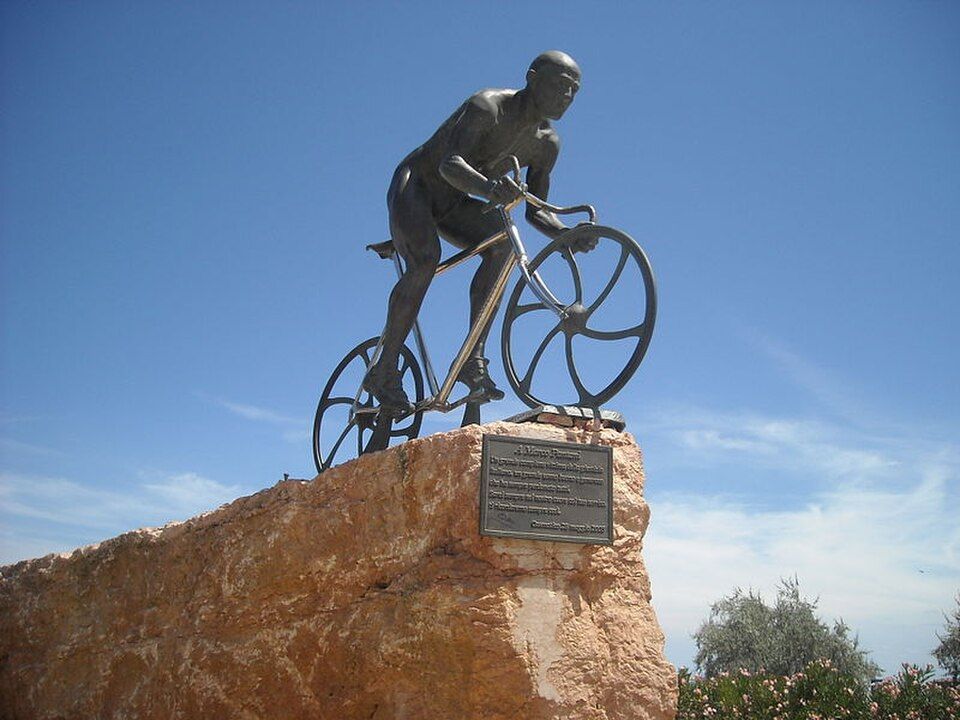

Sources and image notes
Each image is reproduced under the licence stated in its caption. None documents the 1995 crash.
Continue exploring
More from cycling history
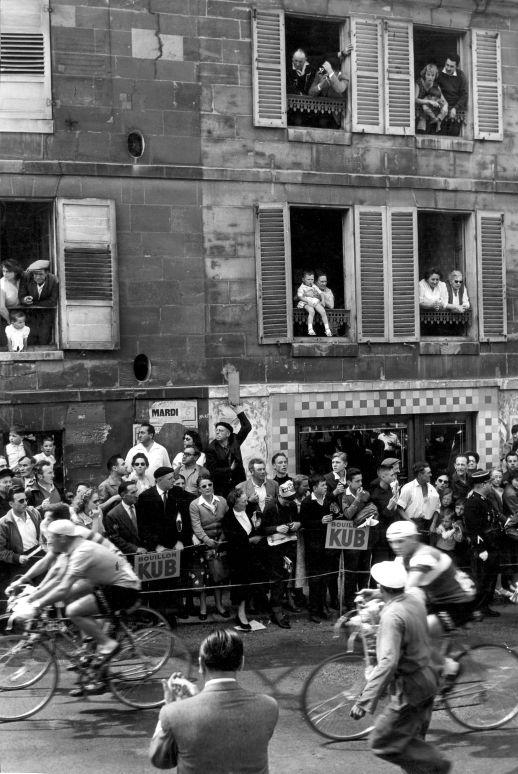
The Tour winner nobody expected
Roger Walkowiak won no stage in the 1956 Tour. He won the race because the favourites first underestimated his breakaway and later could not drop him.
Read the story →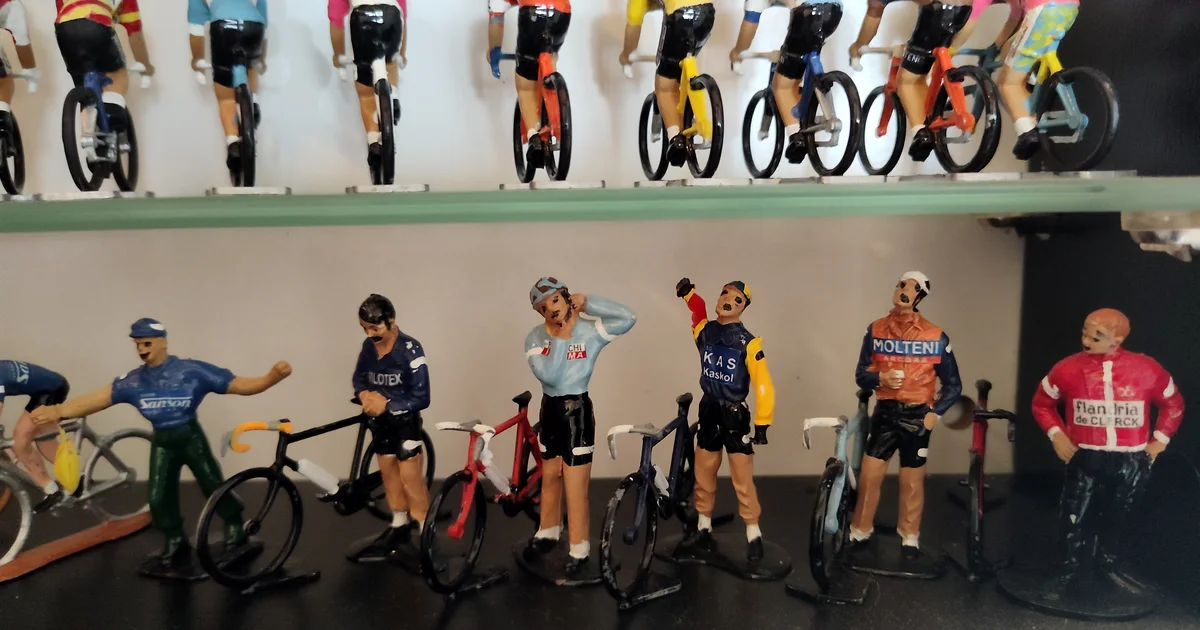
When the Tour de France moved into the children’s room
Small cast cyclists turned pavements, sandpits and carpets into stage races — and later became collectibles with their own moulds, poses and peculiarities.
Read the story →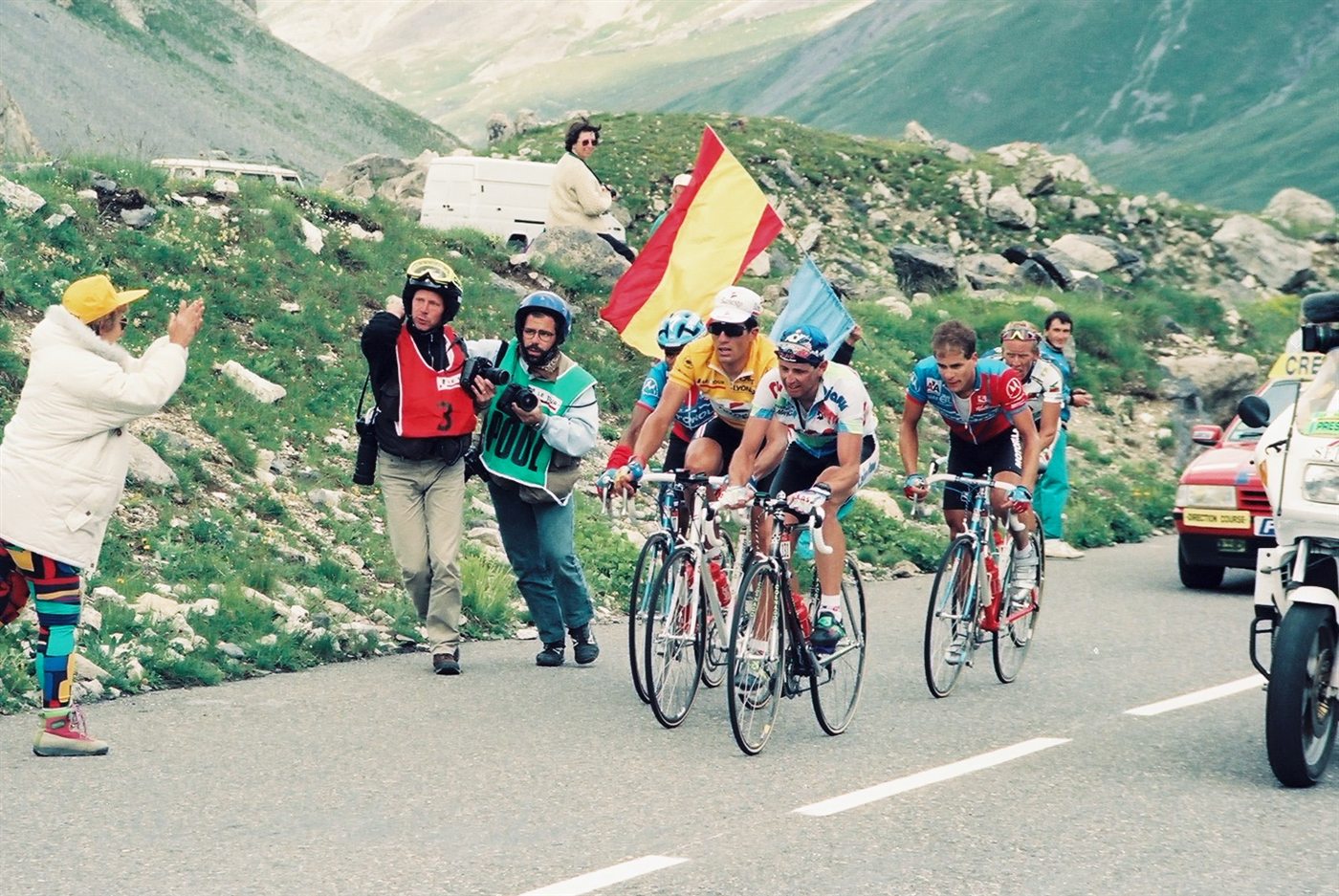
When shifting moved to the handlebars
See the races, people, bicycles and changes that shaped the period.
Explore the period →