Toys · Tour de France · from the 1930s
When the Tour de France moved into the children’s room
A few centimetres of metal, two thin wheels and a flat base were enough to stage an entire bicycle race.
A road drawn in chalk
The course might run along a pavement, through a sandpit or across a carpet. Chalk made the bends. A pile of sand became a mountain pass. The finish required little more than a line and somebody keeping track of the order.
Small cyclists stood on the course. Some were flicked directly with a finger. Others followed a marble shot along the route. Children in France, Belgium, the Netherlands and Italy made their own stage races and kept careful records of winners, times and jerseys. The Tour could continue after the radio had been switched off and the real peloton had moved on.
From soldier to cyclist
The foundries found a new hero
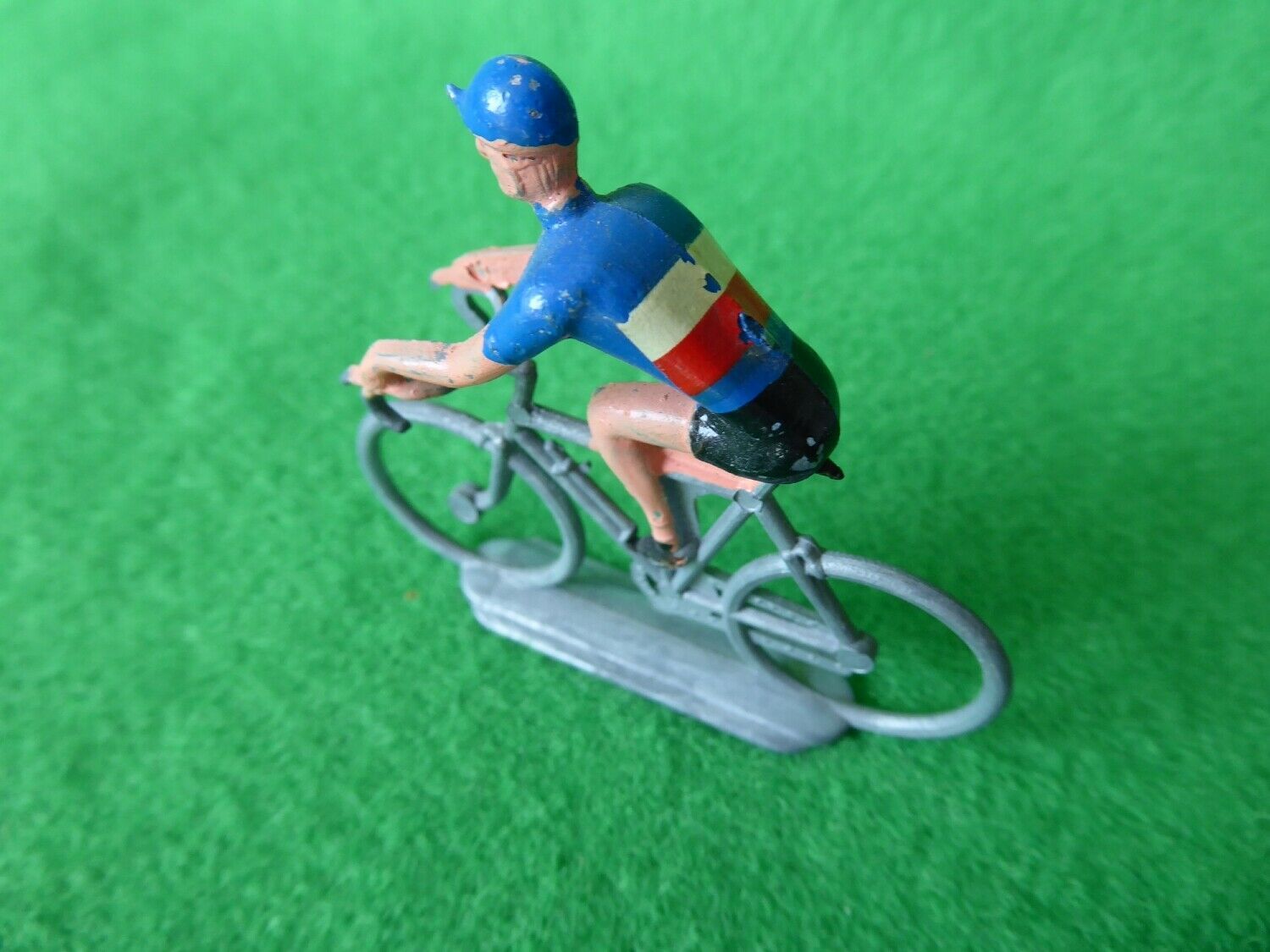
Cast figures were already familiar toys in the 1930s and 1940s. Soldiers, firemen and animals left small workshops in large numbers. Popular enthusiasm for the Tour de France, the Giro d’Italia and road racing gave manufacturers an obvious new subject.
The earliest riders were often described as lead figures. As restrictions on lead in toys became stricter, other materials took over. The French Fonderie Roger made miniature cyclists in zamak during the 1950s. Zamak is a zinc alloy containing aluminium, magnesium and copper, well suited to die casting. Plastic cyclists later appeared from Roger, Cofalu, Salza and others.
This was a small object but not necessarily a small business. Fonderie Roger states that by the mid-1960s it was producing several hundred thousand cyclists a year for France, Italy and Belgium.
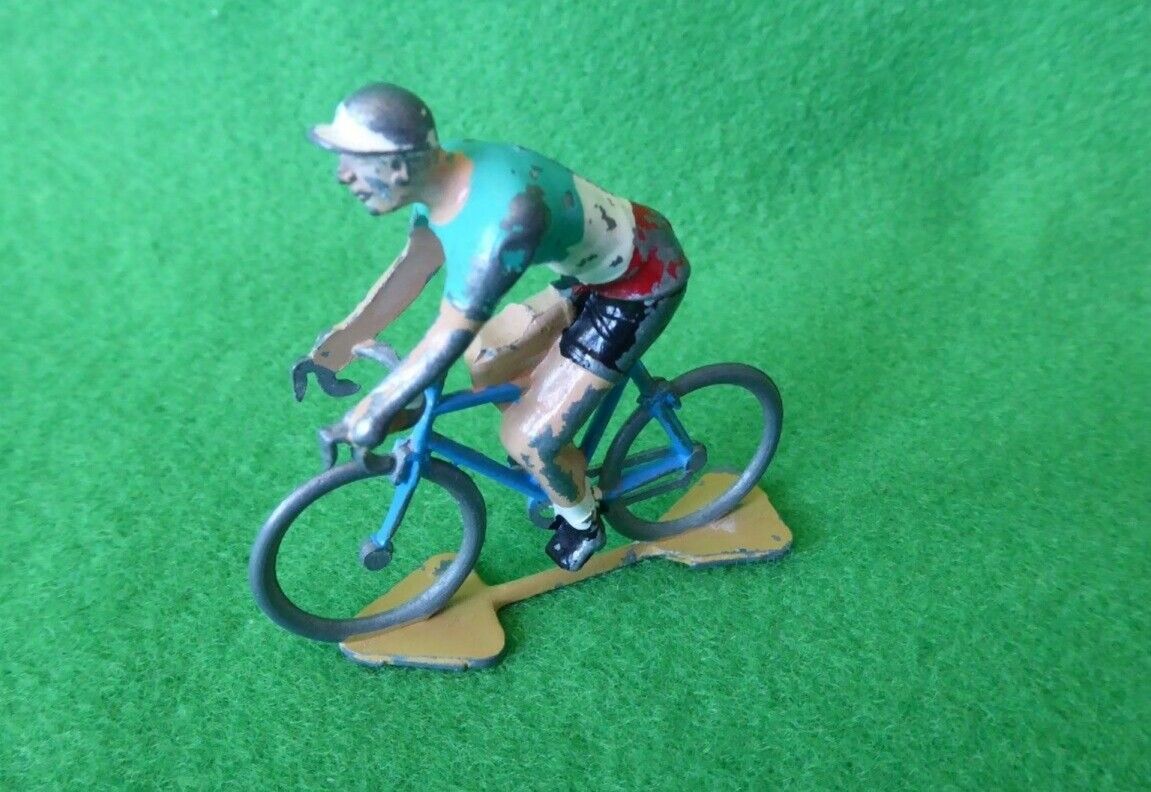
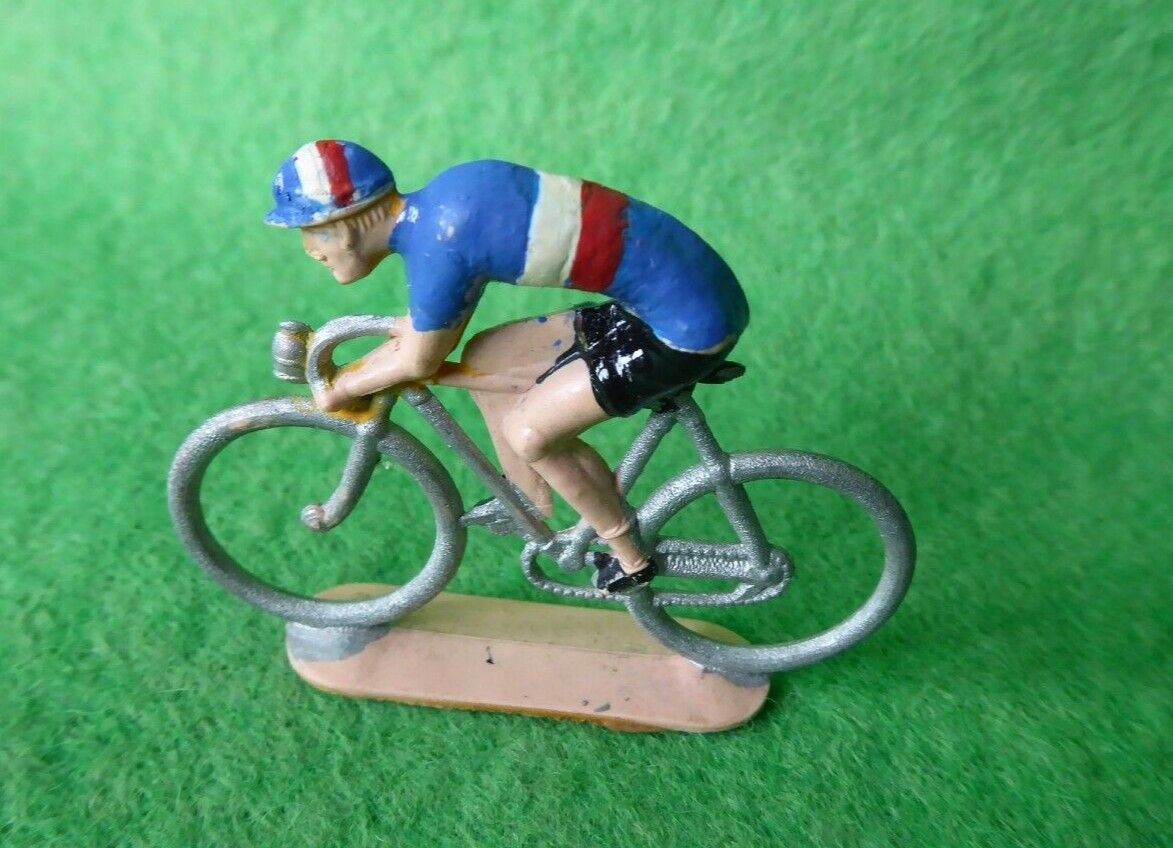
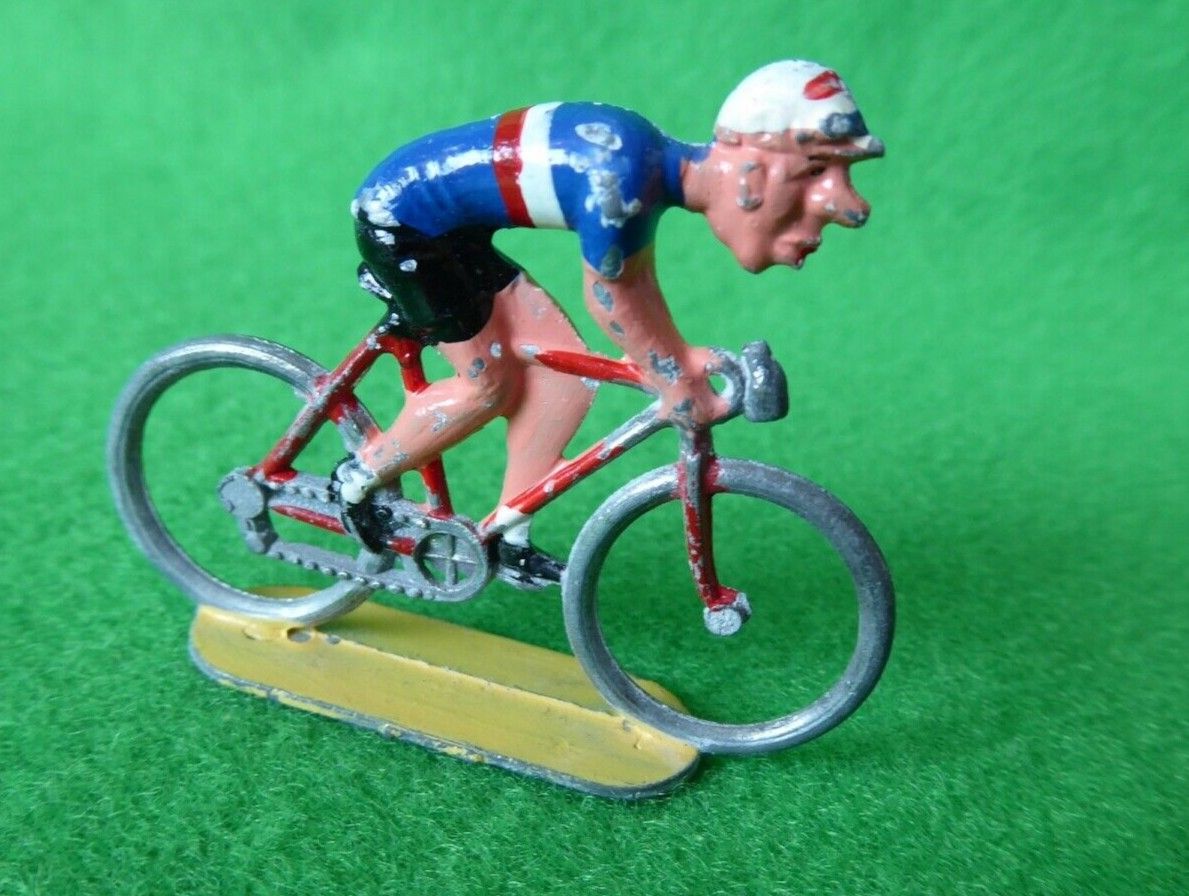
The figure had to stand, move and survive play. Its base mattered as much as the fine paintwork.
The game
The stage race made its own rules
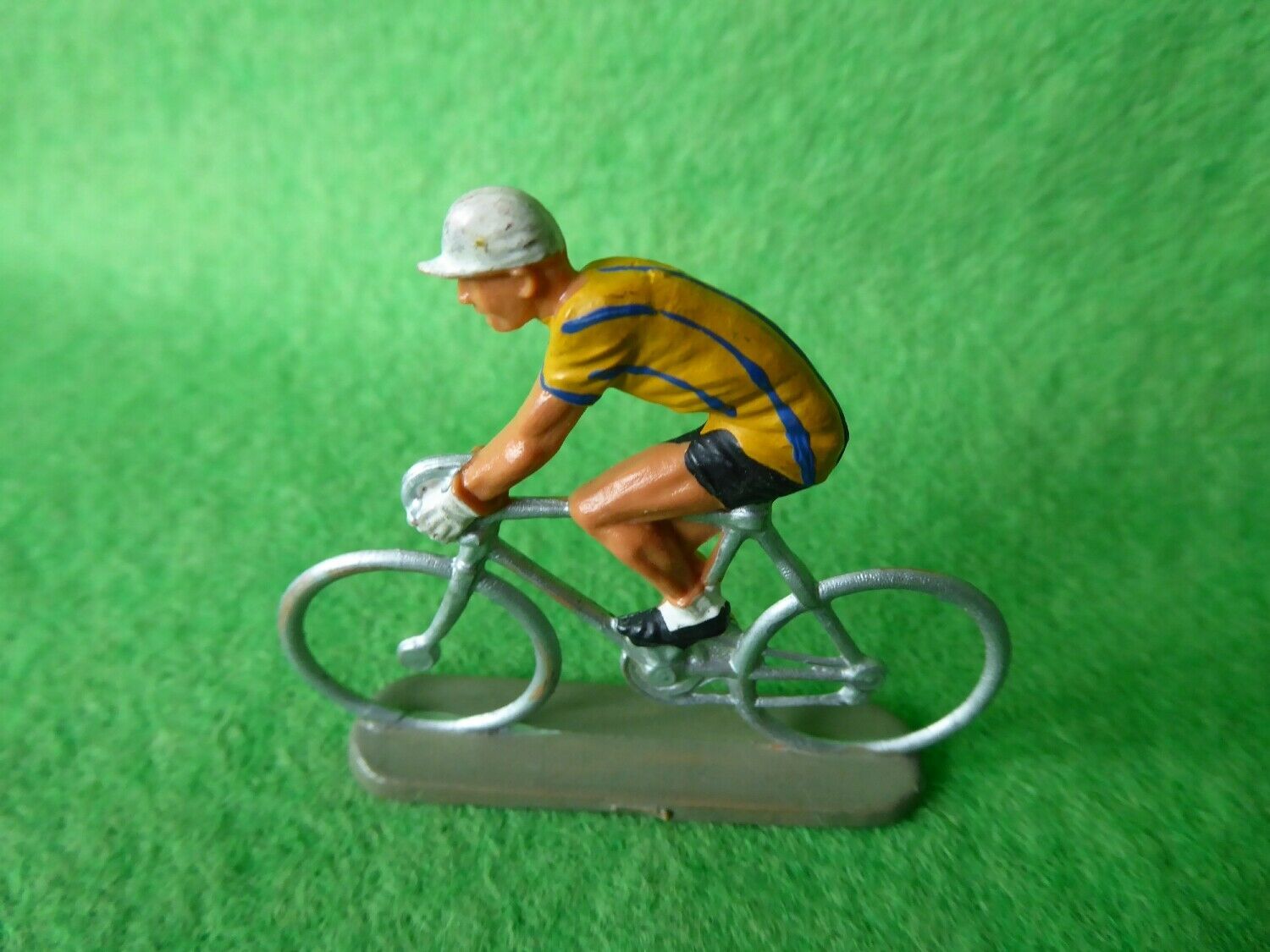
There was no single set of rules. Some children used dice. Others flicked the rider or let a marble decide how far it could advance. A bump on the beach became a climb, while cracks in the pavement supplied all the cobbles a race could need.
The important point was that the game could grow. It might be one classic or an entire Tour, complete with stages, mountains classification, green jersey and overall time. Results went into notebooks. These figures were not merely objects to look at. They were pieces in a game devised and managed by the children themselves.
Some models had a central square base and could serve as board-game pieces. The better-known triangular base offered stability outdoors and was eventually cast as part of the rider so that it could not be lost along the route.
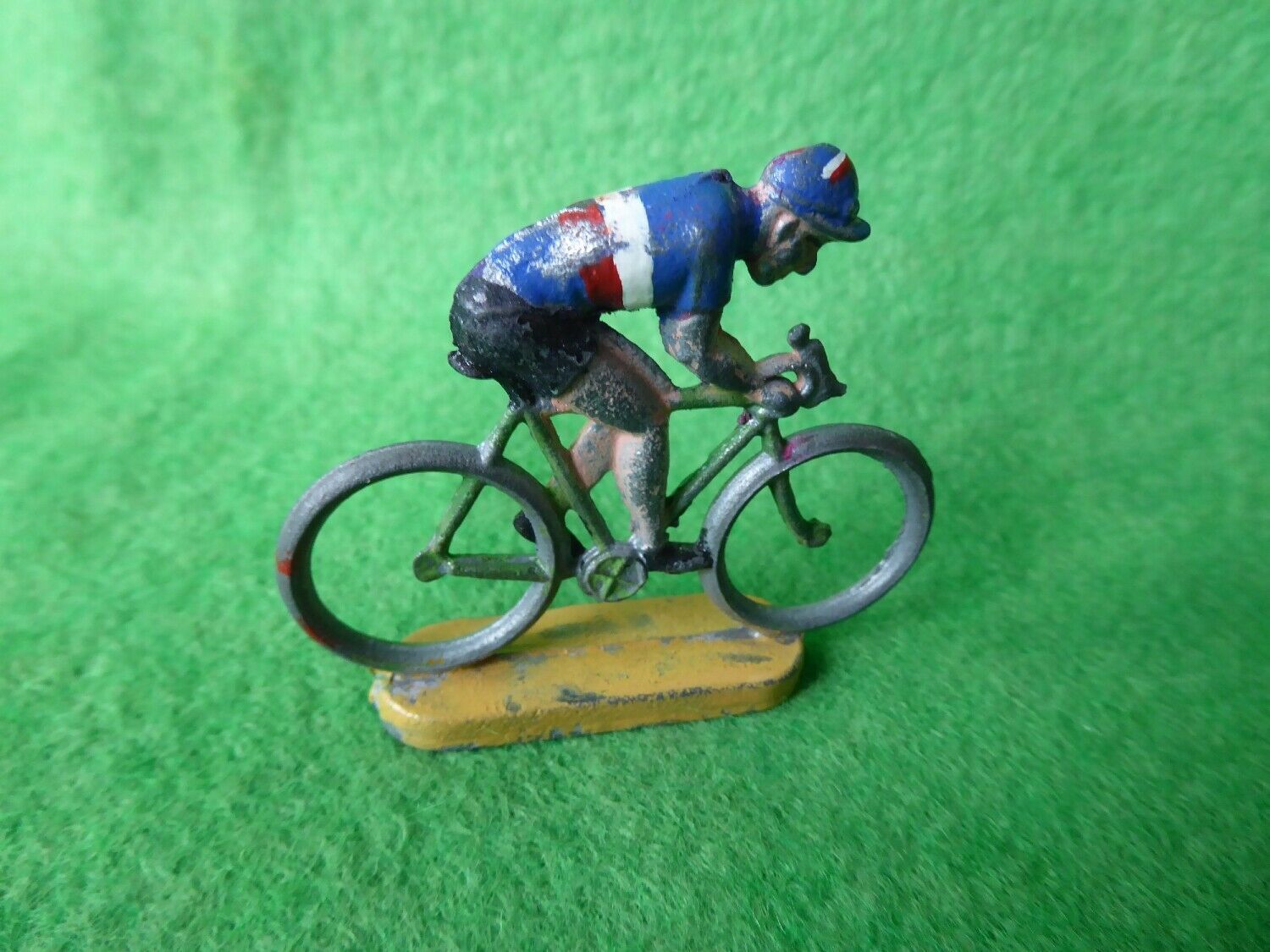
The positions
A whole peloton from a few moulds
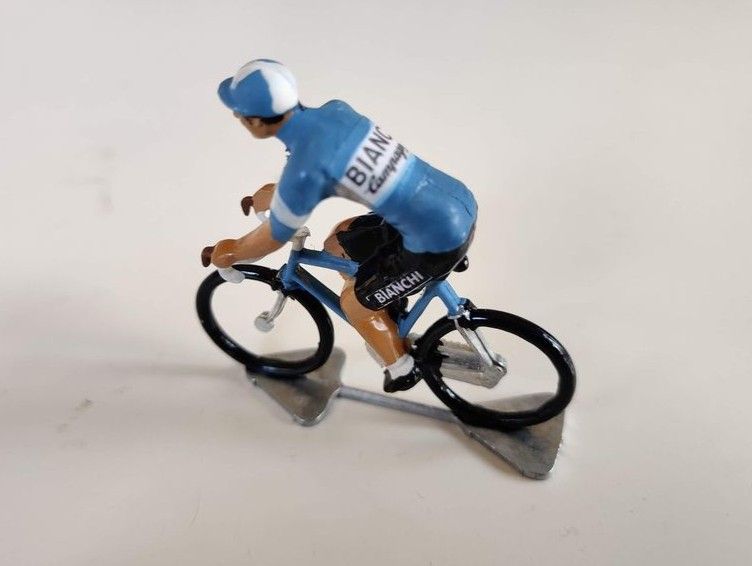
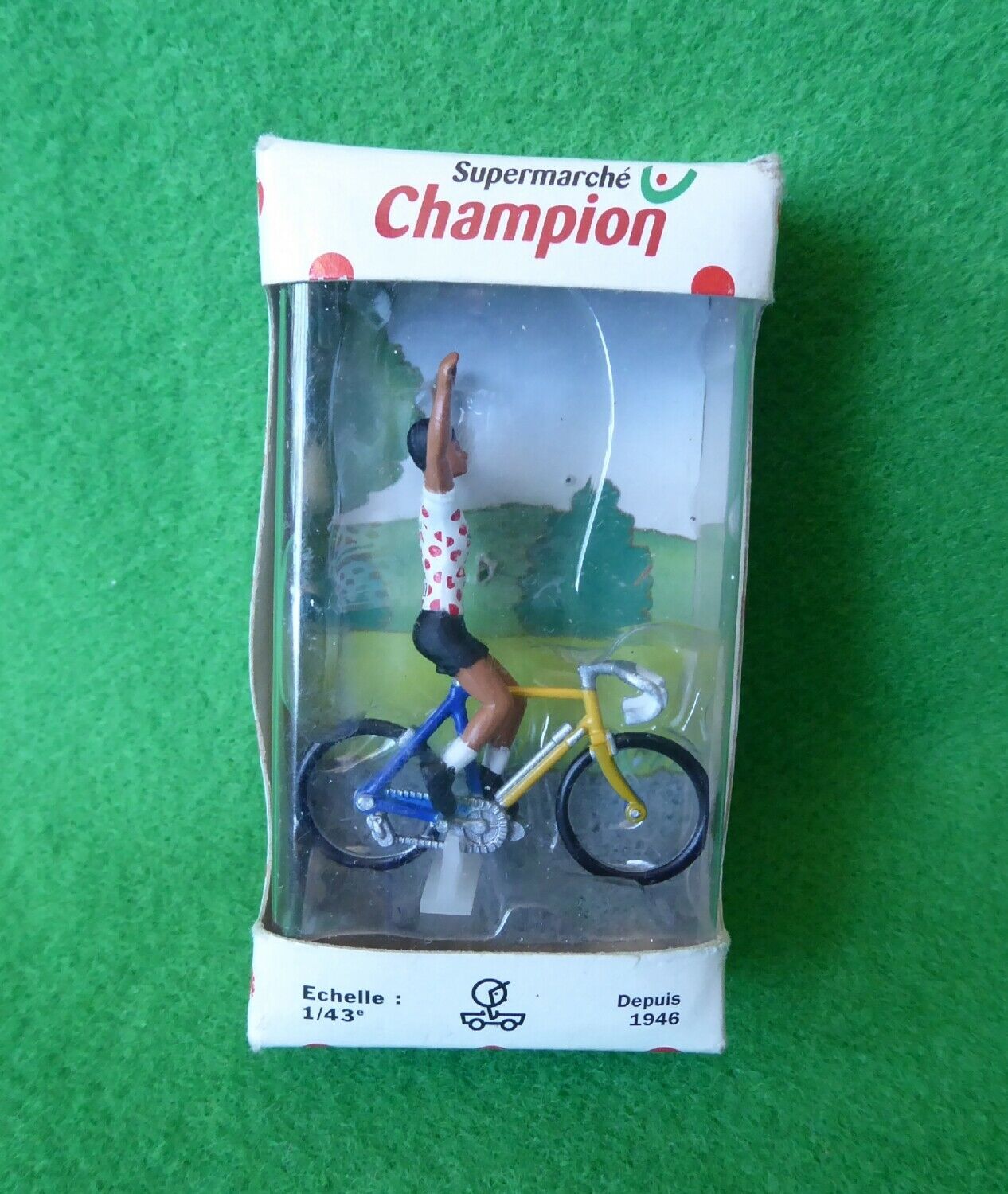
Manufacturers developed a number of basic poses. The rouleur was seated in a normal riding position. A grimpeur or danseur stood on the pedals. The sprinter crouched low over the bars, while the vainqueur raised both arms in victory. A bidon figure reached for or drank from a bottle.
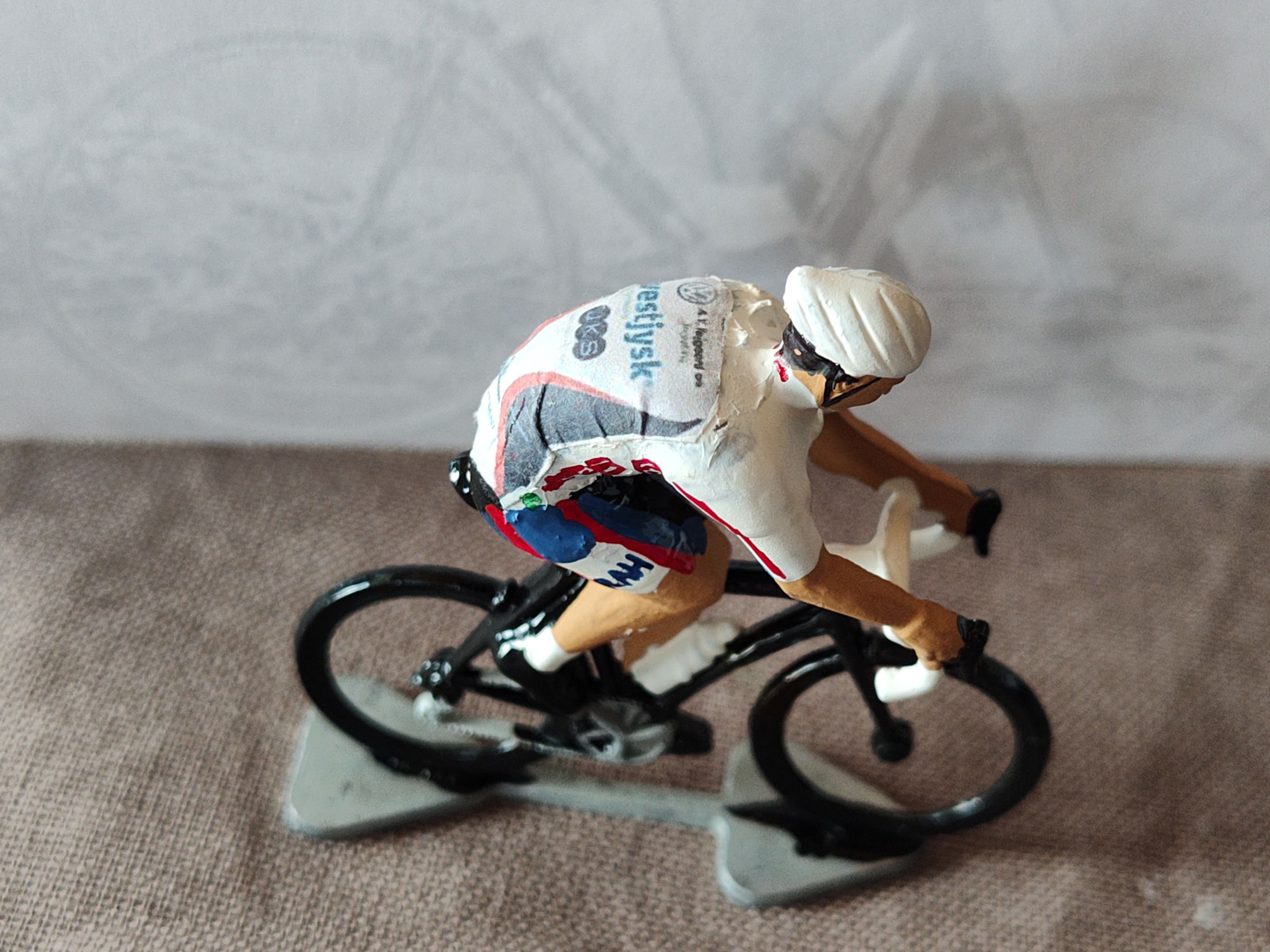
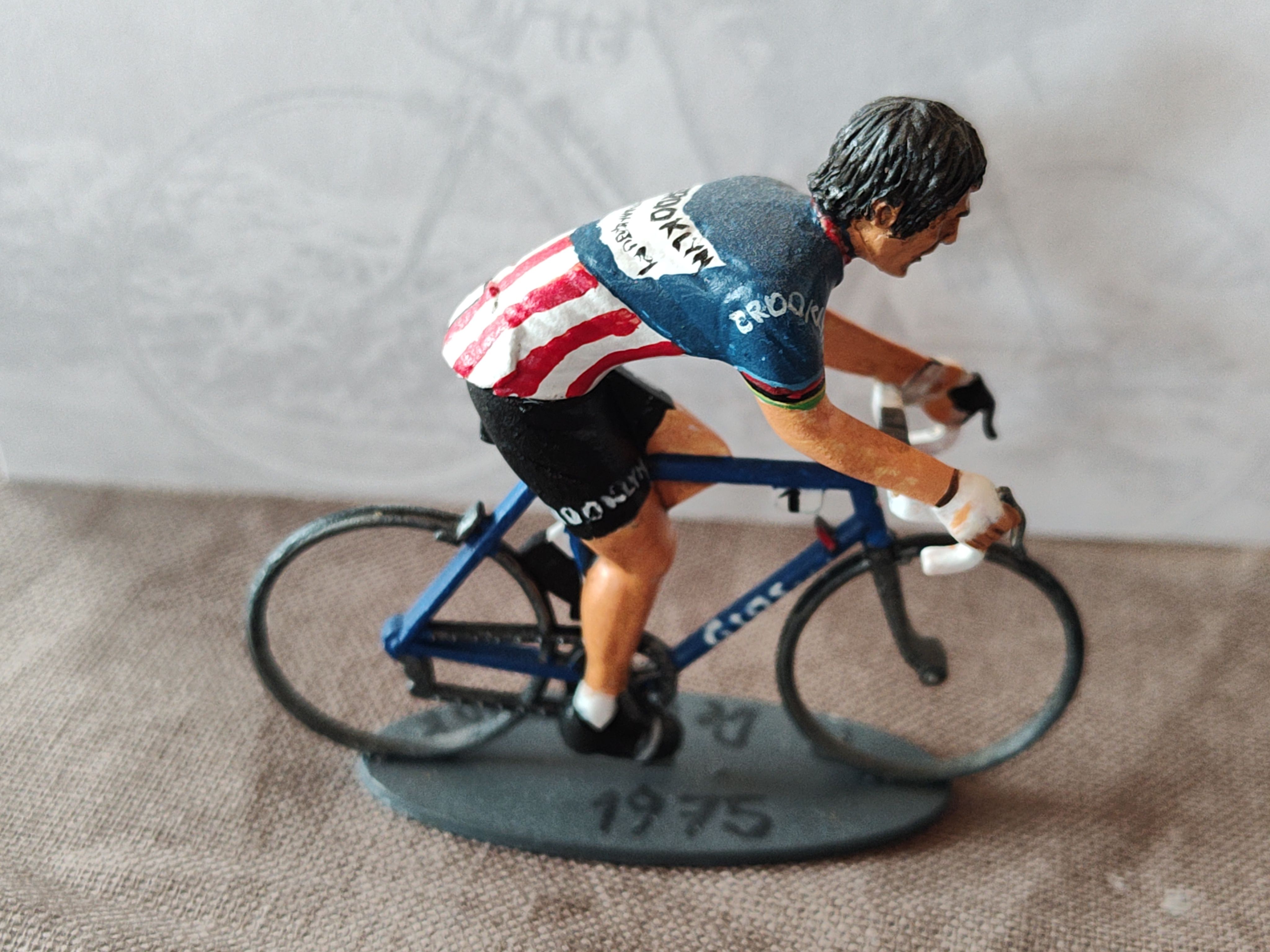
Colour did the rest. The same casting could become a French champion, a yellow jersey or a familiar sponsored team. Figures were often hand-painted, and small differences in faces, jerseys and brushwork gave each one its own character.
Collectors’ terms also preserve traces of production. “LN”, or “Long Nose”, is used for figures with an unusually long or bulbous nose. It is commonly attributed to a worn mould. What began as an irregular detail later became something to seek out.
The caravan in miniature
The cars joined the race
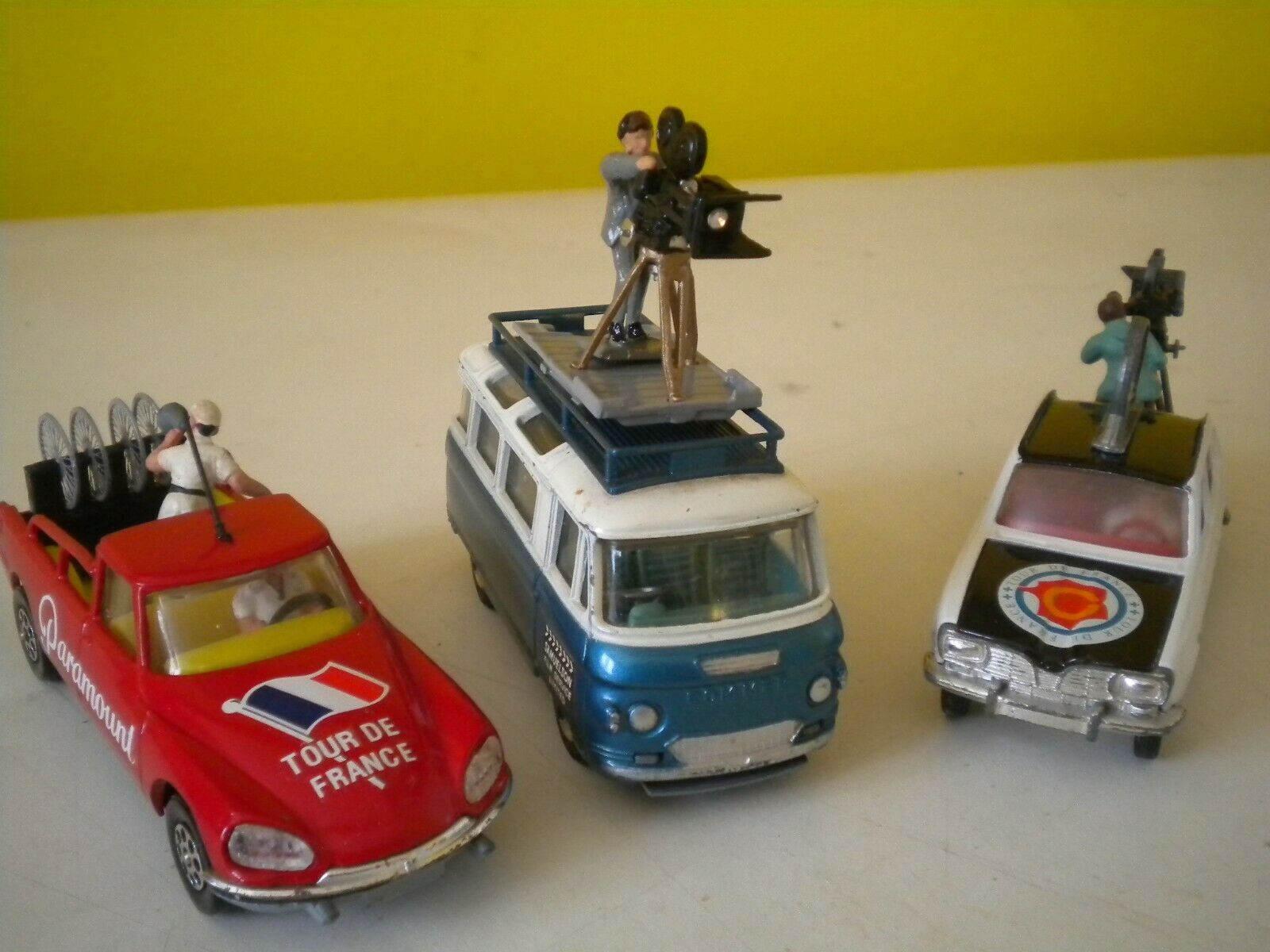
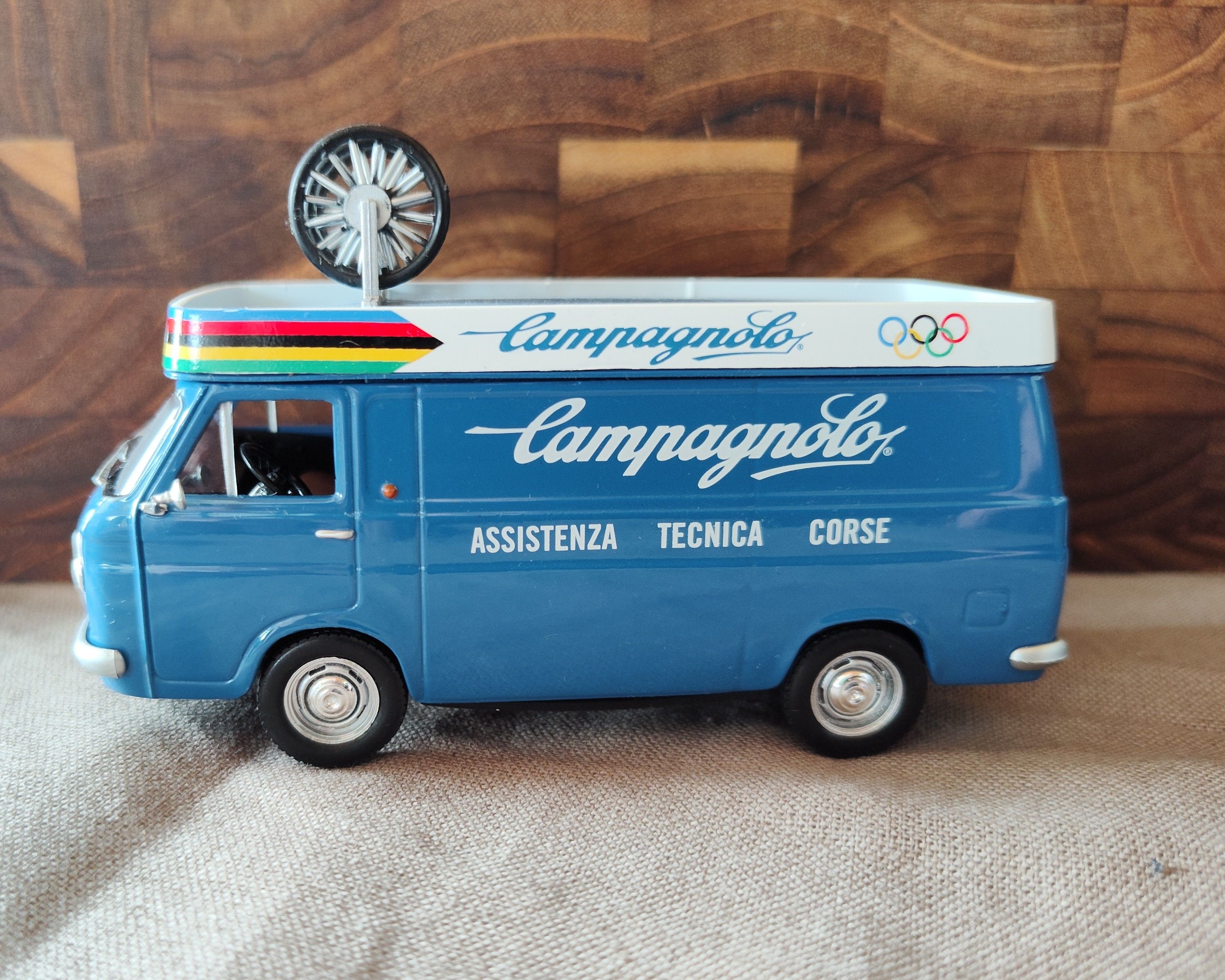
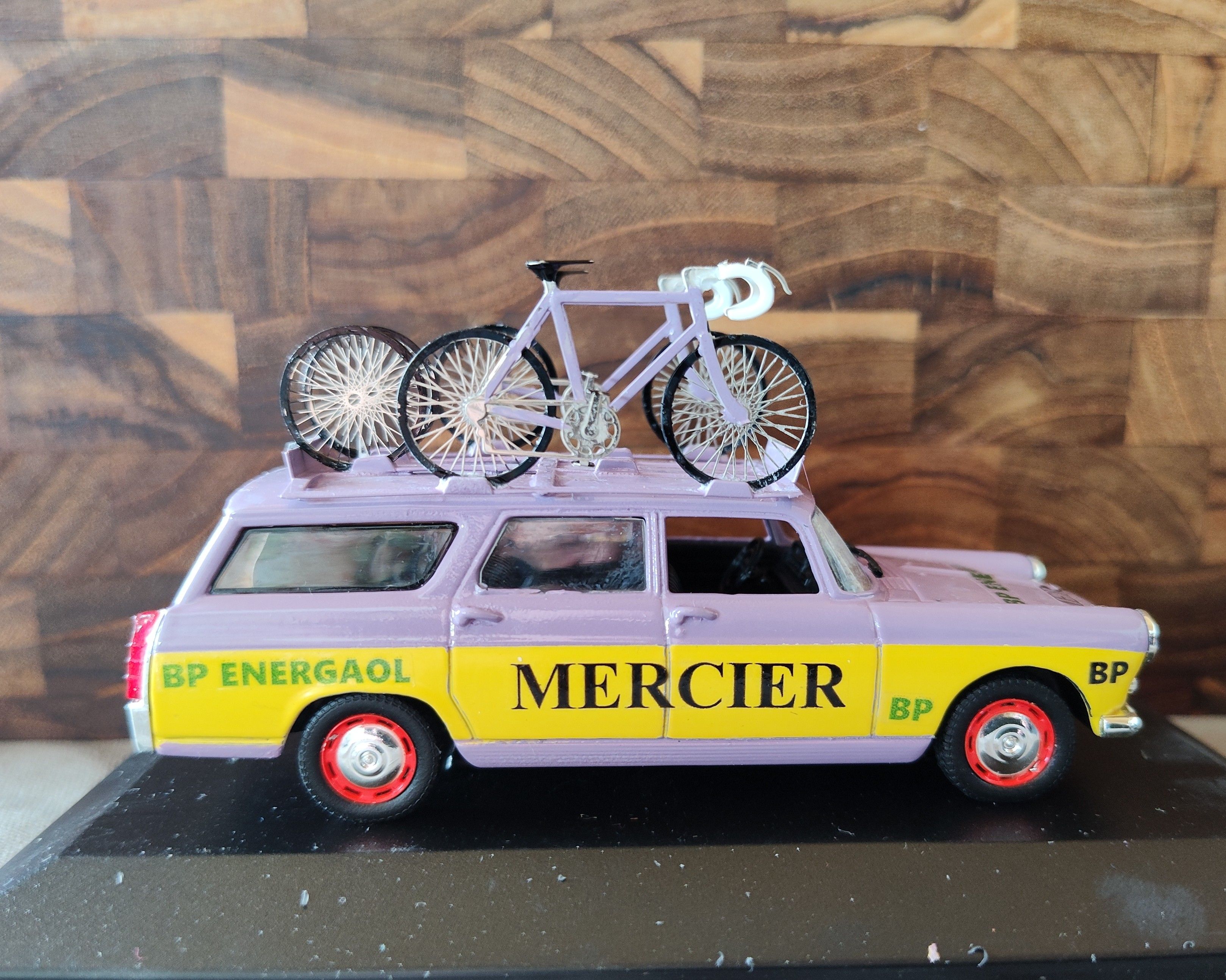
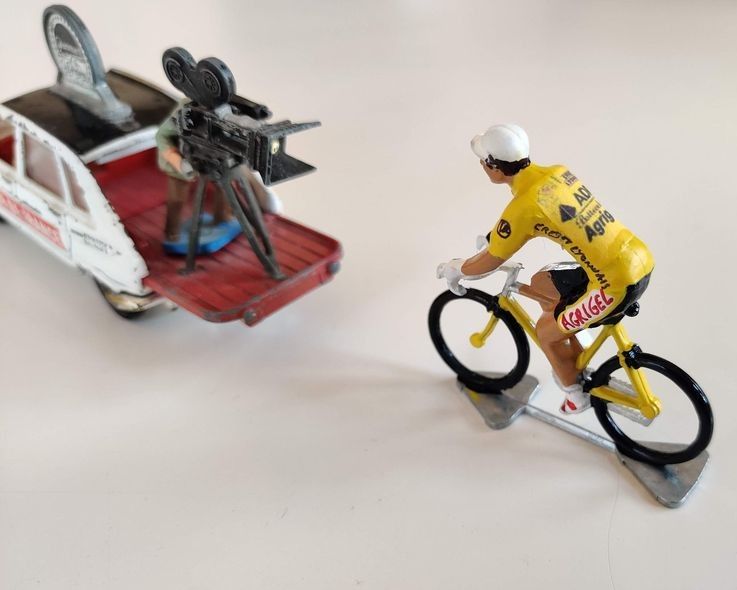
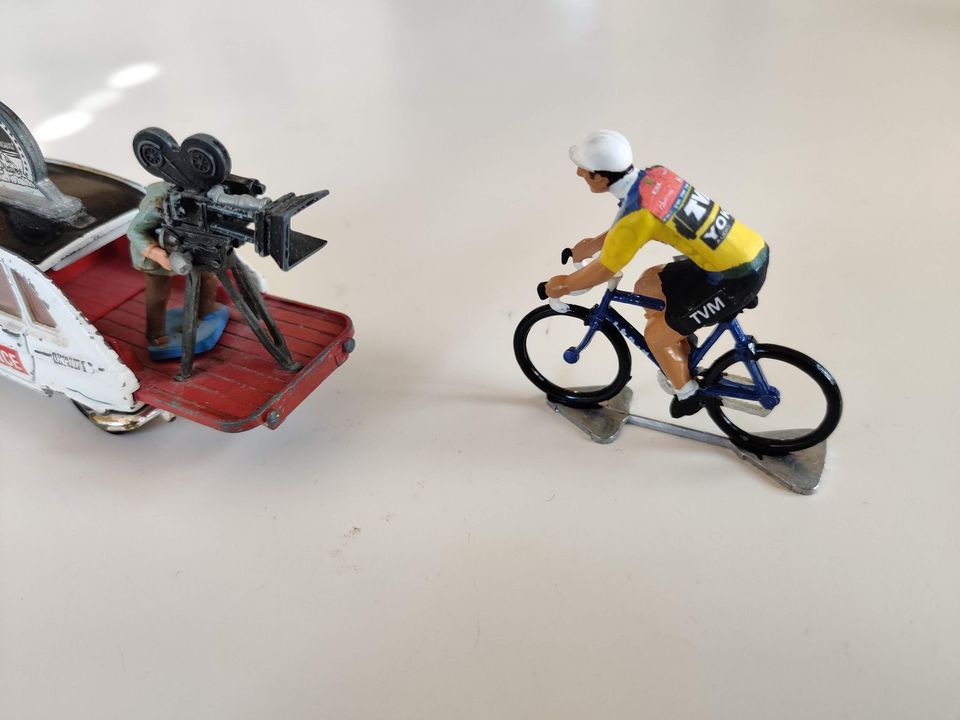
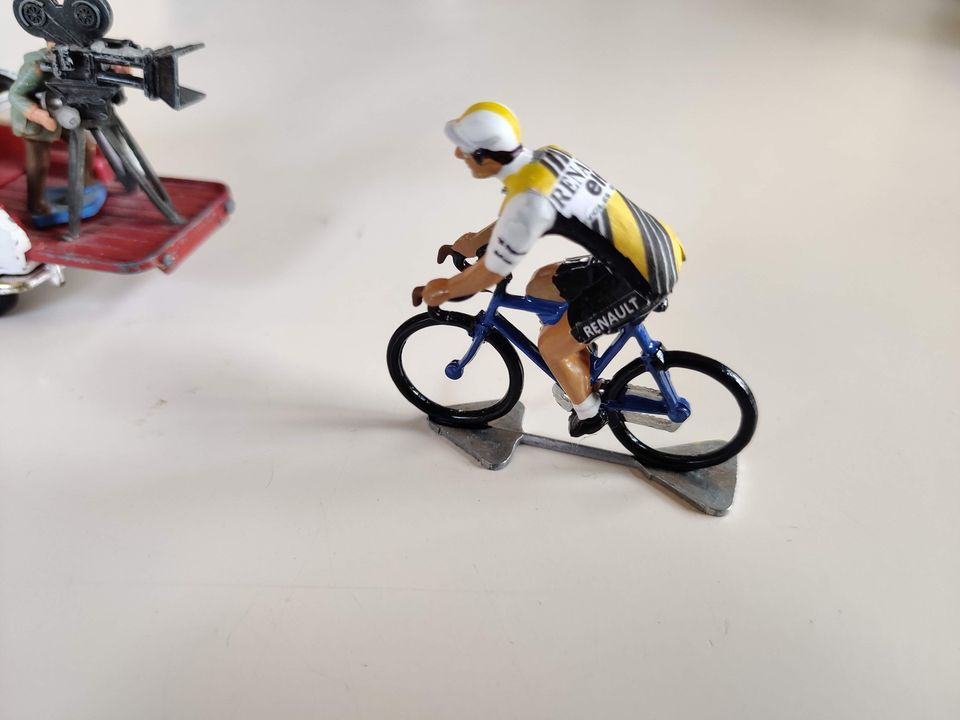
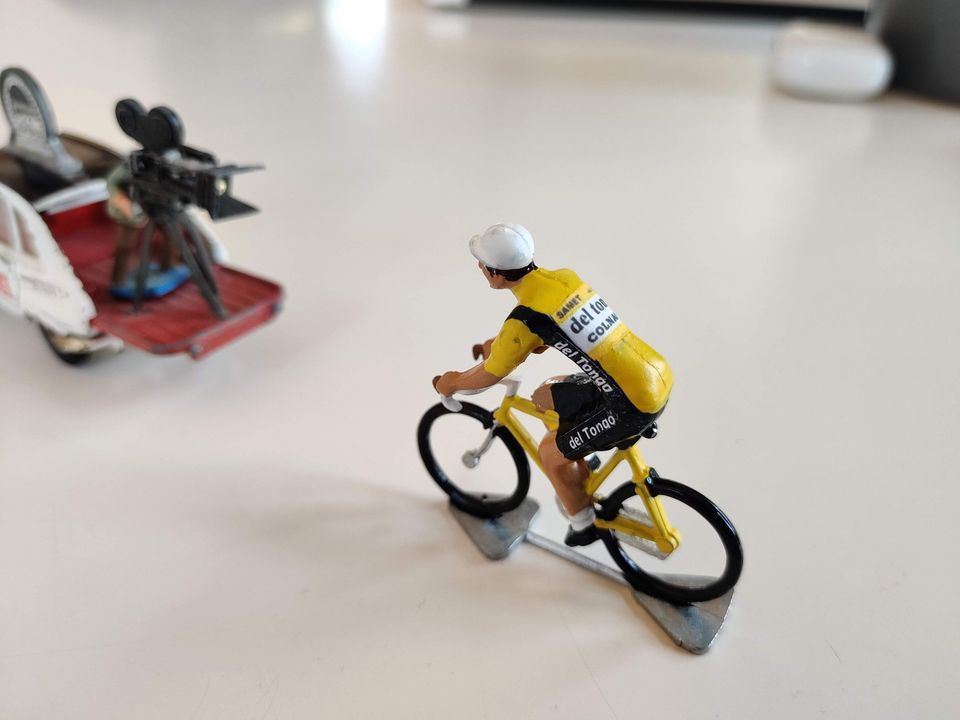
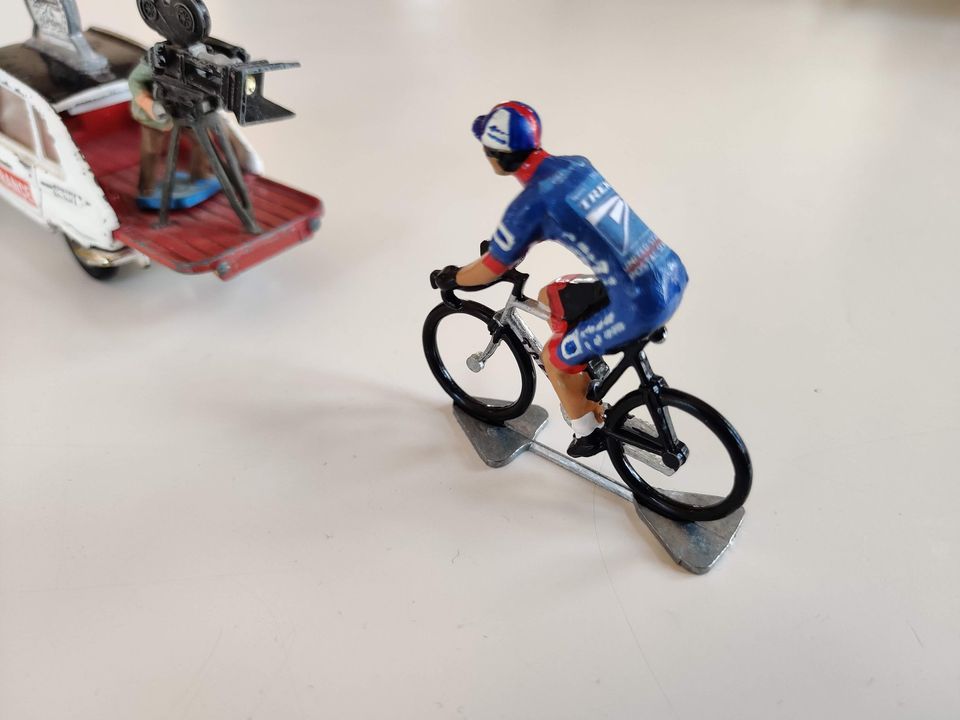
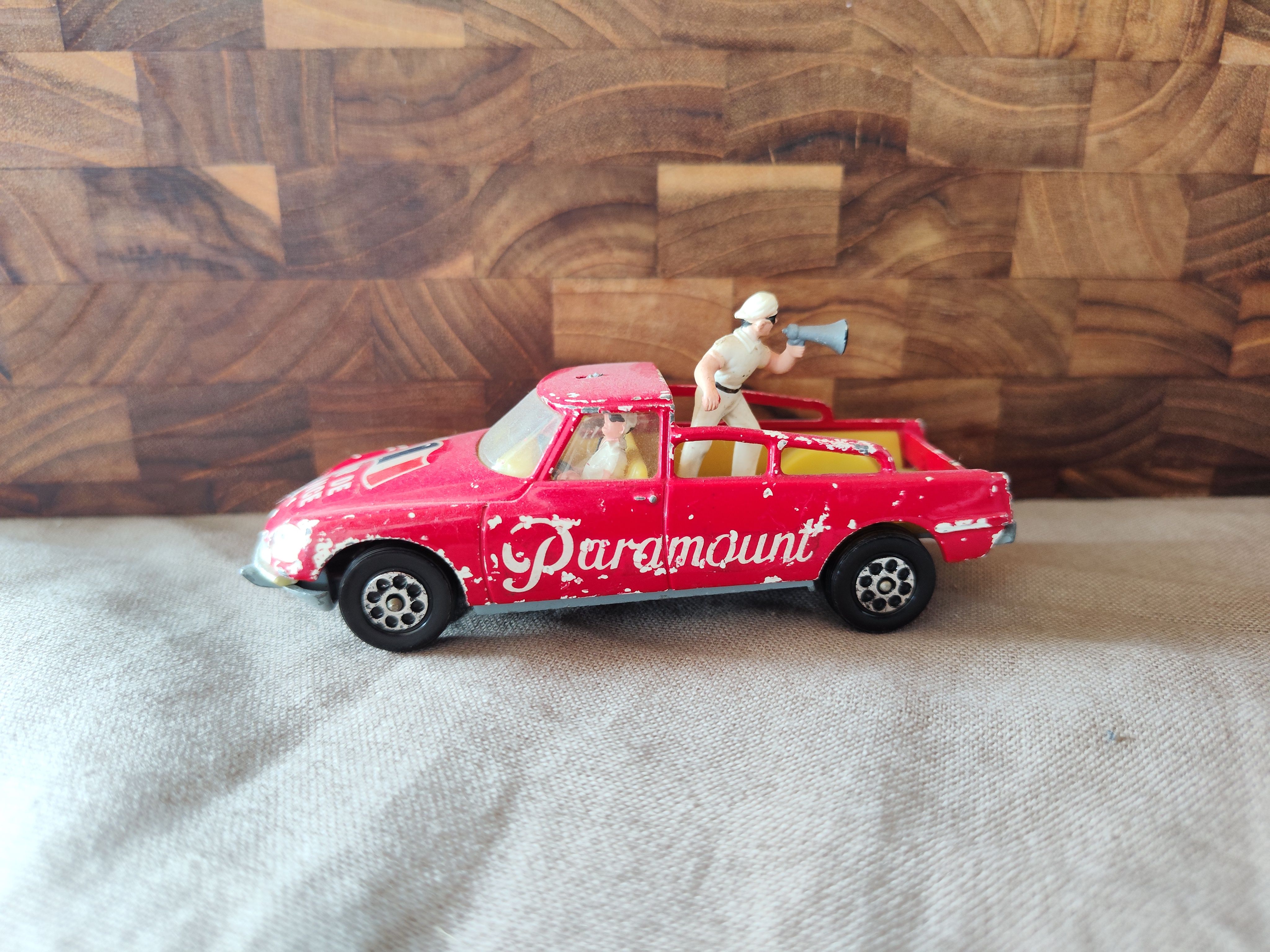
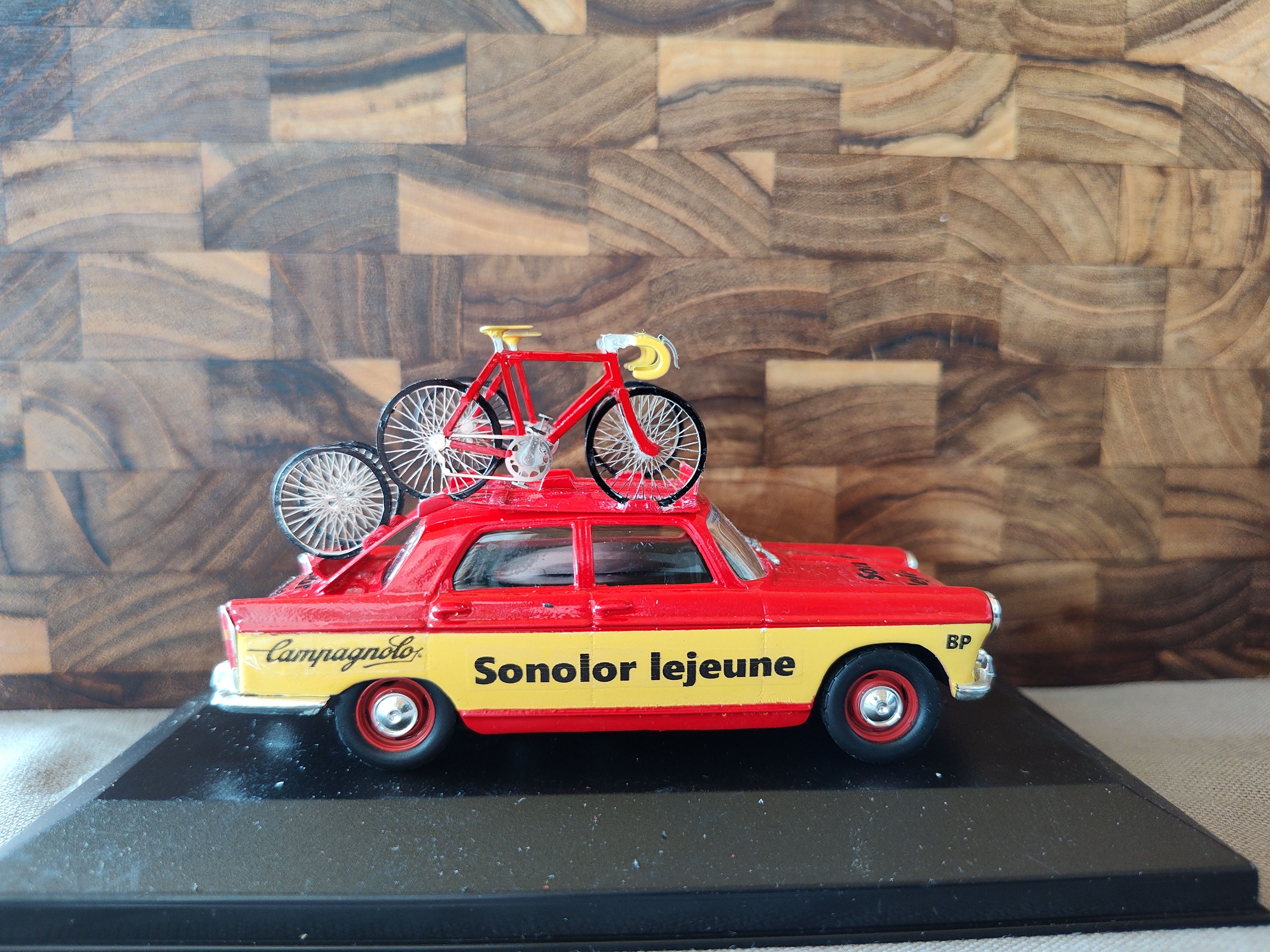
The Tour’s publicity caravan officially became part of the race in 1930. It travelled ahead of the peloton with decorated vehicles, advertising messages and small gifts for the roadside crowd. In miniature, the cyclists were therefore joined by service vans, camera cars and team cars carrying bicycles.
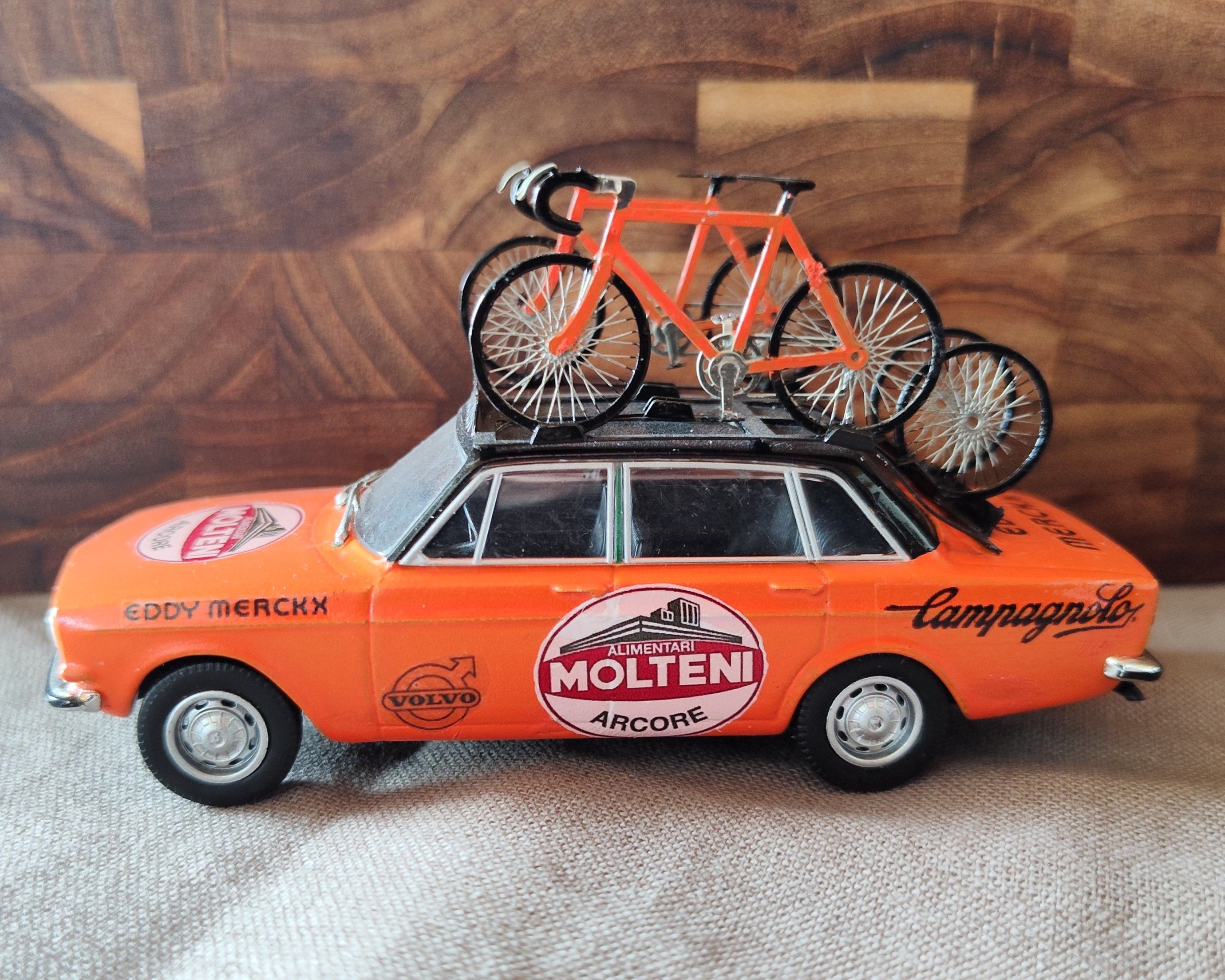
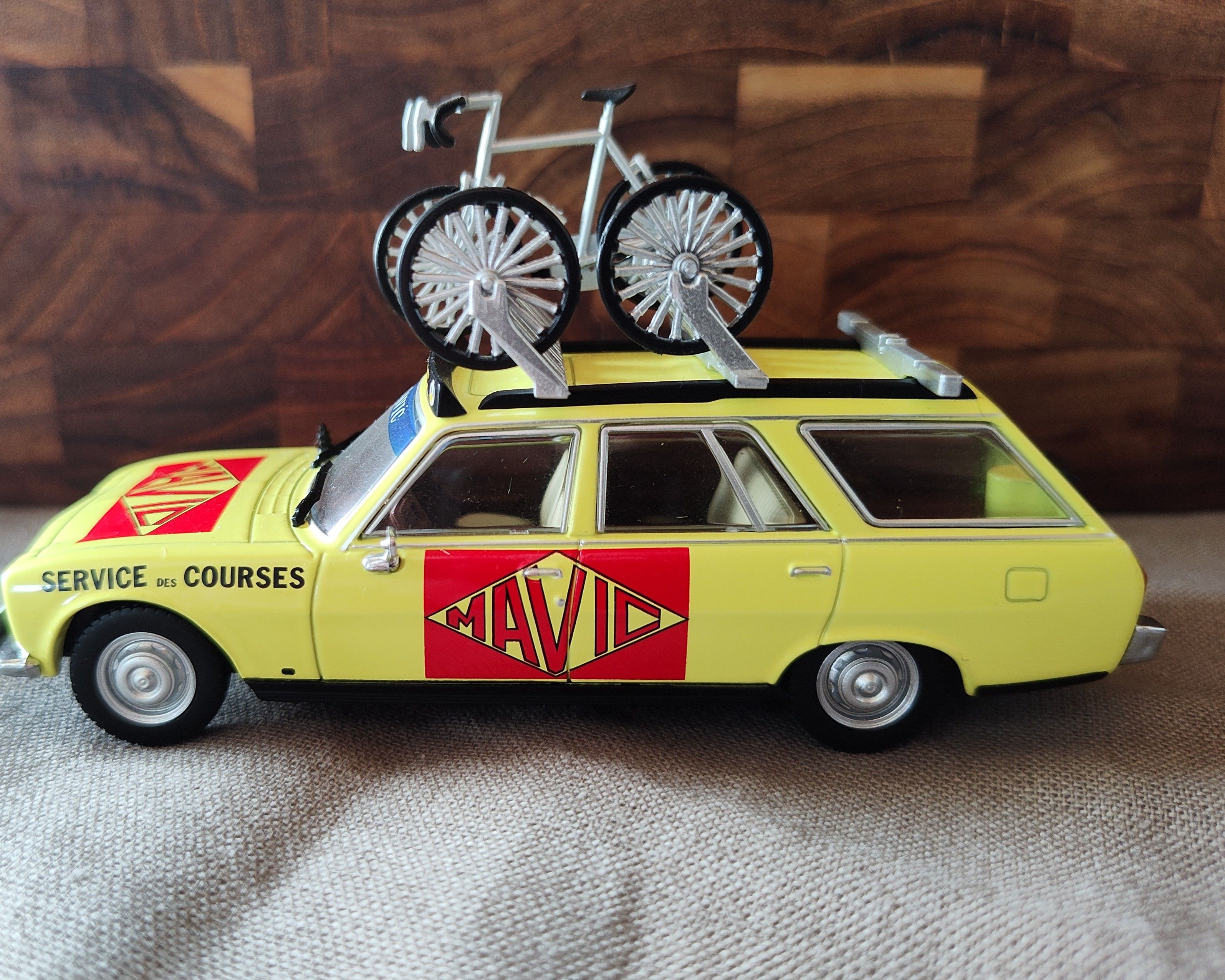
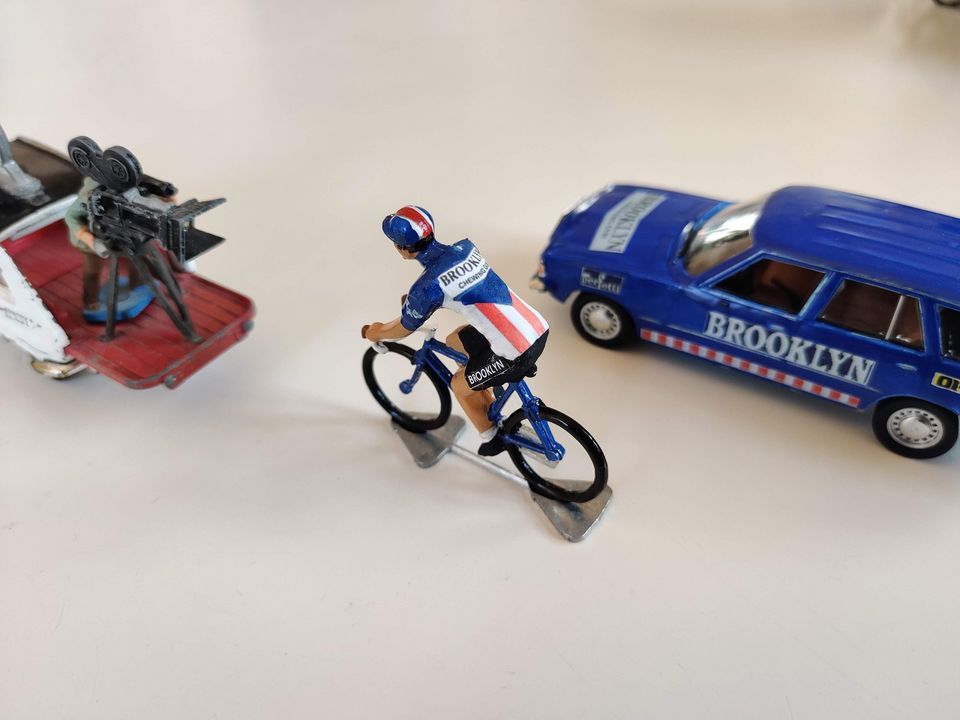
The little vehicles show another side of bicycle racing. A peloton is not made up of riders alone. There are mechanics, press, spare parts and brands wishing to be seen. A Molteni car, a Mavic service vehicle or a Campagnolo van gave the children’s race a caravan of its own.
Some miniatures were sold as ordinary toys, others as advertising or souvenir objects. For collectors today, the attraction lies precisely in that meeting of toy history, cycling history and commercial history.
From toy to collection
A peloton from several periods
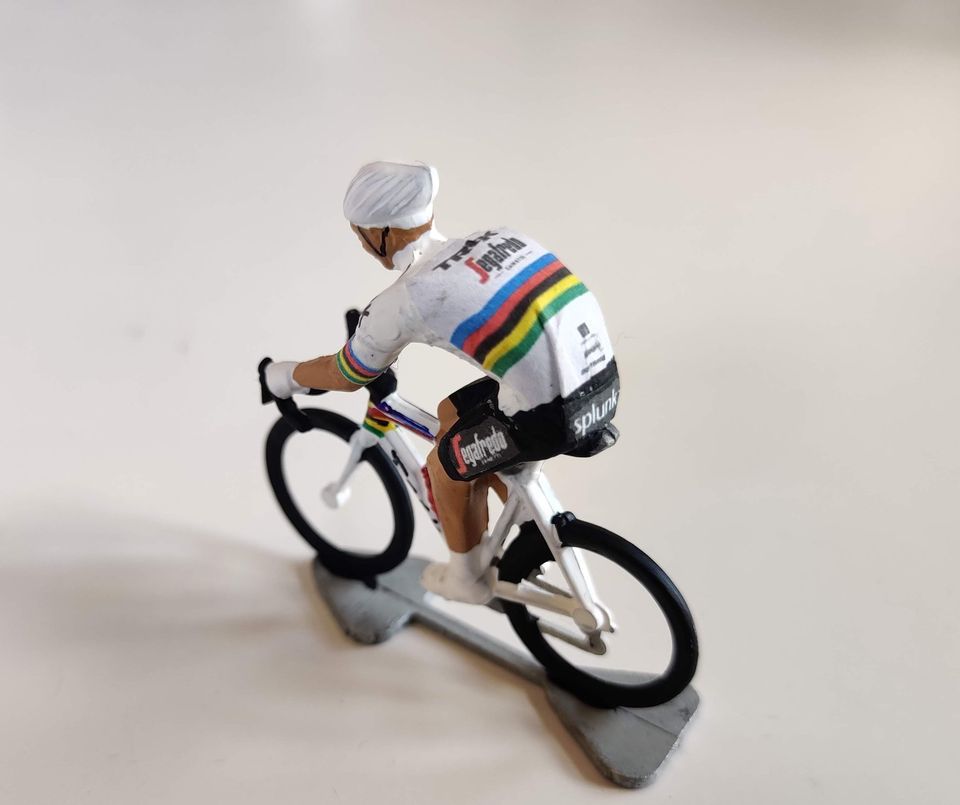
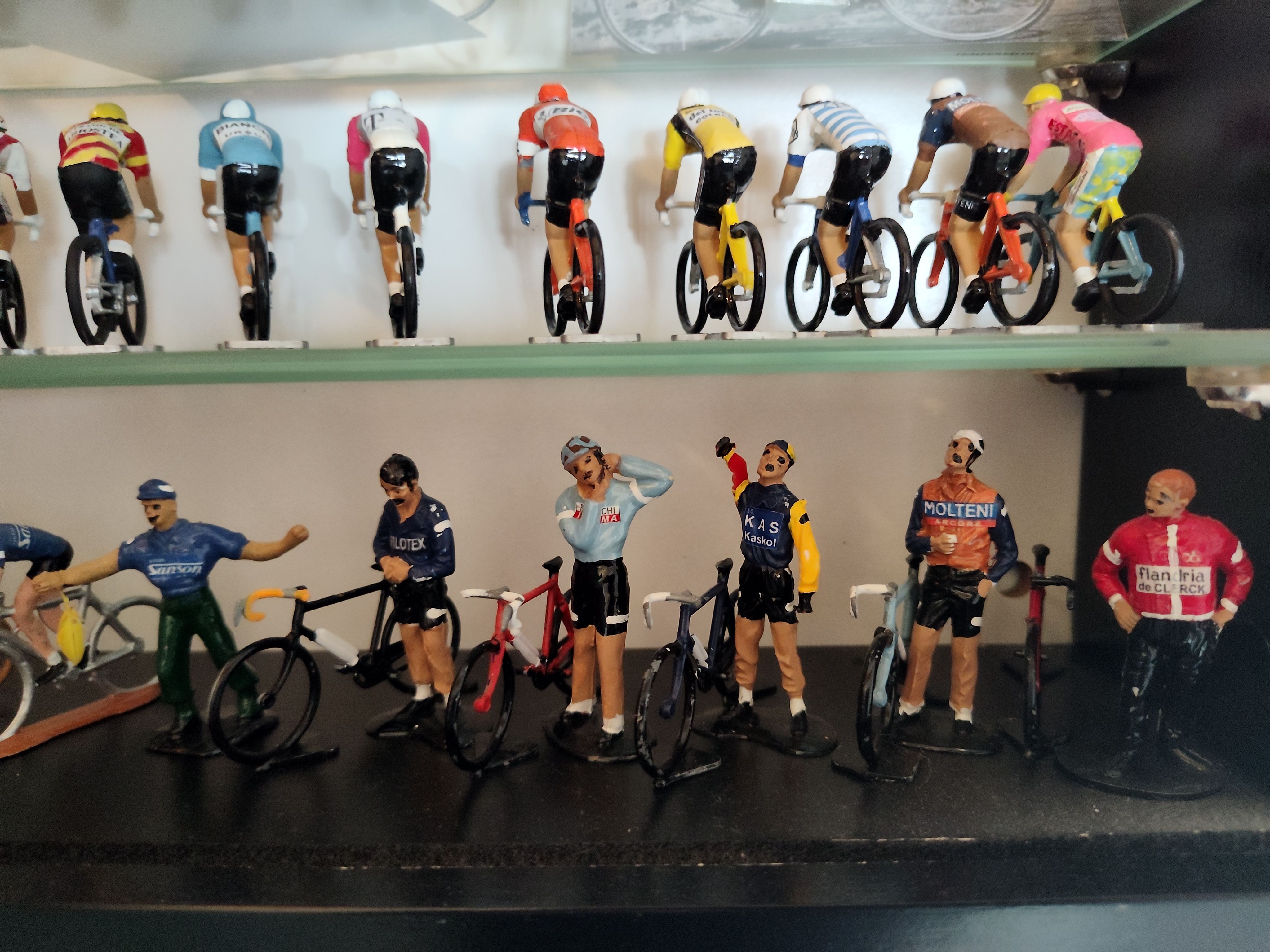
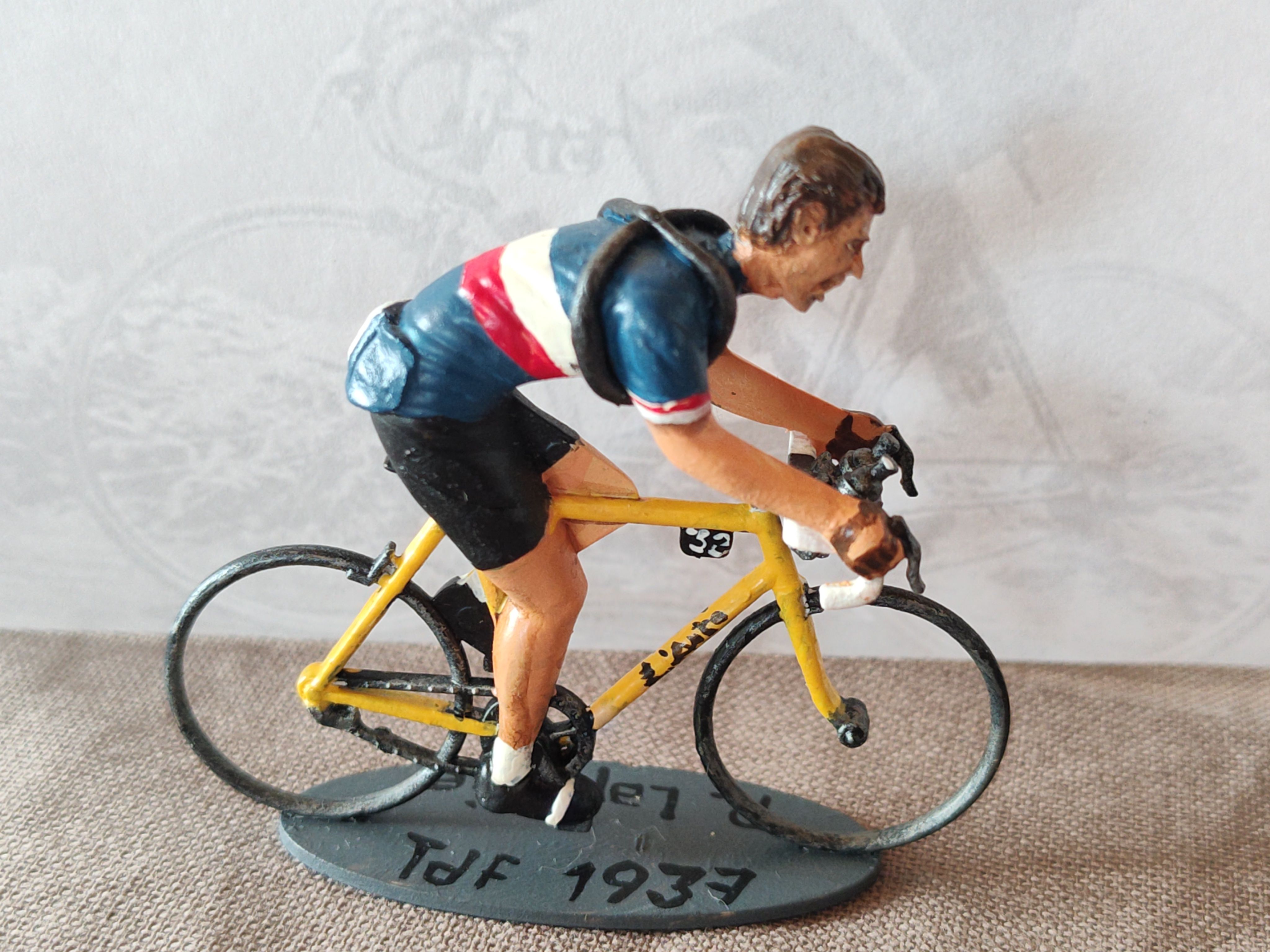
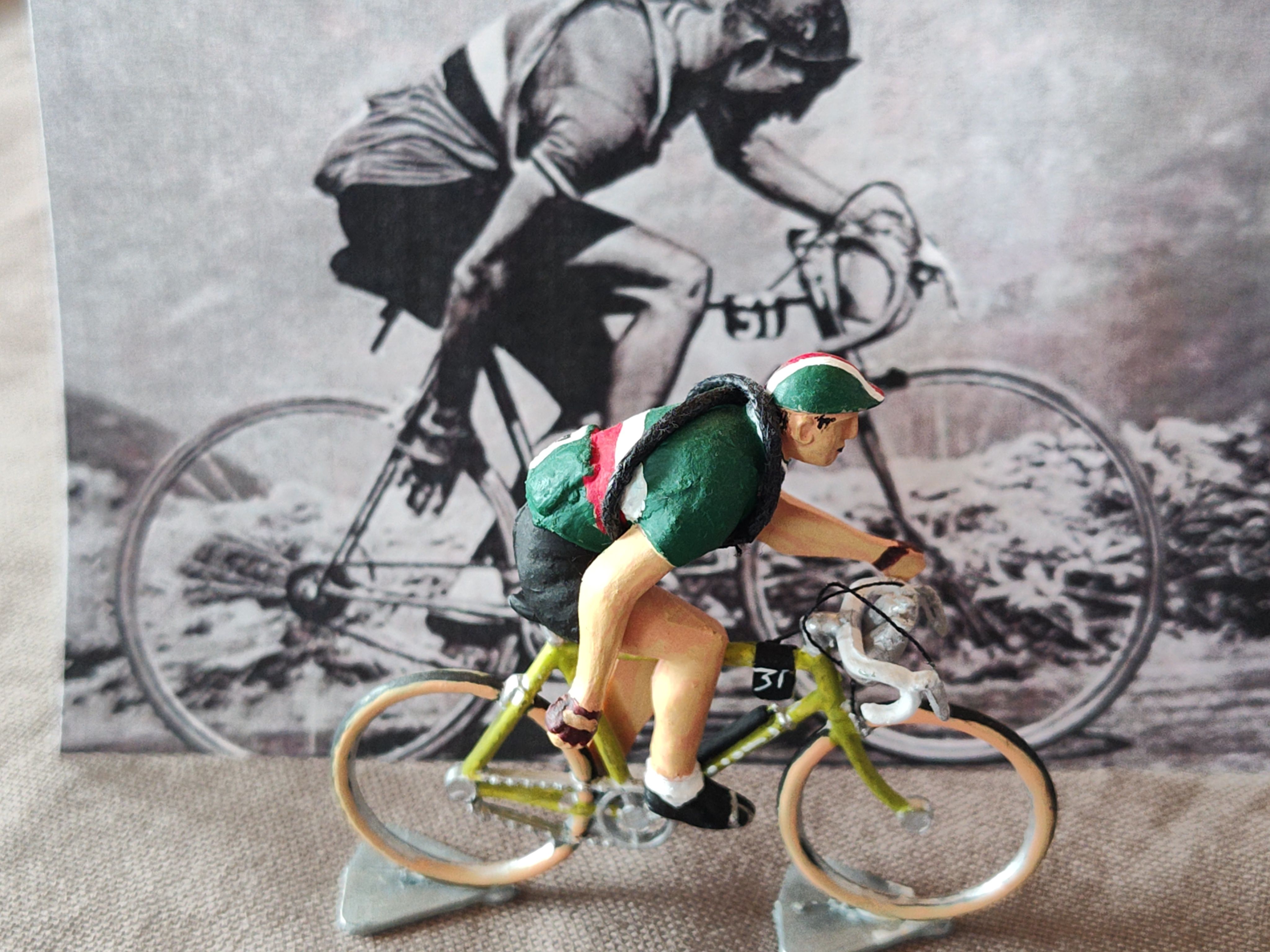
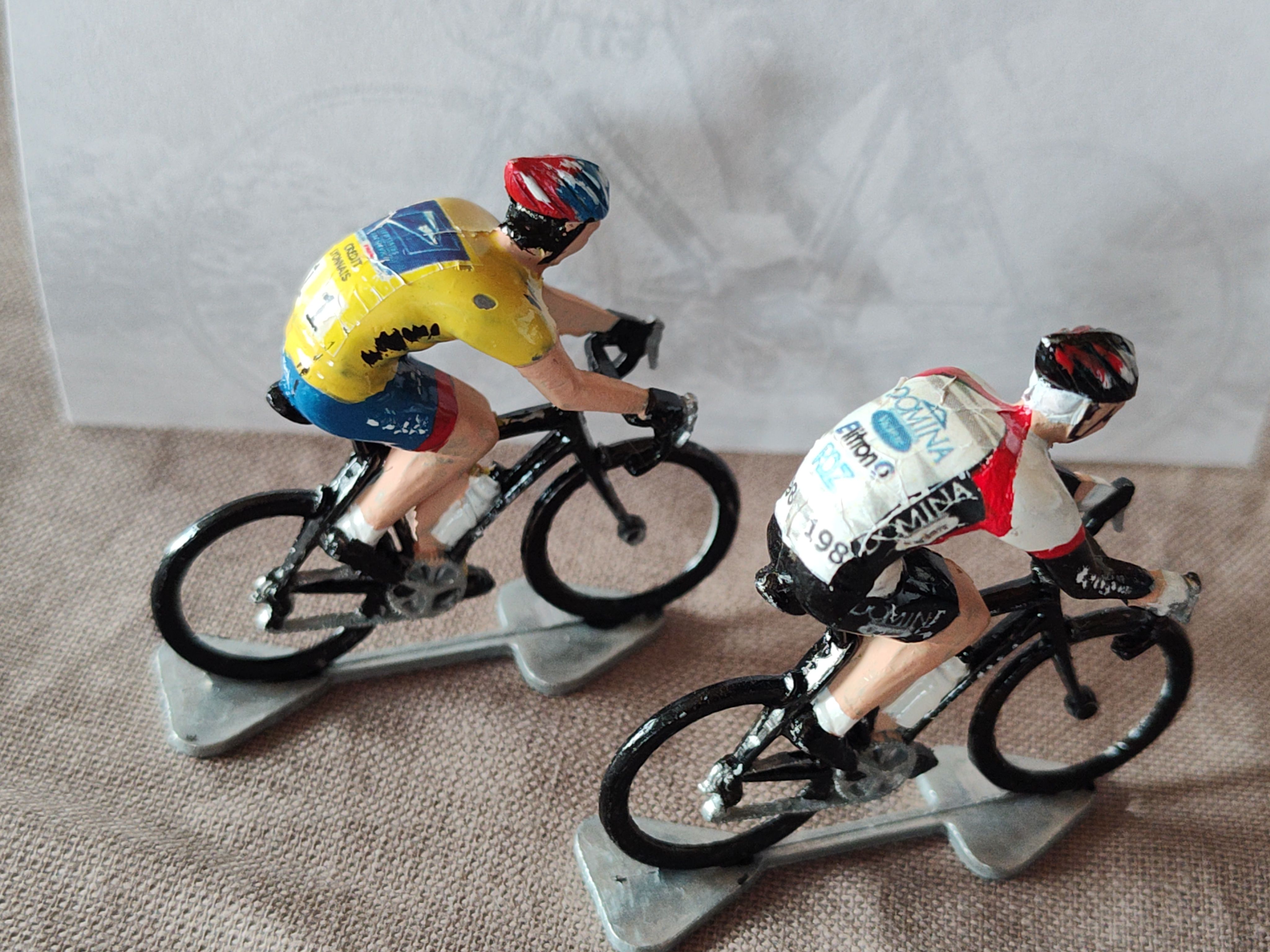
Many figures now stand in cabinets instead of on pavements. Older metal riders are collected by maker, mould, jersey, base and casting peculiarity. Later plastic and metal models reproduce teams and riders with far more sponsor marks and detail.
The layers of time should be kept separate. A worn, hand-painted post-war metal figure is not the same object as a later model in Bianchi, Molteni or world champion colours. Yet both belong to the same tradition: the desire to make the great road race small enough to hold in one hand.
That is why chipped paint does not necessarily make a poorer example. It may be evidence of what the figure was made to do. Before it became a collectible, it first had to reach the finish.
More models from the collection
The rest of the peloton
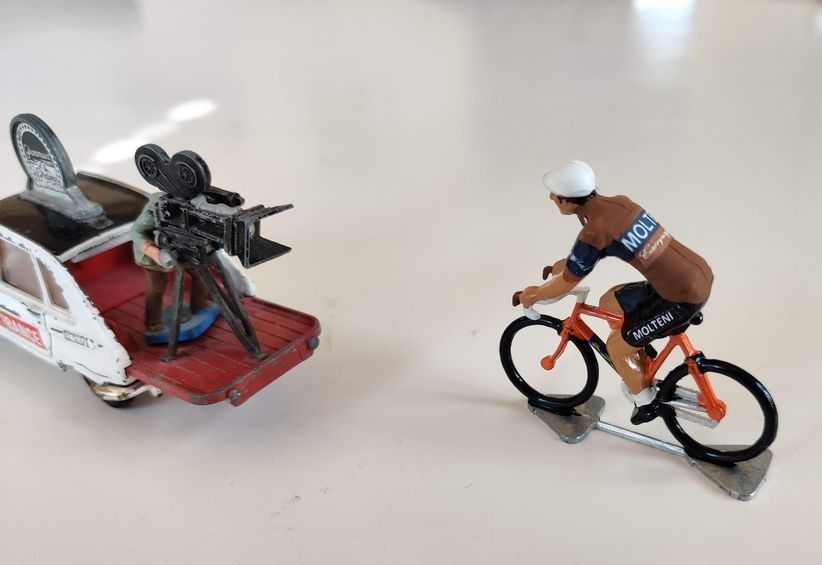
The remaining riders and race vehicles are gathered here as a final image archive.
Sources and image note
The article is based on the collection’s fact-checked material. Manufacturing and casting details have been compared with the histories published by Fonderie Roger and Cofalu. The Tour’s official history documents the publicity caravan’s beginning in 1930. Every model shown was photographed in the collection; they come from different periods and should not all be understood as 1950s originals.
Continue exploring
More from cycling history
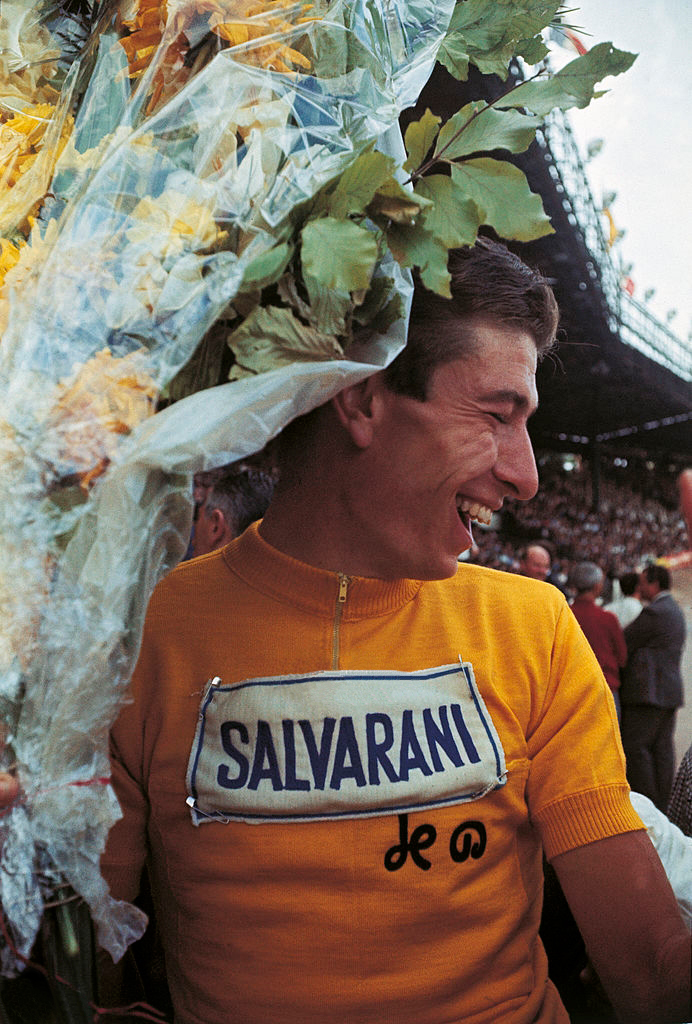
When Gimondi opened the sprint against Merckx
At the 1971 World Championships in Mendrisio, Eddy Merckx and Felice Gimondi reached the finish alone. Gimondi opened, but Merckx took his second rainbow jersey.
Read the story →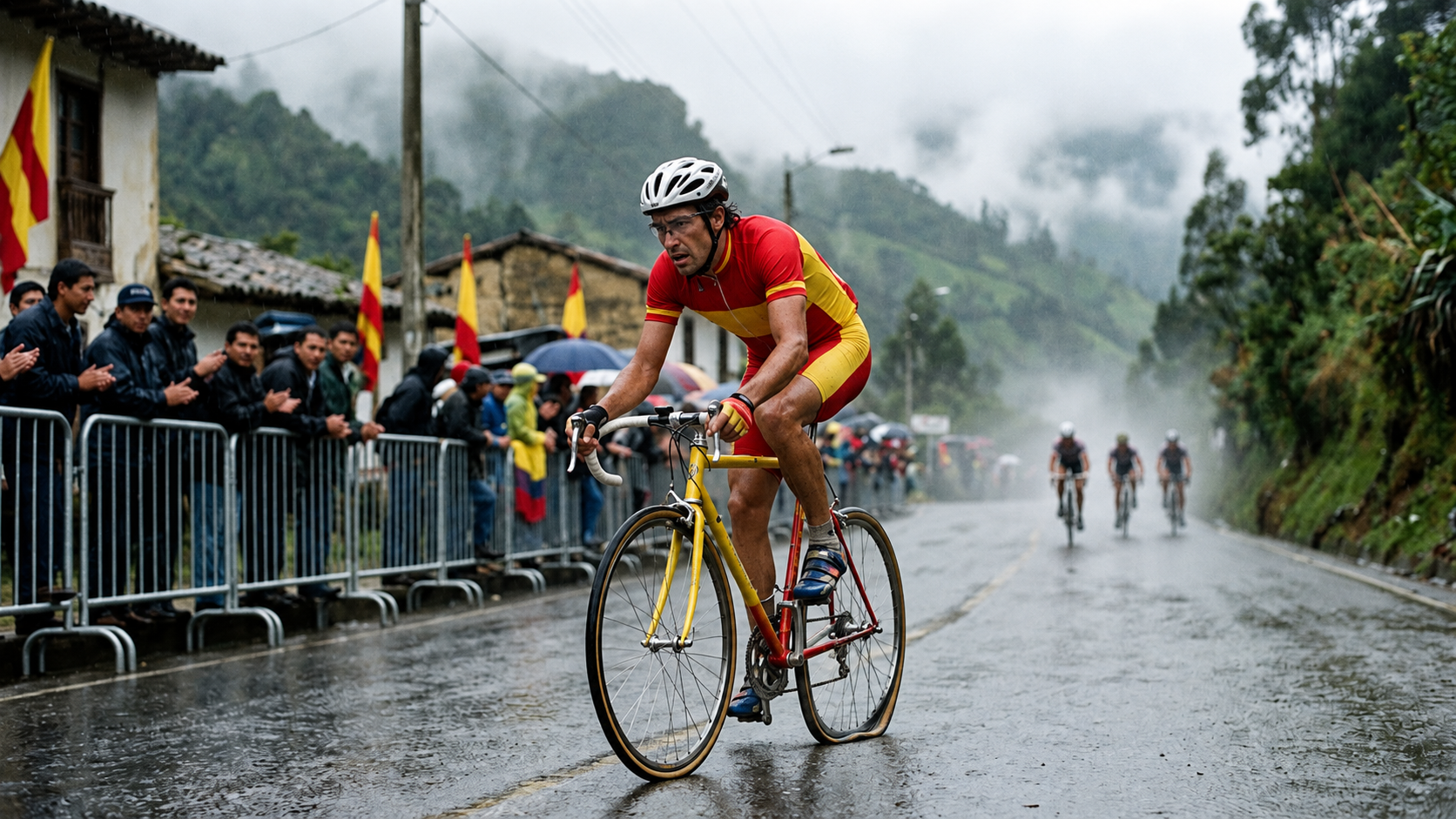
When Olano finished on a flat rear tyre
Abraham Olano punctured shortly before the finish at the World Championships in Duitama. Behind him, Miguel Induráin kept the chase under control.
Read the story →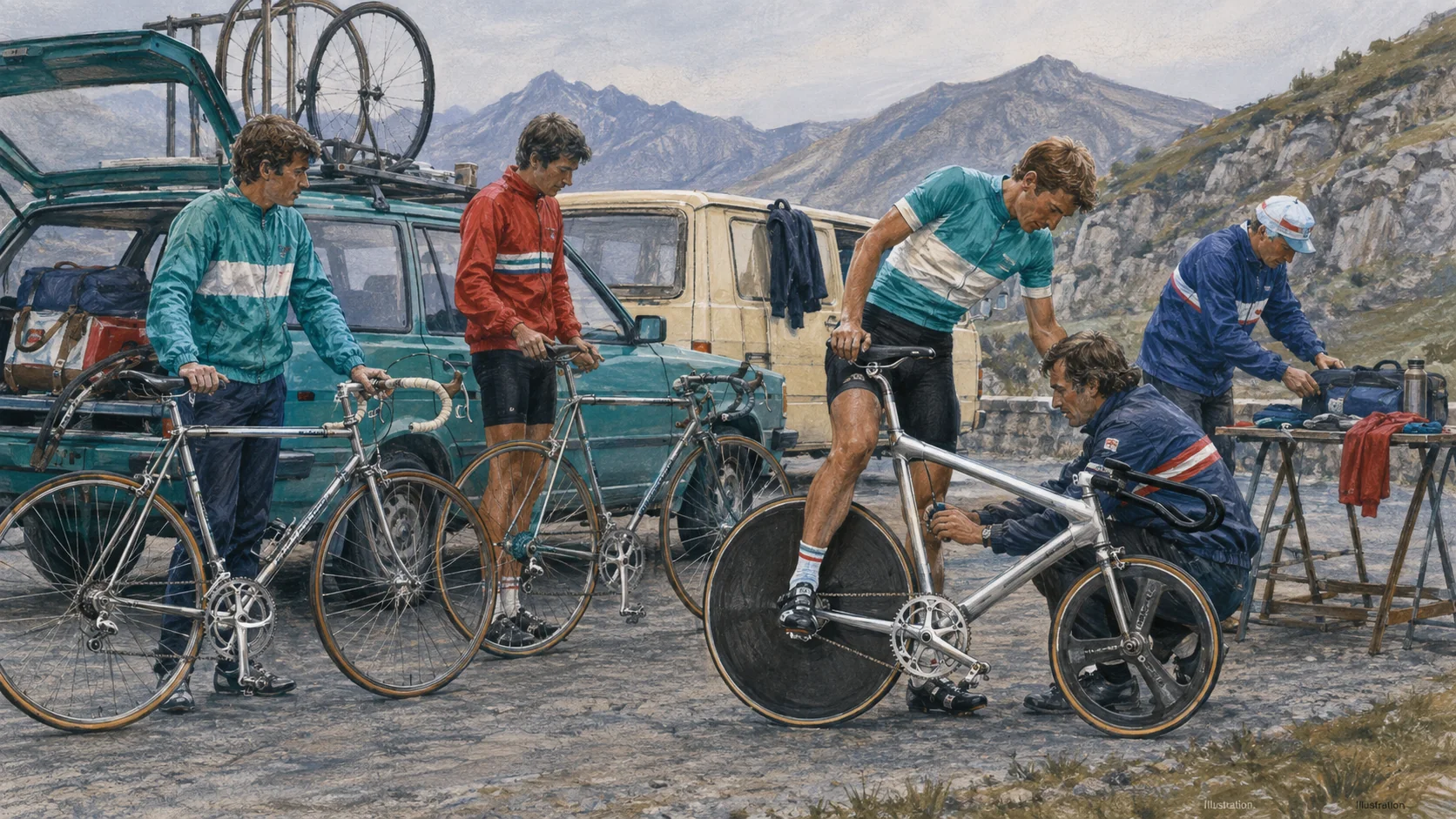
When the bicycle became a laboratory
See the races, people, bicycles and changes that shaped the period.
Explore the period →