Tour de France · The Alps, 2015
The riders had finished.
Her day continued.
Christine Lueber did not appear in the results. Yet Trek's next stage had already begun in her car, washing machine and hands.
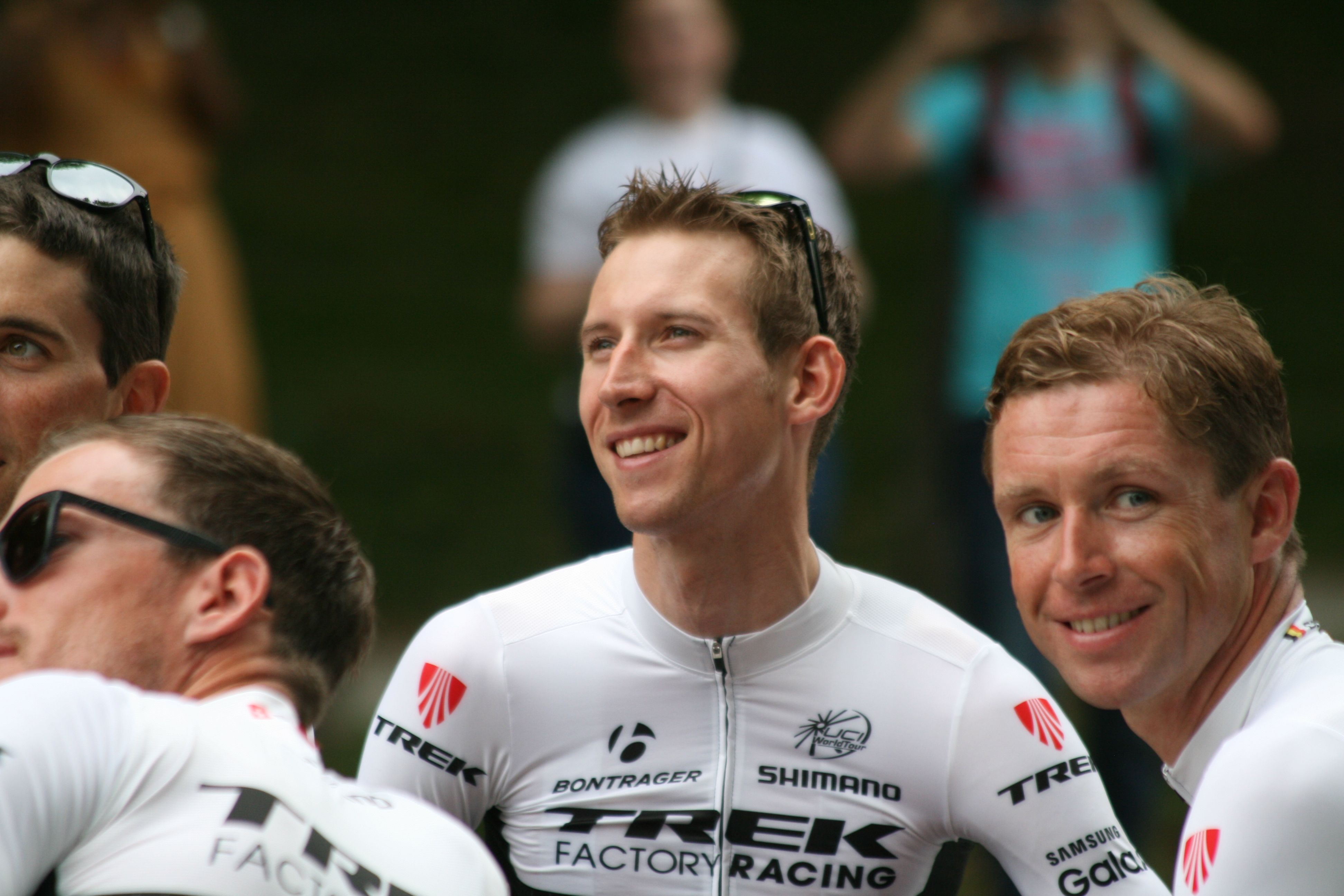
A soigneur stands by the road with musettes, at the finish with bottles and at the hotel with massage oil. Between those three places lies a working day that spectators rarely see.
Before the peloton arrives
On 23 July 2015, the Tour's 18th stage ran from Gap to Saint-Jean-de-Maurienne. While the riders prepared for 186.5 kilometres and seven classified climbs, Christine Lueber's day began with what had to be ready: drinks, rice cakes, musettes and dry jerseys.
She worked for Trek Factory Racing and had been a soigneur for more than fifteen years. The word suggests care, but the job covered much more than massage. A bottle in the right place and a hotel room near the right rider were also forms of treatment.
A different road through the Alps
Lueber did not always follow the race route. Cars without the necessary accreditation had to go around the caravan. From Gap to the next hotel at Le Corbier, that meant a detour of about 200 kilometres over the Col de Montgenèvre, into Italy and back through the Fréjus tunnel.
On the course, Romain Bardet won the stage. At the hotel, Lueber checked the room allocation. The soigneurs needed to be close to their riders so tired legs did not have to search the corridors for the massage table.
Fabian had gone home
For many years, Lueber had special responsibility for Fabian Cancellara. At the 2015 Tour he was wearing the yellow jersey when a mass crash on stage three fractured two vertebrae. He withdrew that evening.
So on this evening she had only one rider to massage instead of the usual two. A treatment took about an hour. Her hands did not follow a fixed recipe; they searched for that day's tension in thighs, back and neck. The laundry still waited. The team's kit had to be washed, dried and ready again.
The invisible stage
The Tour measured Bardet's winning margin and Chris Froome's overall time. It did not count the musettes Lueber packed, the kilometres she drove or the hours at the massage table. Her stage ended only when the riders could begin the next one.
That may be the simplest explanation of the people behind a bicycle race: they do not win at the finish line. They make it possible for others to start again the next morning.
Sources and image notes
The article is based on a contemporary report from Trek Factory Racing during the 2015 Tour. The description concerns Lueber's particular day and is not presented as a universal job description.
- Cyclist: Soigneur diaries
- EF Pro Cycling: A soigneur's life
- Wikimedia Commons: Trek Factory Racing 2015

Alternative illustration: A clearly labelled documentary magazine scene in a small Alpine hotel in 2015: a female soigneur folds team kit beside a massage table, musettes and bottles; no recognisable people or legible logos.
Continue exploring
More from cycling history
Bartali's training rides had another purpose
During the German occupation of Italy, Gino Bartali used the familiar sight of a professional rider in training as cover while carrying material for a rescue network.
Read the story →
Paris–Roubaix 1949 – one race, two winners
André Mahé crossed first after being misdirected at the track. Serse Coppi protested. Months later, the race had two winners.
Read the story →
Between the Cannibal and the Badger
See the races, people, bicycles and changes that shaped the period.
Explore the period →