Bicycles and technical change · 2000–2009
When the carbon bicycle reached the weight limit
Carbon allowed freer frame shapes and lower weight. The UCI’s 6.8-kilogram minimum meant that the lightest bicycle could require ballast before it was legal to race.
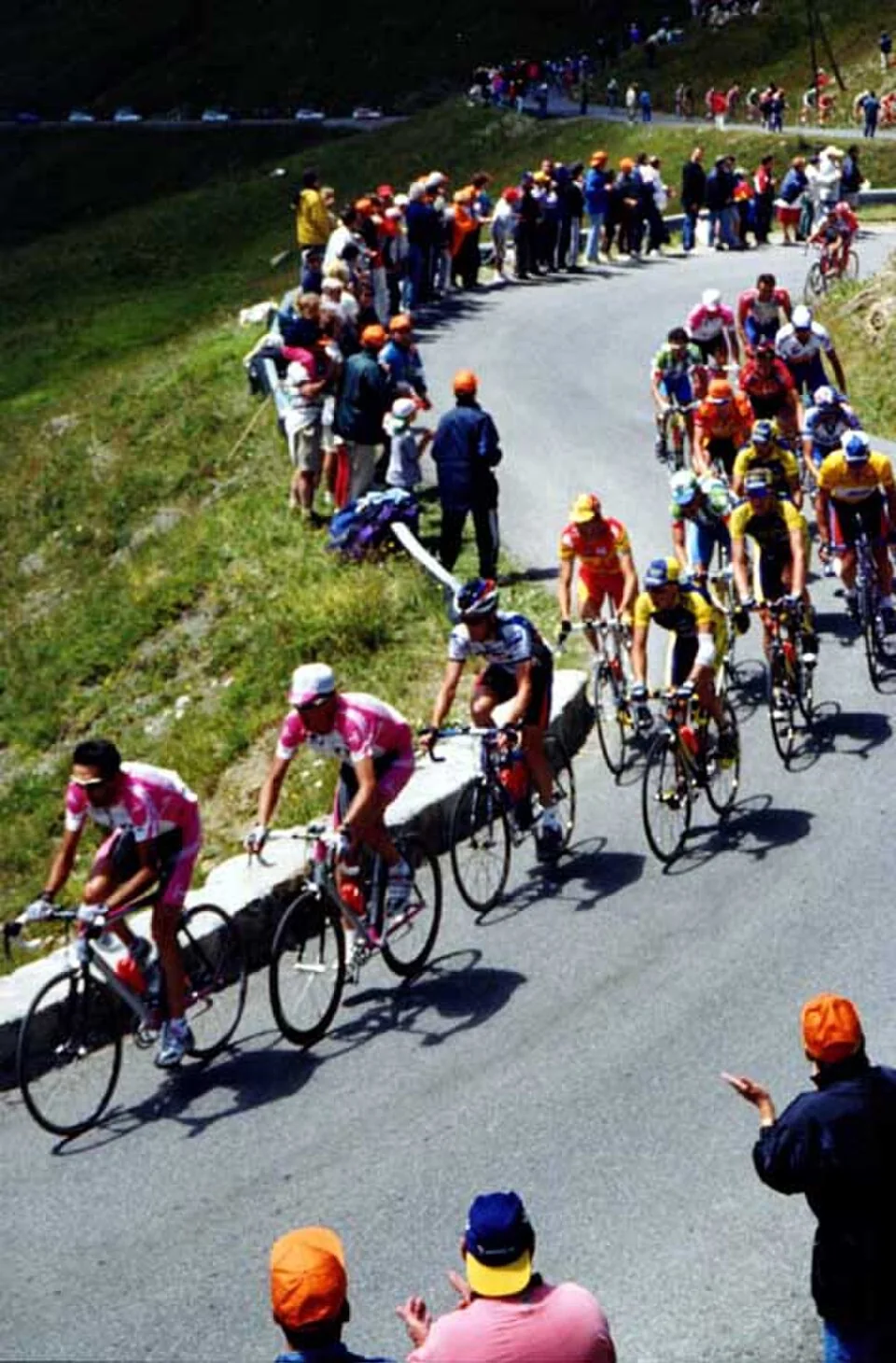
Carbon allowed freer frame shapes and lower weight. The UCI’s 6.8-kilogram minimum meant that the lightest bicycle could require ballast before it was legal to race.
Several materials on one start line
At the start of the decade professionals still raced aluminium, carbon, titanium and a few steel frames. Carbon was not new, but production improved and larger monocoque sections offered possibilities beyond joined metal tubes.
Shape moved
Fibres could follow loads and tubes no longer had to be round. Bottom brackets, head tubes and rear triangles grew. Aerodynamics and stiffness became visible sales terms, but sound design still required control of weight, impact strength and handling.
The 6.8-kilogram floor
UCI rules set a 6.8-kilogram minimum for the complete bicycle. As top machines approached it, mechanics had to verify every setup and sometimes add ballast. Safety and consistent inspection took precedence over the lowest possible number.
Gram hunting with consequences
Titanium bolts, light saddles, thin paint and selected wheels saved grams. Mechanics also had to ensure the bicycle survived braking, cobbles and three weeks of racing. The lightest solution was not always the fastest or most reliable.
The new normal
By the end of the 2000s carbon dominated top-level bicycles. Craft did not disappear. Much of it moved from the brazing torch to moulds, fibre orientation, test laboratories and a scale beside the team bus.
Sources
Continue exploring
More from cycling history
When the alarm clock cost twenty minutes on the Paris–Roubaix route
Jonas B. Hansen woke up 45 minutes late in Roubaix. By the time he reached the start, the others had left and the rest of his day became one long chase.
Read the story →
When old bicycles found new roads
L’Eroica began with 92 riders on Tuscany’s white gravel roads.
Read the story →
Pioneers and endurance
See the races, people, bicycles and changes that shaped the period.
Explore the period →