Danish track cycling · 1950s–2019
Why the whole Forum cheered for Pair Number 7
A race number became the crowd’s own pair. The riders changed, but the expectation stayed with the red-and-white jersey.
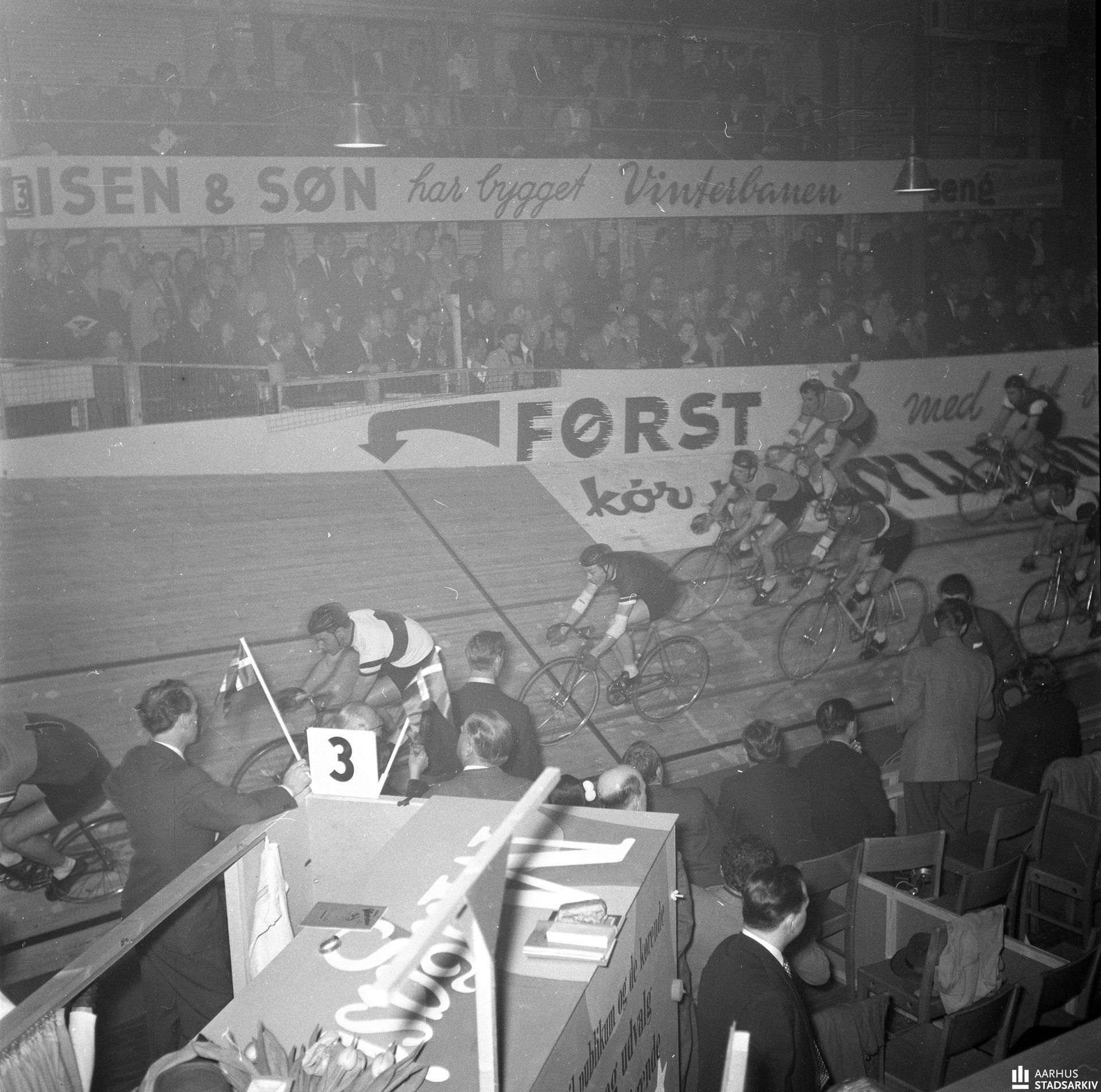
When Pair Number 7 was announced, the Danish crowd did not need to read the names in the programme. The number already told them whom the hall was there to support.
Kay Werner set the number in motion
The tradition grew around Kay Werner Nielsen in the 1950s. He first rode with Evan Klamer and later with Palle Lykke Jensen. They were not the first Danish track riders embraced by the public, but they made the number seven something special.
Kay Werner and Klamer rode together at the Copenhagen six-day race in Forum in December 1953. The following January, they won the first edition in Aarhus-Hallen as Pair Number 7. The number therefore travelled beyond Copenhagen early on and became a recognisable sign of the home favourites.
Colourful recollections survive about why Kay Werner chose seven, and about its contrast with Willy Falck Hansen’s old number 1. They belong to the lore of the winter track. What is certain is that Kay Werner created the myth with Klamer and later Palle Lykke.
A simple point of reference in a complicated race
A six-day race was not one long sprint. Spectators had to follow chases, points, laps won and lost, changing partnerships and late nights. A permanent favourite number made the sport easier to read. When Number 7 moved, the hall knew what was at stake.
The pair generally raced in Danish flag jerseys. That made them visible on the short track, but it also gave the role a national meaning that existed nowhere in the international rules. Pair Number 7 was a Danish tradition created jointly by organisers, riders and spectators.
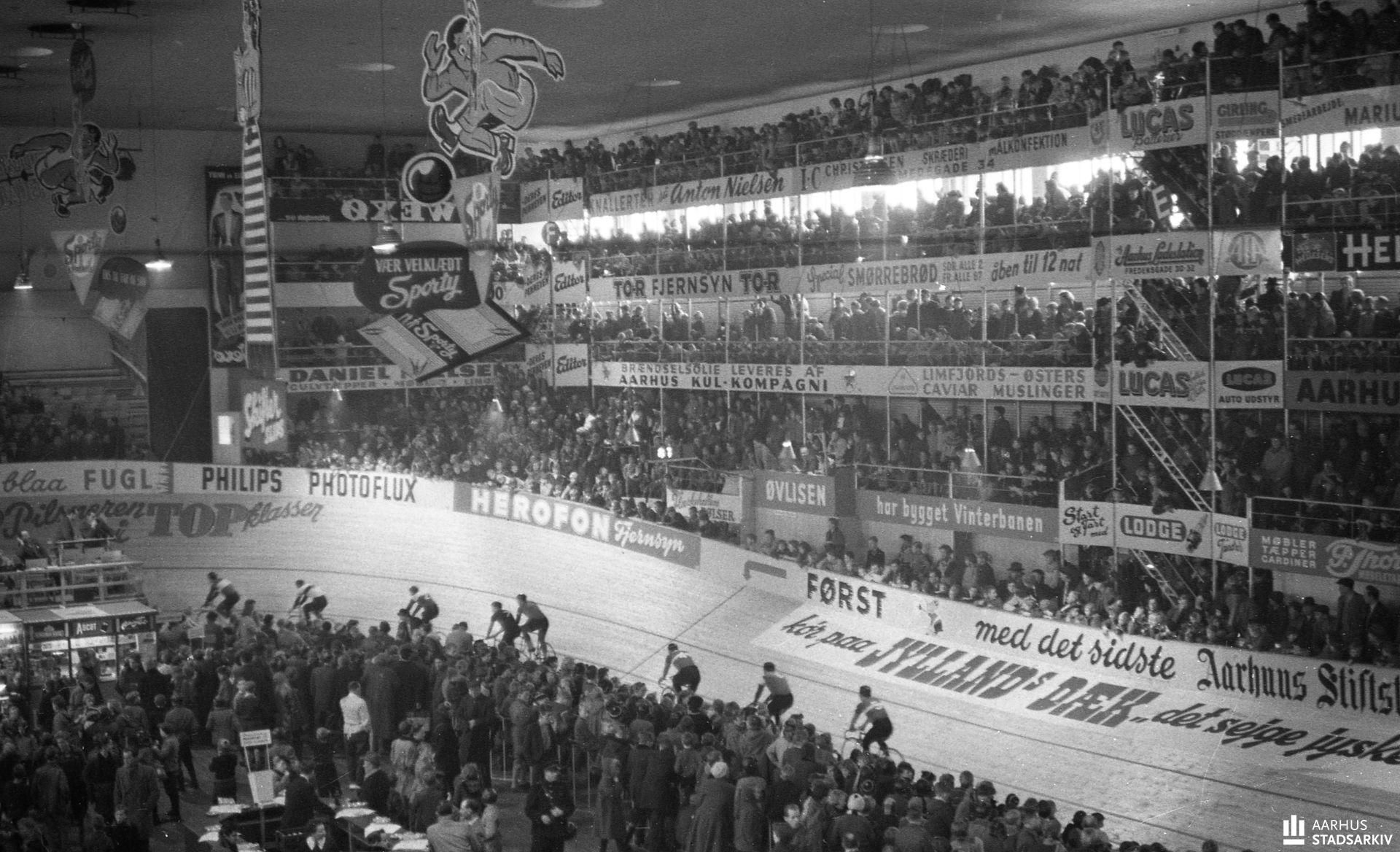
The role was inherited
Gert Frank and Hans-Henrik Ørsted carried the tradition forward. Jens Veggerby and Jimmi Madsen followed. The names changed, but the home favourites kept the number and the attention that came with it.
The support of the hall could be an advantage. It was also a pressure. Pair Number 7 was not placed in the field to remain anonymous. The crowd expected attacks, hand slings and a position near the front, regardless of who wore the number.
Three victories in succession
Michael Mørkøv and Alex Rasmussen gave the tradition a new golden period. Racing as Pair Number 7, they won the Copenhagen six-day race in 2009, 2010 and 2011. Three consecutive victories were a record. They won again in 2015.
Mørkøv appeared as Number 7 eleven times, more than anyone else. He also won with Lasse Norman Hansen and Kenny De Ketele, while Alex Rasmussen won with Jesper Mørkøv in 2016.
By the time the most recent Copenhagen six-day race was held in 2019, the number had survived many partners and several venues. On paper it was still merely a race number. In the hall it was a message: this was the pair the crowd had come to see.
Sources and image notes
- Lex: Par nr. 7 (Danish)
- Lex: Copenhagen six-day race (Danish)
- Aarhus City Archives: Kay Werner Nielsen and Evan Klamer, 1954
- Danish Cultural Heritage/DR: Kay Werner and Evan Klamer in Forum, 1953
The article keeps the popular origin story separate from the documented results. Both photographs were published by Aarhus City Archives under Creative Commons Attribution.
Continue exploring
More from cycling history
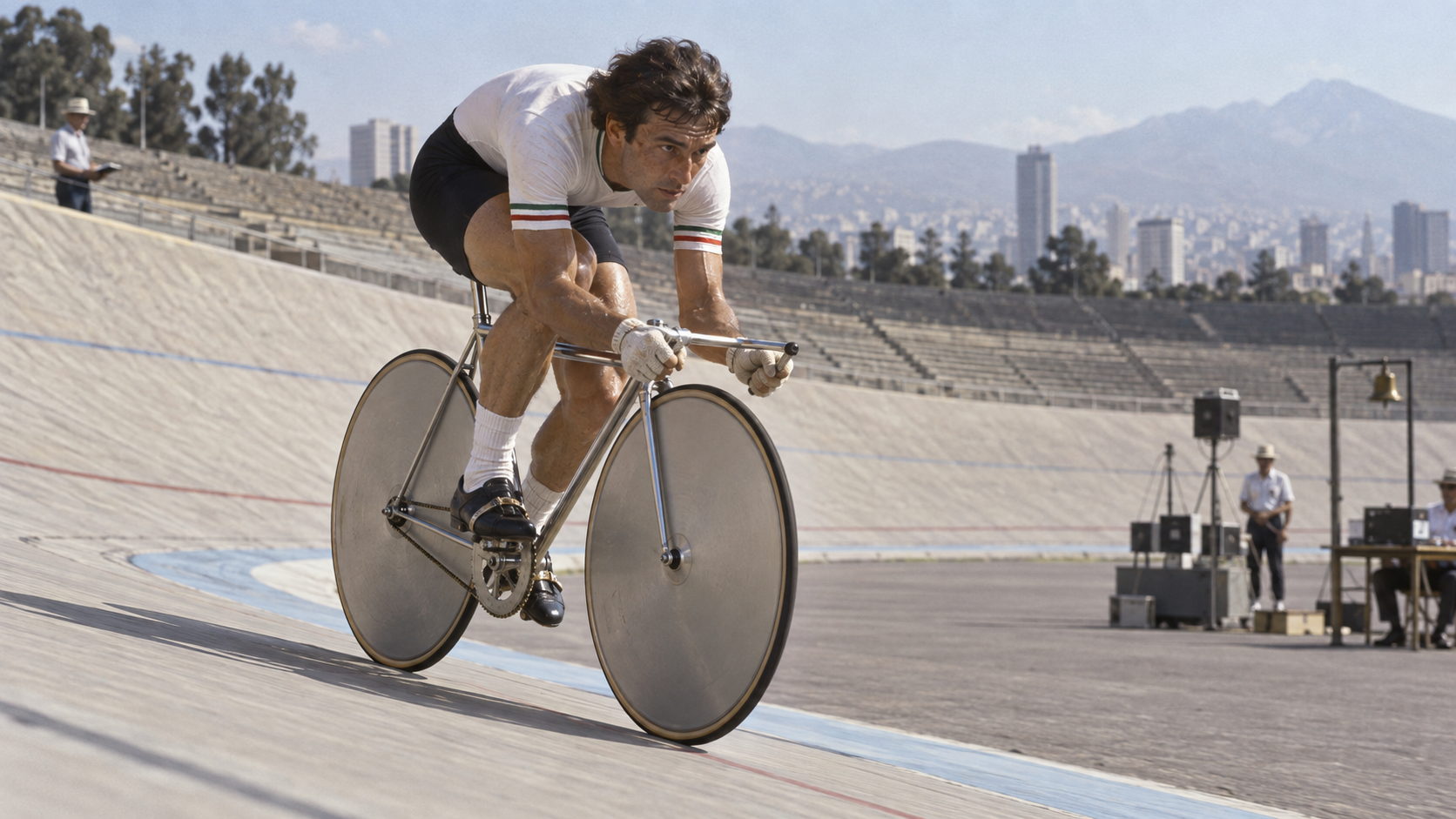
When Moser rode 51.151 kilometres in an hour
In Mexico City, Francesco Moser made aerodynamics, disc wheels and a new riding position visible on the stopwatch.
Read the story →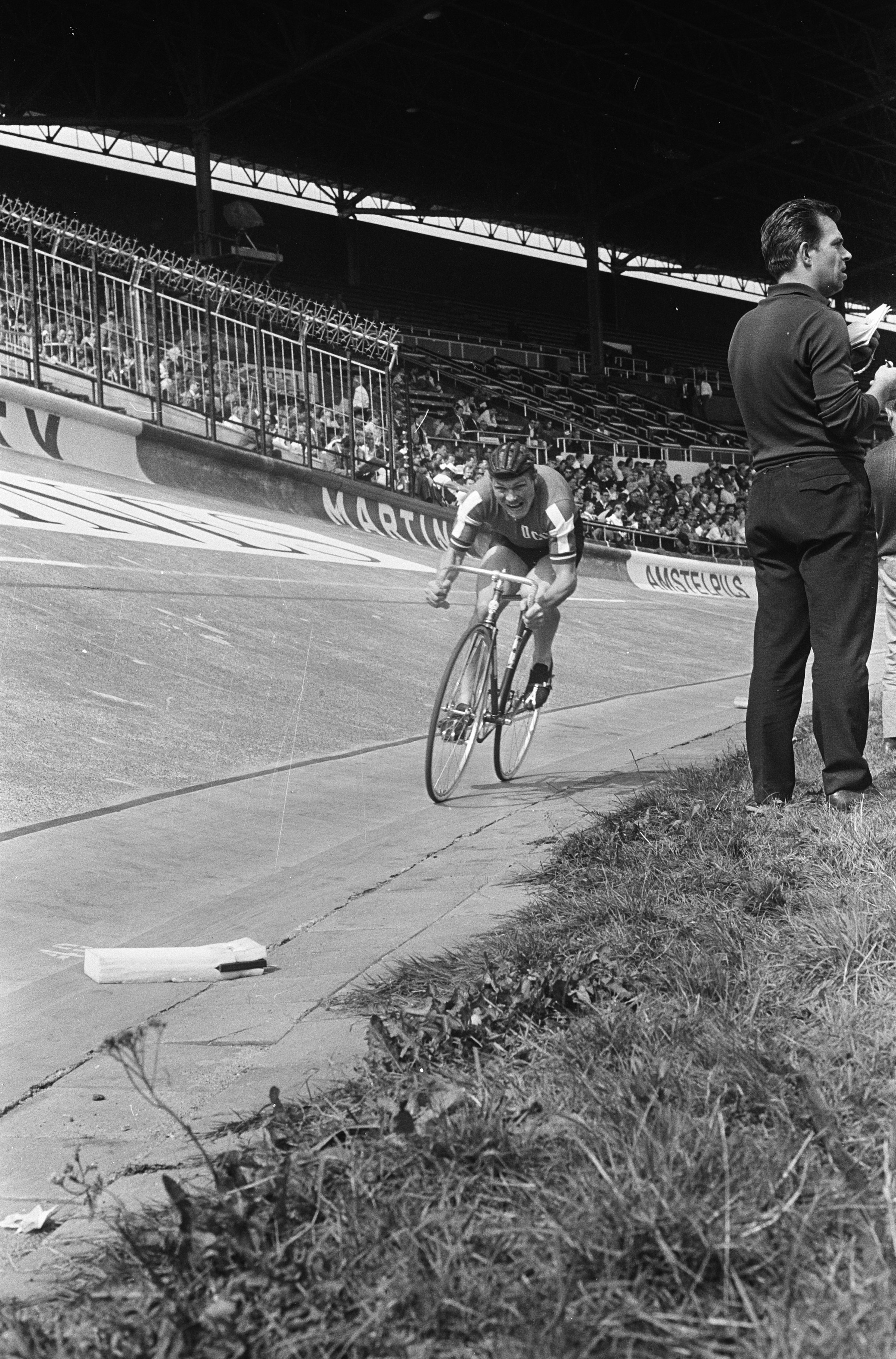
When Mogens Frey won after a hand on the handlebars
Joaquim Agostinho crossed first in Mulhouse, but the jury awarded victory to team-mate Mogens Frey after visible interference in the sprint.
Read the story →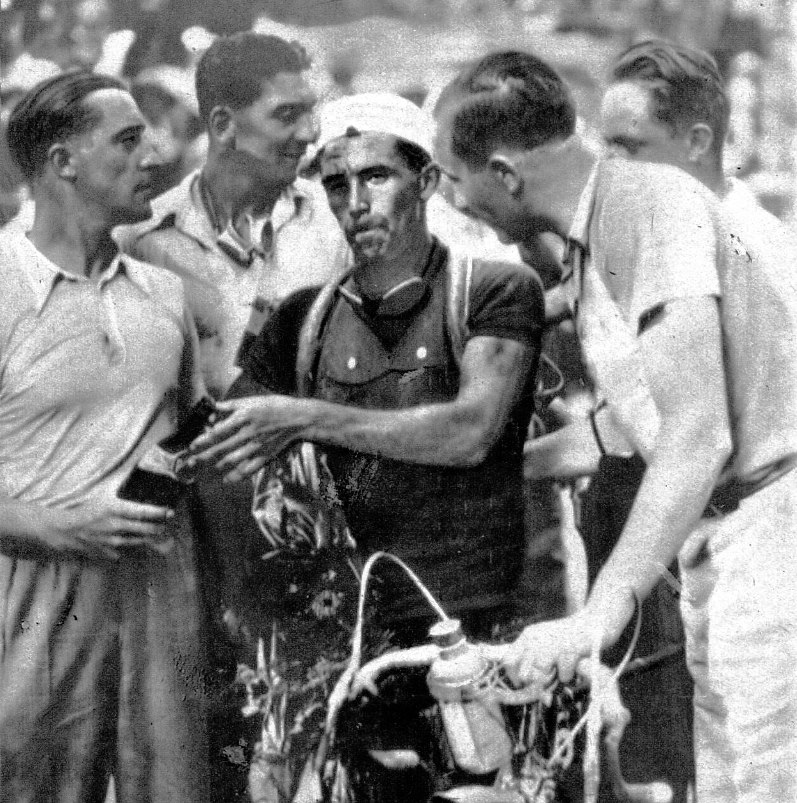
When the racing bicycle became modern
See the races, people, bicycles and changes that shaped the period.
Explore the period →