Technology · Track cycling · 1984
When Moser rode 51.151 kilometres in an hour
Across four January days in Mexico City, Francesco Moser moved the hour record twice. Disc wheels, altitude and a new approach to drag turned the bicycle into a laboratory.
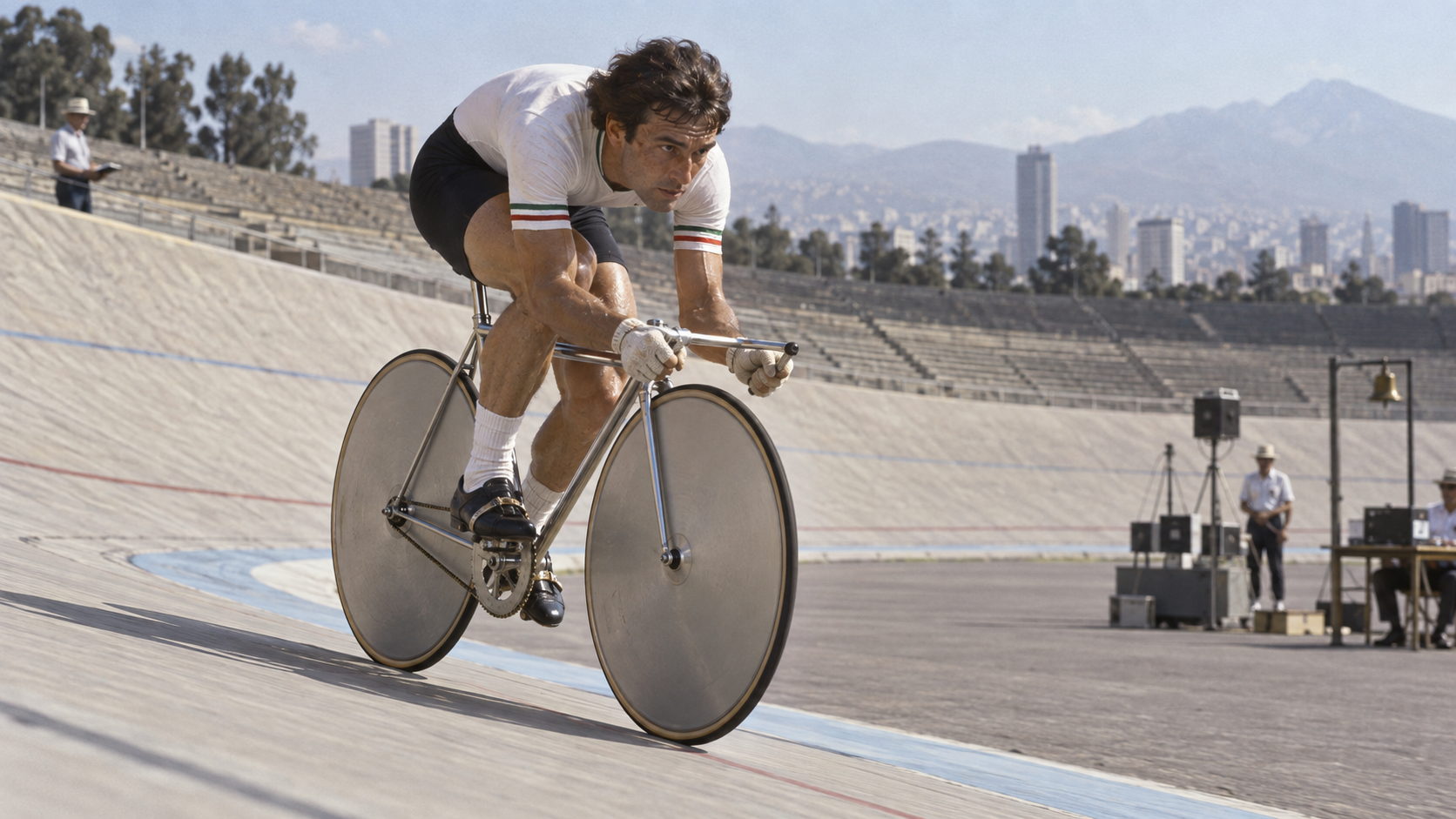
Across four January days in Mexico City, Francesco Moser moved the hour record twice. Disc wheels, altitude and a new approach to drag turned the bicycle into a laboratory.
The black line
On 19 January 1984, Francesco Moser covered 50.808 kilometres in Mexico City. Four days later, he returned and reached 51.151. Eddy Merckx’s 1972 mark had not merely been beaten; it had entered a new technical age.
Altitude and the body
Mexico City’s thin air reduced drag but also supplied less oxygen. Moser and physician Francesco Conconi prepared with testing, training and a systematic focus on sixty minutes. Rider, physiology, track and equipment worked together.
A bicycle that looked wrong
Solid disc wheels and a compact position broke with the familiar track bicycle. The frame was still steel, but the air around it now dictated the shape. Every projection and angle became part of the calculation.
More than two wheels
The discs became the visible symbol, but they did not ride alone. Moser was an exceptional rider, the track was at altitude and the preparation served one task. Technology mattered because the whole attempt was organised around it.
After the record
The UCI later changed its hour-record rules and separated equipment categories in the historical lists. January 1984 still showed a broad audience that aerodynamics could determine how far a human travelled in an hour.
Sources
Continue exploring
More from cycling history
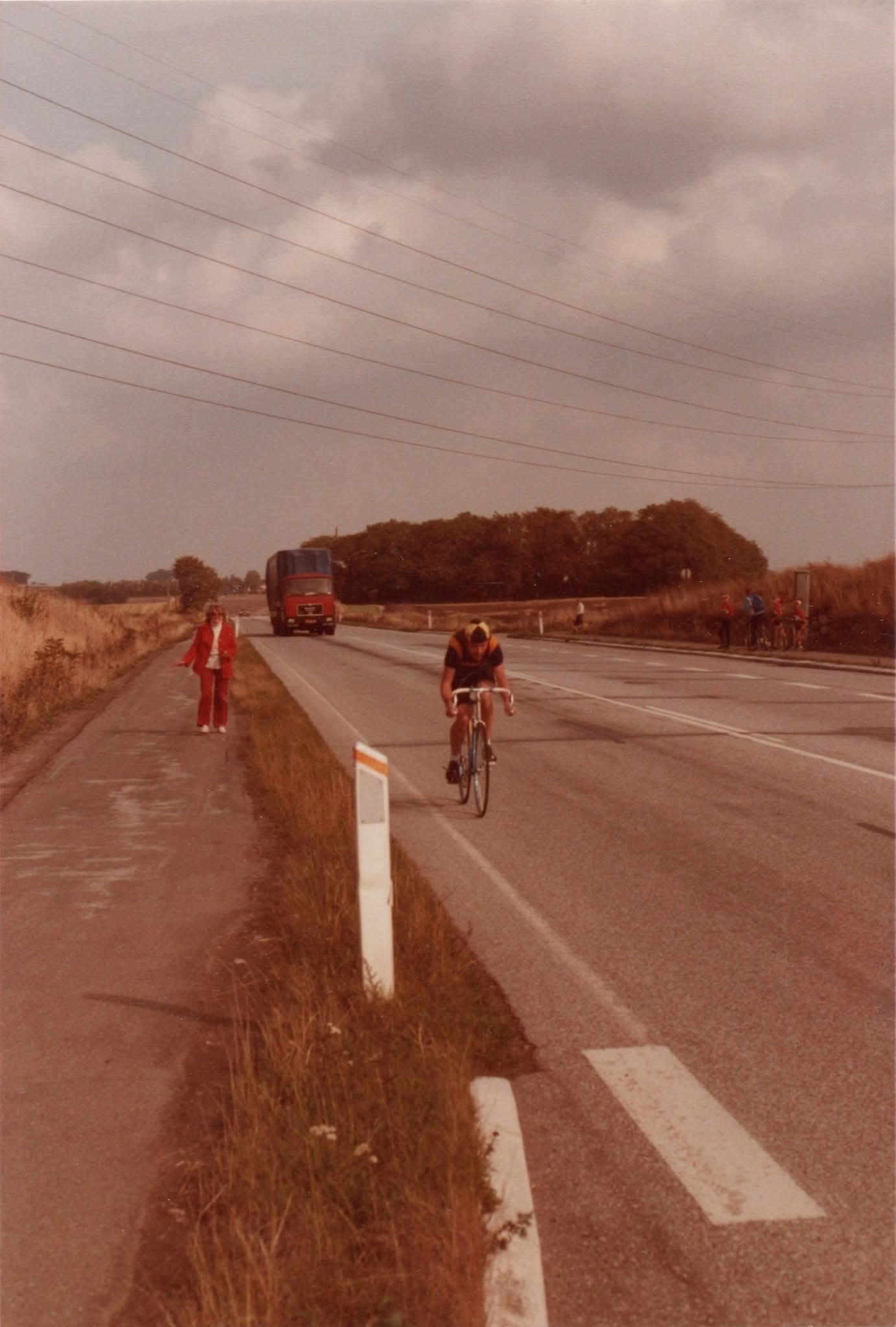
Kund Rindbøl’s time trial on the old main road
A reader remembers 30 kilometres against the clock, a 54 × 14 gear and his mother at the roadside between Holbæk and Roskilde.
Read the story →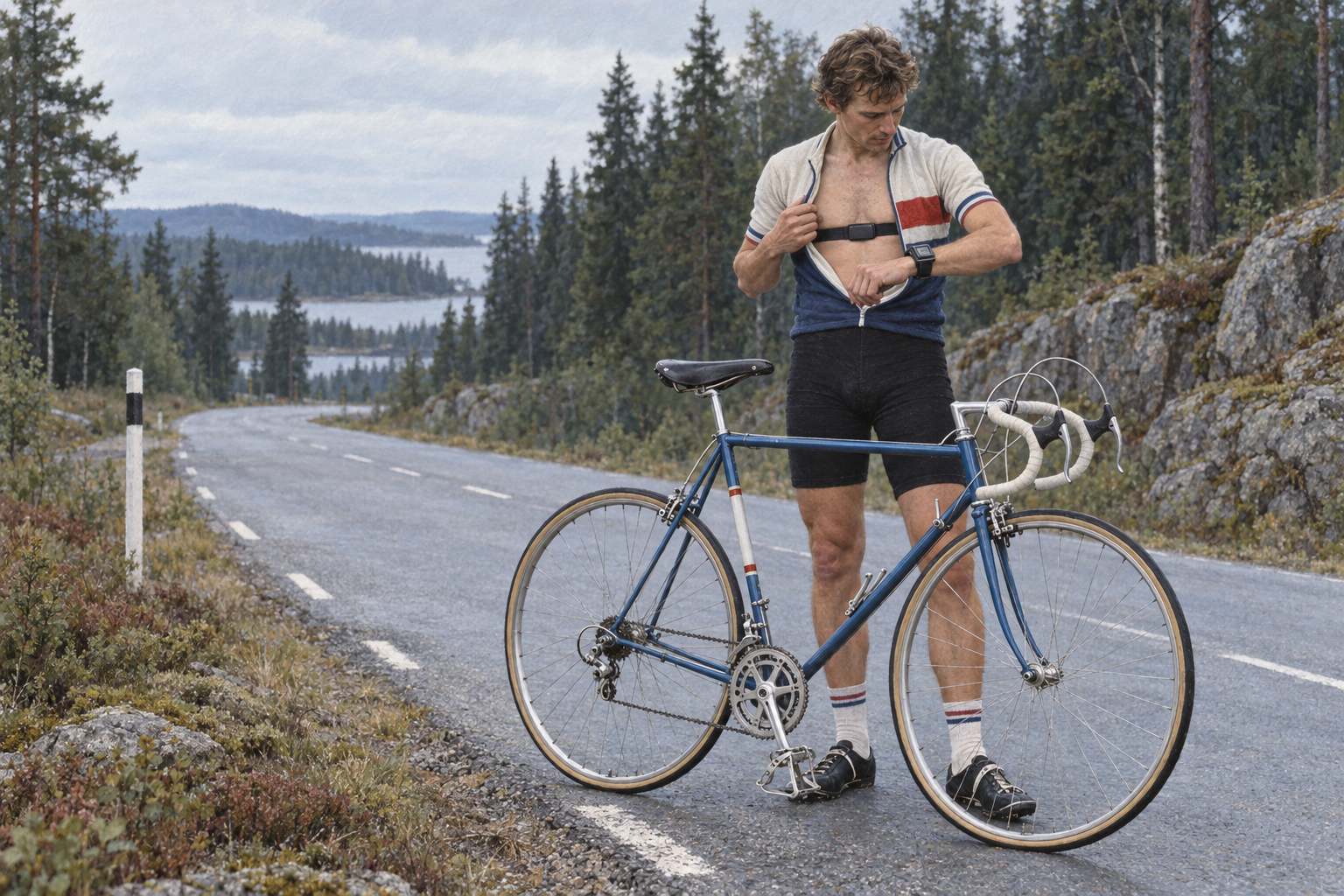
When heart rate joined the rider on the road
A chest strap and a small wrist receiver made it possible to follow the heart without laboratory cables. Training acquired a new number to discuss.
Read the story →
When the racing bicycle found its modern form
See the races, people, bicycles and changes that shaped the period.
Explore the period →