Food, training and science · Heart-rate monitoring · 1982–1989
When heart rate joined the rider on the road
A chest strap and a wrist receiver let riders follow the heart without stopping to count beats with their fingers.
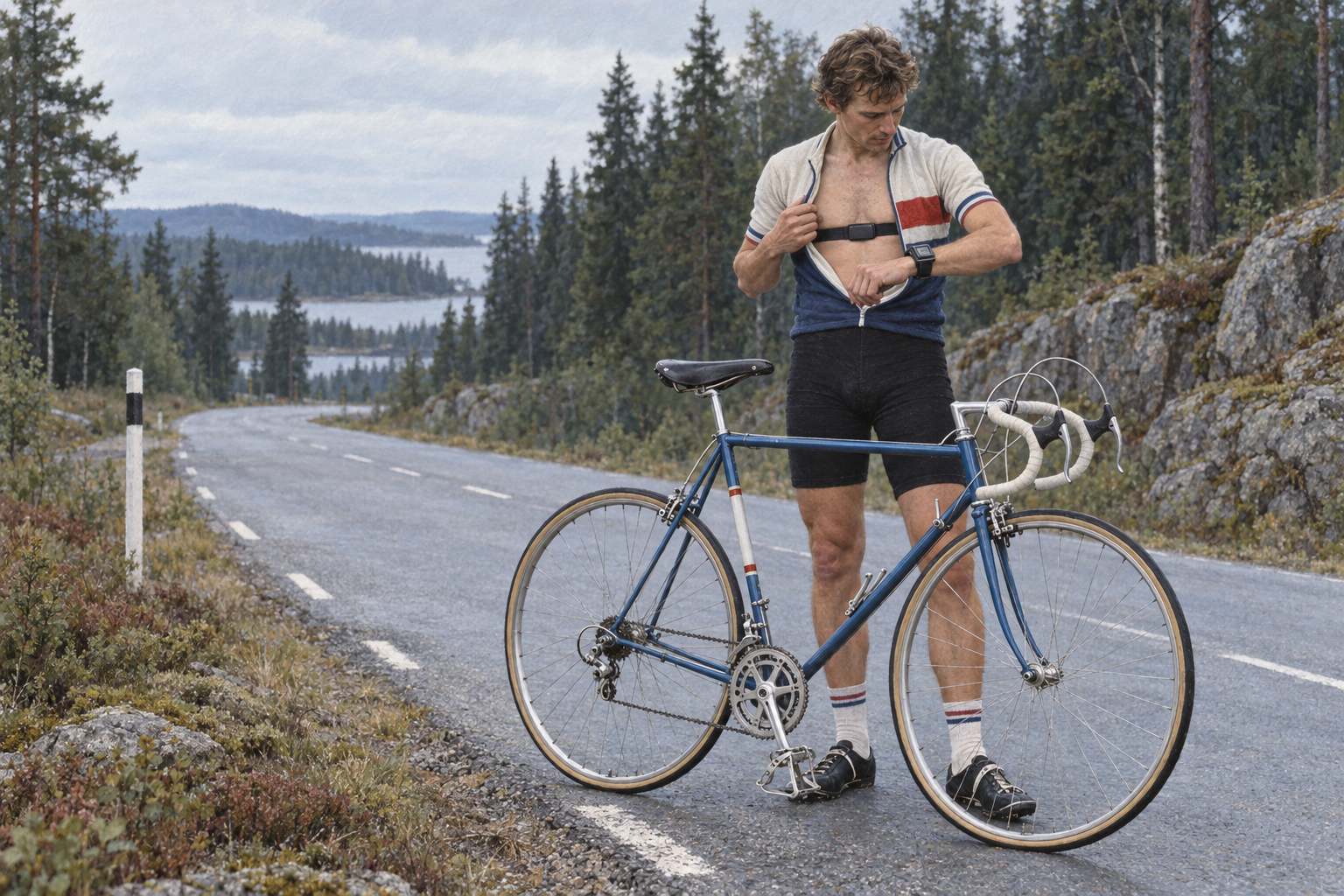
A chest strap and a wrist receiver let riders follow the heart without stopping to count beats with their fingers.
A number in the middle of the road
Beneath the jersey, a narrow strap touches the chest; on the wrist, the receiver is larger than an ordinary watch. Its number does not show speed but the effort required to hold it. In the early 1980s, that was unusual information to carry on a training ride.
From ski track to wrist
Polar was founded in Finland in 1977 following work on measuring heart rate wirelessly during exercise. The Sport Tester PE2000 reached the market in 1982. Electrodes in the chest strap detected the heartbeat and transmitted it to a receiver. Measurement could now follow the athlete through an entire effort rather than happen only at a stop or in a laboratory.
The first circle was small
Polar describes its 1980s users as a limited group of elite athletes. One concrete early case was Finnish orienteer Kari Sallinen, who used the monitor with coach Jukka Kalliokoski in summer 1983. Cyclists gained the same advantage: a ride could be divided into easier and harder periods even when wind and hills made speed a poor guide.
Distance was no longer the whole answer
A training diary might say 180 kilometres. Heart rate added another question: how were they ridden? Coaches could work more systematically with intensity, intervals and recovery. Yet the number also responded to heat, dehydration, nerves and fatigue. The monitor replaced neither the coach’s eye nor the rider’s experience.
Before the power meter
Power meters later showed work directly in watts; heart rate showed the body’s response. In the 1980s, watts did not sit on every handlebar. The early Polar made part of the laboratory portable. It was not an answer sheet, but the beginning of a more measured training day.
Sources
Continue exploring
More from cycling history
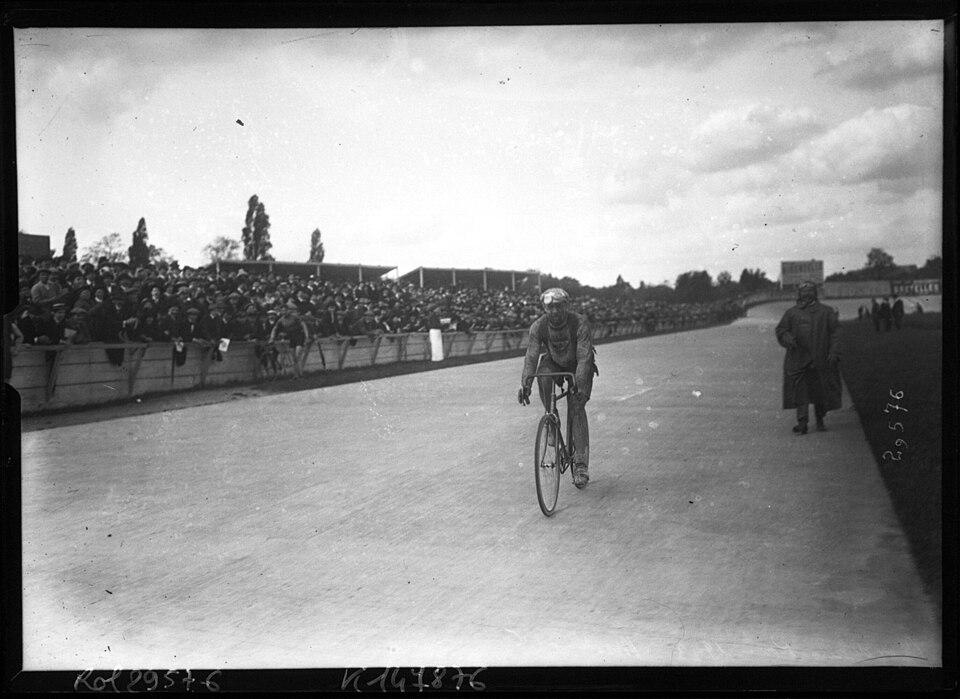
Bordeaux–Paris — with a motor pacer ahead
Jacques Anquetil won the Dauphiné and, a few hours later, began the 557-kilometre Bordeaux–Paris with motor pacing over the final part of the race.
Read the story →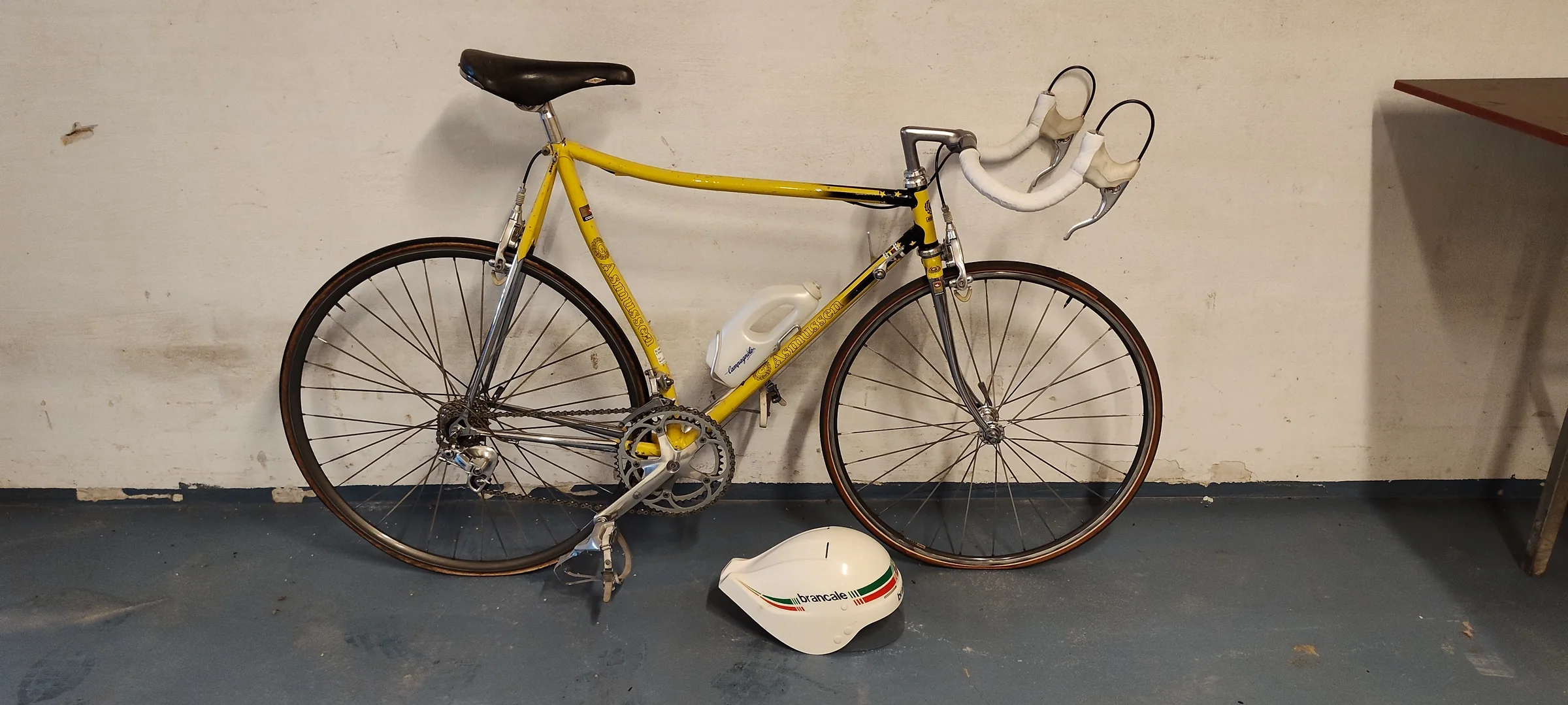
When Gunnar Asmussen made the bicycle lower
From Olympic gold in Mexico City to a yellow-and-black funny bike from a bicycle workshop in Aarhus.
Read the story →
Cycle racing’s hard golden age
See the races, people, bicycles and changes that shaped the period.
Explore the period →