1985 · Story
When Oosterbosch found the time trial again
He had become accustomed to second places just when everybody expected a win. On the slippery streets of Winschoten, his speciality returned.
Waiting beyond the finish
Bert Oosterbosch stood at the finish and waited. Out on the wet streets of Winschoten, Eric Vanderaerden was still riding. The Belgian was a team-mate, the favourite and one of the men expected to beat the time. Oosterbosch was not yet prepared to call himself the winner. The 1985 season had taught him to stop doing that.
The clock showed 8 minutes 25 seconds for 6.6 kilometres. The course twisted through the town centre, and a contemporary newspaper cutting described the asphalt as extremely slippery. There was little room to settle into an even rhythm: accelerate, lower the body, brake late, turn the bicycle and drive it back up to speed. It was a short time trial, but not a simple one.
Eleven seconds
Vanderaerden crossed the line eleven seconds later. Ron Groen, Gerrit Solleveld and Steven Rooks followed at fifteen seconds. On such a short course, that was a proper gap. Oosterbosch had averaged a little over 47 kilometres an hour despite the bends and the wet road.
The local Winschoten archive says almost 25,000 people watched around the course. That sounds a lot for a prologue on an August Monday, but the Tour of the Netherlands had come between the houses. Spectators saw the riders one at a time and could follow the clock. Only after Vanderaerden had finished did Oosterbosch allow himself to believe it.
The speciality that had almost ceased to be his
Oosterbosch was made for racing against the clock. He had been professional world pursuit champion on the track and could push a large gear from a position that made most riders move their hands after a few minutes. On the track the task was clean: speed, line and lap times. On the road, potholes, kerbs and wet drain covers joined the calculation.
Even so, 1985 had been awkward. The newspaper said second places arrived on the very days when he had been named favourite. He had won the prologue of the Vuelta a España earlier that year, but the notable results had become fewer afterwards. In Winschoten he again resembled the specialist people thought they knew.
A world championship without Oosterbosch
The victory had an odd edge to it. The track world championships began that same week in Bassano del Grappa. Oosterbosch had aimed at the pursuit, but the Dutch federation had not selected him. According to the contemporary report, he had missed the national championship in Alkmaar after a dispute over appearance money.
The organisers had offered half his normal fee, and he would not accept it. One can understand the principle without making him a hero for it. The consequence was straightforward: no track world championship. Instead, he stood in Winschoten wearing the leader’s jersey of his home stage race.
A victory, not a rescue
The Tour of the Netherlands had not been decided. Vanderaerden later took control and won overall. Oosterbosch’s prologue therefore did not begin a grand recovery or provide the neat turn that sports stories often seek. It lasted 8 minutes 25 seconds, and that was enough.
I have always had a soft spot for victories like this. Not because they change everything, but because they show a rider doing precisely the job he did best. The wet road, the many corners and the team-mate still on the course made the wait feel long. When Vanderaerden finally stopped the clock, eleven seconds remained. Oosterbosch had found the time trial again.
Source and further reading
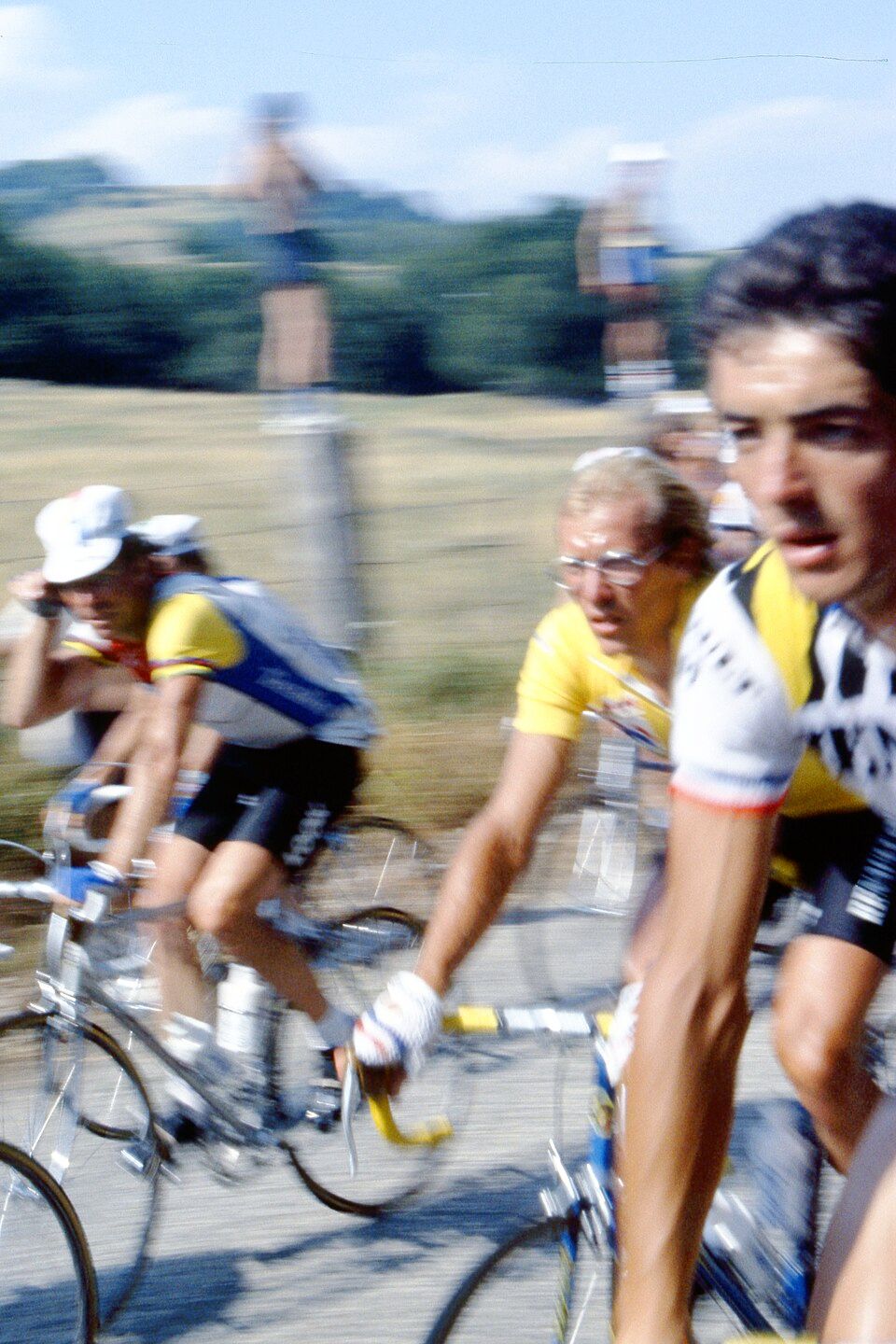
The image provides historical context. Where it does not depict the specific event, the caption says so.