Team colours · Turin · 1973–1977
When Brooklyn
turned GIOS blue
One request from a sponsor joined an Italian framebuilder, an American-looking jersey and a Belgian classics team.
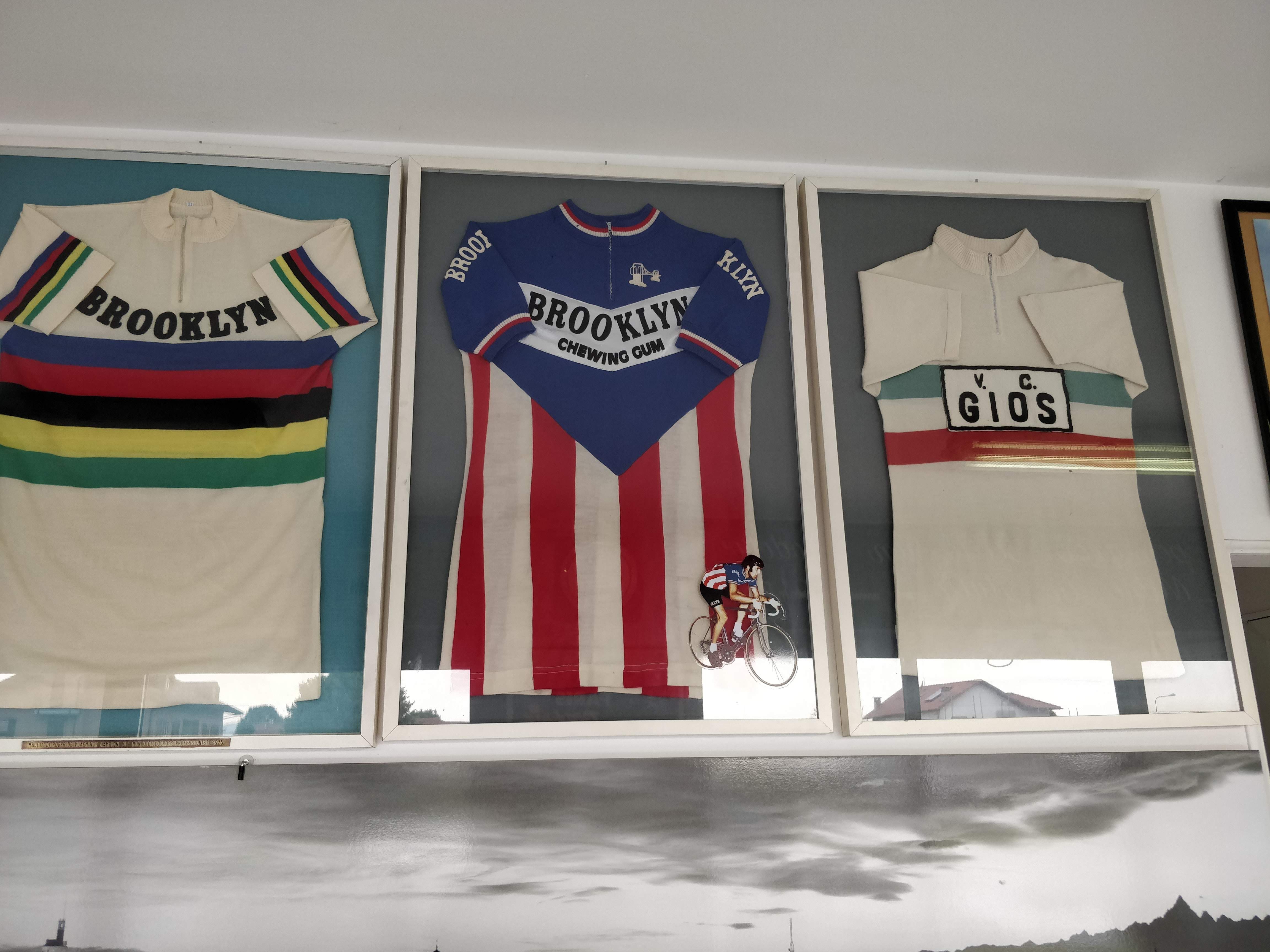
Giorgio Perfetti made one visible demand of the bicycles: the frame had to match the Brooklyn team jersey.
The connection did not begin at a race, but at a trade show. At the 1971 Milan bicycle show, Perfetti, owner of the company behind Brooklyn Chewing Gum, noticed the GIOS Easy Rider. He ordered bicycles as prizes for a competition linked to the gum.
The following year, sports director Franco Cribiori was looking for a sponsor for a professional team. Perfetti entered cycling and chose GIOS as bicycle supplier. When the team began the 1973 season, the frames wore the clear blue finish the factory would call Blu Gios.
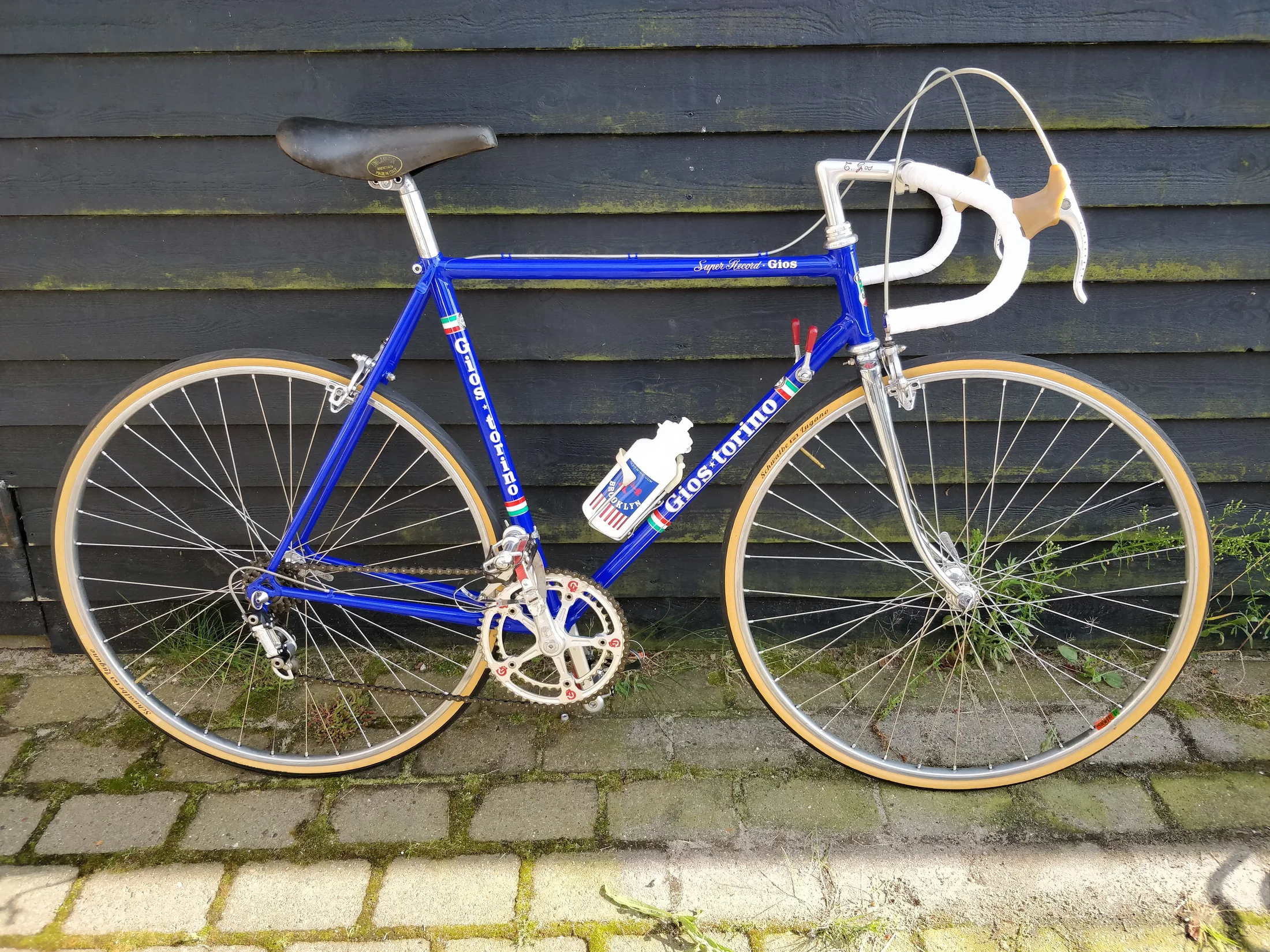
A jersey that looked American
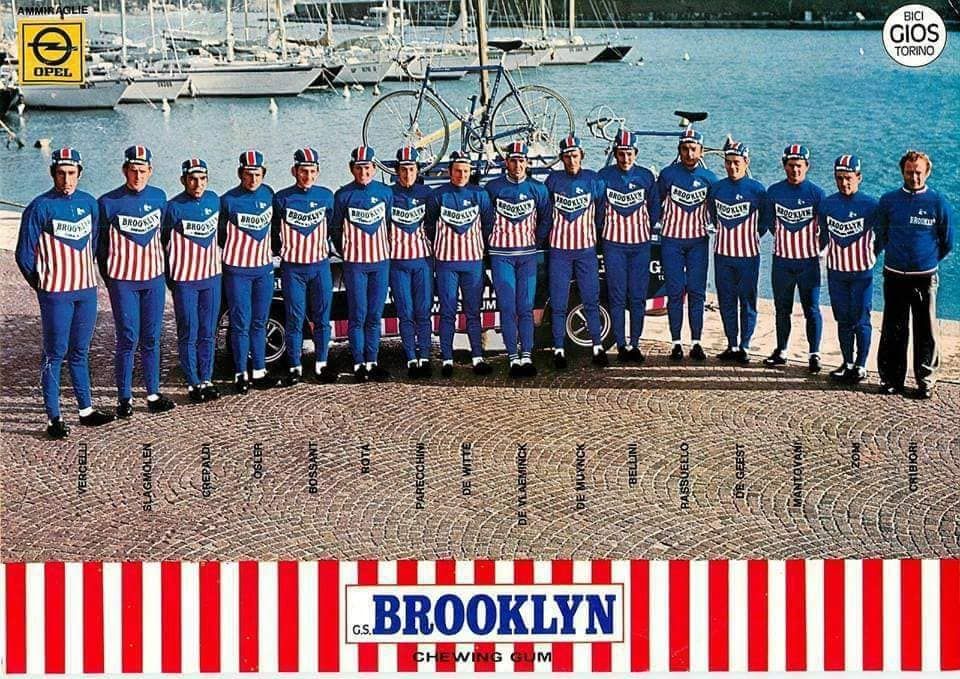
The Brooklyn name, stars and vertical stripes gave the team an American appearance. Behind it was a more mixed arrangement: sponsor and framebuilder were Italian, the team had Italian management, and its leading rider, Roger De Vlaeminck, was Belgian.
Colour brought the parts into one picture. The blue frame was easy to recognise in the peloton, while white panels and red stripes continued through the kit. GIOS became attached to the team without anyone having to explain the whole relationship.
The Super Record frame arrived with the Brooklyn partnership in 1973. According to the GIOS historical register, it changed little through 1977: lugged steel, racing geometry and a build suited to Campagnolo's best parts. Colour was the advertisement; the work under the paint had to keep the riders on the bicycles.
The mechanic between workshop and race
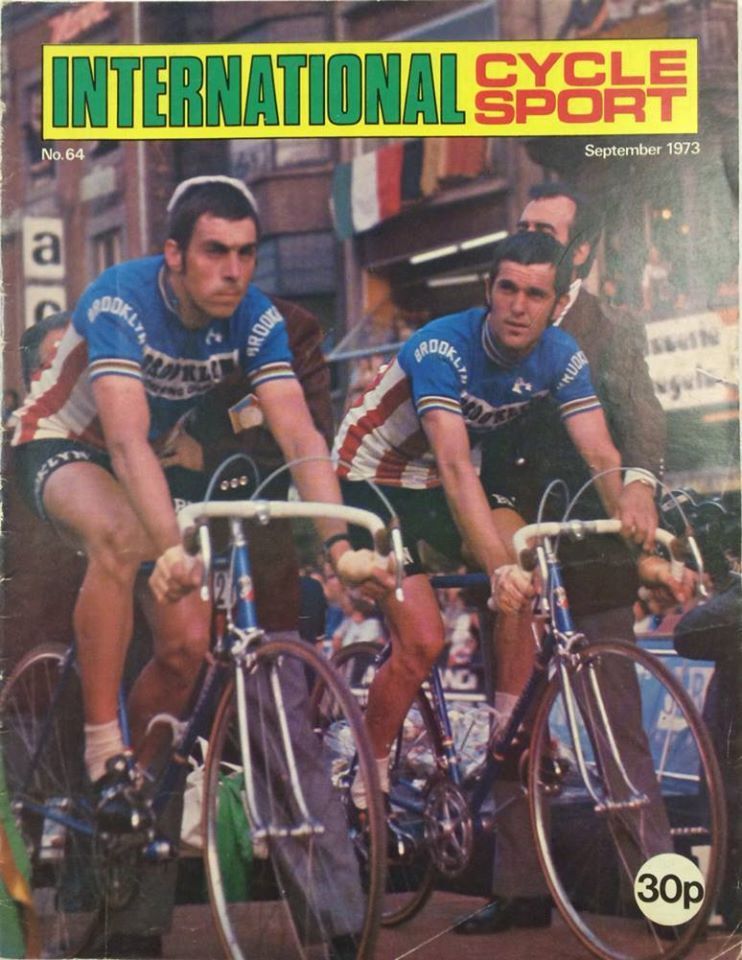
In 1975, Aldo Gios became the team's official mechanic and Roger De Vlaeminck's trusted man. That made the connection practical. GIOS did not merely supply correctly coloured frames; the family had someone close to the riders who could see what lasted and what needed changing.
That year De Vlaeminck won Paris–Roubaix ahead of Eddy Merckx and André Dierickx. It was his third victory in the race. Results like this placed the blue bicycle in the race photographs, but its longer life came from the colour remaining GIOS's own.
Brooklyn left professional cycling after 1977. The jersey disappeared from the peloton, while the blue paint remained in Turin. A sponsor's request that might have ended with a contract instead became part of the marque's permanent language.
From the archive
Jerseys, team and workshop
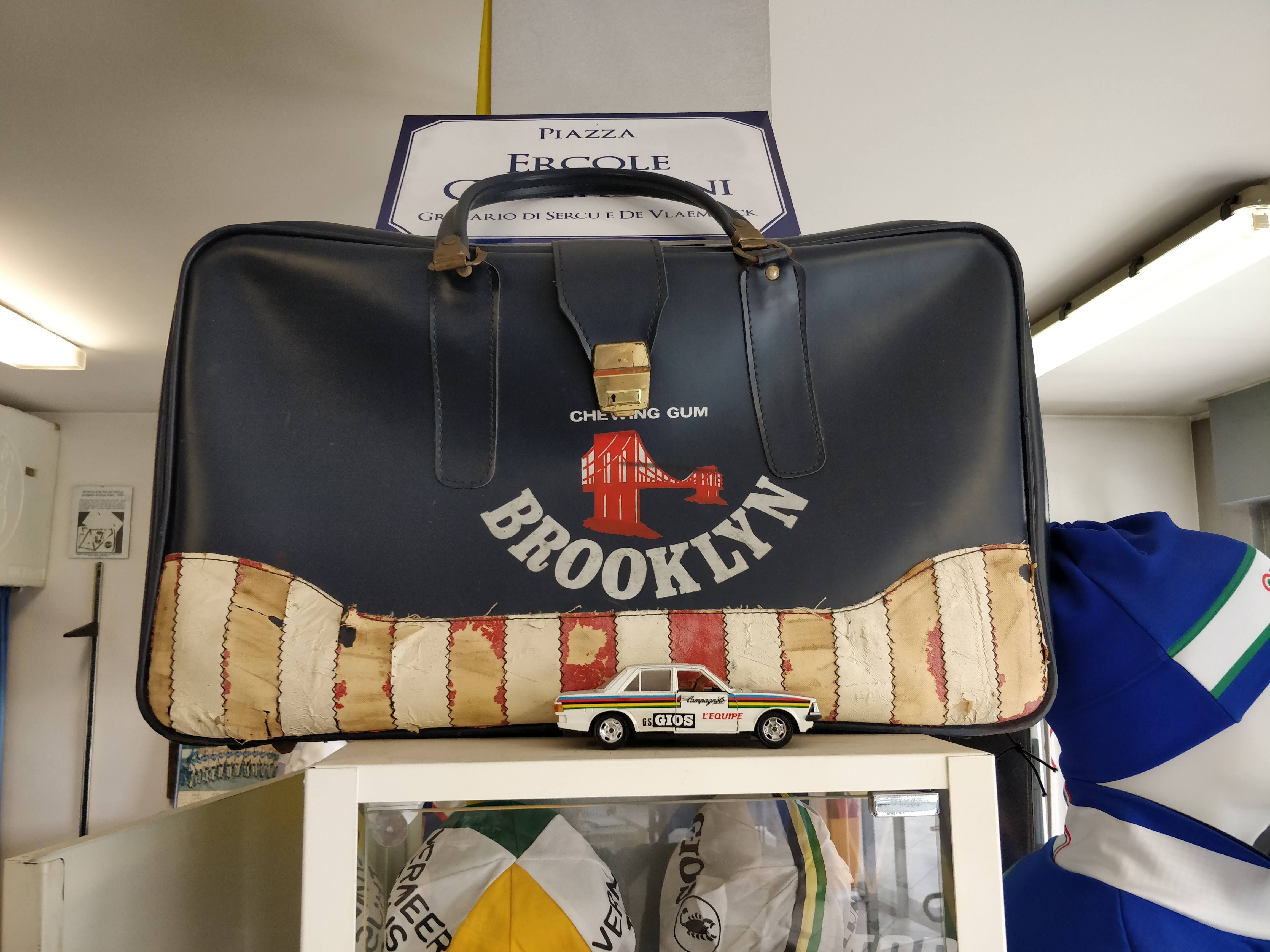
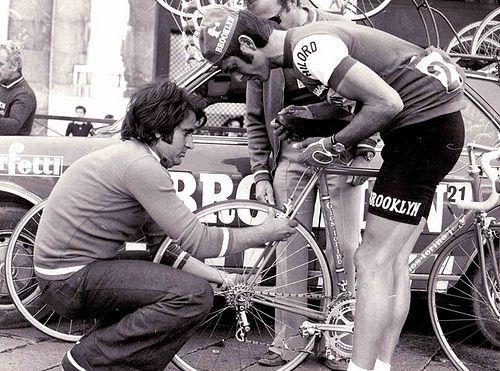
Sources and image note
The main account is based on the GIOS family history and the GIOS historical register. Team information was checked against Brooklyn 1973 at ProCyclingStats. The 1975 Paris–Roubaix result was checked against the race's official history.
The recent museum and bicycle photographs are by The Evolution of Bikes. The historical reproductions were approved by the owner for this article, but their photographer and original publisher are not fully documented; they are therefore shown with an explicit image note.
Continue exploring
More from cycling history
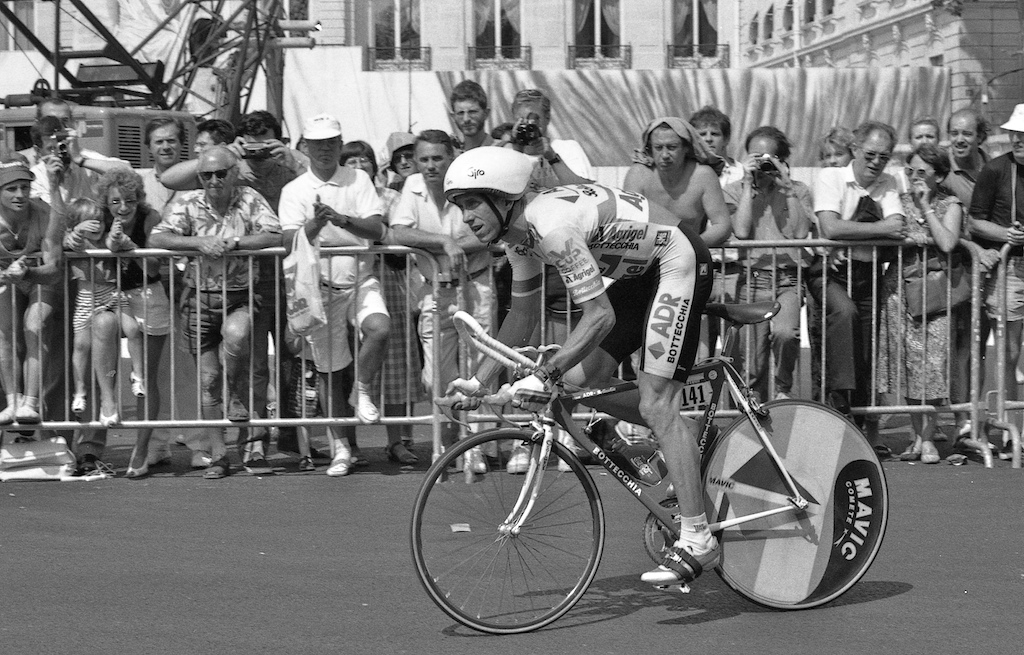
Eight seconds on the Champs-Élysées
Greg LeMond began the final time trial 50 seconds behind Laurent Fignon and finished the Tour eight seconds ahead.
Read the story →
When a bent crank gave Colnago access to the Giro
Ernesto Colnago was 23 when a mechanical observation on Fiorenzo Magni's bicycle took him into the Giro service crew.
Read the story →
Pioneers and endurance
See the races, people, bicycles and changes that shaped the period.
Explore the period →