Herning · 5–10 December 1974
When Herning acquired its own wooden track
Winter track racing had disappeared from Denmark. Then came a track from London, a circular exhibition hall in Herning and a field containing some of Denmark's best-known riders.
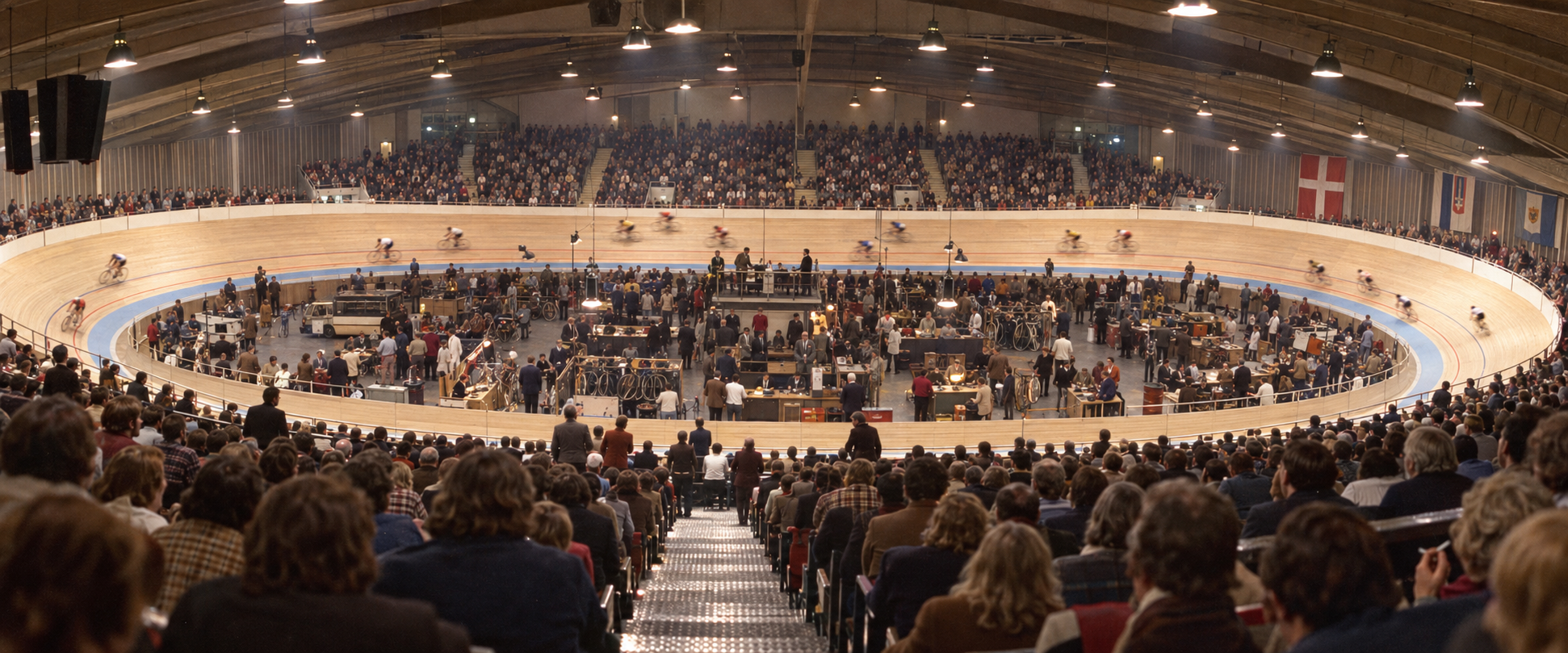
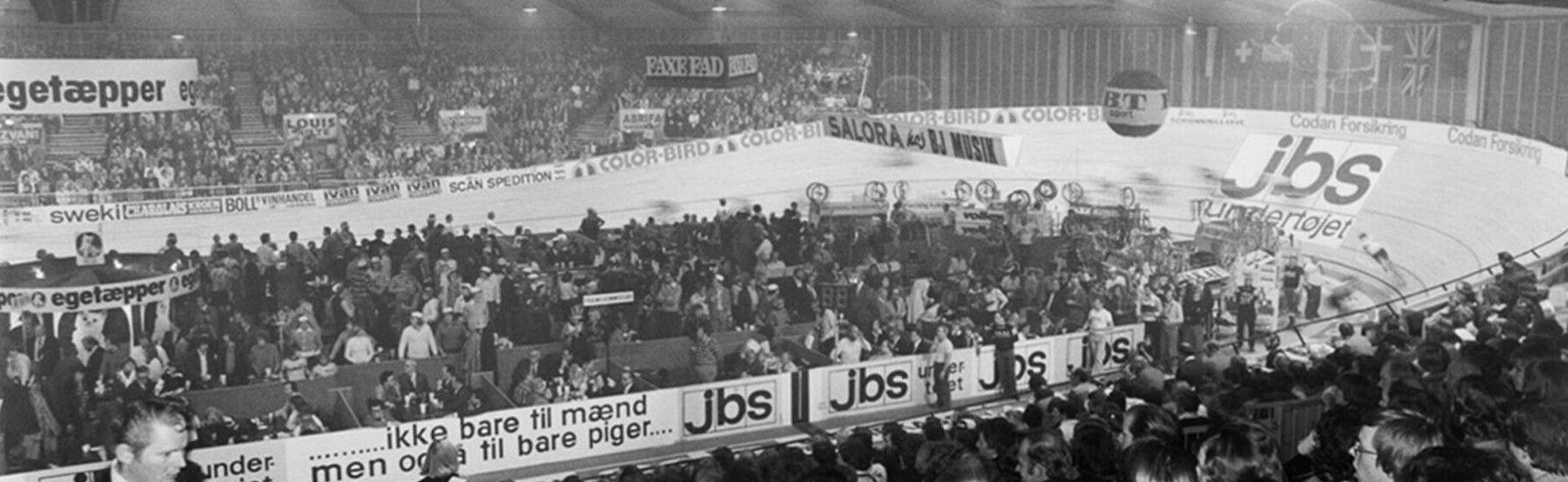
The wooden track had already served in London before it was laid inside Herning's new circular Hall B. On 5 December 1974 it became the centre of six days of racing in central Jutland.
A track from the Empire Pool
Copenhagen's Forum had ceased operating as a winter track in 1961. For more than a decade Denmark had therefore lacked the peculiar mixture of Madison racing, chases, music, advertising and late evenings that made up a six-day event.
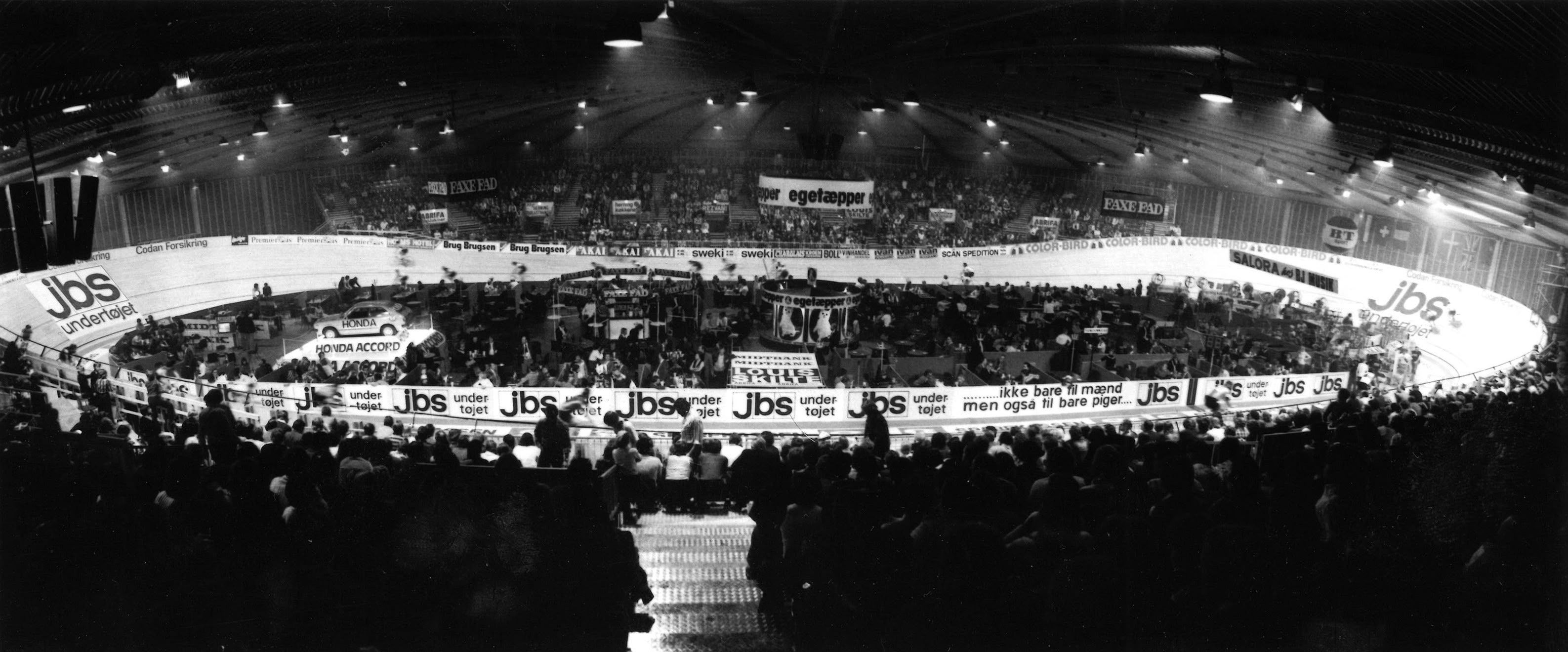
Herning found a practical solution. The wooden track from London's Empire Pool was moved into the new circular exhibition hall, which had been in use for only a few months. The shape fitted the track, while the infield could hold boxes, tables, advertising boards and the working life of the race.
The initiative came from JBS owner Jens Bjerg Sørensen and actor Poul Bundgaard. Helge Sander organised the race. It mixed sport, trade and entertainment, but still required riders whom people would pay to see.
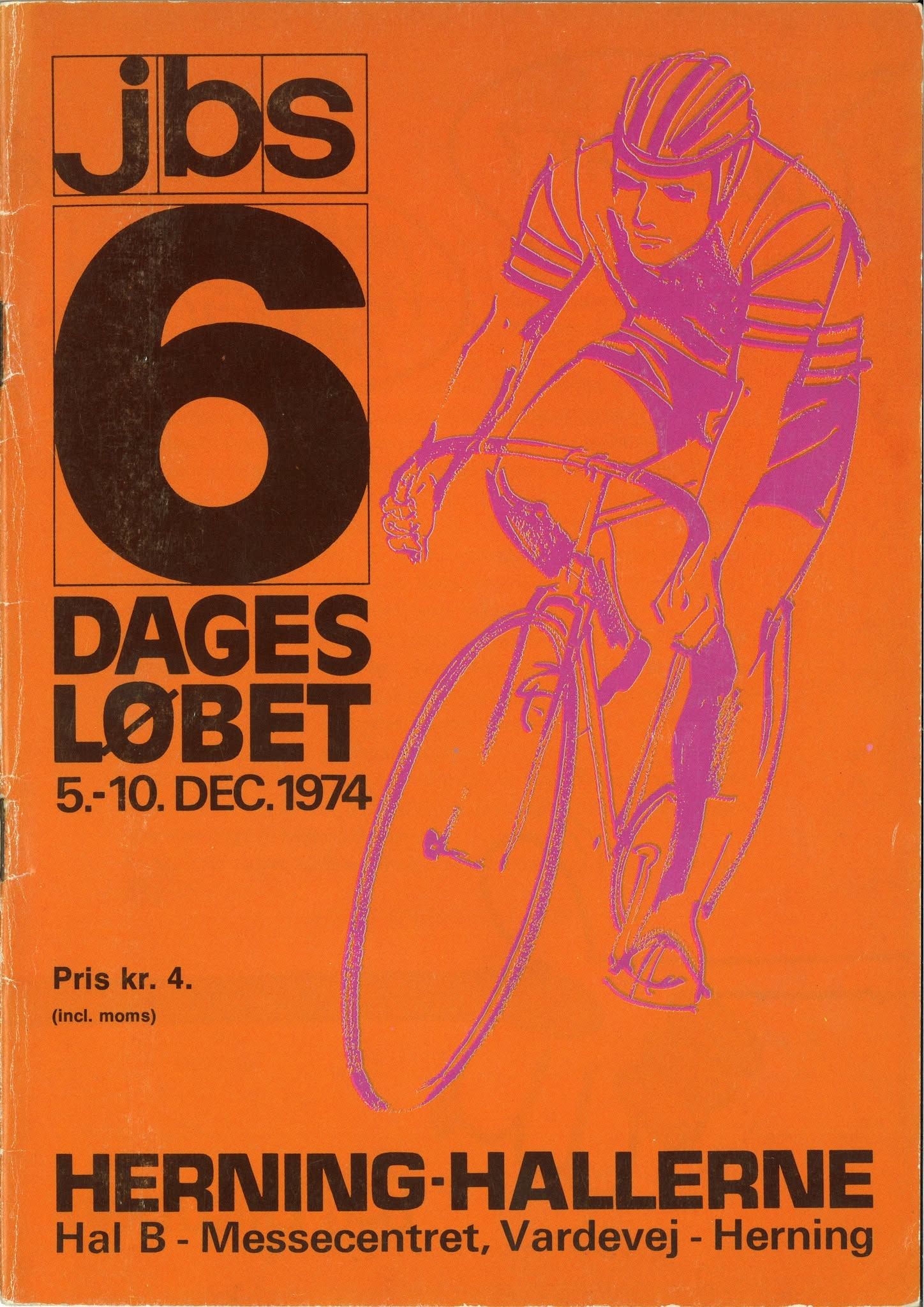
Ritter was the name on the bill
Ole Ritter was the obvious Danish attraction. He had set the hour record in Mexico City in 1968 and won stages of the Giro d'Italia. In Herning he was paired with Dutchman Leo Duyndam, an experienced specialist of the winter tracks.
They won the first edition and repeated the result the following year. The pairing says something about the event's early needs: the Danish star gave the crowd a rider to support, while his partner supplied the particular experience required by six-day chases.
Ritter later won the Copenhagen Six-Day in 1977 with Patrick Sercu. His victories in Herning came first and showed that winter track racing could draw a substantial Danish crowd outside the capital.
Pair number seven was already there
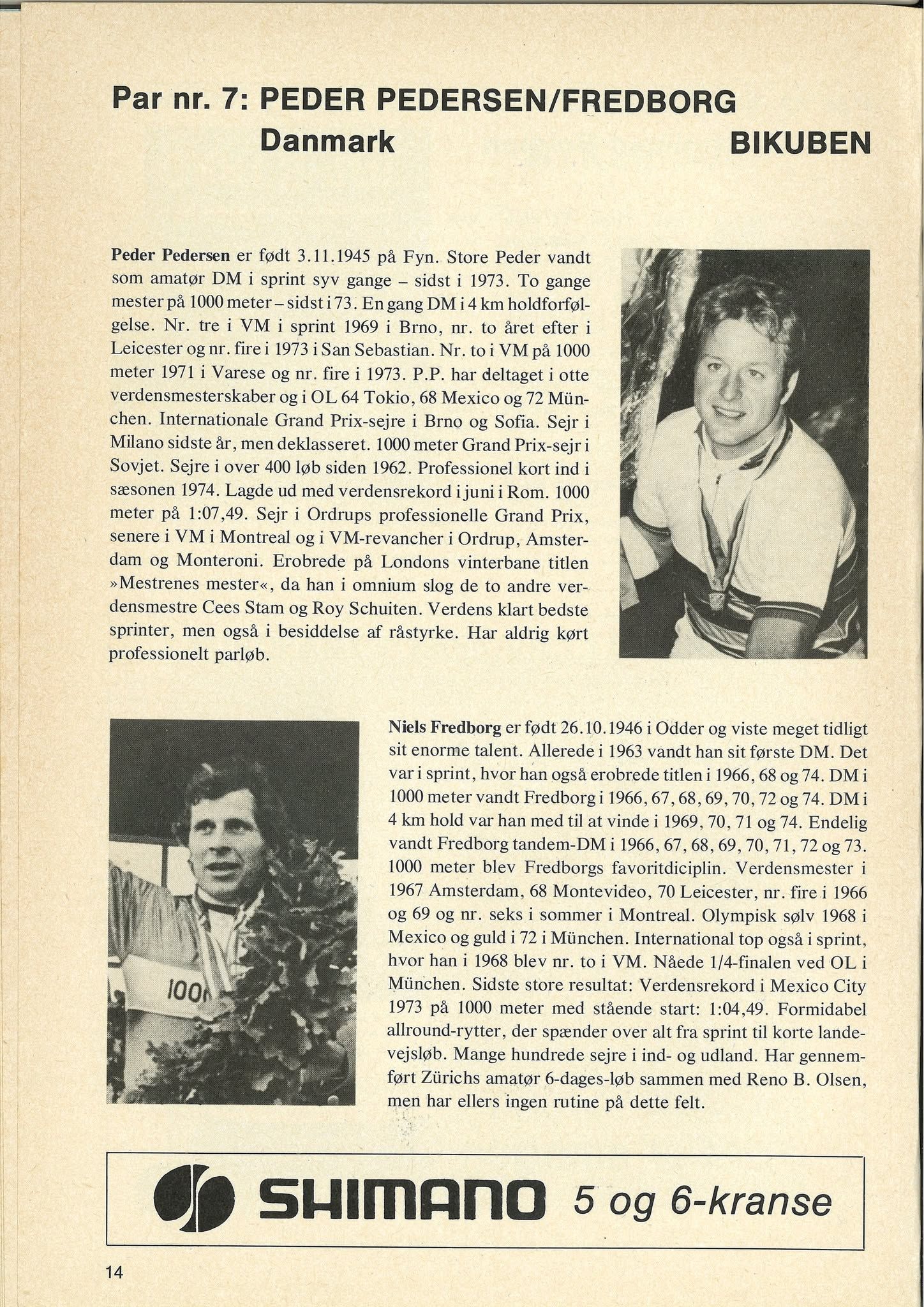
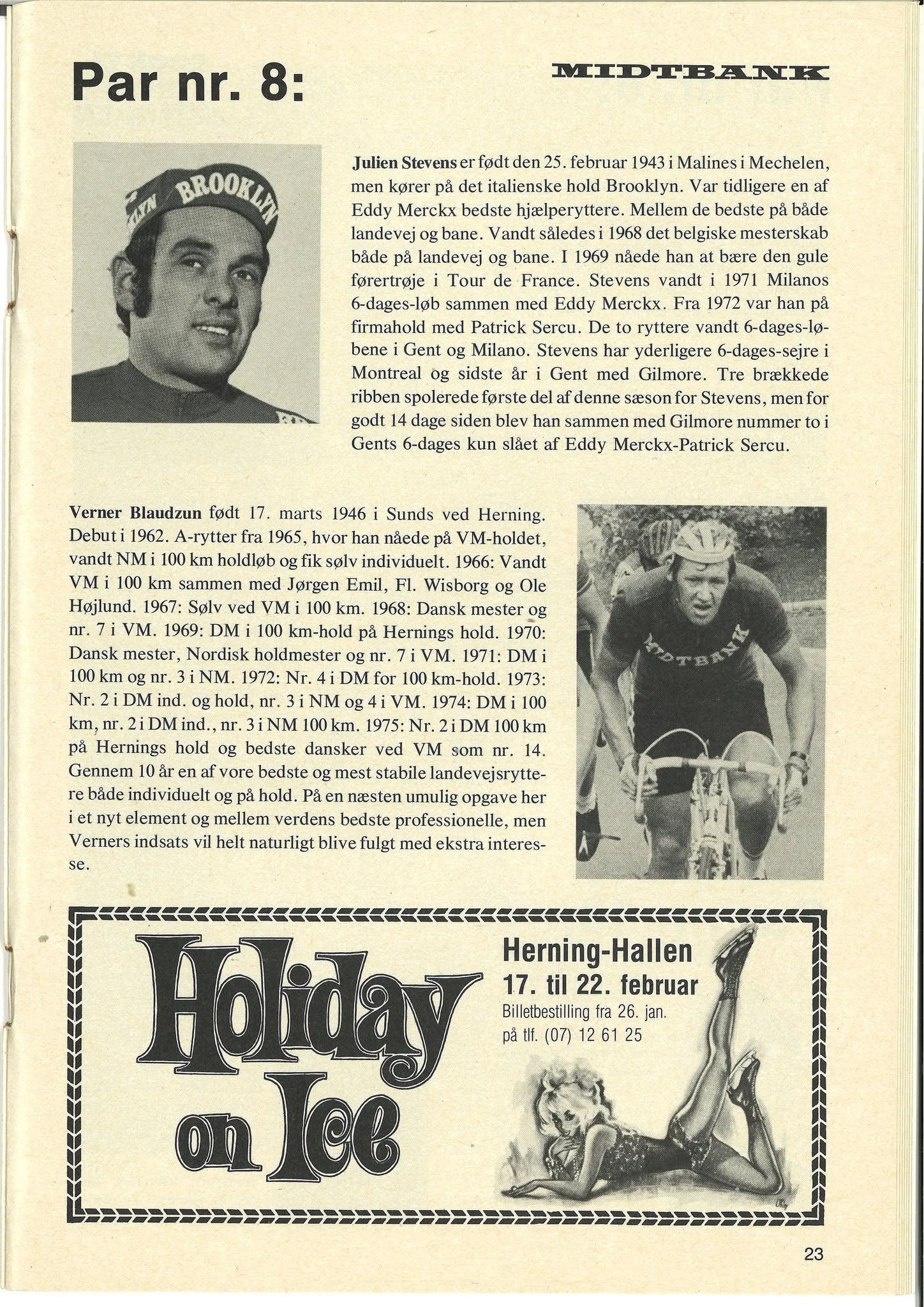
The 1974 programme usefully corrects a common simplification about the Danish pair number seven. The number was already Danish at Herning's opening edition: Peder Pedersen and Niels Fredborg were listed together.
Gert Frank and Hans-Henrik Ørsted later turned the number into a major new crowd story. They won in Herning in 1981 and 1983. Yet the number's roots in the Jutland hall can be seen on a programme page from the first edition.
Ten consecutive winters
The first race was not a one-off experiment. Herning staged a six-day event every winter through 1983. The field changed, the advertising changed, and the rider profiles reveal how widely the organisers cast their net: Danish road racers, local names and foreign track specialists were combined in pairs.
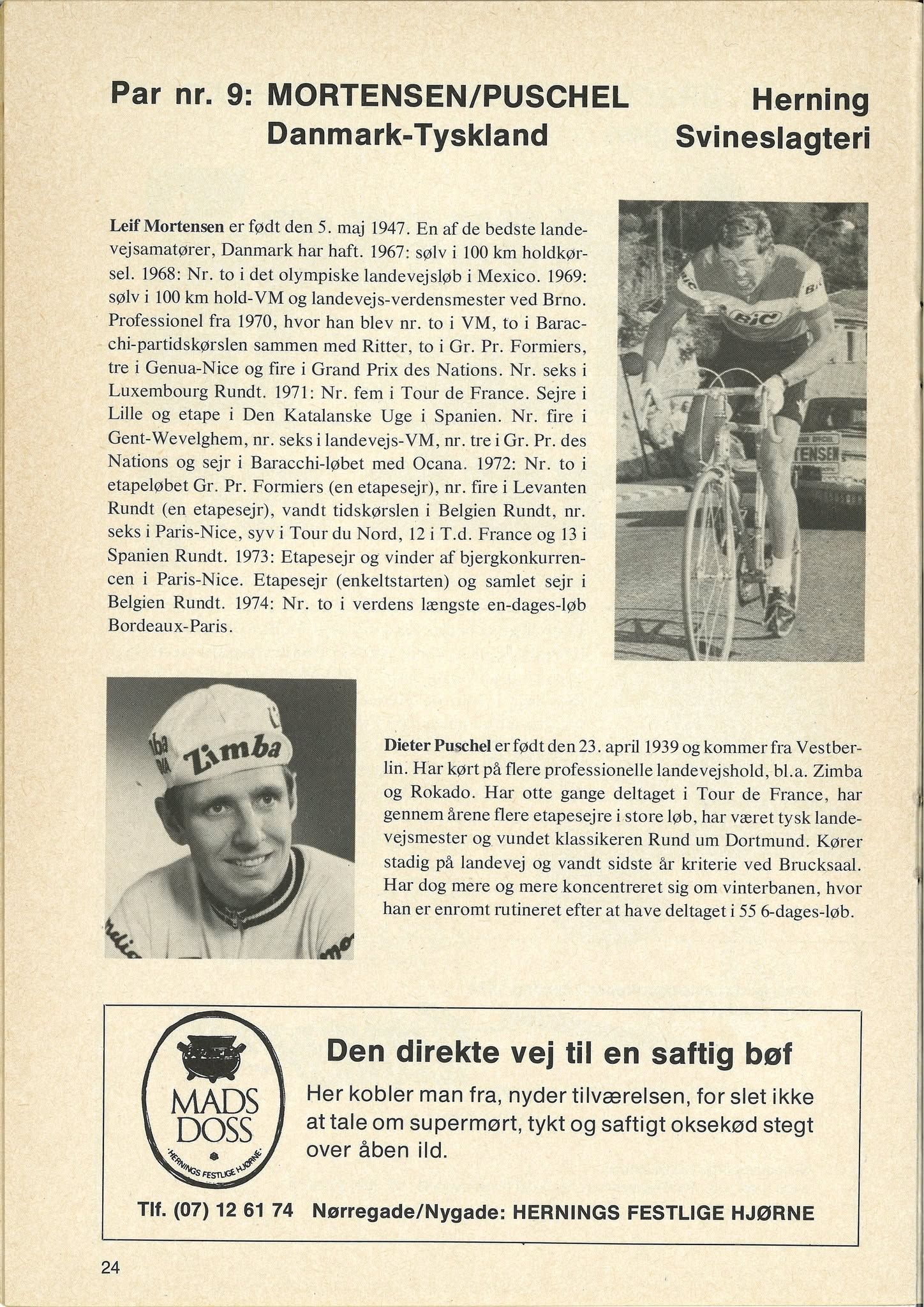
The track was consequently also a meeting place between disciplines. Leif Mortensen arrived with world championship medals and Tour results. Verner Blaudzun was one of Denmark's most consistent amateur road riders. Julien Stevens had ridden both the classics and six-day races. In Herning they all had to adapt to short laps, relay chases and evenings that ended late.
When the first race began in December 1974, it was not simply a copy of the old Forum. It was Herning's own version: a used English wooden track in a new Jutland exhibition hall and a Danish world star as the name the crowd came to see. That proved sufficient for ten winters.
From the archive
Programmes and views from Herning
The additional images document the field and the hall. Captions distinguish the inaugural event from later editions where the dating can be established.
Sources and image notes
- Museum Midtjylland: 50 years since the first JBS Six-Day
- Herning History: 1974 register
- Cykelsiderne: Herning Six-Day
- Lex: Gert Frank
The programmes and track photographs come from the owner's archive and are used with the owner's approval. The people in the illustration are not portraits of named riders.
Continue exploring
More from cycling history
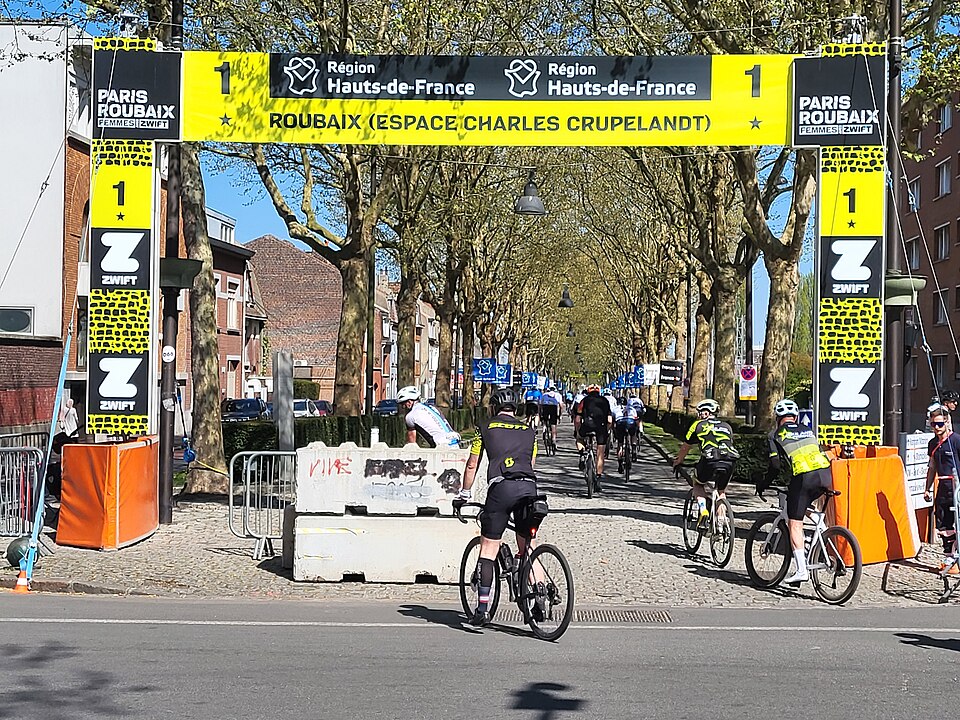
When the alarm clock cost twenty minutes on the Paris–Roubaix route
Jonas B. Hansen woke up 45 minutes late in Roubaix. By the time he reached the start, the others had left and the rest of his day became one long chase.
Read the story →
When old bicycles found new roads
L’Eroica began with 92 riders on Tuscany’s white gravel roads.
Read the story →
When war closed the roads
See the races, people, bicycles and changes that shaped the period.
Explore the period →