1934–1939 · Story
Hand slings, cabins and 144 hours in Forum
One rider worked on the track while his partner withdrew to the cabin. The six-day was cycle race, shift work and endurance in equal measure.
Across the track
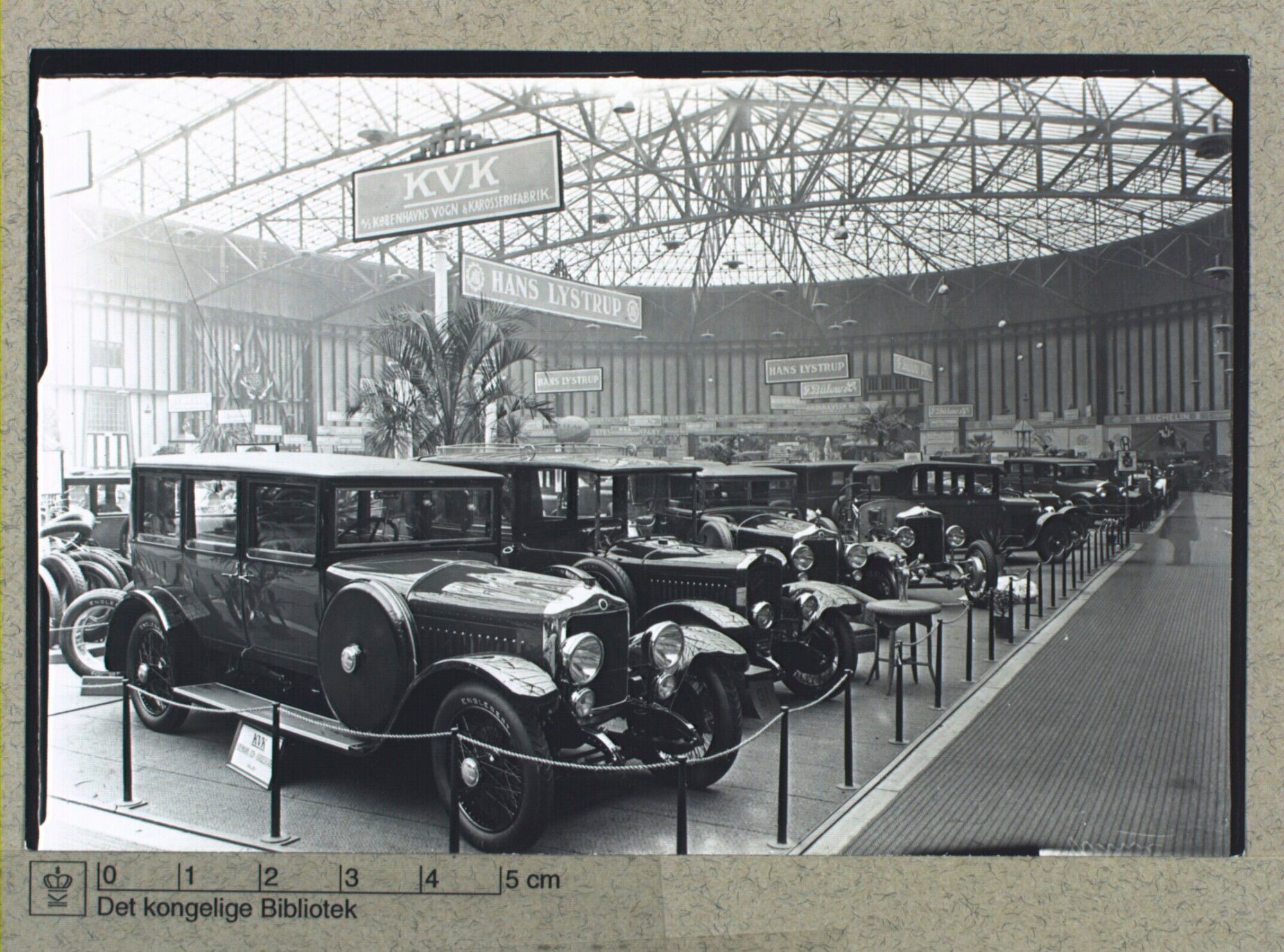
A footbridge led across the cycle track in Forum. On the other side lay the infield, with small cabins for the riders and space for specially invited guests. A person could quite literally walk into the middle of a cycle race. The riders had their base there while their rivals continued to circle outside.
It is a useful way into the six-day race. To understand the old version, one must also look at what happened between a rider’s turns on the bicycle.
Copenhagen staged its first six-day race in Forum in 1934. The hall had opened with a motor exhibition in 1926, and cycling demanded its own arrangements. A track and grandstands had to be built. The first track measured 180 metres and remained in use until 1939. A short lap, with no shortage of opportunities to ride it again.
Six days in shifts
Six days contain 144 hours. The number says something about the original idea: a cycle race continuing through day and night. It should not be read as an exact stopwatch result for every event ever called a six-day race.
No single rider was expected to remain in the saddle throughout. The pair divided the labour between two men. One kept the team in the competition while the other had a chance to rest. A partner therefore became part of a rider’s endurance. Spend everything on a badly judged chase and the resulting problem was handed directly to him.
The cabins belonged to that arrangement. They gave riders somewhere to withdraw from the track, yet remained inside the hall. Workplace and resting place were separated by only a few metres. A pause in the infield was not the same as having time off.
Only from the late 1950s did it become common to neutralise six-day races at night. The name remained even as the hours were used differently. A spectator may therefore know the later form and still underestimate how much the early race was about simply enduring.
Two riders, one account
For the spectator, the difficulty was knowing who actually led. The first man on the straight was not necessarily the race leader. A pair might already have gained a lap, leaving its advantage in the standings even when its active rider sat farther back in the group.
Laps came first. Sprint points could separate teams on the same lap total. Chasing a lap was therefore different from a brief sprint for points. Following the race required attention to more than the next dash for the line. A fast rider might win a sprint, while his pair’s position still depended on work done much earlier.
Today the hand sling is the Madison’s most recognisable movement. The working rider takes his partner’s hand and helps accelerate him before leaving the effort himself. That small transfer of speed makes the change part of the tactics. The partner must be found and the handover timed while every other pair continues racing.
The exchanges evolved, however. American track rider Jack Simes described earlier riders using, among other methods, a push from behind before the hand sling became familiar. A modern Madison is therefore not a finished diagram of every movement made in Forum in 1934.
Music and aching hands
Johannes V. Jensen wrote about the six-day race for Politiken in 1934. His account includes a loudspeaker, an orchestra and spectators whistling along. The hall provided entertainment as well as sport. People were meant to enter and make an evening of it.
He also observed riders with aching hands and painful eyes, shifting on their saddles to endure the discomfort. That detail gives the long contest a more tangible scale than the number of hours alone.
The crowd could follow the chase on the track and the music inside the hall. In the middle stood the cabins. Whenever one rider withdrew into them, his partner continued around the 180-metre track.