Warsaw ↔ Prague · 1–9 May 1948
Two pelotons.
Opposite ways.
The first Peace Race was not yet called the Peace Race. It consisted of two simultaneous stage races between Warsaw and Prague, run in opposite directions through a landscape still marked by war.
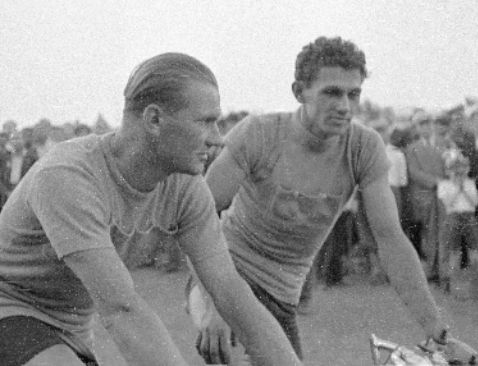
As one field rode south-west from Warsaw, another headed north-east from Prague. When they finished, the same event had produced two winners.
A May Day start
Riders left both capitals on 1 May 1948. The event bore the more prosaic title International Cycling Race Warsaw–Prague–Warsaw. The Peace Race name arrived in 1950.
The date was deliberate. The initiative came from the Communist party newspapers Głos Ludu in Poland and Rudé právo in Czechoslovakia together with the national cycling federations. It was intended to display friendship and reconstruction. It was sport, but it was political from the first pedal stroke.
The shorter road to Prague
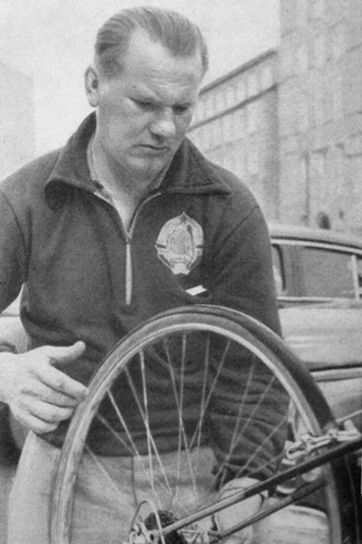
From Warsaw, 65 riders covered five stages and roughly 872 kilometres via Łódź, Wrocław, Jelenia Góra and Liberec. The mountains came late, and the final day was the longest: 236 kilometres from Liberec to Prague.
August Prosenik, a 32-year-old Yugoslav mechanic, took the lead on stage two. Czechoslovak Jan Veselý won three of the five stages, but punctures and a penalty for an illegal bicycle change proved costly. Prosenik reached Prague in 26 hours 52 minutes 25 seconds and won by just under five minutes.
The longer road to Warsaw
The other field faced eight stages and about 1,104 kilometres. The route ran from Prague through Pardubice, Brno, Gottwaldov, Žilina, Katowice, Kraków and Kielce to Warsaw. A team time trial between Katowice and Kraków did not count towards the individual classification.
Aleksandar Zorić won without taking a stage. In Katowice the judges had to estimate times because the commissaires' car took a wrong turn and arrived after the field. Despite such improvisation, Zorić stayed ahead and finished 5 minutes 22 seconds clear of Emanuel Krejčů. Poland's first team won the team competition in both directions.
Peace as a name and programme
Nearly one hundred cyclists from Poland, Czechoslovakia, Yugoslavia, Romania and Hungary took part. Contemporary newspapers wrote of Slavic friendship and cooperation between the people's democracies. The language was hopeful, but it was also a tool of the new regimes.
The Peace Race later became Eastern Europe's largest amateur stage race. East Germany and Berlin joined the route in 1952, and the white dove became its enduring symbol. Yet the 1948 beginning was stranger: no single tour, no common peloton and no sole winner. Two roads linked the same cities.
Sources and image notes
Later summaries vary slightly on distance, generally between 842/872 and 1,104/1,144 kilometres. The stage distances and contemporary result lists give roughly 872 kilometres for Warsaw–Prague and 1,104 for Prague–Warsaw; those are used here.
- University of Wrocław: Peace(less) Race
- Závod míru: how the race began
- Museo del Ciclismo: 1948 results
- Głos Wielkopolski, 3 May 1948
- Wikimedia Commons: Prosenik and Zorić

Alternative illustration: A clearly labelled period-style illustration could show two pelotons leaving Warsaw and Prague on 1 May 1948, with battered post-war roads, simple steel bicycles and restrained red banners — documentary poster style, muted colours and no invented named individuals.
Continue exploring
More from cycling history
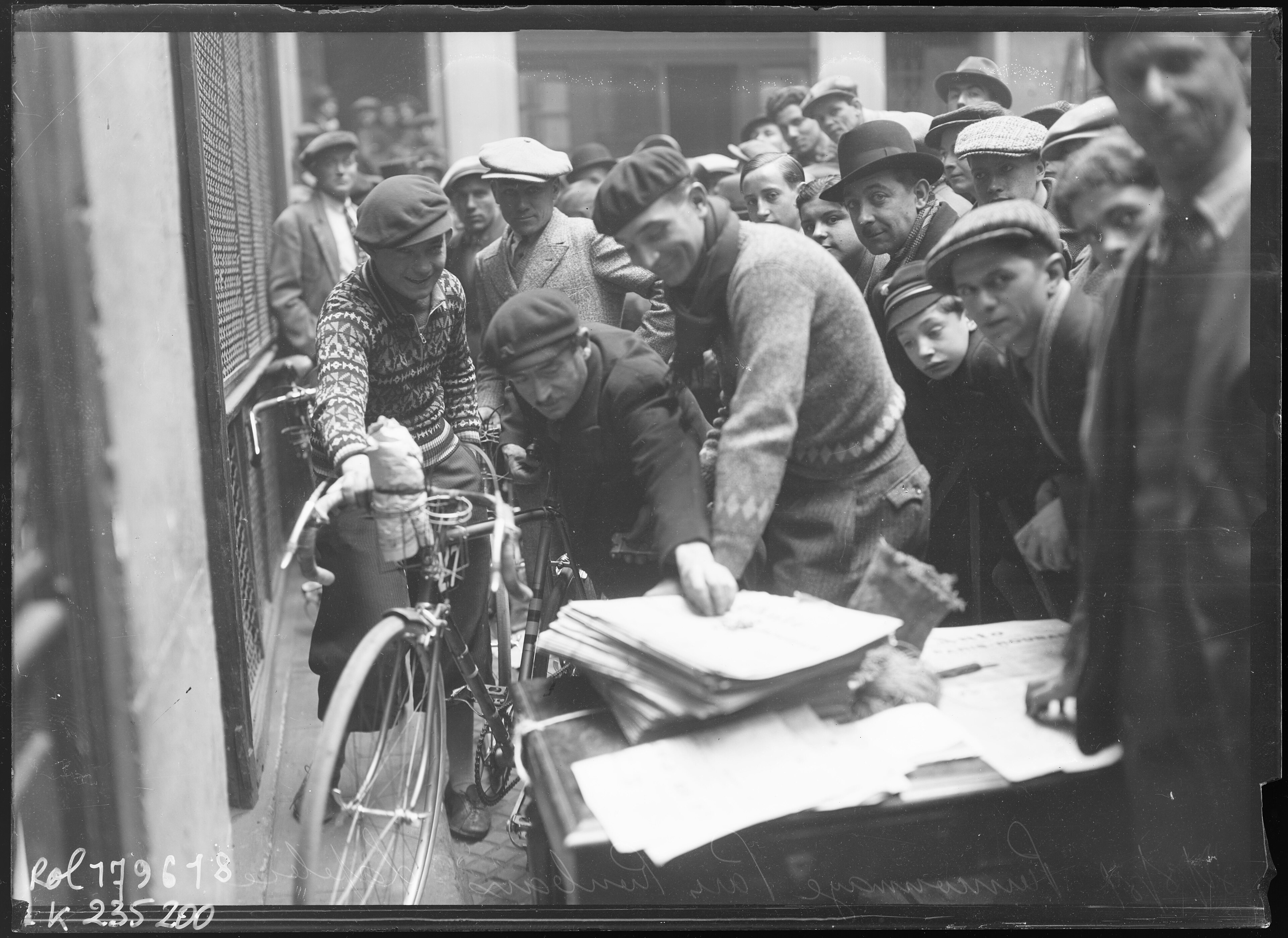
The spectator's bicycle that cost Lapébie Paris–Roubaix
Roger Lapébie punctured near the finish, borrowed a spectator's bicycle and crossed the line first. The rules awarded victory to Gaston Rebry.
Read the story →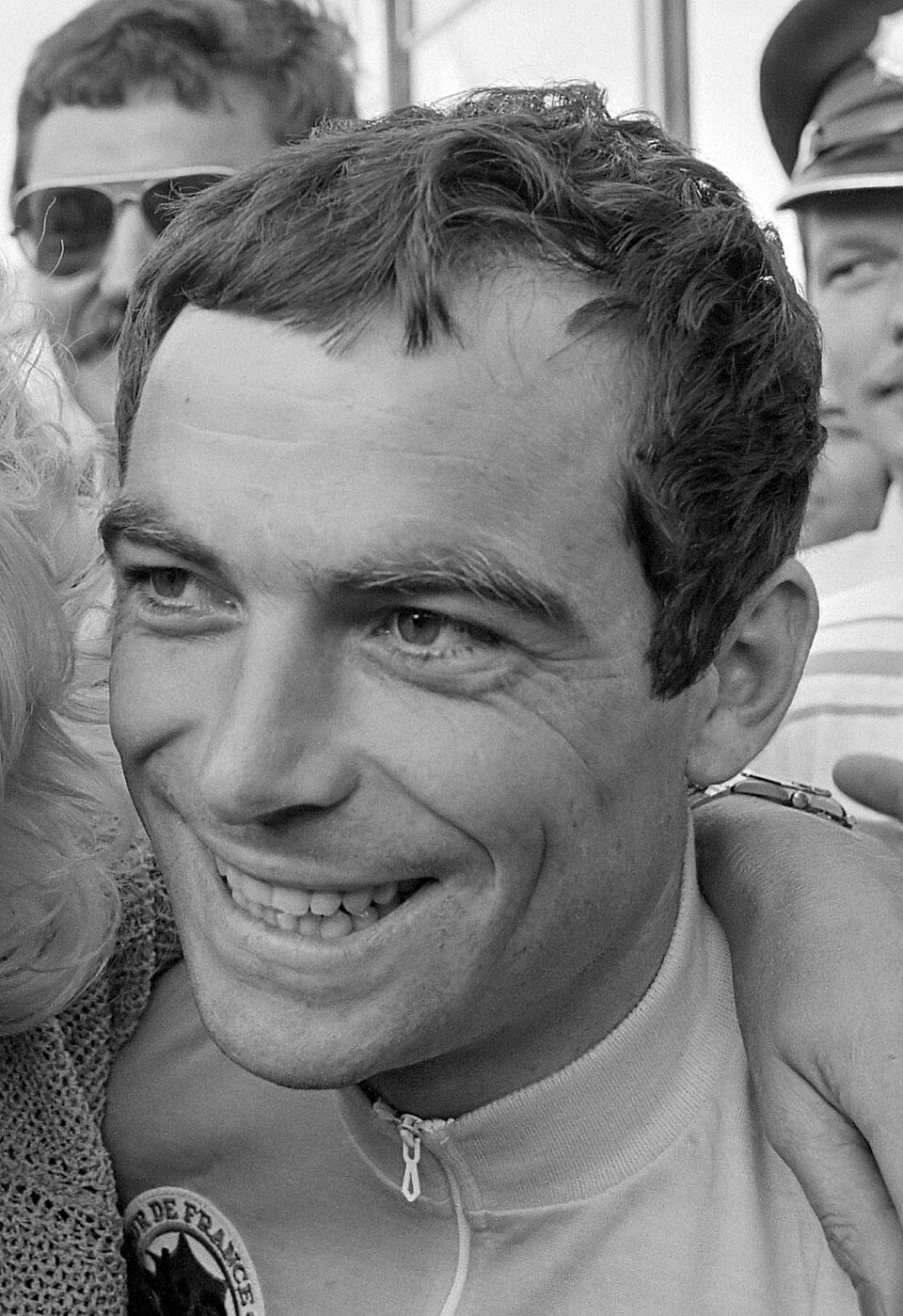
The day snow emptied Liège–Bastogne–Liège
A field of 174 began in the cold and only 21 finished, while Bernard Hinault rode roughly 80 kilometres alone and suffered lasting damage to his hands.
Read the story →
When cycling became a control room
See the races, people, bicycles and changes that shaped the period.
Explore the period →