Tour de France · 13 July 1967
When Tom Simpson died on Mont Ventoux
On the bare mountain, an exhausted rider continued until his body could do no more. The tragedy cannot be explained by a single cause.
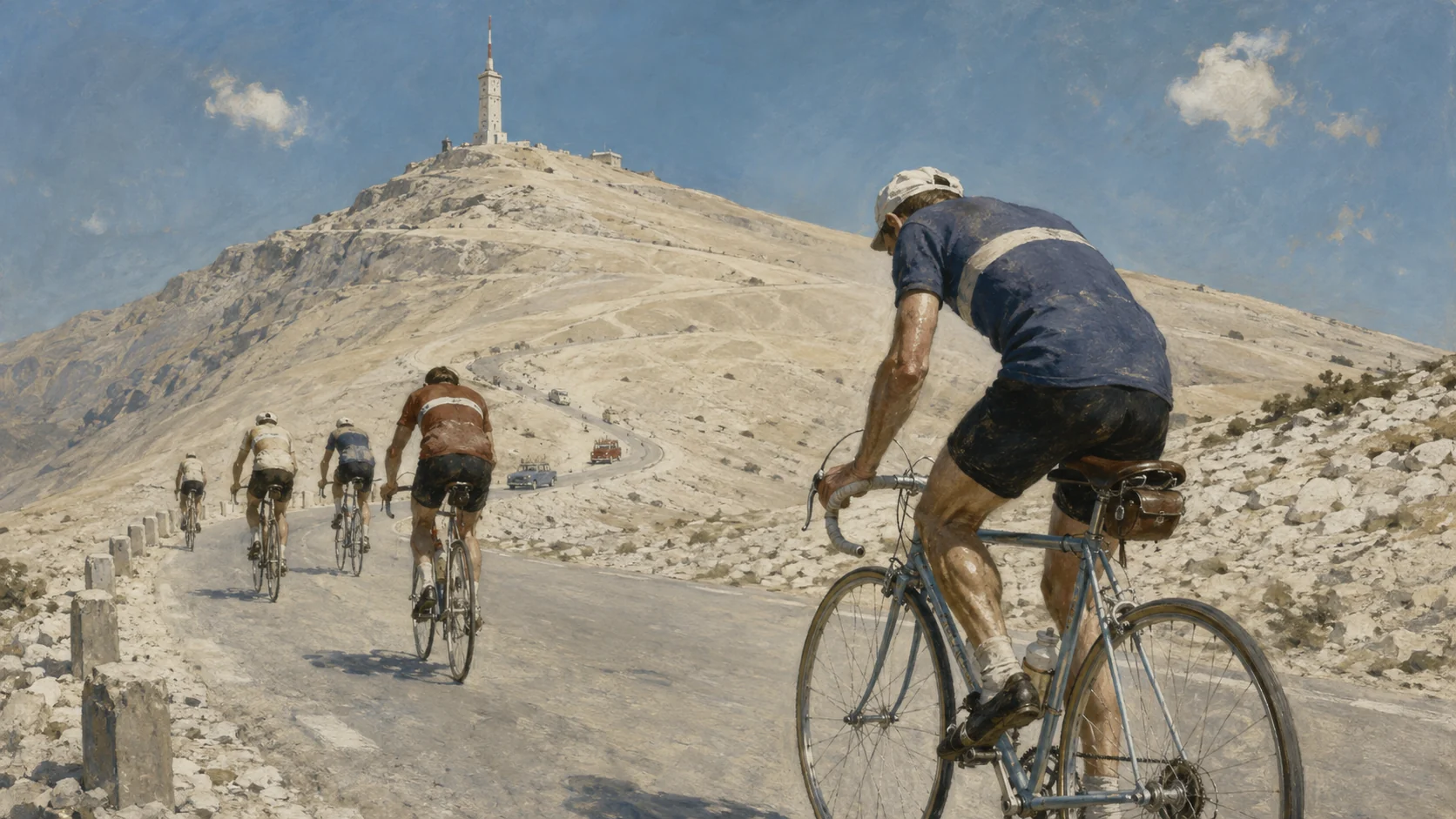
Stage 13 ran from Marseille to Carpentras via Mont Ventoux. Tom Simpson was the 1965 world champion and one of the strongest classics riders of his generation. On the mountain that day, it was not his results but his death that came to follow cycling.
A mountain without shade
Ventoux rises from Provence and ends in a pale, stony landscape without shelter. On 13 July, the heat was severe. Simpson began to struggle on the climb, weaved and fell. He was helped free of the bicycle but wanted to continue. Shortly afterwards he collapsed again. Attempts to revive him failed, and he was pronounced dead after being taken from the mountain.
The final part of the episode has been retold many times and often turned into a heroic scene. It is more soberly understood as evidence of a dangerous norm: a professional rider was expected to continue even as judgement and body began to fail.
Several strains at once
After Simpson’s death, amphetamines and alcohol were found in connection with him, and toxicological findings formed part of the investigations. Stimulants can suppress the body’s warning signs and allow someone to continue longer than the body can tolerate. At the same time, he faced extreme heat, exhaustion and dehydration.
The responsible account is not to name one cause, but to recognise a chain: heat, dehydration, exhaustion and stimulants acted together.
The period’s rules on fluids did not improve matters. Many races restricted when riders could drink, and the belief that water should be rationed still persisted. Medical support also bore little resemblance to that of a modern stage race.
A sport that had already been warned
Simpson’s death did not lead to the first anti-doping rules. France had passed a law in 1965, and the Tour carried out controls in 1966. The riders had even protested against them. But the death made the discussion concrete in a way that legislation and tests had not.
Cycling did not change overnight. Testing methods, medical responsibility and riders’ rights developed over decades and remain disputed. Even so, Ventoux stands as a decisive point because the consequences could no longer remain inside the peloton’s closed culture.
The memorial on the mountain
A memorial now stands near the place where Simpson fell. Riders and spectators still leave bottles, caps and small messages. It has become part of Ventoux, but it also risks turning the death into a romantic story about willpower.
Simpson was not merely the man who died. He had won the world championship, the Tour of Flanders, Milan–San Remo and the Tour of Lombardy. The events of 13 July 1967 should be remembered without hero worship and without a simple moral conclusion: as the day when sporting demands, the medical culture of the period and an unforgiving mountain produced an irreversible consequence.
Sources and image note
The illustration is a contemporary interpretation and is not used as documentation. The account of the cause of death follows the sources’ multifactorial explanation and avoids treating any single factor as the sole cause.
Continue exploring
More from cycling history
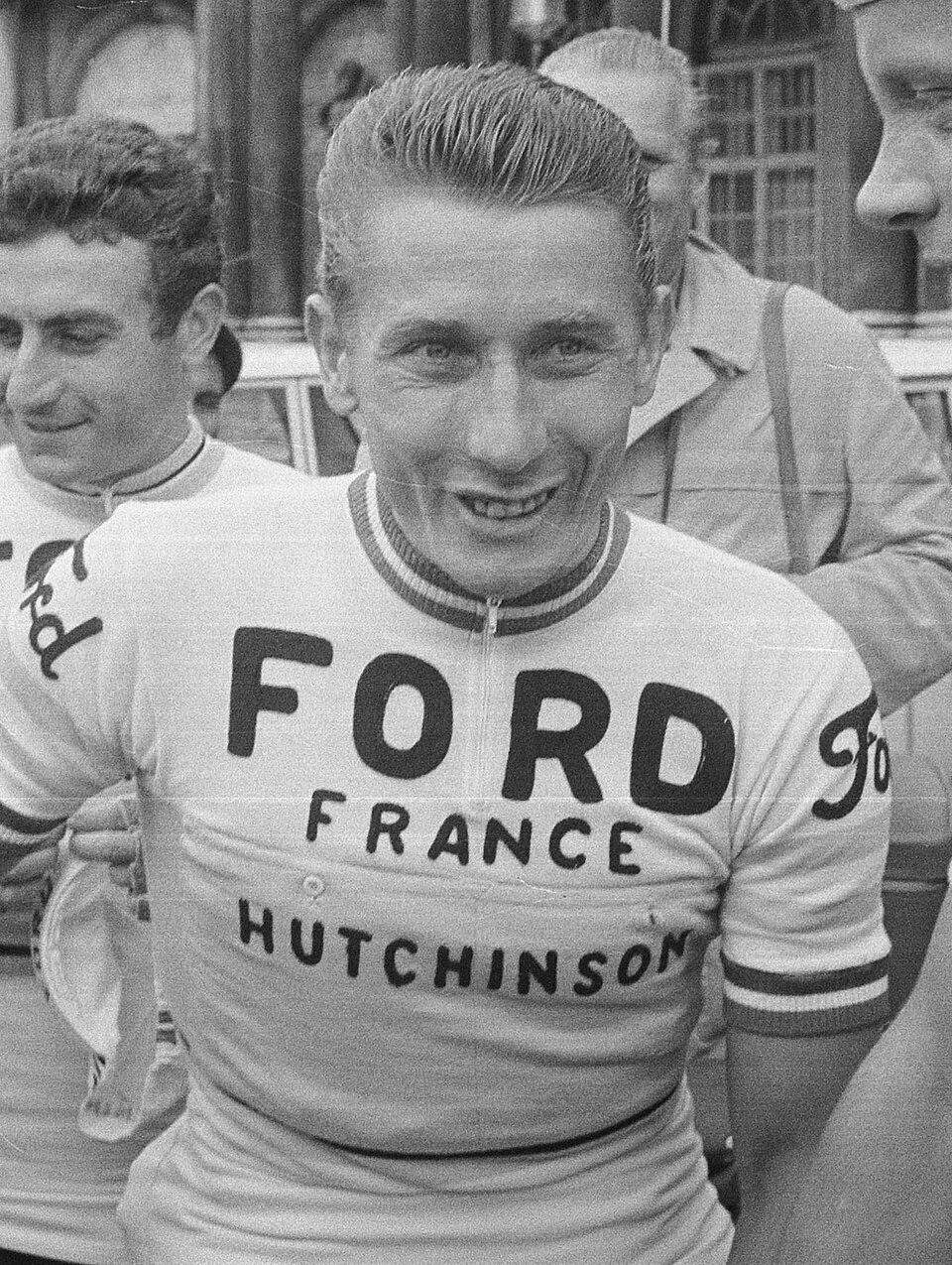
When the Tour peloton protested against doping controls
Shortly after leaving Bordeaux, the riders stopped. New doping controls had entered an old working culture.
Read the story →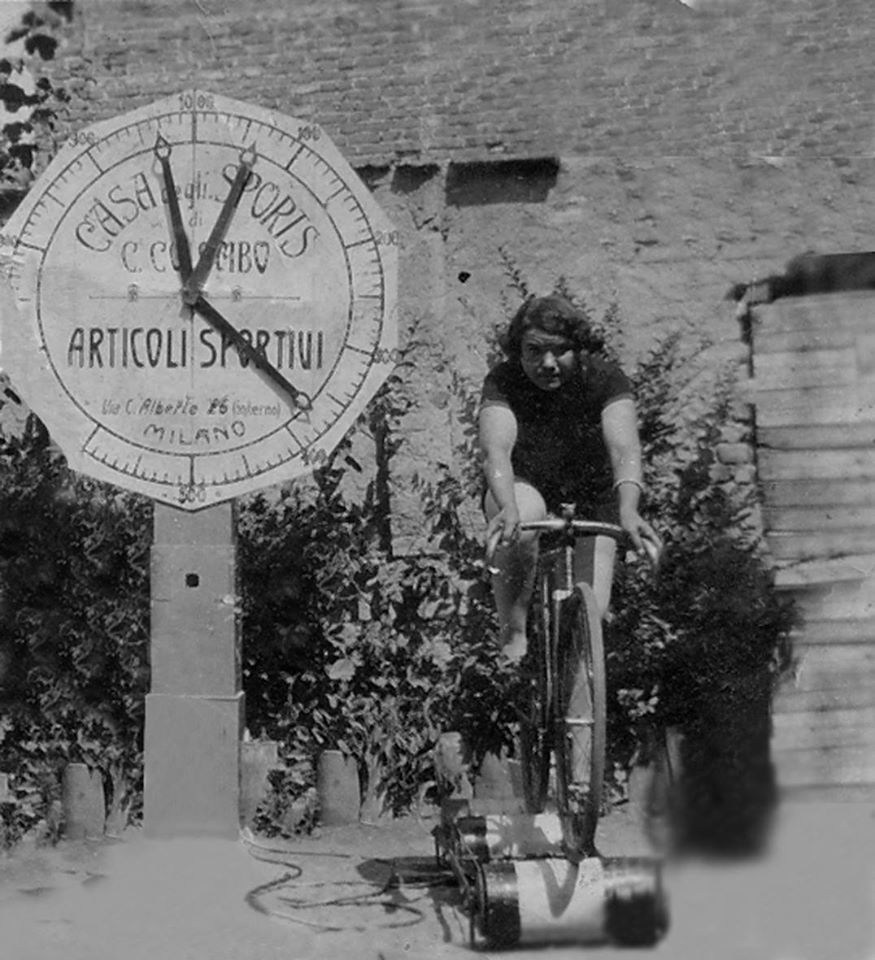
The woman the Giro could not get rid of
Alfonsina Strada arrived outside the time limit in Perugia. Even so, she continued all the way to Milan.
Read the story →
Pioneers and endurance
See the races, people, bicycles and changes that shaped the period.
Explore the period →