2017–2026 · Story
Tour of Guangxi: Six days and one steep finish
For most of the week the sprinters can calculate seconds and positions. Then the road turns into NongLa and the final ramps make the arithmetic rather short.
Born at the top level
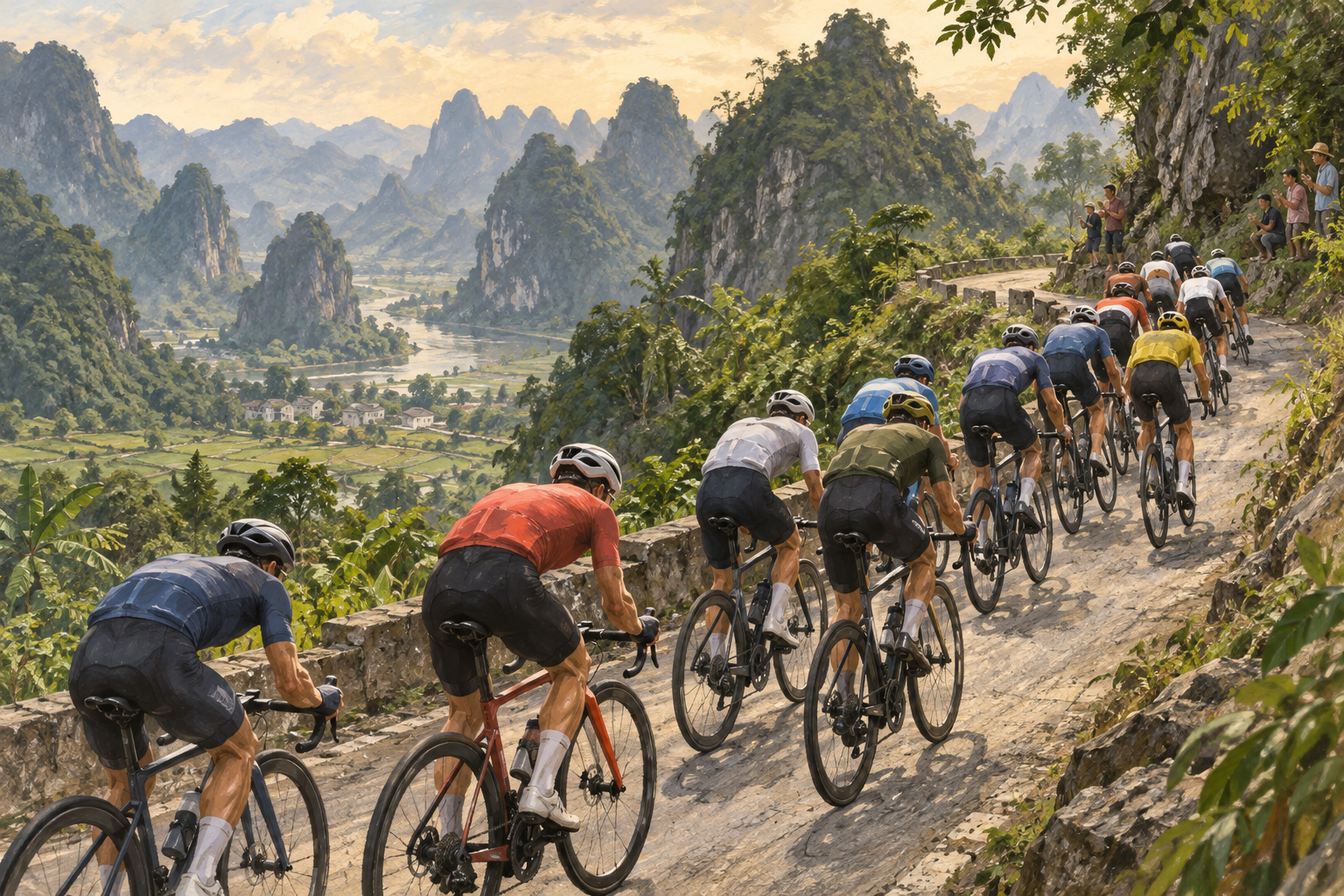
The Tour of Guangxi did not grow slowly from a small local race. In December 2016 the UCI, Wanda Sports and the Guangxi regional authorities agreed to create a new Chinese stage race. Its first edition in October 2017 was already part of the WorldTour.
China had tested the model with the Tour of Beijing from 2011 to 2014. Guangxi was given a different place: at the very end of the season, after the European one-day races, with events for both men and women.
Winners and interruption
Tim Wellens won in 2017, followed by Gianni Moscon in 2018 and Enric Mas in 2019. The race usually rewards a rider who survives the sprint days and still has an explosive effort when the road rises.
The pandemic cancelled the 2020, 2021 and 2022 editions. Milan Vader won the return in 2023, Lennert Van Eetvelt followed in 2024 and Paul Double in 2025. Six editions produced six different winners.
Six stages in 2026
The 2026 race runs from 13 to 18 October over roughly 1,043 kilometres. A 149.4-kilometre circuit around Chongzuo opens the race, followed by 179.7 kilometres to Jingxi and the longest stage, 212.3 kilometres from Jingxi to Bama.
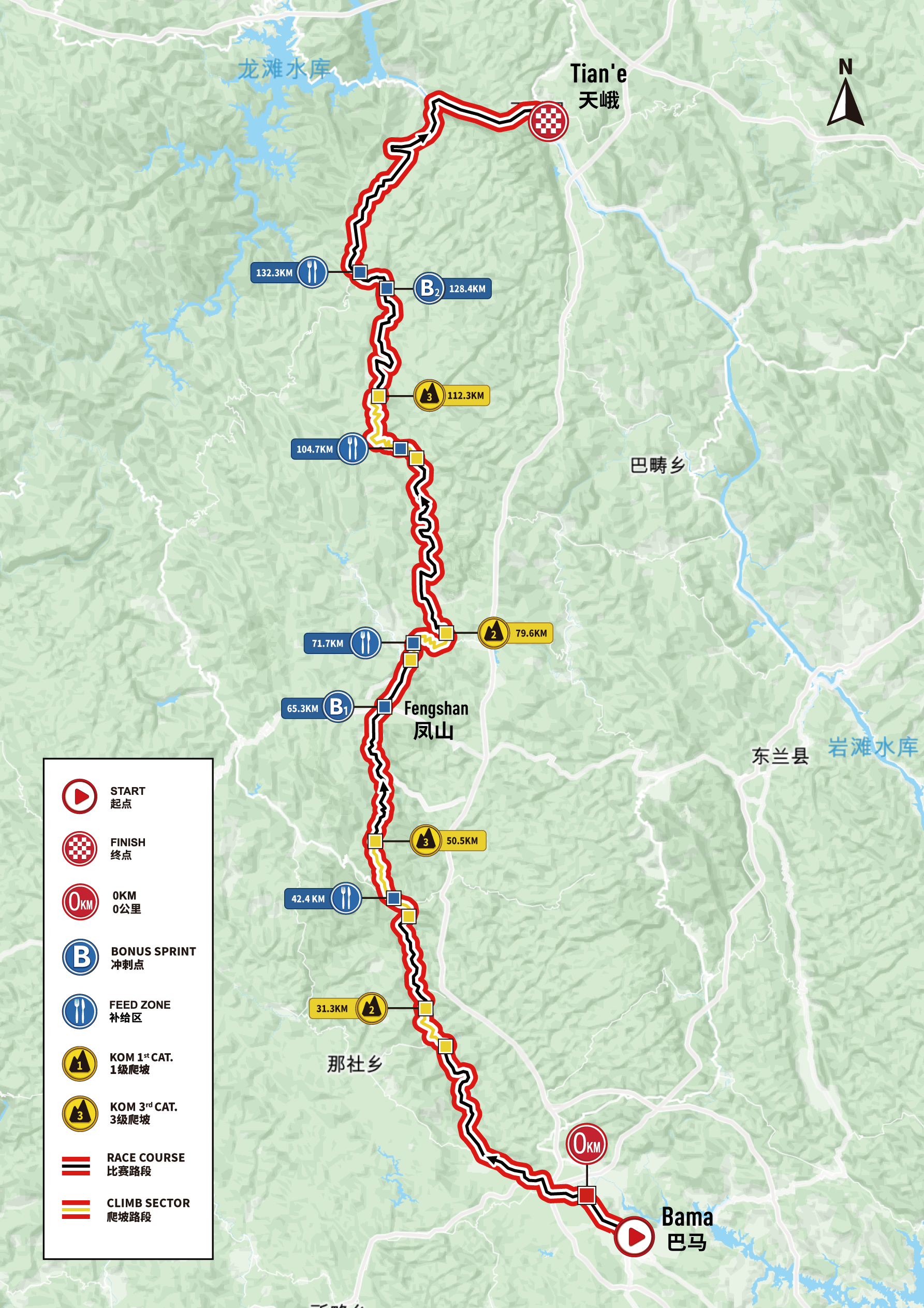
Stage four covers 165.7 rolling kilometres from Bama to Tian’e. Stage five runs 170.1 kilometres from Jinchengjiang to Yizhou, with three classified climbs but a flat finish. It looks like another sprint, provided the teams can control the breakaways.
NongLa takes the seconds
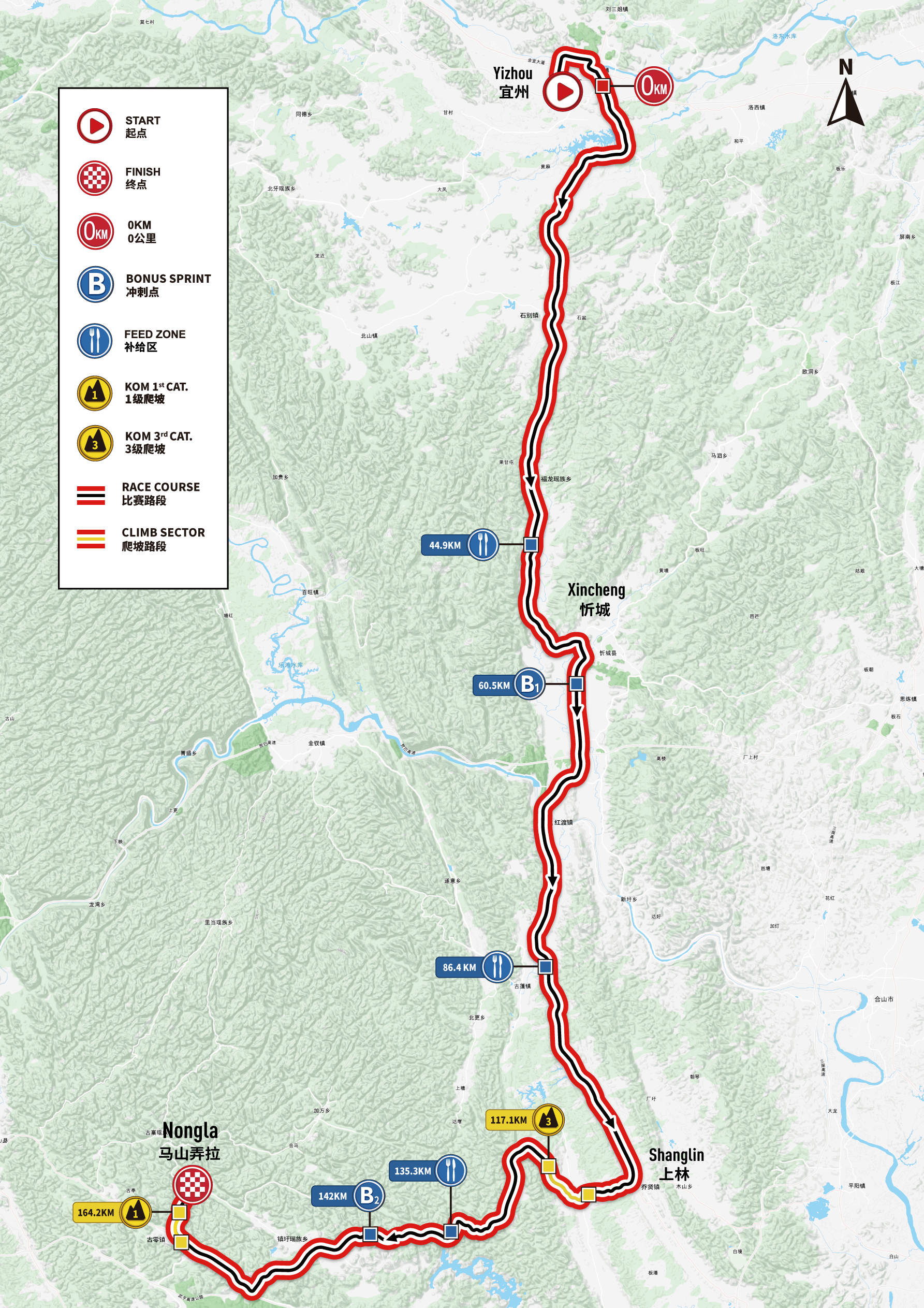
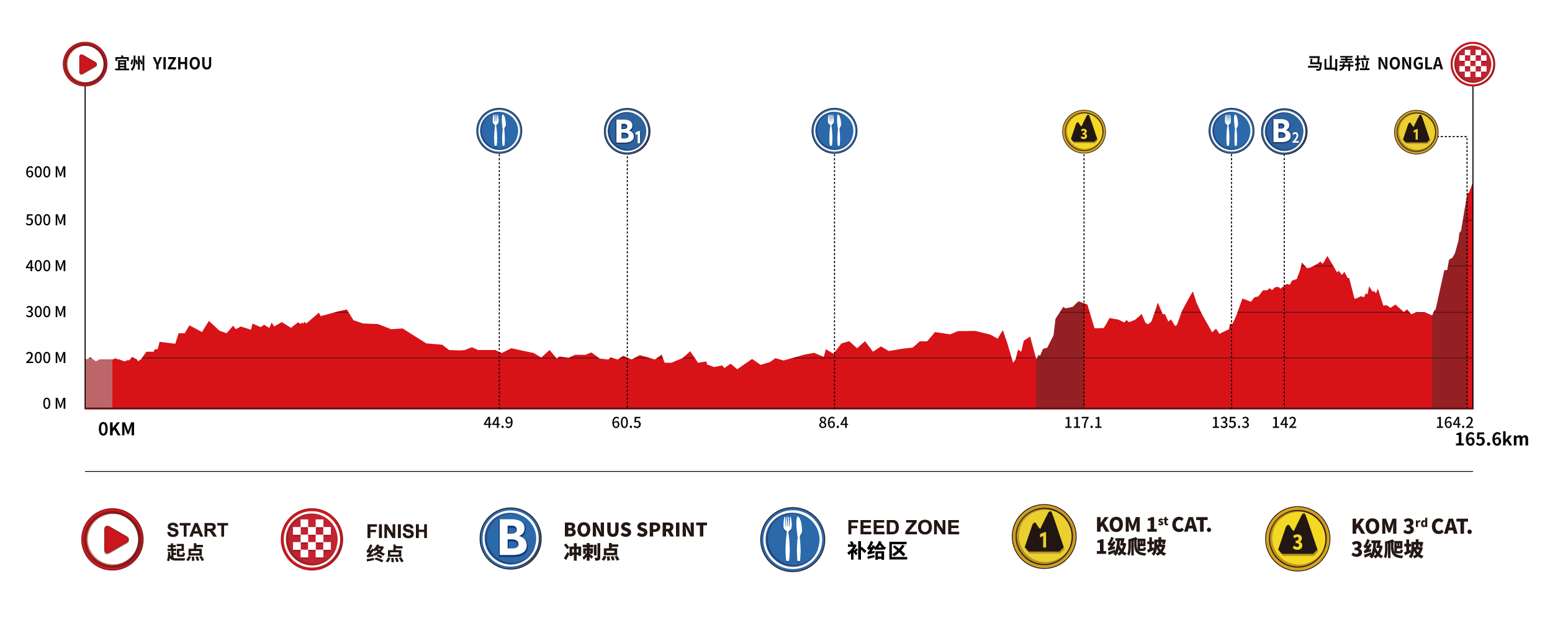
The final stage covers 165.8 kilometres from Yizhou to NongLa. Most of the route is relatively flat before the decisive climb. Depending on where it is measured, the key section is about 3.2 kilometres at roughly 7.3 per cent, with the last 1.2 kilometres approaching 15 per cent at its steepest.
This is not a one-hour diesel climb. It rewards positioning, a fierce lead-in and an effort of three to eight minutes near the limit. Go too early and the ramp becomes very long; wait too long and there is no road left. The winning move often comes inside the final 500 to 800 metres.
Before the start
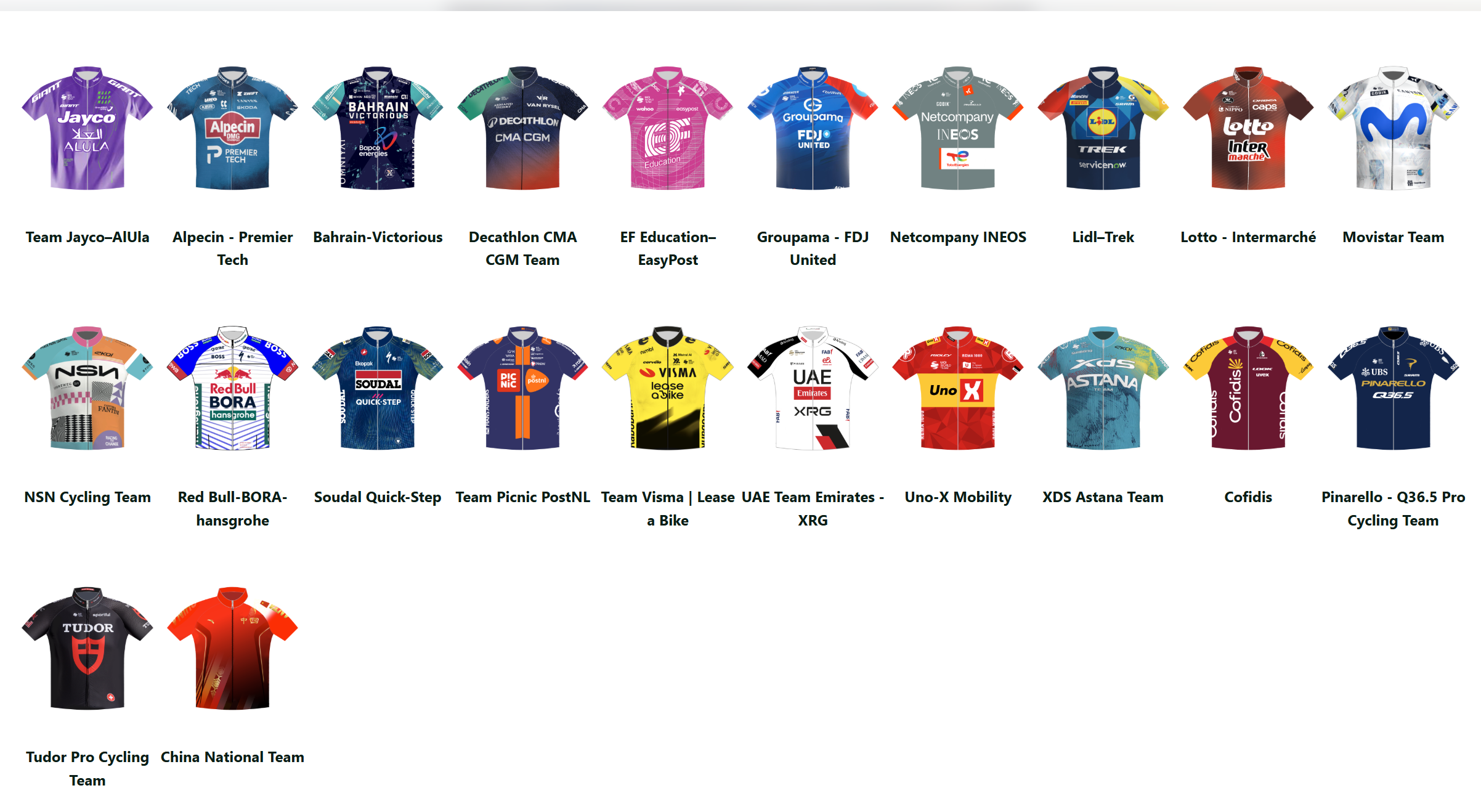
The start list remains provisional. Most WorldTour teams are expected alongside invited ProTeams and the Chinese national team. Tom Pidcock is among the announced contenders, while the provisional sprinter list includes Paul Magnier, Olav Kooij and Jordi Meeus.
The race therefore contains two stories. Five days of sprint trains, crosswinds, breakaways and avoiding needless time loss, then one short road through NongLa. After an entire WorldTour season, three steep kilometres can be enough.
Source and further reading
The image provides historical context. Where it does not depict the specific event, the caption says so.