Yorkshire · 17 September 1967
Beryl Burton, twelve hours
and a liquorice allsort
Mike McNamara was on course for the British men’s record. Then Beryl Burton passed him and offered him a sweet.
After about 235 miles
Burton had caught the fastest man in the event. In her later account, she reached for a liquorice allsort, asked whether he wanted it and rode on.
A race against the clock
The British 12-hour time trial was simple in form and unforgiving in execution: ride as far as possible in twelve hours. Riders started individually, and their distance was measured when time ran out. There was no mass start, no stages and no mountain to provide a natural climax. Only speed, endurance and the same roads, hour after hour.
On 17 September 1967, Otley Cycle Club held its 12-hour event on Yorkshire roads. Among the entrants was Beryl Burton of Morley Cycling Club. She was 30 and already one of the strongest riders of her generation, with world titles on both road and track.
The women started after the men. Burton could therefore catch riders who had begun ahead of her. One of them was Mike McNamara. He was not merely another competitor on the course. He was riding towards a record of his own.
The man with a record in reach
McNamara was on his way to 276.52 miles, a new British men’s record. Burton caught him after about 235 miles. Her autobiography and a later account by her daughter, Denise Burton-Cole, preserve the small scene that followed: Burton found a liquorice allsort and offered it to him. He accepted. She continued.
It was not a grand gesture. That is why it fits the ride so well: In the middle of a record attempt, there was still room to share what she had in her pocket.
The anecdote has been retold with small variations. Its core, however, comes from the Burton family and McNamara’s own confirmation: She caught him, offered him the sweet and covered the greatest distance that day.
When time ran out
277.25 miles
Burton’s final distance was 277.25 miles, about 446.2 kilometres. That is an average of roughly 23.1 mph, or 37.2 km/h, for twelve continuous hours. She did more than improve the women’s record. She rode 0.73 miles farther than McNamara’s new British men’s record.
The result was not produced in a separate women’s race on a shorter course. Burton and McNamara rode the same roads in the same event. When the day ended, she had travelled farther.
It took two years for a man to ride farther in a British 12-hour event. Burton’s women’s record lasted much longer and was not surpassed for half a century.
An unusual measure
She was not compared with the men to make a headline. The distance made the comparison unavoidable.
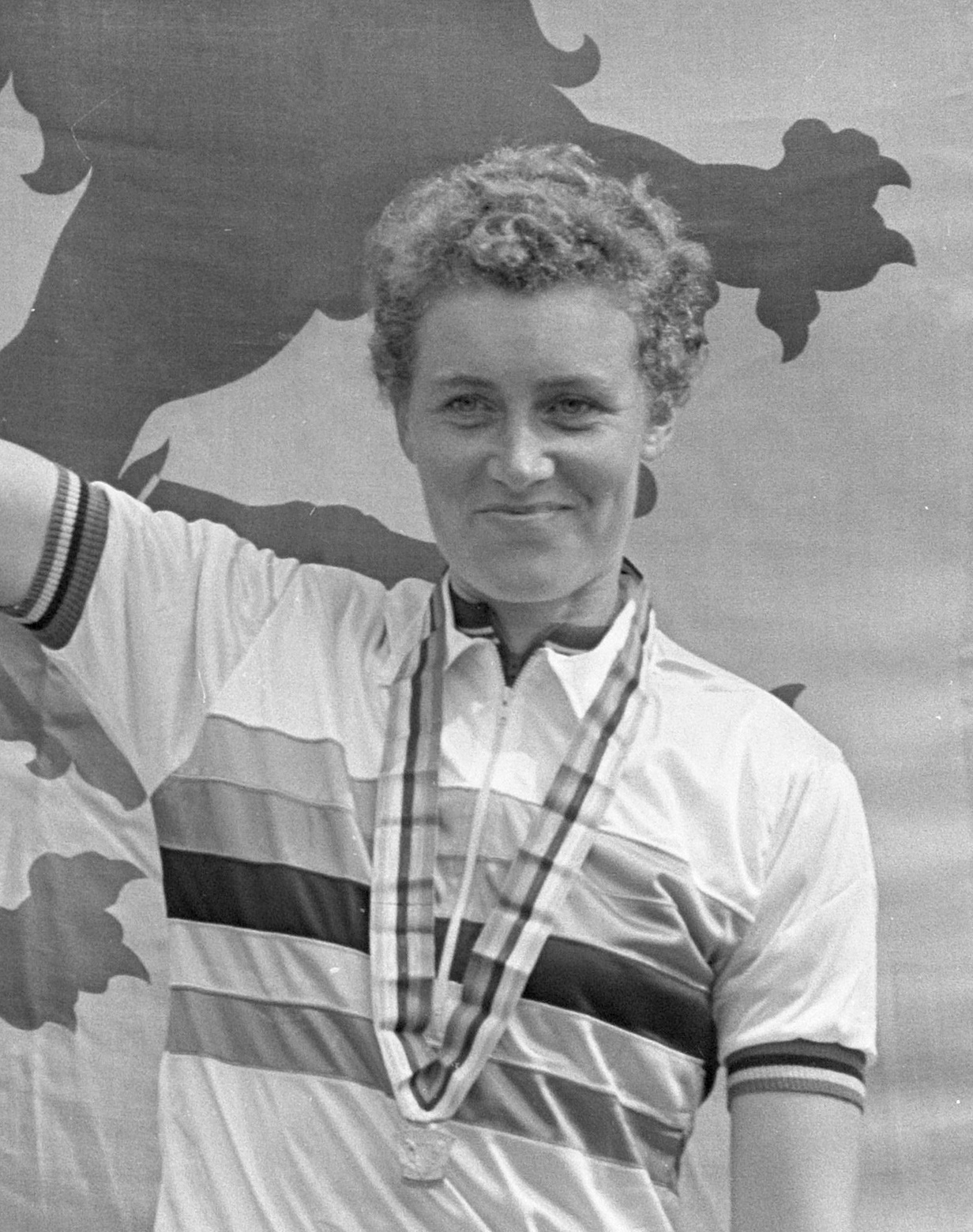
Burton won seven world championships and dominated British women’s cycling for decades. The 12-hour ride nevertheless remains an unusually clear expression of her level. In most events, women’s and men’s results were separated by classes, distances and starting fields. Here, the clock and the road provided a common measure.
The record also says something about the sport of the period. Women had few opportunities for professional support, and women’s road cycling did not enter the Olympic programme until 1984. Burton combined training and competition with work and family life, yet performed at a level the established sport struggled to accommodate.
What remained
The record and the sweet
The numbers are exact: 277.25 miles against 276.52. They explain what Burton did. The liquorice allsort does not explain the result, but it makes the final hours human.
Mike McNamara earned his men’s record. Beryl Burton rode farther. And somewhere on a Yorkshire road, one record rider accepted a small sweet from the other.
Sources and image notes
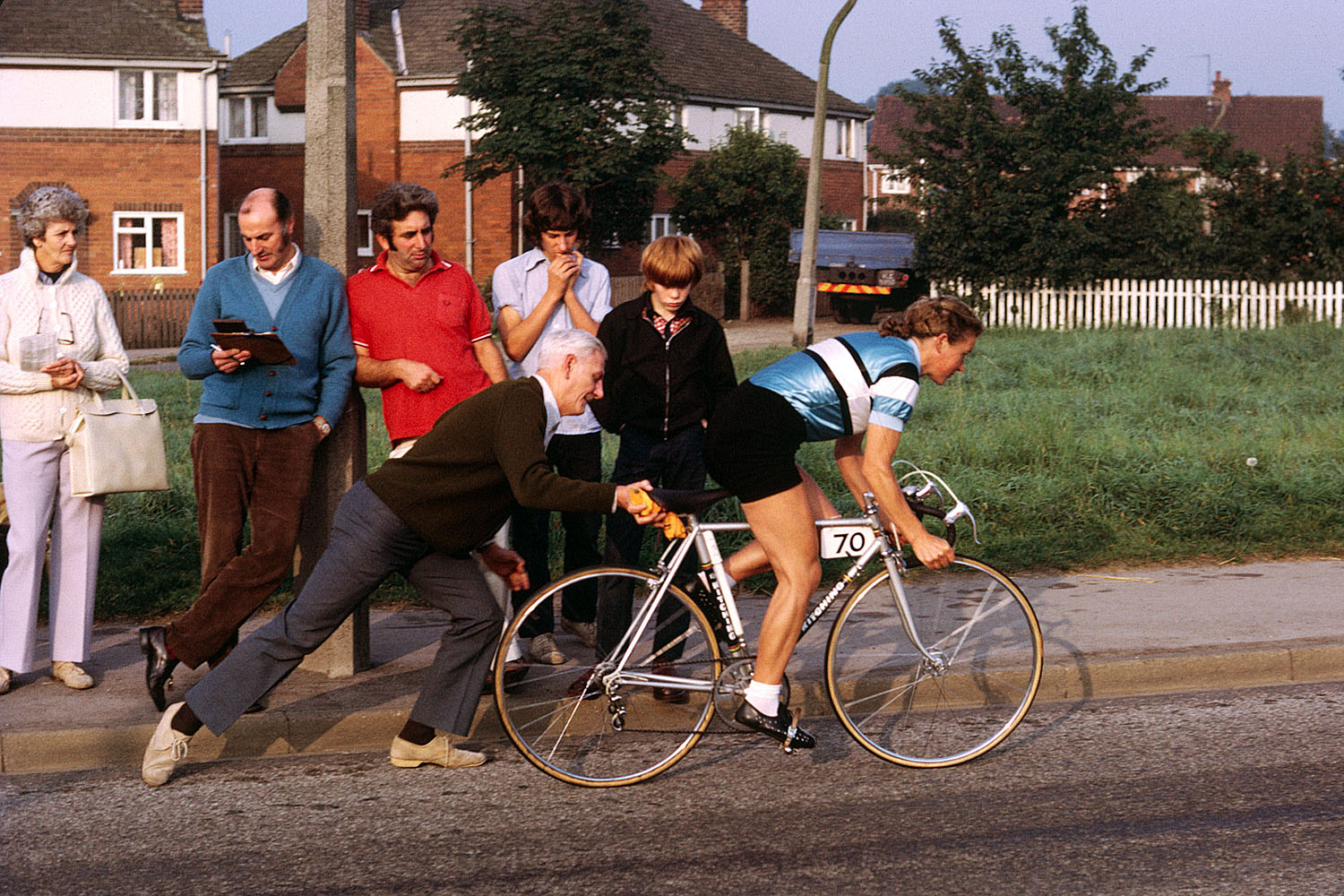
The date, distances and record context have been checked across British cycling-history sources. The liquorice allsort story rests on Beryl Burton’s later account, her daughter Denise Burton-Cole’s retelling and Mike McNamara’s confirmation. Both photographs are freely licensed historical archive images; the exact year of the start photograph is not stated.


Continue exploring
More from cycling history
When the bicycle left its first owner
A gold Favorit F11, its 1960 receipt and a meeting with the man who had kept the bicycle for more than six decades.
Read the story →
When the Tour returned to a hungry France
The Tour returned after the war and had to feed a race over 4,640 kilometres while France cut the daily bread ration to 200 grams.
Read the story →
When the racing bicycle became modern
See the races, people, bicycles and changes that shaped the period.
Explore the period →