Mexico City · 17 October 1968
A world record.
And still only silver.
Niels Fredborg rode the Olympic kilometre in 1:04.61 and equalled the world record. Then he had to wait for the remaining riders.
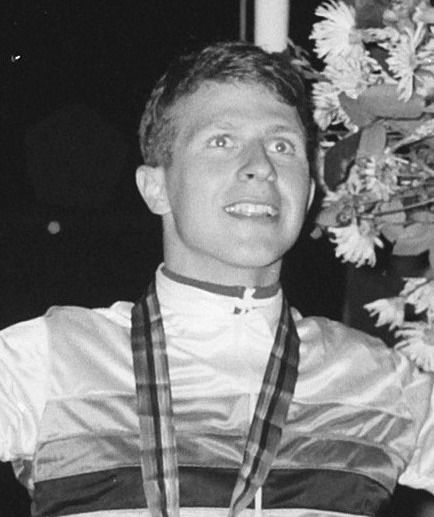
On an ordinary day, equalling the world record is a reasonable claim to first place. Mexico City was not an ordinary day.
Four laps without assistance
The 1,000-metre time trial was one of track cycling's simplest events to explain and one of its hardest to ride. The cyclist started from rest. There was no opponent alongside and no sprint for which to save energy. The clock started, and after four laps everything had been spent.
Fredborg knew the work. He had begun at Aarhus Velodrome in 1962 at the age of fifteen, requiring special permission because of his age. He set a record in his novice test. Five years later he won the world kilometre title in Amsterdam.
He therefore arrived at the 1968 Olympics as the reigning world champion and one of the favourites. The velodrome stood about 2,240 metres above sea level. Thin air reduced drag, and the times fell so sharply that old comparisons became nearly useless.
64.61 seconds
Thirty-two riders started. Italy's Gianni Sartori, second in the order, recorded 1:04.65 and beat the existing Olympic record. Fredborg followed immediately. His splits were 16.80, 28.50, 40.20 and 52.70 seconds. At the finish the clock read 1:04.61.
That was exactly the world record Sartori had set in Mexico the previous year. Fredborg had equalled the fastest official time and taken the Olympic record. He moved into the lead and could do nothing more.
The particular cruelty of a time trial is the waiting. Fredborg watched name after name. The first 23 starters could not beat him. Several came close: Roger Gibbon rode 1:04.66 and Poland's Janusz Kierzkowski 1:04.63. Two hundredths separated silver from bronze.
Rider number 24
France's Pierre Trentin was no outsider. He had taken bronze in the event at the 1964 Olympics and won the 1966 world title. Starting 24th, he recorded 1:03.91. For the first time an official result had gone below 64 seconds.
Trentin took both the world record and Olympic gold. In practical terms, Fredborg's world record had survived eleven more starters. In the result it remained an Olympic record because it was faster than any previous Olympic time. It was still only second place.
Altitude explains some of the speed: the first seventeen finishers all broke the old Olympic record. But altitude did not turn the pedals. Fredborg beat thirty riders and equalled the existing world record under the same conditions as Trentin.
A silver medal between two world titles
It is tempting to describe the silver as failure because Fredborg was favourite. The calendar tells a different story. He had won the world title in 1967. Only sixteen days after the Olympic race, he won the kilometre world championship again in Montevideo and also took sprint silver.
He won the kilometre world title once more in 1970. Olympic gold followed in Munich in 1972 and bronze in Montreal in 1976. He therefore won a medal in the event at three consecutive Games: silver, gold and bronze.
The Mexico silver was not the story of a rider who fell short. It was one kilometre in a long period when Fredborg belonged among the world's best. On 17 October 1968, he was good enough to equal the world record. He had simply started before Pierre Trentin.
Sources and image notes
- Olympedia: 1,000-metre time trial at the 1968 Olympics
- Aarhus Velodrome: Niels Fredborg
- Lex: Danish Olympic and world champions in cycling
- UCI: Track World Championship results
- Wikimedia Commons: Niels Fredborg 1967

Alternative illustration: A clearly labelled illustration of a Danish track rider in 1968, seen low from the infield of an outdoor Mexico City velodrome; simple steel frame, conventional spoked wheels, toe clips and no modern aero equipment.
Continue exploring
More from cycling history
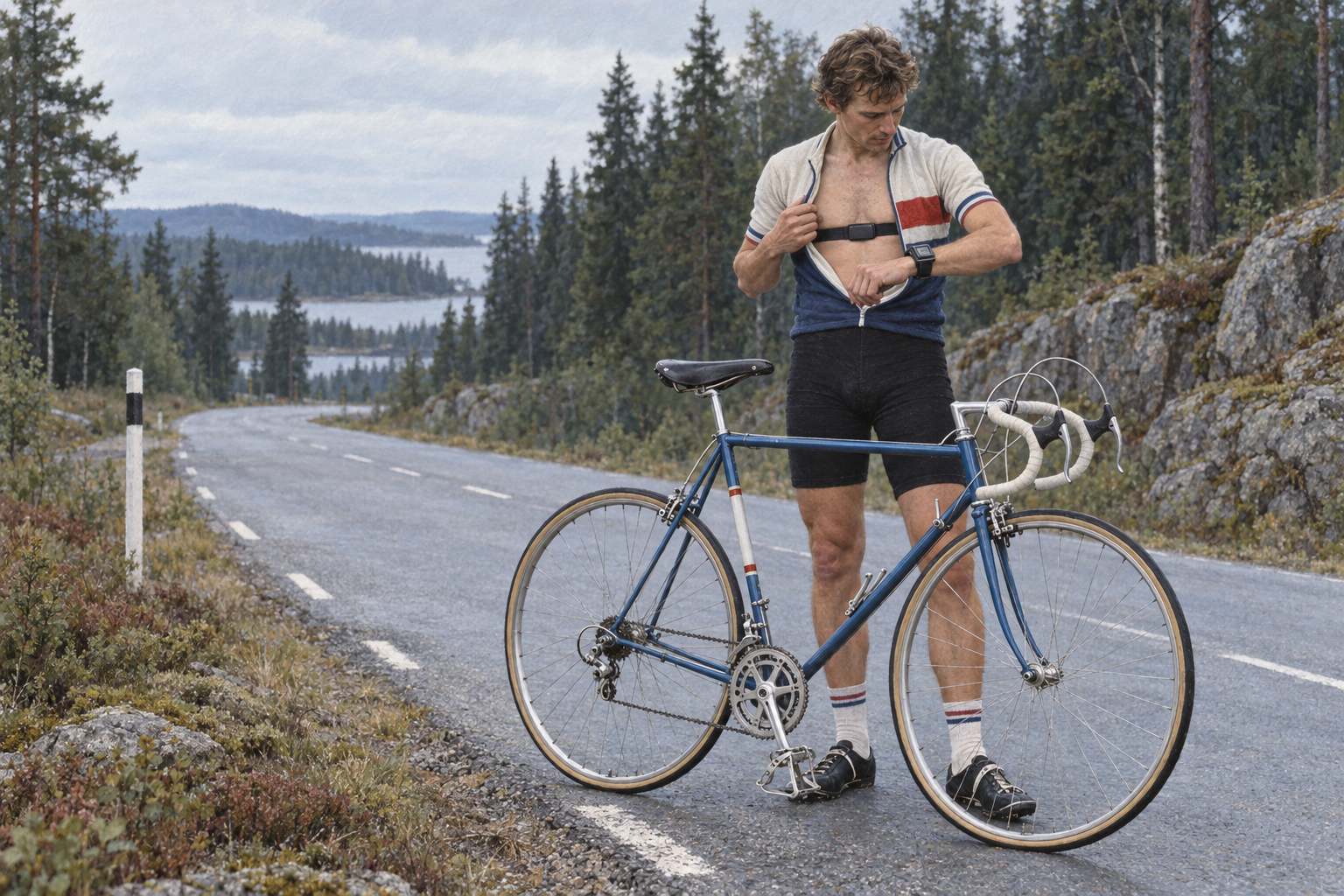
When heart rate joined the rider on the road
A chest strap and a small wrist receiver made it possible to follow the heart without laboratory cables. Training acquired a new number to discuss.
Read the story →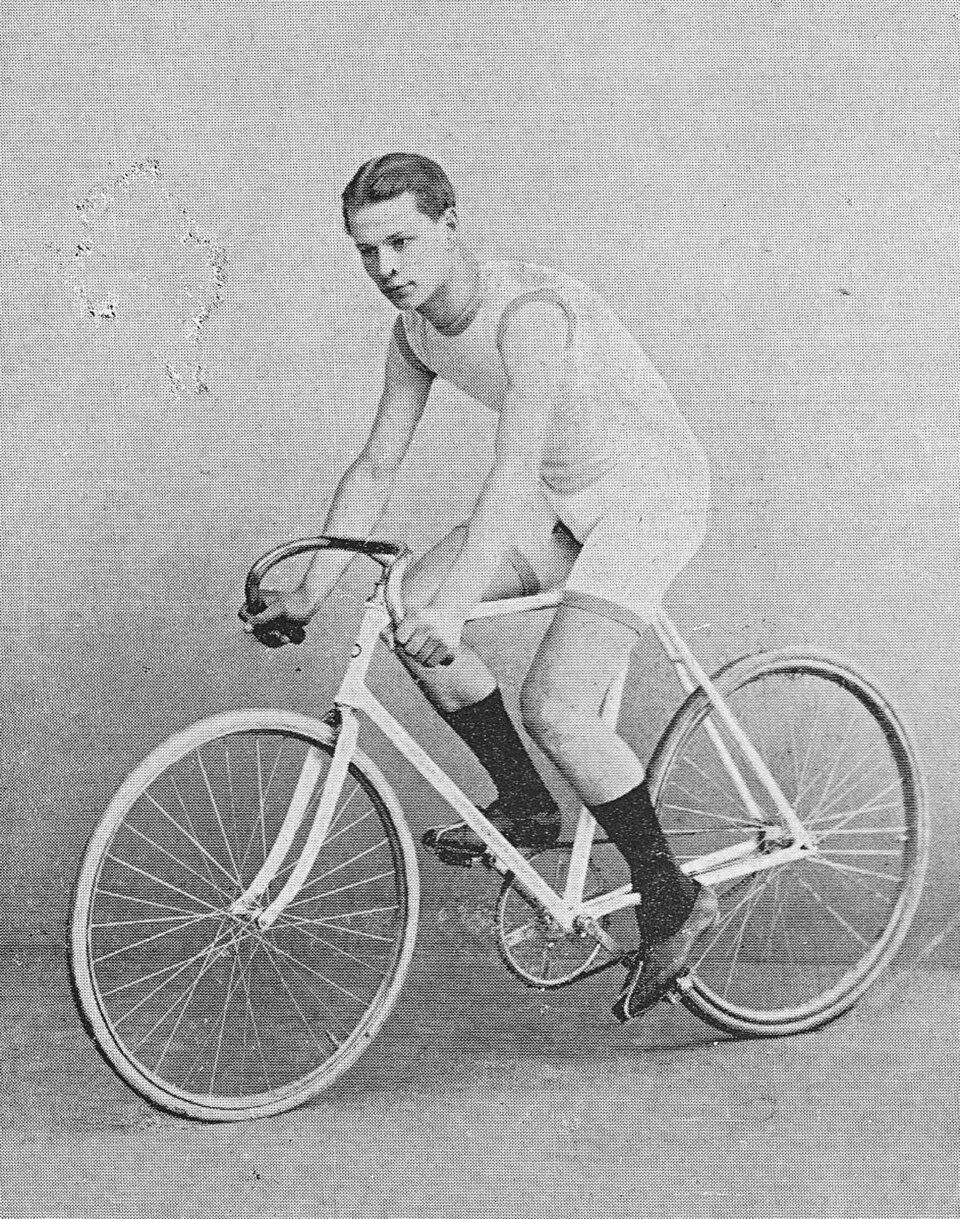
From Paris–Roubaix to spark plugs
Albert Champion won Paris–Roubaix at twenty. His work and a dispute over his name later produced two American spark-plug brands: Champion and AC.
Read the story →
When cycling became a control room
See the races, people, bicycles and changes that shaped the period.
Explore the period →