Races and great moments · Giro d’Italia · 1988
When the summer peloton rode into snow
The stage began in rain on 5 June. On the Passo di Gavia the road was white, hands were numb and the line between continuing and stopping almost disappeared.
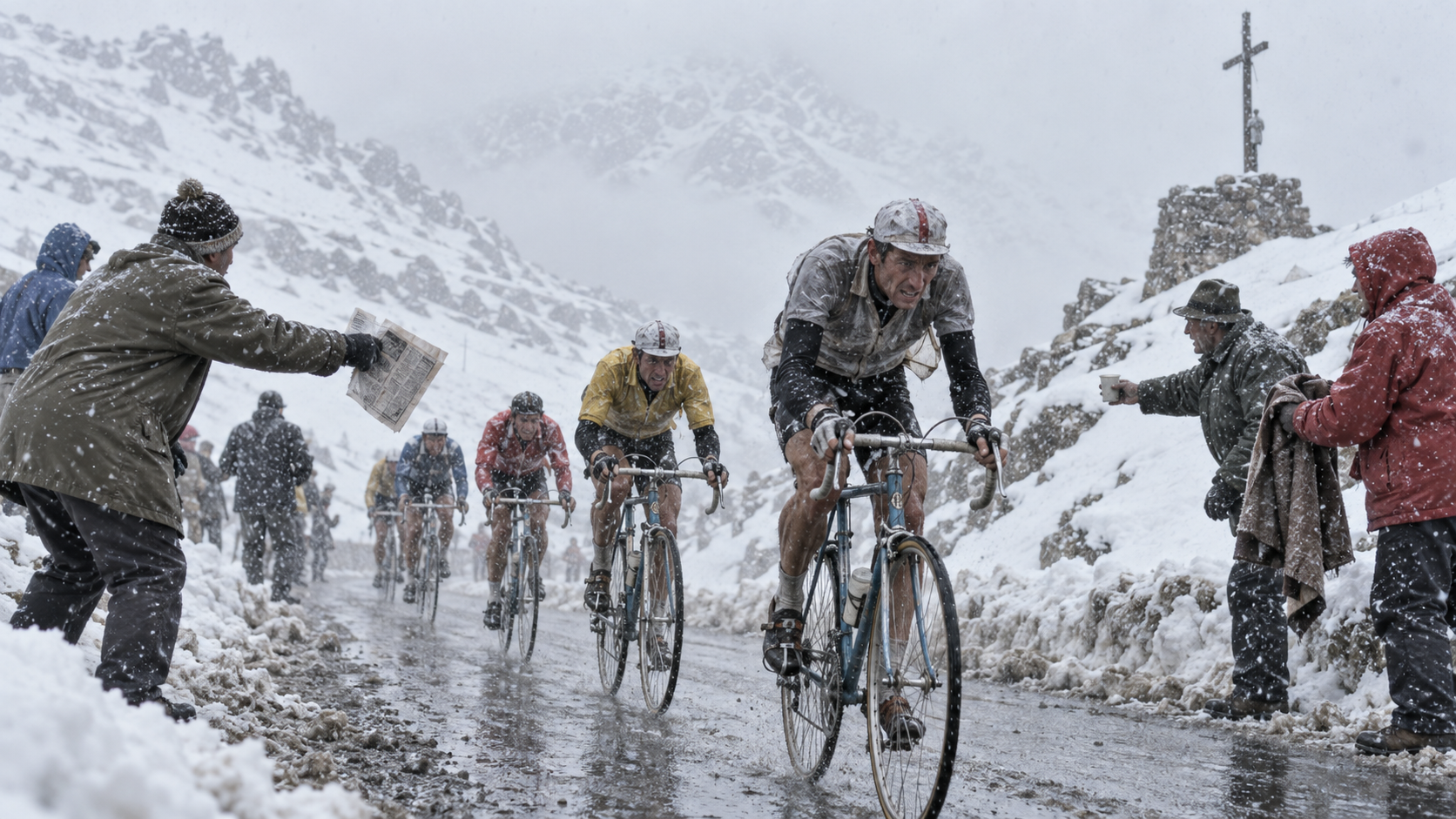
The stage began in rain on 5 June. On the Passo di Gavia the road was white, hands were numb and the line between continuing and stopping almost disappeared.
A short stage on paper
The 120 kilometres from Chiesa in Valmalenco to Bormio looked modest. Rain in the valley turned to snow above. The Gavia was not yet the broad, controlled mountain road a modern race would prefer.
Van der Velde first over
Johan van der Velde reached the summit first. On the descent he sought shelter in a camper and eventually lost 47 minutes. This was not an ordinary tactical collapse. Cold made clothing, braking and judgement part of one problem.
Breukink won, Hampsten took pink
Erik Breukink won in Bormio. Andy Hampsten arrived just behind and took the pink jersey by 15 seconds. He kept it to the finish and became the Giro’s first American winner.
The helpers beside the road
Extra clothing, warm drinks and hands from team staff could make the difference, but support was uneven on a mountain with riders scattered across it. Soigneurs and mechanics became as important as gearing.
The image that remained
Gavia 1988 is remembered as heroic, but the cold was not scenery. It was a genuine danger. The stage endured because it showed both the riders’ resolve and the limit of what a race can ask.
Sources
Continue exploring
More from cycling history
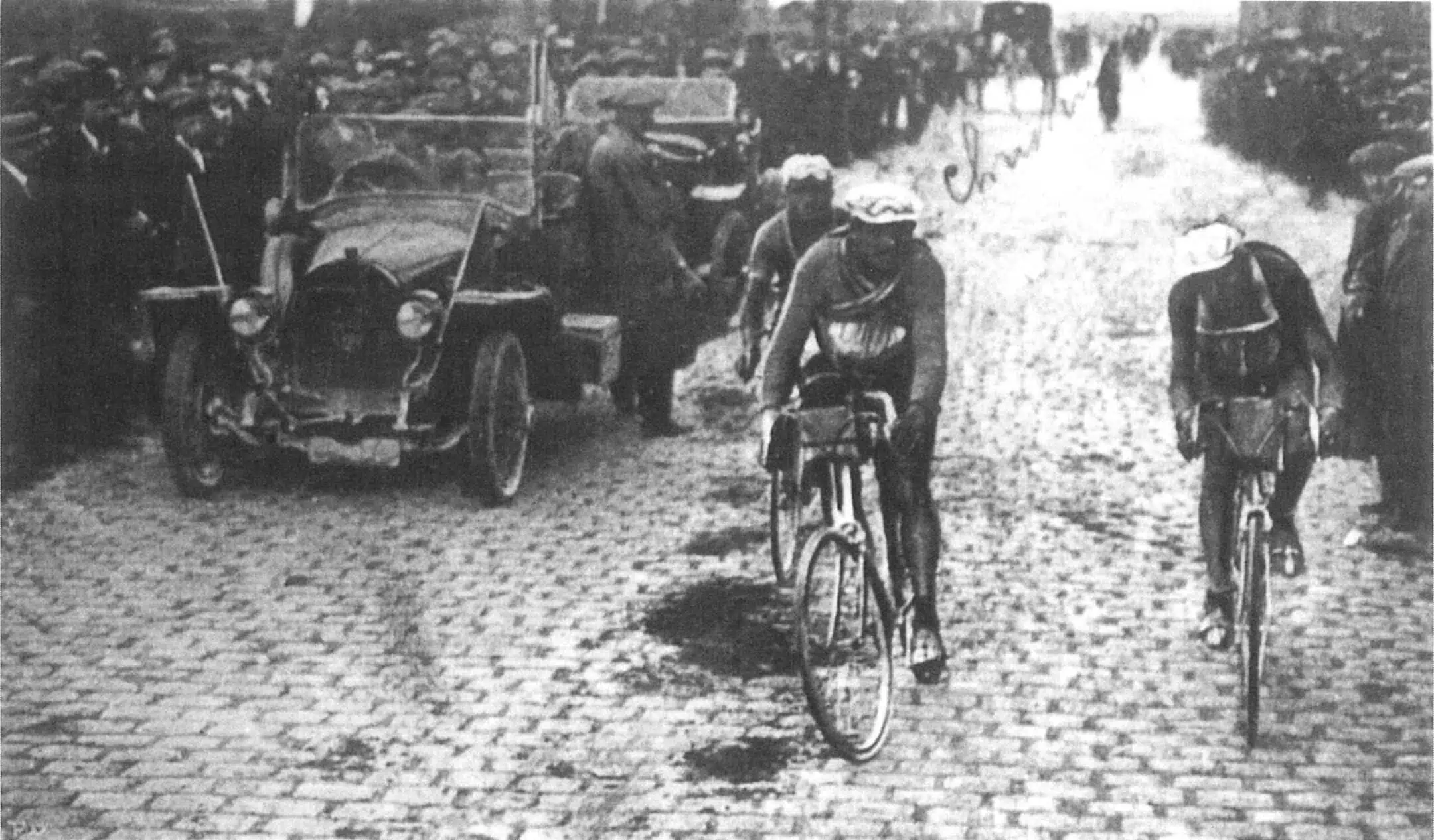
Christian Christensen – out of the Tour, but on to Paris
Christian Christensen missed the time limit in the 1913 Tour. Later accounts describe how the Danish dairy worker continued to Paris outside the classification.
Read the story →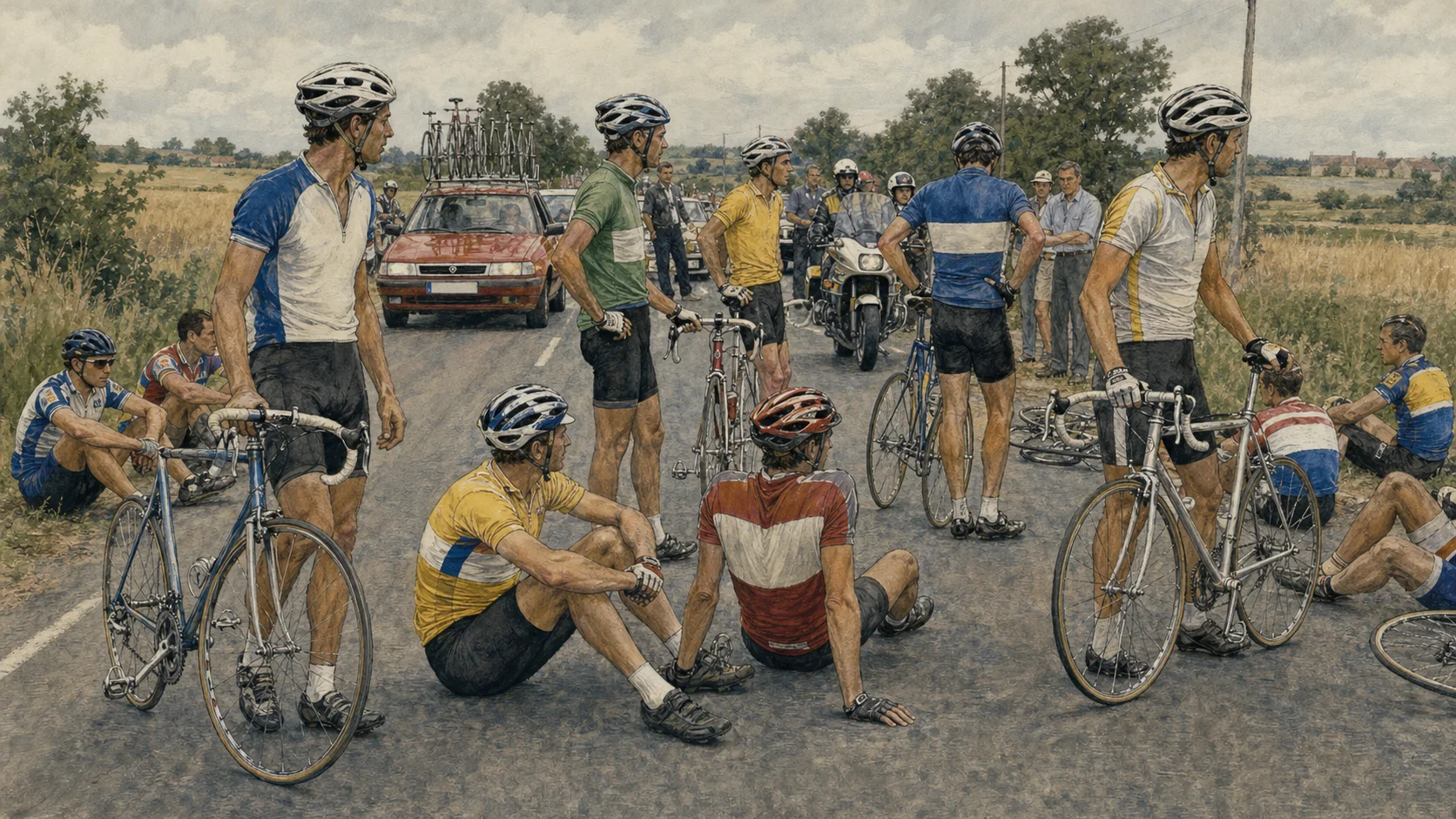
When the Festina affair brought the Tour de France apart
A car full of doping products was stopped before the Tour. Three weeks later a team was expelled, riders were protesting and the peloton was nearly halved.
Read the story →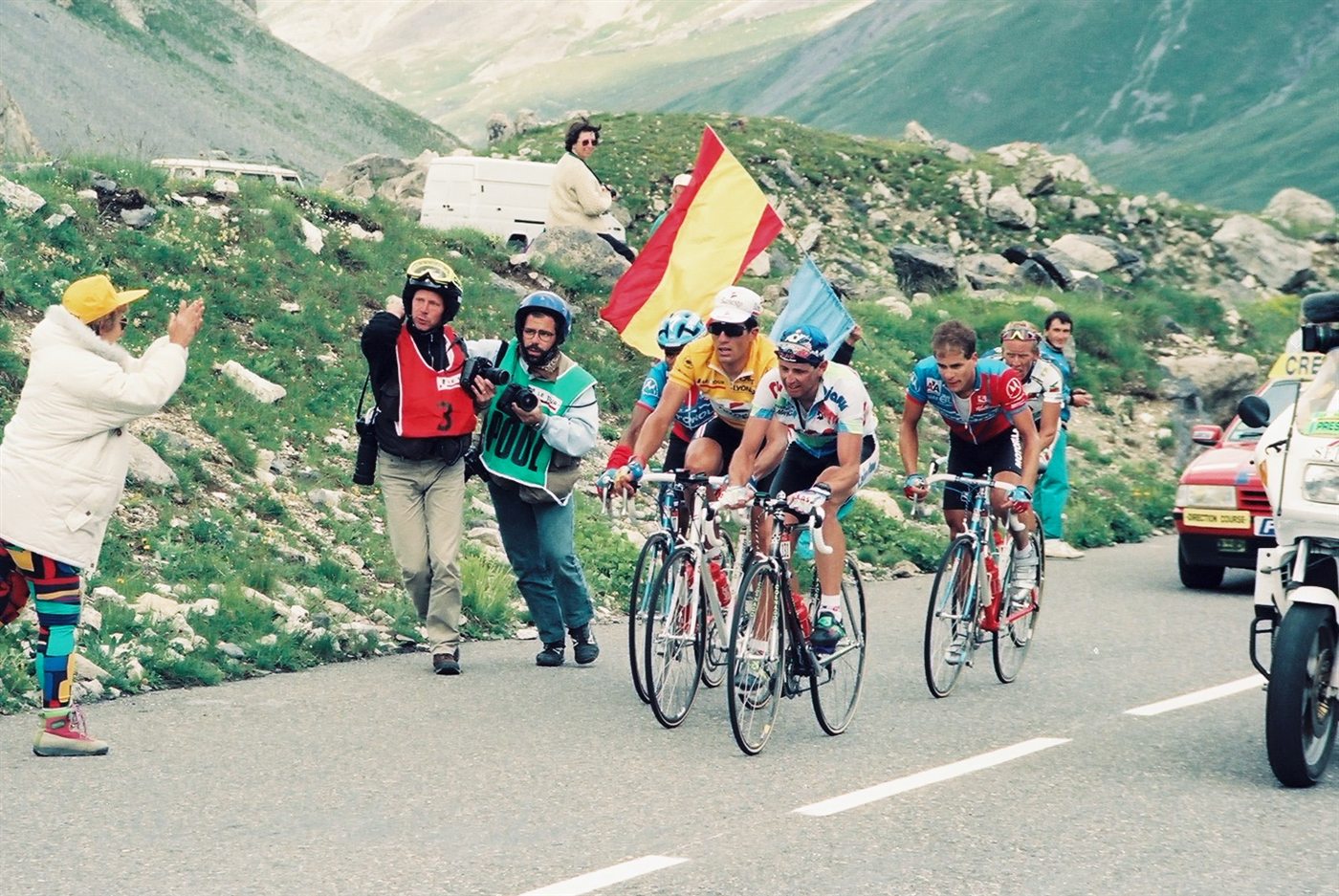
When shifting moved to the handlebars
See the races, people, bicycles and changes that shaped the period.
Explore the period →