Bicycles and technical change · Gears · 2015
When the gear cable disappeared
SRAM RED eTap moved the signal between the controls and derailleurs through the air. It changed operation, installation and the appearance of the racing bicycle.
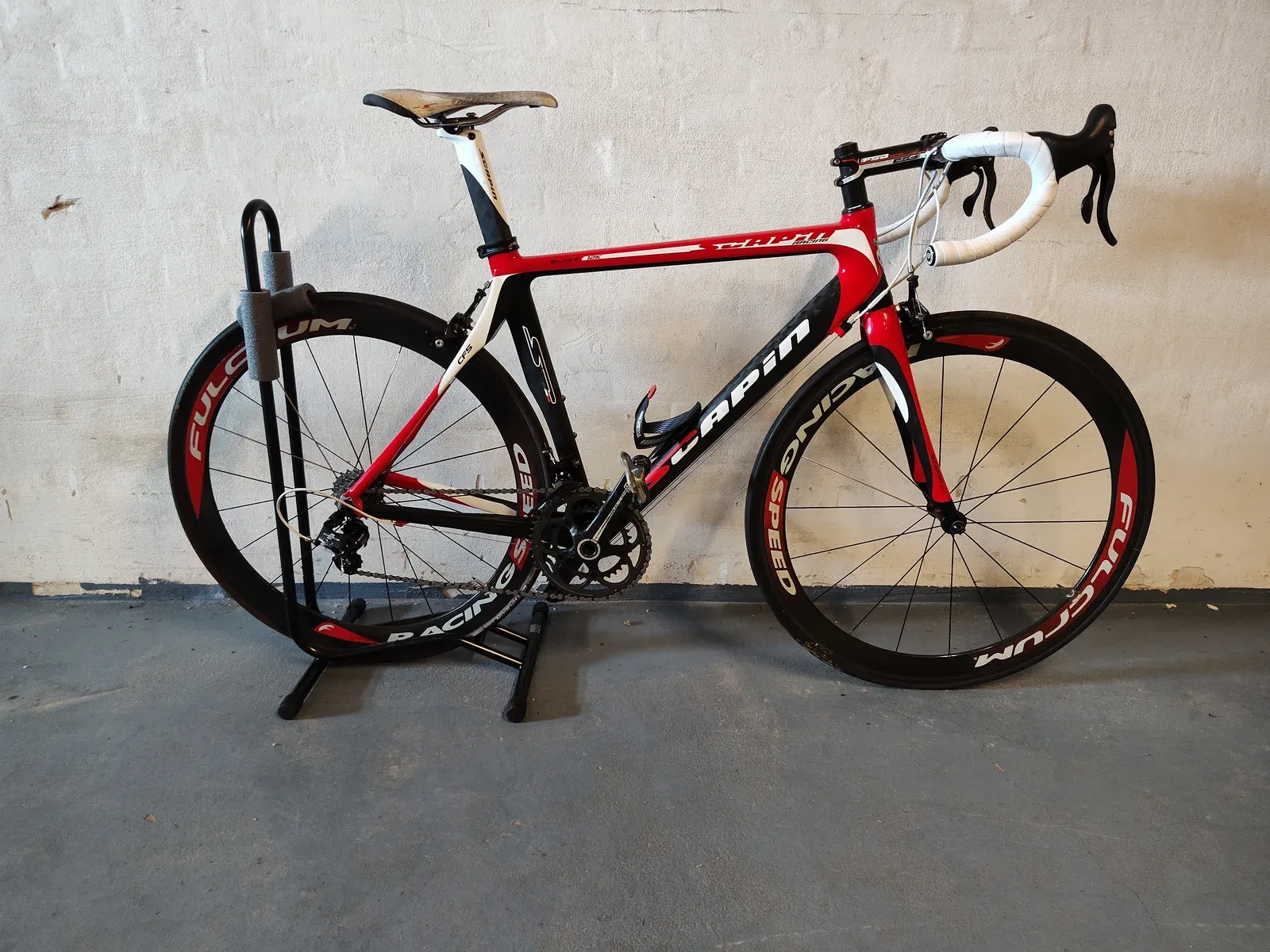
SRAM RED eTap moved the signal between the controls and derailleurs through the air. It changed operation, installation and the appearance of the racing bicycle.
Electronic was no longer new
Shimano had already made electronic shifting dependable in professional racing, and Campagnolo followed with EPS. Those systems used wires between controls, battery and derailleurs. SRAM chose another route.
A signal without a cable
RED eTap was announced in 2015 as a wireless 11-speed road group. Each control sent a coded signal, while front and rear derailleurs had their own batteries. SRAM called the connection Airea; it was neither ordinary Bluetooth nor ANT+.
Left easier, right harder
Operation was deliberately simple: the left control moved to an easier sprocket, the right to a harder one, and both together operated the front derailleur. Fewer commands made mistakes with cold fingers less likely.
A mechanic’s new work
Without gear cables, setup became easier on frames with complicated internal routing. Charging, pairing, battery status and software entered the toolbox instead. Mechanical adjustment did not disappear; it gained radio signals as company.
The clean frame
Wireless shifting suited the decade’s integrated carbon bicycles. Fewer cables gave designers more freedom and produced a cleaner appearance. Within a few years the system moved from novelty to a normal option on performance road bicycles.
Sources
Continue exploring
More from cycling history
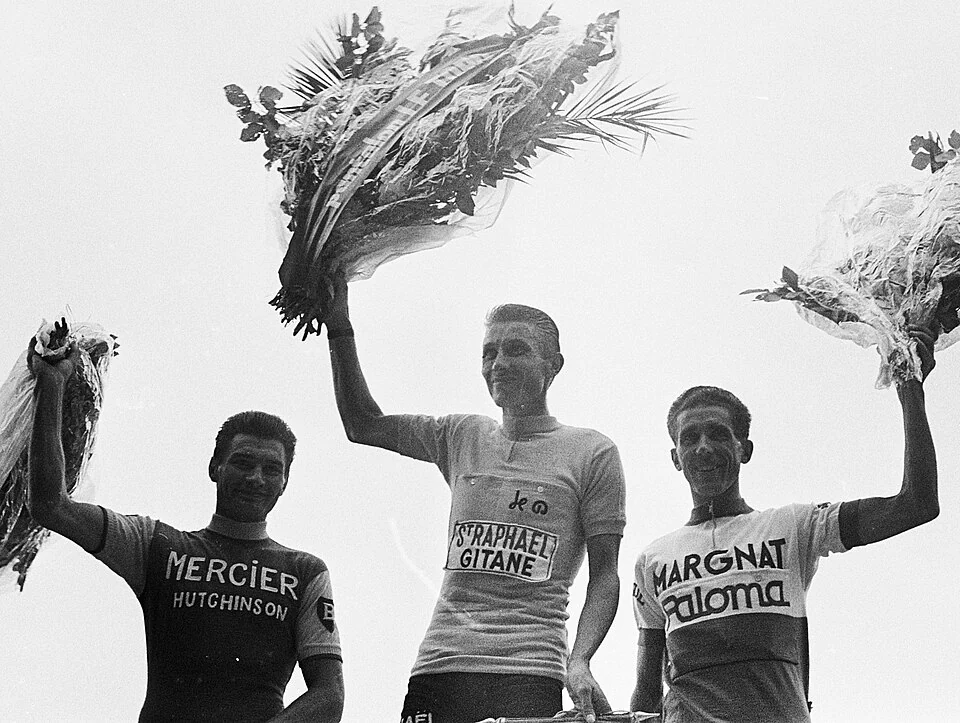
When Anquetil and Poulidor rode shoulder to shoulder
Poulidor won the duel on the Puy de Dôme, but Anquetil kept the yellow jersey by fourteen seconds.
Read the story →
The yellow jersey disappeared down the mountainside
Wim van Est crashed over the Aubisque and was hauled back up with an improvised rope made from inner tubes.
Read the story →
When the racing bicycle became modern
See the races, people, bicycles and changes that shaped the period.
Explore the period →