Technology · Danish frame building · 1990–2007
Principia and the Danish aluminium dream
Three triathletes in Aalborg began welding the aluminium frames they could not afford to buy. Within a few years, Principia was racing far beyond the basement workshop.
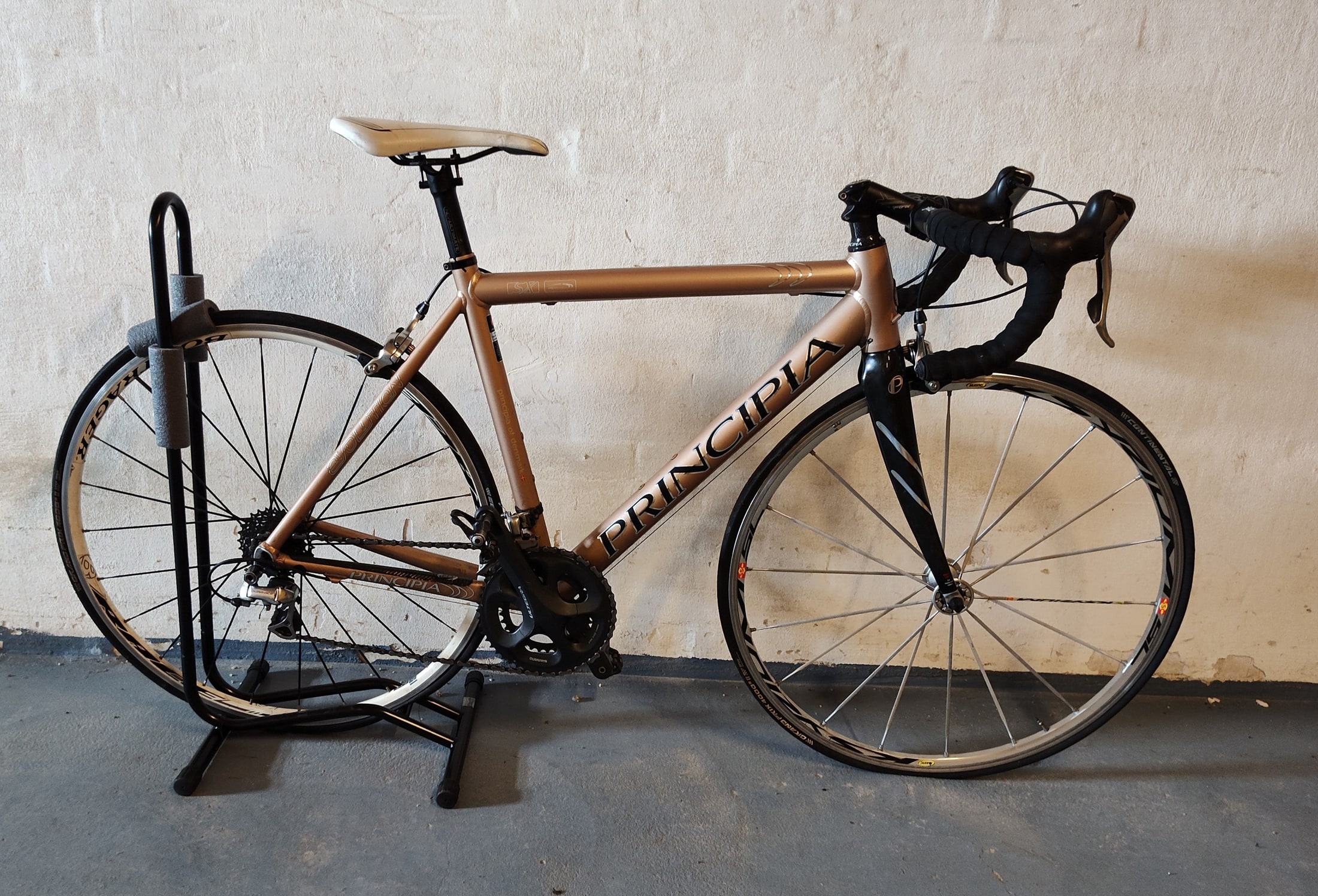
Three triathletes in Aalborg began welding the aluminium frames they could not afford to buy. Within a few years, Principia was racing far beyond the basement workshop.
It began with three triathletes
Around 1990, three young triathletes in Aalborg faced a simple problem. They wanted light, stiff aluminium frames like those from the United States, but could not afford them. Their solution was to try making their own. They began welding frames in a basement workshop, first for themselves and then for others. One of the three was Gert Spender Andersen, who later told the story on Principia’s own website.
Stiffness divided by weight
Principia made the relationship between stiffness and weight a working principle and called it STW — stiffness to weight. The large, round aluminium tubes were not merely a visual choice. A larger diameter could make a tube stiffer without the same weight increase as a correspondingly thicker tube. The material also demanded careful welding and heat treatment if the frame was to last.
7020 and the road to Germany
The company continued with 7020 aluminium and sent frames for testing in Germany. Principia’s own history describes good results in German cycling magazines as the opening to the export market. It was a decisive step: the small Danish maker was no longer measured only against domestic workshops, but against established European and American brands.
A Danish bicycle in the Giro
In 2000, the Linda McCartney Racing Team rode Principia bicycles. David McKenzie won the 182-kilometre Giro d’Italia stage from Vasto to Teramo, finishing 51 seconds ahead of the runner-up. The result is recorded in the race archive. Principia’s own history adds the more precise claim that the Australian had ridden alone for 164 kilometres. That number comes from the marque’s retrospective account and should be read as such.
The price of visibility
Professional cycling supplied images, results and credibility, but it was expensive. Principia’s own account describes how sponsorships and market competition put pressure on the finances. Danish bicycle wholesaler HF Christiansen acquired the marque in 2006. Principia continued, but the basement venture had become a different kind of company.
The Evolution in the collection
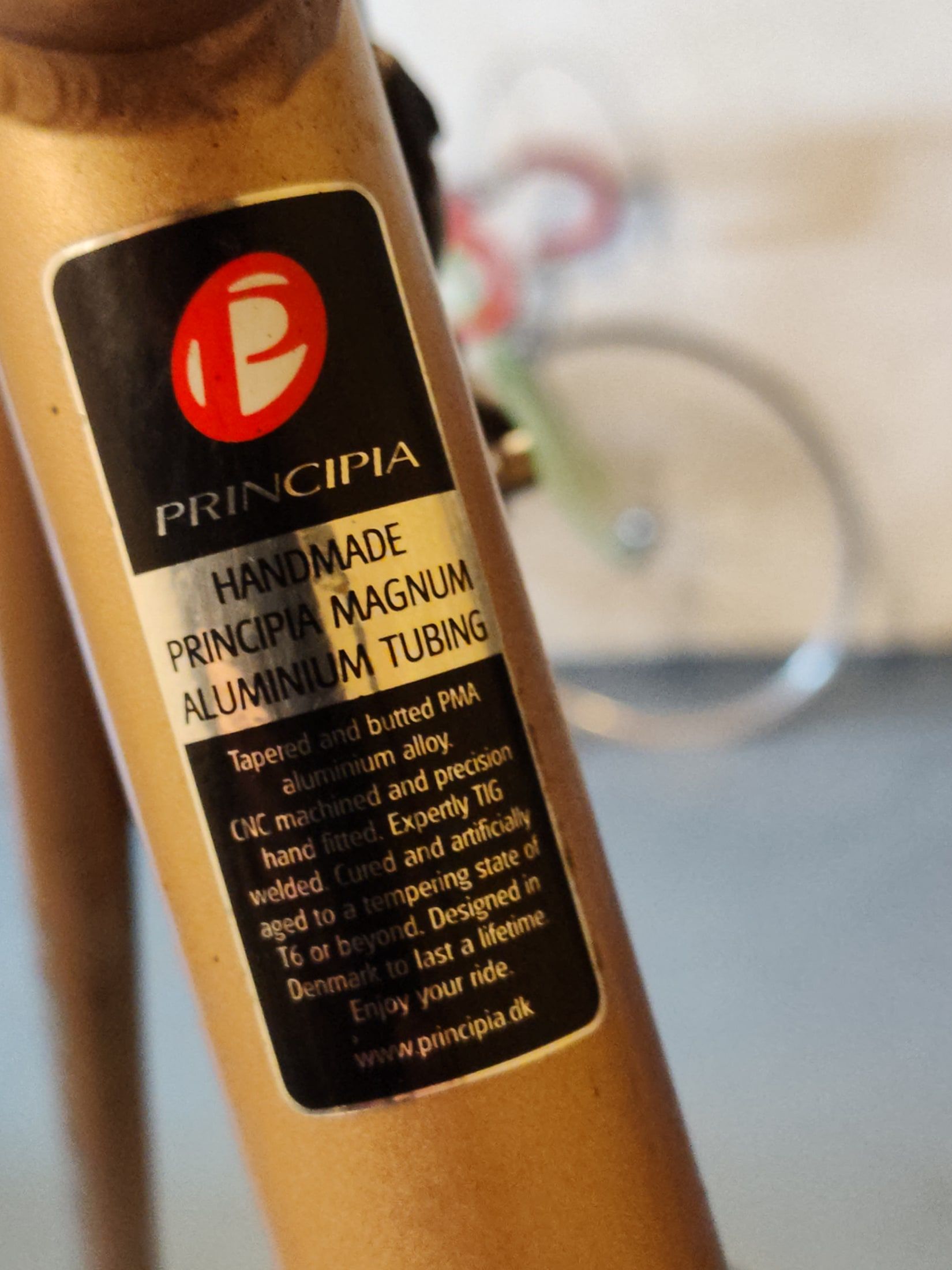
The collection’s Evolution dates from 2007 and is not a bicycle from the early years. It is better understood as an echo. The broad tubes, visible aluminium construction and name on the down tube show how far the Aalborg idea travelled: not from nothing to world domination, but from three riders short of money to a Danish marque in the Giro d’Italia.
Sources
Continue exploring
More from cycling history
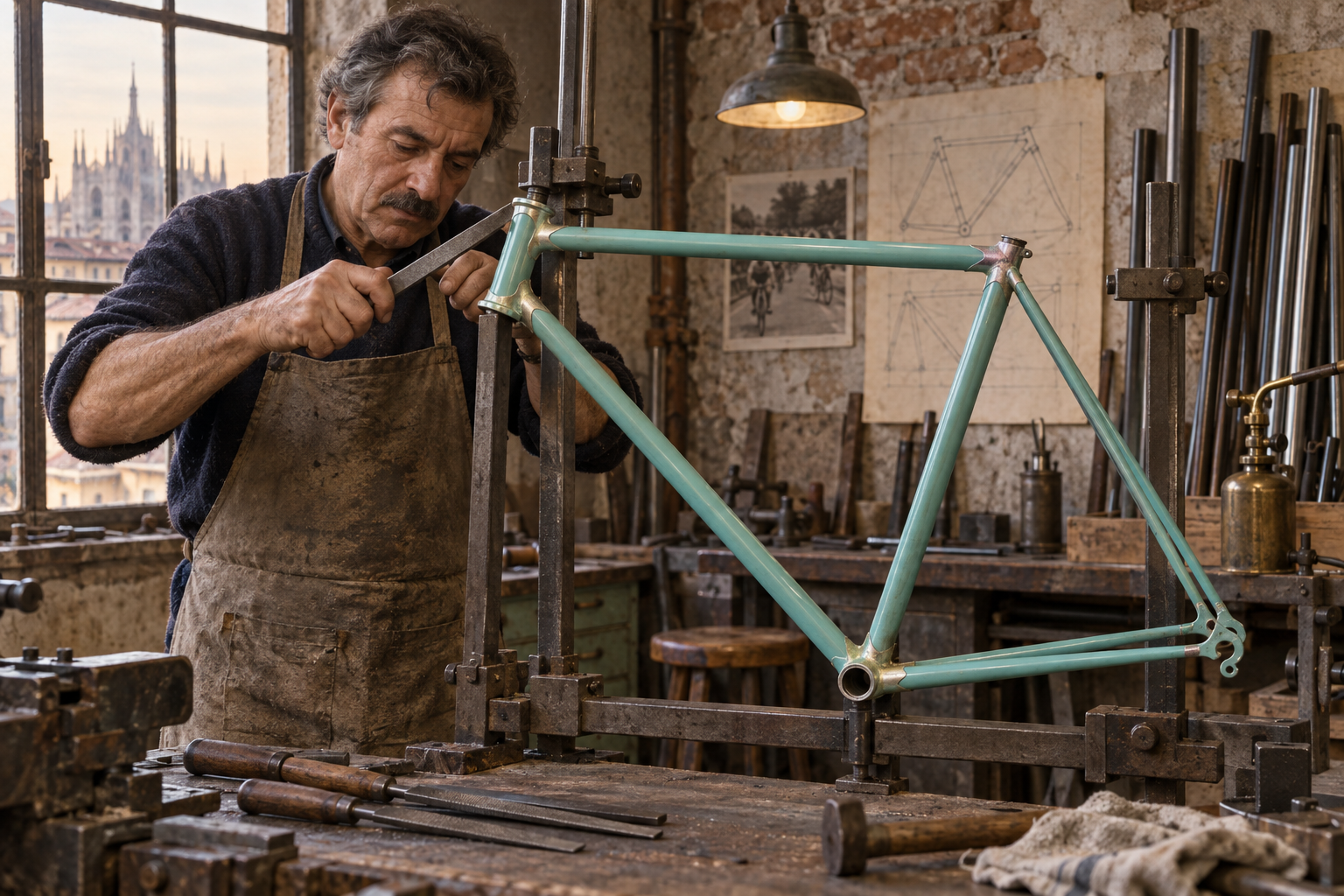
Bianchi on the down tube, Drali at the file bench
Peppino Drali built made-to-measure Bianchi frames in Milan. The large factory supplied the name and materials; the small workshop supplied the fit and handwork.
Read the story →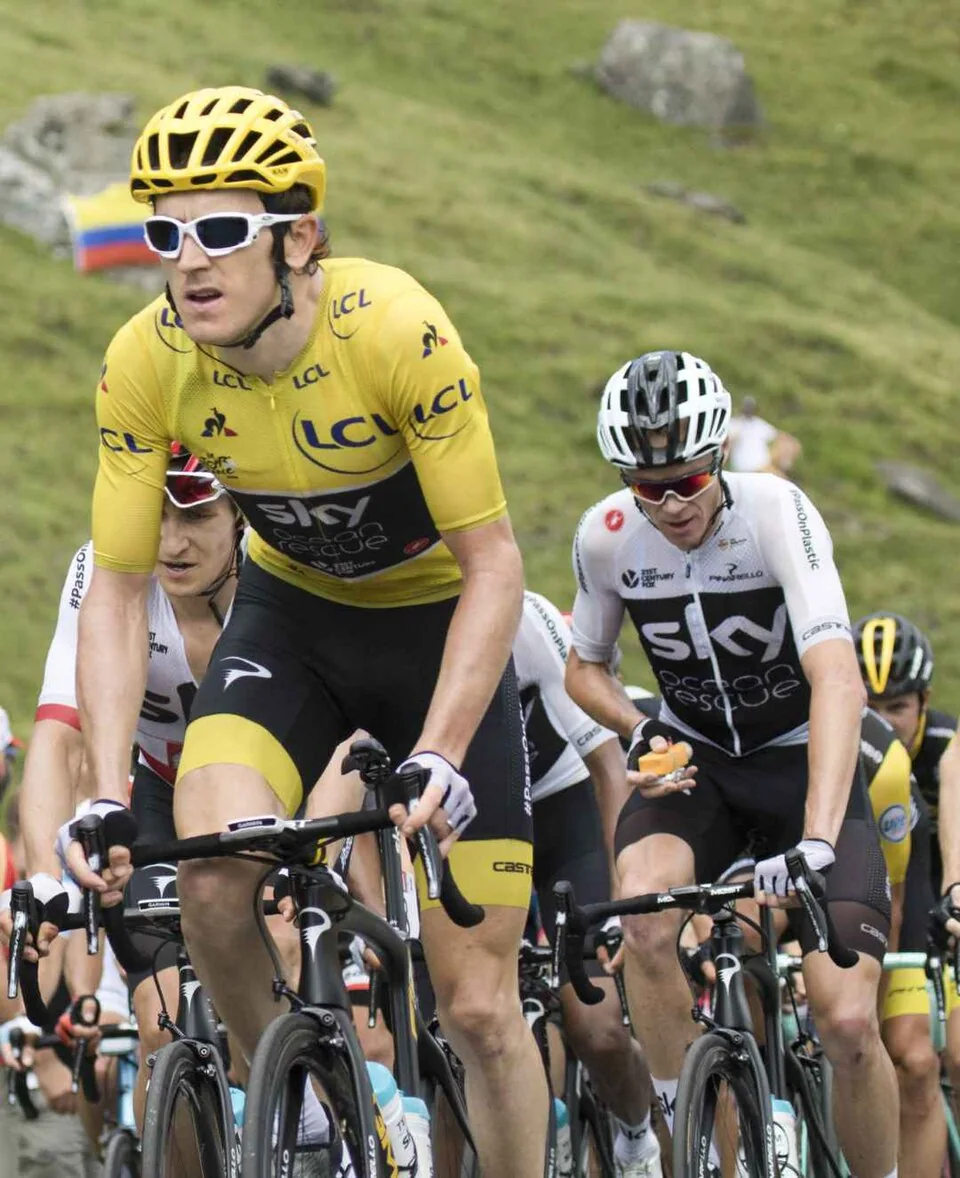
When Froome attacked with 80 kilometres remaining
On the Colle delle Finestre, Chris Froome rode away alone and overturned a Giro he began that day 3 minutes 22 seconds from the lead.
Read the story →
When the computer took over the bicycle
See the races, people, bicycles and changes that shaped the period.
Explore the period →