In the collection · Cavenago Brianza, Italy · 1978
Rossin
Record
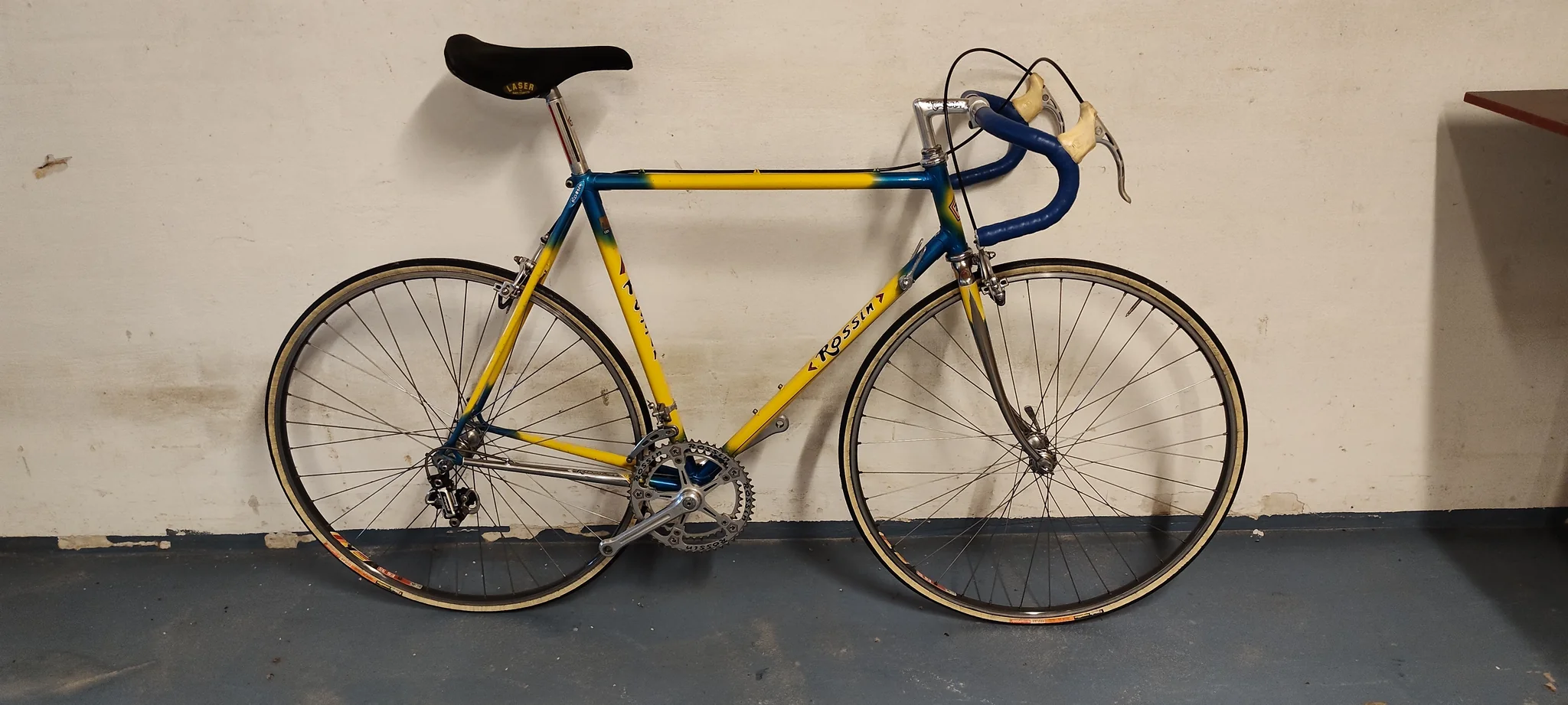
An early professional racer from a young Italian marque, built in Columbus SL and made recognisable by colour, chrome and a name repeated all the way down into the metal.
A name in the details
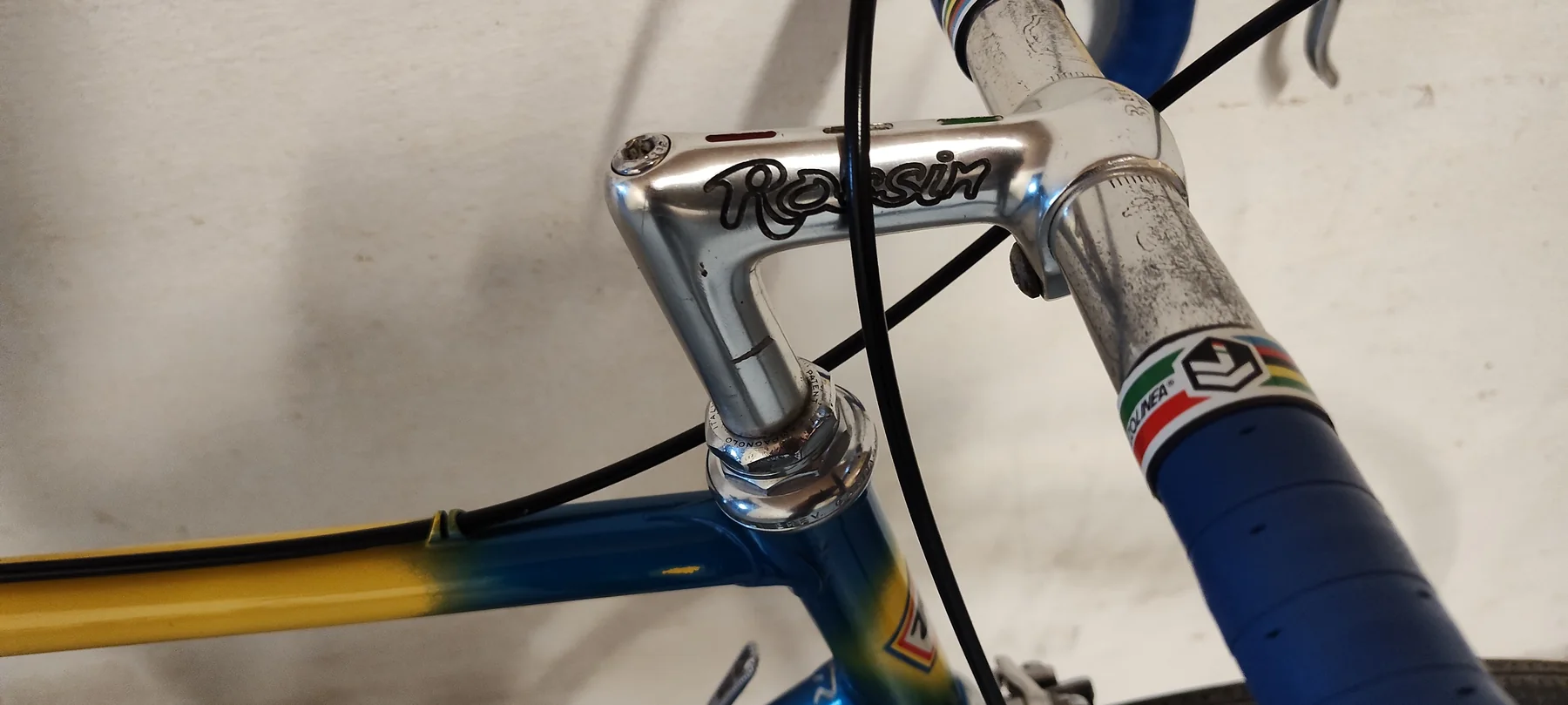
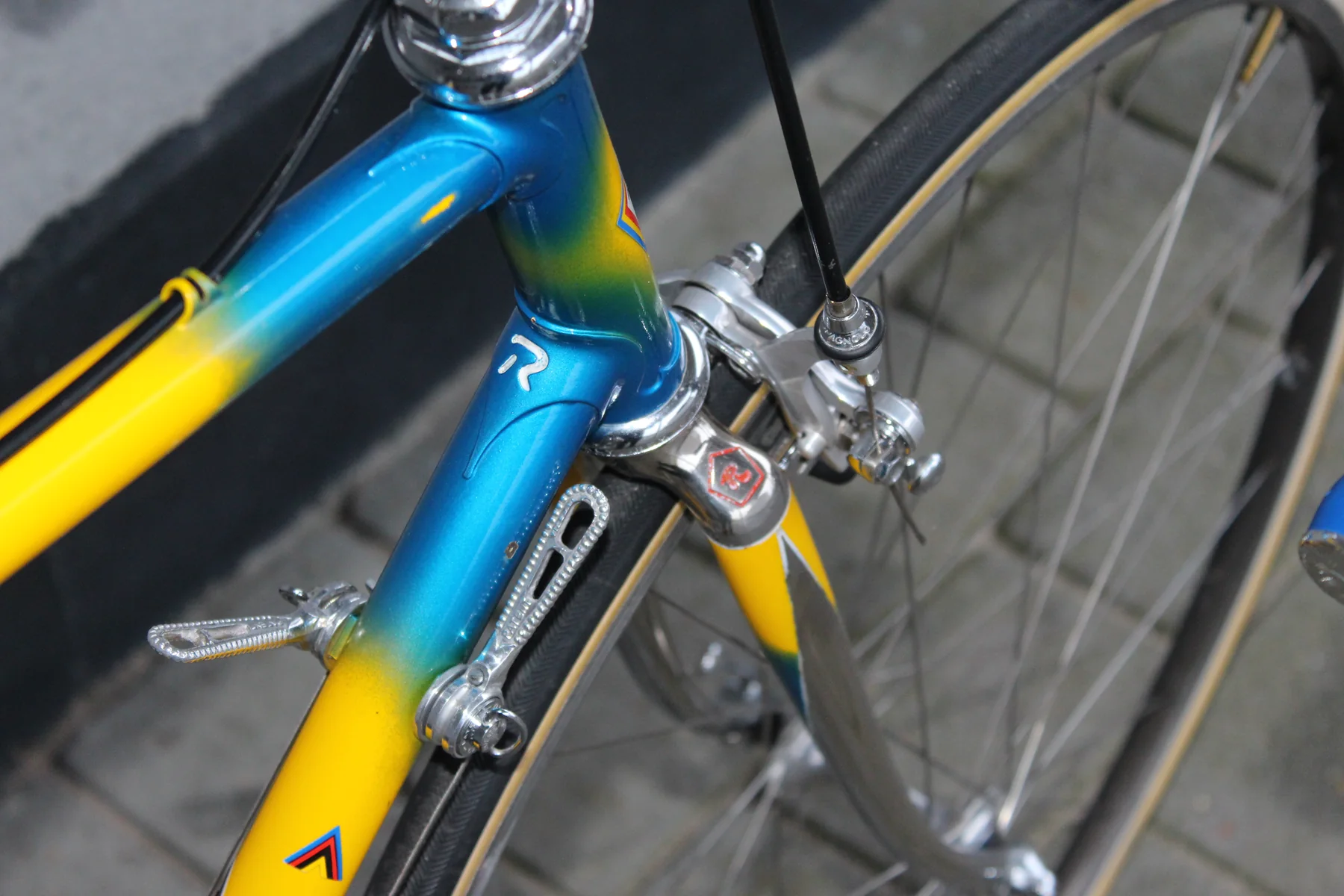
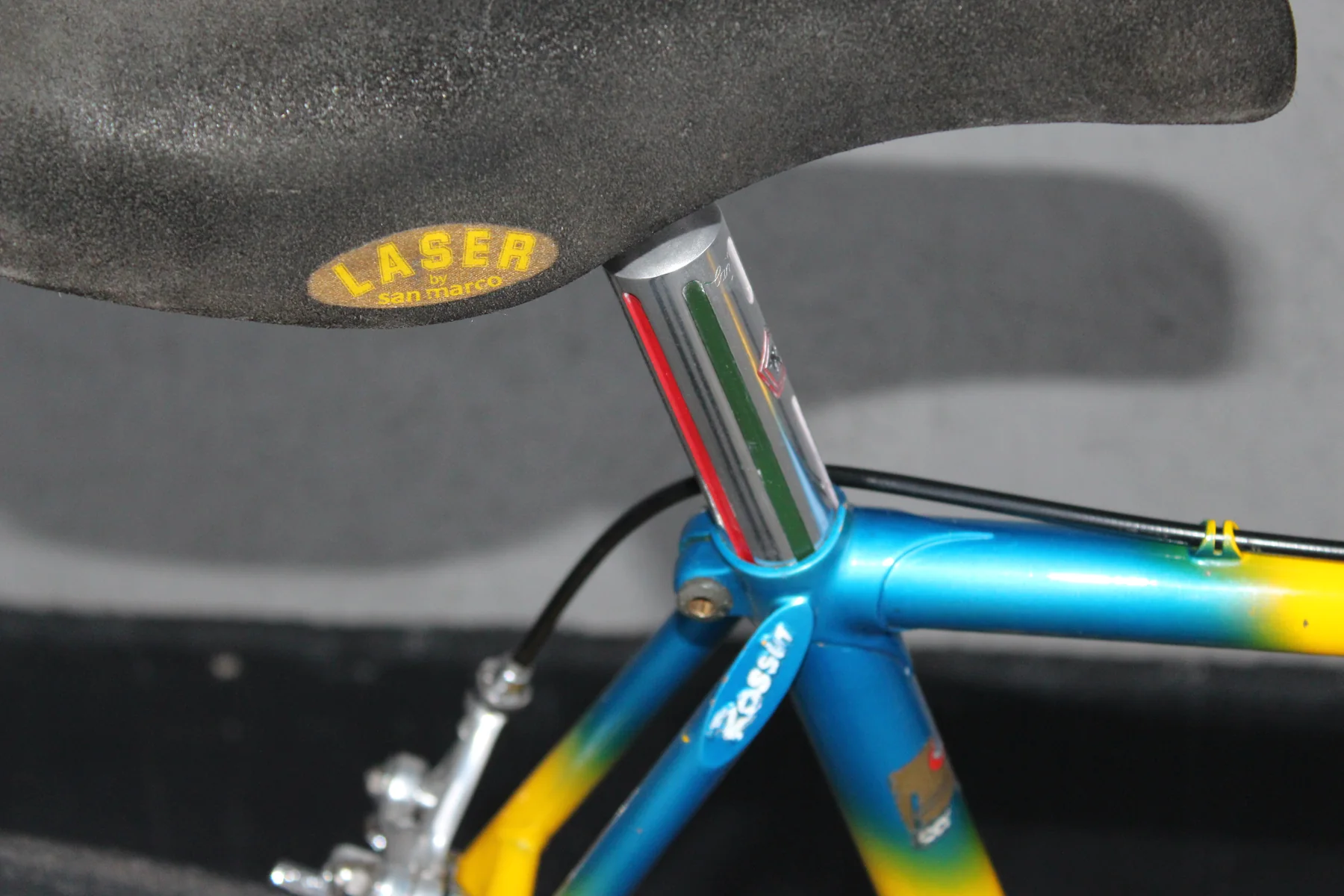
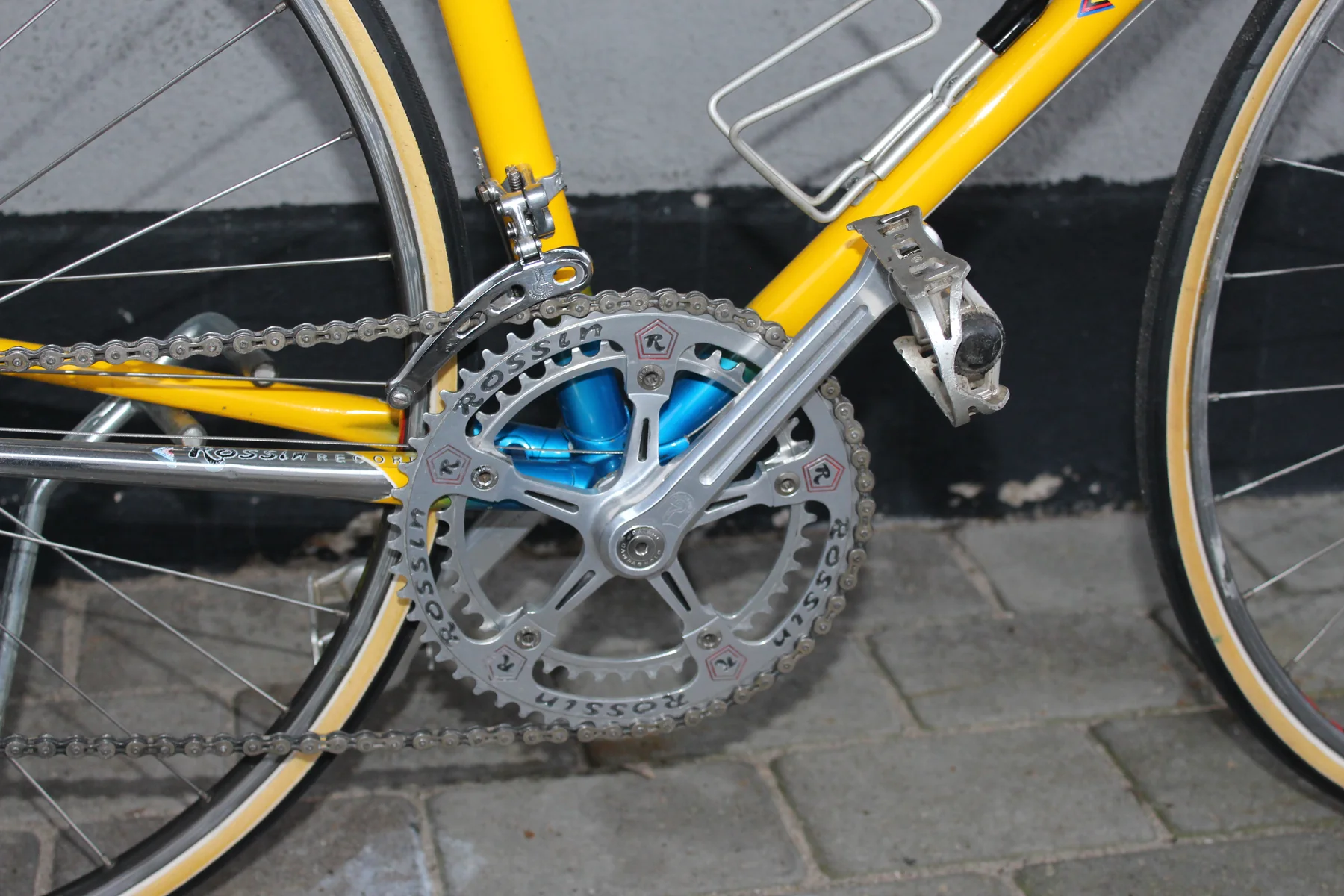
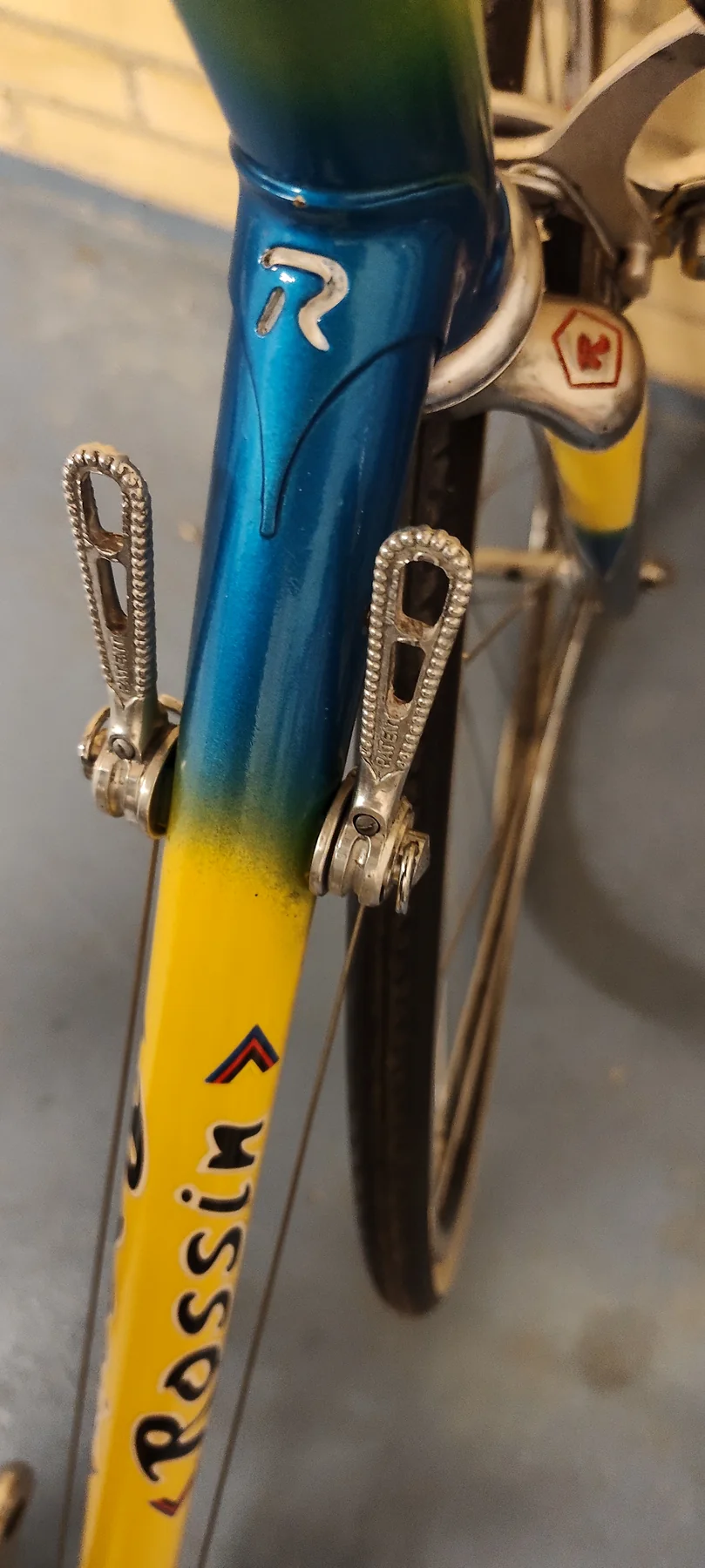
Rossin appears on more than the down tube. The name is repeated on the stem, chainset and toe straps, while the angular R returns at the head tube and brakes. This was a bicycle designed to be recognised at close range as well as from across the road.
A young marque
From Colnago to a workshop of his own
Rossin was established in 1974 by Mario Rossin and five partners. Mario Rossin had previously worked at Colnago and wanted to build his own marque around precision, form and speed.
The Record was among its early professional models. Rossin later became known for experiments with internal cable routing, aerodynamic tube shapes and new geometries. This bicycle, however, begins with a classic lightweight steel construction.
The Record build
A catalogue bicycle with its own signature
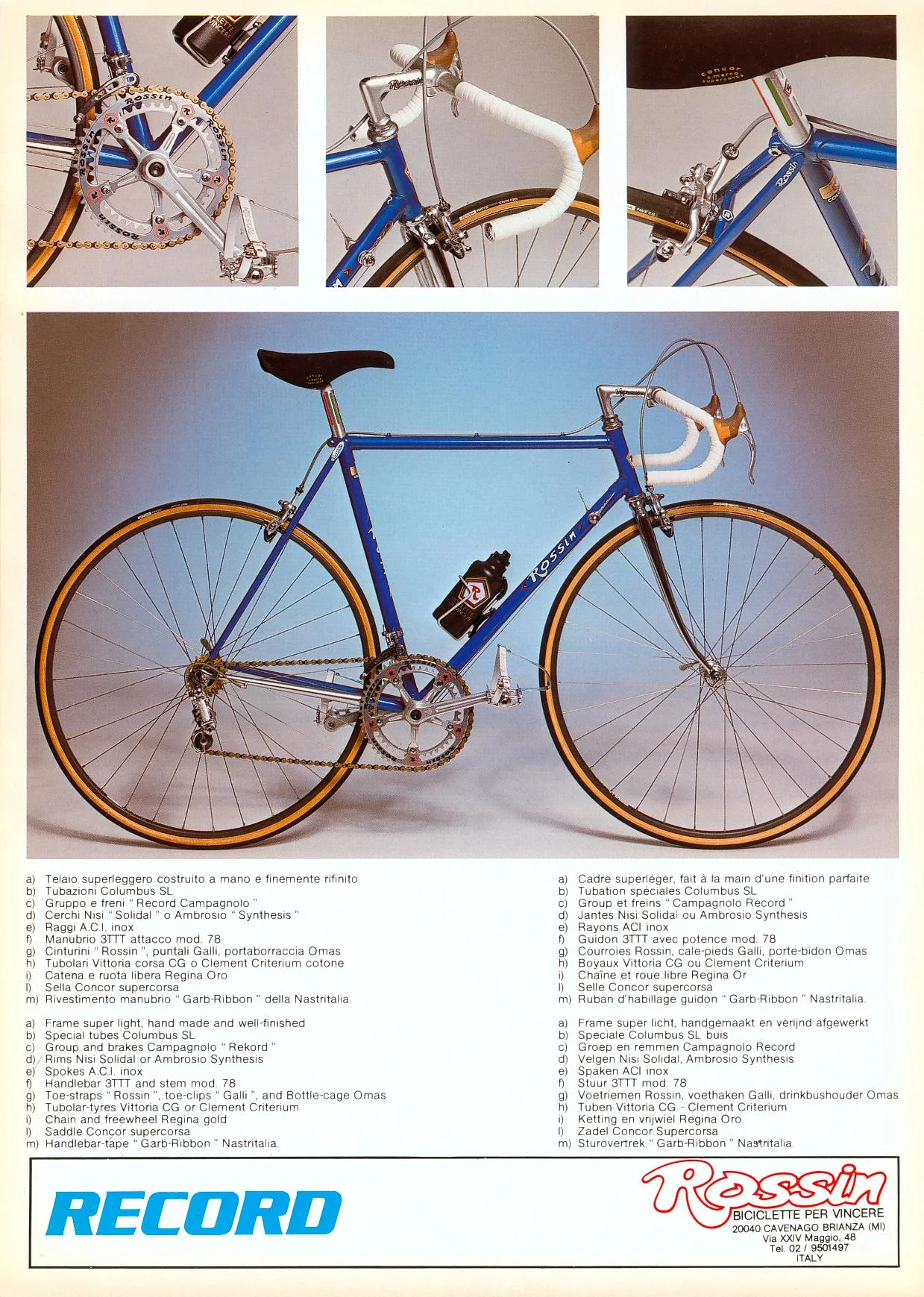
The period Rossin catalogue describes the Record with Columbus SL tubing and Campagnolo Record gears and brakes. Nisi Solidal or Ambrosio Synthesis rims, ACI spokes, Regina Oro chain and freewheel, and a 3TTT bar and stem completed the factory proposal.
The surviving bicycle follows the same idea, but a bicycle from 1978 may have received replacement parts over the years. The catalogue specification is therefore a historical comparison, not a guarantee that every fitted component remains original.
Columbus SL
Light steel before aero tubing
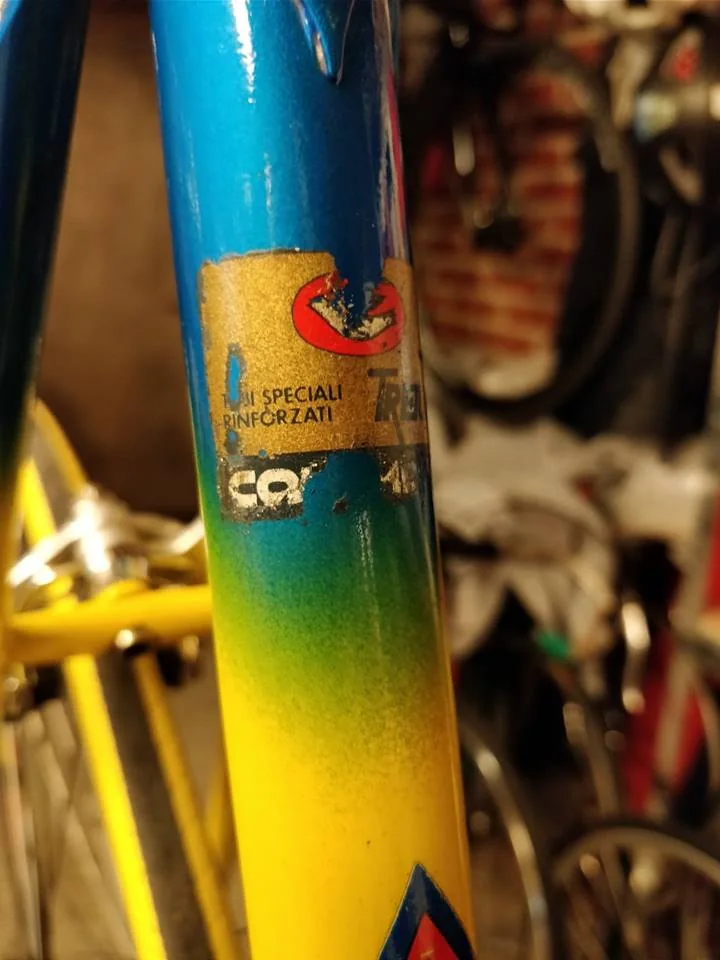
Columbus SL was a natural choice for an Italian top model in the late 1970s. Its thin-walled tubes offered a light frame, while the lugs and chrome surfaces left room for a carefully finished construction.
The blue and yellow paint moves across the joints in soft transitions. Together with the pantographing, it is the kind of work that made Rossin bicycles easy to distinguish from more anonymous catalogue frames.
The bicycle in the collection
Brief specification
- Model
- Rossin Record
- Year
- 1978, stated
- Frame
- Lugged Columbus SL steel
- Gears and brakes
- Campagnolo Record
- Defining details
- Pantographed components, chrome and yellow-and-blue paint
- Saddle
- San Marco Laser, presently fitted
- Status
- In the collection
Sources
The basis of this page
The model and its original build have been compared with a period Rossin Record catalogue page held in the collection archive. The date, provenance and information about Mario Rossin also draw on the documentation supplied with the bicycle.
The present specification is assessed from the bicycle and the detail photographs shown here. Where the catalogue and the surviving bicycle may differ, the distinction is made in the text.
The Rossin Record shows a marque early in its development: the classic Columbus frame is in place, while the colour, engraving and small R emblems already point to a maker determined to leave a signature of its own.