New to the collection · France / Herning · 1994
Vitus
992
A French bonded-aluminium frame with a Danish frame number, Shimano 105 and Henning Jørgensen’s name on the tubes. The bicycle has not yet been restored.
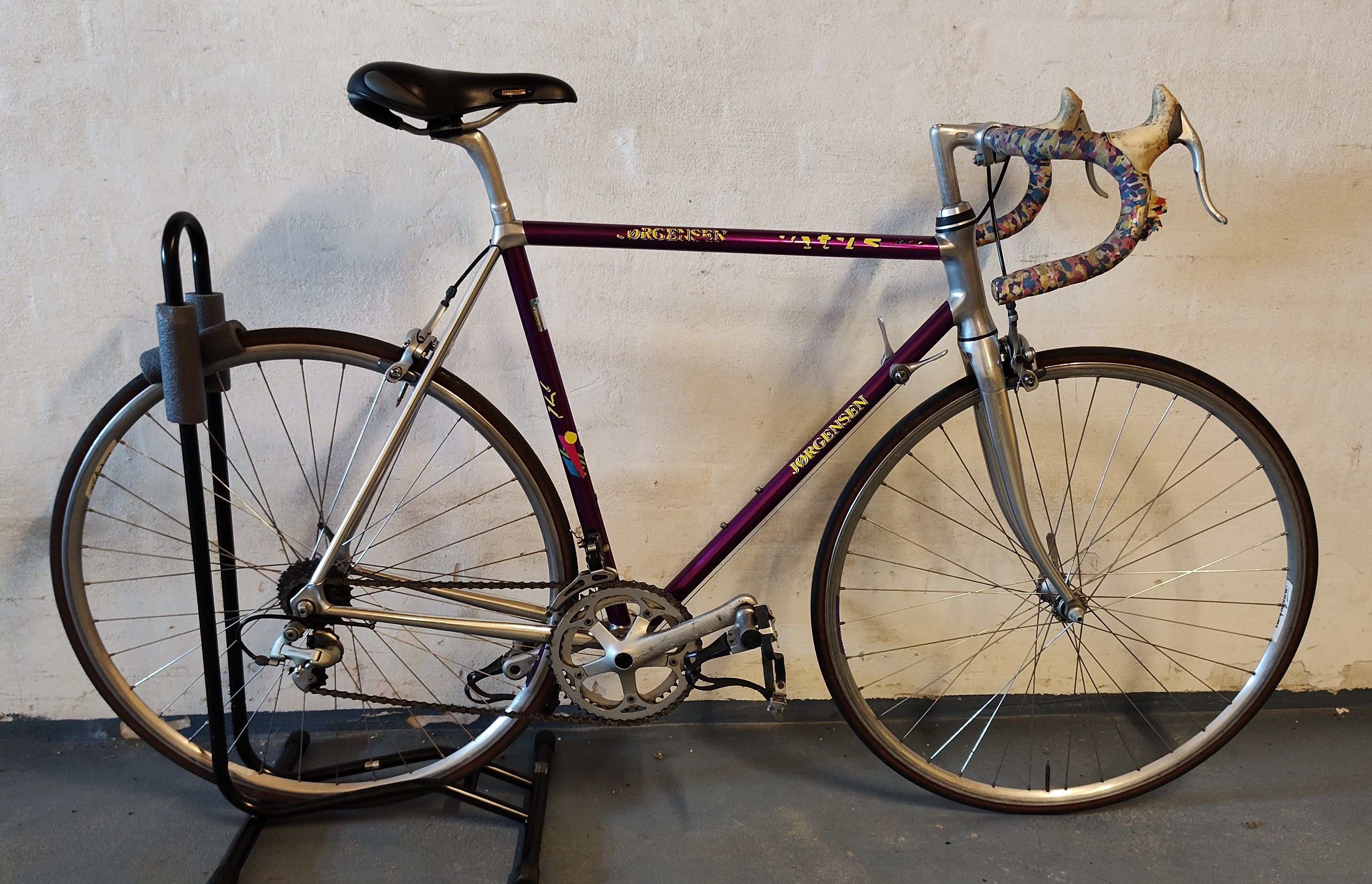
Before the work begins
This Vitus 992 is new to the collection. It remains used and untouched, which is a good place to begin. Before dismantling, the frame, transfers, cable routing and wear will be recorded. Polishing can always come later. Putting the original traces back is harder.
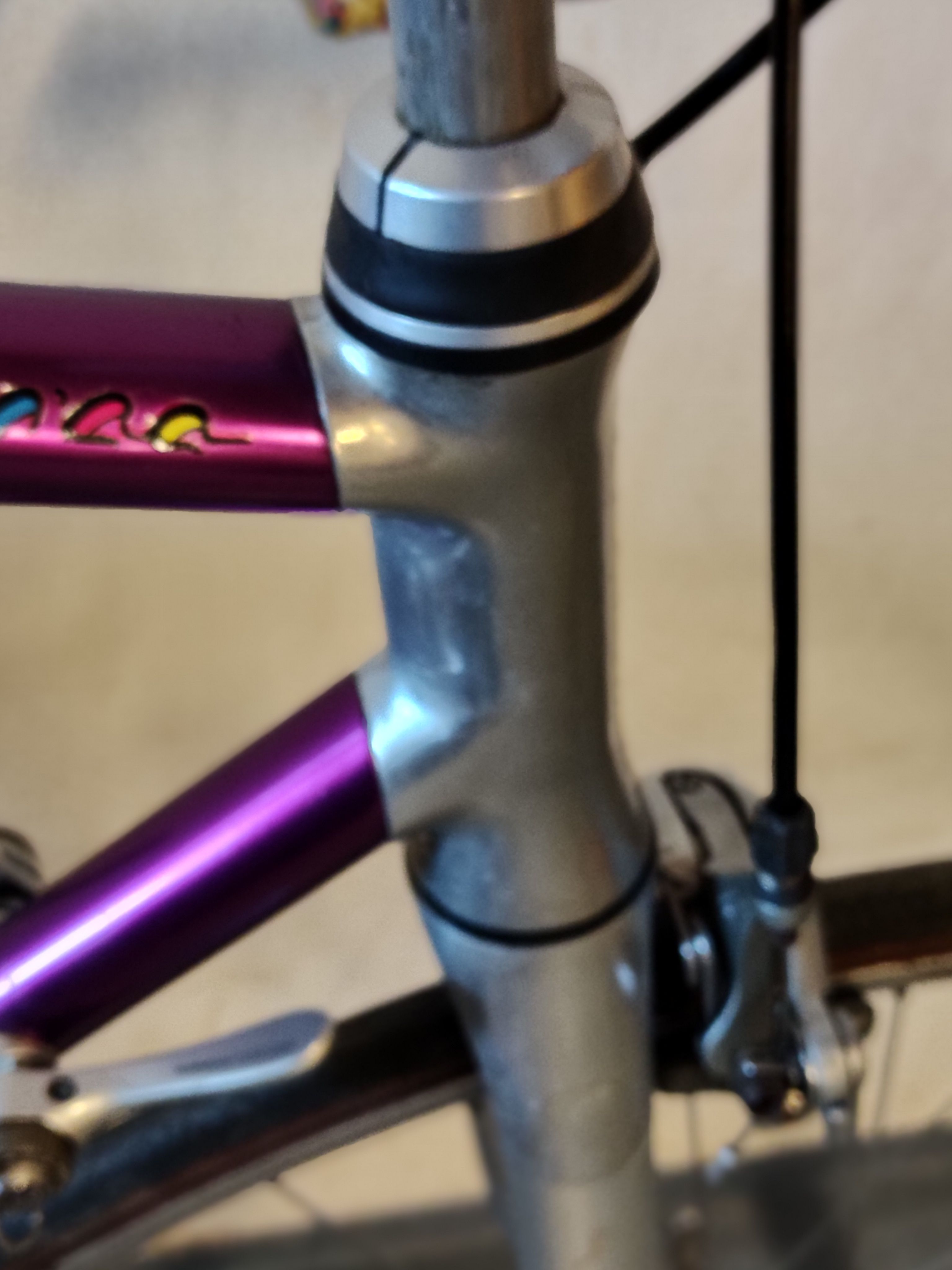
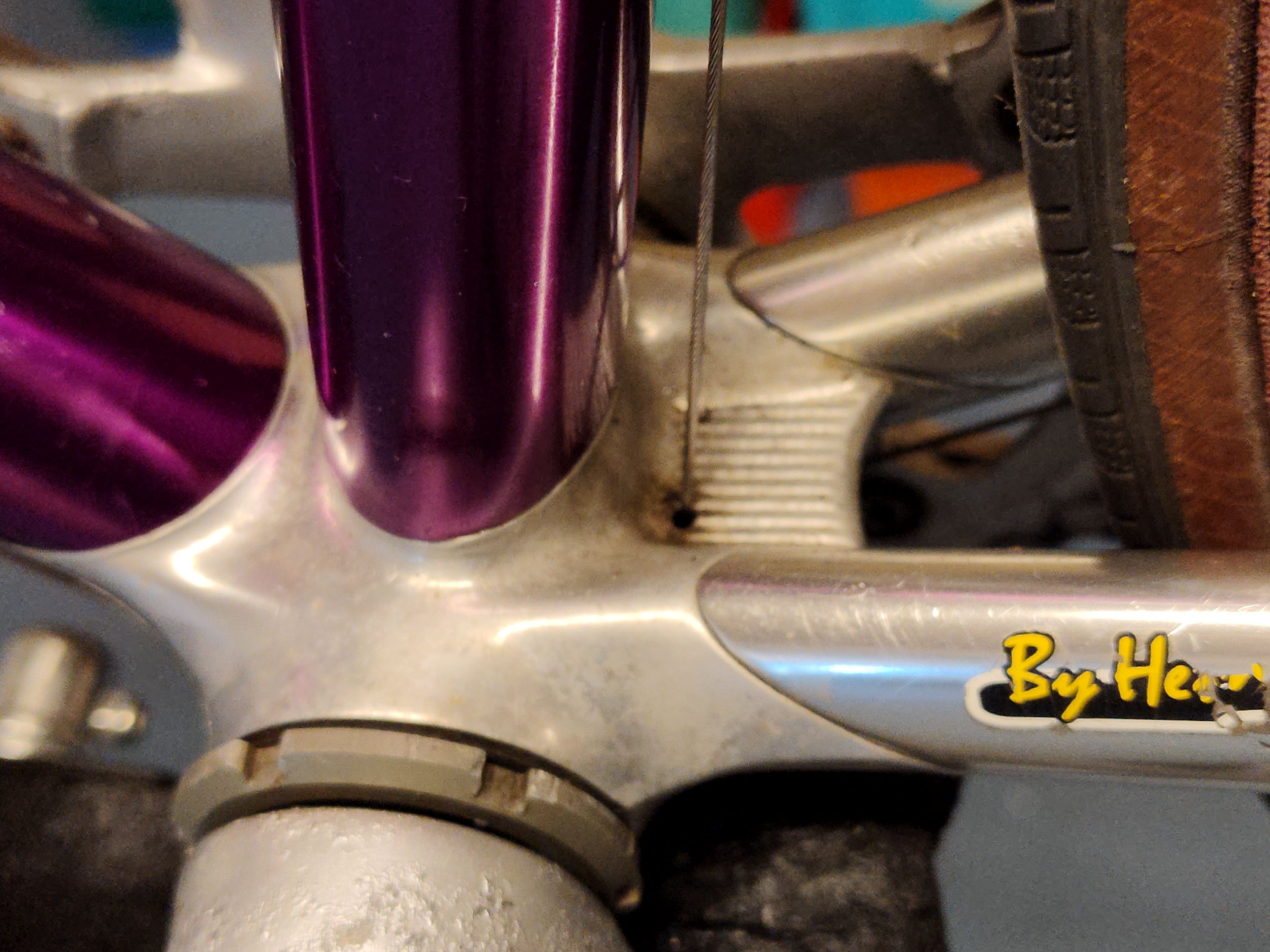
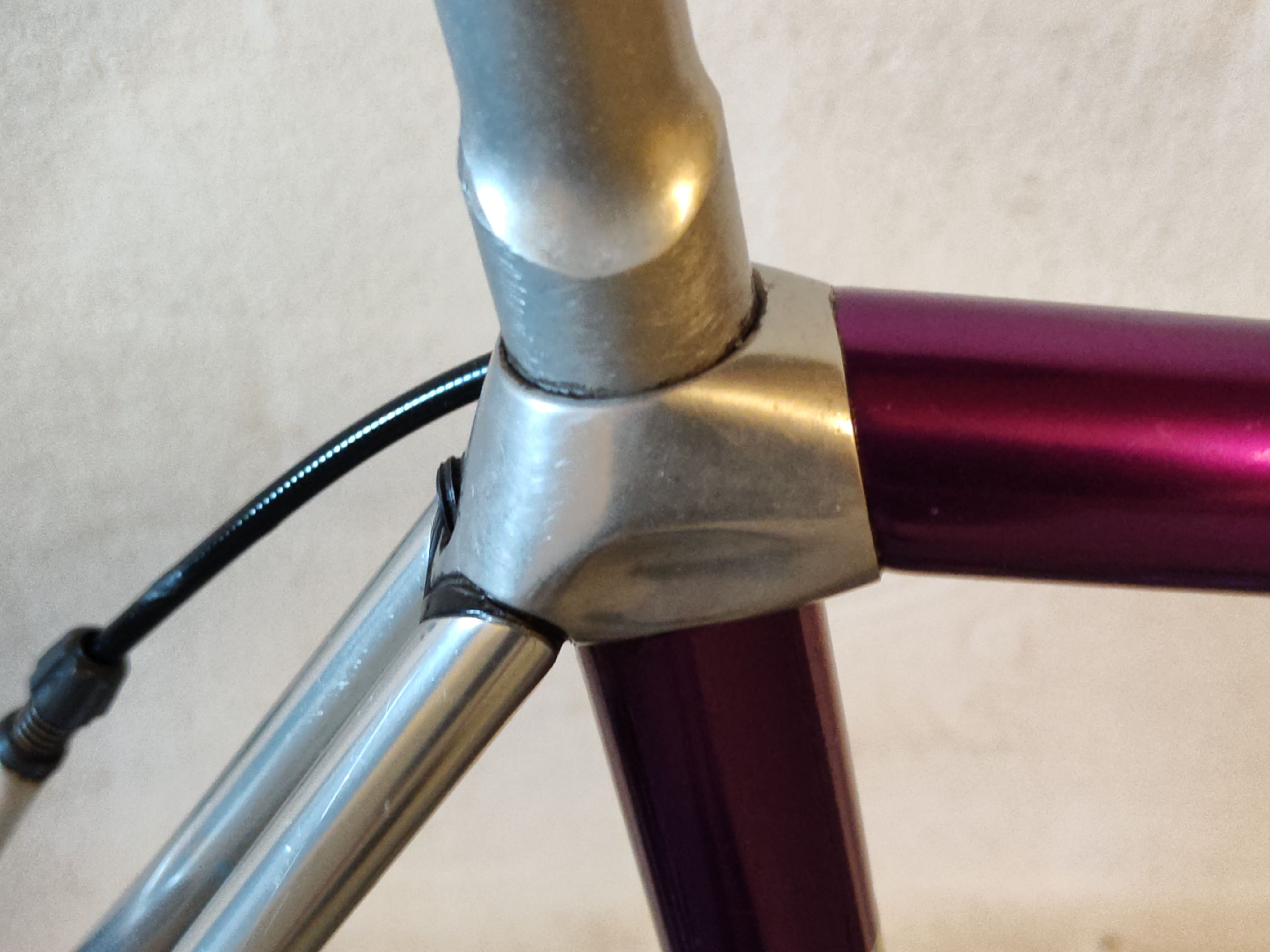
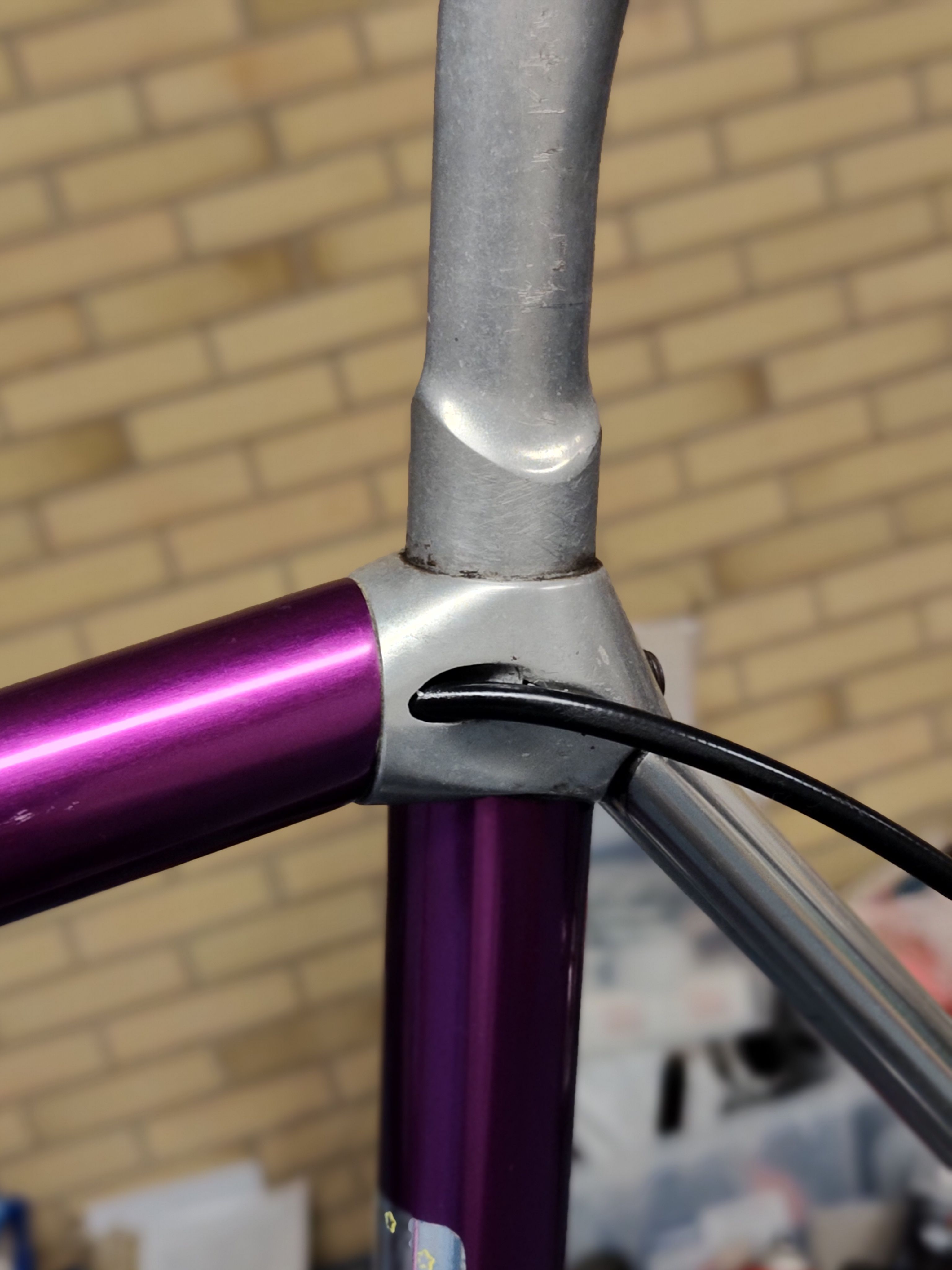
From a distance, the purple and silver bicycle looks unmistakably early 1990s. Up close it reveals how unusually Vitus worked with aluminium: the tubes are not welded together but bonded into large shaped junctions. Those transitions are both structure and visual language.
1992
Vitus made the tubes larger
Since the late 1970s, Vitus had built light aluminium frames by bonding tubes into shaped aluminium junctions. The 979 became familiar throughout the 1980s and accompanied Sean Kelly through a long series of victories in one-day and stage races.
The principle was simple to describe but demanding to execute. The tubes were fitted into the junctions and secured with epoxy. This avoided the intense heat of welding and allowed Vitus to produce a light frame with a very different character from the traditional steel frames of the period.
Low weight came with a drawback. The 979 developed a reputation for noticeable flex around the bottom bracket and head tube when a powerful rider pushed hard. Vitus answered in 1992 with the 992. Larger, oval Duralinox tubes replaced the slender round main tubes. Smooth junctions at the head tube, seat tube and bottom bracket gave the frame a more integrated appearance and greater resistance to twisting.
The teardrop and egg-shaped tube profiles were more than a visual update. Their larger sections allowed Vitus to increase stiffness without abandoning the bonded construction that had become its signature. At the same time, the frame retained the muted, resilient ride many riders associated with the company’s aluminium bicycles.
Sean Kelly won Milan–San Remo in 1992 on a Vitus 992. The model reached the road just as welded aluminium and carbon began pressing the bonded construction from opposite directions. The 992 therefore occupies a brief technical interval: more substantial and purposeful than the 979, yet still made by a method that would soon become less common in professional racing.
France to Herning
Henning Jørgensen’s name on the tubes
The frame is French and the model is a Vitus 992. The Jørgensen transfers tell another part of its history: the bicycle was bought from Henning Jørgensen, a former racing cyclist and bicycle dealer in Herning.
That distinction matters. The Jørgensen name does not make this a separate model; it records the local route from the French manufacturer to a Danish customer. The dealer’s name on the top tube and down tube became part of the bicycle’s identity, even though Vitus made the frame itself.
The Danish frame number WH106K dates the bicycle to 1994. Together, the number, dealer’s name and surviving build make it more than a loose French frame. They show how it entered Danish cycling culture and became a particular working racer in Herning.
The working racer
Japanese group and Italian rims
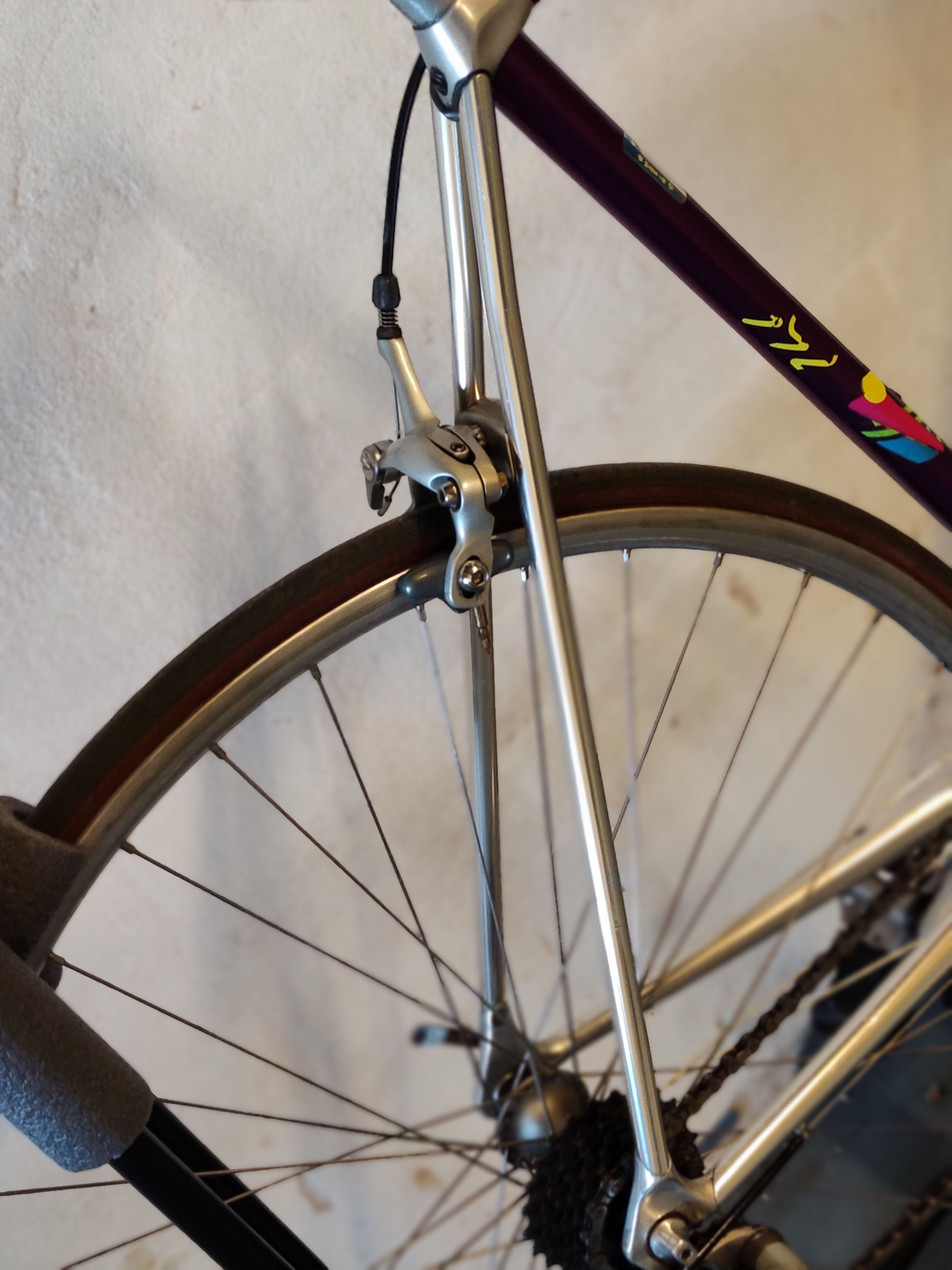
The bicycle is built with Shimano 105 SC, the dependable 1055-generation group from the early 1990s. The chainset, front and rear derailleurs and brakes form a coherent working build rather than a display project.
The shift levers remain on the down tube and can be used in friction or indexed mode. A hand must leave the bars for every change. At the same time, Shimano’s integrated brake and shift levers were already reshaping the racing cockpit. This bicycle sits directly across the transition between traditional controls and the arrangement that would soon become standard.
Dark-anodised Campagnolo Lambda Strada rims add an Italian element to the French frame and Japanese group. The Lambda rim’s lightly profiled shape and dark surface were familiar on many good road wheels of the period. Here they give the bicycle a more subdued appearance than bright polished rims would have done.
The combination of a French frame, Japanese group and Italian rims was not a clash of styles. It was a perfectly ordinary way to assemble a good working racer: choose the parts that suited the job and the available money. For that reason, the bicycle says as much about the cycle trade of the 1990s as it does about Vitus construction.
The collection bicycle
Brief specification
- Maker and model
- Vitus 992 Duralinox
- Year
- 1994, dated by its Danish frame number
- Frame number
- WH106K
- Dealer
- Henning Jørgensen, Herning
- Frame
- Oval Duralinox aluminium tubes bonded into aluminium junctions
- Fork
- Vitus aluminium
- Gears and brakes
- Shimano 105 SC
- Shift levers
- Friction/indexed down-tube levers
- Rims
- Campagnolo Lambda Strada
- Status
- New to the collection · not restored
Sources
Basis
Vitus: Vitus Heritage · the bicycle, frame number and information supplied by its owner.
The construction and components are described from visible markings on the bicycle. The year follows the Danish frame number.
The 992 kept the adhesive and the junctions but made the tubes larger. This one was sold in Herning, received Japanese equipment and Italian rims, and was ridden. It now stands still briefly while those traces are recorded.