Campagnolo · Italy · 1946
Cambio Corsa
A gear change demanding courage and balance — the rider released the rear wheel while moving.
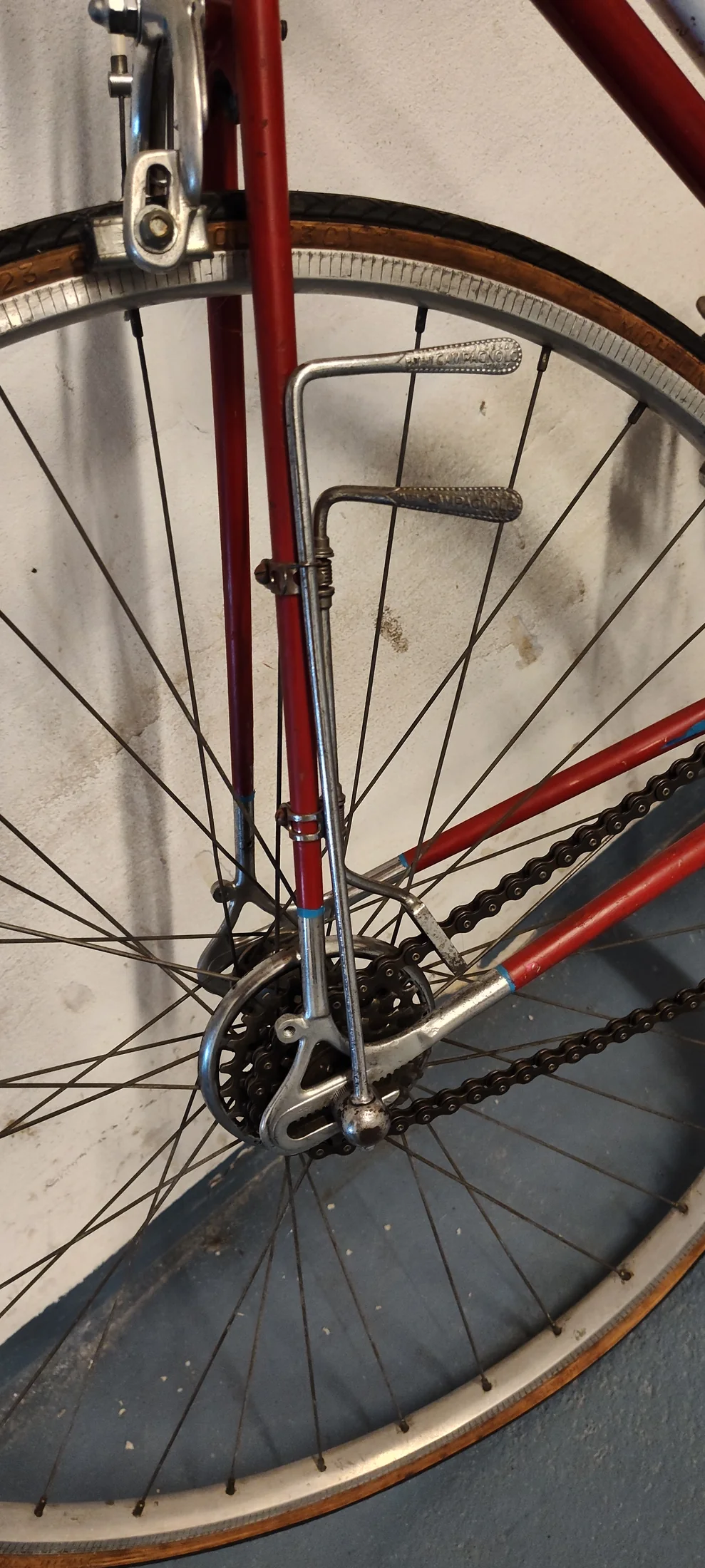
A mechanical intermediate step
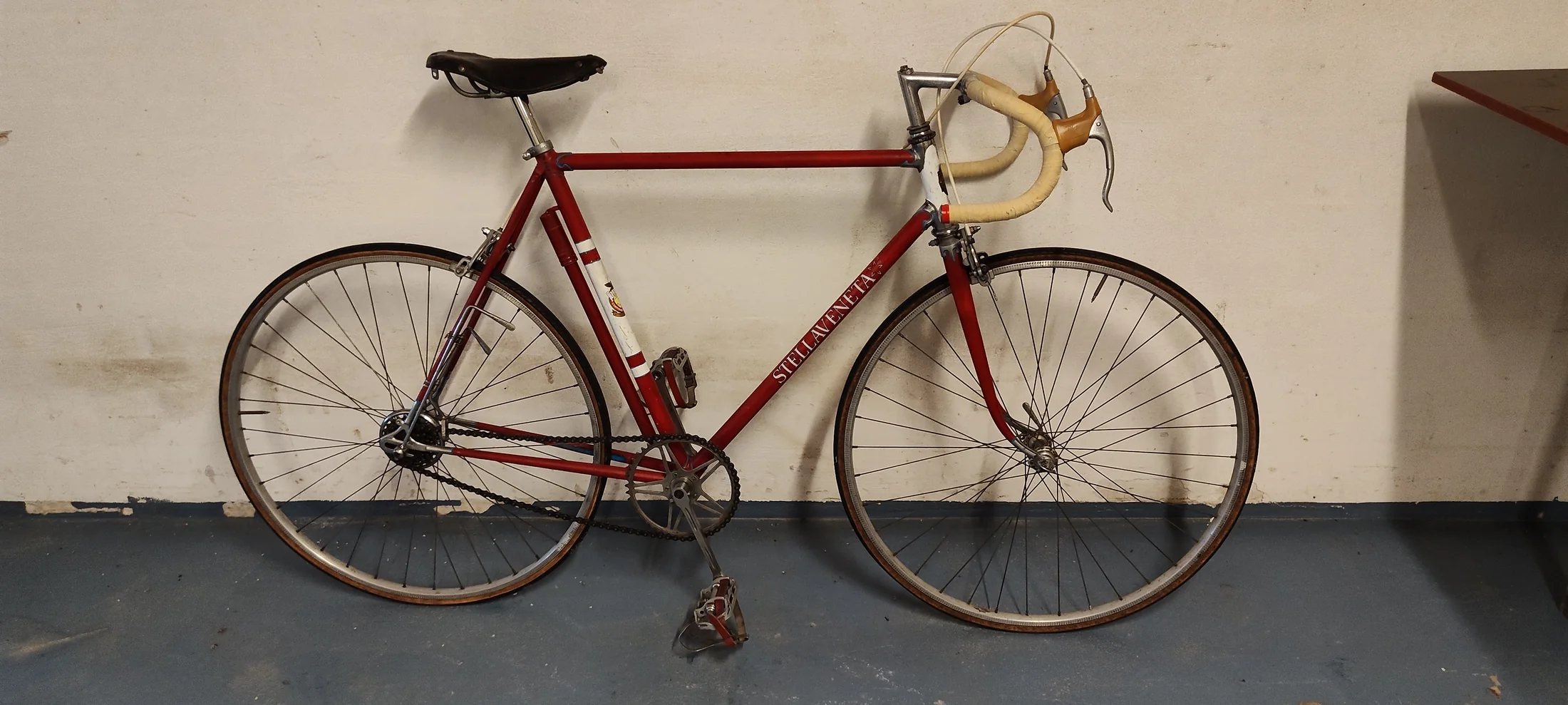
After the Second World War the racing bicycle changed rapidly. Cambio Corsa allowed shifting without dismounting, though its operation now appears remarkably risky.
Campagnolo introduced it in 1946. It moved both chain and rear wheel.
With no sprung derailleur, the axle moved in toothed horizontal dropouts to compensate for changing chain length.
All while the bicycle was moving.
The shift
Right hand backwards.
Rear wheel loose.
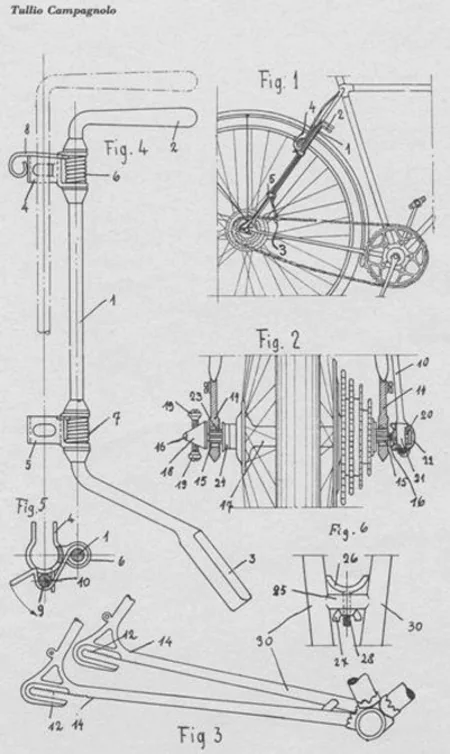
Release the axle
The upper lever opens the rear quick release.
Move the chain
The second rod guides it to another sprocket.
Back-pedal
The chain moves while the bicycle rolls.
Position and lock
Chain force and the brake move the wheel before the axle is locked.
Courage and balance
A poor shift could cost more than speed
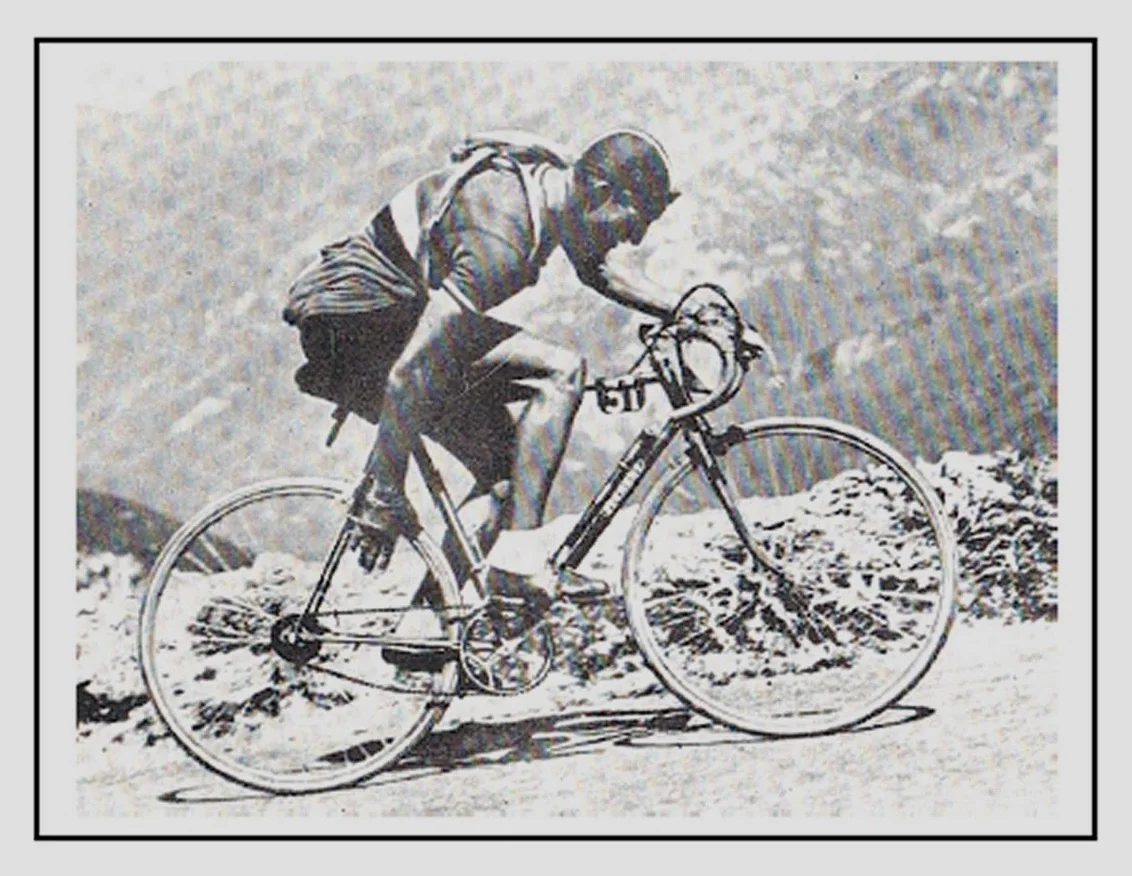
The rider reached backwards, released the wheel and back-pedalled, often on rough roads or in a peloton. Incorrect locking could leave the wheel displaced or crooked.
“Suicide gear” is a later nickname, not clearly a contemporary one. Professionals treated it as a competition tool offering a real advantage when mastered.
Chain force pulled the wheel forwards and the brake guided it back. The sequence had to be exact.
Three or four sprockets
Modest now.
A major step then.
Previously riders stopped and moved the chain by hand or reversed the wheel. Cambio Corsa allowed forward motion during the change.
Gino Bartali and Fausto Coppi are associated with this generation of Italian shifting systems.
Resisting the myth
Coppi, Bartali and the Tour
They did not contest a Cambio Corsa duel in the 1948 Tour’s Pyrenees: Coppi did not start. Bartali led and won after his Alpine attacks.
In 1949 they travelled as joint leaders. Coppi won Giro and Tour, but sources indicate he also used French Simplex components; the Tour victory cannot simply be credited to Cambio Corsa.
What followed
Paris–Roubaix and Gran Sport
A single-lever model appeared in 1949, later known as Paris–Roubaix after Coppi’s 1950 victory. The axle still had to be released.
Gran Sport provided the lasting solution: a fixed wheel and sprung derailleur that moved and tensioned the chain automatically.
Not merely a “suicide gear” —
but a bold step towards the modern racing bicycle.