2006–2012 · Story
From the Landis case to the exposure of US Postal
First he was the man who lost the Tour. Later he became one of the witnesses who forced cycling to open a much larger case.
The victory that disappeared
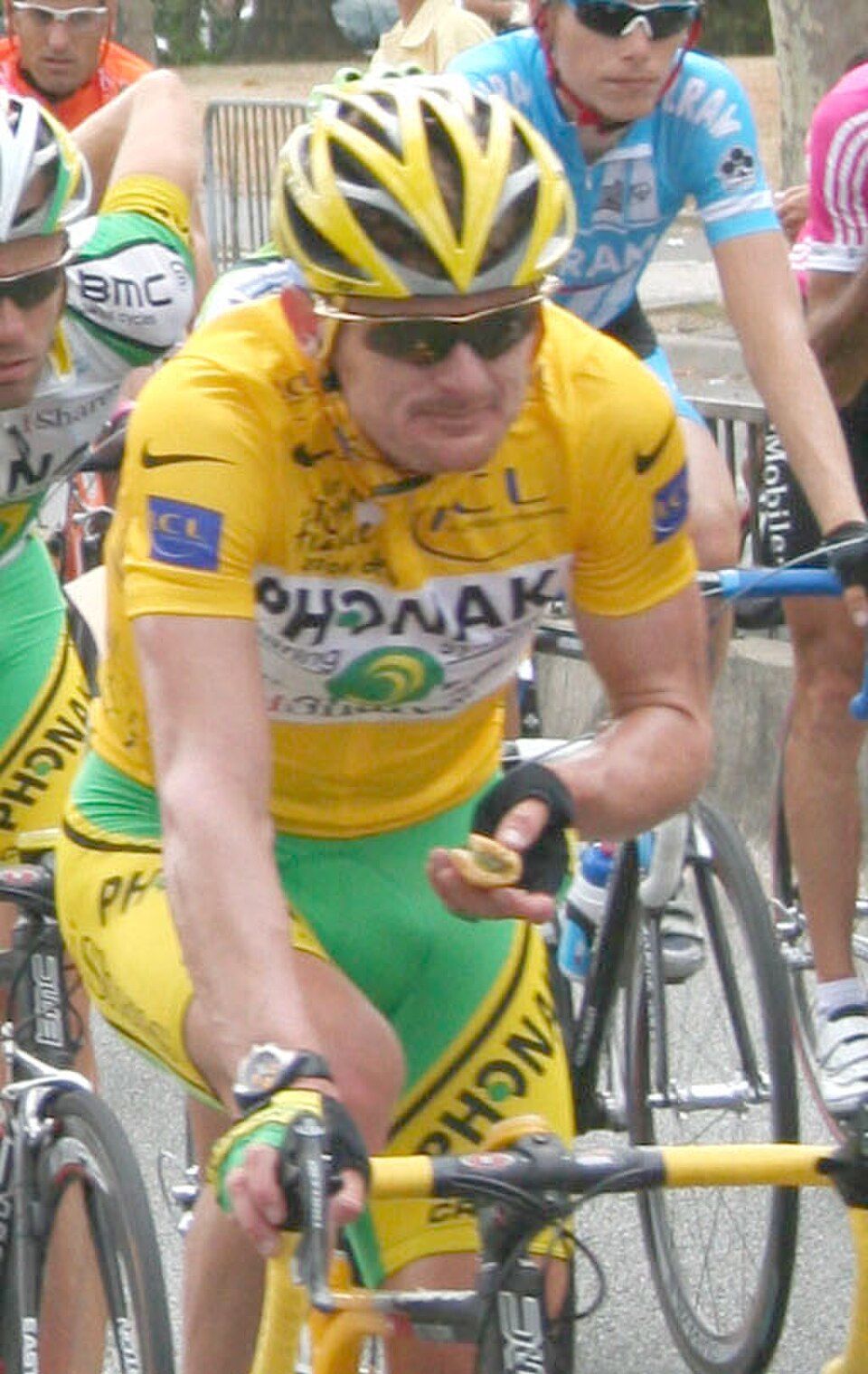
Floyd Landis stood on the top step in Paris on 23 July 2006. Four days later Phonak announced that a sample after stage 17 had shown an abnormal testosterone-to-epitestosterone ratio. Isotope analysis indicated external testosterone. Landis denied doping and fought a long case, but arbitration upheld the violation in 2007. The Tour went to Óscar Pereiro.
Landis had rescued his race with a long attack to Morzine after collapsing on La Toussuire. That ride now became evidence. He was not merely a disqualified winner, but an example of how far a rider and his circle could go to defend an explanation.
The 2010 email
In April 2010 Landis changed course. In emails to American cycling authorities he described doping in his own career and an organised system around US Postal, where he had ridden with Lance Armstrong from 2002 to 2004. His account did not absolve him, but gave investigators names, methods and episodes that could be compared with other witnesses.
USADA did not build its case on one embittered rider. Its 2012 reasoned decision included statements from numerous former teammates and extensive documents. Landis was one piece among many, but an important early insider.
A witness with baggage
USADA published its decision in October 2012. Armstrong lost results from August 1998 and received a lifetime ban. Landis did not regain his 2006 Tour; his own sanction remained. His role had changed from denying protagonist to compromised witness.
Landis’s information also fed into an American case about the sponsorship money supplied by the United States Postal Service. The issue was no longer only who had taken which drug, but whether a publicly backed sponsor had paid for a team promoted on a false basis. Landis brought the case under a law allowing a private person to pursue a claim on behalf of the government. Federal authorities later joined it. The case ended in a 2018 settlement without Armstrong admitting liability. Landis received a share, which inevitably kept arguments about his motives alive.
This was no tidy conversion. Landis had doped, lied and attacked the system before he spoke. He had raised money for his defence and maintained his account long after the laboratory work was complete. When he changed his story, he carried knowledge, anger and self-interest with him. A witness does not become reliable merely by confessing everything at once. Reliability comes when claims can be tested against documents, samples and the accounts of other people.
That left Landis in an awkward double role. He was evidence of the system investigators were trying to describe and also a route into it. His Tour victory was never restored, and he was not turned into an innocent hero. Yet statements from a discredited past could be checked and could matter. Cycling did not have to believe in Landis as a person. It had to investigate what he said.
What the case changed
The case also changed how cycling’s largest doping stories were told. A positive test could decide one rider’s result, but an organised system had to be described through many kinds of evidence: testimony, payments, emails, medical routines and patterns in the team’s work. Landis did not supply the entire explanation. His importance lay in providing concrete information that could open routes to other accounts and then be tested against them. When the Armstrong case was published, it therefore stood not as a duel between two former teammates but as a composite picture built from many voices. It distinguished believing a person from investigating a claim. That distinction made it possible to use Landis without cleansing his own past.
Nor did the aftermath give the sport a tidy ending. Results could be removed, places reassigned and sanctions imposed, but the years could not be raced again. For spectators and riders, the period remained marked by blank spaces in classifications and the knowledge that the official story had been inadequate. Landis was both the cause of one such blank and one of the people who helped explain several others.