1902–1906 · Story
The break that became Alcyon
Later accounts make a denied promotion the beginning. What is certain is the break, the factory and a brand that quickly reached the races.
Out of the door
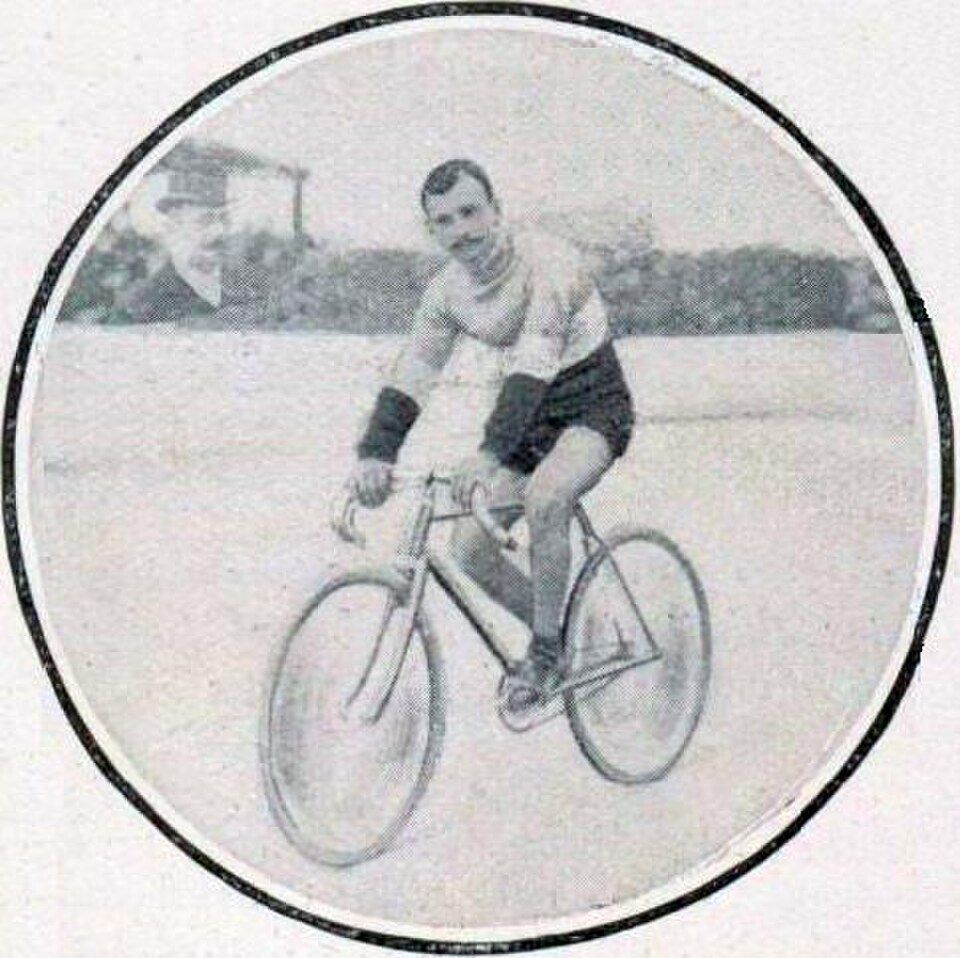
Edmond Gentil worked around the French bicycle industry at the turn of the century, including Peugeot and Griffon. Later accounts say a dispute or missed promotion made him leave. The precise insult is harder to document than the result: in 1902 Gentil began his own concern in Neuilly-sur-Seine.
He called it Alcyon, the kingfisher. The works made bicycles and soon motorcycles and cars. Gentil later gathered several brands, while the pale-blue Alcyon became the most visible.
The road as showroom
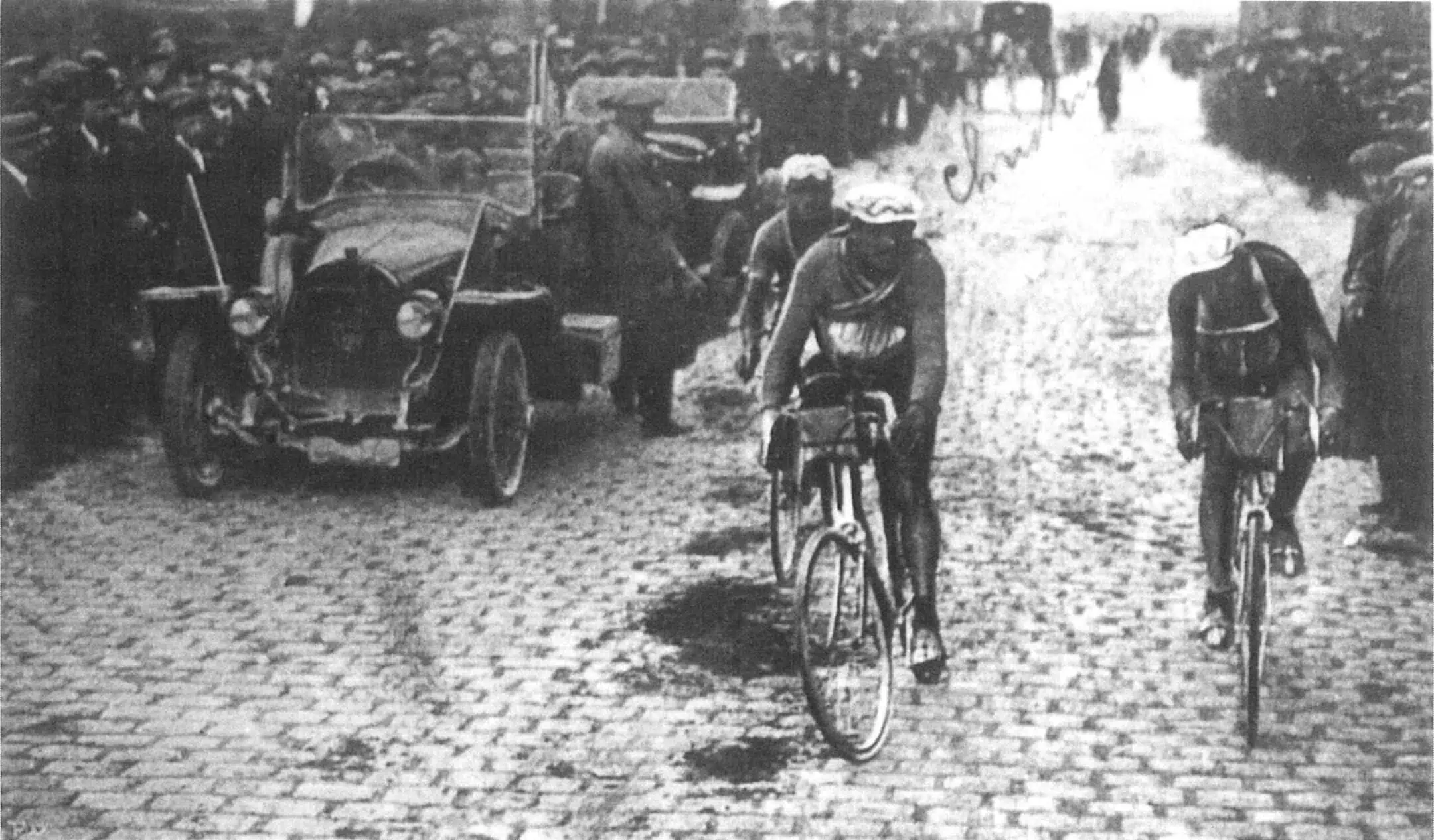
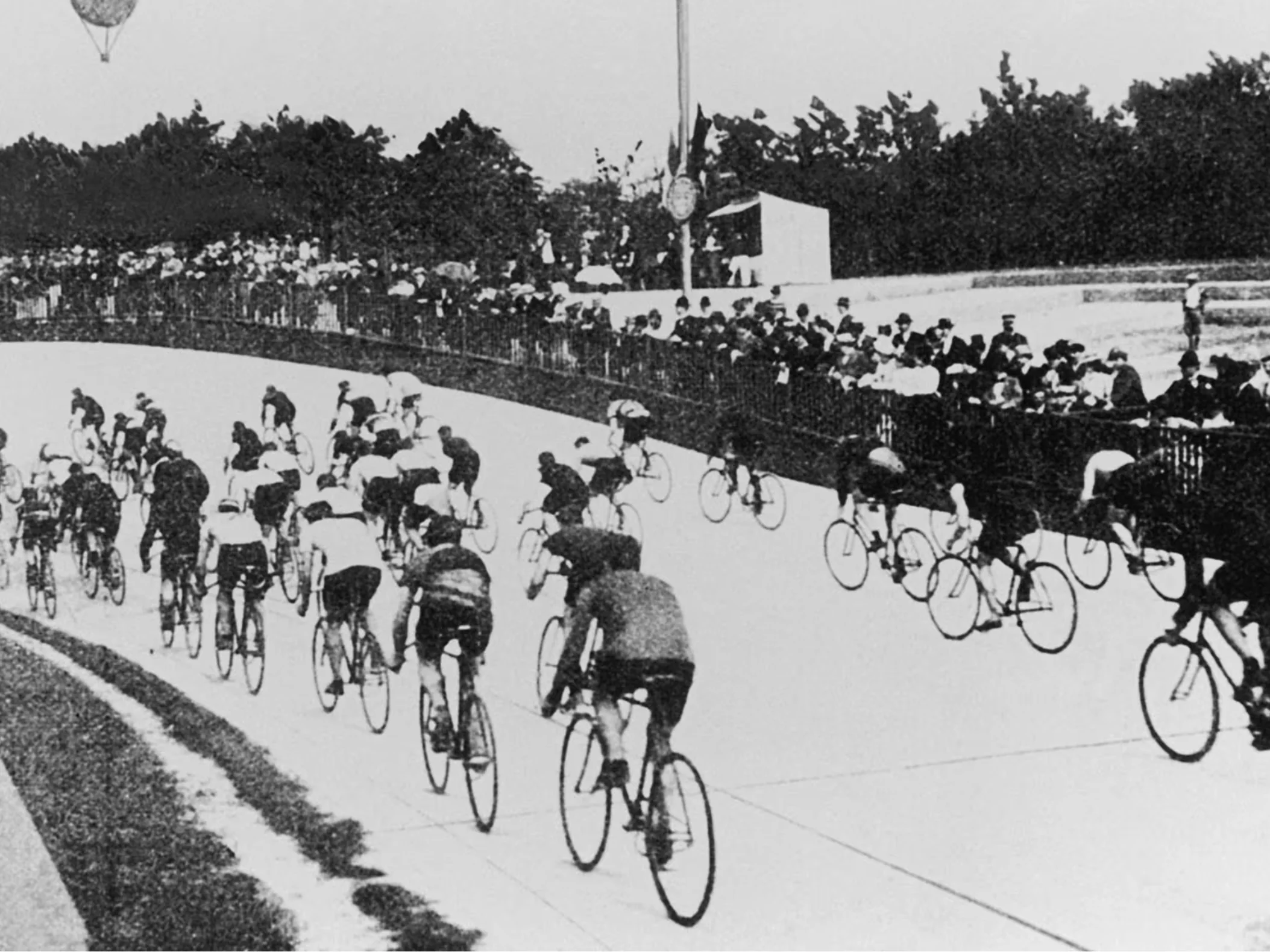
In 1906 the company formed a professional team. A victory then connected rider and factory more directly than an advertisement: the bicycle beneath the winner, the badge on the jersey, and Monday’s newspaper did the rest.
Alcyon won Bordeaux–Paris and became one of the strongest factory names. Tour victories from 1909 through 1912 came with François Faber, Octave Lapize, Gustave Garrigou and Odile Defraye. Four years and four riders made Gentil’s break with the old industry a visible business.
A story polished by time
The insult story fits almost too well: Peugeot said no, Gentil left, and Alcyon later beat the rival on the road. Sources support a falling-out but not every dramatic detail, so it is best treated as company lore with a documented core.
Peugeot absorbed Alcyon’s bicycle activity in 1954. That supplies a final twist, but industrial history is rarely pure revenge. Gentil built production, brands and a team that made the bicycle visible where it mattered: at the finish.
A brand built around racing
Alcyon prospered while the French cycle industry was expanding rapidly and had yet to draw a firm line between factory, team and advertising. A manufacturer could sell ordinary bicycles, motorcycles and cars while using road racers as moving proof of speed and durability. When an Alcyon rider won after hours on poor roads, the result became a simple commercial claim: this machine could last. That was easier to understand than a long technical explanation in a catalogue.
The team was more than a collection of individual stars. The factory supplied bicycles, organised support and made its name recognisable through colours and results. The Tour de France was becoming a national event, and Alcyon placed itself at its centre. Faber, Lapize, Garrigou and Defraye were different riders, but their victories could be presented as one continuous factory story. Gentil’s particular strength was therefore not a single invention. It was his ability to combine manufacturing, brands and racing within the same concern.
That also explains why the later anecdote about the overlooked employee survived. It gives a large industrial story a human beginning: one man walks out and builds a rival. Yet Alcyon did not become powerful at the moment Gentil left his employer. It became powerful through years of investment, acquisitions and victories. The break is a useful entrance to the story. The work that followed is the real explanation.
Alcyon’s long life also shows that a powerful racing name was not sufficient by itself. Markets changed, brands were gathered together and relations between factories became more complicated. By the time the bicycle activity passed to Peugeot, the early dispute had been overtaken by industrial concentration. The kingfisher had already left its mark. The pale-blue jersey and four Tour victories belong to an age when a factory name, a rider’s body and the reputation of a bicycle were almost impossible to separate.
Old photographs still make that connection visible. The rider does not stand beside a neutral tool, but beside a bicycle whose name forms part of his public identity. This was before television coverage and global sponsorship programmes. A brand had to be repeated in newspapers, on jerseys and at finish lines until the public knew it. Alcyon’s team performed precisely that work.