Society and the times · Media · 1948–1959
When television found the Tour
Radio had long given the Tour a voice. Television first had to learn how to follow a race that moved every day and regularly disappeared among the mountains.
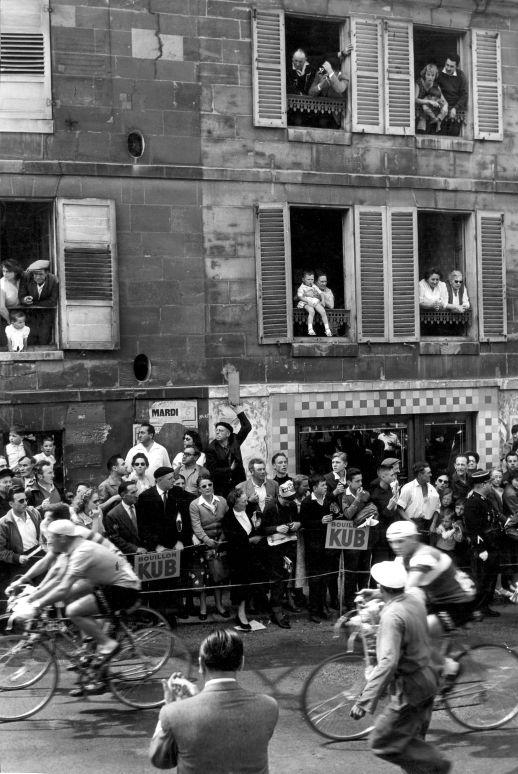
Radio had long given the Tour a voice. Television first had to learn how to follow a race that moved every day and regularly disappeared among the mountains.
A live broadcast from a fixed finish line
In 1948 a Tour finish was broadcast live on French television for the first time. It sounds modest now, but the assignment suited contemporary equipment badly. Cameras, control vehicle, cables and signal links had to remain in one place while the race approached on an uncertain timetable. Viewers received the finish, not the whole stage. Radio, newspapers and later film still told most of the day.
The Tour was a television problem
A stadium could be wired and tested in advance. The Tour began somewhere new every morning. Mountains blocked signals, roads were narrow, and power and connections had to be assembled temporarily. A motorcycle could film close to the riders, but its picture still had to reach a receiver and then the audience. Television crews did not merely follow the race. They built a new production site each day.
The mountains reached the screen in 1958
In 1958 mountain climbs were shown live for the first time. Viewers could now watch faces, rhythm and gaps as they developed instead of waiting for evening film or the next newspaper. Charly Gaul’s Tour victory therefore belonged to a different public setting than earlier climbers’ triumphs. Pictures remained monochrome, selective and unstable, but the climb had become shared live time.
The helicopter supplied a new view
The television production introduced helicopters in 1959. At first they were as important for relaying signals as for the aerial pictures now associated with the Tour. From above, a camera could place the field in the landscape and follow a longer section of road. Signals could also cross terrain that defeated ground transmission. It was costly and awkward. It worked often enough to continue.
The race began thinking in pictures
Television did not immediately redraw the route, but it gave certain places new value. A hairpin road, a dense crowd or a finish with room for equipment could provide memorable pictures. Organisers increasingly wanted drama that could be seen. Riders learned that an attack was no longer reported only later; it might unfold in living rooms while their legs still hurt.
Commentators explained what remained invisible
Cameras showed only part of the field. Punctures, escapes and tactical moves happened outside the frame. Commentators assembled information from race radio, motorcycles and the finish while explaining flickering images. Television did not remove the storyteller. It gave that person more fragments to hold together. The method persists, even as cameras and data sources multiply.
From novelty to daily programme
By the end of the 1950s, the entire Tour was not broadcast live from start to finish. The basic form nevertheless existed: mobile cameras, relays, helicopter, commentators and a production travelling with the race. The Tour remained a bicycle race and a newspaper story. It had also become a recurring television event, changing who could follow it and what a July moment increasingly needed to do: be visible.
Sources
Continue exploring
More from cycling history
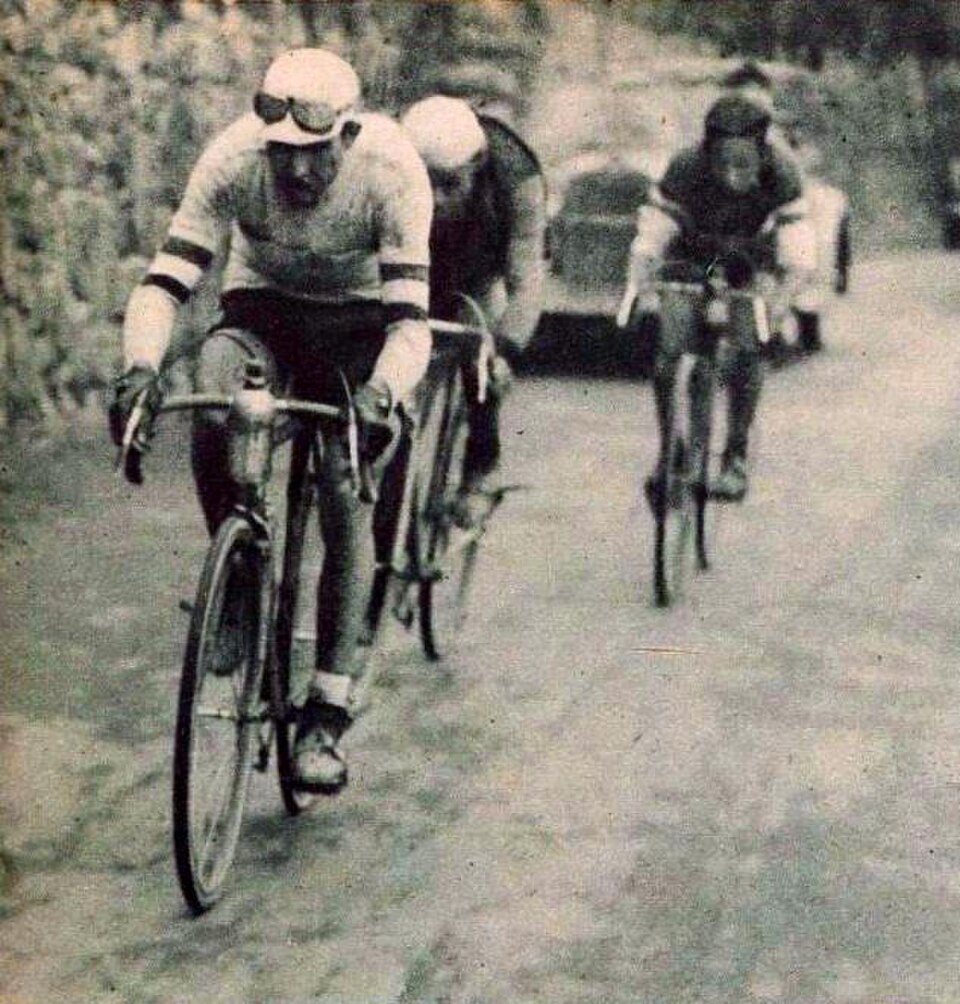
Bartali's training rides had another purpose
During the German occupation of Italy, Gino Bartali used the familiar sight of a professional rider in training as cover while carrying material for a rescue network.
Read the story →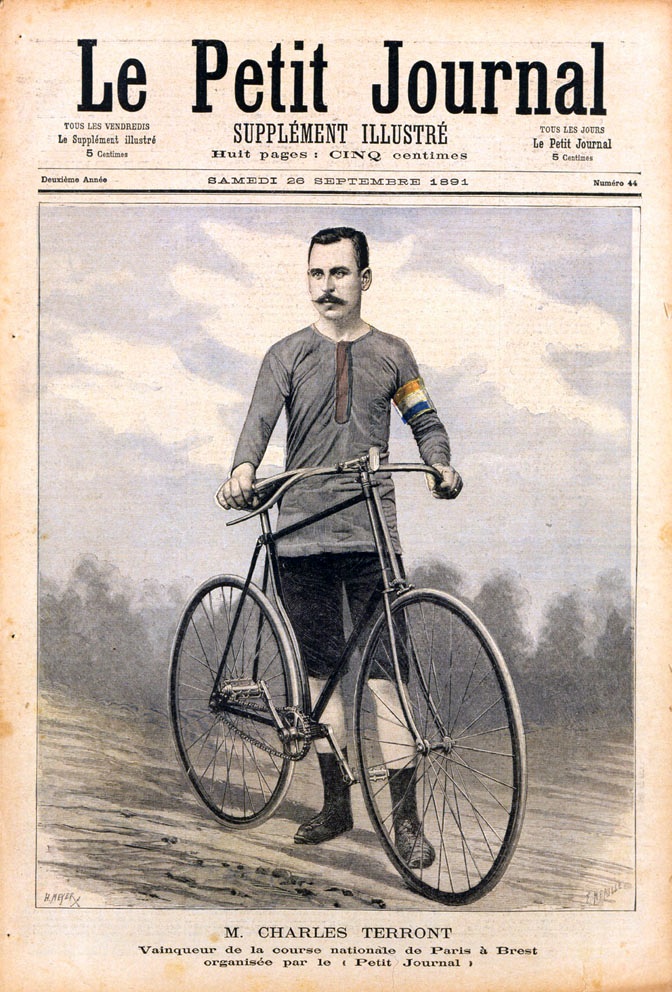
Paris–Brest–Paris 1891 – Charles Terront's three days
Charles Terront covered 1,200 kilometres in 71 hours 37 minutes. The newspaper race tested both the rider and the young safety bicycle.
Read the story →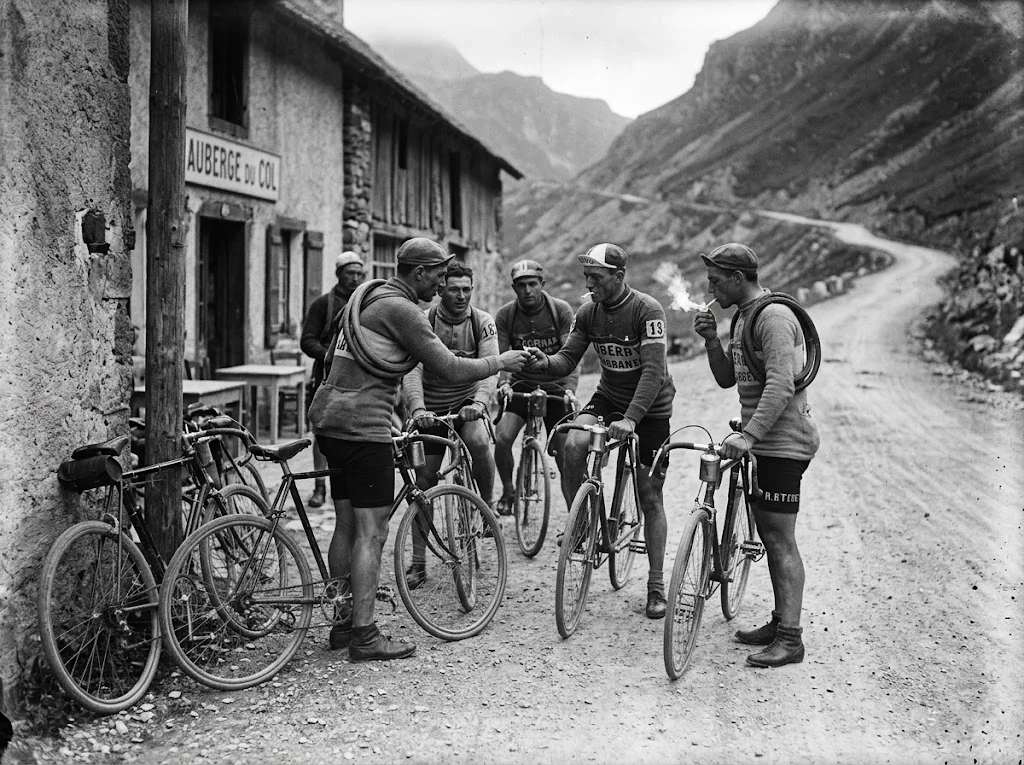
Cycle racing’s hard golden age
See the races, people, bicycles and changes that shaped the period.
Explore the period →