1974 · Story
What happened to Freddy Maertens in Montréal?
He remembered a bottle and the stomach trouble that followed. The result is certain. The explanation for his abandonment is not.
The bottle that kept returning
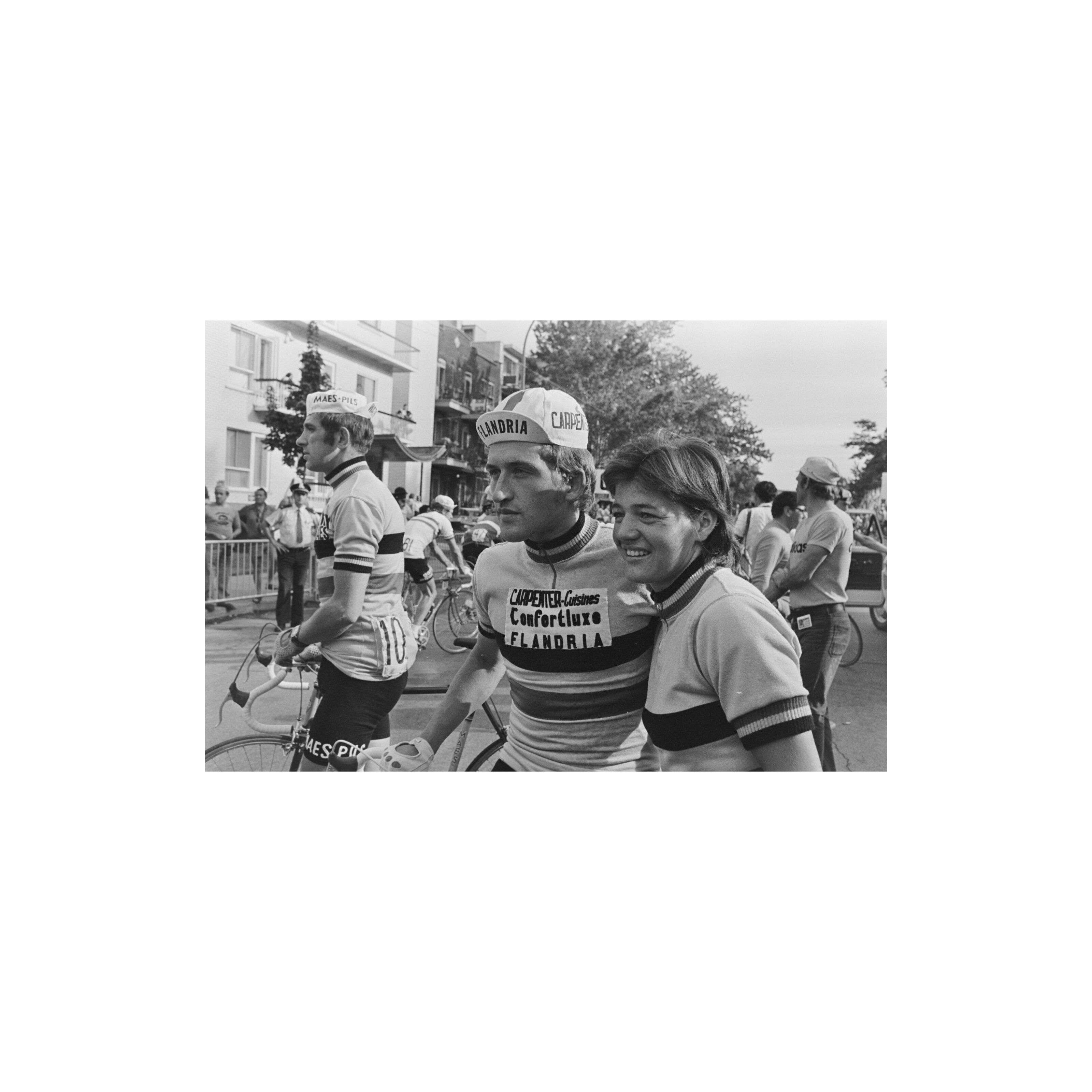
Freddy Maertens remembered a bottle. It had been handed to him during the 1974 World Championships in Montréal, and in his later account that was where the race went wrong. Stomach trouble followed. He abandoned a championship he believed he had the legs to win.
A bottle is among the most ordinary objects in a bicycle race. A rider takes it, drinks and returns it to the cage. That ordinariness may be why this one kept returning whenever Maertens spoke about his career.
We must keep track of who says what. Maertens abandoned and Eddy Merckx won: those facts belong to the race. The suggestion that something was put in the bottle is Maertens’s later account. That distinction easily disappears when the story is retold.
The Belgians brought unfinished business
The previous year’s championship in Barcelona had ended in Belgian argument. Maertens led out the sprint for Merckx, but Merckx could not come past. Felice Gimondi could. The Italian won, Maertens finished second and accusations travelled between the Belgian camps afterwards.
Canada therefore did not begin with a blank sheet. There was a national team, but also the interests of the ordinary trade teams. Merckx and Maertens each had an opportunity and their own people around them. A Belgian jersey did not automatically remove the competition between them.
In Montréal Bernard Thévenet attacked alone. Maertens and the Italian Costantino Conti went after him. They did not reach Thévenet, but remained ahead of the peloton. The Belgians had agreed not to chase a compatriot. With Maertens up the road, Merckx had to wait.
Then severe stomach trouble took Maertens out of the race. His day ended there. For everyone else, the pursuit continued.
The explanation came later
In a 2011 interview Maertens gave his version. His own soigneur, Jef D’Hont, had supposedly left his post to eat and asked another helper to hand over a bottle. That helper was Gust Naessens, who was associated with Merckx.
Maertens also said that Naessens later worked for him and that he asked him about Montréal. According to Maertens, Naessens then admitted putting something in the drink to slow him down.
It is a serious accusation, but the interview contains Maertens’s retelling of the conversation. It is not an independently documented confession from Naessens. Repeating the story years later does not by itself make it more certain.
Maertens maintained the account. When KOERS interviewed him in 2026, he again chose Montréal as the race he would like to ride once more. More than fifty years later, he still called it his greatest disappointment.
The memory can be told without treating the case as solved. None of the material examined contains an independent inquiry establishing what was in the bottle. Nor does Maertens’s account document any order from Merckx.
The race continued
Merckx and Herman Van Springel could now join the pursuit. Thévenet was caught in the finale, and Raymond Poulidor was eventually the only rider able to follow Merckx. The Belgian won ahead of the 38-year-old Frenchman, with Mariano Martínez taking bronze on 25 August 1974. It was Merckx’s third professional world title.
Contemporary coverage concentrated on Merckx’s victory and Poulidor’s performance. There was an entire bicycle race around Maertens’s misfortune, with attacks, pursuit and a decisive finale.
For Maertens, the day remained attached to something much smaller: a bottle accepted during the race. The result sheet can tell us who won. It cannot tell us what was in it.