The people behind cycling · Neutral support · 1972–1977
When the neutral service car became everyone’s mechanic
A car broke down during the Dauphiné Libéré. The following year, Mavic sent out a yellow service car to help the entire field — including riders whose own mechanic was far away.
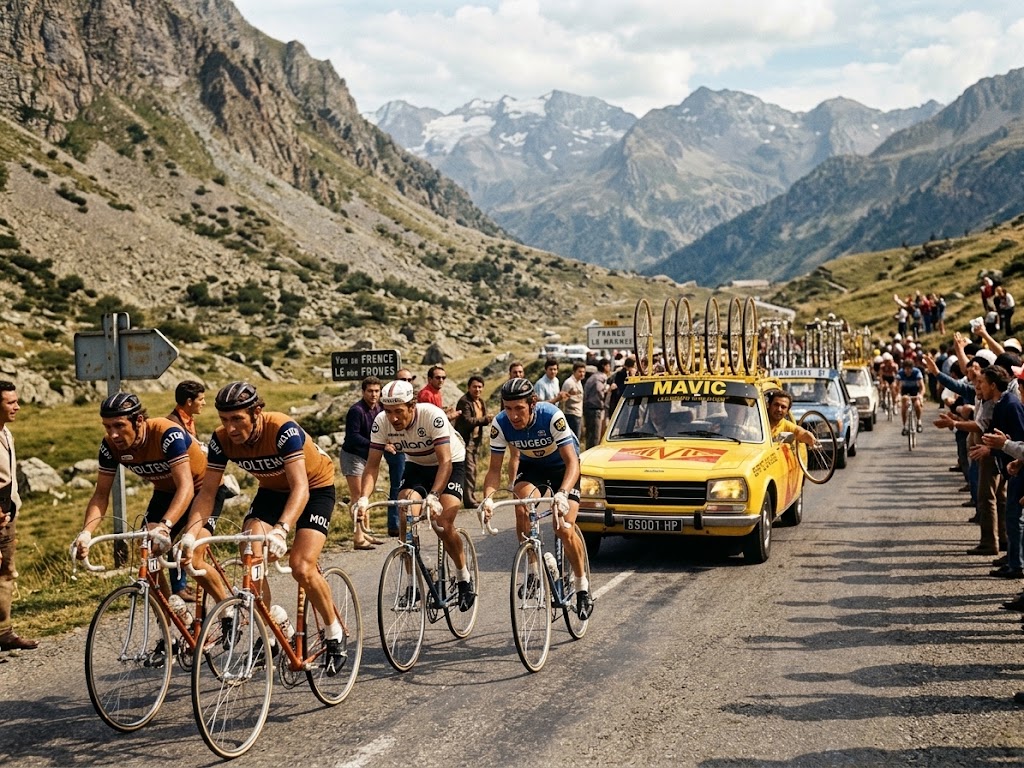
A car broke down during the Dauphiné Libéré. The following year, Mavic sent out a yellow service car to help the entire field — including riders whose own mechanic was far away.
A car stopped — the race did not
A team director’s car broke down during the Critérium du Dauphiné Libéré in 1972. The race continued while the man responsible for following his riders stood beside the road. Bruno Gormand, then head of Mavic, lent him his own car. It might have remained a small favour within the race convoy. Instead, it gave Gormand an idea: assistance did not always have to come from the rider’s own team.
One car for the whole field
At Paris–Nice in 1973, Mavic deployed its first neutral service car. It carried wheels, tools and mechanics who were meant to help any rider, regardless of jersey, bicycle brand or position in the race. The car could travel close to breakaways that team vehicles did not always reach, and also formed part of the race’s radio link.
The wheel had to fit now
It sounds simple. The rider raises an arm, the car stops and a new wheel goes in. But a wheel is not merely a wheel. Freewheel, axle and brake adjustment had to fit a bicycle the mechanic might never have touched before. A team mechanic knew his rider’s machine. The neutral mechanic had seconds to look, think and act.
Good enough to continue
There was no time for a thorough workshop inspection. The wheel had to be secure, the chain had to run and the brake could not drag so badly that the rider immediately lost speed again. The team car could finish the job later, if it arrived. It was not always elegant, but the rider continued.
Two different beginnings
Mavic’s neutral support did not begin at the Tour de France. The idea emerged in 1972 and was put into practice at Paris–Nice in 1973. Mavic assistance joined the Tour only in 1977, according to the Tour’s own account marking the partnership’s fortieth anniversary in 2017. Four years is a small difference, but it keeps the story in order.
The yellow car could be found
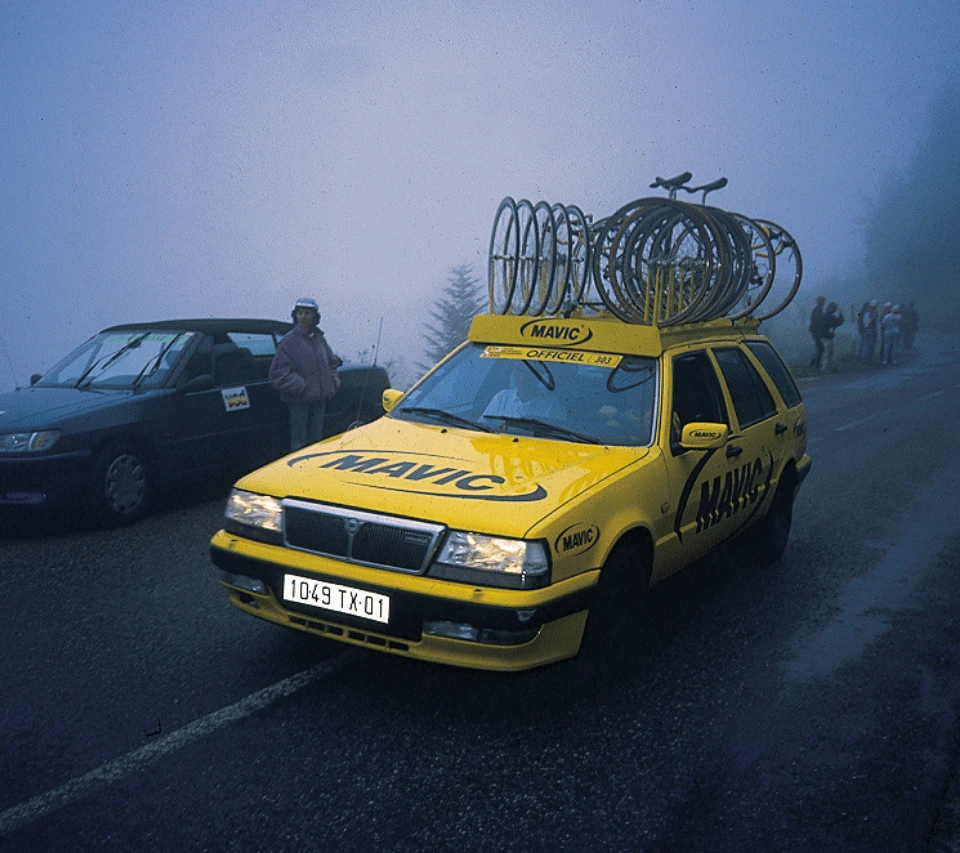
The yellow car became a familiar sight in the field. Its colour was practical. A rider with a flat tyre had to find help in rain, fog and a crowded convoy. Spare wheels sat on the roof, tools and parts travelled inside, and around the car worked people whose job began when something else had broken.
The mechanic without a team jersey
Neutral support did not remove the need for team mechanics. It filled the gap when a team car was too far away, trapped behind other vehicles or helping another rider. The mechanic in the yellow car saw a raised hand, a flat tubular or a loose chain. Tools out. A wheel down from the roof. Quickly onwards. To my mind, that is where the story lies: he did not ask which team the rider belonged to. He simply had to get him back on the bicycle.
Sources
Continue exploring
More from cycling history
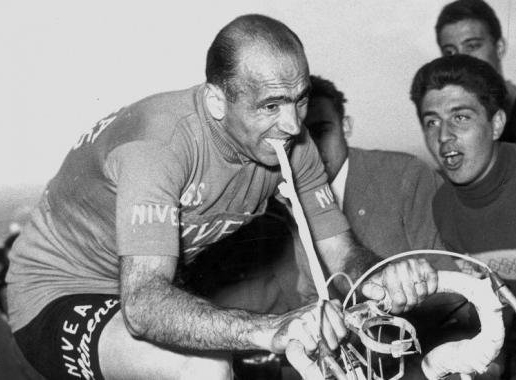
When Magni bit an inner tube to stay in the Giro
With a badly injured shoulder, Fiorenzo Magni continued the Giro with an inner tube tied between his handlebars and teeth.
Read the story →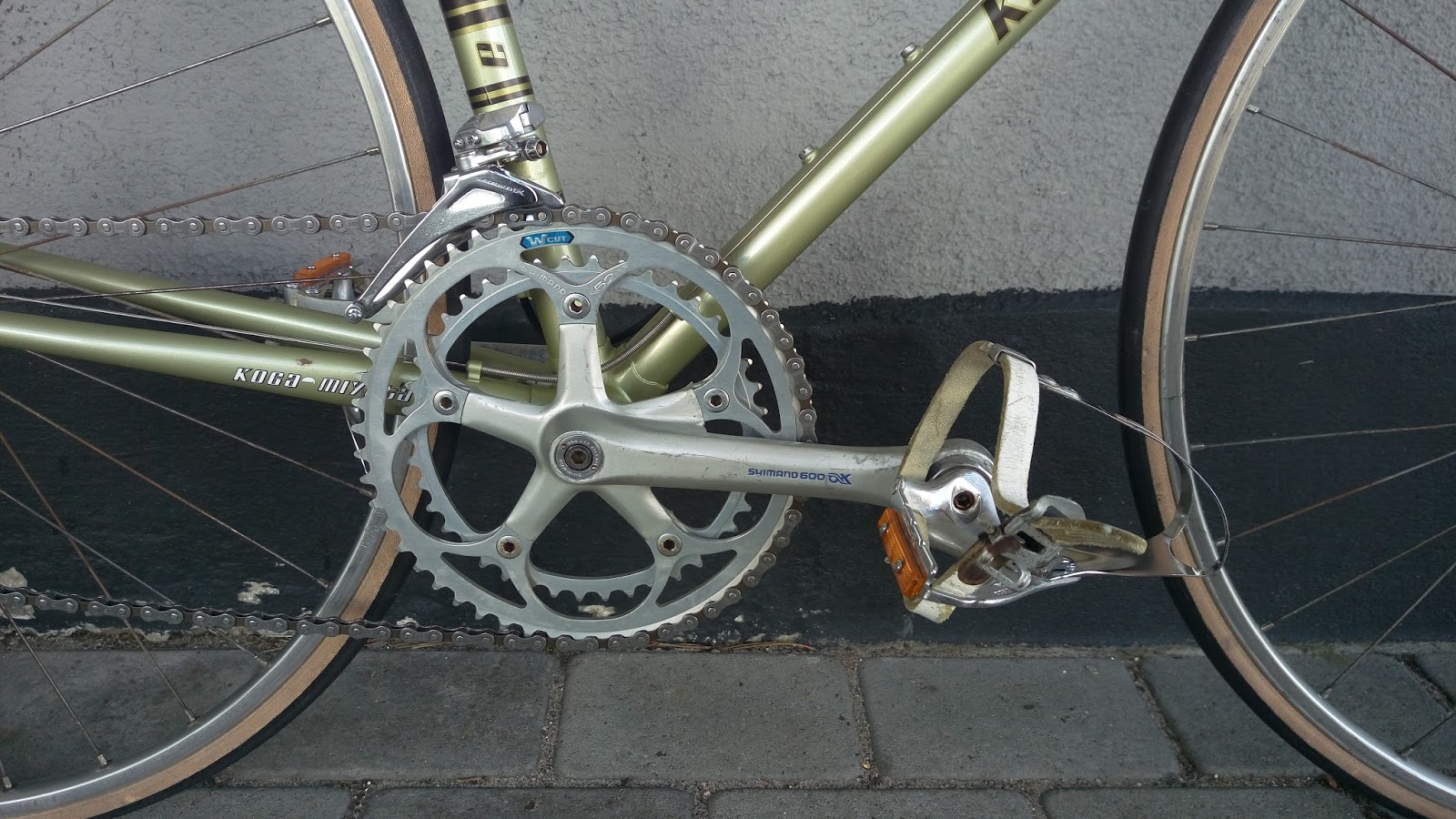
When even the pedal thread had to be aerodynamic
Shimano built a wind tunnel and gave Dura-Ace AX smooth forms. The idea reached all the way to the pedal and showed how far a complete system could be pushed.
Read the story →
When war closed the roads
See the races, people, bicycles and changes that shaped the period.
Explore the period →