Bicycles and technical change · Aerodynamics · 1980–1983
When even the pedal thread had to be aerodynamic
Shimano built a wind tunnel and gave Dura-Ace AX smooth forms. The experiment reached the pedal itself and showed how far a complete technical idea could be pushed.
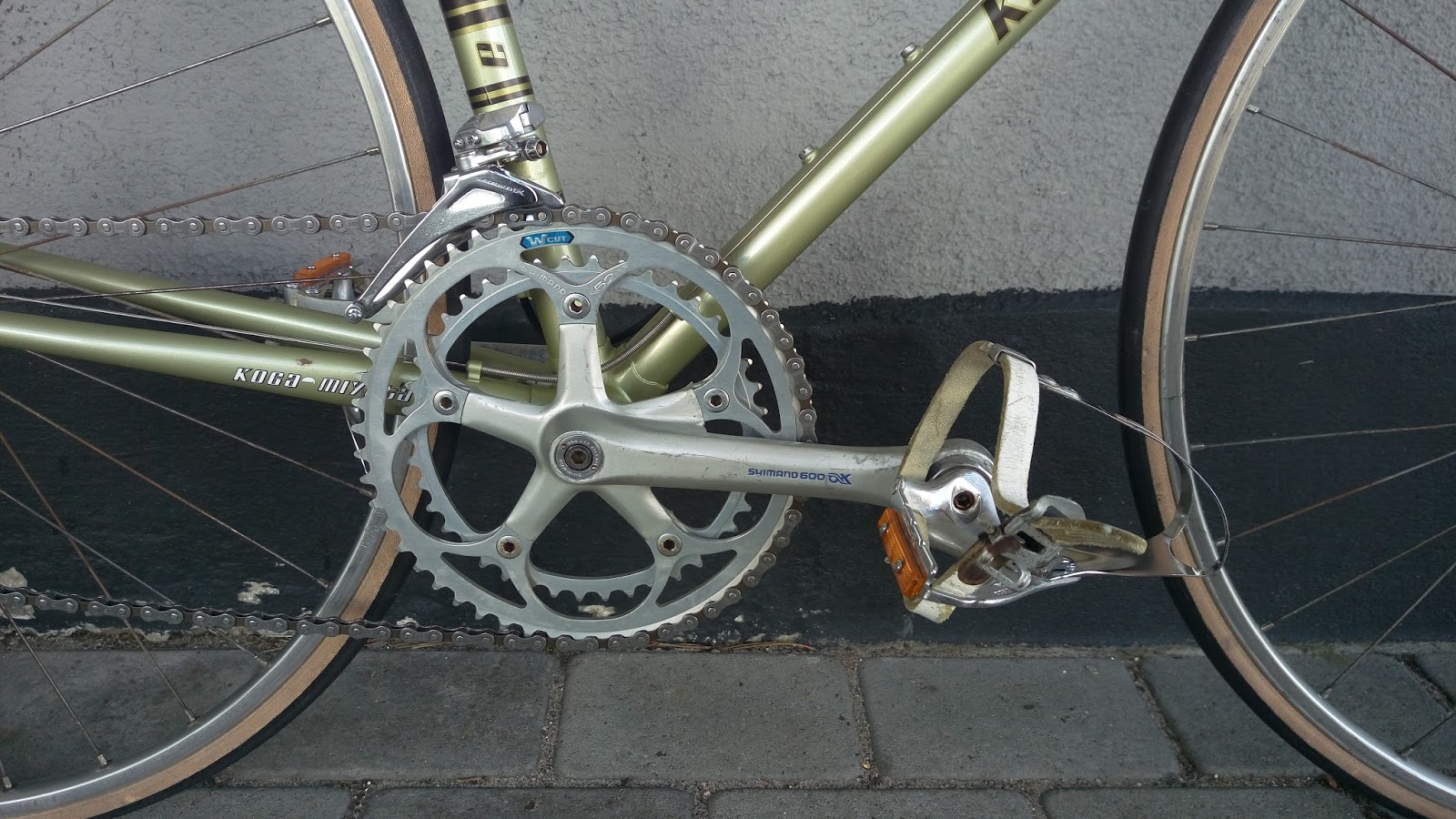
Shimano built a wind tunnel and gave Dura-Ace AX smooth forms. The experiment reached the pedal itself and showed how far a complete technical idea could be pushed.
Aerodynamics became a system
Around 1980, a fast bicycle was no longer defined only by a light frame and good bearings. Shimano tried to treat the component group as one airflow. Dura-Ace AX received rounded, smooth shapes with edges, bolts and protrusions reduced or covered. Brakes, hubs, controls, crank and pedals belonged to the same argument.
From Dura-Ace to AX
Shimano introduced Dura-Ace in 1973 and EX in 1978. The 7300 AX series followed in 1980. The Japanese company wanted to challenge Europe’s leading groups with more than price. It built a wind tunnel and made aerodynamics the group’s clear identity. AX was both a technical experiment and a claim to leadership.
Small gains across the bicycle
Sharp transitions were rounded and several fittings gained covers or lower profiles. Brake and control shapes considered airflow, while hubs and shifting parts followed the same visual language. Each gain could be small. The point was the sum—and the possibility of selling the bicycle as a coordinated aerodynamic system.
Dyna-Drive lowered the foot
Dyna-Drive was the most conspicuous idea. Its bearings were not arranged around a conventional spindle outside the crank. An oversized thread allowed the platform to sit closer to the centre of the axle. Shimano claimed a lower foot and reduced frontal area. The design required dedicated cranks and pedals, so it could not simply be mixed with standard equipment.
Flagship and sibling
Dura-Ace AX led the project, but its ideas travelled into 600 AX. The collection’s 1983 Koga-Miyata Gentsracer-Aero carries Shimano 600 AX and Dyna-Drive. It does not document Dura-Ace itself. It shows something equally useful: the aero project became a product family fitted to high-quality production bicycles.
When a system limits choice
Special solutions may be elegant while making replacements difficult. Dyna-Drive did not use a normal pedal thread, and several AX parts occupied their own technical world. Mechanics had less freedom to combine components from different years and makers. The short lifespan later made AX fascinating to collectors—and demonstrated that an ingenious solution does not automatically become a standard.
Shifting became the stronger story
Dura-Ace 7400 arrived in 1984. Accurate shifting, followed by Shimano’s indexed SIS system, became more important than the special AX appearance. Many smooth AX forms disappeared, but Shimano did not stop thinking in systems. Compatibility among controls, derailleur, chain and sprockets became one of its greatest strengths.
A short experiment with a long idea
Dura-Ace AX did not solve aerodynamic bicycles once and for all. Modern tunnels measure differently, and today’s components face other constraints. Yet the group made every small part available for questioning. AX’s precise solutions were short-lived. Its method of thinking was not.
Sources
Continue exploring
More from cycling history
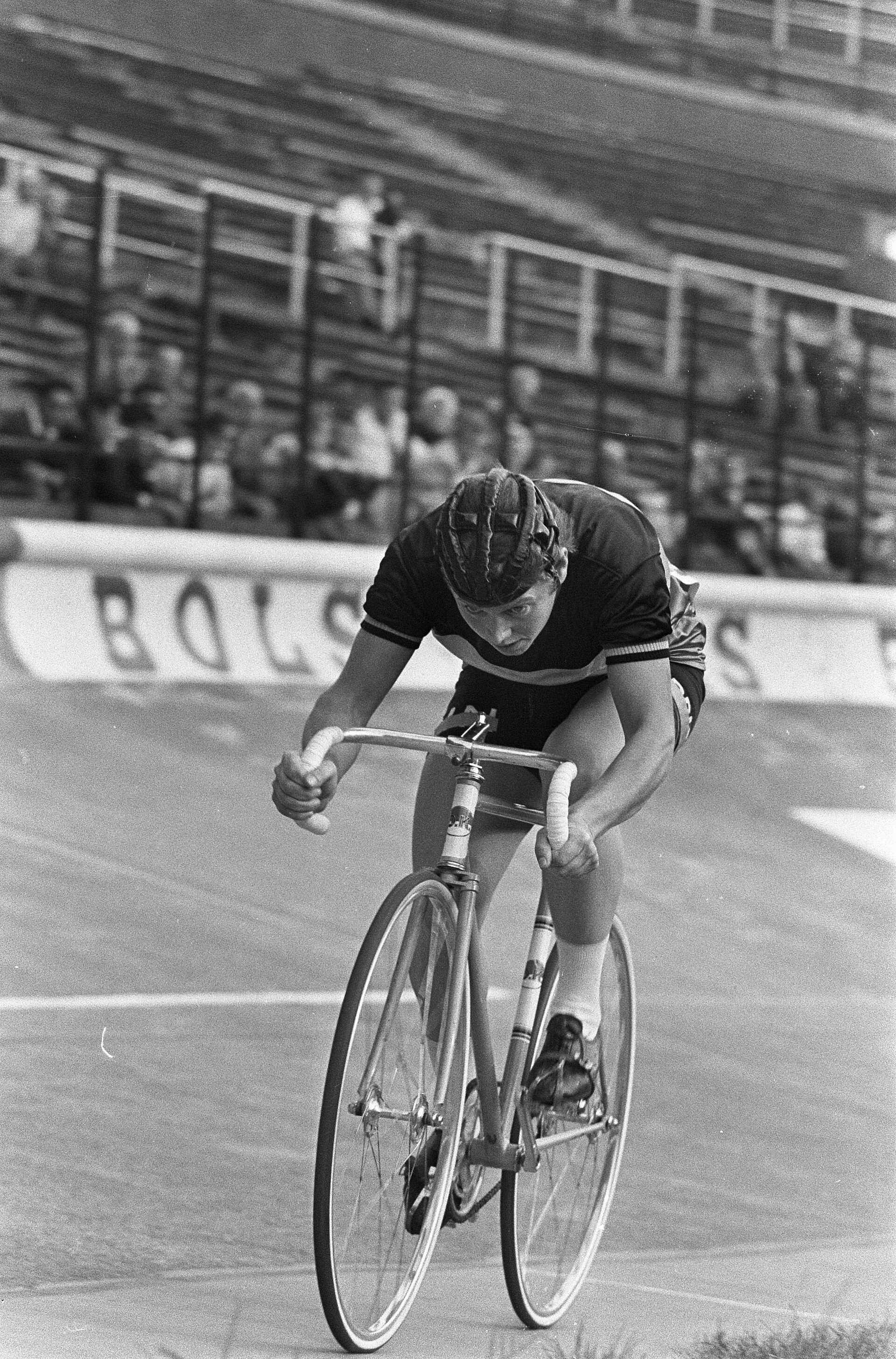
When the coal had been delivered, training began
Yvonne Reynders delivered coal on a three-wheeled cargo bicycle before winning seven world titles on road and track.
Read the story →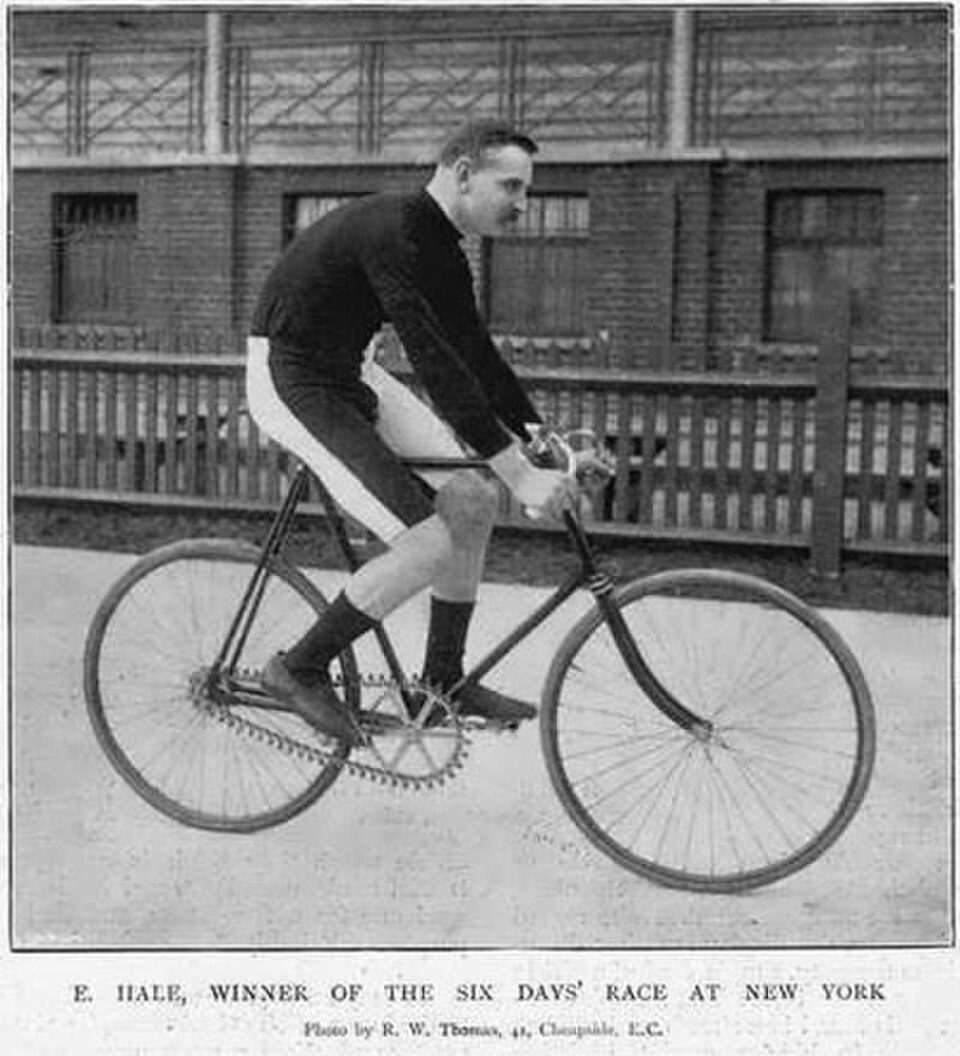
Teddy Hale and 142 hours in New York
In December 1896, Teddy Hale won the individual six-day race at Madison Square Garden after 142 hours and roughly 3,074 kilometres.
Read the story →
When the bicycle became a laboratory
See the races, people, bicycles and changes that shaped the period.
Explore the period →