1986–1991 · Story
When the power meter took the laboratory onto the road
Schoberer’s crank measurement gave riders data from the road. A 1991 training camp shows what changed.
At a training camp in St. Moritz in 1991, German national team riders took something onto their bicycles that had previously belonged in a laboratory. An SRM system measured their power while they rode. Obtaining a figure for their work at the pedals no longer required staying on a stationary bicycle.
It was a practical attempt to bridge testing and reality. A rider could achieve a particular result under controlled conditions yet struggle to explain why a long training ride or race had gone differently. On the road, effort became entangled with gradients, wind and other riders. Speed alone could not separate them.
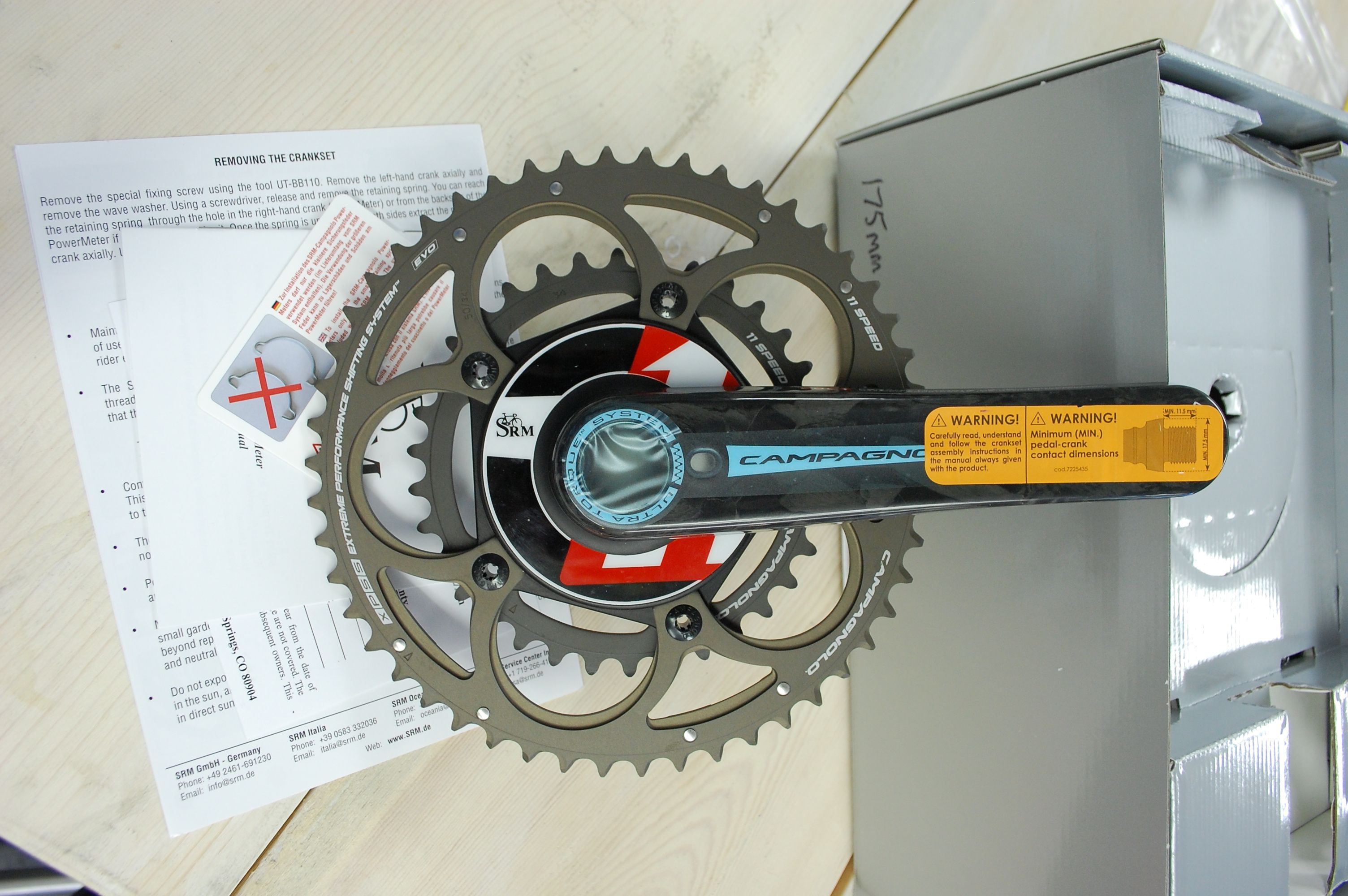
The instrument was the work of engineer Ulrich Schoberer. He began development in 1986 and received a patent in 1987 for a measurement solution at the crankset. A system capable of recording data followed in 1988. By the time the riders tried it at camp, several years of work already lay behind the equipment rotating beside the bottom bracket.
Measuring work at the chainring
Schoberer’s design placed the measurement in the crank spider, the connection between the crank axle and chainrings. Small sensing elements registered deformation under load. The system could determine torque and combine it with rotational speed to calculate power.
That is the distinction between pushing hard and producing many watts. A large force without movement does not deliver the same mechanical power as a force turning the crank rapidly. The meter needed both load and movement. The result was a figure that could follow the rider from one interval to the next.
It did not make heart rate or feel redundant. Heart rate describes something about the body’s response; a power meter describes mechanical output at its measurement point. A tired rider can experience a familiar load very differently from a fresh rider. The difference between the number and the sensation can itself be useful when reviewing training.
Speed also depends on what the bicycle must overcome. A tailwind can produce high speed at modest power. A headwind can make a substantial effort slow. Measuring at the cranks let a coach examine the effort without first inferring it from kilometres per hour.
Bringing the ride home
Recording mattered at least as much as the handlebar display. Once a ride was saved, rider and coach could examine how long a load had actually been sustained. A planned interval and a completed interval no longer had to be treated as identical simply because the stopwatch had run.
SRM continued to develop both measurement and recording. In 1993 a new generation could record at one-second intervals and had memory for lengthy sessions. More detail also demanded someone able to interpret it. A file does not explain whether the rider was dropped, leading the bunch or simply descending.
Greg LeMond was among the early professional users. It is tempting to let a famous name complete an invention in a single stroke, but adoption was gradual. The systems needed to be reliable, durable and useful to coaches. An accurate instrument left in a box changed nobody’s training.
A number that had to be right
Measurement requires checking too. Zero offset and calibration belong to the work of using a power meter; electronics do not exempt the mechanism from being correct. Otherwise a rider risks comparing numbers that look alike on a display but mean different things.
The new instrument therefore brought both an opportunity and a task. Effort could be described more precisely, but still needed understanding. In St. Moritz the riders had taken laboratory measurement onto the road. Returning from the ride, they now had something to put on the coach’s desk as well.