1933–1939 · Story
Grundahl won in Forum with Albert Billiet
Two names appear on the winners’ list: Albert Billiet and Werner Grundahl. The young Dane had turned professional and found a Belgian partner for the work in Forum.
A victory with two names
Werner Grundahl won the Copenhagen Six Days in 1936 with Albert Billiet. The Belgian and the Dane became the third winning pair in the event's history. Adolphe Charlier and Roger De Neef finished behind them. Willy Falck Hansen also competed, but his partner was Cor Wals and their result was third place.
Grundahl had entered a different working life. The previous year he had taken bronze in the amateur road World Championships. Now he was a professional, sharing his efforts with a partner on an indoor track. A strong engine remained necessary, but the task had changed shape.
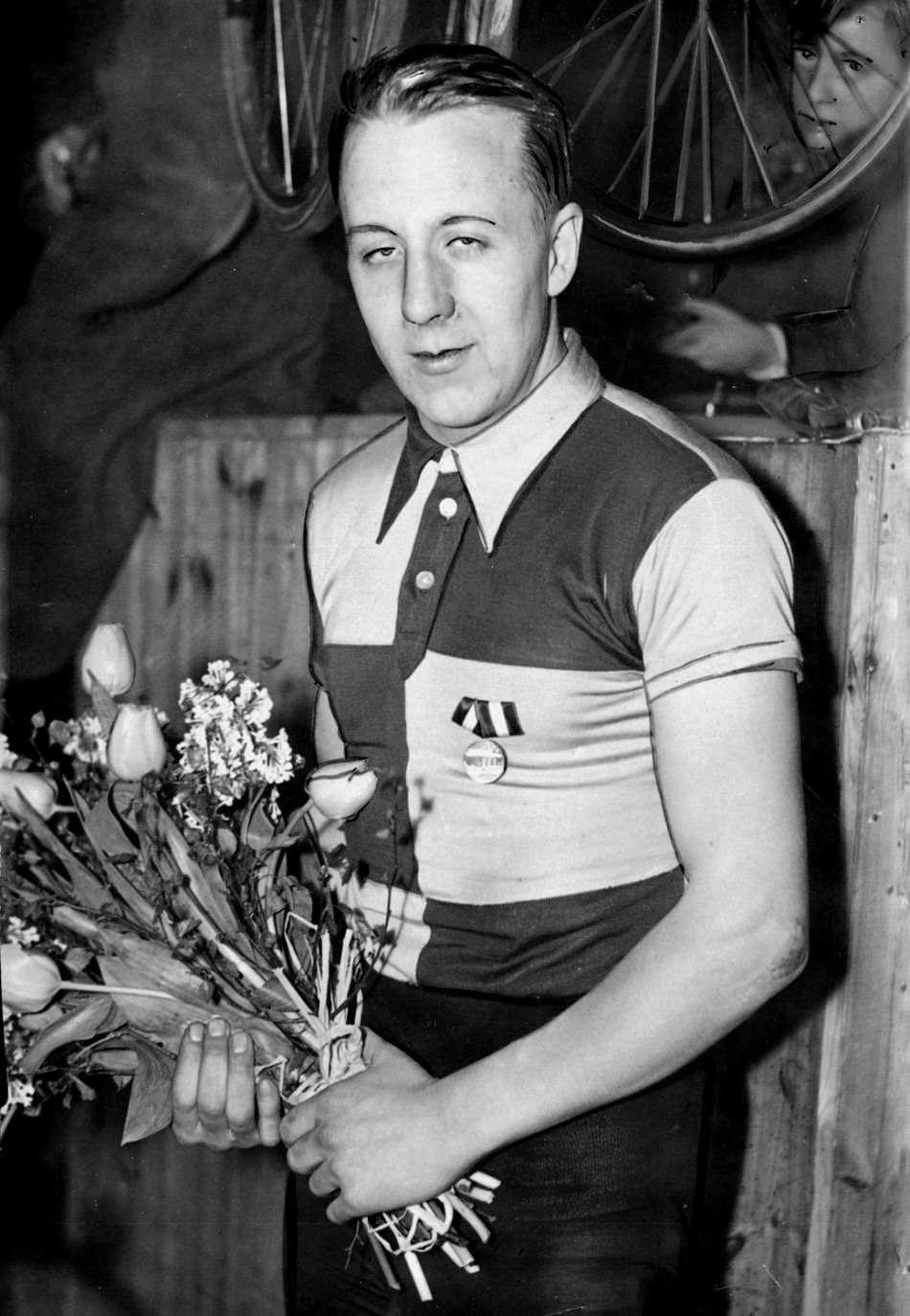
He arrived with a name Danish sports readers already knew. In 1933 he had won both the national championship and Stjerneløbet. That year he also received the Årets Fund award. A surviving photograph from 1933 shows him holding a bouquet, with a medal on his chest. The young rider had attracted attention before his name reached Forum's winners' list.
Two years later came his world bronze medal. He therefore carried an international result with him when he became a professional at the beginning of 1936. He did not have to learn how to endure a bicycle race. Six-day racing nevertheless demanded a partnership which an individual road medal could not manage on its own.
A Belgian partner in Copenhagen
Albert Billiet had already stood on the Copenhagen podium. At the first Six Days in 1934 he finished third with René Martin. He knew the event before his name appeared beside Grundahl's in the results two years later.
A pair had a shared result to protect. While one performed his part of the work, the other still had to be able to continue. One powerful rider could not make his partner's legs unnecessary. There had to be energy for decisive efforts and a way of holding on to what they had gained.
This gave Grundahl's road strength a new purpose. He had to judge more than his own reserves against those of the opposition. He also had a partner to work with. The result shows that they succeeded: Billiet and Grundahl finished first in the earlier of Copenhagen's two six-day events in 1936.
The second edition that year was won by Jan Pijnenburg and Frans Slaats. It is a small but significant detail when reading old results. Two winning pairs appear against 1936. Grundahl's victory can disappear if the year is treated as a single event with a single winner.
The track career continued
Billiet was more than a name to be printed in small letters after a Danish victory. He was the other half of the winning pair. Grundahl's first major Copenhagen six-day result was achieved alongside a rider bringing his own experience and his own share of the work.
Grundahl continued collecting results on the track. DBC's list of professional ten-kilometre champions names him as winner in both 1937 and 1938. His move into professional racing therefore produced more than one successful week in Forum.
In 1939 he finished second in the Copenhagen Six Days, this time with Bjørn Stieler. His partner had changed, and victory went to Karel Kaers and Omer De Bruycker. Grundahl remained among the riders capable of making an impression in the Copenhagen competition.
In the 1933 photograph he is still the young man with the flowers. On the 1936 results sheet he appears in a different setting. Albert Billiet's name stands on the other side of the slash.