1969 · Story
Danguillaume took yellow on the road to Cottbus
A time-trial win gave Danguillaume the lead in the 1969 Peace Race. In Berlin 42 seconds remained.
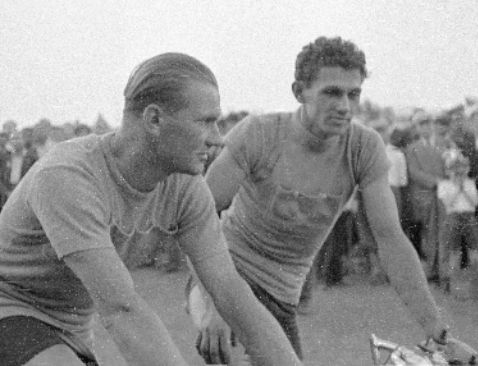
Between Guben and Cottbus, Jean-Pierre Danguillaume finished in a time Ryszard Szurkowski could not match. This was the Peace Race in May 1969. It was a time trial, so the Frenchman could not see his lead as a gap in the bunch. It had to be read from the clock. When the times were added up he had won the stage and taken the yellow jersey. Szurkowski was still close enough overall that the jersey would need defending all the way to Berlin.
The East German newspaper Neues Deutschland printed the result the following day. It gave Danguillaume one hour, 21 minutes and eight seconds. Later accounts give other times and disagree about how much he took out of Szurkowski on the day. The order and the change of leader are clear. Time gained on the stage and the gap in the standings are different figures. In Berlin the Pole finished 42 seconds behind the Frenchman.
A day with one job
The time trial gave Danguillaume a different job from riding in the bunch. On an ordinary stage a rider can see a group go clear and decide whether to follow. In a time trial he has to choose his own pace. Start too hard and there is still a long way to go with nobody in front to take the wind. Start too cautiously and the lost seconds do not return of their own accord.
In the contemporary report Danguillaume said afterwards that this was his first time-trial win. The paper also described the French coach greeting him after the stage. It was no foregone conclusion just because the winner later managed to hold the lead. One day had given him an opportunity. The work of keeping it began the next morning.
The Peace Race was ridden by national teams. In 1969 it went from Warsaw to Berlin and did not visit Prague. The riders had several stages and different kinds of racing in which to do their work. A good French result against the clock had put a Frenchman in yellow, but the rest of the field was still there. Szurkowski still had his legs and a Polish team to ride with.
The newspaper placed Danguillaume after Jean-Pierre Genet and Bernard Guyot among the French riders who had taken the race lead. It was a way of telling the result that made sense for the French delegation. From the Polish team the day looked different. A Polish official interviewed by the paper still thought the contest for the lead was open. Both views could be right at once. France had the jersey, and the race had yet to reach Berlin.
The final 42 seconds
After the time trial Danguillaume could afford to follow if the Pole tried to make up time. That is a different task from setting the fastest time of the day. A rider has to watch who gets into a break and what it would mean if the group reached the finish ahead. Someone else can win the stage while the contest for yellow is taking place farther back.
Dieter Gonschorek finished third behind Danguillaume and Szurkowski. The winner turned 23 in Berlin. He later won Tour de France stages, settling races in other ways. Here it was the clock on the road to Cottbus that gave him the lead. Once the race was over, those 42 seconds might have looked a small figure in a long list of results. It took the rest of the race to keep them.