1981 · Story
Italy’s sprint and Maertens in Prague
Baronchelli had brought Saronni forward. The last part of the sprint belonged to Freddy Maertens, and afterwards came the argument about everything the Italians might have done.
One wheel too many
Giuseppe Saronni had reached the sprint for which the Italian team had worked. Gianbattista Baronchelli had brought him forward in the closing stages of the Prague World Championships on 30 August 1981. Saronni still had a Belgian to remove from his wheel.
Freddy Maertens came past to win his second world title. Saronni took silver and Bernard Hinault bronze. Francesco Moser finished sixth. Those placings made the Italian finish something which required explanation as soon as the riders stepped off their bicycles.
Italy had possessed several options along the way. The team could use fast finishers as well as riders capable of trying to escape before the sprint. In the closing stages the opportunity fell to Saronni. Maertens stayed close enough to decide the race himself.
A long race does not necessarily slow a sprinter enough for everyone else to disregard him. Maertens had demonstrated his speed many times, but the Italians had to decide how to use their energy against him on this particular day. At the finish there were no further moves available.
The explanations afterwards
In the contemporary Italian newspaper l'Unità, Gino Sala examined the defeat. There was criticism of whether Baronchelli had left Saronni exposed too early, of the help provided by Moser and Gavazzi, and of Saronni's gearing. Others wanted the Italians to have attacked before the sprint, either to tire Maertens or to get away from him entirely.
These were judgements after the event rather than one complete technical explanation. When several possibilities have ended in the same defeat, almost every moment in the final can start to look wrong. An earlier acceleration, a later one or a different rider in front could each be proposed as the solution.
Saronni also spoke to the newspaper the following day. He expressed his disappointment at losing with so many Italians near the finish. He suggested Moser and Gavazzi might have helped, but added that they had probably given what they could. There was both a wish for more support and a limit to how strongly he would criticise his teammates.
On the bicycle, different possibilities must eventually become an action. Should a rider follow an attack, wait for his sprinter or try to decide the race himself? Having several strong potential winners does not necessarily simplify the decisions. They still share the same road towards the finish and the same few seconds when the sprint begins.
The Belgian took the final stretch
Hinault had returned after a chase earlier in the final and still found the energy for bronze. His position prompted judgements too. The defending world champion had spent energy regaining contact, yet remained present when the medals were distributed.
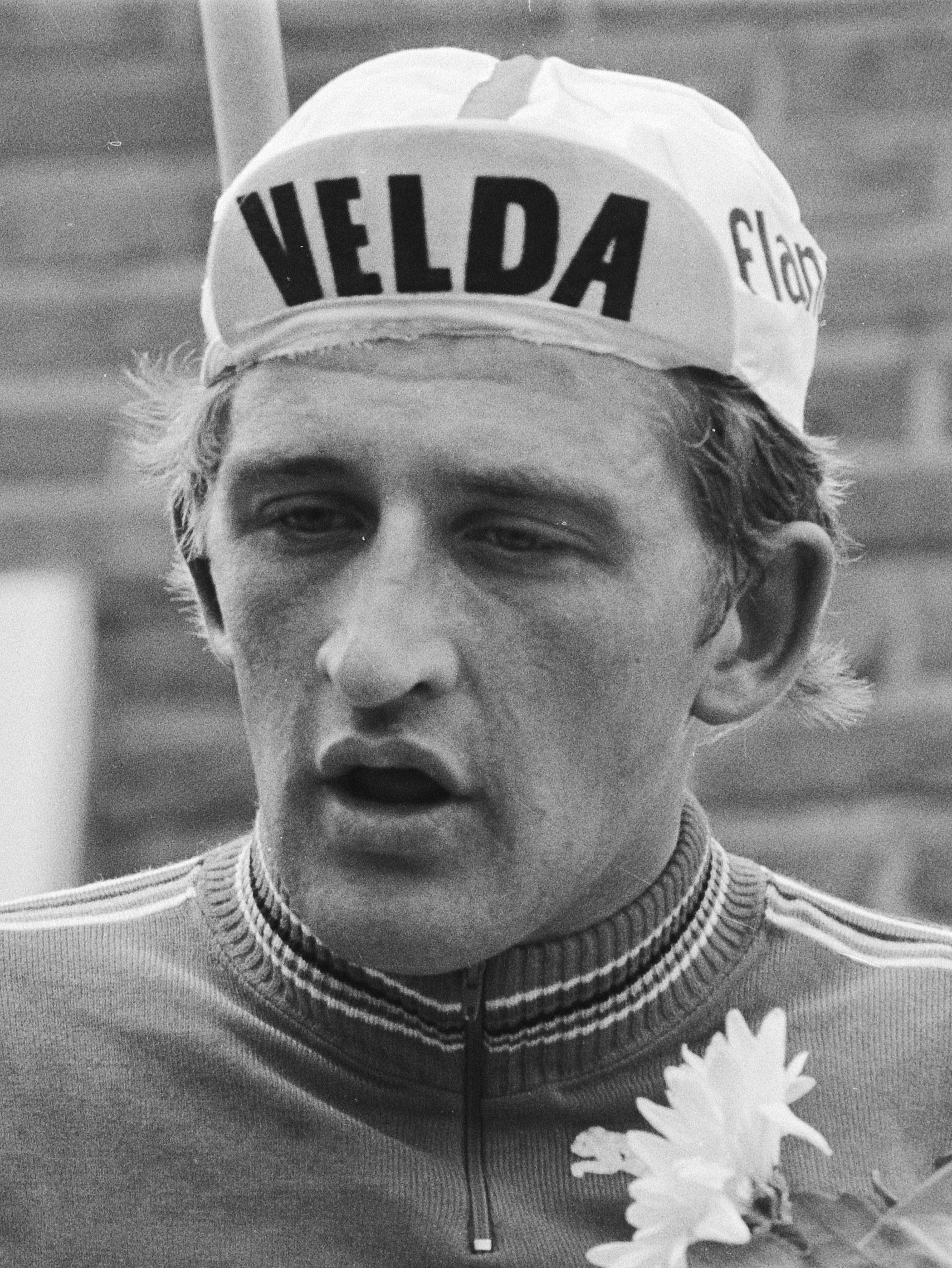
Maertens had a different sort of finish. He needed to maintain contact with the fast Italians and find his position until he could use his speed. No rule turned an Italian lead into an Italian victory. When Saronni reached the front, the Belgian sprinter remained close enough to make the difference.
The order on the podium was straightforward. Maertens on top, Saronni beside him and Hinault in third. The Italian explanations did not change those positions. Nor was Moser left with the placing a planned sprint might have brought him; his sixth place appeared on the same results sheet.
Five years earlier Maertens had won the Worlds in Ostuni ahead of Moser. Now he again had an Italian behind him, this time Saronni. Two different finishes had brought him the same jersey. In Prague the Italians had delivered their man. Maertens took the final stretch of road.