1896–1902 · Story
Orla Nord from the Horsens track to the Rome Worlds
Half a Danish ell cost Orla Nord second place at Horsens. Six years later he won world bronze.
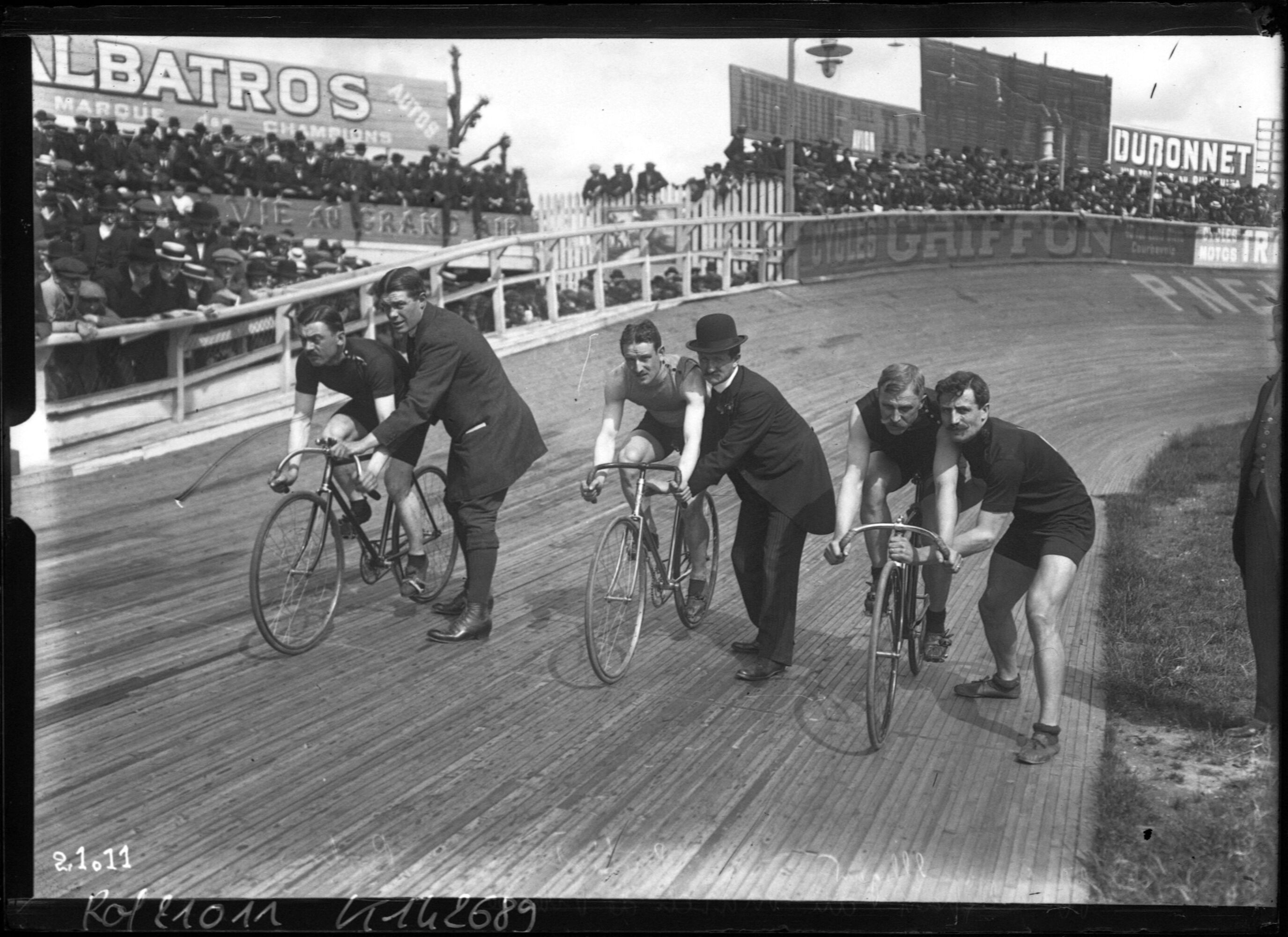
At Horsens on 2 August 1896, the cycling paper Cyclen reckoned that Orla Nord missed second place in the English mile by half a Danish ell. Knud Nielsen got his front wheel ahead. Ingeman Petersen had already crossed the line first. Nord was third, and the report gave him the little gap as well as the place. About thirty centimetres is very little when describing a track. At the finish line it is enough to settle a placing.
Nord had another chance later that day. He finished second in the four-kilometre handicap. Petersen won this one too, starting alone from scratch, without a head start. The mile had been settled in a final heat. In the handicap the riders started from different marks, which made for a different race. The report gives no mark for Nord, so we cannot work out how much of a gap he made up or lost.
Several starts in a day
That day at Horsens tells us something about the track racing Nord learned. The programme included races for club members, for riders from the provinces and for handicapped fields. An English mile and a Danish mile were very different distances, though both were called miles. The short one was a little over a kilometre and a half, the long one about seven and a half. It was worth checking which the organisers meant before getting ready.
A race report could keep track of something as small as half an ell at the line and still give space to how quickly the whole meeting was run. Cyclen said the Horsens programme was over in less than three hours. For spectators it was an afternoon with several finishes. For a rider the next job could arrive before the crowd had finished talking about the last one.
Nord had also been near the front at Fedet, by Risskov. Aarhus Cycle Track preserves the account of a challenge cup over one Danish mile, won by Axel Dahl of Odense ahead of the Swede Sjöberg and Nord of Copenhagen. Another third place, but it tells us where the riders came from. On a track outside Aarhus, a Copenhagener, a man from Odense and a Swede could fill the first three places. Track racing was already something riders travelled for.
The two Horsens results are worth setting beside each other. Third in the mile tells us whose front wheel was ahead after a common finish. Second in the handicap tells us how the riders finished after starting from different marks. Put just the numbers three and two beside Nord's name and the afternoon looks simpler than it was. The racing formats are what make the two places mean different things.
From Horsens to Rome
The Danish Cycling Union lists Orla Nord as national sprint champion in 1901. The following year he took bronze in the amateur world sprint in Rome. Thorvald Ellegaard won the professional sprint at the same championships. There were two races and two separate medals. With Ellegaard's gold so prominent in the memory of Rome, it is easy to miss the Dane on the amateur podium.
There are gaps between the report from Horsens and the list from Rome. We can see where Nord raced and what he achieved, but cannot follow every training ride or explain how he won the 1901 title. Fortunately both the half-ell at Horsens and the bronze in Rome have survived. They show a rider first encountered in the middle of a Danish meeting programme and later in the results of a world championship. They are two moments in the same job. First the front wheel has to cross the line. Then you see what the gap was worth.