1897–1926 · Story
Thorvald Ellegaard left bricklaying for the world’s tracks
Work kept Ellegaard away from a world championship. As a professional he won six titles and filled a passport with journeys.
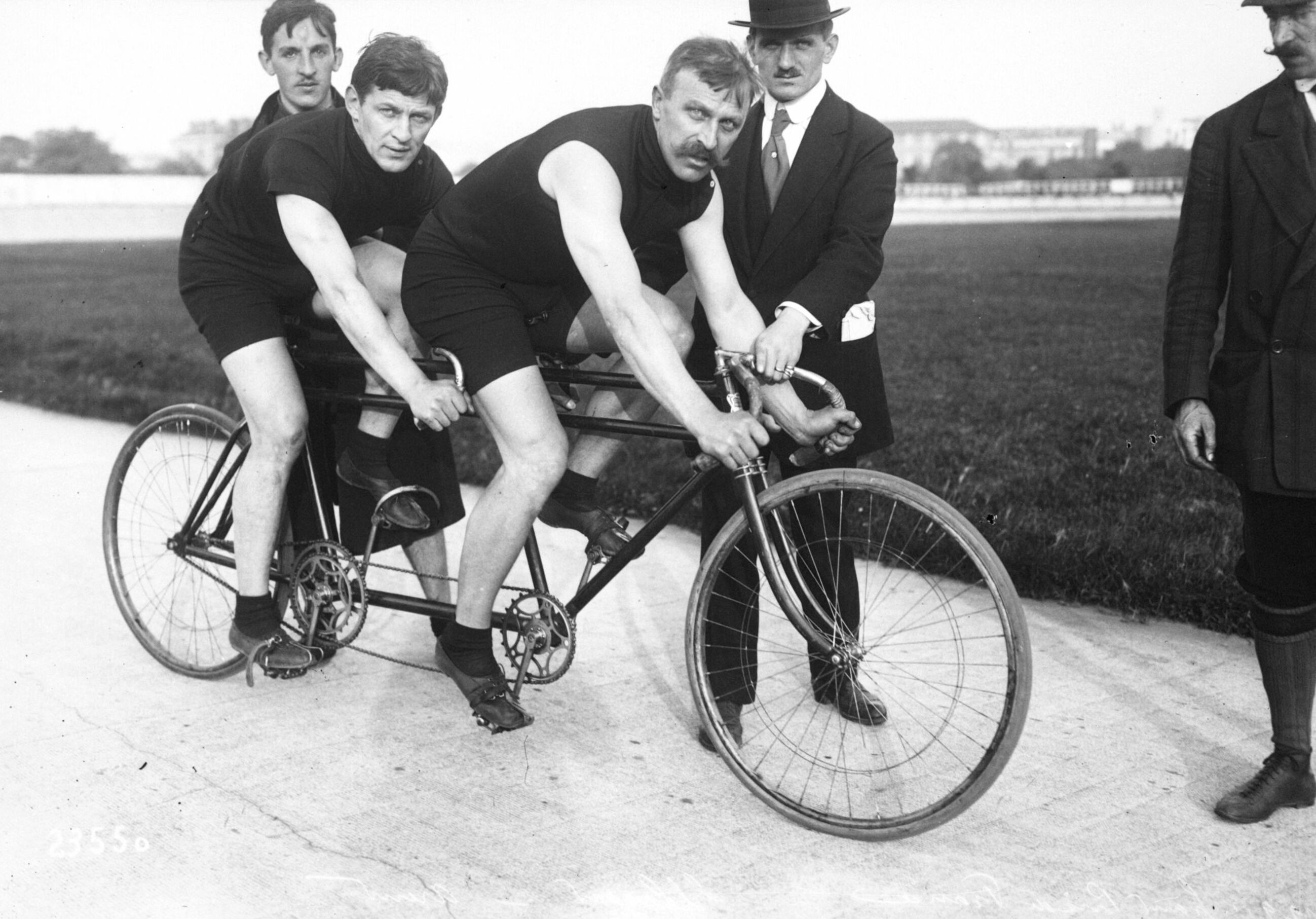
Thorvald Ellegaard did not go to the world championships in Glasgow in 1897. He had been selected, but his work as a journeyman bricklayer intervened. According to the account published by Odense City Archives, his employer would not spare him for more than a week. Erwin Schrader took his place and returned as Denmark’s first cycling world champion.
Ellegaard stayed at home. It was a practical beginning to the story of a man who would later travel between cycling tracks around the world for decades. First he had to escape a job in which selection for the national team did not automatically mean time off.
He came from Fangel outside Odense and had learned his trade in the city. There was a cycling track at Fruens Bøge, and for a while he had combined building work with racing. A world championship in Scotland required more than an evening at the track. The journey also meant days without laying bricks.
Leaving the building trade
In 1898 Ellegaard turned professional. Racing became his work. That did not make his opponents easier to beat, but it allowed him to travel where the strongest riders competed and where a good track racer could earn his living.
His speciality was the sprint. Here a lap time does not tell the whole story. Two riders can watch each other, hesitate and try to make the other open the race before the final metres settle it. Following can be useful until the moment it becomes an obstruction. Winning requires speed, and judgement about when to use it.
Ellegaard won his first professional world championship in that discipline in 1901. More followed. His career, however, was not an unbroken run of world titles. Three consecutive victories were followed by years without gold before he won again in 1906. Titles in 1908 and 1911 followed. Ten years separated his first and last.
During that time he repeatedly faced riders familiar with his racing. A world champion could not hide as an unknown entrant. Winning again meant finding a way past men who had had ample opportunity to study him.
A passport full of cycling tracks
Ellegaard’s working life extended well beyond Denmark. He lived in France for a number of years and raced in Australia and America too. His travels left a tangible record: his passport from 1916–20 was later deposited with Odense City Archives alongside family papers, photographs and medals.
A passport is not a results sheet. Its stamps speak of the part of a sporting career between the starts: borders, journeys and the need to arrive when a promoter had advertised a meeting. The name from Fangel had become a name that could attract spectators far from home.
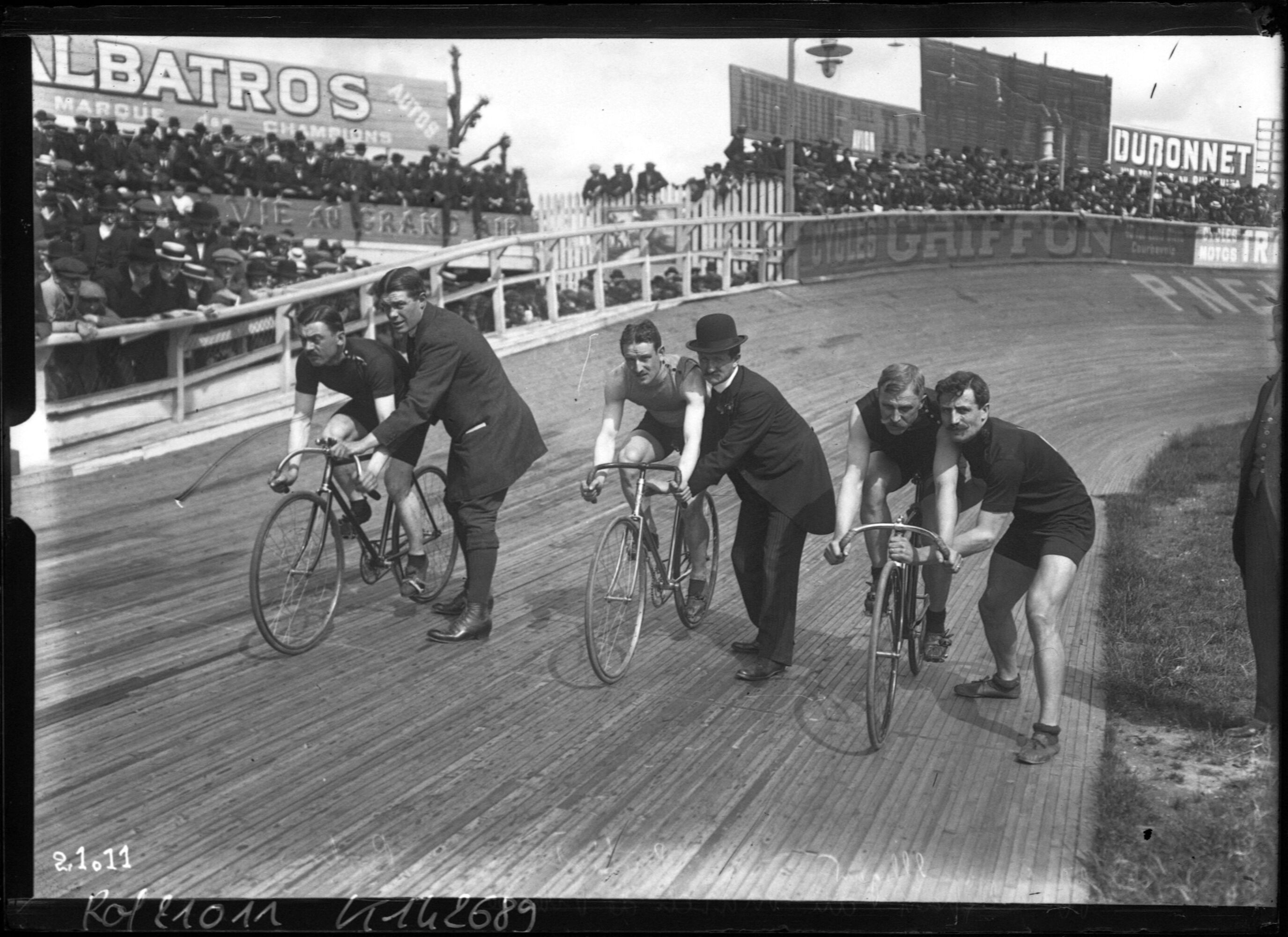
Sprinting was not his only work. He rode tandems with changing partners and entered motor-paced events. On a tandem, his judgement of speed and position had to work with another person’s strength. International track racing offered several forms of competition; a long career cannot be reduced to six world championship finals.
The last start
When the First World War ended, Ellegaard was over forty. He continued nevertheless. He no longer had the speed of his best years, but experience still mattered in a discipline that required reading an opponent.
In September 1926 he rode his final race at the age of 49. The following year he took a job connected with Ordrup track through Dansk Bicycle Club. No longer the man spectators awaited in a sprint, he remained in the world that had provided his livelihood.
The bricklayer once obliged to stay home from a world championship had made an entire working life out of travelling to bicycle races. At the end he no longer needed to stand on the start line to belong at the track.
More images