1960–1963 · Story
Pino Cerami's late victories
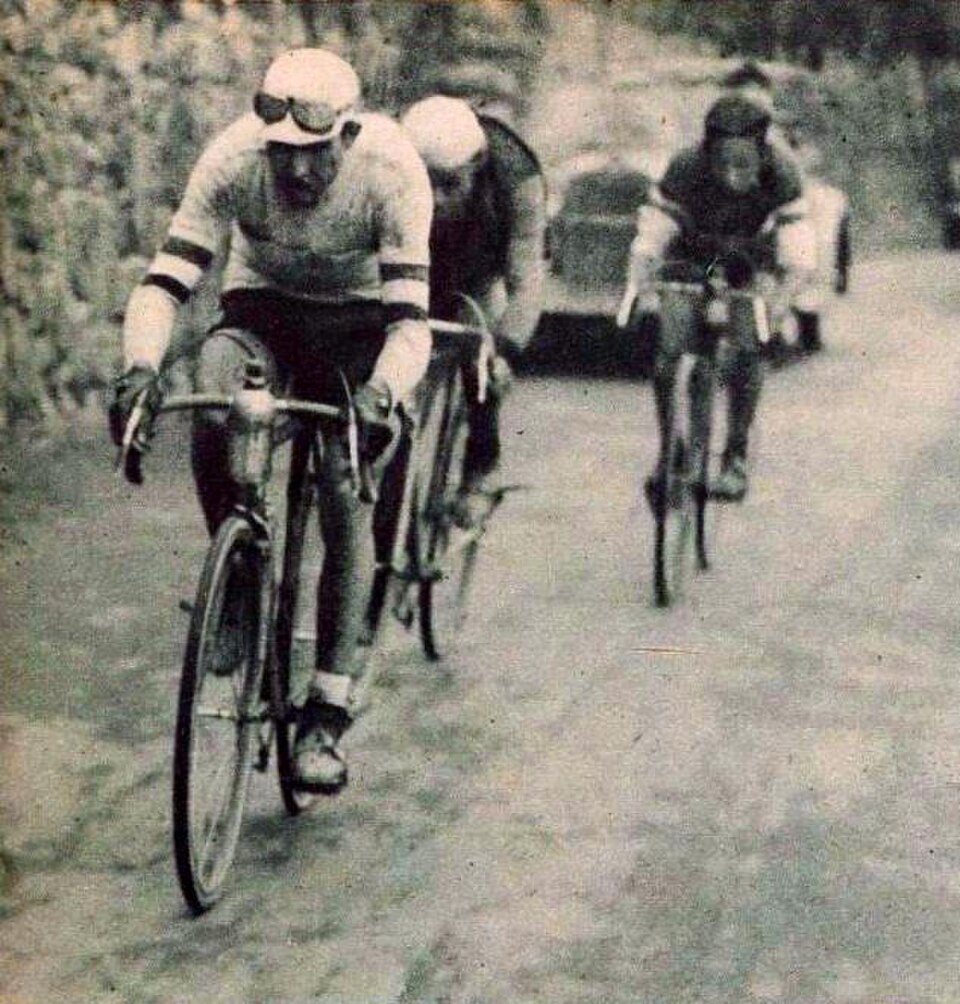
Winter work and years as a domestique preceded Cerami’s late classics victories. He won his Tour stage at 41.
On 1 July 1963, Pino Cerami reached the finish in Pau first. André Darrigade, one of the peloton's leading sprinters, appears one second behind him in the results. Cerami was 41. He had ridden the 202 kilometres from Bordeaux and won the ninth stage of the Tour at an age when many of his contemporaries had long since handed back their race numbers.
It was a late victory, but it had not come from nowhere. Three years earlier he had won both Paris–Roubaix and Flèche Wallonne. Before that, much of his career had been spent improving other riders' chances. He had also needed to make sure there was something to live on when the racing stopped for winter.
The winter had to be paid for
Cerami was born in Sicily in 1922 and came to Belgium as a child. His family settled in a country where industry offered work and cycle racing offered a possible route to something else. The two worlds continued to run alongside each other in his own life.
In an interview many years after retiring, he recalled that he had trained as a car mechanic. He nevertheless chose the steelworks. As an apprentice in a garage he would have earned less, and after his father's death the family's finances had become his responsibility. The size of the wage settled the matter.
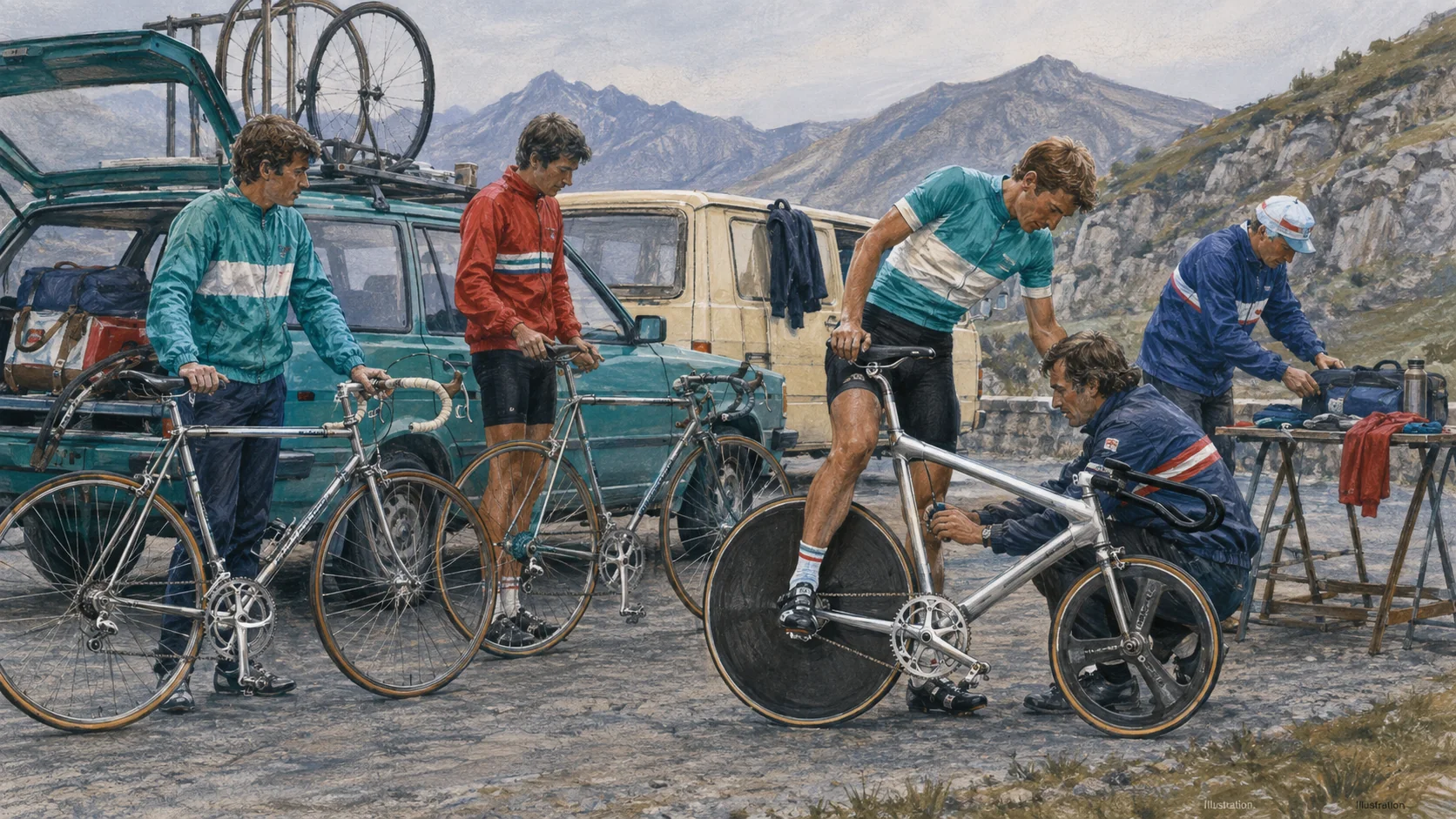
The factory did not immediately disappear when he became a professional cyclist. In his own recollection he worked there from November to February. An engagement at the Brussels Six Day could replace the winter job, but the payment also had to cover expenses and a soigneur. A figure on a racing contract was not the same as money available at home.
That experience gives his long service as a supporting rider a different weight. He had worked for names such as Stan Ockers and Rik Van Steenbergen. The reward for that work often appeared beside somebody else's name. A results sheet records who won. It says rather less about who helped put the winner in a position to do so.
A spring with his own name on it
In 1960 the results began to look different for Cerami. He won Paris–Roubaix and then Flèche Wallonne. Two major victories in the same spring, for a rider approaching forty. He could hardly be described as a new prospect. What was new was seeing his own name at the top of some of the races that mattered most.
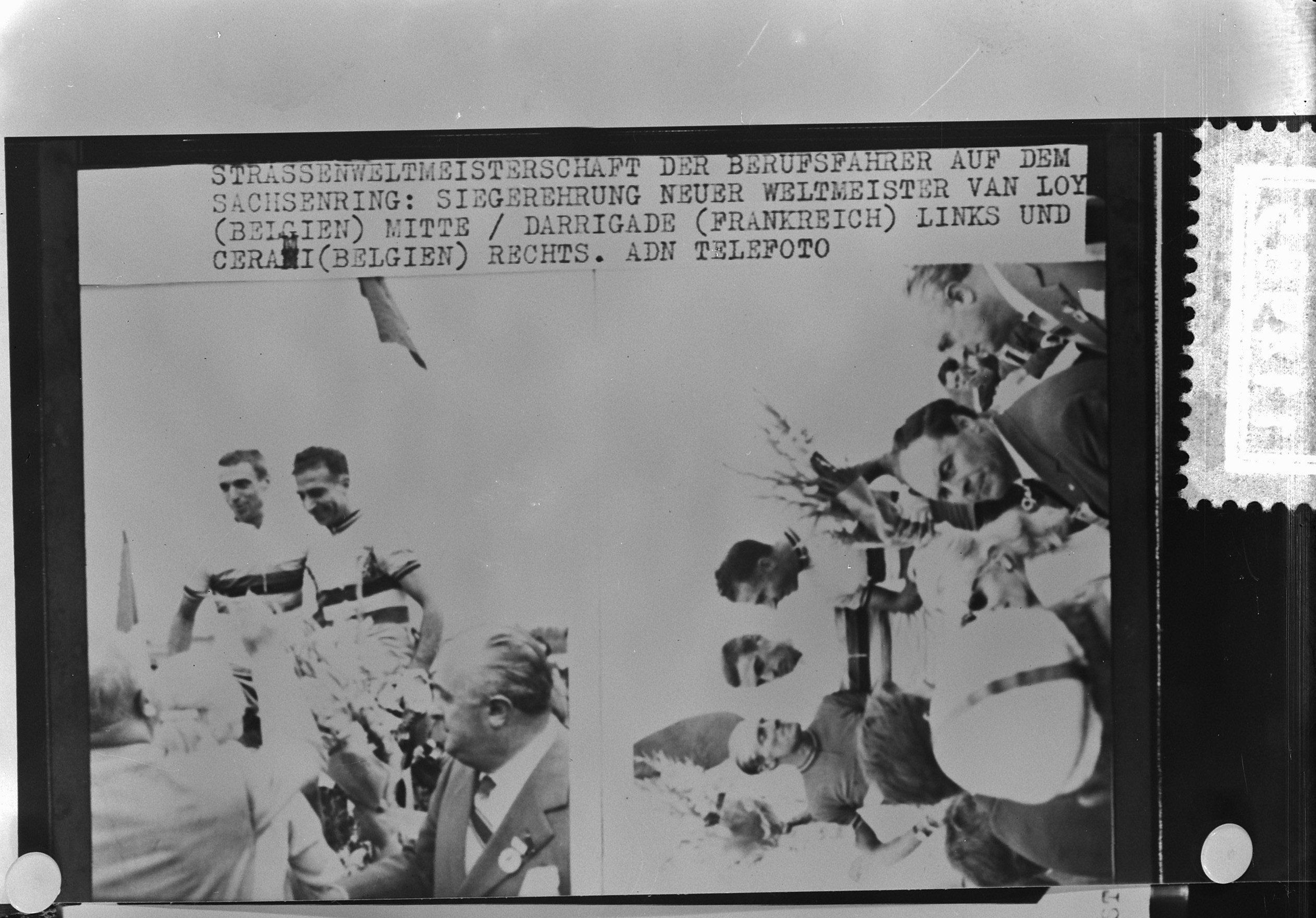
The year continued with a bronze medal at the world championship on the Sachsenring. In the archive photograph of the presentation he appears with André Darrigade and the new world champion, Rik Van Looy. Cerami had become a Belgian citizen in 1956. Now he was on the podium for his adopted country, in the same season that had brought victory in Roubaix.
It is tempting to reduce such a year to one simple explanation: the helper finally being given his chance, or experience suddenly beating youth. Results alone cannot explain why it happened in that particular spring. They do show that the late successes were not confined to one fortunate afternoon.
Victories in Paris–Brussels and Brabantse Pijl followed in 1961. In 1963 he finished second in Liège–Bastogne–Liège, beaten by the much younger Frans Melckenbeeck. Cerami could still be there when a major one-day race was decided. His repeated appearances at the front were becoming difficult to dismiss as accidents.
Then came the stage to Pau.
In the Tour results his name stands ahead of Darrigade and Joseph Groussard. A single second separates the winner from the next riders. They had been on their bicycles for more than four and a half hours. In the end, a single second separated their finishing positions.
The man who had taken winter work to make the household finances add up, and spent many seasons riding in the service of others, had another victory to his own name. This time it was in the Tour de France, at 41. Darrigade had to settle for second place.